Best Non-Dairy Milk

A plant milk can taste fine from the glass and still ruin a cup of coffee. That curdle is usually about protein, acidity, and formulation, not your brewing skills. A good one stays smooth in hot coffee, froths for a latte, blends without grit, and tastes pleasant plain. It should also earn its fridge space with a fair price, a workable shelf life, and a nutrition panel that is not just sugar and stabilizers. The right carton fixes a lot of small daily compromises.

I have rotated oat, soy, almond, and pea milks through my kitchen for years, but over the past three months my team and I worked through 18 cartons side by side. We tasted them plain, splashed them into hot and iced coffee, frothed them, blended them with frozen fruit, and cooked them into sauces. Creamy texture and neutral flavor rarely arrive in the same carton, so the best pick depends on whether you drink it, froth it, or cook with it. The list below follows those trade-offs.

1

Best Overall

Silk Organic Unsweetened Soy Milk

95 /100
Trail Score Outstanding

Key details

Free From
Carrageenan, gluten, MSG
Pack Size
6 x 32 fl oz
Sweetener
Unsweetened, no added sugar
Certification
Organic; Non-GMO Project Verified
Check Price on Amazon

Protein is what separates this carton from the rest of the shelf. Almond, oat, and macadamia milks are built around body and flavor; organic soy carries enough protein that a glass actually counts toward the day, and it does it with a creaminess the nut milks here can't match. That combination is why it's our top pick: one carton that works in coffee, over cereal, and in a sauce without tasting like a compromise.

We put it through the ordinary rounds — hot coffee, cold cereal, a pan of mashed potatoes, a cream soup. In the mug it stayed smooth where thinner cartons go grainy, and it disappeared into the savory food entirely; nothing about the flavor announced soy. Straight from the glass it's the creamiest of the unsweetened options here, closer to low-fat dairy than to the cloudy water that gives almond milk a bad name.

The case is six 32-ounce cartons, shelf-stable until you open them, so it earns a place in the pantry rather than on the fridge door. No added sugar, no carrageenan, organic and Non-GMO Project Verified — the ingredient list is short enough to read in one breath, which is not true of every carton on this list.

Two things to know before you commit. Soy is a declared allergen, so this is off the list for a soy-allergic household, and the per-carton cost sits above the almond picks. If you use milk by the splash, a six-pack is more commitment than you need; if you go through a quart a week, you'll be glad of the spares.

Pros

  • Creamy body holds up in hot coffee
  • Real protein from an organic soy base
  • Unsweetened, organic, no carrageenan
  • Six shelf-stable cartons for the pantry

Cons

  • Soy rules it out for soy-allergic households
  • Costs more per carton than the almond picks
Our verdict

Our default carton: real protein, a creamy body that survives hot coffee, and a clean unsweetened flavor that works in savory cooking too.
Check Latest Price
2

Best for Coffee

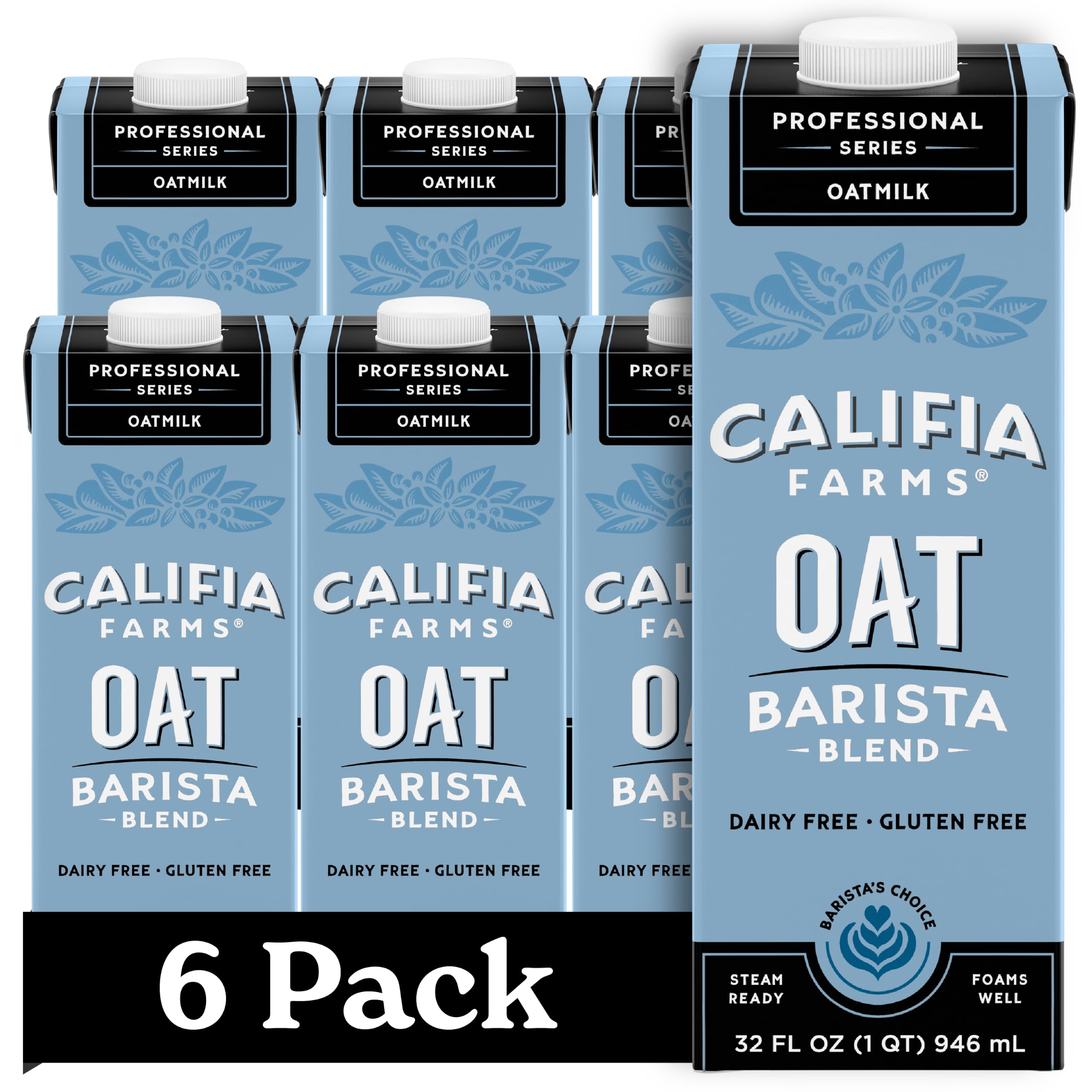
Califia Farms Oat Barista Blend

93 /100
Trail Score Outstanding

Key details

Pack Size
6 x 32 fl oz
Certification
Non-GMO, Kosher, vegan
Formulated For
Frothing and steaming
Check Price on Amazon

Every carton in this guide went through the same morning test: a hard shake, cold milk into a frothing pitcher, then into a hot americano. Most of them foam and then collapse. This one held a fine, pourable microfoam long enough to finish the cup, which is exactly what a barista blend is supposed to do.

The flavor is the other half of it. There's a subtle sweetness and an oat backbone, but neither pushes the coffee around; it reads as cream rather than as a flavored drink. It also blends into iced coffee without the swirl of sediment thinner milks leave behind. Of everything here, this is the carton we keep for mornings when the coffee is the point.

Froth is not guaranteed, though. Once a carton has been open a few days it can go flat, and the fix is technique as much as milk: shake hard, froth it cold, then heat the result for a few seconds. What you're paying for is the formulation, and it does cost more per carton than the everyday milks here.

Pros

  • Froths and steams for latte-style coffee
  • Subtle sweetness that leaves the coffee in charge
  • Blends smoothly into iced coffee
  • Shelf-stable until opened

Cons

  • Cases can arrive with short dates
Our verdict

If the milk's main job is coffee, buy this one: it froths, steams, and lets the roast stay in front.

Check Latest Price
3

Best Pantry Value

Silk Unsweetened Vanilla Almond Milk

95 /100
Trail Score Outstanding

Key details

Flavor
Unsweetened vanilla
Storage
Shelf-stable until opened
Calories
25 per serving
Pack Size
6 x 1 qt
Check Price on Amazon

Six quart cartons that sit in the pantry until you need one solves a real problem: no fridge space claimed, no dash to the store, no half-empty carton going sour at the back of a shelf. At 25 calories a serving with a whisper of vanilla, it's built for cereal, smoothies, and iced coffee.

We like it most as the cold-drinking carton of the group. The vanilla is doing real work over cereal, and the light body keeps a smoothie from turning into a milkshake. It is thin, though: some cartons drink closer to cloudy water than to milk, and we noticed it most in coffee, where it adds color more than creaminess. For a béchamel or a pan of mashed potatoes you want a plain unsweetened carton instead.

Pros

  • Six quarts store unopened on a shelf
  • 25 calories a serving, unsweetened
  • Vanilla suits cereal and smoothies

Cons

  • Vanilla flavor limits savory cooking
Our verdict

The pantry case for cold drinking: light, lightly vanilla, and cheap per carton enough to keep a backup on the shelf.

Check Latest Price
4

Best for Protein and Allergies

Ripple Original Pea Protein Milk

91 /100
Trail Score Outstanding

Key details

Protein
8 g pea protein
Free From
Dairy, soy, nut, gluten, lactose
Pack Size
6 x 32 fl oz
Certification
Vegan; Non-GMO
Check Price on Amazon

Read the allergen line before anything else: no dairy, soy, nut, gluten, or lactose. In a house where one person can't do nuts and another can't do soy, that leaves very few cartons on the shelf, and this is the one that clears both.

Eight grams of pea protein per serving is the headline, and it's why the body is thicker than the almond and oat milks here, closer to a light cream than to water. In coffee and blended drinks it stays smooth, and in a creamy soup or a gravy it does the job dairy would. We tried it over cereal too, where the extra body reads as richness rather than weight.

What it isn't is neutral. The first glass tastes faintly starchy next to soy, and the pale, opaque pour takes a beat to get used to; by the second carton neither registered. If your reason for buying plant milk is nutrition and allergy safety rather than the closest possible match to dairy, that trade is easy to take. The shelf-stable cartons are also the easiest of these to stash for travel.

Pros

  • 8 g of pea protein per serving
  • Free of dairy, soy, nut, gluten, and lactose
  • Stays creamy in coffee and blended drinks
  • Shelf-stable six-pack

Cons

  • Most expensive carton in this set
Our verdict

The allergy-household carton: eight grams of pea protein, no dairy, soy, or nuts, and a body that holds up in cooking.

Check Latest Price
5

Best Low-Sugar Splurge

milkadamia Unsweetened Macadamia Milk

92 /100
Trail Score Outstanding

Key details

Sugar
0 g
Dietary
Vegan, gluten-free, soy-free
Calories
40 per serving
Pack Size
6 x 32 fl oz
Check Price on Amazon

This is the splurge of the group, and it earns the money in one specific place: drinking it straight or over something plain. Unsweetened macadamia has a rounded, almost buttery richness that almond milk doesn't get near, with none of the chalk that turns people off nut milks. Zero sugar, 40 calories a serving.

Where it surprised us was chai and smoothies. It blends without the grit that settles at the bottom of a glass, and it thickens a blended drink enough that you notice the texture rather than the flavor. Over cereal it's quiet in a good way: you taste the cereal.

The catch is cost, and it isn't small — a case of six works out more per carton than the everyday almond and oat milks, which is the whole argument against drinking it daily. It is also still a tree nut, so it solves nothing in a nut-allergic household. Think of it as the carton you buy for the glass, not the one you cook with.

Pros

  • Zero sugar and 40 calories a serving
  • Creamy, rounded, no chalky finish
  • Blends into chai, smoothies, and cereal

Cons

  • Premium price per carton
  • Still a tree nut, so not allergy-safe
Our verdict

The premium pour: zero sugar, 40 calories a serving, and richer than any other nut milk here, if the per-carton price doesn't bother you.

Check Latest Price
6

Best for Savory Cooking

Almond Breeze Unsweetened Original

95 /100
Trail Score Outstanding

Key details

Calcium
Enriched
Calories
30 per serving
Pack Size
32 fl oz
Certification
Non-GMO Project Verified
Check Price on Amazon

Where the Silk case leans vanilla, this carton stays plain: unsweetened original, no flavoring, no sweetness, nothing to argue with. That makes it the one we reach for when the milk is an ingredient rather than a drink — a béchamel, a batch of muffins, a pot of mashed potatoes.

Thirty calories a serving, calcium enriched, Non-GMO Project Verified, and low on the glycemic index if you're watching sugar. It comes as a single 32-ounce carton, so trying it costs you one carton rather than a case. In coffee it behaved better than most of the almond milks here — no feathering, no slick on top.

The call is straightforward: this is the almond milk for cooking, and the thin body that makes it easy to pour is the same thing that makes it disappointing in a latte. If you drink plant milk by the glass, take the soy or the macadamia instead. If you cook with it, keep two in the cupboard and stop thinking about it.

Pros

  • Neutral flavor works in sauces and baking
  • 30 calories and calcium-enriched
  • Single carton, no case commitment

Cons

  • Thin body in coffee and by the glass
Our verdict

The plain, inexpensive carton for cooking and cereal: unsweetened, calcium-enriched, and neutral enough to disappear into a sauce.

Check Latest Price
7

Organic on a Budget

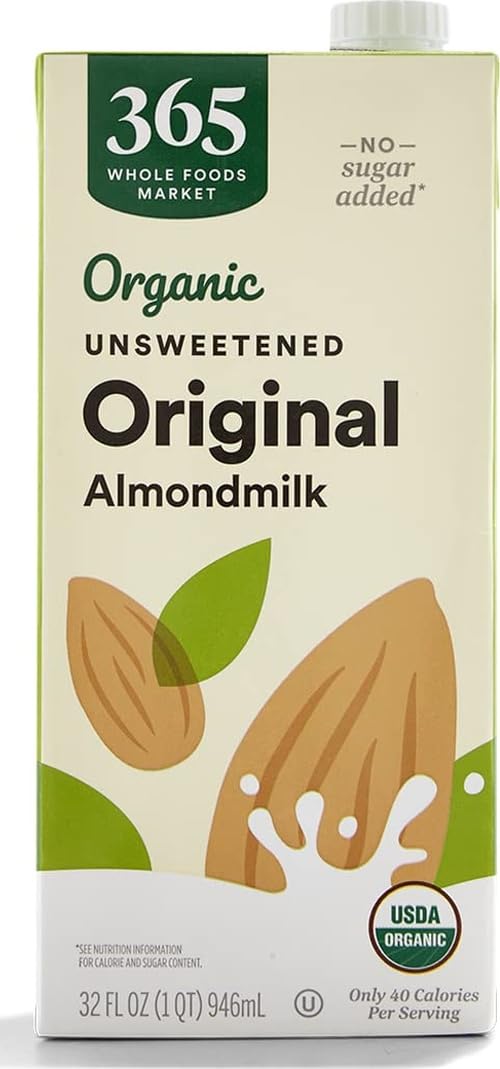
365 Organic Unsweetened Almond Milk

93 /100
Trail Score Outstanding

Key details

Pack Size
32 fl oz
Sweetener
Unsweetened, no added sugar
Certification
Organic
Check Price on Amazon

Organic, unsweetened, and sold one carton at a time. For anyone who wants an organic almond milk without committing to a case, this is the obvious place to start.

It drinks light and clean, with a real almond note rather than a sweet one, and it's creamy enough for cereal and a smoothie without the slickness some cartons leave behind. Where it's less convincing is straight from the glass, where the flavor flattens out and the body reads thin.

Read the ingredient panel if the organic label is why you're here. Organic refers to the almonds, not to a short list, and this panel runs to gums and added vitamins. If calcium is the reason you buy plant milk, compare the percentages on a couple of cartons before you decide, because fortification varies a lot across this shelf.

As an everyday pour it's fine rather than memorable; as an organic, unsweetened, single-carton buy it's the easiest one here to justify. Buy it for cereal, smoothies, and baking, and don't expect it to carry a latte on its own.

Pros

  • Organic and unsweetened in a single carton
  • Light, clean almond flavor
  • Low price per carton

Cons

  • Ingredient list includes gums and added vitamins
  • Thin body when drunk straight
Our verdict

An organic unsweetened carton you can buy one at a time: light and clean, though it won't give a latte much body.

Check Latest Price
8

Budget Oat Milk

365 Original Oatmilk

92 /100
Trail Score Outstanding

Key details

Sugar
7 g natural sugar per cup
Dietary
Dairy-free and vegan
Pack Size
32 fl oz
Sweetener
No added sugar
Check Price on Amazon

Seven grams of sugar per cup, and none of it added. That's the thing to understand about oat milk before you buy a carton: oats bring their own sweetness once they're milled into a drink, which is why oat milk tastes sweeter than almond without a sweetener appearing on the label.

This one is creamy with no chalky aftertaste, and that gentle sweetness is exactly right over cereal, in oatmeal, and in iced coffee where you'd otherwise reach for syrup. It's a 32-ounce carton, so it fits a crowded fridge and doesn't demand a case commitment up front.

It separates, and it separates quickly — shake it hard every time or the last glass is watery. Some cartons pour thinner than others, and once opened it doesn't keep as long as you'd hope, so don't buy two if you'll only finish one.

For the price of a single carton, this is the low-risk way to find out whether oat milk suits your morning. If the answer is yes and you want latte foam, the Califia barista case is the upgrade; if you just want something creamy and slightly sweet over cereal, this does it for less.

Pros

  • Sweetness comes from oats, not added sugar
  • Creamy with no chalky aftertaste
  • Lowest-cost oat carton in this set

Cons

  • Separates and needs a hard shake
  • Opened cartons can turn before the date
Our verdict

The budget oat carton: naturally sweet, creamy enough for cereal and iced coffee, and sold one at a time.

Check Latest Price

What We Looked For in Non-Dairy Milk

We built the shortlist by scanning supermarket shelves and online listings, then narrowing by ingredient base, added sugar, fortification, price per quart, and whether the carton needed refrigeration before opening. We ended up with 18 cartons, which we tested over three months.

Each carton went through a morning routine: a measured glass plain, a splash in hot coffee and iced coffee, and a bowl of cereal. On weekends we frothed them with a handheld wand and a steam wand, noting whether the foam held for a minute or collapsed into bubbles. We blended them with frozen fruit and spinach, looking for grit and curdling, and whisked them into a tomato sauce and a simple roux to see which ones stayed smooth when heated.

We also tracked the unglamorous details. Every carton was shaken before each pour, and we compared the first glass with the last, and a second carton against the first, for sediment, separation, and off notes. Opened cartons went into the fridge door and a back shelf; we dated them and tasted every couple of days until flavor or texture turned. We compared price per quart, read nutrition panels for added sugar, protein, calcium, and B12, and noted which cartons were shelf-stable versus refrigerated.

How to Choose a Non-Dairy Milk

Start With the Job, Not the Base

Plant milks are not interchangeable, even when the cartons look identical on the shelf. Soy and pea are the protein carriers; almond and macadamia are lighter, with macadamia the richer of the two; oat is creamy and naturally sweet. If you want one carton that handles coffee, cereal, and cooking, start with soy or pea and work outward from there. If smoothies and cereal are the whole use case, an almond carton gets you there for less money per carton. And if coffee is the reason you're reading this, skip ahead to a barista-style oat.

Read the Panel, Not the Front of the Carton

Four things on the back of the carton decide most of the purchase: protein per serving, added sugar, calcium, and vitamin D or B12 if plant milk is standing in for dairy in your day. Unsweetened describes the sugar, not the flavor, so an unsweetened vanilla carton still tastes of vanilla, which is lovely over cereal and wrong in a sauce. Organic describes how the almonds were farmed, not how short the ingredient list is. Turn a carton over before you commit to six of them.

Test It in Coffee Before You Buy a Case

Hot, acidic coffee is the hardest thing most plant milks meet, and it's where thin cartons feather and separate. Barista blends are formulated for that job, usually with extra fat and a stabilizer, which is why they cost more per carton. Technique matters as much as the milk: shake hard, froth it cold, then heat the result rather than steaming from the start. A carton that has been open a week can lose its foam before it tastes off, so judge froth on a fresh one.

Decide on Format Before Flavor

Single cartons are for testing and for cooking, where you use a cup at a time. Six-packs suit households that go through a quart a week, and they are the reason shelf-stable milk is worth ordering: unopened cartons live in the pantry and take no fridge space until you need them. Be honest about your pace. A case only saves money if you finish what you open, and a case of barista blend is wasted on someone who makes one latte a week.

Frequently Asked Questions

Final Verdict

Silk's organic unsweetened soy is the carton we recommend for most kitchens. It has the body to work in coffee and the protein to count for something, and it doesn't need vanilla or sugar to be pleasant. If coffee is the entire job, buy Califia's barista oat instead; if someone in the house can't do soy or nuts, Ripple clears both.

Everything else here is a specialist: milkadamia for drinking straight, Almond Breeze for cooking, and a single carton of 365 oat to find out whether oat milk suits your morning before you commit to a case.