Best Natural Sweeteners of 2026

A natural sweetener has one job: make your coffee, tea, or muffin taste sweet without a metallic aftertaste that makes you check the label twice. The trouble is that “natural” covers a lot of ground—monk fruit, stevia, allulose, erythritol blends—and they don’t behave the same. Some taste fine by the spoonful but turn gritty in a cold drink; others measure cup-for-cup like sugar but cost enough that you ration them. The right one fixes all of it: clean sweetness, reliable measurement, and no weird cooling finish.

Over the past three months, I’ve kept 14 jars and packets on my counter and used them in coffee, iced tea, and weekend baking. My team and I compared taste, sweetness, and effectiveness—did a teaspoon do the work of a teaspoon of sugar, or did we need to double it? We also noted texture, how cleanly each dissolved in cold drinks, whether packets measured easily and stayed sealed in a tote, and whether the price per serving made daily use reasonable. For keto or sugar-free baking, we checked which labels backed up the claim. The ones that made the cut are below.

1

Best Overall

Lakanto Classic Monk Fruit

93 /100
Trail Score Outstanding

Key details

Form
Granulated blend
Calories
Zero
Swap Ratio
1:1 for white sugar
Package Size
5 lb bag
Check Price on Amazon

The bag says monk fruit, and monk fruit is in there — but the reason a scoop of it measures and pours like white sugar is erythritol, the other name on the label. That isn't a bait and switch; it's how a granulated zero-calorie sweetener gets the bulk to swap one-for-one into a recipe. We think it's worth knowing before you buy, because it explains both what works so well here and the one thing that might not.

What works is the swap. One cup for one cup, one spoon for one spoon, no conversion chart taped inside a cabinet door. In coffee and tea the sweetness lands without the bitter, lingering finish that turns people off stevia, and the label puts it at zero calories with a zero glycemic index. Of everything on this page, this is the bag we reach for when we don't want to think about it.

The five-pound format is the tell that it's built for baking rather than a single mug. Creamed into butter and folded into a batter, it behaves like the sugar it's replacing, which is more than most zero-calorie sweeteners manage — a spoon-for-spoon granulated blend is the only kind that can. If you bake once a month, that bag is a long commitment and a lot of cupboard shelf.

One more thing to taste for: to some palates it reads a touch less sweet than sugar, so a recipe that sang with a full cup might want a small top-up here. Taste before you decide the batch is ruined; a spoonful usually settles it.

Pros

  • Measures one-for-one with white sugar
  • No bitter stevia finish in drinks
  • Zero calories and zero glycemic index
  • Holds its structure in baked goods

Cons

  • Only sold in a five-pound bag
Our verdict

Buy this one if you want a single bag that sweetens coffee, tea, and baking one-for-one with sugar and adds no calories doing it.

Check Latest Price
2

Best for Coffee and Tea

Truvia Original

96 /100
Trail Score Outstanding

Key details

Form
Individual packets
Ingredients
Stevia leaf extract, erythritol
Packets Per Box
500
Sweetness Match
1 packet = 2 tsp sugar
Check Price on Amazon

One packet replaces two teaspoons of sugar, which makes the arithmetic of a morning mug easy: one packet, two if you're filling a travel cup. That portioning is the entire appeal, and it's why we'd point a household that sweetens coffee and tea every day at the 500-count box rather than a granulated bag. The sweetness is clean rather than herbal, with none of the bitterness stevia is famous for.

Where it beats the spoonable zero-calorie options is convenience. No scoop, no bag clip, nothing to keep dry, and the packets disappear into a hot drink without a gritty residue at the bottom. If a bad first experience with stevia put you off the leaf entirely, a box of these is a low-risk way to find out whether the problem was stevia or the particular brand you tried.

What it isn't is pure leaf. The packet is a stevia and erythritol blend with natural flavors, and the erythritol is doing real work on the mouthfeel. If you want the plant and nothing else in the ingredients, the liquid on this list is your pick instead.

Pros

  • One packet equals two teaspoons of sugar
  • Dissolves cleanly in hot drinks
  • 500 packets per box

Cons

  • One packet suits a teacup, not a 20-ounce mug
Our verdict

For coffee and tea by the mug, this is our pick: a packet replaces two teaspoons of sugar and the box lasts a household months.

Check Latest Price
3

Best Liquid Sweetener

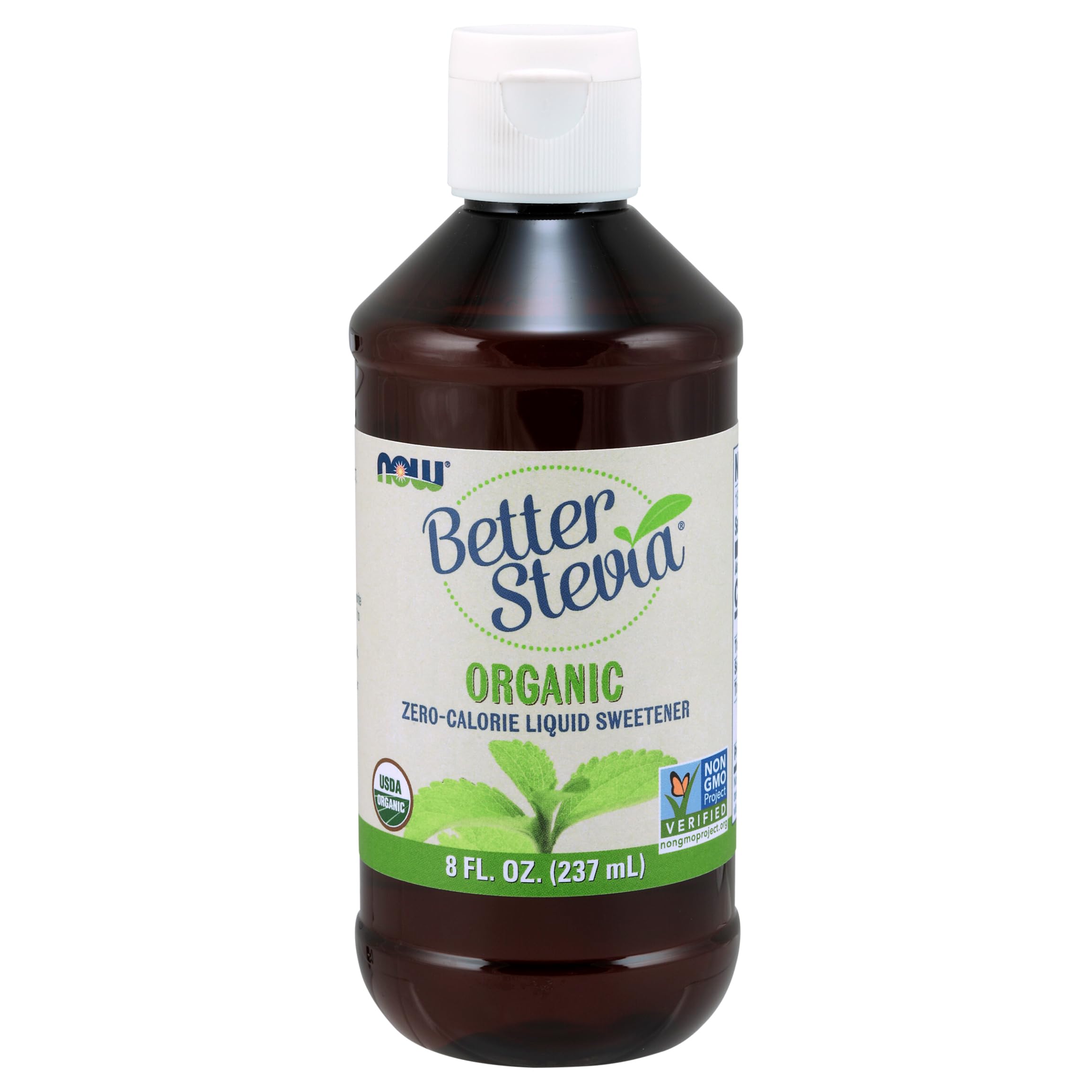
NOW BetterStevia Liquid

93 /100
Trail Score Outstanding

Key details

Form
Liquid drops
Volume
8 fl oz
Calories
Zero
Certification
USDA Organic
Check Price on Amazon

A few drops is the entire dose. This is concentrated stevia rather than a powder bulked out with something else, so a mug of coffee takes a few drops off the spout instead of a spoonful — which is why a single eight-ounce bottle can last months in a household that uses it every morning.

That concentration is the reason to choose it. The ingredient list is the shortest in this guide: an organic stevia extract suspended in water with a little cane alcohol to keep it pourable, with no erythritol, no dextrose, and no bulking powder. We like that for anyone who wants the leaf and nothing else, and we like it even more for iced coffee and cold brew, where granules sink to the bottom and stay there.

Two practical notes before you order. There's no dropper, just a spout, and the cane alcohol can gum it up between pours — wipe it after each use and it stays clear. And drops don't bake. There's no bulk and no browning, and no dependable conversion for a recipe that calls for a cup of sugar, so keep a granulated blend for the oven and this for the glass.

Pros

  • A few drops sweeten a whole cup
  • No erythritol, dextrose, or bulking fillers
  • Bottle lasts months of daily use
  • USDA certified organic

Cons

  • Pouring spout gums up between uses
Our verdict

Buy the bottle if you want stevia leaf without erythritol or dextrose, and if most of what you sweeten is served over ice.

Check Latest Price
4

Best Unprocessed Sweetener

Fischer's Raw Honey

94 /100
Trail Score Outstanding

Key details

Form
Raw liquid honey
Processing
Unfiltered, unpasteurized
Package Size
40 oz
Added Ingredients
None
Check Price on Amazon

Honey is sugar. A tablespoon brings about as many calories as a tablespoon of sugar, and no amount of raw, unfiltered language on the label changes that. So the case for caring which bottle you buy isn't calorie math — it's flavor, and whether anything has been done to the honey between the hive and the jar.

Fischer's is raw, unfiltered, and unpasteurized with no additives or syrups, and you can taste the difference: a fuller, more floral flavor than the squeezable bottles, in a 40-ounce container priced like a pantry staple rather than a gift-shop jar. We use it where the honey is the point, spooned over yogurt or granola or stirred into a mug of tea.

In coffee it's a different story. Honey is slower to dissolve than a granulated sweetener and this one is on the thin side, so a cold drink needs real stirring and a hot one still leaves a little at the bottom. Warm drinks and food are where it earns its place, and on those it's the most genuinely enjoyable thing in this guide — the one we finish a jar of.

Pros

  • Raw, unfiltered, with nothing added
  • Full floral flavor that reads in tea
  • 40-ounce bottle that goes a long way

Cons

  • Runs thin for a raw honey
Our verdict

Choose this when the honey is part of the pleasure — toast, yogurt, tea — and you want nothing added between the hive and the jar.

Check Latest Price
5

Best If You Want Real Sugar

Sugar In The Raw Turbinado

96 /100
Trail Score Outstanding

Key details

Form
Coarse turbinado crystals
Processing
Never bleached
Package Size
2 lb box
Certification
Non-GMO Project Verified
Check Price on Amazon

Every other pick on this page is trying to get you to sweetness with fewer calories or none. This one is sugar — turbinado cane sugar, grown in the tropics, never bleached, with the molasses left in so the crystals stay golden and coarse. If what you want is a less-processed version of the real thing rather than a replacement for it, this is the box, and it's the cheapest way to sweeten anything here.

Coarse is the whole point and also the catch: those crystals take an extra stir or two to disappear in hot coffee. In baking, the molasses flavor is subtle but present, and it's lovely in a muffin or a shortbread where white sugar tastes flat and one-note. The box is plain cardboard with a pour spout, which suits a pantry spoon jar more than a countertop display.

Buy it knowing what it is. This is still sugar, with sugar's calories, and the two-pound box is small enough that a daily baker will go through it faster than expected. What you're paying for is fewer steps between the cane and the cup, and on that measure it delivers without any romance about it.

Pros

  • Less refined than white sugar, molasses intact
  • Golden coarse crystals with real flavor
  • Lowest cost per spoonful in this guide
  • Non-GMO Project Verified and vegan

Cons

  • Coarse crystals sink in iced drinks
Our verdict

Buy this if you want actual sugar rather than a substitute, and you'd rather it were the least-refined version you can spoon into a cup.

Check Latest Price
6

Best Brown Sugar Substitute

Madhava Organic Coconut Sugar

95 /100
Trail Score Outstanding

Key details

Form
Granulated coconut sugar
Sourcing
Family farms in Indonesia
Package Size
3 lb bag
Certifications
USDA Organic, Non-GMO
Check Price on Amazon

The flavor is why people keep a bag of this within reach: warm, caramelly, closer to brown sugar than white, which makes it an easy one-for-one swap anywhere a recipe already wants brown sugar. Cookies, banana bread, a bowl of oatmeal, the morning coffee.

Madhava's is organic, non-GMO, kosher, and vegan, harvested from coconut palms on family farms in Indonesia, and it carries third-party testing for contaminants that most sweeteners on this shelf don't bother with. It dissolves readily in hot coffee, and the three-pound resealable bag is sized for people who actually bake through a bag rather than admire it.

Here's what we think most people get wrong about coconut sugar: the lower glycemic index on the label doesn't make it a low-sugar food. It's still sugar, with calories and carbohydrate close to white sugar's, and swapping it in doesn't change how much you eat — it changes what you taste. That's a swap worth making for flavor. It isn't a health shortcut, and buying it as one usually ends with a bigger spoon, not a smaller one.

Pros

  • Caramel flavor close to brown sugar
  • Swaps one-for-one in recipes
  • USDA Organic, non-GMO, kosher, vegan
  • Three-pound resealable bag

Cons

  • Reads milder than white sugar in baking
Our verdict

The one to buy if you want brown sugar's caramel depth from a less-refined source, and you're happy to count it as sugar.

Check Latest Price
7

Best for Cold Drinks

Agave In The Raw Organic

95 /100
Trail Score Outstanding

Key details

Form
Dark agave nectar
Volume
18.5 oz bottle
Certification
USDA Organic
Sweetness Vs. Sugar
About 25% sweeter
Check Price on Amazon

A bottle of this is the easiest thing to reach for when the drink is cold: dark amber, pourable, thin enough to slide off a spoon into iced tea without five minutes of stirring. The caramel note is real but gentle, closer to a light molasses than to honey, and in a smoothie it disappears rather than announcing itself.

It's about 25% sweeter than sugar according to the bottle, so a short drizzle does what a full spoonful would. It's organic, non-GMO, kosher, and made from blue agave harvested in Jalisco. Hot coffee works too, and in a cocktail it beats simple syrup because there are no crystals to dissolve.

One caveat worth understanding rather than repeating. Agave's low glycemic index comes from its fructose content, which means it's gentle on a blood-sugar reading without being a low-sugar food. It's sugar with a different profile. That's fine as long as you pour it like sugar and not like a free pass.

So our recommendation here is narrow and confident: for iced drinks, smoothies, and anything that wants sweetness without granules, this is the bottle we reach for, and the eighteen-ounce size fits a fridge door. It won't replace a granulated sweetener in a cake, and it isn't trying to.

Pros

  • Pourable and blends into cold drinks instantly
  • About 25% sweeter, so you use less
  • USDA Organic and non-GMO
  • Gentle caramel flavor that doesn't dominate

Cons

  • Bottles can arrive leaking
Our verdict

Keep a bottle for iced tea, cold brew, and smoothies, where a pourable nectar beats granules that never quite dissolve.

Check Latest Price
8

Low-Carb Baking

Health Garden Golden Monk Fruit

95 /100
Trail Score Outstanding

Key details

Form
Golden granulated blend
Calories
Zero
Swap Ratio
1:1
Package Size
2.5 lb pouch
Check Price on Amazon

Golden is the right word. Of everything here, this is the one blended to mimic brown sugar — the warm tint, the molasses-adjacent finish — and that's what makes it useful in the places where a white-sugar substitute tastes wrong. A crumble, a gingersnap, a pan sauce that wants a little depth.

It's erythritol and monk fruit powder with no other fillers, one-for-one by volume, zero calories, and no glycemic impact, and it does what the label claims in a cookie: the color and the caramel note land roughly where brown sugar would. Baking is where it shines, with a near-unanimous verdict from the people using it for exactly that.

Use the pouch it arrives in. This is a sweetener that wants to stay sealed between uses, so scoop from the bag, press the closure shut, and put it back in the cupboard rather than decanting it into a bowl on the counter.

Value is where opinions split, and we land in the middle: a 2.5-pound pouch at a premium price is money well spent if it's replacing the brown sugar in your baking, and hard to justify if it's an occasional spoon in a mug, where a plainer white-sugar-style blend does the same work for less.

Pros

  • Mimics brown sugar in baking
  • Zero calories with no glycemic impact
  • Only erythritol and monk fruit, no fillers
  • Resealable 2.5-pound pouch

Cons

  • Turns hard outside its resealable pouch
Our verdict

Buy it if you're baking low-carb and need something that behaves like brown sugar, color and caramel note included.

Check Latest Price

How We Tested Natural Sweeteners

We started with a shortlist of 14 from ingredient panels, customer reviews, and the sweeteners that kept coming up in sugar-free baking threads, then filtered out anything heavy on fillers or priced oddly per serving. For three months, those jars and packets lived on my kitchen counter and in my tote bag. I stirred them into hot coffee, iced tea, and lemonade; whisked them into salad dressing; and baked them into coffee cake and no-sugar-added muffins.

Taste came first: we tried each plain in water and in coffee, noting bitter, cooling, or licorice aftertastes. We tracked sweetness and effectiveness by measuring spoon-for-spoon against sugar—how many teaspoons it took to match one teaspoon of sugar in a mug, and whether a coffee cake needed more sweetener than the recipe called for. Texture went on the tongue and between fingers; we looked for gritty, chalky, or slick finishes, checked ingredient lists for fillers, and watched for clumping or caking over the three months.

Dissolvability got its own check in cold iced tea, where we looked for grit at the bottom or a film on top. We read labels for sugar-substitute and keto claims, noting net carbs and bulking agents, then tried each in no-sugar-added muffins to see if the crumb held. Packet size and leakage mattered too: we tucked packets into a tote, shook them, checked the seams, and noted whether one packet sweetened a standard mug or barely registered. Finally, we calculated cost per teaspoon from the bag size and how much we actually used, not just the sticker price. The ones that stayed clean-tasting, dissolved without grit, and measured predictably earned a spot.

How to Choose a Natural Sweetener

Read the ingredient line, not the front of the bag

A granulated zero-calorie sweetener needs something to give it volume, and that something is listed first on the label. Erythritol is the usual choice, and it's the reason a spoonful measures and pours like sugar. Dextrose and maltodextrin do the same bulking job, but they are sugars, so a stevia packet built on them is closer to a sugar packet with a little leaf in it.

Flip the box over before you commit. If the first name on the ingredient line isn't the plant or the blend the front of the package is advertising, you're buying a different product than the one in the photo. This single check separates most of the good options from the disappointing ones.

Decide whether you're cutting sugar or cutting processing

Turbinado, honey, agave, and coconut sugar are all sugar. They're less refined, they taste of something, and they carry roughly the calories you'd expect from sugar. That's not a flaw — it's the point. If you want the flavor of molasses or caramel in a cookie, nothing zero-calorie will give it to you.

If fewer calories or a smaller blood-sugar response is the goal, shop the zero-calorie blends instead. What doesn't work is buying coconut sugar and treating it as a free food, or buying a zero-calorie blend and expecting it to brown and crisp like the real thing. Pick your goal first; the product follows.

Match the form to how you actually use it

Spoonable granules are for baking and for a sugar bowl; packets are for a mug at work; drops are for a glass of iced anything; a bottle of nectar is for drizzling. Most people end up with two, and that's fine.

The trap is assuming you can move between forms. There's no dependable conversion from drops to cups, and a liquid sweetener won't give a cake the bulk or the browning that sugar provides. Buy the form for your most common use, then add the second one only if you keep running into its absence.

Buy the size you'll finish

A bulk bag is the better deal per spoonful and the worse deal if it sits open in a cupboard for a year. A five-pound bag makes sense for a household that bakes most weekends; a box of packets or a single bottle is smarter for one person sweetening a mug.

Divide the package cost by the servings you'll realistically get through, not by the total weight. That number is the one worth comparing, and it's the reason a bigger bag isn't automatically the value buy it looks like on the shelf.

Frequently Asked Questions

Final Verdict

If you want one bag that handles coffee, tea, and a batch of cookies without a conversion chart taped inside a cabinet door, buy the Lakanto. It measures like sugar, reads like sugar to most palates, and brings no calories along with it.

If your sweetener mostly meets ice, keep a bottle of the agave instead — it dissolves where granules sink. And if the goal was never fewer calories but less processing, the turbinado is the honest choice, as long as you're counting it as sugar.