Best Creatine for Women of 2026

The first scoop is easy. It's the third week that gets people: the powder that won't dissolve, the gritty last sip, the worry about bloating. Creatine has become a staple for women who lift, run, or just want to stay strong, but the tubs are not interchangeable. Almost all contain creatine monohydrate; what separates a good one is how cleanly it mixes, whether it disappears in water, how it sits in your stomach, and whether the label gives you a dose you can trust.

I've kept a scoop in my kitchen cabinet for years, and my team has now put 16 tubs through four months of real mornings—stirred into water before work, shaken after workouts, blended into smoothies. The differences showed up fast: clumps, aftertaste, chalky texture, and the occasional stomach rumble. Effectiveness is slow to judge; value becomes clear once you see how many servings leave the tub without a hard layer at the bottom. The picks below made the habit feel less like a chore.

1

Best Overall

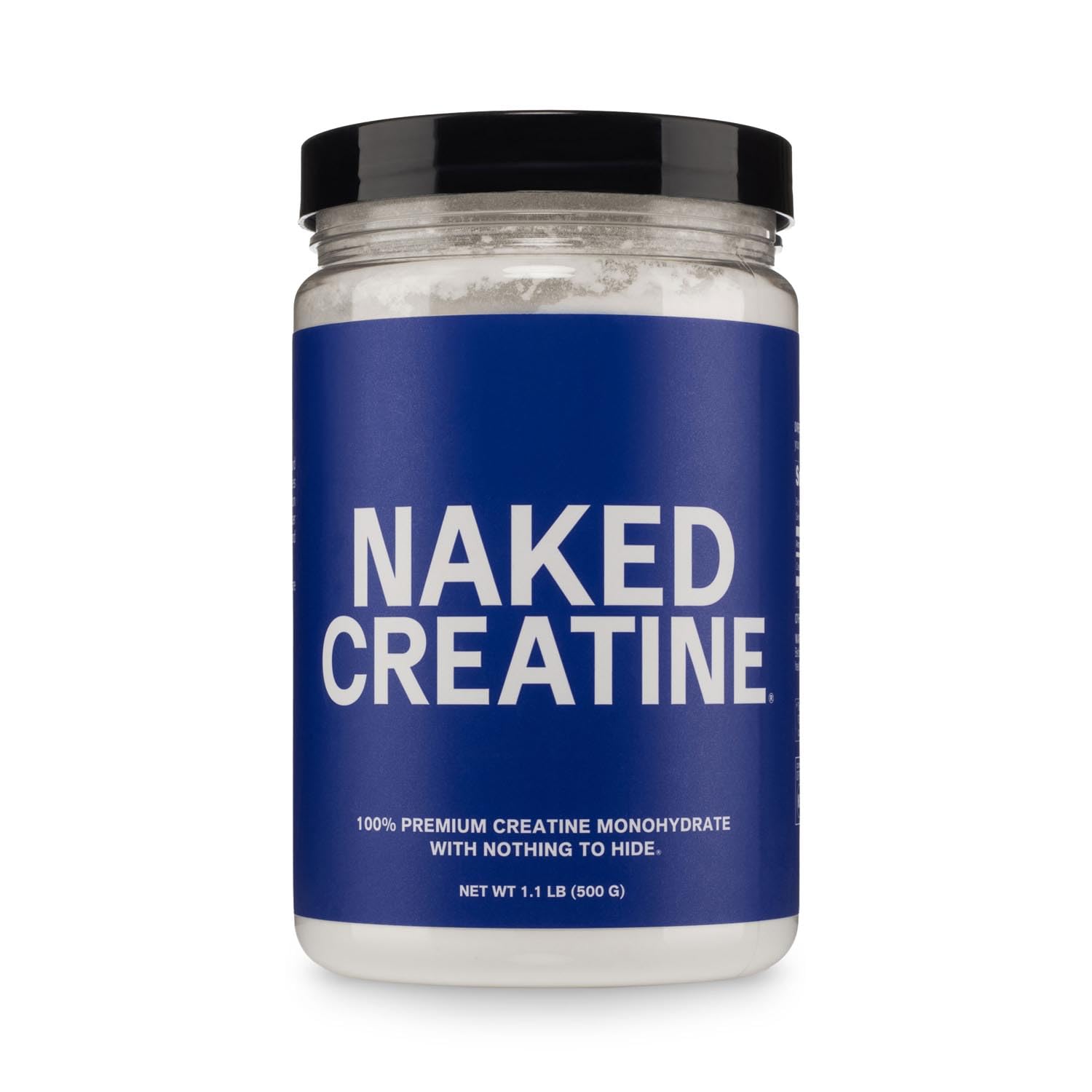
Naked Pure Micronized Creatine

95 /100
Trail Score Outstanding

Key details

Servings
100
Certification
NSF Certified
Added Ingredients
None
Creatine Per Serving
0.18 oz
Check Price on Amazon

Turn the tub around and the ingredient list is one line long: creatine monohydrate, nothing else. Naked sells that plainness hard, and the label backs it up with an NSF Certified mark and 100 five-gram servings in a 500 g tub.

What kept us coming back was how little effort it takes to drink. Micronized powder is milled finer than standard monohydrate, and this one stirs into cold water with a few turns of a spoon and seems to vanish in hot coffee. Grit at the bottom of the glass is the complaint that runs through this entire category, and a powder that mostly stays in suspension removes the daily argument. It's genuinely tasteless, too — in water, in a smoothie, in orange juice, we couldn't pick it out.

The rest of the label is what you want in a daily supplement: 5 g a scoop, no fillers, and vegan, non-GMO, gluten- and soy-free claims that matter if you're stacking it with a protein powder you already trust. It lands in our budget tier despite the certification, which is the part that surprised us most.

It's a light, fine powder, so scoop it over the tub rather than over the counter unless you want a dusting across the kitchen. Beyond that there isn't much to negotiate, which is exactly what we want from something we take every morning.

Pros

  • Single ingredient with no fillers
  • NSF Certified for purity and safety
  • Dissolves in cold water and coffee
  • 100 servings per tub

Cons

  • Costs more per serving than our budget pick
Our verdict

Buy this if you want one tub that does the job without negotiation: a single ingredient, NSF Certified, and a powder that disappears into coffee or water.

Check Latest Price
2

Best Budget

Orgain Creatine Monohydrate

94 /100
Trail Score Outstanding

Key details

Flavor
Unflavored
Servings
100
Free From
Dairy, soy, gluten, GMOs
Creatine Per Serving
0.18 oz
Check Price on Amazon

Orgain's creatine is the cheapest way here to get 100 five-gram servings, and it's the pick we hand to anyone who isn't sure they'll stick with the habit. The tub is plain unflavored monohydrate with nothing else in it — no fillers, no sweetener, no preservatives — and it stirs into water or juice about as cleanly as anything in this group.

Orgain built its name on protein powder, and the creatine follows the same playbook: a 17.6 ounce tub of fine, micronized powder that dissolves without a chalky film and adds no flavor to whatever it lands in. We stirred it into coffee, shook it into a bottle of water, and blended it into a smoothie, and none of the three changed taste. Coffee was the easiest of the three, since warm liquid does most of the work.

Where it gives a little ground is at the very bottom of the glass. Leave it sitting and it can clump, so drink it rather than nurse it, and give the glass a swirl between sips. The rest is what you want from a daily scoop: no aftertaste, no chalk, and a cost per serving that is the lowest in this group.

Pros

  • Lowest cost per serving here
  • Just creatine, no additives
  • Fine powder with no aftertaste

Cons

  • Can clump if it sits in the glass
Our verdict

Our budget pick: the lowest cost per serving here, with a clean-dissolving, tasteless powder that works in water, coffee, or a smoothie.

Check Latest Price
3

Best for Certified Purity

Thorne Creatine

95 /100
Trail Score Outstanding

Key details

Form
Micronized powder
Servings
90
Certification
NSF Certified for Sport
Check Price on Amazon

Thorne's creatine costs noticeably more per scoop than the budget bags that deliver the same 5 g of monohydrate, and the tub is 90 servings rather than 100. Nothing about the powder itself explains the gap — it's a fine, tasteless micronized creatine that behaves like the others. What you're paying for is the certificate on the label.

That certificate is NSF Certified for Sport, which means the product is tested for label accuracy and screened for nearly 300 substances banned by major sports organizations. It's the strictest of the testing marks on this page, and it's the reason a college athlete or a drug-tested lifter can take this one without a second conversation. In daily use it's quiet: it dissolves in hot coffee, leaves little behind in cold water, and doesn't announce itself in a shake, though the grind is a touch grainier than the finest powders here.

The premium is worth it if you're subject to drug testing, or if you simply want the tightest outside verification available without sending a sample to a lab yourself. If you're a recreational lifter taking 5 g a day, our top pick delivers the same compound with a lighter certification and a much smaller bill, which makes Thorne a considered purchase rather than an automatic one.

Pros

  • NSF Certified for Sport
  • Tasteless in coffee or water
  • 90 servings per tub

Cons

  • Premium price per serving
  • Grind is grainier than the finest here
Our verdict

Buy it if you're drug-tested or want the strictest certification here; otherwise the same 5 g of monohydrate costs a lot less elsewhere.

Check Latest Price
4

Best Capsule

Sports Research Creatine Capsules

95 /100
Trail Score Outstanding

Key details

Count
120 capsules
Certification
Informed Sport
Capsules Per Serving
4
Creatine Per Serving
0.18 oz
Check Price on Amazon

Four capsules, five grams. That's the number that decides whether Sports Research's bottle works for you: 120 capsules, four per full dose, which makes a bottle 30 days of creatine at the amount most people are aiming for.

For a gym bag, a carry-on, or a desk drawer, the trade is worth it. There's no scoop to lose, no shaker to rinse, and no grit to chase at the bottom of a glass — you swallow four capsules with your coffee and you're done. The bottle is Informed Sport tested and Non-GMO Project Verified, which puts it in the small group here you can hand to a drug-tested athlete without a second thought.

What you pay for that convenience is the highest cost per serving in this group, plus a handful of pills rather than a sip. Four at once is a lot for anyone who struggles with capsules, and digestive tolerance varies the way it does with any creatine. If neither of those bothers you, this is the version that travels.

Pros

  • No scoop, shaker, or grit
  • Informed Sport tested
  • Full 5 g dose in four capsules

Cons

  • Four capsules per full dose
  • Highest cost per serving here
Our verdict

The capsule pick: four pills deliver a full 5 g dose with no scoop or shaker, at the highest cost per serving here.

Check Latest Price
5

Best Creapure Pick

Muscle Feast Creapure Creatine

93 /100
Trail Score Outstanding

Key details

Type
Creapure monohydrate
Servings
60
Added Ingredients
None
Creatine Per Serving
0.18 oz
Check Price on Amazon

Creapure isn't a brand of creatine so much as a source of it: a German-made creatine monohydrate that supplement companies buy and put in their own tubs. Muscle Feast's version is 99.9% pure by its own label, vegan and keto-friendly, and contains nothing but creatine. We like knowing where the raw material comes from, and this is the only pick here that names it — which is part of the answer to why one monohydrate costs more than another.

In the glass it behaves the way a premium powder should: tasteless, no aftertaste, and it disappears into a smoothie without leaving a chalky film. Cold water takes a longer stir than the smoother powders here; warm water or coffee is where it settles in fastest. The tub is 300 g, or 60 servings, so it's a shorter runway than the 500 g bags — worth knowing if you take 5 g every single day.

It's also the priciest per serving of the powders in this group, which is the honest trade: you're paying for the pedigree of the ingredient, not a better result. Creatine monohydrate is creatine monohydrate once it's in the tub, and if the source doesn't matter to you, our budget pick gets you the same 5 g for less.

Pros

  • Creapure monohydrate, one ingredient
  • Tasteless with no aftertaste
  • Vegan and keto-friendly

Cons

  • Only 60 servings per tub
  • Costs more per serving than the 500 g bags
Our verdict

The pick for label readers: Creapure monohydrate with a single ingredient, at the highest per-serving cost among the powders here.

Check Latest Price
6

Bulk Daily Use

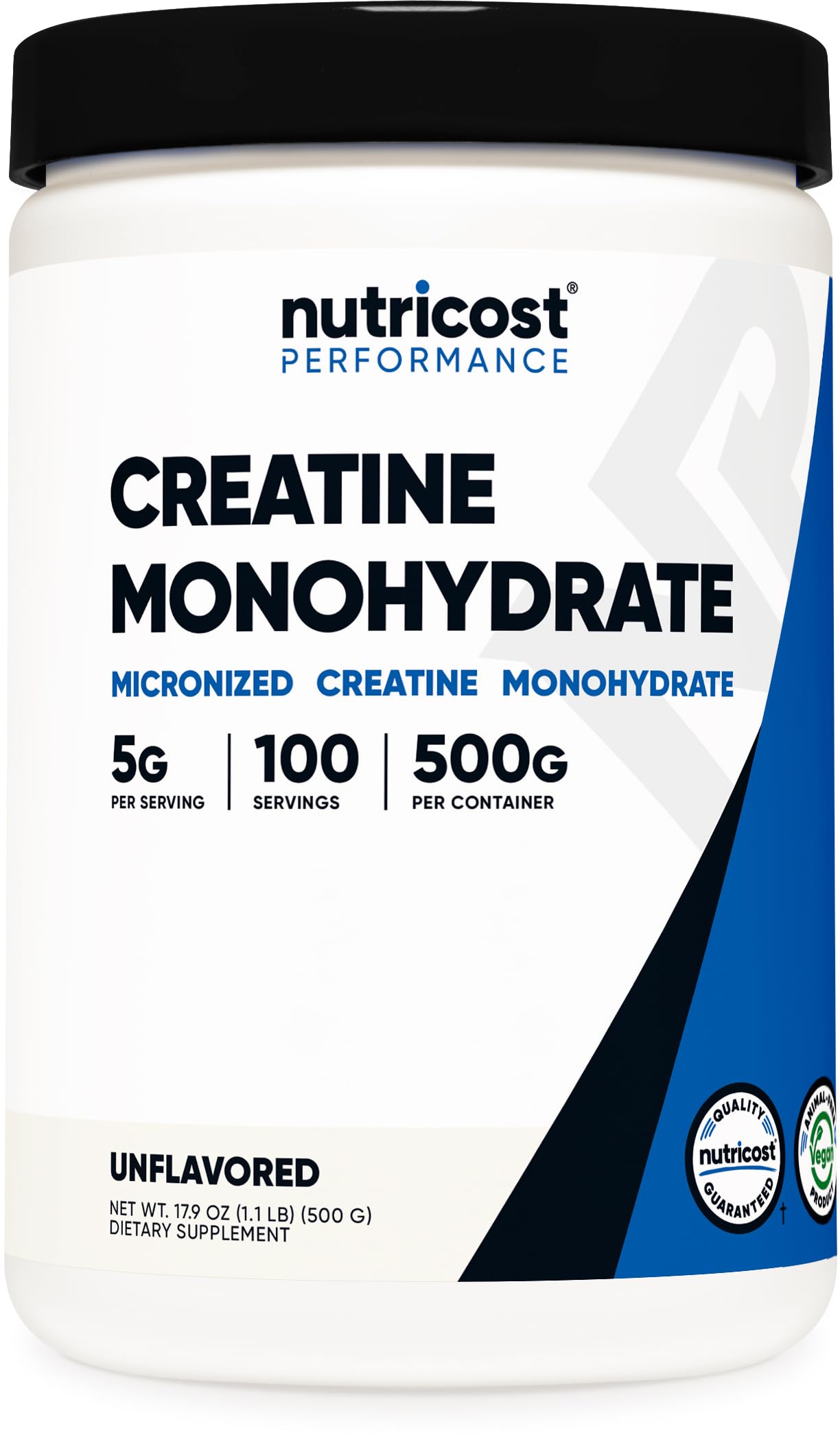
Nutricost Micronized Creatine

95 /100
Trail Score Outstanding

Key details

Flavor
Unflavored
Dietary
Non-GMO, gluten free
Servings
100
Creatine Per Serving
0.18 oz
Check Price on Amazon

Nutricost's 500 g tub is the same size and about the same money as our top pick, which makes the difference between them easy to state: it's the glass, not the powder.

The basics are all here. A 5 g scoop comes in the tub, 100 servings is more than three months of daily use, and it's a micronized monohydrate that disappears into a protein shake or a glass of juice without changing the flavor. It's non-GMO and gluten-free, and the cost per serving is among the lowest in this group.

Plain water is where it loses ground. The powder doesn't fully dissolve however long you stir, and the last third of the glass is gritty; keep the glass moving between sips and it's manageable. Some drinkers also pick up a faint bitter or salty note that the smoother powders here don't have, which is easier to miss in juice than in water.

Taken on price and servings alone, it's one of the best values in this group, and it stays in the roundup for exactly that reason. The grit is the tax, and it's a tax you can taste.

Pros

  • 100 servings at a budget price
  • Scoop included
  • Mixes into shakes and juice

Cons

  • Doesn't fully dissolve in water
  • Faint bitter or salty note for some
Our verdict

A 100-serving tub at a budget price; buy it for flavored shakes, not a plain glass of water.

Check Latest Price
7

Sport-Tested Small Tub

Klean Athlete Klean Creatine

93 /100
Trail Score Outstanding

Key details

Flavor
Unflavored
Weight
11.1 oz
Certification
NSF Certified for Sport
Creatine Per Serving
0.18 oz
Check Price on Amazon

Klean Creatine is the easiest powder here to get into solution. That sounds like faint praise until you've drunk a gritty glass of creatine before a 6 a.m. session — a scoop stirs into water, coffee, or a protein shake with a few turns of a spoon and stays suspended, and the flavor is essentially nothing.

It carries NSF Certified for Sport, the same certification Thorne holds, and the tub is 11.1 ounces, roughly two months at 5 g a day and a smaller commitment than the 500 g bags. We liked the size for a first tub: it fits on a crowded shelf and doesn't ask you to commit to four months of a powder you haven't tried.

The catch is cost per serving, which is premium here, and you'll be reordering sooner than you would with a bulk bag. What the money buys is a clean unflavored powder that mixes without argument and a certification that satisfies a drug-testing program — worth it if either of those is the thing you can't compromise on.

Pros

  • Stirs into liquid with minimal effort
  • NSF Certified for Sport
  • Small tub fits a crowded shelf

Cons

  • Premium cost per serving
  • Small tub runs out quickly
Our verdict

A certified powder that stirs in more easily than anything else here, sold in a small tub that suits a first order.

Check Latest Price
8

Blended Smoothies

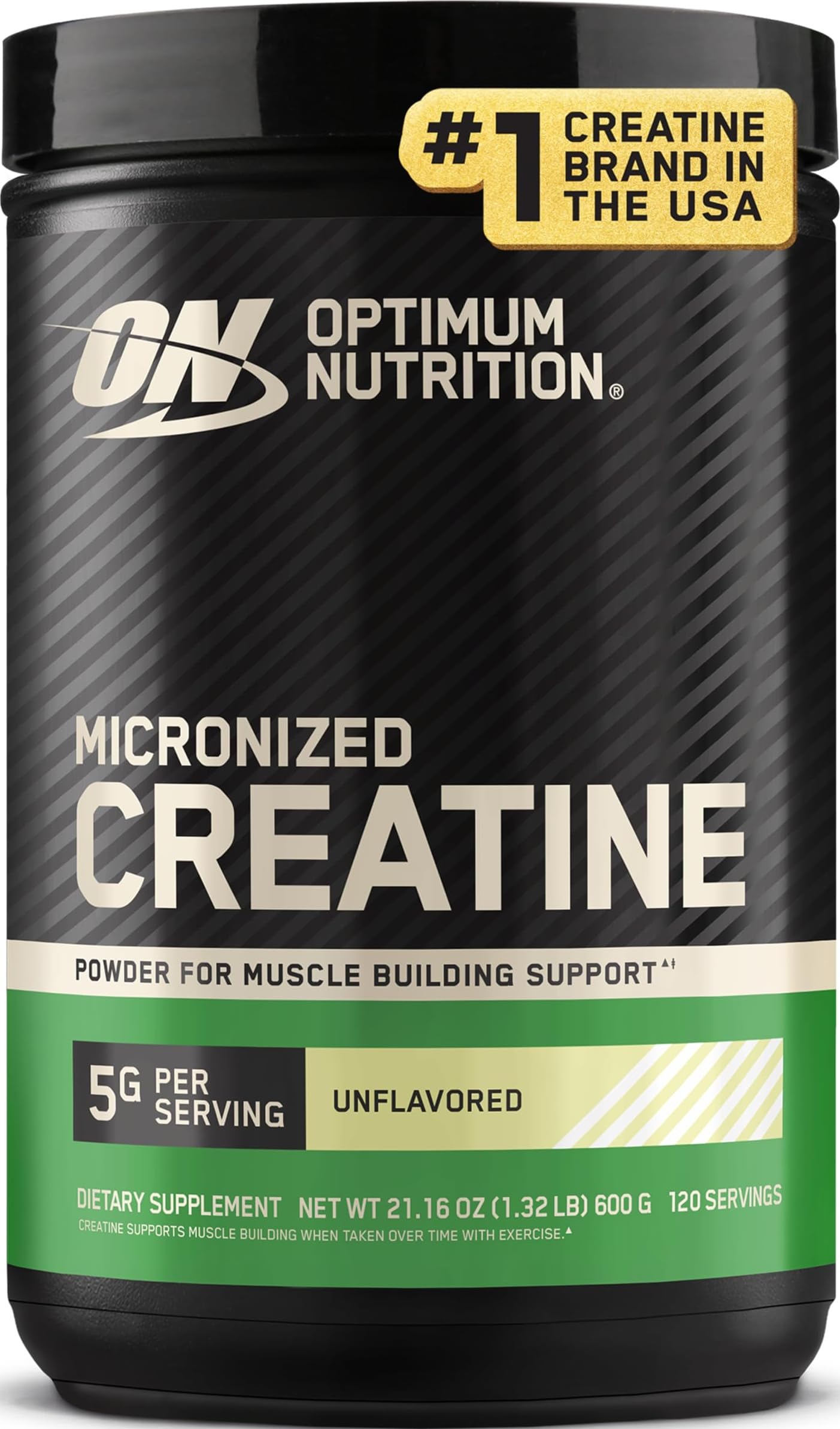
Optimum Nutrition Creatine Powder

93 /100
Trail Score Outstanding

Key details

Flavor
Unflavored
Servings
120
Testing Program
Informed Choice
Creatine Per Serving
0.18 oz
Check Price on Amazon

Optimum Nutrition's creatine is the one most people have already heard of, and it's also the grittiest powder in this group.

That matters when you drink it daily. In cold water it settles into a sandy layer at the bottom of the glass, and the texture reads as grain rather than the fine flour of the better-mixing powders here. We noticed it most in a water bottle at the gym, where there's no blender to rescue it.

Blend it with a banana and milk, or spoon it into a protein shake, and the problem mostly goes away. The tub is 120 servings at 5 g, it's unflavored, and it carries Informed Choice testing, so the serving count and the paperwork are both genuinely good.

So the recommendation comes with a condition the others don't have: if your creatine goes into a smoothie every morning, the serving count and the testing program make this a sensible buy; if it goes into a water bottle, choose almost anything else on this page.

Pros

  • 120 servings per tub
  • Informed Choice tested
  • Unflavored and blends into shakes

Cons

  • Scoop isn't always in the tub
Our verdict

Worth it only if you blend it: 120 servings and Informed Choice testing, at the cost of the grittier texture here.

Check Latest Price

How We Tested Creatine for Women

We started with a shortlist of 30 creatine powders sold for women, then narrowed it by label transparency, third-party testing, creatine monohydrate dose per scoop, added sweeteners and flavorings, and cost per serving. Price alone did not rule a tub in or out; a cheap powder that cakes after a week is not a bargain, and an expensive one still has to disappear in a glass of water. We ended up testing 16 tubs over four months.

Each tub lived in a kitchen cabinet, not a lab. We mixed one serving in eight ounces of plain water with a spoon and again in a shaker, noting how quickly the powder wetted out, how many shakes it took to clear lumps, and whether a gritty film settled at the bottom after five minutes. We also blended servings into smoothies and stirred them into cold water on busy mornings, because a creatine that only works in a blender is not one most people will keep using. The unflavored tubs were judged on taste and texture alone—any chalkiness, aftertaste, or sandy mouthfeel got written down.

Over the four months, we checked the tubs for clumping and hardening, especially after humid weeks and repeated scooping. We tracked digestion and side effects in a simple daily note—bloating, cramps, bathroom changes—and compared how each powder felt on an empty stomach versus after food. Effectiveness was judged on consistency: whether the scoop was easy to take daily, whether the dose matched the label, and whether we kept reaching for it after the novelty wore off. Value came down to cost per serving and how much powder actually made it out of the tub.

How to Choose a Creatine Supplement

Start With Monohydrate, Then Read the Rest of the Label

Creatine monohydrate is the form that carries most of the research and the cheapest raw material, and every pick here is monohydrate for that reason. The versions sold as women's formulas usually add collagen, BCAAs, biotin, or a flavor system, and the thing to check is what happened to the creatine dose while those were added. If a scoop delivers well under 5 g of monohydrate, you're paying premium money for a small amount of the ingredient you came for.

A good label is boring: one ingredient, a 5 g serving, and a number of servings you can divide into days. Add-ins are only worth it if you were going to buy them separately anyway.

Powder or Capsules? Do the Serving Math

Capsules solve a real problem — no scoop, no shaker, nothing to explain at airport security — but the dose hides in the pill count. One popular capsule bottle delivers 2.5 g in two capsules, so a full 5 g dose is four pills; another is four capsules for 5 g. Divide the capsule count by the dose before you compare prices, because per-serving cost is where capsules lose badly.

Gummies have become a popular entry point, and the same arithmetic applies: check how many pieces it takes to reach 5 g before you trade a scoop for a chew.

Mixing Is the Thing You'll Live With

Grit is the complaint that runs through this whole category, and it's mostly about particle size and temperature rather than brand quality. Micronized powders are milled finer and stay suspended longer; warm liquid does more of the work than cold, which is why so many people stir their scoop into coffee. A shaker bottle with a little space at the top beats a spoon, and a tub stored somewhere humid will start to clump no matter how good the powder is.

Judge a powder after ten minutes in a glass, not after the first stir. Naked and Klean Athlete disperse most readily of the ones we compared; Optimum Nutrition's powder is the one that needs a blender.

What Third-Party Testing Actually Buys You

NSF Certified for Sport is the strictest mark on this page: it covers label accuracy and screening for roughly 300 substances banned by major sports organizations. Informed Sport and Informed Choice are similar programs run by a different body, and Non-GMO Project verification covers something else entirely. None of them make creatine work better; they tell you an outside party checked what's in the tub.

If you compete under a drug-testing program, buy a certified product and don't think about it again. If you don't, a single-ingredient powder from a brand you trust is a reasonable place to save money, and dissolving behavior and price should decide it.

Compare Servings, Not Tub Weight

A 500 g tub is 100 days at 5 g a day, a 300 g tub is 60 days, and an 11 oz tub is about two months — so the bag that looks cheaper on the shelf can be the more expensive habit. Multiply out the days before you compare.

A smaller tub isn't a bad buy, though. If you're trying creatine for the first time, two months of powder is a sensible commitment, and it's easier to store than a kilo of anything.

Frequently Asked Questions

Final Verdict

Buy Naked's creatine if you want one tub that does the job without negotiation: one ingredient, NSF Certified, and a powder that stirs into coffee or cold water without leaving a sandy layer behind. If cost per serving is what decides it, Orgain gets you the same 5 g for less and dissolves just as cleanly.

If you won't carry a scoop, take the Sports Research capsules; if you're drug-tested, pay for Thorne or Klean Athlete. Those are the only reasons to move off the default.