Best Medicine Balls of 2026

The wrong medicine ball announces itself before you start: a slick seam, a chemical smell, or a weight that feels guessed at. The right one disappears into the workout—wall balls, Russian twists, loaded carries. Over the past four months, my team and I put 14 medicine balls through daily home-gym use, and the differences showed up fast. What this category fixes is trust: honest weight, a grip that holds when your hands are sweaty, and a surface that survives being dropped and rolled back to the wall.

The surprise isn’t how many bounce; it’s how many feel different at the same stated weight. A few arrived smelling like a tire store, and some developed a sandy grit near the seams after weeks of slams. Texture matters more than I expected—smooth balls get slick fast, while a slightly tacky surface stays put. Value here isn’t just the sticker price; it’s whether the ball still feels balanced and easy to grab in month four. The picks below are the ones that earned a spot on the rack.

1

Best Overall

Yes4All Sand-Filled Slam Ball

95 /100
Trail Score Outstanding

Key details

Shell
Textured PVC
Weight
10 lb
Diameter
9.75 inches
Ball Type
Sand-filled slam ball
Check Price on Amazon

A slam ball announces itself the first time you drop it: no bounce, no chase, just a thud and a ball sitting where it landed. That dead weight is the whole reason the Yes4All takes our top spot. You can put everything into a slam without watching the rebound, throw it overhead, chest-pass it, or set it down mid-set without it rolling into the next room.

The 10-pound version covers the widest range of home workouts: heavy enough to load a squat or a Russian twist, light enough that a beginner can hold it through a circuit. Sand inside a firm PVC shell keeps the shape round, and the raised texture gives your fingers somewhere to sit when your hands are wet. Grip is what this ball does best, and it held through sweaty sets. The line runs from 10 to 40 pounds with a one-year warranty, so progression means buying the next size up rather than changing brands.

What you trade away is a ball that settles. The sand moves inside the shell, so a hard-thrown ball can feel a beat behind your hands, and the same texture that grips will rough up bare palms; the listing itself suggests starting light and wearing non-slip gloves, which is good advice for high-volume slam days. If you are slamming for conditioning rather than precision, you will never notice the shift. Neither issue changes the recommendation.

Pros

  • Lands dead, so there is no rebound to chase
  • Textured shell holds a sweaty grip
  • Keeps its round shape under slams
  • Ten weights from 10 to 40 pounds

Cons

  • Sand shifts inside on hard throws
  • Texture roughs up bare hands
Our verdict

If you want one ball for slams, throws, squats, and core work, this is the one we reach for: dead weight that lands where you throw it, with a grip that holds.

Check Latest Price
2

Best Bounce Ball

Amazon Basics Weighted Medicine Ball

96 /100
Trail Score Outstanding

Key details

Weight
4 lb
Diameter
7.6 inches
Material
Rubber
Ball Type
Bounce medicine ball
Check Price on Amazon

Bouncy and small, this is the ball that behaves most like a basketball: 7.6 inches across, lightly textured, firm enough to come back off a wall or a garage floor. For partner passes, rebounder throws, and the old sit-up-and-toss routine, the rebound is the point, and this is the least expensive way here to get a ball that gives it to you.

Four pounds is the catch. This is a warm-up and balance weight, a ball for light core work and for learning a movement pattern before you load it, and it is not what you slam or squat. If you want one ball for strength, the Yes4All above covers that ground. What this one does well is feel familiar in the hands: the surface grips like a basketball even when you are sweating, and the small diameter suits one-hand twists and side bends.

Plan for the smell. New rubber out-gasses, and this ball is no exception; give it a few days in a garage or on a porch and wipe it down before it lives in a small room. The rest is unremarkable in the best way. One ball, ready to use, holds its shape, and cheap enough that buying a second for a partner is not a decision.

Pros

  • Rebounds off walls for partner and rebounder drills
  • Basketball-style surface stays grippy when sweaty
  • Small enough for one-hand twists and side bends
  • Least expensive bounce ball here

Cons

  • Four pounds is too light for strength work
  • Strong rubber odor when new
Our verdict

Buy this if you want a bouncy, basketball-style ball for core work and partner tosses without spending much, as long as you accept that four pounds will not build strength.

Check Latest Price
3

Best Wall Ball

ProsourceFit Soft Wall Ball

91 /100
Trail Score Outstanding

Key details

Cover
PU leather, double-stitched
Weight
8 lb
Diameter
14 inches
Ball Type
Soft stuffed wall ball
Check Price on Amazon

Fourteen inches across is the standard for wall-ball work, and the size changes how the ball handles: you catch it with both hands and your chest, not your fingertips, and a squat throw into a wall starts to feel like the drill from a class. ProsourceFit builds for exactly that, with a padded PU leather shell, double-stitched seams, and a cover that scuffs rather than tears.

Soft is the right call. A hard rubber ball thrown at a garage wall comes back fast and stings; this one absorbs a good share of the impact, which is why it is the ball to hand someone new to wall balls before a slam ball. The flip side is a cover that feels slick until it is broken in; a few sessions and a wipe between rounds get you there, and chalk helps in the meantime.

Eight pounds is a sensible class weight, and the line is color-coded so a household with two or three balls can tell them apart at a glance. Check the balance on arrival: the fill is meant to sit evenly, and a ball that feels heavier on one side will wobble on overhead throws, which is worth exchanging rather than living with. At the top of the price range, it is still the ball we point to for wall-ball work.

Pros

  • Fourteen-inch size matches class wall-ball drills
  • Padded shell absorbs impact instead of stinging
  • Double-stitched, scuff-resistant PU leather cover
  • Color-coded weights across the line

Cons

  • Slick cover until it is broken in
  • Premium price for a single ball
Our verdict

The pick for wall-ball classes and partner work: a 14-inch soft shell that soaks up impact and stays easy to catch, as long as the price does not put you off.

Check Latest Price
4

Best for Heavy Slams

ProsourceFit Slam Medicine Ball

94 /100
Trail Score Outstanding

Key details

Shell
Tread-textured PVC
Weight
15 lb
Diameter
9 inches
Ball Type
Sand-filled slam ball
Check Price on Amazon

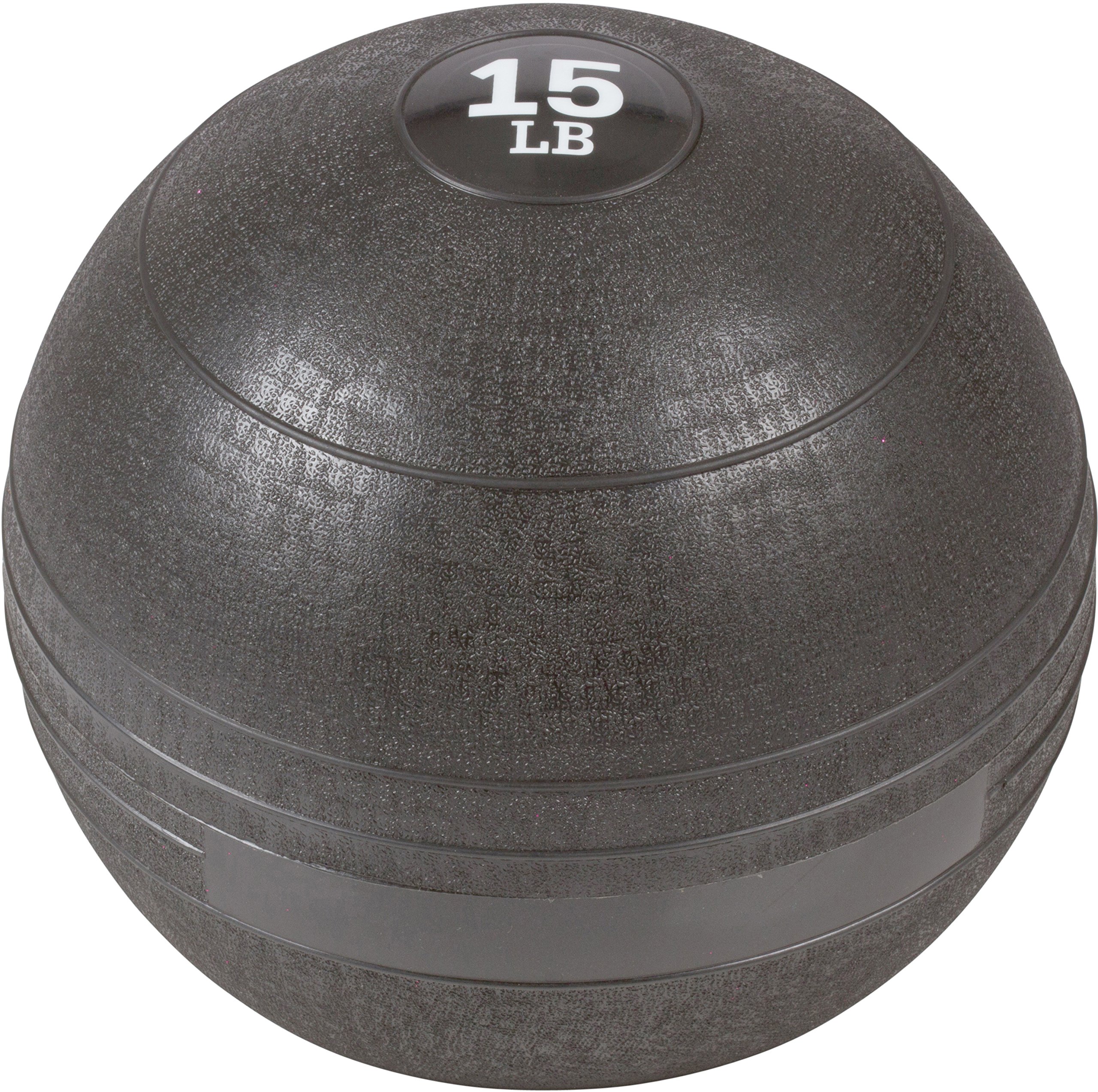
Where our top pick's texture is molded into the shell, this ProsourceFit wears a raised tire tread, deeper grooves that give your fingers somewhere to sit when your hands are wet. On paper the two balls do the same job: sand-filled, no bounce, nine inches. In the hand the difference shows up around the tenth slam of a set rather than the first.

Fifteen pounds is a good working weight for overhead slams, cleans, and over-the-shoulder tosses: heavy enough to feel like conditioning, light enough that form survives the last few reps. The line runs from 5 to 50 pounds and carries a limited lifetime warranty. It is the pick over our top pick if your hands are large or your grip gives out first.

Two caveats come with the tread. It is abrasive on bare hands, so gloves stop being optional once you are doing volume, and the sand moves enough that a hard-thrown ball feels slightly behind your hands. It also arrives slick, so give it a few sessions before you judge the grip. If you do not need the tread, our top pick is cheaper and easier on the palms.

Pros

  • Deep tread grips wet hands well
  • Fifteen pounds suits slams and overhead tosses
  • Limited lifetime warranty

Cons

  • Abrasive tread on bare hands
  • Sand shifts noticeably at this weight
Our verdict

Fifteen pounds and a tire-tread surface make this the ball for high-volume slams and over-the-shoulder throws, provided you wear gloves and accept the moving fill.

Check Latest Price
5

Best Leather Ball

Champion Sports Leather Medicine Ball

92 /100
Trail Score Outstanding

Key details

Cover
Synthetic leather, reinforced stitching
Weight
9 to 10 pounds
Diameter
7.79 inches
Ball Type
Leather medicine ball
Check Price on Amazon

There is no rubber smell. That sounds like a low bar until a new medicine ball has been out-gassing in a spare bedroom for a week, and the Champion leather ball clears it: the synthetic leather cover smells like a glove, not a tire, and it is soft enough to hug against your chest for sit-ups without the shell digging in. That combination is why it is our pick for indoor core work.

Just under eight inches across and nine pounds, it handles like a big basketball, which makes two-hand twists, wood chops, and partner tosses feel natural. The cover is reinforced at the seams and has held its shape, and the surface stays easy to hold when hands are damp. It is also the ball to reach for in a room with furniture and a wood floor, where a soft cover is kinder to everything it touches.

The catch is the weight label: this is sold as a 9-to-10-pound ball rather than an exact figure, so do not build a program around a precise load. Weigh it if the number matters to you. For everything you do holding a ball in your hands, though, it is the nicest-feeling one here.

Pros

  • Synthetic leather cover, no rubber odor
  • Soft shell comfortable against the body
  • Reinforced stitching holds its shape
  • Stays grippy with damp hands

Cons

  • Sold as a 9-to-10-pound ball, not an exact weight
Our verdict

A soft, quiet synthetic-leather ball for tosses, twists, and floor work indoors, and the one to buy if rubber smell and hard shells put you off.

Check Latest Price
6

Best with Handles

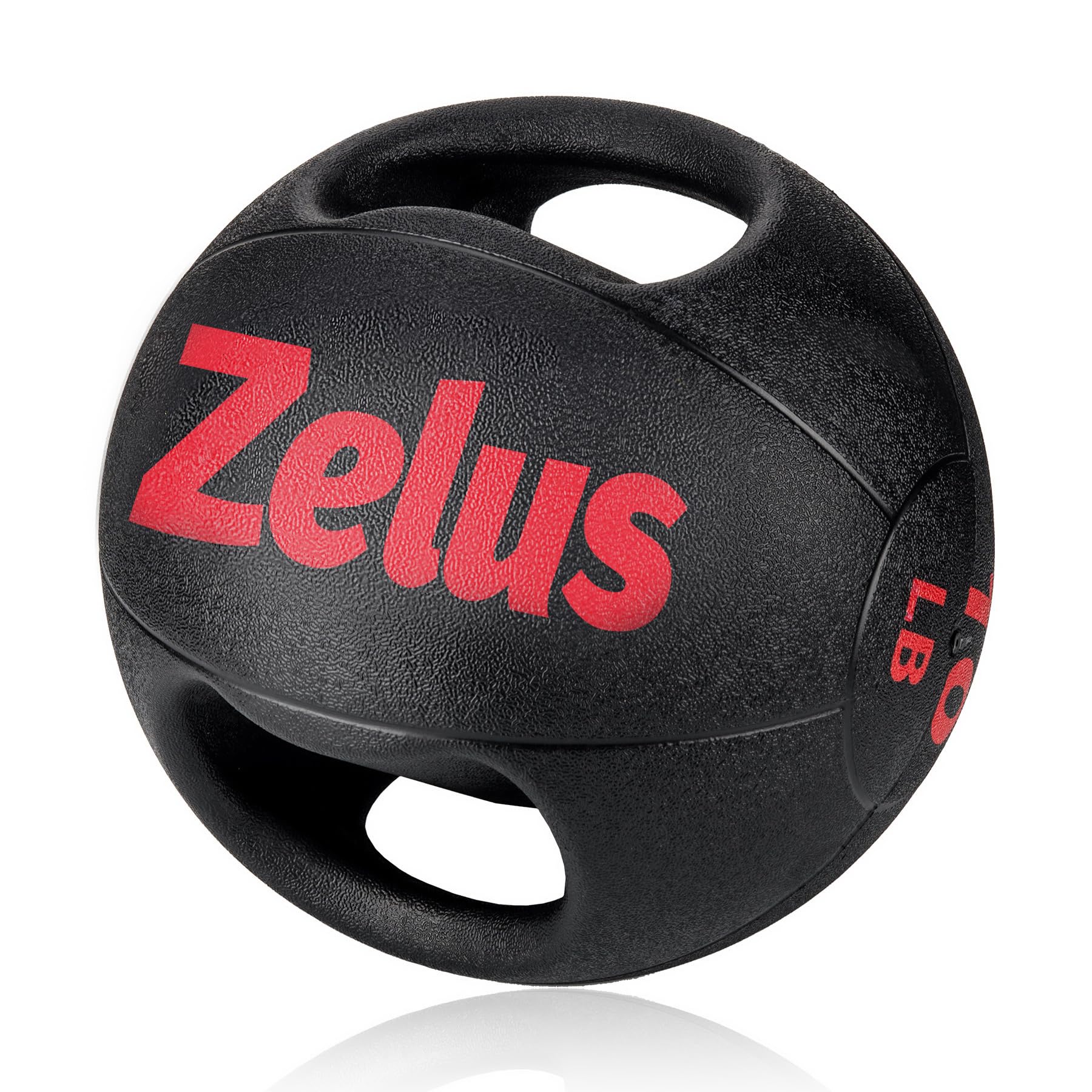
ZELUS Medicine Ball with Handles

94 /100
Trail Score Outstanding

Key details

Weight
10 lb
Diameter
14 inches
Material
Molded rubber
Ball Type
Medicine ball with handles
Check Price on Amazon

Two molded handles set into the shell change the exercise menu. Instead of cradling the ball, you grip it, which makes wood chops, Russian twists, one-arm holds, and walking lunges feel closer to kettlebell work and further from juggling. The handles are rounded and slightly flexible, so they give a little when you swing rather than biting into your palm.

At 14 inches and 10 pounds, this is a big ball. The size is what makes the handles work, since there is room for both grips and a wide stance between your hands, but it also makes the ZELUS awkward for anything compact, like a tight Russian twist or a one-hand toss. It is a home-gym tool, not a class ball.

It can also arrive smelling strongly of rubber or fuel, and that smell can linger for weeks in a closed room, so air it out in a garage and wipe it down before it goes near a bedroom. Everything else about the build feels solid: a heavy-duty molded shell, an air valve, and grips that have stayed tight through daily use.

What we keep coming back to is the grip. If your hands are small, arthritic, or just tired of chasing a slick ball across the floor, the handles justify the premium, and the ball doubles as a light weight for carries and presses. If you need something you can throw and catch, buy a round ball instead.

Pros

  • Dual handles make the ball easy to hold
  • Rounded, slightly flexible grips
  • Works for chops, twists, carries, and presses

Cons

  • Strong rubber smell that can linger
  • Fourteen-inch body is bulky for compact drills
Our verdict

The ball for anyone who finds a smooth medicine ball hard to hold: two molded grips turn it into something closer to a kettlebell for chops, twists, and carries.

Check Latest Price
7

Rehab and Youth

Champion Sports Rhino Elite Ball

93 /100
Trail Score Outstanding

Key details

Weight
2 lb
Diameter
8 inches
Material
Synthetic rubber
Ball Type
Hollow bounce ball
Check Price on Amazon

Two pounds is barely more than a full water bottle, and that is the point. The Rhino Elite is a hollow synthetic rubber ball, eight inches across, with a textured surface and enough bounce to come back to your hands off a wall. This is the ball you reach for when the goal is reps, range of motion, or throwing speed rather than load.

The bounce is modest rather than lively, which makes it predictable against a block wall or a rebounder, and the textured cover keeps it from slipping in a sweaty hand. Hollow rubber shrugs off being dropped and knocked around a gym floor, which is more than a stitched ball manages.

We like it most at the warm-up end of a session: arm circles, overhead throws, rotational tosses, and light wall slams that prime the shoulders without tiring them out. It is the size coaches hand to youth and PE groups for the same reason, heavy enough to teach a movement pattern and light enough that nobody loses form.

Where it falls short is value at the low end. A two-pound ball costs nearly as much as a ten-pound slam ball and it will not grow with you, so buy it for a specific job, whether that is rehab, throwing speed, or a kid's first ball, and let something heavier carry the strength work.

Pros

  • Light enough for high-rep shoulder work
  • Predictable, modest bounce off walls
  • Textured cover resists slipping

Cons

  • Too light for strength training
  • Costs as much as a much heavier ball
Our verdict

A two-pound ball for shoulder rehab, throwing speed, youth training, and warm-ups: not a strength tool, but the right one for high-rep, low-load work.

Check Latest Price
8

Budget Slam Work

Trademark Innovations Slam Ball

92 /100
Trail Score Outstanding

Key details

Shell
PVC
Weight
15 lb
Diameter
9 inches
Ball Type
Sand-filled slam ball
Check Price on Amazon

Fifteen pounds for less than most ten-pound balls here is the appeal, and it is a real one if you are outfitting a garage gym or buying a second ball for a training partner. The Trademark is a sand-filled PVC ball, nine inches across, with a dead weight that stays where it lands.

The shell is softer than our top pick's, and that cuts both ways. It is easier on the hands and quieter on the floor, but you can feel the fill move more, and a hard-thrown ball feels like it arrives a beat behind your hands. For conditioning work rather than precision throwing, that is a fair trade.

Grip is where it gives up the most ground. The surface is smoother than the treaded and textured balls here, and with sweaty hands it is the ball most likely to slip out of a swing; gloves or chalk fix it cheaply. The shell also goes shiny where your hands sit, which is cosmetic but worth expecting.

For the price, it does the job of a much more expensive ball, and it is the one to hand a friend who wants to try slam work without committing. If you are building a serious slam habit, step up to the Yes4All; if you just want a heavy ball to throw around, this is plenty.

Pros

  • Lowest price of any slam ball here
  • Softer shell is easy on the hands
  • Dead weight stays put between sets

Cons

  • Smoother surface slips when hands are sweaty
  • Fill shifts noticeably on hard throws
Our verdict

The cheapest way to get a 15-pound slam ball, with a softer, more pliable shell than our top pick: good for casual conditioning, less so for precision.

Check Latest Price

How We Tested Medicine Balls for Grip, Weight, and Wear

We started by scanning specs and owner reviews for medicine balls sold in common home-gym weights, then filtered out anything with vague weight tolerances, slippery-looking seams, or a price that only made sense for a commercial gym. That left 14 balls, which we used for four months in a garage gym and a spare-room workout corner. We weighed each one on a kitchen scale before the first workout and again at the end, then ran the same circuit: wall balls against a concrete wall, Russian twists on a mat, overhead carries across the driveway, and partner chest passes.

Grip and texture got checked with dry hands, then again after a set of burpees and a quick towel-off, because a ball that only works with chalk isn’t much use at home. We noted whether the surface felt tacky, slick, or rubbery and whether it stayed that way after repeated floor contact. Odor got a simple test: we sniffed each ball out of the box, then again after a week in a warm garage, and noted which smells faded versus which ones stuck around.

After driveway sessions, we rolled each ball on a clean mat and checked whether grit or sand clung to the surface and worked into the seams. Weight distribution got a low-tech check: we rolled each ball across a level floor and listened for wobble, then held it at chest height and rotated it slowly to feel for a dead spot. We also rotated them through slams, carries, twists, and partner passes to see which ones were genuinely versatile, and compared seam wear against price at the end—a cheap ball that scuffs apart early isn’t a value.

How to Choose a Medicine Ball

Start With the Fill

The biggest fork in this category is bounce versus no bounce. A hollow rubber ball, like the Amazon Basics or the Rhino Elite, rebounds off walls and floors, which is what you want for partner passes, rebounder throws, and anything where the ball comes back to you. A sand-filled slam ball lands dead, which is what makes it safe to slam and easy to live with. A stuffed soft shell, like the ProsourceFit wall ball, absorbs impact and stays catchable.

Decide which of those three you are buying before you compare weights, because no single ball does all three well. The wrong pairing is what people regret, not the wrong brand.

Pick a Weight You Can Control

Four to six pounds is warm-up, rehab, and speed work. Eight to twelve covers most core and rotational training. Fifteen and up is for slammers with some strength behind them. Buy for the exercise you do most, not the one you aspire to: a heavy ball you cannot control teaches bad mechanics, and a light ball you can move fast builds more power.

A first ball in the 10-to-15-pound range suits most adults who already train. If you are coming back from a shoulder or back injury, start lower and add a heavier ball later rather than splitting the difference.

Match the Diameter to the Job

Most medicine balls run 7 to 9 inches; wall balls are 14. The smaller sizes fit one hand for twists and side bends and are what you want for slams and rebounder work. The 14-inch ball forces a two-hand catch and a chest-level hold, which is the entire point of wall-ball drills, but it is clumsy for one-arm work and takes up real shelf space.

One ball for a class-style workout means 14 inches. One ball for everything else means 9.

Grip, Texture, and Handles

Grip separates a ball you keep using from one that sits in the corner. Deep treads and raised panels hold a sweaty hand; smooth PVC does not, and a ball that slips mid-swing is a ball you stop picking up. Aggressive texture has a cost, though, and a few of the textured balls here are rough enough on bare palms that gloves make sense for volume work.

Handles are the alternative. They make a ball easier to hold for chops, twists, and carries at the price of a catchable round shape, so decide whether you are gripping or catching before you pay for them.

Seams, Shells, and Storage

Molded PVC and rubber shells scuff and go shiny long before they fail, so a beat-up-looking slam ball is usually still fine. Stitched covers are the ones to inspect, since seams are where leather balls wear first. Sand-filled balls can leak at the fill point after repeated slams on concrete.

Store any of them on a shelf rather than a sunny patio. Heat and ultraviolet light age rubber faster than anything you do in a workout, and a ball left in a hot car will smell worse for longer.

Frequently Asked Questions

Final Verdict

Most people should start with the Yes4All slam ball. It covers the widest slice of what a medicine ball is for, from slams and throws to squats and twists, and its dead weight means you are not chasing it across the garage between sets.

If your training is wall-ball classes or partner work, buy the ProsourceFit soft ball instead, because its 14-inch shell behaves like a class ball. And if you want the bounce of a basketball, the Amazon Basics is the least expensive way to get it.