Best Liposomal Vitamin C of 2026

Vitamin C is everywhere and cheap, and a good chunk of it leaves your body almost as fast as you swallow it. Liposomal vitamin C wraps the nutrient in microscopic fat bubbles meant to shield it through digestion, so more of the dose reaches your bloodstream — ideally without the stomach cramping a big dose of plain ascorbic acid can bring. Every bottle in this category makes that promise. I've taken a daily dose for years, and my team and I just spent four months with 13 liposomal vitamin C products to see which ones actually back it up.

The catch is that "liposomal" isn't a regulated term, so two bottles using it can be built completely differently — some spell out their phospholipid content, others bury it in a proprietary blend. And the part you live with every morning matters just as much: a liquid you dread swallowing or a softgel too big to get down won't survive the first week, no matter how clean the label looks. We weighed taste, pill size, consistency, and how each one sat with us afterward, and the picks below are the ones that held up.

1

Best Overall

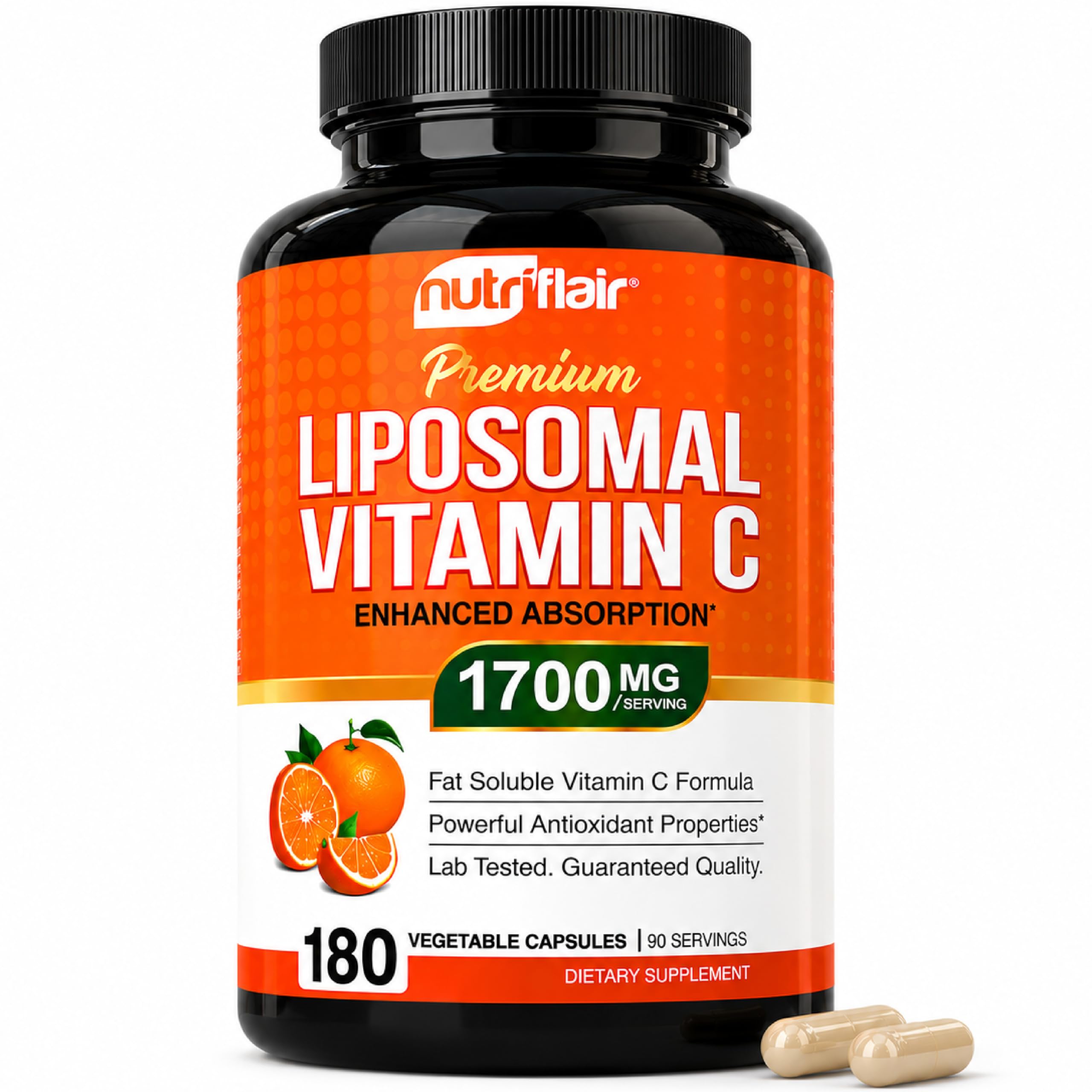
NutriFlair Liposomal Vitamin C

96 /100
Trail Score Outstanding

Key details

Form
Vegan capsule
Free From
Gluten, soy, preservatives
Capsule Count
180 capsules
Vitamin C Per Serving
1,700 mg
Check Price on Amazon

NutriFlair lists 1,700 mg of liposomal vitamin C per serving and puts 180 vegan capsules in the bottle, and that combination is why it's our top pick. The dose is high enough to feel like a serious daily supplement, while the capsule format keeps it simple: no measuring, no mixing, no syrup. We took it with breakfast and found the capsules easy to swallow, with no aftertaste or reflux.

The label is also clean in the ways that matter for a daily habit: vegan, gluten-free, soy-free, and made without preservatives. We like that it doesn't lean on a long list of extras; this is a vitamin C capsule first, not a kitchen-sink blend. If you already take other supplements, that leaves less to untangle.

The bottle is sized for daily use rather than travel, so it stays on the counter. If you want the same high-potency idea for less, Nutrivein is the obvious alternative; if you want a buffered formula, DACHA is the one we point to.

Pros

  • 1,700 mg per serving
  • Easy-to-swallow vegan capsules
  • No aftertaste or reflux in our use
  • Gluten-, soy-, and preservative-free

Cons

  • Pricier than budget softgels here
Our verdict

This is our default for a daily high-potency capsule: 1,700 mg per serving, 180 vegan capsules, and no aftertaste in our use.

Check Latest Price
2

Best Value Capsule

Nutrivein Liposomal Vitamin C

95 /100
Trail Score Outstanding

Key details

Form
Vegan capsule
Made In
USA, cGMP facility
Capsule Count
180 capsules
Vitamin C Per Serving
1,650 mg
Check Price on Amazon

Nutrivein is the closest thing to a value version of our top pick: 1,650 mg per serving, 180 vegan capsules, and a formula free of soy, gluten, and dairy. It's made in a cGMP-certified facility and lists a fat-soluble liposomal matrix, so the label gives you the basics without asking you to decode a lot of extras.

We reach for it when we want the same capsule routine for less. In our use the capsules went down easily with no aftertaste, and that makes it a sensible daily pick if you don't need the absolute highest number on the label.

NutriFlair is the one we recommend first for a daily capsule routine, while Nutrivein is the better fit if value is the deciding factor. It doesn't have a buffered claim, so if your stomach is the sensitive part of the equation, DACHA is the safer bet.

Pros

  • 1,650 mg per serving
  • 180 vegan capsules
  • Easy to swallow with no aftertaste
  • Made in a cGMP facility

Cons

  • Slightly lower dose than top pick
Our verdict

A smart value pick for the same high-potency capsule routine, with 1,650 mg per serving and 180 vegan capsules.

Check Latest Price
3

Best Buffered Capsule

DACHA Liposomal Vitamin C

95 /100
Trail Score Outstanding

Key details

Form
Vegetarian capsule
Capsule Count
200 capsules
Liposomal Source
Sunflower lecithin
Vitamin C Per Serving
1,700 mg
Check Price on Amazon

DACHA's pitch is straightforward: 1,700 mg per serving, 200 vegetarian capsules, and a buffered formula built with sunflower lecithin. That's the combination we like for anyone who wants a high-potency capsule and a little more cushion for a sensitive stomach.

The 200-capsule bottle gives it a small edge over the 180-capsule bottles here, and the buffered approach is why we point to it over a plain ascorbic acid capsule. We found the capsules easy to swallow and didn't notice an aftertaste.

It's still a capsule-first product, so it won't solve the problem if you dislike pills or want a travel packet. But for a daily bottle that sits on the counter, it's one of the most practical high-dose options in this group.

Pros

  • 1,700 mg per serving
  • Buffered with sunflower lecithin
  • 200 vegetarian capsules
  • Easy to swallow, no aftertaste

Cons

  • Large bottle, no travel size
Our verdict

The buffered capsule we choose for a sensitive stomach, with 1,700 mg per serving and 200 vegetarian capsules.

Check Latest Price
4

Best 100-Day Supply

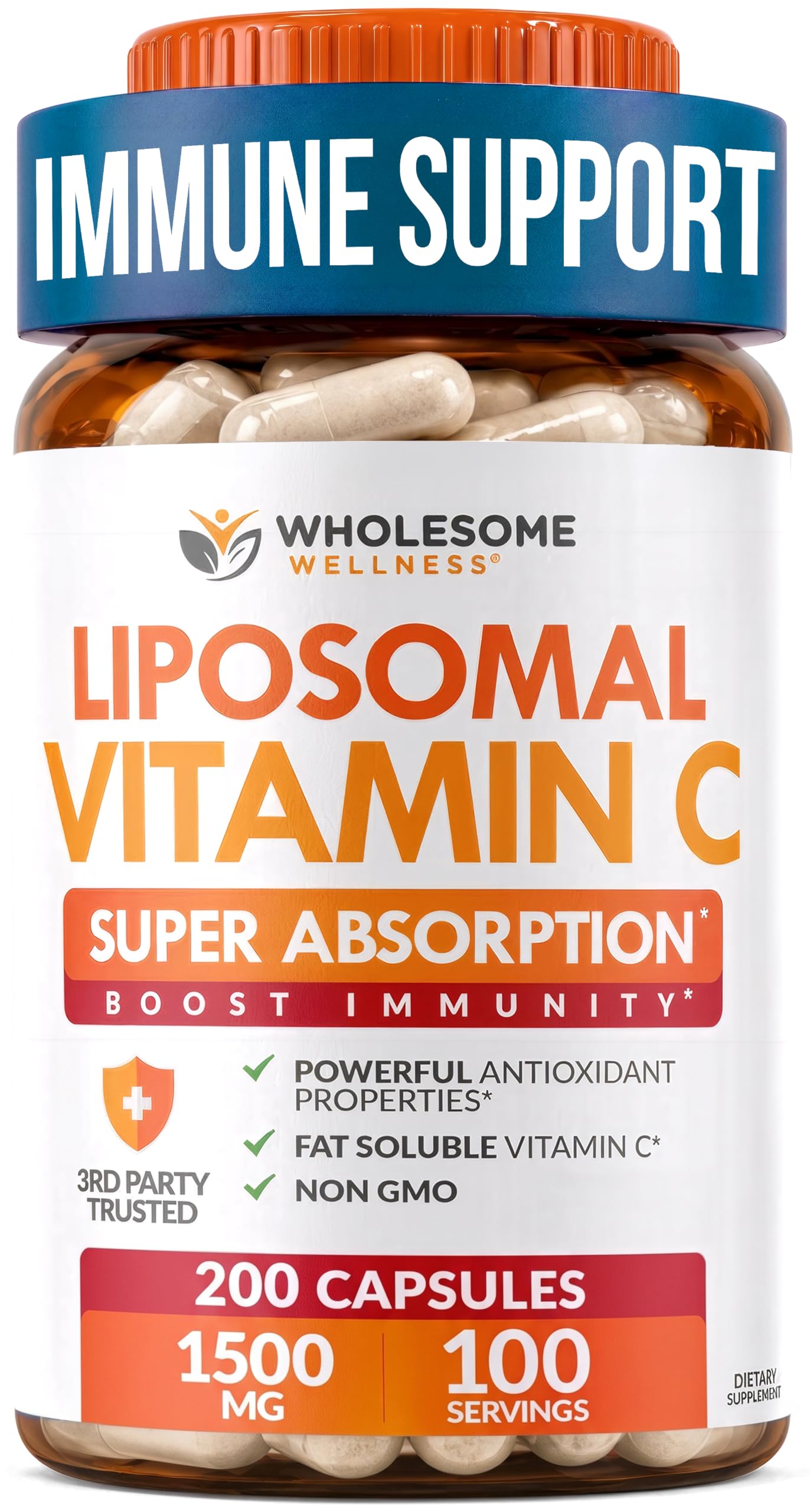
Wholesome Wellness Liposomal Vitamin C

95 /100
Trail Score Outstanding

Key details

Form
Buffered capsule
Capsule Count
200 capsules
Stated Supply
100 days
Vitamin C Per Serving
1,500 mg
Check Price on Amazon

Wholesome Wellness states a 100-day supply from 200 capsules at 1,500 mg per serving, which is the longest stated supply in this group. That's a different kind of convenience: you're not reordering every month, and the bottle is sized for a routine rather than a trial.

The formula is buffered with sodium ascorbate and sunflower phospholipids, and it's non-GMO, soy-free, gluten-free, and vegetarian. We found the capsules easy to take and gentle on the stomach, which is the main reason to choose a buffered capsule in the first place.

The trade-off is the dose. At 1,500 mg per serving, it's below the 1,700 mg options here, so it's not the pick if the biggest number is the priority. But if you want a long-running bottle that's easy to tolerate, this is the one we keep on the shelf.

Pros

  • Stated 100-day supply
  • Buffered sodium ascorbate formula
  • Gentle on the stomach
  • 200 vegetarian capsules

Cons

  • No smaller bottle for travel
Our verdict

A long-running buffered bottle for daily use, with 1,500 mg per serving and a stated 100-day supply.

Check Latest Price
5

Best Packets for Travel

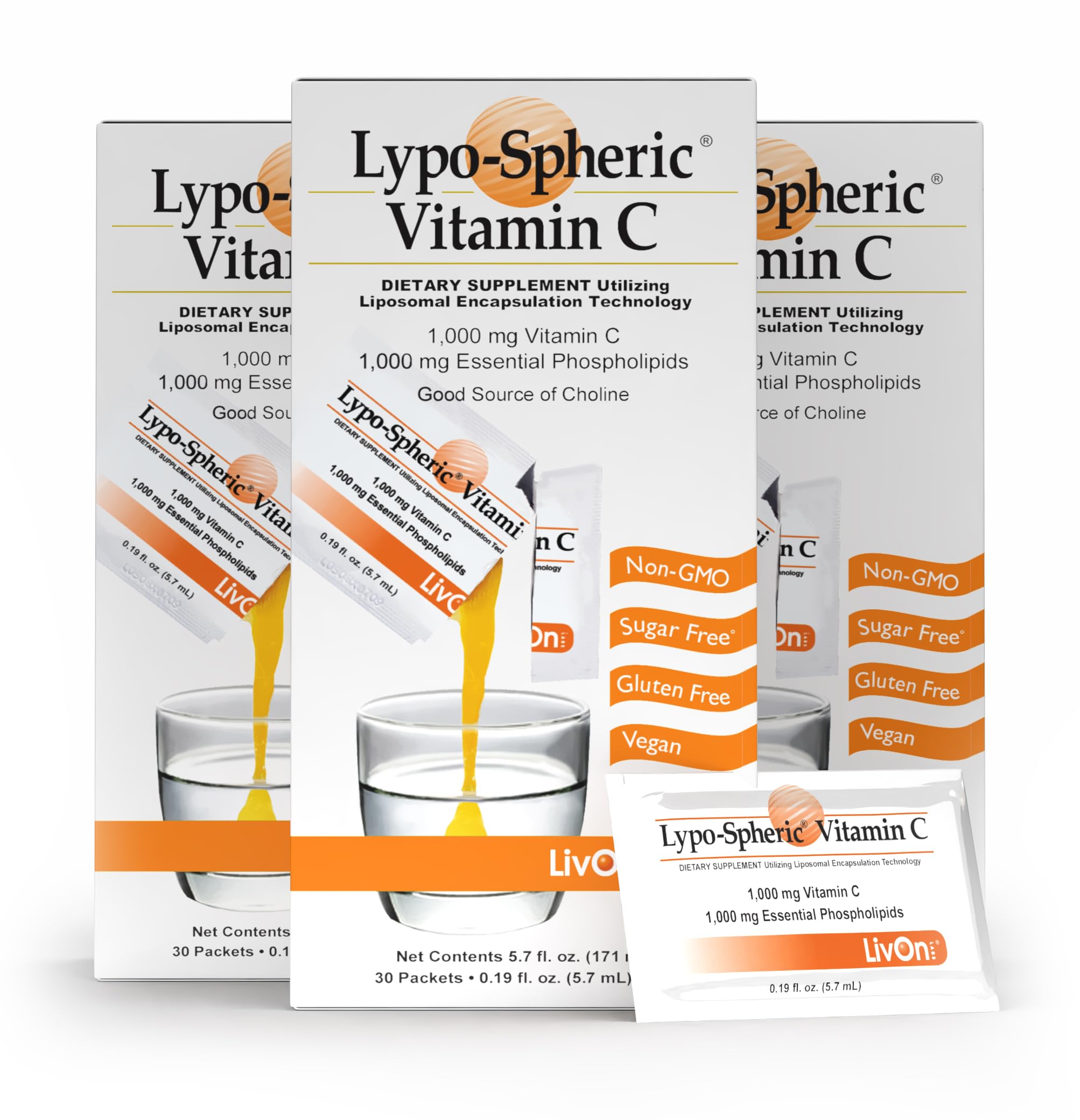
LivOn Lypo-Spheric Vitamin C

93 /100
Trail Score Outstanding

Key details

Form
Liquid packet
Packet Count
90 packets
Vitamin C Per Packet
1,000 mg
Phospholipids Per Packet
1,000 mg
Check Price on Amazon

LivOn's Lypo-Spheric packets are the pick for anyone who wants a pre-measured dose without a capsule: each packet holds 1,000 mg of vitamin C and 1,000 mg of essential phospholipids. You tear, squeeze into water or a cool drink, and you're done.

We like the packet for travel because there's nothing to count and nothing to swallow. The flavor is the catch. It's a concentrated liquid, and we found it needs a full glass of something cold rather than a quick sip; if you want a neutral drink, this isn't it.

The 90-packet carton is a premium commitment, and it's the most expensive format in this group. What you get for that is the most explicit phospholipid amount here and a dose that's already measured. If you'll use the packets, that's a fair trade; if you won't, a capsule is simpler.

Pros

  • Pre-measured 1,000 mg packets
  • 1,000 mg phospholipids per packet
  • No pills to swallow
  • Vegan and non-GMO

Cons

No notable drawbacks to flag.

Our verdict

The packet pick for travel and pre-measured doses, with 1,000 mg vitamin C and 1,000 mg phospholipids per packet.

Check Latest Price
6

Best Liquid for Pill Avoiders

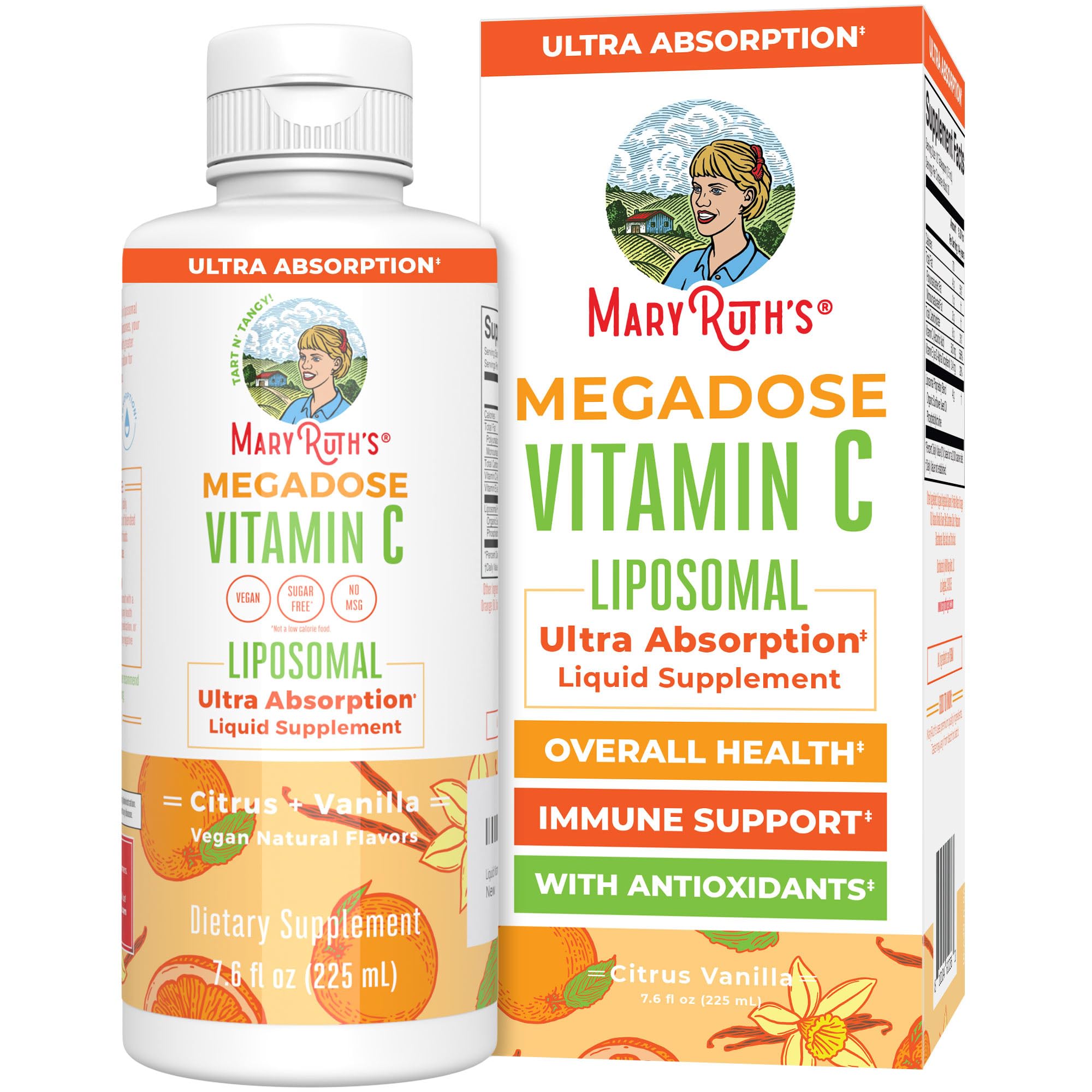
MaryRuth's Liposomal Vitamin C

92 /100
Trail Score Outstanding

Key details

Diet
Vegan, sugar-free
Form
Liquid
Servings Per Bottle
30 servings
Vitamin C Per Serving
500 mg
Check Price on Amazon

MaryRuth's Megadose is a liquid, not a capsule, and that's the whole reason to consider it: 500 mg of liposomal vitamin C per serving in a bottle you can measure and take without swallowing a pill.

The flavor is sweet and citrusy, and it's easy to take straight from a spoon. The texture is thick and syrupy, though, so we prefer to stir it into a smoothie or a glass of water rather than take it neat.

The 500 mg serving is the trade-off. It's well below the 1,500 mg and 1,700 mg capsules here, so it's not the pick if you want a high single dose.

For a pill-averse household, though, that's still a useful trade. We like it as a liquid option for someone who needs the format to stay consistent, and the clean-label, vegan formula is easy to fit into a daily routine.

Pros

  • Liquid format for pill avoiders
  • Pleasant sweet citrus flavor
  • Vegan and sugar-free
  • 500 mg per serving

Cons

  • Only 30 servings per bottle
Our verdict

A liquid option for pill avoiders, with 500 mg per serving and a sweet citrus flavor that's easy to work into a routine.

Check Latest Price
7

Softgel Fans

Core Med Science Liposomal Vitamin C

92 /100
Trail Score Outstanding

Key details

Form
Softgel
Softgel Count
270 softgels
Vitamin C Source
Scottish
Vitamin C Per Serving
1,000 mg
Check Price on Amazon

Core Med Science puts 1,000 mg of liposomal vitamin C into a softgel and packs 270 of them into the bottle. That's the softgel pick in this group, and the count makes it a long-running bottle rather than a sampler.

The formula uses vitamin C sourced from Scotland and is non-GMO. The softgel is a smooth one-piece pill, which some people find easier than a capsule, and we found it goes down with a full glass of water.

The softgel format won't suit everyone, but if you already prefer softgels and want a big supply, it's an easy one to stay with; if you don't, a capsule is the better route.

Pros

  • 270 softgels per bottle
  • 1,000 mg per serving
  • Non-GMO formula
  • Smooth softgel

Cons

  • Large softgels
  • Premium price
Our verdict

A premium softgel for people who already prefer softgels, with 1,000 mg per serving and 270 in the bottle.

Check Latest Price
8

Budget Softgels

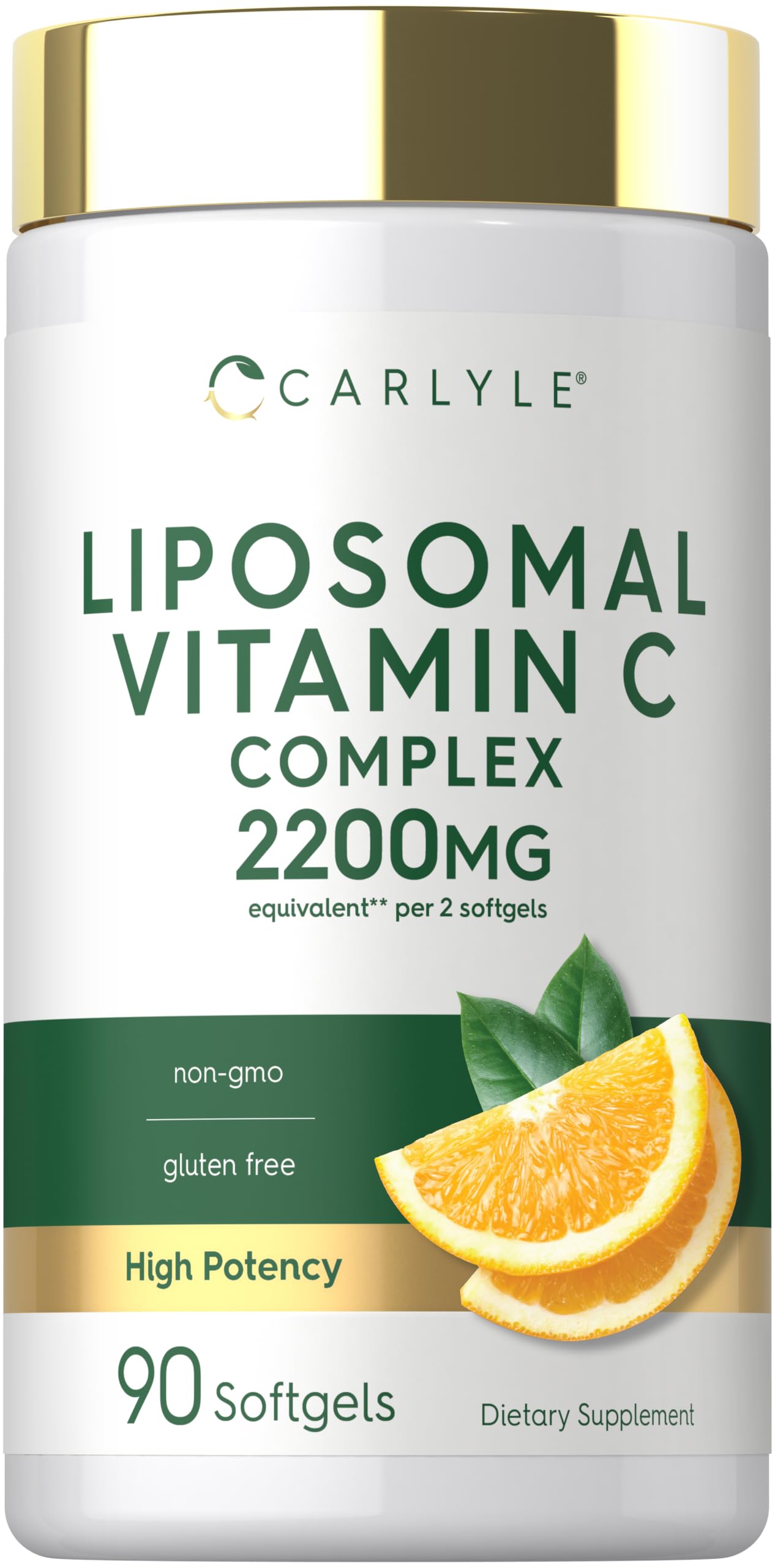
Carlyle Liposomal Vitamin C

93 /100
Trail Score Outstanding

Key details

Form
Softgel
Free From
Gluten, wheat, yeast
Softgel Count
90 softgels
Vitamin C Per Serving
2,200 mg
Check Price on Amazon

Carlyle lists 2,200 mg per serving and 90 softgels, which makes it the highest-dose softgel here and the budget entry in this group.

The formula is non-GMO and free of gluten, wheat, yeast, milk, lactose, artificial flavor, and artificial sweetener. That's a lot of exclusions for a budget softgel, and it's the reason we kept it in the mix rather than treating it as a low-cost afterthought.

The softgels are large, but the coating is smooth enough to help them go down, and the taste is minimal.

For a high dose at the lowest outlay, this is the one we point to. It does the budget job without asking you to settle for a low dose, and that's the reason it stays in the guide.

Pros

  • 2,200 mg per serving
  • Budget softgel
  • Free of gluten, wheat, and yeast
  • Smooth coating

Cons

  • Smaller bottle than capsule picks
Our verdict

The budget softgel for a high dose, with 2,200 mg per serving and 90 softgels in the bottle.

Check Latest Price

How We Tested Liposomal Vitamin C

We started with labels, not marketing. I pulled every liposomal vitamin C product I could find from mainstream supplement brands, then narrowed by three things: the actual milligrams of vitamin C per serving, whether the label named its phospholipid source instead of hiding behind a proprietary blend, and whether the maker mentioned third-party testing or a GMP facility. I also compared cost per 1,000 milligrams, which quietly eliminated several bottles that were mostly water and flavoring. That left 13 products, and I bought each one at full retail.

For four months, I took one product at a time for at least two weeks, same time each morning, and kept a running log. I noted whether liquids poured thin or gloppy and whether they needed a hard shake first, how sweet or metallic they tasted, and whether a capsule went down with a normal sip of water or needed two. I took some doses on an empty stomach and some with breakfast to see which ones caused cramping, bloating, or a replayed orange aftertaste an hour later.

Effectiveness and immune support are the hardest things to pin down in a supplement, so I watched the boring signals: whether I actually finished the bottle, whether I skipped days, and how I felt through a stretch of office colds in February. I checked the label dose against what the scoop or dropper really delivered per serving, counted how many honest servings were in each container, and weighed that against what I paid. The bottles that survived were the ones I didn't have to talk myself into taking.

How to Choose Liposomal Vitamin C

Choose the form around your routine

Capsules and softgels are the easiest daily habit: no measuring, no taste, and they travel well. We prefer capsules for most people because they're simple to swallow and easy to keep on the counter. Softgels can be a good option if you already like them, but they tend to be larger, and the 2,200 mg Carlyle softgels are a good example of that trade-off.

Liquids and packets solve a different problem. MaryRuth's liquid is the pick if pills are a barrier, while LivOn's packets are the best fit for travel or a pre-measured dose. They ask more of you on taste and cost, so choose them for the format, not because the label sounds more advanced.

Read the dose and serving size together

A big milligram number on the front label means little until you check the serving size. The high-potency capsules here list 1,500 mg to 1,700 mg per serving, while MaryRuth's liquid lists 500 mg. That's a real difference if you want a single daily dose, but only if you know how many capsules or softgels make a serving.

Look at the back for both numbers, then compare the bottle count. A 200-capsule bottle can last longer than a 90-softgel bottle even if the doses look similar. The 100-day supply on Wholesome Wellness is stated on the label, which makes that comparison easier.

Look past the word liposomal

Liposomal is a delivery format, not a guarantee. The useful detail is what the formula uses to form the liposomes: DACHA and Wholesome Wellness list sunflower lecithin or phospholipids, while LivOn lists 1,000 mg of essential phospholipids per packet. If a label is vague about that, we treat the claim as less informative.

Buffered formulas use sodium ascorbate rather than straight ascorbic acid, and that's the version we point to for a sensitive stomach. It won't make a high dose disappear, but it's a more comfortable starting point. If you have a medical condition or take medication, check with a clinician before adding a high-dose product.

Match the bottle to your budget and storage

Value is not the same as a low bottle price. Divide what you pay by the number of servings you'll actually get, then compare that with how often you'll reorder. Carlyle is the budget softgel, but it holds 90 softgels; the 180- and 200-capsule bottles cost more up front and last longer. Neither is automatically the better deal.

Storage matters too. Capsules and softgels are easy to keep in a cupboard; liquids and packets take up more space and may be less convenient to travel with. We keep the daily bottle where we'll see it, because consistency is the whole point of a supplement routine.

Frequently Asked Questions

Final Verdict

NutriFlair is the bottle we recommend first: 1,700 mg per serving, 180 vegan capsules, and a formula that's easy to take every day without an aftertaste. It's the best default for a daily capsule routine, and the midrange price is easier to justify than the premium softgels.

The exception is format. If you won't take capsules, MaryRuth's liquid is the better fit; if you want a pre-measured dose for travel, LivOn's packets are worth the trade in taste and cost.