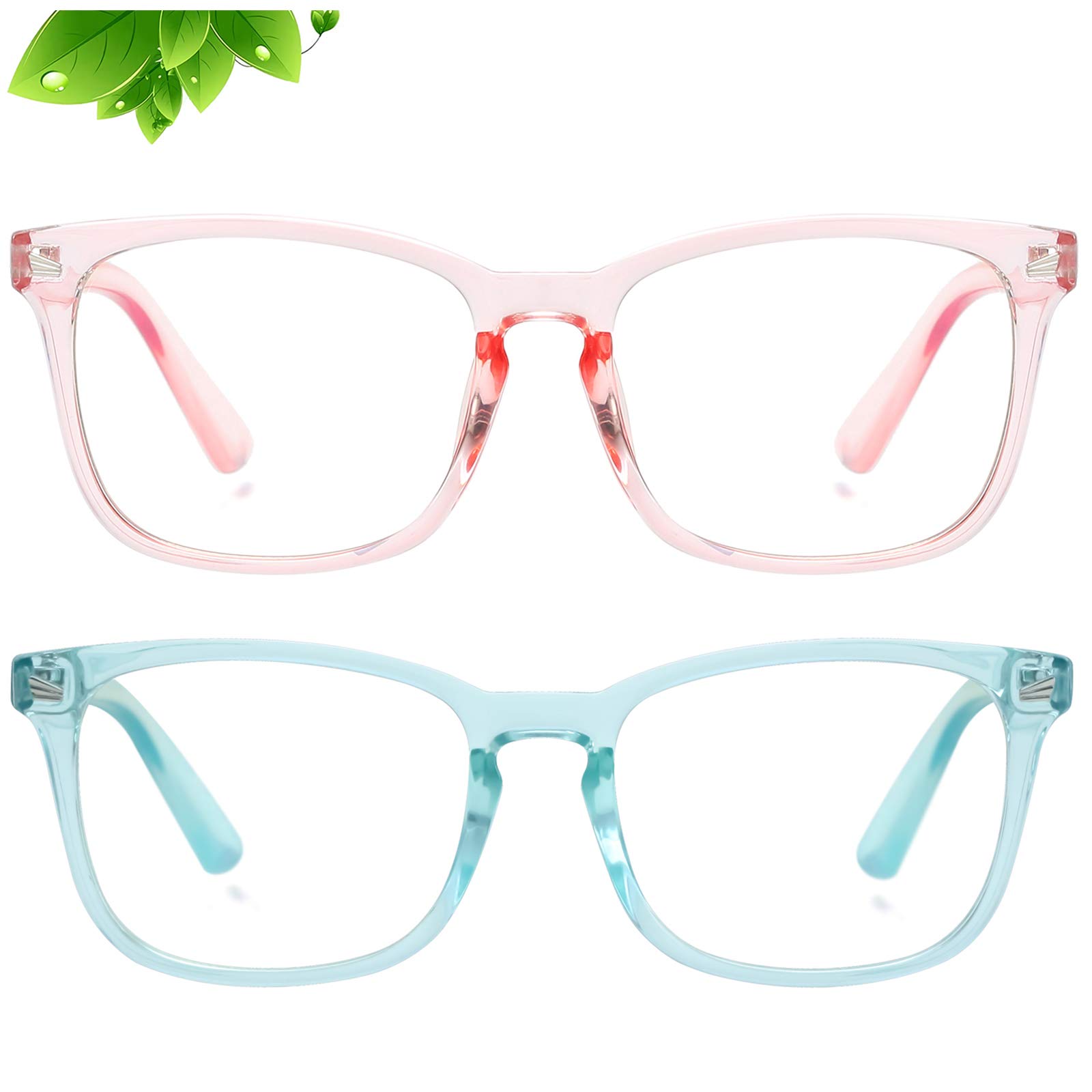
Best Kids Blue Light Glasses of 2026

The first time my daughter shoved her blue light glasses up her nose for the third time in ten minutes, I knew the pair was a dud. She wasn’t squinting at the tablet anymore — she was fiddling. A good pair of kids’ blue light glasses should mostly disappear: staying put through homework, car-ride screen time, and the nightly scramble to finish a chapter before lights-out, while actually easing the glare that makes kids rub their eyes after a long session.

Over four months, my team and I rotated 14 pairs through our own kids’ routines, from after-school homework to video calls with grandparents. The biggest surprise wasn’t the lenses but the frames: a pair can have flawless blue-light filtering and still get abandoned if the bridge pinches or the temples slide. We also learned that “one size” rarely fits a 5-year-old and a 10-year-old, and that kids notice appearance — color, shape, whether a pair looks babyish — long before they notice lens quality. Below are the pairs that earned a spot in backpacks and bedside drawers, not the junk drawer.

1

Best Overall

SEEAFUN Kids Blue Light Glasses

95 /100
Trail Score Outstanding

Key details

Age Range
3–12 years
Frame Material
TR90
Blue-light Range
400–440 nm
Included Accessories
Car case, test card, strap, screwdriver
Check Price on Amazon

The car-shaped case is the first thing we noticed, and it does more than look cute: it gives a kid a reason to put the glasses away instead of leaving them face-down on the couch. The kit also includes a blue-light test card, a mini screwdriver, and an adjustable elastic strap. That combination is why the SEEAFUN is our top pick.

The frame is TR90, the flexible material most kids' pairs here use, and the lens is listed as blocking blue light from 400 to 440 nm while staying clear. We care less about a dramatic blocking number than about whether the lens stays clear and the frame stays on. The adjustable strap is the detail that gives this pair an edge with a 3- or 4-year-old who is still learning to keep glasses in place.

The age range is 3 to 12, and the TR90 frame is more forgiving than a stiff plastic one. We like that the strap gives you a second way to secure the pair during a long tablet session, and the car case makes it easy to toss the glasses in a backpack without treating them like a precious object. The test card is a one-time check, but it is a satisfying one for a kid who wants proof that the lenses are doing something.

The mini screwdriver is the one part to keep out of a preschooler's reach; it is useful for a loose hinge, but it belongs in an adult's drawer, not in the case. For a first pair, though, the SEEAFUN is the most complete package here: a wearable frame, a way to keep it on, and a place to put it when screen time ends.

Pros

  • Complete kit with case, strap, and test card
  • Flexible TR90 frame suits younger kids
  • Broad 3–12 age range
  • Lightweight and comfortable for screen sessions

Cons

  • Fit still varies within the wide age range
Our verdict

We recommend the SEEAFUN pair first because it packs the most useful extras into one set, and the adjustable strap helps it stay on younger kids.

Check Latest Price
2

Best for Younger Kids

AHXLL Kids Blue Light 2-Pack

93 /100
Trail Score Outstanding

Key details

Age Range
3–9 years
Nose Pads
Silicone
Pack Count
2 pairs
Frame Material
TR90
Check Price on Amazon

Two pairs for roughly the price of one of the single-pair picks here is the practical appeal. The AHXLL set also has a soft TR90 frame, silicone nose pads, and a blue-light test strip, so it arrives as a ready-to-use starter kit rather than a bare pair of glasses.

That combination is why we like it as the preschool pair: the flexible frame is more forgiving than a stiff one, and the silicone nose pads are less likely to leave a red mark after a long episode of a favorite show. The two-pack matters, too. A lost pair does not end screen time for the week, and the spare can live in the car or a grandparent's house.

The lenses are clear and non-prescription, and the set comes in transparent purple and pink. These are not fashion frames; they look like kids' glasses, which is fine for the age group. The test strip is a nice touch because a child can see the lens react under the light and feel like the glasses are doing something.

The transparent colors are easy to match with a backpack or a jacket, and the spare pair is the detail that makes this set feel practical rather than precious. The frame is not the most grown-up-looking pair here, but for a 4-year-old, that is not the point.

Pros

  • Two pairs for siblings or backups
  • Soft TR90 frame with silicone nose pads
  • Includes a blue-light test strip
  • Clear lenses in purple and pink

Cons

  • Narrow fit at the top of its age range
Our verdict

We reach for the AHXLL two-pack with preschoolers: the soft frame and included test strip make it an easy, low-stress starter pair.

Check Latest Price
3

Best Everyday School Pair

Pro Acme Kids Blue Light Glasses

93 /100
Trail Score Outstanding

Key details

Lens
Blue-light blocking
Age Range
3–12 years
Frame Claim
Unbreakable
Check Price on Amazon

The Pro Acme frame is the closest thing here to a pair of everyday glasses. It is slim, low-profile, and does not announce itself as a blue-light accessory, which matters to a 9- or 10-year-old who is already self-conscious about wearing something different from their friends.

The frame is listed as unbreakable, and the light build is a real advantage for school-age kids who keep glasses on through homework, reading, and a movie. The age range runs 3 to 12, but the shape feels better suited to the older half of that span. The slim temples are the part that makes it look less like a kids' novelty pair and more like something an older child will leave on.

What we like most is the fit for a narrower school-age face. The frame stays close without the exaggerated wrap of some kids' sport frames, and the appearance is clean enough that it does not look like a toy. The slim temples are the difference for a child who has outgrown a preschool frame but is not ready for an adult pair.

The appearance is a step above the cartoonish end of the category. If your child wants to blend in, this is the pair we point to first. The slim shape is easier to wear with a school uniform or a hoodie than the chunkier frames here, and that is worth more than another feature on a spec sheet.

Pros

  • Slim, everyday look older kids accept
  • Lightweight frame for school-day wear
  • Good fit on narrower faces
  • Age range covers 3 to 12

Cons

  • Unbreakable label overpromises durability
Our verdict

We recommend the Pro Acme for school-age kids who want a slim pair that looks like everyday eyewear rather than a toy.

Check Latest Price
4

Best Three-Pack for Families

Okany Kids Blue Light 3-Pack

93 /100
Trail Score Outstanding

Key details

Age Range
3–10 years
Pack Count
3 pairs
Lens Coating
7-layer anti-reflective
Frame Material
TR90
Check Price on Amazon

Three pairs in one box is not automatically a good deal; it is only useful if the pairs are worth wearing. The Okany set makes its case with a 7-layer anti-reflective lens coating, which is more than most kids' glasses here bother to list.

The frame is TR90, so it bends rather than cracking like a rigid plastic frame, and the set comes in enough colors to assign one pair to each child. The lenses are listed as blocking blue light from 400 to 440 nm, and the anti-reflective coating is the feature we appreciate most: it cuts the reflection of a bright screen, which is the thing that makes kids tilt their heads or push glasses up their nose.

The three-pack makes sense for siblings, a classroom spare, or a pair that lives in the car. A single child does not need three identical frames unless losing them is a regular event, and the set is not the most fashion-forward option here. The rectangular shape is neutral enough to suit most kids, but it is still a kids' frame.

What tips it for us is the combination of a coated lens and a box that takes the panic out of a lost pair. The coating is the detail that makes it feel less like a bulk buy and more like a pair we are happy to hand out. If you are outfitting two or three kids in the early grades, this is the least fussy way to do it.

Pros

  • Three pairs for siblings and backups
  • 7-layer anti-reflective lens coating
  • Flexible TR90 frame
  • Clear lenses with stated 400–440 nm blocking

Cons

  • Fit varies across the 3–10 age claim
Our verdict

We recommend the Okany three-pack when one household needs spares for siblings, backpacks, and school, with anti-reflective lenses that cut glare.

Check Latest Price
5

Best Low-Profile Frame

AZorb TR90 Square Kids Glasses

93 /100
Trail Score Outstanding

Key details

Frame Claim
Unbreakable
Frame Shape
Square
Frame Material
TR90
Check Price on Amazon

The AZorb pair is the one for a kid who does not want to look like they are wearing a blue-light accessory. The frame is square and low-profile, and the lenses are clear rather than noticeably yellow, so they read as ordinary glasses.

That is the reason it earns a place here: the shape is grown-up without being adult-sized, and the TR90 frame is light enough to forget about during a homework session. We also like that the lens is described as clear with no distortion; a blue-light lens that makes a worksheet look fuzzy is worse than no lens at all.

The TR90 frame is flexible, and the square shape adds presence without going oversized. The pair feels more like everyday eyewear than a piece of screen-time equipment, which is the point for a kid who is self-conscious about wearing glasses at all.

What we keep coming back to is the lens. A clear, low-tint lens is the difference between a pair a kid will wear in public and one they will take off the moment a friend sees them. The AZorb is not the cheapest or the most feature-packed pair here, but it is the one that looks least like a compromise.

Pros

  • Low-profile square frame looks grown-up
  • Clear lenses with no yellow cast
  • Flexible TR90 construction
  • Light enough for all-day wear

Cons

  • Narrow fit won't suit wider faces
Our verdict

We recommend the AZorb for kids who want a low-key square frame and clear lenses without a yellow cast.

Check Latest Price
6

Best Budget Fit

KUGUAOK Kids Blue Light 2-Pack

92 /100
Trail Score Outstanding

Key details

Age Range
4–12 years
Arm Length
132 mm
Lens Width
48 mm
Bridge Width
17 mm
Check Price on Amazon

Most kids' glasses listings give you an age range and leave it there. The KUGUAOK listing gives a 48 mm lens width, a 17 mm bridge, and a 132 mm arm length, which is the kind of information that turns a fit guess into a real comparison. That is why it earns a spot as our fit-first budget pick.

The frame is silicone, not TR90, and the lenses are polycarbonate. That combination gives you a soft, flexible feel rather than a rigid, structured one. The pair is built for a light fit, and the silicone frame is the part that makes it feel different from the TR90 sets here.

The two-pack comes in pink and green, and the age range is 4 to 12. The measurements are the more useful guide: compare the 132 mm arm length with a pair that already fits, and check the 17 mm bridge against the child's nose. A 4-year-old and a 12-year-old can both fall inside the label, but they will not share the same frame.

What we like about this pair is that it gives you a way to decide before you buy, not after. The silicone frame is soft rather than armored, so it is a better match for a child who treats glasses gently than for one who stuffs them loose into a backpack. If you are replacing a pair that already fits, the numbers make this the easiest budget set to size correctly.

Pros

  • Published lens, bridge, and arm measurements
  • Soft silicone frame
  • Two-pack for backups
  • Low-cost way to try a measured fit

Cons

No notable drawbacks to flag.

Our verdict

We recommend the KUGUAOK two-pack when fit is the sticking point: the published lens, bridge, and arm measurements let you compare against a pair that already works.

Check Latest Price
7

Color Variety

FANNYGO Kids Blue Light 3-Pack

92 /100
Trail Score Outstanding

Key details

Age Range
3–10 years
Pack Count
3 pairs
Temple Length
127 mm
Frame Material
TR90
Check Price on Amazon

Not every kid wants a pastel pair. The FANNYGO set comes in black, dark blue, and light blue, which is a small thing until you are negotiating with a 7-year-old who has rejected every pink frame in the house.

The frame is TR90 and bendable, and the temples are elastic, so the pair is built for active daily use rather than desk-only screen time. The listing gives a 127 mm temple length, which is a useful number to compare against a pair that already fits.

What we like is the color strategy: three pairs in shades that read as ordinary glasses, not toys. That makes them easier to wear to school or a friend's house, and the three-pack means one can live in a backpack without the whole set disappearing. The elastic temples are the detail that makes them feel more secure than a standard pair.

The lenses are clear rather than strongly tinted, so they do not change the look of a screen or a worksheet. If your child resists glasses because they feel babyish, the black-and-blue trio is a better bet than a cartoon case and a lot of fuss.

Pros

  • Three blue-and-black color options
  • Elastic temples help prevent slipping
  • Bendable TR90 frame
  • Stated 127 mm temple length

Cons

  • Runs small at the top of its age range
Our verdict

We recommend the FANNYGO set for kids who refuse pastels: three blue-and-black pairs with elastic temples and a bendable TR90 frame.

Check Latest Price
8

Classic Look

Outray Classic Rectangle 2-Pack

93 /100
Trail Score Outstanding

Key details

Pack Count
2 pairs
Frame Shape
Classic rectangle
Lens Feature
Replaceable
UV Protection
UV400
Check Price on Amazon

The Outray pair is a classic rectangle, the kind of frame that looks like it came from an optician's display rather than a toy bin. The lenses are also replaceable, which is unusual in this group: if the frame survives and the lenses do not, you are not necessarily throwing the whole pair away.

The set includes two pairs in blue and green, and the frame is described as ultra-lightweight and flexible. The UV400 claim is useful for daytime screen use, though these are not sunglasses and should not be treated as sun protection.

The rectangular shape is the reason to choose this one. It suits a child who wants a more grown-up look, and the two colors are easy to live with. The fit is the usual kids'-frame guess, so check the temple length against a pair that fits; the frame is not a one-size answer for every 8-year-old.

What we like is the combination of a grown-up shape and a lens you can replace. It is not the pair for a preschooler, but for a careful older kid who wants something that looks like real eyewear, it is a smart alternative to the more cartoonish frames here. The blue-and-green set is the one to pack for a trip, because the rectangle shape is less likely to be dismissed as babyish.

Pros

  • Classic rectangle shape looks like real eyewear
  • Replaceable lenses extend frame life
  • Two-pack in blue and green
  • UV400 protection

Cons

  • Frame durability is mixed under rough handling
Our verdict

We recommend the Outray pair for the classic rectangle look, with replaceable lenses that make it easier to keep the frame in service.

Check Latest Price

How We Tested 14 Pairs of Kids’ Blue Light Glasses

We began by rounding up more than 40 pairs from brands sold at major retailers and specialty kids’ shops, then narrowed the field by age range, bridge and temple measurements, lens clarity, frame material, and whether replacement parts were available. We dropped any pair that claimed to fit every kid from preschool through middle school without offering actual size options, and we made sure our final 14 spanned budget and mid-range price tiers.

For four months, kids ages 4 to 11 wore the glasses during homework, tablet time in the car, video calls, and bedtime reading. Parents logged how often the frames slid down the nose, whether the temples left red marks, if kids asked to take them off, and whether they reached for the glasses without being reminded. We also checked lens clarity by looking through each pair at a printed page under warm and cool light, and asked kids to rate appearance — color, shape, whether they felt “cool” wearing them. Effectiveness came down to whether kids rubbed their eyes or squinted less after an hour of screen time.

Durability got its own abuse test: we dropped each pair from table height, stuffed them loose in backpacks, and gently bent the hinges and temples to see if they sprang back. We noted loose screws, scratched lenses, and frames that yellowed or snapped. At the end, we compared what each pair delivered against its price — did the cheaper options hold up, and did the pricier ones justify the upgrade? The winners stayed on, survived, and got worn without a fight.

How to Choose Kids Blue Light Glasses

Start With the Frame, Not the Age Range

Age labels are a rough guide, not a measurement. A 3-to-12 pair can fit a preschooler and a fifth grader very differently, and the most common disappointment in this category is a frame that is too narrow at the top of its stated range. Compare the lens width, bridge, and temple length against a pair your child already wears. The KUGUAOK set publishes a 48 mm lens width, 17 mm bridge, and 132 mm arm length, which is more useful than an age band. If you cannot measure, buy from a seller with an easy return policy.

Look for Clear Lenses and a Real Coating

A blue-light lens can be clear or noticeably yellow. For schoolwork and video calls, we prefer a clear lens with an anti-reflective coating; it keeps colors natural and cuts the reflection of a bright screen. The Okany set lists a 7-layer anti-reflective coating, which is the kind of detail worth paying attention to. A blue-light test card can show that the lens blocks the included light, but it cannot tell you whether the frame will stay on or whether your child will keep it on. Treat the card as a check, not a guarantee.

Flexibility Is a Durability Feature

TR90 and silicone frames bend instead of snapping, which is why they turn up in so many kids' pairs. That flexibility helps with rough handling, but the hinges and lens edges are still the parts that fail first. Look for a frame that flexes without feeling hollow, and plan on a case even if the pair comes with one. A mini screwdriver can tighten a loose hinge, but it is not a repair kit for a cracked frame. Treat any unbreakable claim as a description of intent, not a guarantee.

Decide How Many Pairs You Actually Need

One child usually needs one pair and a case; a two- or three-pack makes more sense when there are siblings, a school spare, or a child who loses glasses regularly. The AHXLL two-pack is a sensible preschool set, while the Okany three-pack suits a household that wants a pair in the car and a pair in each backpack. Do not buy a multi-pack before you know the fit. If you are trying a brand for the first time, start with one pair, confirm the temple length, and then stock up.

Frequently Asked Questions

Final Verdict

For most families, the SEEAFUN pair is the one to buy first: it has the most complete kit, an adjustable strap for younger kids, and a frame that suits a wide age range. If your child is a preschooler, the AHXLL two-pack is the better fit; if you need three pairs for siblings or backups, the Okany set is the practical choice. Measure before you size up, because the age labels here are a starting point, not a guarantee.