Best Insoles for Flat Feet of 2026

Standing at a wedding reception, I caught myself shifting weight foot to foot, chasing that dull ache along the inside of my arch that flat feet produce after two hours on a hard floor. A good insole doesn't fix your foot, but it gives the arch somewhere to land, softens the heel strike, and stops your foot from rolling inward step after step. My team and I spent four months in 14 pairs finding the ones that actually do that.

The lesson I keep relearning is that soft and supportive are not the same thing. A squishy pair feels wonderful for a week and then pancakes under your arch, while a firm one can feel like a plank until it warms to your foot. Insoles also eat shoe volume, so a thick pair can turn a roomy sneaker into a cramped one. The picks below are the ones that held their shape, stayed put, and made standing at the end of a long day noticeably easier.

1

Best Overall

PowerStep Pinnacle Maxx

91 /100
Trail Score Outstanding

Key details

Heel
Angled, firm and flexible
Made In
USA
Designed For
Flat feet and overpronation
Support Type
Maximum stability
Check Price on Amazon

A flat foot rolls inward, and the correction has to happen in two places: under the arch and behind the heel. The PowerStep Pinnacle Maxx is one of the few insoles here built around both, pairing a firm contoured arch with an angled heel that sits the back of the foot in a slightly corrected position. That heel angle is the detail that earns it the top spot — most insoles prop up the arch and let the rearfoot do whatever it likes.

Firm is the operative word. The support doesn't squash under a heel strike, which is the point when the arch collapses, and there's enough of a top layer that it never feels like standing on a shelf. It's cut to your shoe size rather than trimmed with scissors, so the fit out of the box is the fit you keep. Ours went into lace-up shoes and work boots, where the heel counter gives the rearfoot something to sit against.

Where it pulls ahead of the cheaper picks is over a full day. Standing on concrete for a shift is the use this insole was designed for, and it's the one we point to for anyone who has been quoted a price for custom orthotics and hesitated. Plantar fasciitis is covered too: a firm, deep arch takes load off the band under the foot instead of just padding the heel.

The adjustment is real. A firm arch announces itself for the first few days, so wear a new pair around the house for an evening or two before committing to a long shift. Once it settles, what we noticed is how little we thought about our feet by the end of the day, which is the whole point of buying an insole.

Pros

  • Angled heel helps check inward roll
  • Firm arch that holds through a shift
  • Closest to a custom orthotic here
  • Sized like a shoe, no trimming

Cons

  • Premium price against most picks here
Our verdict

If your arches collapse and your ankles roll inward, this is the pair we hand people first: firm support, an angled heel, and enough durability to survive a work week.

Check Latest Price
2

Best for Tight Shoes

PowerStep Original

91 /100
Trail Score Outstanding

Key details

Arch
Contoured neutral arch
Profile
Low-profile full length
Heel Cup
Deep cradle
Shoe Fit
Tighter-fitting shoes
Check Price on Amazon

Most flat-foot insoles fail at the shoe, not the foot. A full-length orthotic in a slim sneaker lifts the heel until the laces stop closing, and in a dress shoe it turns a comfortable fit into a clamp. The PowerStep Original is built for that exact problem: the lowest-profile full-length insert here, at 2.4 ounces, sliding in under the factory footbed without changing how the shoe fits.

We keep this one for the shoes that won't take anything else. The arch is contoured and firm rather than soft, the heel cradle is deep enough to center the foot, and the whole thing is thin enough to vanish under a leather upper. It's a modest shape rather than a rebuilt foot, and the support doesn't fold under a long day.

Expect a firm ride. There's a thin cushion under the heel and very little under the forefoot, and the first few wears feel unyielding. Pair it with a shoe that has its own midsole foam and the impression fades within a week; put it in a hard-soled oxford and you'll feel every curb and doorstep. That's the trade for a profile this low.

Pros

  • Low profile that fits slim shoes
  • Deep heel cradle centers the foot
  • Light enough to forget it's there

Cons

  • Neutral arch won't correct severe overpronation
Our verdict

For slim sneakers, dress shoes, and anything with no room to spare, this is the flat-foot insole we reach for: thin, firm, and shaped like a foot rather than a cushion.

Check Latest Price
3

Most Durable

Superfeet All-Purpose Medium Arch

91 /100
Trail Score Outstanding

Key details

Heel Cup
Cradled, shock absorbing
Wear Life
Up to 12 months or 500 miles
Arch Support
Medium
Best Activity
Running and everyday
Check Price on Amazon

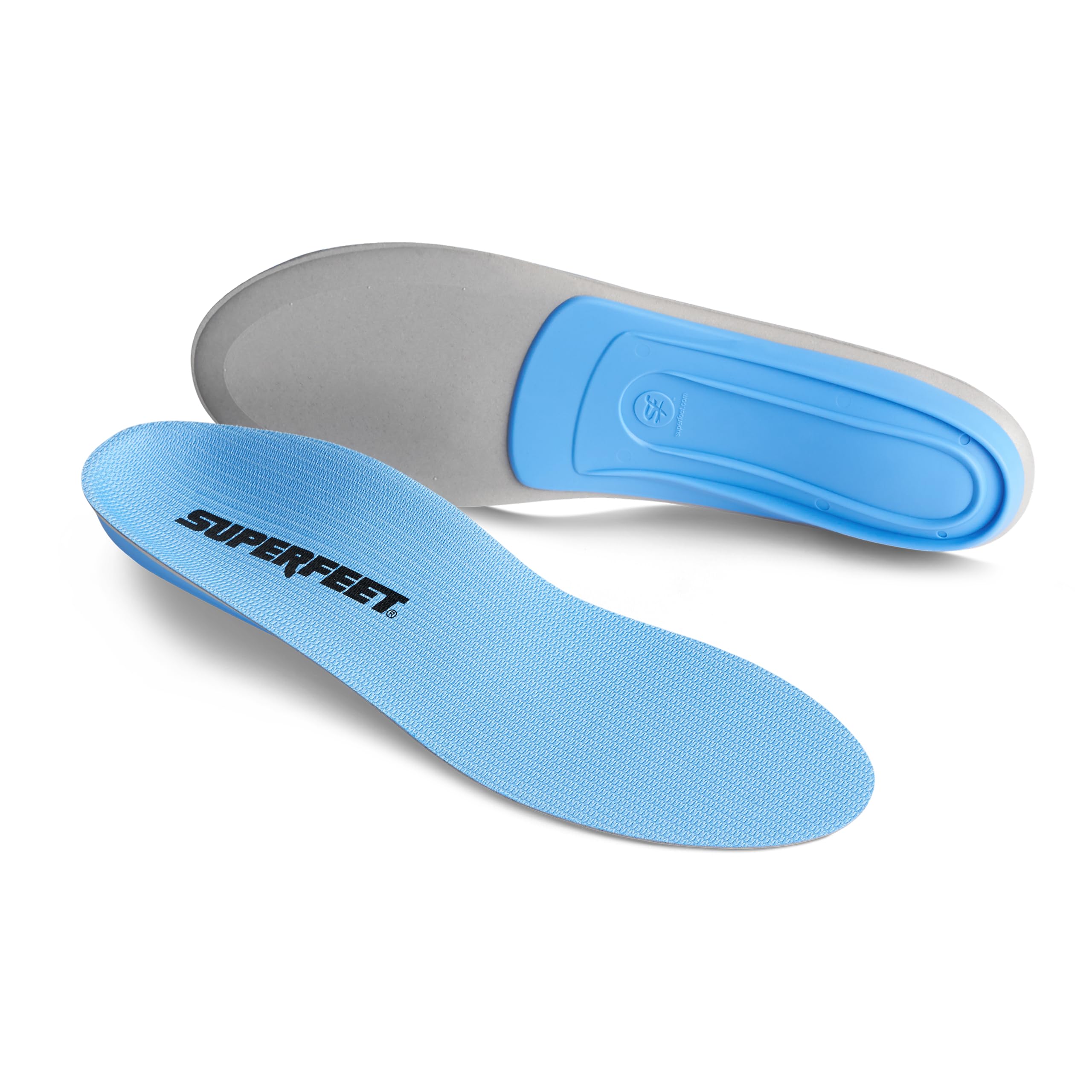
Superfeet's best-known insole is the high-arch one, and it's the reason some flat-footed people give up on the brand: it sits so high under the midfoot that a low arch never settles onto it. This is the medium-arch version of the same idea, and it's the one shaped for feet like yours.

Support here is a gentle contour rather than a ramp, with a heel cup that cradles the back of the foot and takes the sting out of hard floors. The foam is dense rather than gel-soft, so it keeps its shape instead of packing out, and the top surface is smooth enough that it doesn't grab a sock. It's a full-length insert, so it wants a shoe with a removable factory footbed.

The first week is the price of admission. The arch feels like a lump under the foot at first, and then it stops — the support fades into the background after a few days of wear. Past that, it's the longest-lived insole here, rated for up to 12 months or 500 miles, and the one we leave in a pair of shoes rather than shuttling between bags.

Pros

  • Medium arch low feet can settle onto
  • Deep heel cup absorbs impact
  • Rated for up to a year or 500 miles

Cons

  • Most expensive pair in this roundup
Our verdict

If you want one pair to live in a single shoe for a year, this medium-arch insole is it: supportive without the ramp-like feel that turns flat-footed people off high-arch inserts.

Check Latest Price
4

Best for Heavier Wearers

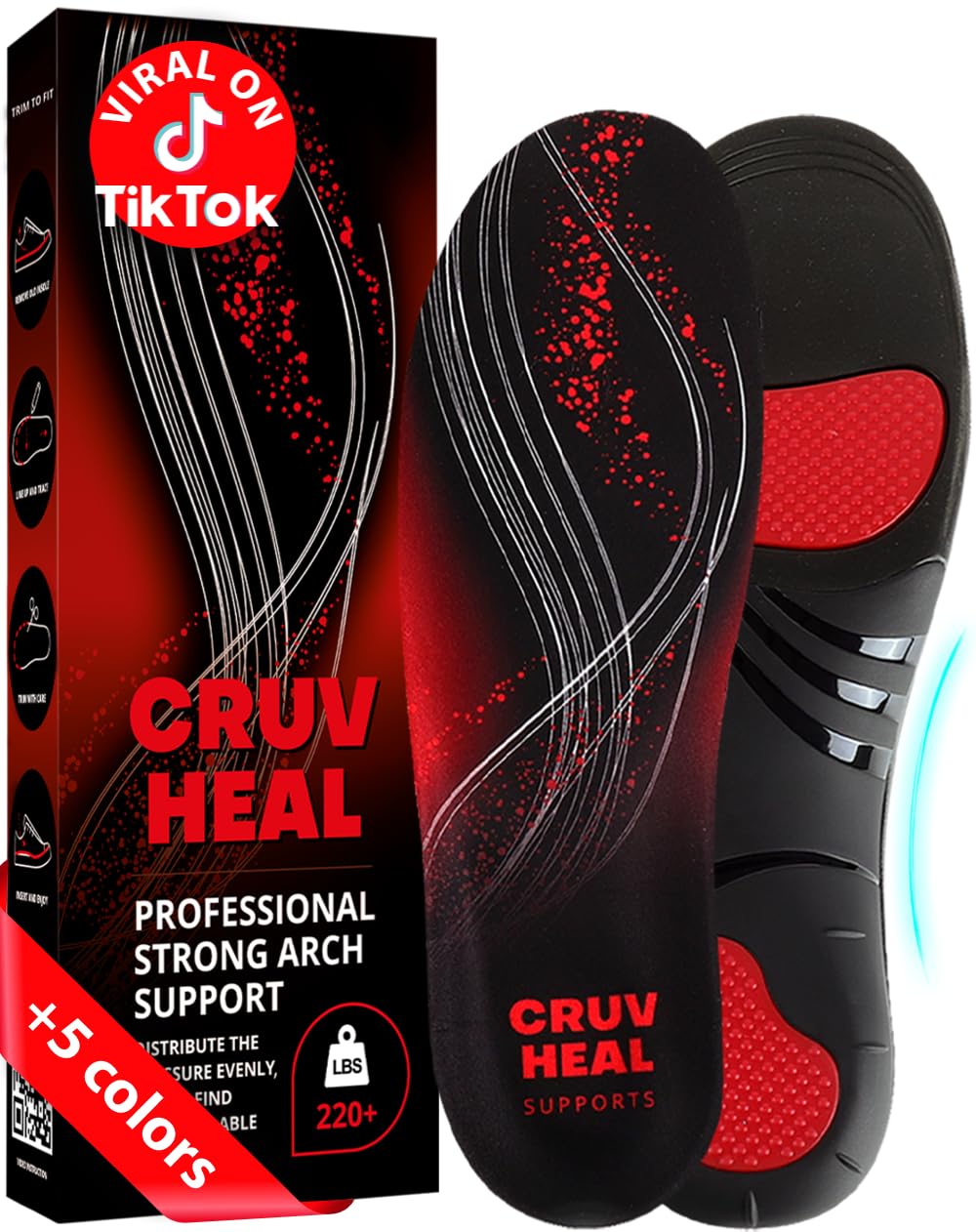
CRUVHEAL 220+ lbs Orthotic

88 /100
Trail Score Excellent

Key details

Cushioning
Shock-absorbing gel pads
Arch Height
1.4 inches
Weight Rating
220+ lbs
Support Period
1 year
Check Price on Amazon

A 1.4-inch arch is a serious amount of lift, and the CRUVHEAL pairs it with a rating for bodies over 220 pounds, a combination that usually costs more than this one does. That's why it's our pick for heavier wearers: the shell holds its shape under weight instead of flattening into the shoe, and the arch keeps pushing back at the end of a long day.

Gel pads are what make it livable. A tall, firm arch with nothing under the heel is punishing, and the cushioning at the back and under the ball takes the edge off hard floors. The shell is heavy in the hand at just over nine ounces, which is the price of a frame that doesn't fold — this is not an insole for a featherweight racing shoe.

Fit is the thing to get right. The arch is tall enough that a shallow shoe will feel crowded, so put it in something with a removable footbed and some depth: work boots, a roomy walking shoe, a court shoe. Use the size chart rather than guessing, since the insole is sized to the shoe, and check the length against your old footbed before the first long walk.

Pros

  • Rated for bodies over 220 pounds
  • 1.4-inch arch gives real lift
  • Gel pads soften heel and forefoot
  • One year of maker support

Cons

  • Needs a few days to feel normal underfoot
Our verdict

For a heavier frame that flattens cheap insoles, this is the pair we point to: a tall, weight-rated arch with gel padding, at a price that leaves room for a second set.

Check Latest Price
5

Best Budget

WalkHero Arch Support

88 /100
Trail Score Excellent

Key details

Heel
Deep heel cup
Material
EVA
Designed For
Wider, high-volume shoes
Check Price on Amazon

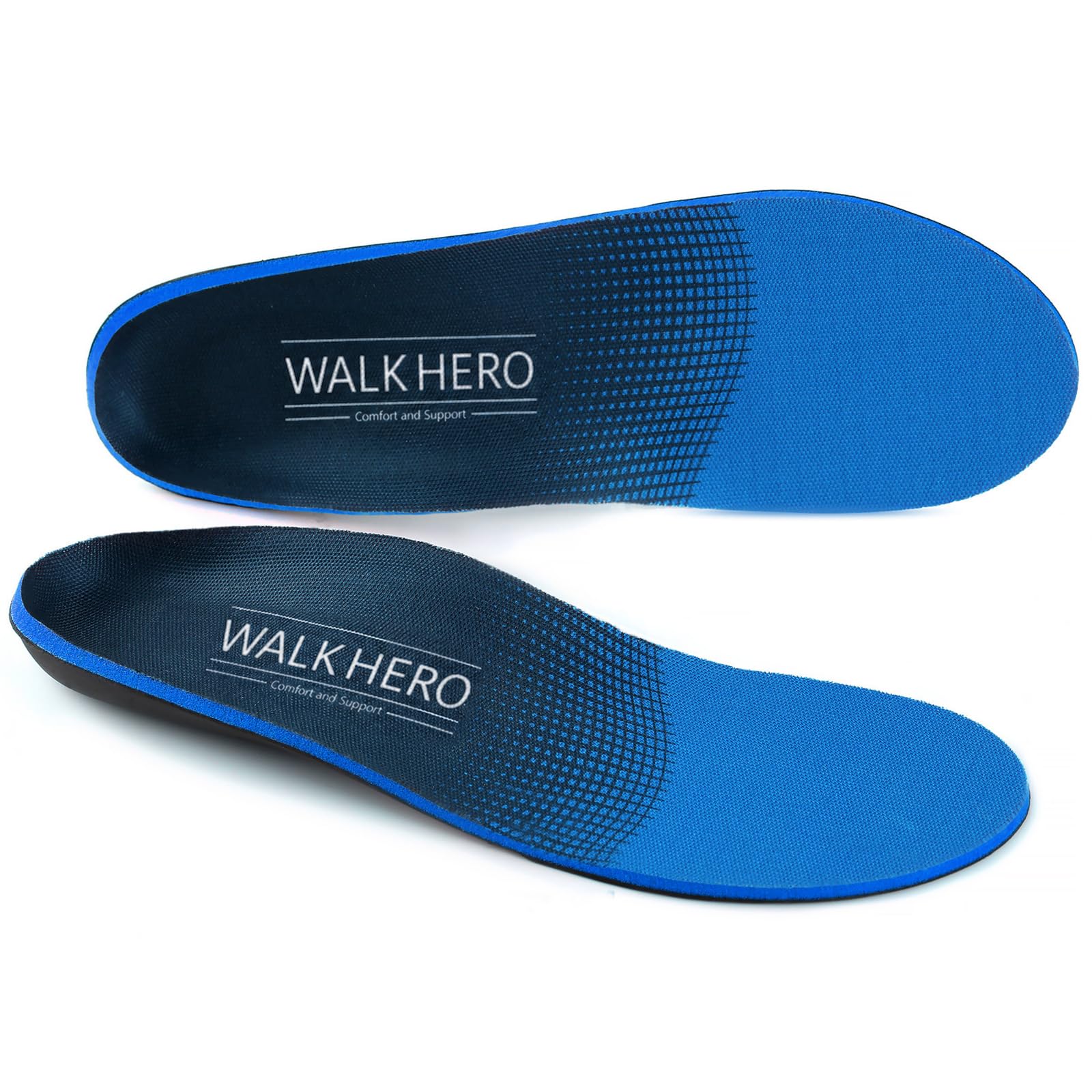
If you've never worn arch support and you're not sure it will help, the WalkHero is the low-risk way to find out. It's one of the cheapest insoles here, it has a genuinely deep heel cup, and the arch is firm enough to push back — which is more than the flat foam slab that came in your shoes manages.

Its design brief is a wide, high-volume shoe: work boots, basketball shoes, roomy trainers. That's where it earns its place. The EVA shell doesn't compress much, so it holds the arch up through a shift, and the deep cup keeps the heel from wandering. We put ours in a roomy work boot and it behaved; in a slim sneaker it's too much insole and the fit goes wrong fast.

Where it falls short is cushioning. The same firmness that does the supporting means there's almost no give under the heel or the ball, and the first week can feel like standing on a shoehorn. Give it seven days and pair it with a shoe that has its own midsole, and it becomes comfortable — just don't expect it to soften into a pillow.

Pros

  • Budget price for a firm arch
  • Deep heel cup keeps the foot centered
  • Built for wide, high-volume shoes

Cons

  • Can shift inside a smooth-lined boot
Our verdict

A firm, deep-cupped insert for wide work boots at a budget price — the right first pair if you want to learn whether arch support helps before spending more.

Check Latest Price
6

Best 3/4-Length

Dr. Scholl's Custom Fit CF440

93 /100
Trail Score Outstanding

Key details

Arch
Adaptive 3D
Length
3/4 length
Trimming
None needed
Cushioning
Three layers
Check Price on Amazon

Three-quarter length insoles exist for one reason: some shoes won't give up their factory footbed, and a full-length insert laid on top of it lifts your heel and shortens the shoe. The Dr. Scholl's Custom Fit CF440 runs from the heel to just behind the ball of the foot, so there's no trimming, no scissors, and no change to the length of the shoe.

Cushioning is where it leads. Three layers, a soft top cloth, and an arch that's shaped rather than flat make this the pick for anyone who finds firm orthotics punishing. We put ours in shoes with glued-in footbeds where nothing else fit, and the difference is a heel that finally has something to land on.

Where it earns its place is a shoe you stand in rather than train in: a loafer, a work shoe with a fixed footbed, a pair of boots with no room to give. The top layer is the part that goes first — in a shoe worn daily, expect the surface under the heel to flatten before the arch does, so rotate it between two pairs and it lasts longer.

Pros

  • Slides into shoes with fixed insoles
  • No trimming needed
  • Plush three-layer cushioning

Cons

  • Cushioned more than corrective
  • Forefoot gets no added padding
Our verdict

If your shoes have glued-in footbeds and no room for a full-length insert, this is the pair to buy: soft, trim-free, and shaped under the arch.

Check Latest Price
7

Ball-Of-Foot Pain

Spenco Total Support Max

89 /100
Trail Score Excellent

Key details

Arch
Firm, contoured
Support
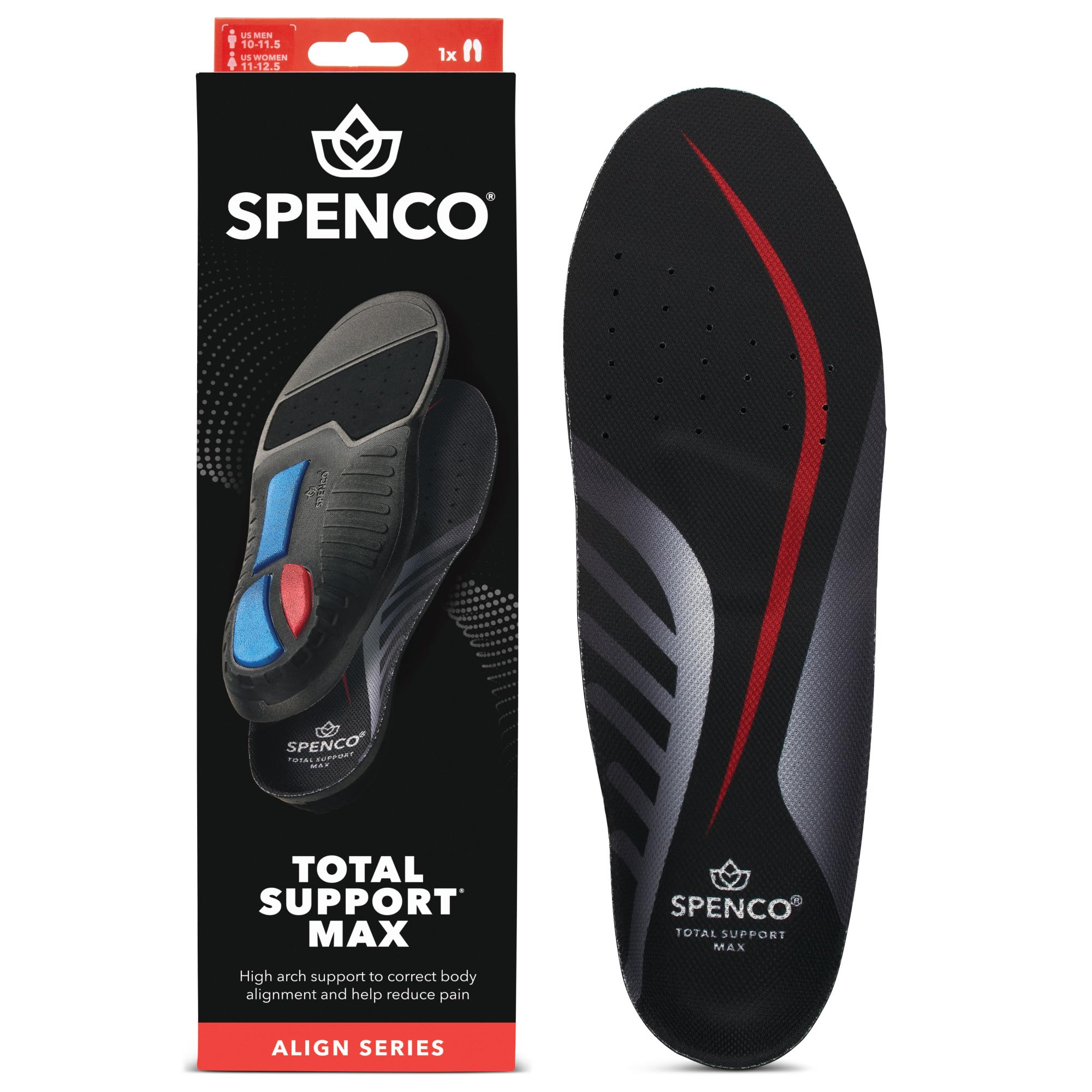
Multi-density with rigid pod
Forefoot
Built-in metatarsal pad
Heel Cup
Deep
Check Price on Amazon

The feature most people skip over on the Spenco Total Support Max is the metatarsal pad, a raised dome behind the ball of the foot. For a flat-footed walker whose forefoot takes a beating, it's the reason we choose this insole over the others here. Flat feet don't only hurt at the arch.

The build is a multi-density shell with a rigid pod under the arch and softer foam around it, plus a deep heel cup. That combination is aimed at overpronation: the pod resists the inward roll, the cup keeps the heel off the inside edge, and the softer zones keep the edges from digging in.

It runs wide and it runs full. In a narrow shoe the edges bunch, and in a shallow toe box the volume stacks up quickly, so put it in something with room — a walking shoe, a trainer, a work boot with a removable footbed. Sizing runs generous, and the women's fit in particular is broad.

Our read is that this is the specialist of the group rather than the default. If your flat feet come with ball-of-foot pain, or you've been told you overpronate and want a rigid pod under the arch, it does something the other picks don't. If you want a softer ride first, the Dr. Scholl's Custom Fit is the plusher choice.

Pros

  • Rigid pod resists overpronation
  • Metatarsal pad eases ball-of-foot pressure
  • Deep heel cup centers the heel

Cons

  • Firm ride with very little cushioning
  • Sole edges can separate with heavy use
Our verdict

For flat feet that also hurt at the ball, this is the specialist pick: a rigid pod to slow the roll and a metatarsal pad no other insole here has.

Check Latest Price
8

Heavy Wide-Footed Men

Dr. Scholl's Heavy Duty Support

89 /100
Trail Score Excellent

Key details

Heel
Extra-supportive cushioning
Sizes
Men's 8 to 14, trim to fit
Width
Designed for wide feet
Weight Rating
200+ lbs
Check Price on Amazon

Dr. Scholl's builds this one for a specific man: over 200 pounds, tall, wide-footed, sizes 8 to 14, on his feet in work boots. If that describes you, the brief makes sense. If you're lighter, or the arch itself is the problem, it isn't the insole you need.

What it does well is cushion. The heel gets an extra supportive pocket of foam that takes the sting out of concrete, and the width is cut generously enough that a wide foot isn't hanging over the edge. Trim-to-fit sizing covers a big range, and the material is soft enough to cut down with kitchen scissors in a couple of minutes.

The arch is the weak point for genuinely flat feet. It's a soft, rounded lift rather than a firm correction, and it won't hold up an arch that collapses under load the way the Pinnacle Maxx or the CRUVHEAL do. What you get instead is comfort for a heavy frame in a wide boot, with nothing to break in and nothing to fuss over.

So this is the budget comfort pick, not the budget support pick. Buy it if your boots are wide, your shifts are long, and you want a softer landing; buy one of the orthotic-shaped insoles if the arch itself is the problem. Ours went into a pair of wide work boots and made them wearable again, which is a modest ambition, well met.

Pros

  • Built for men over 200 pounds and wide feet
  • Extra heel cushioning for hard floors
  • Trim-to-fit covers men's sizes 8 to 14
  • Budget price for a heavy-duty build

Cons

  • Wears down faster than an orthotic
  • Adds enough bulk to tighten some shoes
Our verdict

A soft, wide, generously sized insole for heavier men in work boots — buy it for cushioning, not for arch correction.

Check Latest Price

How We Chose and Wore-Tested the Best Insoles for Flat Feet

We started with a long list of roughly 40 pairs pulled from podiatrist-recommended brands, best-sellers, and the insoles my coworkers already had in their shoes, then cut anything that came in only one size, required trimming into a shape we couldn't predict, or was too thick to sit under the existing footbed of a standard sneaker. That left 14 pairs, which we wore for four months.

Before anyone put them in a shoe, we traced each insole, measured heel-cup depth with a ruler, weighed it, and checked thickness at both the heel and the ball of the foot. Each tester then lived in a pair inside their own shoes: sneakers for most, work boots and one pair of dress shoes for the rest. Everyone walked the same two-mile loop once a week so we compared like with like, and the rest of the wear came from commutes, grocery runs, and full workdays on hard floors.

At two weeks, six weeks, and the end of testing, we looked at pilling on the top fabric, compression at the heel, creasing at the forefoot, and whether the arch shell stayed in place or crept toward the toes. The two testers with the flattest feet kept notes on that first-step ache in the morning and whether it eased by evening. We also squeezed every pair by hand at the start and again at the finish, because a hard insole that slowly softens is a different animal from a firm one that stays firm, and neither is automatically better. It came down to whether your foot wanted a shelf or a cushion.

How to Choose Insoles for Flat Feet

Match the Arch to Your Foot, Not the Label

An insole has to hold a low arch up without levering the foot outward, which is why an insert built for high arches is the wrong first buy even though it looks like more support. Start with a medium, contoured shape and move to a maximum-stability design only if you know your ankles roll in hard. Our test for any pair: wear it indoors for half an hour. A hard lump under the midfoot, or a foot tipping toward the outside edge, means the arch is too tall for you.

Check the Shoe Before the Insole

Volume decides more purchases than support does. Pull the factory insole out; if it lifts, a full-length insert will fit. If it's glued down, a full-length insert laid on top lifts your heel and shortens the shoe, so go three-quarter length instead. Slim sneakers, loafers, and cycling shoes usually need a low-profile full-length insert. Compare the old insole with the new one before cutting, and trim a little wide rather than a little short.

Firm Under the Arch, Soft Under the Heel

Soft foam feels wonderful for the first mile and does nothing for an arch that collapses. What supports a flat foot is a firm shell that resists the roll, with cushioning layered over it so the support isn't punishing. Multi-density builds do both: a rigid pod or firm arch under the midfoot, softer foam at the heel and ball. A soft insole isn't wrong, it's answering a different question — comfort rather than correction — which is exactly what the Dr. Scholl's Custom Fit is for.

Stability Comes From the Heel

Most of the control lives at the back of the insole, not the middle. A deep heel cup centers the rearfoot and stops it sliding toward the inside edge; an angled heel, like the one on the Pinnacle Maxx, tilts the foot slightly outward before the arch even engages. If your shoes wear through on the inside edge of the sole, we put the heel cup ahead of arch height — that wear pattern is the clearest sign of overpronation you can check at home.

Budget for Replacements

Insoles are consumables. The densest pairs here are rated for about a year of daily wear; softer foam compresses in a few months under a heavy body. The signal is simple: press a thumb into the arch. When it stops pushing back and feels flat, the insole is done, even if the fabric still looks intact. Two moderate pairs rotated between shoes usually outlast one expensive pair worn every day.

Frequently Asked Questions

Final Verdict

If your arches collapse and your ankles roll inward, buy the PowerStep Pinnacle Maxx. The angled heel and the firm contoured arch are the closest thing in this roundup to a prescription orthotic, and the support is still there at the end of a shift rather than a week.

If your shoes are the constraint — a slim sneaker, a dress shoe, a cycling shoe — the PowerStep Original does the same job in a thinner package. And if you want to buy once and leave a pair in one shoe, the Superfeet medium arch is the longest-lived option here.