Best Insect Repellents for Ticks of 2026

A tick bite doesn't announce itself. There's no sting, no swelling to ice — just a speck you might find behind your knee hours later, plus a nagging question about what it was carrying. That's why I stopped judging repellents by how they smell going on and started judging them by whether I found ticks on me afterward. A good one buys you a few unbothered hours in tall grass, on a shady trail, or at the weedy edge of the yard where the dog keeps disappearing. A bad one buys you false confidence that lasts right up until the tick check.

Part of what I learned this spring: a repellent you dread putting on a second time is a repellent that fails, so scent and residue matter more than the fine print suggests. Over four months, a few of us put 14 formulas through dog walks, garden cleanup, and a weekend of camping, logging every application and every tick check. The picks below are the ones we kept reaching for.

1

Best Overall

Sawyer 20% Picaridin Lotion

93 /100
Trail Score Outstanding

Key details

Form
Lotion
Size
4 fl oz (2-pack)
Tick Protection
Up to 12 hours
Active Ingredient
20% picaridin
Check Price on Amazon

Twelve hours is the figure that settled this one for us. Most tick repellents ask you to stop what you're doing and reapply halfway through the afternoon; this 20% picaridin lotion is labeled for up to 12 hours against both mosquitoes and ticks, which covers a full hike or a Saturday of yard work in a single application.

The format is why we keep coming back to it. Pumped lotion goes exactly where you put it — around the ankle bones, along the sock line, at the waistband, behind the knee — which is where ticks actually make contact. You can see the film while you're rubbing it in, so the gap you missed is obvious. It dries down quickly and doesn't leave the slick, sticky residue that makes people skip repellent altogether.

Picaridin is also kinder to gear than DEET. It won't damage plastics or synthetic coatings, so a watch strap, sunglass frames, or a pack that catches overspray comes out fine. The formula is fragrance-free, and on a warm day that is the difference between wearing repellent and enduring it.

No repellent holds its full clock through heavy sweat or a swim, and this one is no exception — the label's 12 hours assumes a dry, ordinary day outside. That is still most of the tick days we plan for: a morning on the trail, an afternoon of raking, the walk where the grass reaches your calves.

Pros

  • Up to 12 hours against ticks and mosquitoes
  • Fragrance-free and non-greasy on skin
  • Safe on plastics, watches, and pack straps
  • Lotion shows you where you've covered

Cons

  • Slower to apply to a group than a spray
  • Two bottles go quickly for a family
Our verdict

Our default for a day outdoors: 20% picaridin gives up to 12 hours against ticks, goes on like hand lotion, and leaves no scent behind.

Check Latest Price
2

Best for Clothing and Gear

Sawyer Permethrin Clothing Spray

93 /100
Trail Score Outstanding

Key details

Form
Trigger spray
Use On
Clothing and gear
Protection Lasts
6 weeks or 6 washings
Active Ingredient
Permethrin
Check Price on Amazon

Six weeks or six washings, whichever comes first — that is the promise permethrin makes to a pair of pants, and it is why we treat gear instead of re-spraying it. The spray bonds to fabric fibers rather than sitting on the surface, so a treated sock keeps working through a wet morning.

Where it earns its place is low. Ticks don't drop out of trees; they wait on grass and brush at shin height and grab the first thing that brushes past, usually a boot, a sock, or a pant cuff. Treating those three items covers the contact point that skin sprays reach last and sweat washes off first.

It is not a skin product, and the label is blunt about that. Spray it outdoors or in a garage, hang the clothes to dry, and do a season's worth of socks and cuffs in one session so you aren't treating a shirt the night before a trip.

The twin pack covers boots, socks, pants, and a daypack in one sitting, with enough left for a midseason refresh, and it won't stain or damage fabrics, plastics, or finished surfaces. We treat in April, before the first warm weekend, and the habit sticks far better than remembering a spray bottle at the trailhead.

Pros

  • Keeps working for six weeks or six washes
  • Covers ankles and cuffs where ticks attach
  • Holds up to sweat and water
  • Won't stain fabrics or harm plastics

Cons

  • Trigger sprayer can sputter or fail
  • Chemical smell while fabric dries
Our verdict

The half of tick protection you apply once: bonded to socks, boots, and pants for six weeks or six washes, and still working while you sweat.

Check Latest Price
3

Best Non-Greasy DEET Spray

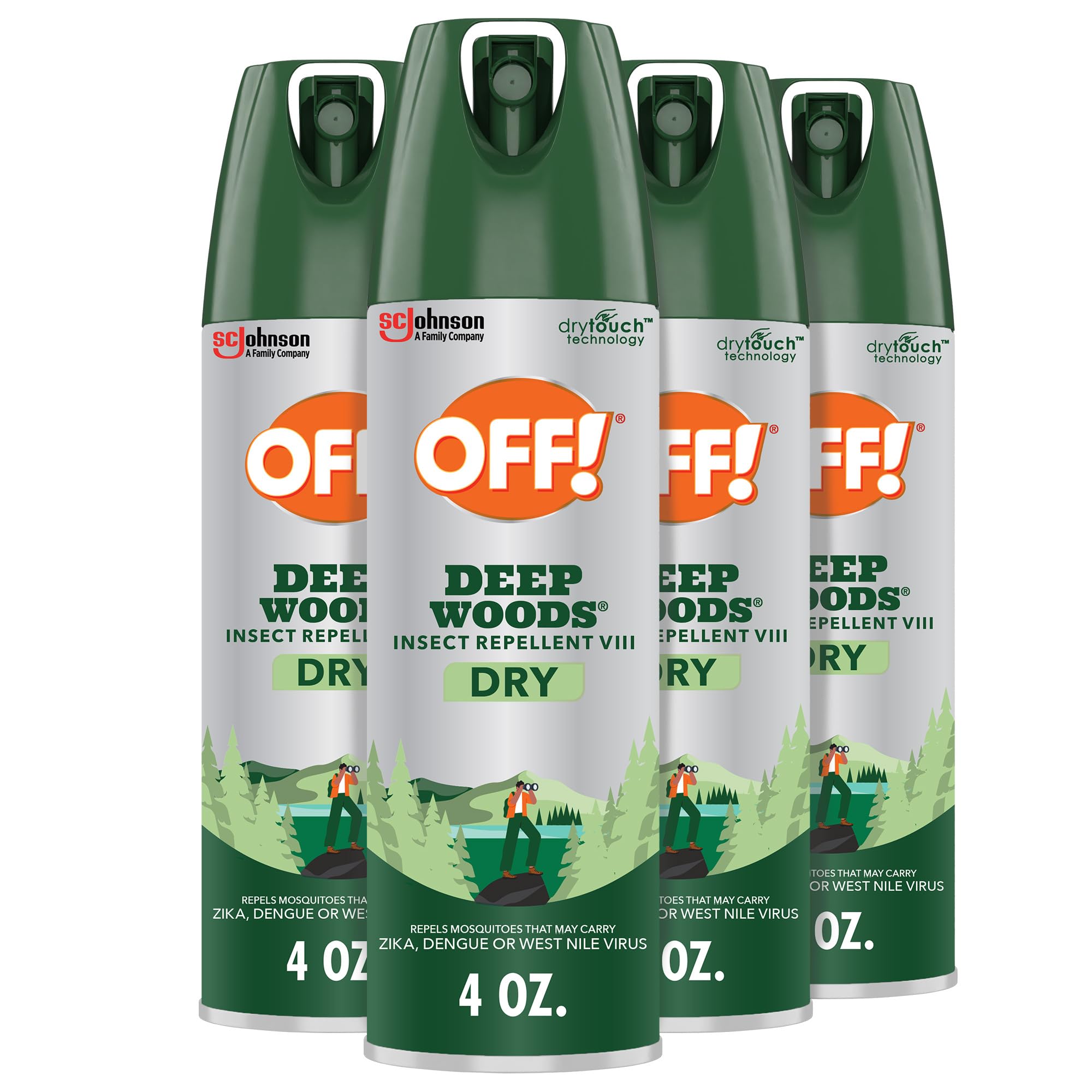
OFF! Deep Woods Dry

95 /100
Trail Score Outstanding

Key details

Form
Aerosol spray
Size
4 oz (4-pack)
Finish
Powder-dry
Active Ingredient
25% DEET
Check Price on Amazon

Dry is the word doing the work here. DEET sprays have a reputation for leaving your arms slick and your jacket smelling like a campground; this one goes on powdery and fades, which is why it ends up in the daypack rather than the shelf in the garage.

Twenty-five percent DEET lands in the band that actually holds ticks — enough to matter on a real day outside, without the harshness of the near-pure formulas. The label names ticks specifically, along with mosquitoes, biting flies, gnats, chiggers, and fleas, and it's the aerosol we reach for when the whole family is heading out the door at once.

A couple of sweeping passes cover both legs and arms, and the dry finish means you aren't leaving prints on a car seat or a phone screen. Hold the can back when you spray: close up, the formula can leave a pale cast on dark clothing or arm hair until you rub it in.

The label doesn't put an hour figure on tick protection the way the picaridin products here do, so on a long day we treat lunch as the reapplication point rather than trusting one coat from morning to dusk. Four cans is the other quiet advantage — one in the car, one in the pack, one by the door, one spare.

Pros

  • 25% DEET sits in the effective band for ticks
  • Goes on powder-dry, not oily
  • Continuous aerosol covers legs fast
  • Four cans to stage in car, pack, and mudroom

Cons

  • Sharp smell for the first minute or two
Our verdict

A 25% DEET spray that goes on powder-dry and stays out of the way — the one we hand people who hate the feel of repellent.

Check Latest Price
4

Best for Long Days Out

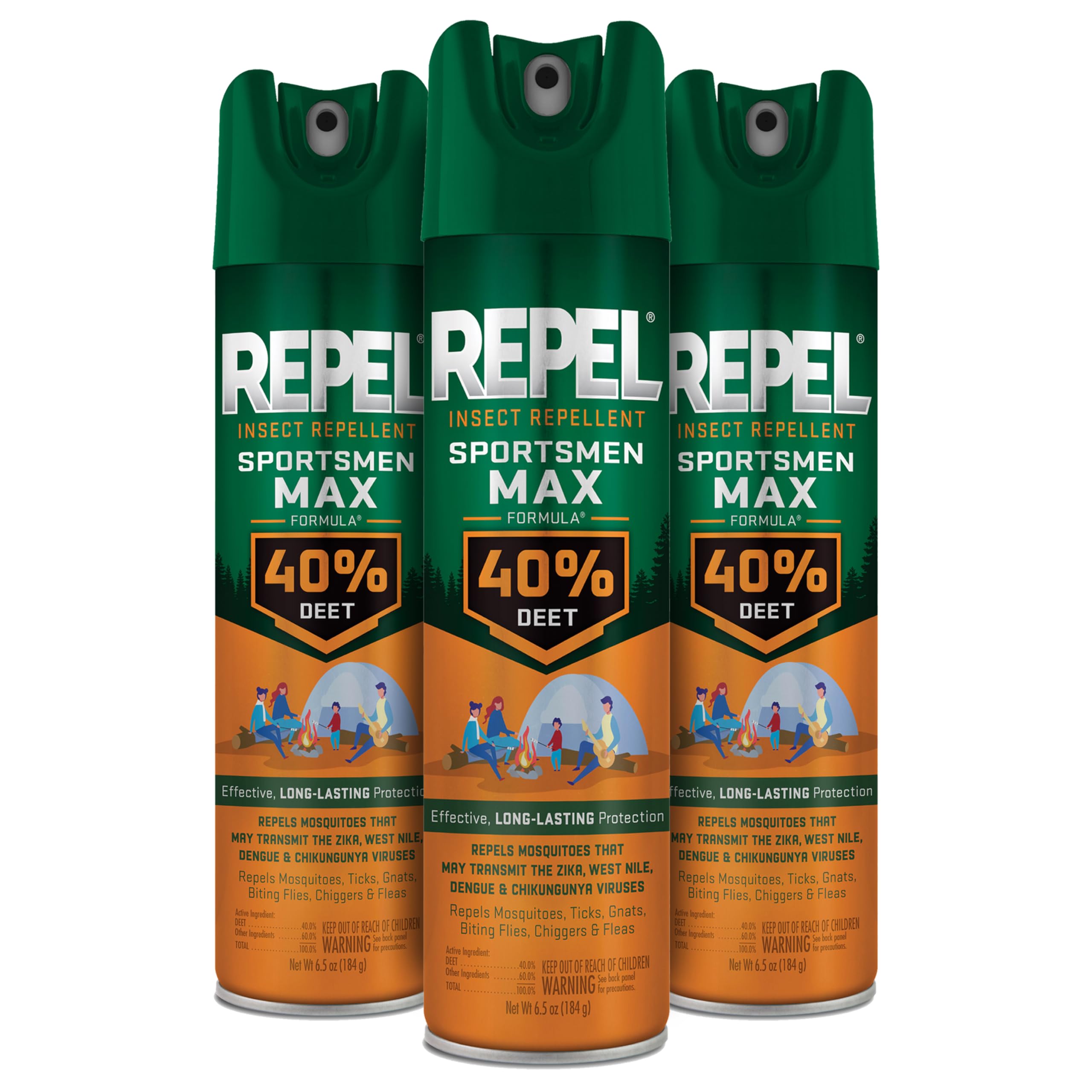
Repel Sportsmen Max 40% DEET

93 /100
Trail Score Outstanding

Key details

Form
Aerosol spray
Size
6.5 oz (3-pack)
Active Ingredient
40% DEET
Check Price on Amazon

Forty percent DEET sits between the drugstore sprays and the near-pure formulas, and for most tick country that is the sensible middle — more concentration than a 25% can, without the grease and the sharp smell of a 98% one.

The reason we reach for this over the 25% aerosol is time between applications. Concentration mostly buys hours, and on a day when you aren't back at the car until dusk, that extra DEET is what keeps you from spraying again at noon. It also repels gnats, biting flies, chiggers, and fleas, not just ticks and mosquitoes.

It is an aerosol, so covering pants and boots takes seconds, and the scent is quieter than its concentration suggests — noticeable while wet, mostly gone once dry. Three 6.5-ounce cans mean one lives in the truck, one in the pack, and one on the shelf, replaced when it empties.

It suits someone who treats repellent as consumable gear rather than a keepsake: buy the three-pack before the season, use one can hard, and stop thinking about it. That is a different purchase from a bottle of lotion you'd carry carefully for a year.

Pros

  • 40% DEET for longer wear between coats
  • Also repels gnats, flies, chiggers, and fleas
  • Three cans for truck, pack, and shelf

Cons

  • Nozzle can quit before the can is empty
  • Feels oily on skin until it dries
Our verdict

Forty percent DEET is the middle ground worth taking: more staying power than a 25% can, none of the grease of the near-pure stuff.

Check Latest Price
5

Best for Families

Boogie Insect Repellent Lotion

94 /100
Trail Score Outstanding

Key details

Form
Lotion
Size
6 fl oz
Tick Protection
Up to 14 hours
Active Ingredient
20% picaridin
Check Price on Amazon

Getting repellent onto a child is a negotiation, and a lotion you rub in yourself wins it more often than a cold aerosol cloud. Boogie is 20% picaridin in a fragrance-free lotion, and the format, not just the ingredient, is what makes it our first suggestion for families.

Fourteen hours is the longest labeled tick window in this group, and it is why one morning application can carry a school day, an afternoon practice, and the walk home. Treat it as the ceiling it is: swimming and heavy sweat shorten it, so reapply after the pool.

On skin it feels like a light moisturizer rather than a coating — no shine, no stickiness, and no scent to argue about in a closed car. It also goes on clear and doesn't mark clothing, which matters more with children than with adults.

The trade is speed and supply. Rubbing lotion into a squirming six-year-old takes longer than two passes with a spray, and a 6-ounce bottle empties fast when three people are drawing from it daily. Keep a second one in the bag rather than rationing the first.

Pros

  • Up to 14 hours against ticks on the label
  • Odorless and non-greasy on skin
  • Lotion goes exactly where you rub it

Cons

  • Slower to apply than a spray
  • A 6-ounce bottle empties fast for a family
Our verdict

For families, this is the easiest yes: a scent-free 20% picaridin lotion with the longest labeled tick window here.

Check Latest Price
6

Best Budget Picaridin

OFF! Clean Feel Picaridin

93 /100
Trail Score Outstanding

Key details

Form
Aerosol spray
Size
5 oz
Protection
Up to 8 hours
Active Ingredient
Picaridin
Check Price on Amazon

The least expensive way to get picaridin instead of DEET, and it doesn't feel like a compromise. OFF! Clean Feel is fragrance-free and DEET-free, labeled for up to eight hours with protection against mosquitoes, ticks, and biting flies, and it comes out of the can light rather than wet.

For everyday exposure — a backyard, a ballfield, a walk on a rail trail — eight hours covers the whole outing, and the lack of scent means you can spray it in a car or a small mudroom without clearing the room. We never felt like we were wearing a coating, which is more than we can say for most aerosols.

Where it gives ground is specificity. The can doesn't state what percentage of picaridin it carries, so you are comparing an eight-hour promise rather than a concentration, while the 20% lotions here put their number on the front. Spray it downwind of yourself and outdoors; misting into the breeze gets you a mouthful of repellent for no extra protection.

It lives by the back door, which is the honest measure of a repellent. It is the can you grab on a Tuesday for twenty minutes of weeding, not the bottle you save for a trip — and at this price, using it that casually is the point.

Pros

  • Fragrance-free and dries fast on skin
  • Up to 8 hours against ticks and mosquitoes
  • Cheapest picaridin option here

Cons

  • Can doesn't state its picaridin percentage
  • Spray can drip or sputter
Our verdict

The cheapest picaridin here, and a rare case where the budget pick is also the pleasant one — scent-free, light, and good for eight hours.

Check Latest Price
7

Best for Extreme Exposure

Repel 100 Insect Repellent

93 /100
Trail Score Outstanding

Key details

Form
Pump spray
Size
4 oz (6-pack)
Protection
Up to 10 hours
Active Ingredient
98.11% DEET
Check Price on Amazon

Ninety-eight percent DEET is more repellent than a normal Saturday requires, and that is exactly the point. This is the bottle for the trip where you are in deep brush from dawn to dusk, or where a tick-borne illness is a live worry rather than a theoretical one.

The label puts protection at up to ten hours, the longest stated window for a DEET product in this group, and the formula is DEET with no alcohol or added ingredients. What we appreciate on a trip like that is the pump: it throws a directed stream rather than a cloud, so you can hit the waistband and the sock line without fogging the tent.

What you pay for that is comfort and gear. On skin it is greasy and it smells like what it is, and it will stain or damage plastic and rubber if it lands on them, watch crystals included. Spray it in the open, keep it away from anything synthetic you care about, and wash it off at the end of the day.

Six 4-ounce bottles is more than one person wears out in a season, so split the pack: one in the truck, one in the pack, one in the range bag, spares for whoever forgot theirs. It is not the can to hand a casual user, and it isn't trying to be.

Pros

  • 98.11% DEET for maximum exposure days
  • Labeled for up to 10 hours
  • Pump spray targets ankles and cuffs

Cons

  • Greasy on skin and strongly scented
  • Damages plastics, rubber, and watch crystals
Our verdict

For deep brush and heavy tick pressure, 98% DEET and a labeled ten hours is the most protection a single bottle here offers.

Check Latest Price
8

DEET-Free Protection

Murphy's Naturals Tick Spray

89 /100
Trail Score Excellent

Key details

Size
6 fl oz (2-pack)
Active Ingredient
Oil of lemon eucalyptus
Deer Tick Protection
Up to 4 hours
Other Tick Protection
Over 8 hours
Check Price on Amazon

The scent arrives before anything else — lemon eucalyptus, sharp and herbal, closer to a lozenge than to a chemical spray. Some people in our group love it and ask for it by name; nobody has ever called it subtle.

Underneath is a genuine three-ingredient formula: oil of lemon eucalyptus, water, and corn-derived ethanol, EPA-registered and labeled for six hours against mosquitoes, four hours against deer ticks, and over eight against lone star and brown dog ticks. Those tick windows are the shortest and most species-specific in this group, so in deer tick country you plan around four hours rather than assuming an all-day pass.

Because it works on scent rather than on the insect's receptors the way DEET and picaridin do, it has no plasticizing effect — no hazed watch crystal, no softened strap — and it is the option for anyone who has decided against the conventional actives. Spray it into your palm and wipe rather than misting: the sprayer is uneven and the mist goes where the wind sends it.

Two things to know before buying it for a household with small children. The label carries an age restriction, and it is not registered in California for use on children under three. On sensitive skin it can also sting in a way DEET and picaridin typically don't. We keep it for the people who won't wear anything else, and we pair it with treated socks.

Pros

  • Three-ingredient, plant-based formula
  • EPA-registered with a stated tick claim
  • No plasticizing effect on gear

Cons

  • Can sting on sensitive skin
  • Short tick window in deer tick country
Our verdict

A real botanical option with a genuine tick label, though the shortest windows here — buy it when DEET and picaridin are out.

Check Latest Price

How We Tested the Tick Repellents

We started with the EPA-registered actives — DEET, picaridin, IR3535, and oil of lemon eucalyptus — and built a shortlist of 14 formulas in spray, lotion, and wipe formats, skipping anything unregistered or priced so high we'd hesitate to use it liberally. Then we used them where ticks actually turn up: sock lines and ankles before dog walks, forearms and necks during yard work, and the back of a neck on a camping trip.

We sprayed each one from about six inches onto a forearm and a pant leg, noting whether it came out as a fine mist or a wet stream, how many pumps it took to cover a lower leg and ankle, and whether the bottle worked upside down or one-handed. Two minutes in, we pressed a tissue to the skin to see how much shine came back. Scent got logged at application, at one hour, and after ten minutes in the sun, with a second person judging from arm's length so we weren't nose-blind.

For staying power, we timed reapplications across a two-hour hike and a sweaty afternoon of yard work, and checked whether the stuff had rubbed off onto cuffs and waistbands. Effect was the part we took most seriously: we dragged a white flannel sheet along grass edges and leaf litter, flipped it, and counted the ticks clinging to it, while every tester did a full-body check — scalp, waistband, behind the knees — after each outing. Testers with sensitive skin wore the same formula on an inner forearm for three straight days and reported stinging or redness, especially on a scratched ankle. Value came down to a pump count: how many full applications a bottle actually delivered at the rate we use it.

How to Choose an Insect Repellent for Ticks

Start With the Active Ingredient, Then the Clock

Four actives do the work here: DEET, picaridin, oil of lemon eucalyptus, and permethrin. For ticks, DEET from about 20% up and picaridin at 20% are the two we trust for a full day. Concentration mostly buys hours rather than strength, so a 25% spray is a sensible everyday can and a 40% or 98% formula is for long or heavy exposure. Oil of lemon eucalyptus is a genuine plant-based choice with a shorter tick window.

Pick the hours your day actually needs, then choose the ingredient you'll tolerate wearing. A formula you avoid is worth less than a modest one you use.

Treat Clothing and You Cover What Spray Misses

Ticks wait on grass and low brush and grab at shin height, which is why treated socks, boots, and pant cuffs do so much work. Permethrin bonds to fabric and keeps working through six washings or about six weeks, so one session in spring covers the contact point a skin spray reaches last and sweat washes first.

Treat a batch of gear outdoors before the season, let it dry completely, and re-treat after that sixth wash. The trap is treating permethrin as a skin product. It isn't, and the smell while the fabric is wet is a reminder to keep the spraying outside.

Match the Form to the Person Wearing It

Lotions give you a visible film and precise placement, which is why they win with children and with anyone who wants the sock line and waistband properly covered; they are simply slower for a group. Aerosols cover a lot of leg in two passes but waste product into the wind and encourage a quick once-over that misses the back of the knee and the hairline.

The mistake with aerosols is assuming a cloud equals coverage. It doesn't, and the spots people miss are the ones ticks find.

Reapplication, Sweat, and the Number on the Label

The hours printed on a label assume an ordinary dry day. Sweat, swimming, and clothing rubbing over your arms all shorten the clock, so a 12-hour claim is not a promise that survives a humid afternoon of yard work. Reapply after a swim or a hard climb.

Carry the small can rather than leaving it in the car. A repellent you'll reapply does more for you than a stronger one sitting at home.

What It Does to Your Gear and Your Skin

DEET is the ingredient that hazes watch crystals and eats into synthetic straps, painted surfaces, and car trim; picaridin doesn't, which is why we reach for it around gear. Fragrance-free formulas matter in a shared car or a small classroom.

If one active irritates your skin, try the other before giving up on repellent altogether, and test anything new on a forearm the night before a trip rather than the morning of.

Frequently Asked Questions

Final Verdict

Weekend hikers and yard workers get the most from two products rather than one: Sawyer's 20% picaridin lotion on skin, twelve hours at a stretch, and Sawyer's permethrin on socks, boots, and pants for the season. Neither is a chore to put on, and that is the real test of a repellent.

If your exposure runs to deep brush and long days, Repel 100's 98% DEET buys the longest window here and earns its discomfort. On a tight budget, OFF! Clean Feel is the cheapest picaridin of the group and handles an ordinary afternoon.