Best Home Spinal Decompression Devices of 2026

There's a specific kind of back pain that shows up at 3 p.m. on a Tuesday — the one that arrives after four hours in a desk chair and makes standing up feel like a negotiation. A home spinal decompression device is meant to interrupt that cycle: traction, gentle stretch, and a few minutes off your feet, without booking a chiropractor or driving to a clinic. What it actually fixes is the gap between "my back hurts" and "I can do something about it right now."

The trick is that these devices are only useful if you'll actually lie down on them, and the wrong one — too hard, too aggressive, too fiddly to assemble — becomes a very expensive dust collector. Over the last eight months, I've tested ten of them at home, on the living room floor and the bedroom rug, and the differences in comfort, neck support, and stability are real. A gentler curve you'll use daily beats an intense one you dread.

1

Best Overall

Innova Inversion Table

93 /100
Trail Score Outstanding

Key details

Type
Inversion table
Height Range
4'10" to 6'6"
Weight Capacity
300 lb
Assembled Dimensions
46" H x 28" W x 61" D
Check Price on Amazon

The heat and massage pad is what makes the Innova the one we reach for first. It runs along the spine pad and adds warmth and vibration before you invert, which makes the first few minutes feel less like a mechanical event and more like a routine. The six-position pin system has a protective cover, so changing the angle feels deliberate rather than fiddly. We also appreciate the 4-foot-10 to 6-foot-6 height range and 300-pound capacity; it covers a wide household without needing a second table.

Once you are inverted, the table does the job you bought it for: a full-spine stretch that is hard to replicate with a floor arch or a neck strap. We like the heat and massage on a low setting, not because it replaces the traction but because it helps us settle into the position. The table is heavy at 60 pounds, and the assembled footprint is 46 by 28 by 61 inches, so it wants a dedicated corner or a room where it can stay set up. It does fold, but this is not a tuck-behind-the-sofa item.

Assembly is the main friction. The parts are organized and the instructions are clear, but the frame and pad take real time, and two people make it easier. The adjustability is good for the angle, though we found the full inverted position less comfortable than a partial one; most people will not need to go all the way back. We kept the ankle hold locked and used it on a level floor, which are non-negotiables with any inversion table.

If you want a single home device for whole-spine decompression, this is the strongest default in this set. The heat and massage are useful extras, not gimmicks, and the capacity means it can serve more than one body. The buyer who should look elsewhere is the one with a small apartment, a low tolerance for inversion, or a clinician's warning against it; a targeted lumbar or cervical device is the better fit.

Pros

  • Full-spine inversion with six angle positions
  • Heat and massage built into the spine pad
  • Fits users from 4'10" to 6'6" up to 300 lb
  • Folds for storage between sessions

Cons

  • Heavy 60-pound frame needs dedicated space
Our verdict

We recommend the Innova as the best full-spine decompression table here: the six-position inversion, heat, and massage make a complete home setup, provided you have the floor space and no reason to avoid inversion.

Check Latest Price
2

Best for Targeted Lower Back

Tianfucen Lumbar Traction

79 /100
Trail Score Very Good

Key details

Type
Electric lumbar traction
Programs
23
Electrotherapy Levels
20
Heat/Vibration Levels
3
Check Price on Amazon

The Tianfucen is the one we point to when someone wants lower-back traction without hanging upside down. It is a motorized lumbar traction device, so you lie on the base plate and let the machine pull and hold while you stay flat. The handheld controller is the part that makes it feel less clinical: you can choose among 23 programs, 20 electrotherapy levels, and three heat and vibration levels without getting up. We like starting with heat and a low pull, then adding vibration once we are settled.

The short session cycle is the detail that makes it livable. A session runs about 15 minutes, which is short enough to do after work and long enough to feel like a real routine. The traction is targeted at the lumbar spine, so it does not help neck tension at all; that is a different device. The base is firm by design, and the first few sessions can leave you a little sore, so the lowest setting and a gradual build matter. One aggressive session is not a fair test.

For a lower-back-only buyer who wants heat, TENS, and vibration in one unit, this is the most complete pick in this set. It takes up less floor space than an inversion table and is easier to live with in a small room. The trade-off is that it is not a whole-spine solution, and the firm base is not plush. If you want to treat both neck and back, pair it with a cervical device rather than expecting this to do everything.

Pros

  • Motorized lumbar traction with adjustable pull
  • 23 programs and 20 electrotherapy levels
  • Heat and vibration add comfort

Cons

  • Lumbar only; no cervical traction
  • Firm base can leave you sore at first
Our verdict

We recommend the Tianfucen for lower-back-focused decompression: it combines motorized lumbar traction with heat, vibration, and TENS in a compact home unit.

Check Latest Price
3

Best Standing Traction

Stamina InLine Traction

81 /100
Trail Score Excellent

Key details

Type
Standing traction
Weight
29 lb
Warranty
90 days parts; 3 years frame
Dimensions
33" L x 27" W x 43" H
Check Price on Amazon

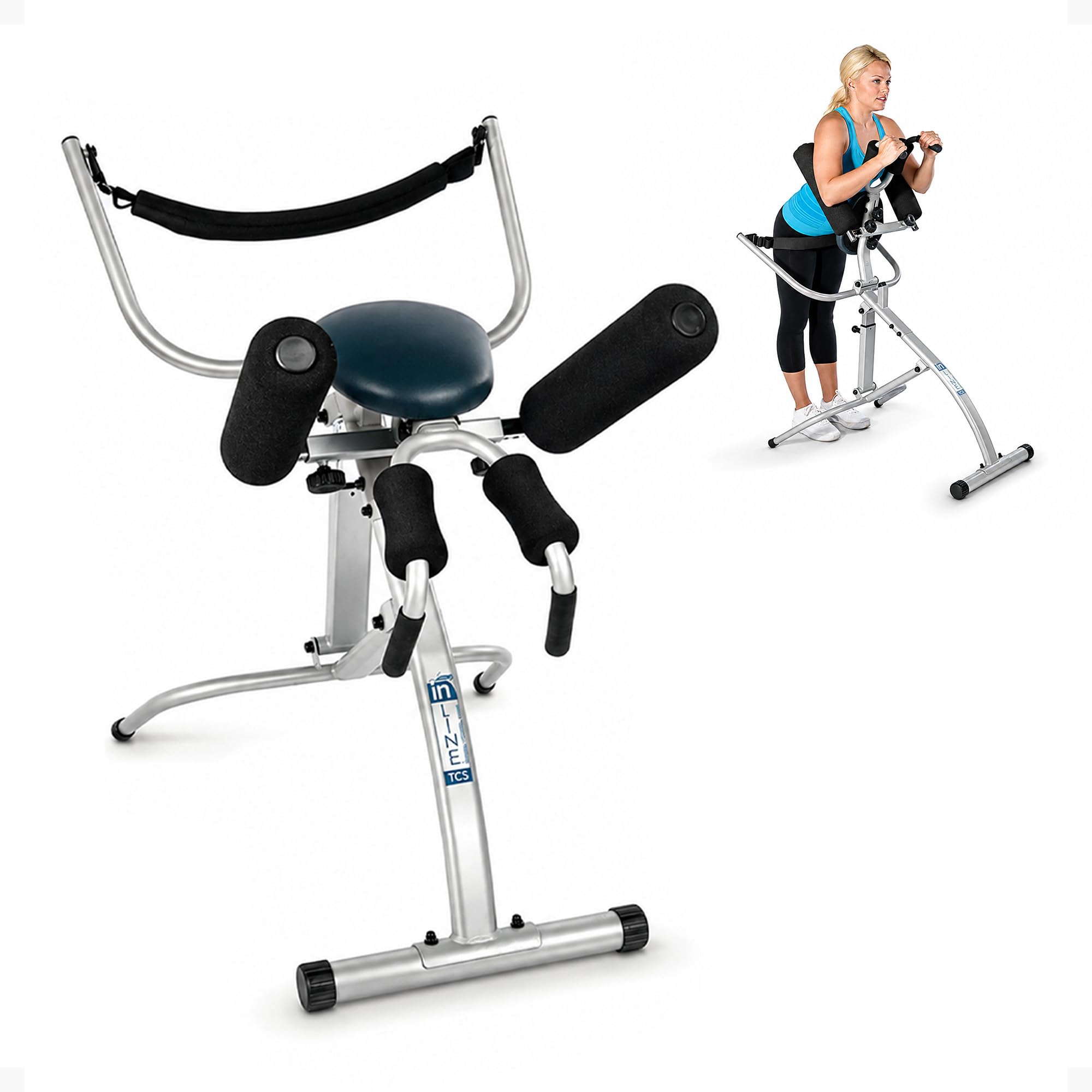
Standing upright in the Stamina is a different idea of decompression: your feet stay on the floor, your hips settle into the padded lap belt, and you lean into the arm supports to create a gentle pull through the lower back. We like it for the person who has tried an inversion table and hated the head rush. There is no hanging, no ankle lock, and no wait to come upright; you step off and walk away.

The frame is steel and feels reassuringly solid at 29 pounds, with a footprint of 33 by 27 by 43 inches. Setup is straightforward, and the lap belt and arm supports adjust to line up with your hips. The stretch is posture-dependent: lean too little and not much happens, lean too far and you feel it in your shoulders. We found a slow lean and a short hold worked better than trying to force a big stretch. The warranty—90 days on parts and three years on the frame—is a practical comfort for a device this size.

This is not a whole-spine table and it will not replace a cervical device. It is best for lower-back traction in a standing position, especially for someone who wants to avoid inversion or has trouble getting down onto the floor. The trade-off is that you have to find the right stance every time, and the pull is only as good as your setup. For a standing routine, though, it is the most purposeful pick here.

Pros

  • Standing traction without inversion
  • Adjustable lap belt and arm supports
  • Sturdy steel frame with three-year frame warranty

Cons

  • Posture-dependent stretch takes practice
Our verdict

We recommend the Stamina for a standing lower-back stretch when inversion is off the table; it is sturdy, adjustable, and easy to step away from.

Check Latest Price
4

Best Portable Neck Traction

ELESIK Neck Traction

85 /100
Trail Score Excellent

Key details

Seal
Triple-seal system
Type
Inflatable cervical traction
Weight
3.53 oz
Neck Support
Contoured height
Check Price on Amazon

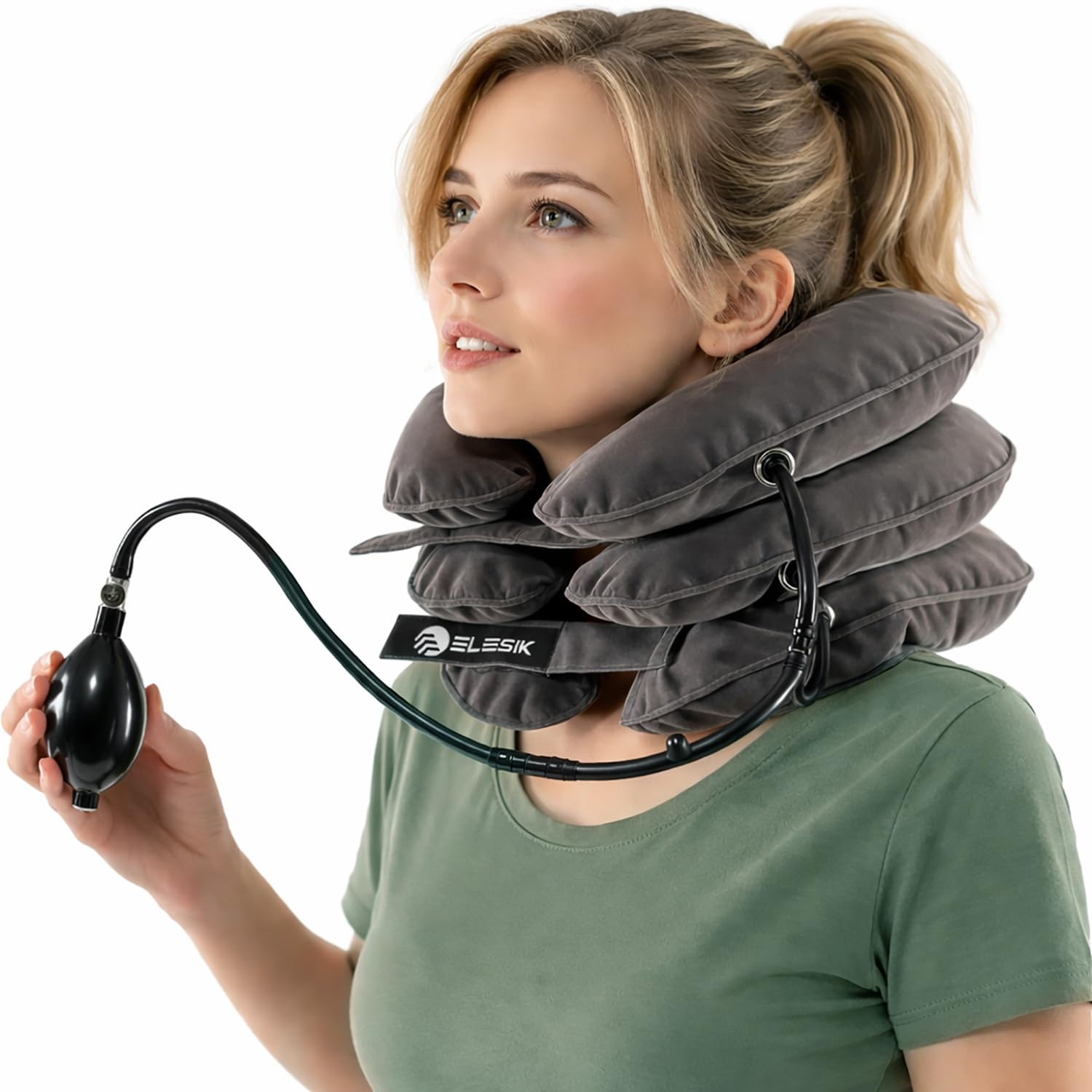
The ELESIK is the cervical device we hand to someone who wants a gentle stretch at a desk, not a dramatic pull. It is an inflatable collar with a contoured height that settles under the jaw and behind the neck; you add air until you feel support, then stop. The triple-seal valve is the detail that matters, because a slow leak turns traction into a nuisance. We also like that it deflates flat enough to live in a work bag.

The adjustment is the strength. The hand pump lets you add pressure in small steps, so you can start with a light stretch and build only if your neck is comfortable. The straps hold the collar in place, and the shape supports the neck rather than just pushing the chin up. We found it most useful after long screen sessions, when the goal is a gentle reminder of length rather than a forceful chiropractic-style pull. If you have a larger neck, check the strap length before you commit; the fit can run out before the air pressure does.

This is not the device for someone who needs a strong, sustained pull or who has a diagnosed cervical condition without clinician guidance. It is a portable, low-effort way to get a few minutes of cervical traction at home or at work. For mild tension and travel, that is a useful niche, and it is the inflatable we choose first in this set.

Pros

  • Adjustable hand-pump inflation
  • Contoured neck support with secure straps
  • Deflates flat for travel
  • Triple-seal valve resists leaks

Cons

  • Straps may not fit larger necks
  • Gentle pull only, not strong traction
Our verdict

We recommend the ELESIK for portable, gentle cervical traction; the adjustable inflation and contoured support make it an easy desk-side routine.

Check Latest Price
5

Simple Neck Stretch

RESTCLOUD Neck Relaxer

86 /100
Trail Score Excellent

Key details

Type
Cervical traction pillow
Weight
8.78 oz
Material
Polyurethane foam
Dimensions
8.7" x 6.9" x 4.9"
Check Price on Amazon

The RESTCLOUD is a hard foam arc, and the first thing you notice is not the shape but the firmness. You lie on it for about 10 minutes, let the head settle back, and the curve holds the neck in extension. There is no pump, no strap, and no assembly, which is why it is the easiest cervical device to keep in a living room.

We like it for the simplicity: it asks for a short session and then gets out of the way. The polyurethane foam is dense, so the stretch feels passive but real, and the shape supports the neck rather than pushing it into a forced angle. The catch is that the same density that makes it effective can feel like too much on a sensitive neck. Start shorter than the full 10 minutes, or put a thin towel under the head if the angle is too strong; we do not treat the first uncomfortable minute as a sign to push through.

This is not an all-night pillow and it is not a device for someone who wants adjustable pull. It is the pick for a simple, low-cost daily cervical stretch, especially for someone who already knows they tolerate firm support. If your neck is easily irritated, the inflatable ELESIK is the gentler first step; if you want more control, a strap or a pump-driven unit makes more sense. The RESTCLOUD earns its place by being the most uncomplicated way to get a few minutes of traction here.

Pros

  • No assembly or inflation needed
  • Dense foam holds the cervical curve
  • Short 10-minute sessions

Cons

  • Very firm foam can feel harsh
  • Not intended as an all-night pillow
Our verdict

We recommend the RESTCLOUD for a simple, firm cervical stretch at home; it is the easiest device here to use daily, provided you like firm support.

Check Latest Price
6

Manual Neck Traction

WIDREST Neck Strap

87 /100
Trail Score Excellent

Key details

Type
Cervical traction strap
Weight
10.2 oz
Material
Polyester
Included Components
Neck stretcher strap, chin strap, instruction manual
Check Price on Amazon

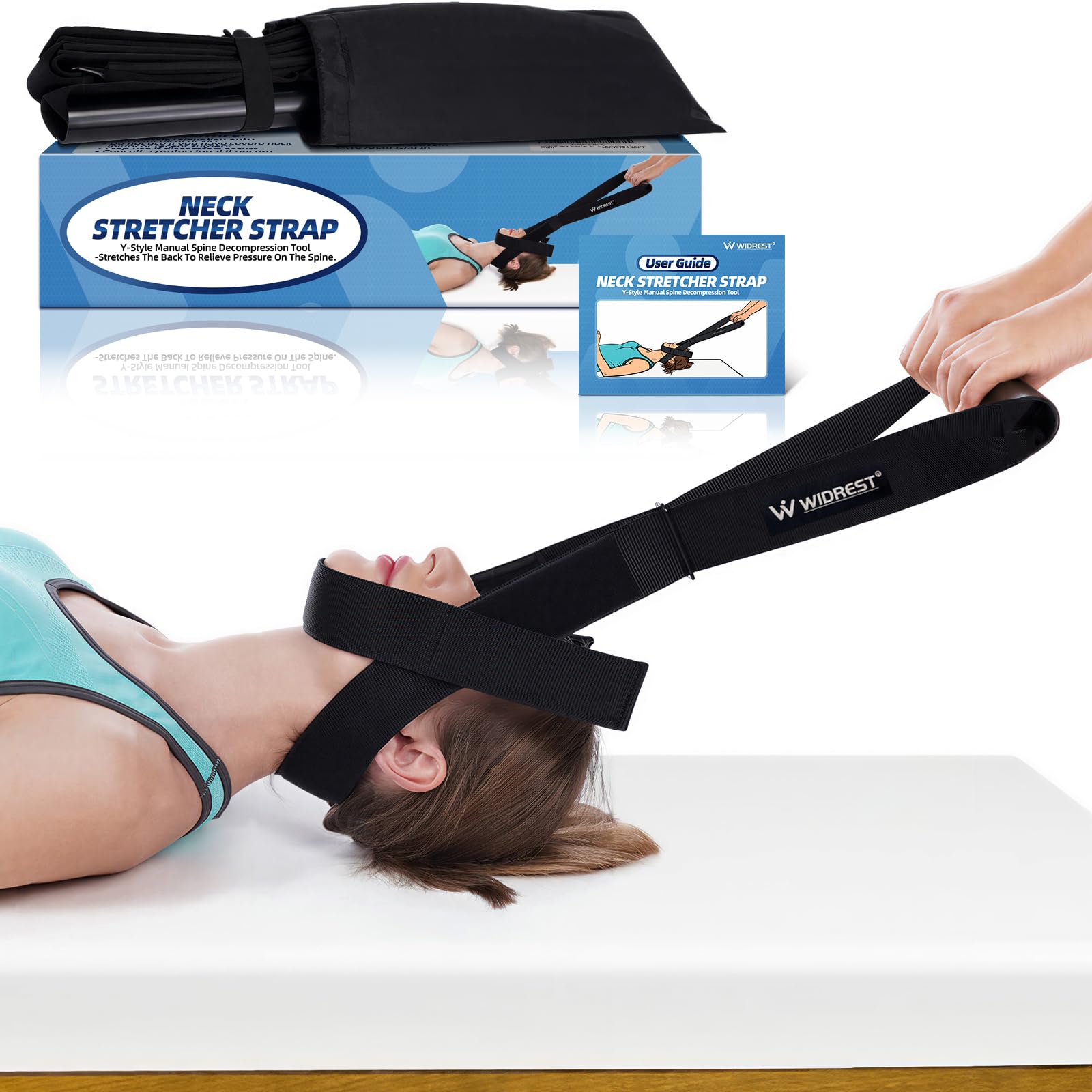
The WIDREST is a chin belt and a long pull strap, which sounds primitive until you feel how direct the stretch is. You settle the belt under the chin and behind the head, fasten the Velcro, and someone pulls steadily from the other end. We like the control: you can ease off instantly, and the pull is as gentle or as deep as the person on the strap makes it.

It is small and light at 10.24 ounces, and it packs away in a drawer, which makes it the most travel-friendly manual cervical option here. The catch is the helper. Used solo, you need a fixed anchor and you lose some of the fine control that makes the strap pleasant. We also found the surface matters: on a smooth floor, the person being pulled can slide before the neck stretches. A rug, a braced chair, or a second person solves that, but it is worth knowing before you try it in a kitchen.

The Velcro has to be fully engaged; a partial fasten can slip under load, and that is not a sensation you want at your neck. Used carefully, though, this is an effective low-cost way to get a deep cervical stretch without a pump or a frame. It is best for someone with a willing partner or a reliable anchor, not for a household that wants a fully self-contained device.

Pros

  • Deep, controllable manual traction
  • Lightweight and packable

Cons

  • Needs a helper or fixed anchor
  • Velcro can slip if not fully fastened
Our verdict

We recommend the WIDREST for a deep, manual cervical stretch when you have a helper; it is simple, portable, and more controllable than a fixed frame.

Check Latest Price
7

Lumbar Curve Support

WANYIDA Lumbar Roll

81 /100
Trail Score Excellent

Key details

Type
Lumbar traction roll
Weight
6.4 oz
Height Levels
3
Weight Capacity
300 lb
Check Price on Amazon

The WANYIDA is a small foam roll with a very specific job: it sits under the lumbar curve and uses a fulcrum shape to encourage the spine toward its natural 26-degree lordosis. It is not a broad back stretcher and it is not a massage tool. We like that focus, because a targeted roll can be more useful than a big arch when the goal is to restore a curve rather than force a dramatic stretch.

Three height settings let you start low and build, and the roll weighs only 6.4 ounces, so it moves from floor to chair easily. The 300-pound weight capacity gives it a wider margin than its size suggests. We found it most useful for a short session after a long sit, when the lower back feels compressed and a gentle fulcrum is enough. It is also the easiest pick here to stash in a bag.

The foam is dense by design, and the shape is assertive, so this is a short-hold tool rather than a lounging pad. On a soft rug or an uneven surface, the narrow roll can feel less stable than a full-width stretcher. Neither issue makes it a bad choice, but they do narrow who it suits.

This is the pick for someone who wants a portable lumbar curve tool and is willing to go slowly. It is not the right first device for a broad, whole-back stretch, and it will not replace an inversion table or a motorized traction unit. As a small, targeted adjunct, though, it earns its place in this set.

Pros

  • Targets the lumbar curve with a 26-degree shape
  • Three height levels for gradual progression
  • Lightweight and easy to stash
  • 300-pound weight capacity

Cons

  • Very firm foam can feel harsh
  • Narrow roll can feel unstable on soft surfaces
Our verdict

We recommend the WANYIDA for targeted lumbar curve work; it is portable and adjustable, but firm enough that slow, short sessions matter.

Check Latest Price

How We Tested Home Spinal Decompression Devices

We started by pulling every home decompression device we could find — floor arches, traction chairs, neck stretchers, inversion-style units — and narrowed by specs, footprint, price, and whether the listed dimensions matched a real adult body. That left ten units, which we assembled solo and timed, noting whether the instructions assumed a second set of hands or a toolbox.

Every device lived on a living room floor or bedroom rug for at least three weeks, used after work and again in the morning when the back is stiffest. We did ten-minute sessions and logged what we felt: where the curve pressed, whether the neck cradle actually supported the cervical spine or just pushed the chin forward, and whether a stretch turned into stiffness by the next hour. We pressed a palm into each pad to gauge hardness and firmness, and slid each unit across hardwood to see whether it stayed put or skated.

We also worked every Velcro strap and adjustment point a dozen times, since the hooks are usually the first thing to fail — if a strap fuzzed out or slipped mid-session, that device lost points. Finally, we compared the least expensive arches against the pricier traction units to see whether the extra money bought anything beyond bulk.

How to Choose a Home Spinal Decompression Device

Start With the Area You Need to Treat

A cervical device and a lumbar device are not interchangeable. If your tension sits at the base of the skull, a neck stretcher, inflatable collar, or lying traction arc is the right shape; if it sits in the lower back, an inversion table, a lumbar traction unit, or a standing traction frame makes more sense. Full-spine inversion is the broadest option, but it is also the most demanding. We prefer to see you buy a targeted device you will use daily than a big table that stays folded.

Understand the Traction Mechanism

Inversion uses body weight and gravity; a motorized or pneumatic device pulls or lifts a specific segment; a strap relies on an external pull; a foam arch uses your own body weight over a fulcrum. Each creates a different sensation. Inversion gives a long, whole-body unload but can feel intense and is not for everyone. Targeted traction is easier to control and easier to fit into a small room. In this set, the Innova is the full-spine example, while the Tianfucen and ELESIK are targeted. We think most first-time buyers are better served by a targeted device unless they have specifically wanted an inversion table.

Check Fit and Space Before You Order

Fit numbers are not fine print. An inversion table needs the height range to match every user, plus enough ceiling and floor space to rotate; the Innova runs 4-foot-10 to 6-foot-6 and 300 pounds, but its frame is 61 inches deep. A cervical collar or strap has to fit your neck circumference and fasten securely; an inflatable that is too small will press in the wrong places. Measure the user, the room, and the storage spot before you buy, not after the box arrives.

Plan for Comfort and Session Length

Firmness is the most common adjustment, not a sign that a device is wrong. Dense foam, a hard base, or a strong pull can feel like too much in the first minute. Start with the lowest setting, keep the first sessions short, and add heat or vibration only after you know the position is comfortable. The RESTCLOUD and WANYIDA are good examples: both are intentionally firm, and both work better as short daily sessions than as long lounging sessions. If a device leaves you sore the next day, back off rather than push through.

Know the Safety Boundaries

Inversion and cervical traction are not neutral stretches for every body. If you have a spine injury, uncontrolled high blood pressure, glaucoma, or are pregnant, talk to a clinician before inverting. People with pacemakers or implanted electrical devices should get clearance before using TENS or electrotherapy. Use the device on a level, stable surface, stay within its stated limits, and stop if you feel dizziness, numbness, or worsening pain. A home device is an adjunct, not a diagnosis.

Frequently Asked Questions

Final Verdict

Start with the Innova if you want one home device for full-spine decompression and you have the floor space. Its six-position inversion, heat, and massage make it the most complete table here, and the 300-pound capacity lets it serve more than one person.

If your pain is lower-back-only, the Tianfucen is the more practical buy: targeted traction with heat, vibration, and TENS without hanging upside down. For neck tension, choose the ELESIK for gentle portable traction or the RESTCLOUD for a firm lie-down stretch. Match the device to the area you need to unload and the position you will actually keep up.