Best Cork Yoga Mats of 2026

Marketing calls cork mats 'non-slip,' but out of the box cork is slick until moisture activates it — hundreds of owners report wiping palms in down-dog for the first few sessions. That's a quirk to expect, not a defect; once wet, the same surface grips hard.

The more consequential choice hides underneath. The layer between cork and floor, natural rubber or TPE foam, drives grip, weight, and whether the cork peels in months or lasts years. Budget cork-over-TPE mats dominate the delamination complaints; natural-rubber bases earn the durability praise that explains their higher price.

Because rubber is dense, those durable mats weigh 6 to 8 lb, so portability and durability directly conflict. Recognizing that trade-off, along with thickness, dimensions, and how the cork bonds to its base, is the difference between a mat that outlasts a habit and one that ends up rolled in a corner.

1

Best Overall

Body By Yoga Cork Mat

86 /100
Trail Score Excellent

Key details

Weight
5.9 lb
Thickness
4.25mm
Dimensions
72 x 24 in
Base Material
Natural rubber
Check Price on Amazon

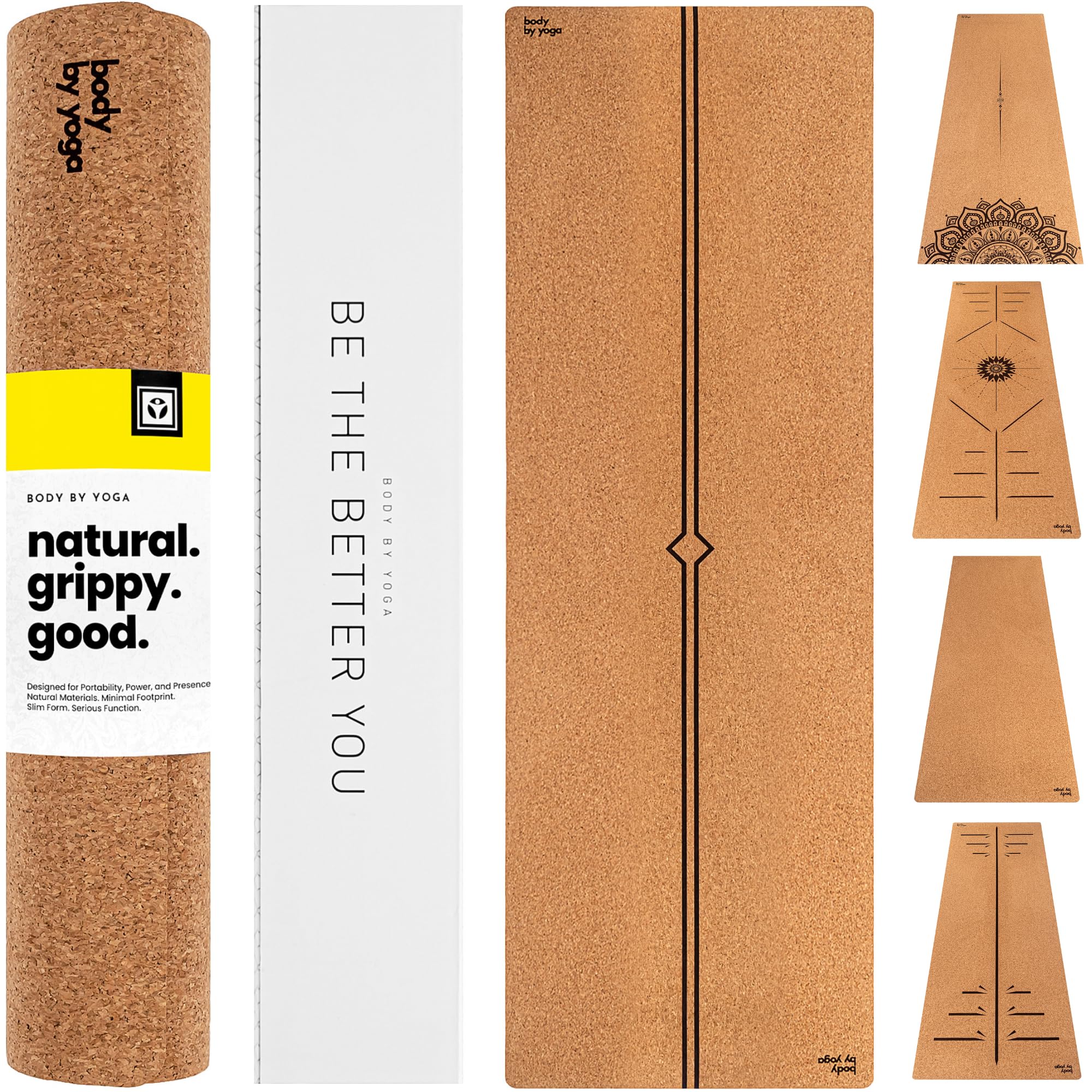
This mat answers the real engineering question behind cork: grip engages as practice warms up, the surface holding firmer under sweaty palms instead of going slick the way cheap tops do. The 4.25 mm profile cushions tender knees during lunges and low poses, yet stays steady enough for balance work. Owners describe the natural-rubber base keeping its floor position through long vinyasa sequences without creeping.

Cork bonded to natural rubber goes where cork-over-TPE mats do not: the layer resists the peeling that appears when moisture and friction hit a cheaper base every session. Several seasons in, the surface texture stays intact, which is the quiet logic behind the sticker price. The cushion sits close to the floor — supportive without the unsteady sponginess of thick foam mats.

This one suits the practitioner who trains several times a week in a home studio and wants a surface that still performs once the novelty wears off. Hot-yoga-at-home yogis get the moisture-reactive grip; anyone with sensitive knees gets forgiving yet stable support. For regular practice in one dedicated room, this is the tier worth buying into.

💡 Dampen your palms or mist the mat as you warm up — grip engages fully once moisture reaches the cork surface.

Pros

  • Grip engages with moisture and tightens as the session heats up, holding sweaty palms steady.
  • Cushioning spares tender knees while staying firm enough for balance work.
  • Natural rubber resists the cork peeling that budget TPE bases show over time.
  • Premium pricing reads fair against a string of cheaper mats that need replacing.

Cons

  • A bone-dry new surface can feel slick for the opening minutes before moisture primes the cork.
  • At about six pounds it is a home-practice mat
Our verdict

Set it up in the room where you practice daily and give it steady use — the surface that still grips into its second year is what the premium buys.

Check Latest Price
2

Best Value with Alignment Lines

Y O GAYO Cork Mat 5mm

87 /100
Trail Score Excellent

Key details

Weight
8.35 lb
Thickness
5mm
Dimensions
72 x 26 in
Base Material
Natural rubber
Check Price on Amazon

A neutral cork surface over a dense 5mm natural-rubber base, Y O GAYO earns uniformly positive marks for how it anchors hands and feet the moment palms warm. The baked-in alignment guides correct foot and hand placement that body memory cannot reliably reset, and reviewers consistently call the build their favorite mat for the money. At a mid-range price it undercuts the pricier flagship while keeping comparable rubber construction and nontoxic materials.

This mat suits home practitioners logging sweaty vinyasa or hot sessions where moisture turns the cork grippier, plus anyone who second-guesses foot placement and wants placement lines that read clearly on the floor. The dense cushioning absorbs floor pressure through longer holds. It will earn its keep in a permanent practice spot rather than a tote bag, so yogis who trek to a studio each week should compare carry weights before committing.

💡 Mist the cork surface with water before practice so the grip engages as palms warm.

Pros

  • Alignment guides that correct hand and foot placement, praised uniformly for resetting bad habits.
  • Moisture-activated grip that keeps hands and feet anchored once practice turns sweaty.
  • Soft yet dense cushioning that eases knees through longer seated holds.

Cons

  • At over 8 lb, the heaviest mat in the set, a real burden for anyone who carries a mat to class.
Our verdict

For home practice that needs natural-rubber grip plus visual alignment guidance at a friendlier price, this is the honest value buy. Commuters should look at lighter alternatives.

Check Latest Price
3

Best for Tall Practitioners

Satori Cork Mat 80in

87 /100
Trail Score Excellent

Key details

Weight
5.5 lb
Thickness
4mm
Dimensions
80 x 26 in
Base Material
Natural rubber
Check Price on Amazon

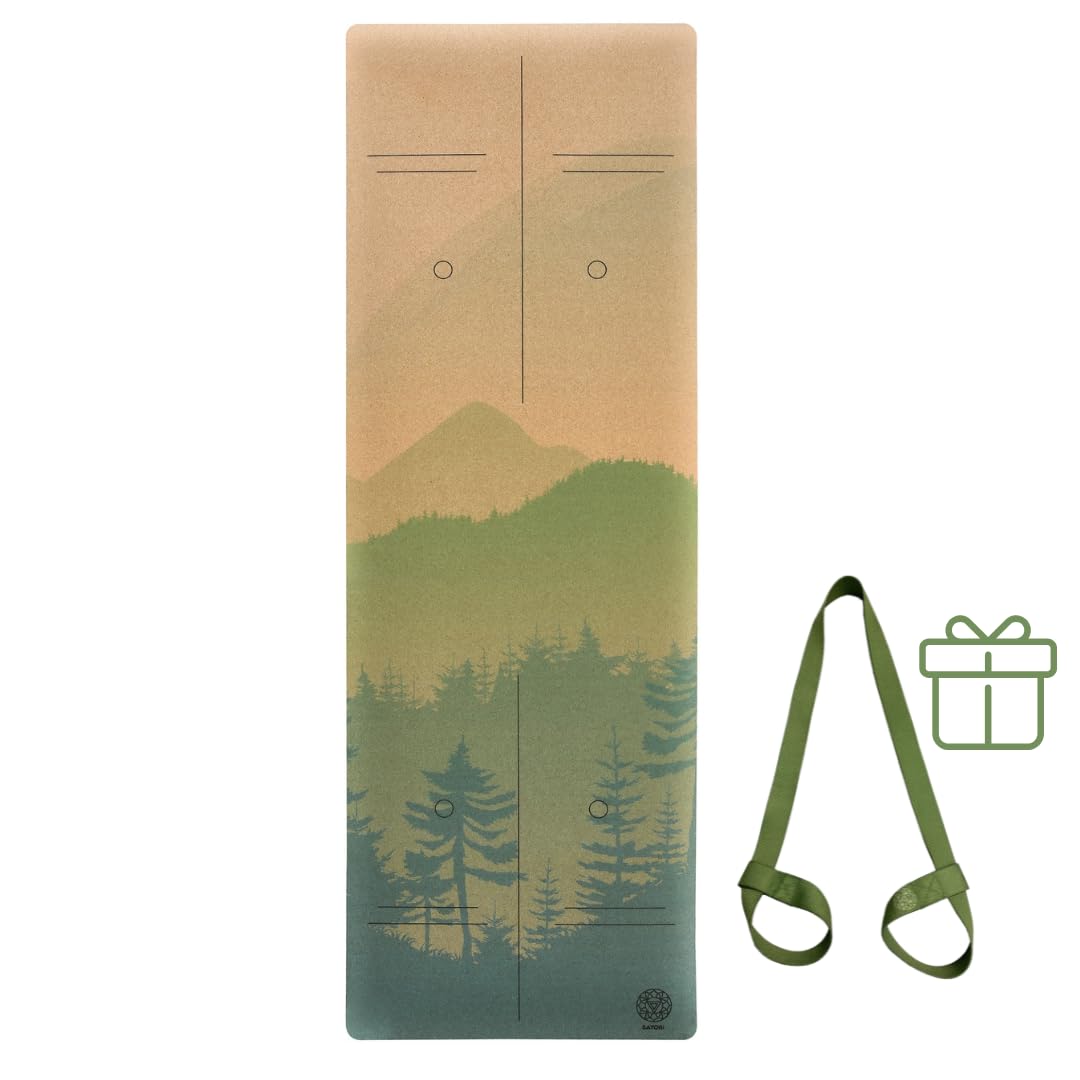
The 80-inch deck adds a full 10 inches over the 72-inch standard, so a centered down-dog stops ending with toes creeping toward the front edge. The natural-rubber base bites into sweaty palms through heated vinyasa, and the nature-inspired prints keep the cork fresher-looking than a plain tan sheet. Weighing 5.5 lb with the carry strap included, it packs light relative to its length.

This is the mat for practitioners 5'10" and taller who practice at home, where an 80-inch roll unfolds on an open floor instead of straining a standard studio cubby — measure your storage first, since this length will not clear typical racks. The 4mm rubber base keeps a supportive, lightly cushioned feel underfoot, suited to steady home sequences and easy to wipe clean after each flow.

💡 Dampen your palms before the first session — the cork builds its hold once it meets a bit of moisture.

Pros

  • Full 80-inch surface keeps practitioners 5'10" and taller planted through down-dog.
  • Natural-rubber base grips sweaty palms through full sessions.
  • Distinct nature prints keep the surface fresh-looking and easy to clean.

Cons

  • Cork needs a few warm-up flows before its grip settles in.
  • The 80-inch length may not clear standard studio cubbies or racks.
Our verdict

The premium price pays off specifically for practitioners over 5'10" who train at home. Shorter yogis or those storing in a standard studio cubby will find the extra length buys little they need.

Check Latest Price
4

Best Lightweight for Travel

StrongTek Cork Mat 7mm

78 /100
Trail Score Very Good

Key details

Weight
2.2 lb
Thickness
7mm
Dimensions
72 x 24 in
Base Material
TPE
Check Price on Amazon

At 2.2 lb with a 7 mm profile, this is the lightest cork mat in the set — easy to sling over a shoulder for the trip to the studio — and it still cushions knees and hips through kneeling work. That portability-plus-padding pairing at a budget-friendly price is the draw for anyone tired of carrying six pounds to class.

Best for commuters who refuse to bring a heavy mat to a lunchtime class, and for beginners who want forgiving cushioning at an entry-level price. The cork top can stay slick until it picks up a little moisture, which matters in sweaty flow but not in moderate practice on a dry mat, and multi-year durability on this TPE base is less documented than on the natural-rubber options here — so it suits someone finding their routine more than a ten-year daily habit.

Pros

  • Light enough to carry daily
  • Generous 7 mm padding cushions knees and hips on hard floors.
  • Solid feel for the money on a dense, well-built TPE base.

Cons

  • Sweaty down-dog can test grip until the cork takes on moisture.
  • Long-term use may reveal occasional cork bonding or surface wear.
Our verdict

Right for the yogi who puts portability and joint comfort ahead of multi-year durability — if you plan to practice hot and daily for years, the natural-rubber builds in this set track better.

Check Latest Price
5

Best Extra-Wide Surface

HAPBEAR Wide Cork Mat

80 /100
Trail Score Excellent

Key details

Weight
5.4 lb
Thickness
6mm
Dimensions
72 x 36 in
Base Material
TPE
Check Price on Amazon

Widest cork surface in this set at 36 inches, a measure that keeps a larger body or a wide-lunge firmly on the mat. HAPBEAR pairs that room with a carry bag and five resistance bands at a budget price, a combination the featherweight alternative here can't match since it trims width to stay portable. This is not a hot-yoga mat; the TPE base and its grip trail the natural-rubber studio builds ranked above it.

For home floor work — stretches, Pilates, wide-stance poses — the extra width genuinely serves larger-bodied practitioners who kept sliding off standard mats. Two boundaries follow: the TPE base can skid on polished hardwood, so carpet or rubber studio flooring is the right setting, and the 6mm profile reads softer in spec than it feels under joint-heavy holds. Choose it for comfort in width, not for premium cushioning.

💡 Lay it over a rug or rubber floor mat; the TPE backing grips firmly everywhere off hardwood.

Pros

  • Extra-wide 36-inch surface keeps larger bodies and wide-stance flow on the mat.
  • Comfortable quality surface that holds its position during floor work.
  • Carry bag and five resistance bands fold into the budget price.

Cons

  • During joint-sensitive floor poses, the 6mm profile can feel thinner than the spec implies.
  • On polished hardwood the TPE base can slide; carpet and studio flooring keep it planted.
Our verdict

Buy this for the width — it's the reason larger-bodied home stretchers switch. Keep practice on carpet or studio flooring so the TPE base stays planted.

Check Latest Price
6

Best Plush Comfort

GURUS Cork Mat

82 /100
Trail Score Excellent

Key details

Weight
6.3 lb
Thickness
—
Dimensions
72 x 25 in
Base Material
Natural rubber
Check Price on Amazon

The softest surface in this set pairs a plush natural-rubber core with a truly odor-free arrival — no rubber or cork scent out of the box, so practice can start the moment the mat unrolls. Where the leading rubber mat in this group wins on documented durability, this one leads on immediate cushioning, softening knees and spine across every pose.

Traction holds through sweat: palms and feet stay planted mid-flow, and the 72-inch length suits most frames. That combination puts this mat squarely in front of joint-sensitive hot yogis who want soft support from day one. The catch sits at the register — at roughly $100 it shows no spec advantage over cheaper natural-rubber rivals that grip just as well, so the premium funds comfort rather than material superiority.

Pros

  • Plush cushioning that softens landings without feeling overly squishy.
  • Grip holds through sweaty hot-yoga flows, keeping hands and feet planted.
  • Odor-free out of the box, so the mat is usable the day it arrives.

Cons

  • Premium near-$100 price with no spec edge over natural-rubber rivals that grip as well.
  • Cork-layer peeling has appeared on some units, though the brand replaces them with free extras.
Our verdict

For hot yogis who rank soft landings above all else, this mat delivers fragrance-free comfort from the first session at home.

Check Latest Price
7

Clean Eco Pick

Ecoga Cork Mat 5mm

87 /100
Trail Score Excellent

Key details

Weight
6.6 lb
Thickness
5mm
Dimensions
72 x 24 in
Base Material
Natural rubber
Check Price on Amazon

Ecoga's 5mm mat layers natural rubber beneath a cork face that arrives free of the chemical smell some synthetic bases carry, a detail that resonates with eco-conscious practitioners. Its etched midline keeps warriors and downdogs on track, while the cushioning takes pressure off knees and hips through longer ground sequences. For home yogis who prioritize clean materials over extra-wide or extra-long footprints, this is the steady middle ground between bare-budget cork and the premium options here.

Pros

  • Odor-free out of the box; the natural-rubber and cork combo avoids synthetic chemical smells.
  • 5mm cushioning absorbs pressure at knees and hips during longer floor sequences.

Cons

  • At roughly 6.6 pounds it leans heavy for daily transit, noticeable in a commute bag.
Our verdict

Choose this over the wider or longer cork mats in the set only when a clean, nontoxic 5mm build with an alignment aid at a fair price is the actual priority.

Check Latest Price
8

Design Travel Mat

Yoga Design Lab Cork

87 /100
Trail Score Excellent

Key details

Weight
3.9 lb
Thickness
—
Dimensions
—
Base Material
Natural rubber
Check Price on Amazon

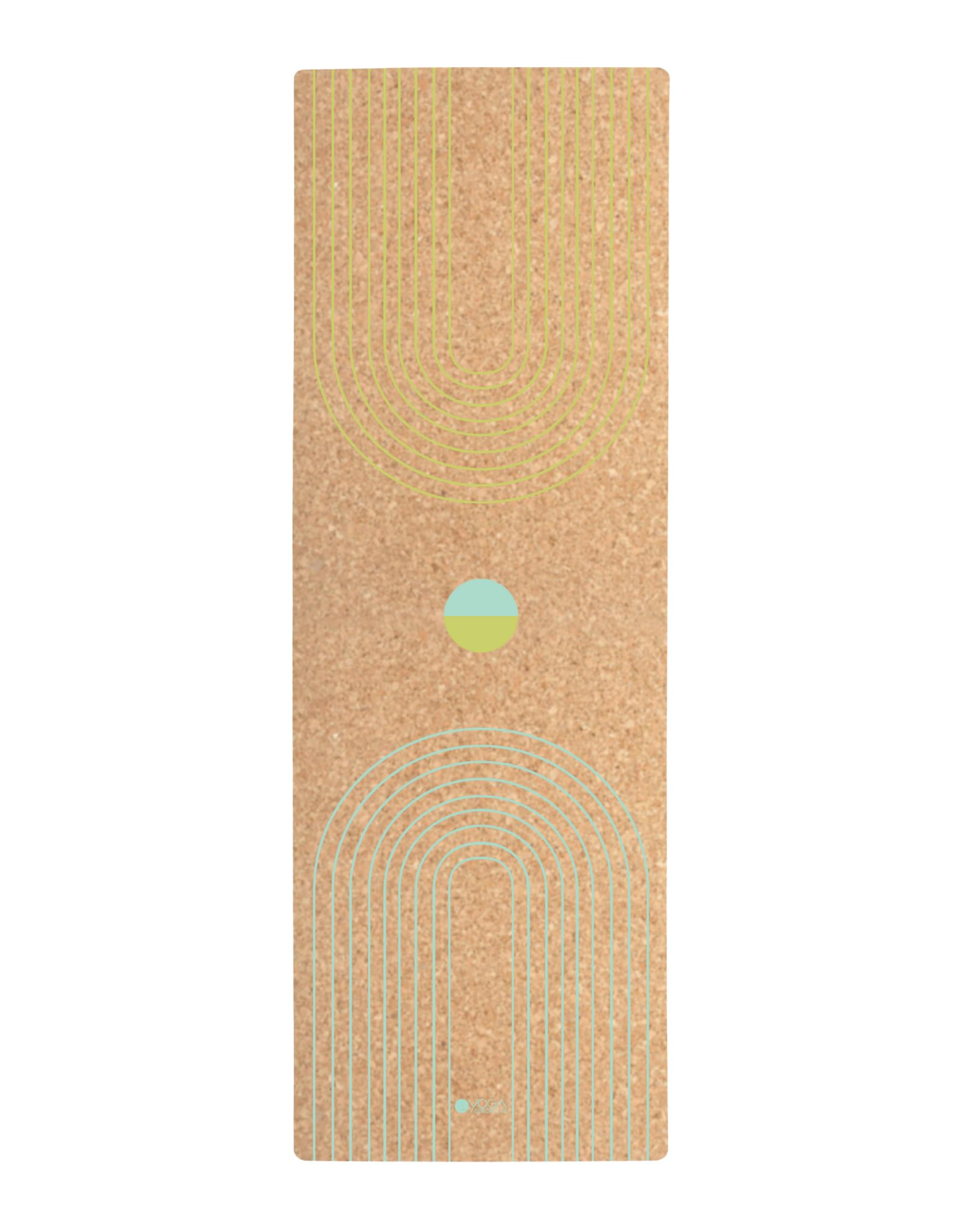
Yoga Design Lab carries the boldest visual identity in this set — printed cork surfaces reviewers uniformly praise — on a natural-rubber base whose sweat-activated grip holds up in heated classes, all at a travel-friendly 3.9 lb. The compromise is cushioning: this thin profile offers minimal joint padding, reading more as a travel layer than a home mat, and the cork bonding has shown rippling on some units after a few months. It fits hot-yoga travelers who practice over studio mats more than home practitioners needing support.

Pros

  • Printed cork tops reviewers consistently call the best-looking surface among these mats.
  • Light 3.9 lb natural-rubber build whose cork grip activates with sweat for hot practice.

Cons

  • The cork layer can ripple or lift from the rubber base after months of hot practice.
  • Thin build carries no joint cushioning; comfort in kneeling poses needs a second mat beneath.
Our verdict

The right fit for style-led hot yogis who haul their own printed surface to studios — not for anyone wanting cushioning from a single home mat.

Check Latest Price
9

Budget Light Travel

Numat Cork Mat 6mm

84 /100
Trail Score Excellent

Key details

Weight
2 lb
Thickness
6mm
Dimensions
72 x 24 in
Base Material
TPE
Check Price on Amazon

At 2 lb with a carrying bag, this is the lightest cork mat in the set at an entry price, and its 6mm profile plus alignment lines give beginners a stable base in heated classes. Cork bonded to a TPE foundation ages faster than the natural-rubber builds here, so the top layer can show wear before the rubber-base options settle in. That suits starter practice and travel more than a decade-long home studio piece — strong value once the shorter service life is understood.

Pros

  • Carry-friendly 2 lb build with quality that outpaces the budget tag
  • Alignment lines and grip that hold steady through heated sessions

Cons

  • TPE base gives the cork surface a shorter useful life before wear shows than rubber-base rivals
Our verdict

Best for budget-conscious beginners and travelers who want a light cork mat with a bag — treat it as a starter mat for occasional practice, not a multi-year workhorse.

Check Latest Price

How to Choose Cork Yoga Mats

Decide the Base Material

Natural-rubber and TPE bases look similar on a spec sheet but behave differently on the floor. Rubber is denser and more friction-heavy, anchoring your stance and holding a bonded cork layer through years of rolling and sweat; TPE is lighter and cheaper, yet cork-over-TPE mats dominate the peeling complaints in this category.

The trade-off is direct: rubber costs more and adds pounds, while TPE cuts both. If you practice at home more than twice a week or in hot rooms, the rubber base earns its price. Buy TPE only when commuting matters more than longevity.

Match Thickness to Your Practice

Thickness runs 4mm to 7mm, and it is a stability-versus-cushioning trade-off. A 4mm mat returns more floor feedback, helping you feel grounded in balancing poses, while a 6mm or 7mm surface cushions sensitive knees for floor work and longer holds.

Do not read the millimeter number as a sole comfort score. A dense 4mm rubber mat can feel plusher than a soft 6mm TPE build, because foam compresses differently under body weight. Let your joints and dominant poses, not the marketing thickness, guide the call.

Check How the Cork Is Bonded

The cork layer fails when the adhesive bond cannot handle repeated flexing. Every time you roll, unroll, and press down in a pose, the surface shears against the base; on low-density foam that stress concentrates at the edges, and sweaty moisture works its way under the layer until it lifts.

Natural-rubber mats tend to use a genuine cork sheet over a stiffer, denser base, which reduces relative movement and keeps the bond intact. Look for mats that specify real cork over a natural-rubber base, and skip ones whose reviews mention flaking or bubbling within the first months.

Fit Dimensions to Your Body

The standard mat measures 72 by 24 inches, which suits most practitioners up to about 5'9". Taller yogis run off the ends in down-dog, so an 80-inch surface is worth the upgrade, and wider builds benefit from 26-inch to 36-inch widths that end the falling-off-the-edge sensation.

Measure your storage before choosing an oversized option. An 80-inch mat will not fit a typical studio cubby or standard yoga bag, and a 36-inch-wide mat changes how it rolls and carries. Buy the extra surface only if your home rack and commute accommodate it.

Decide How Far the Mat Travels

Weight is the hidden cost of a durable mat. Natural-rubber bases run 5.5 to 8.5 lb, which is fine for a mat that lives at home but frustrating for anyone hauling it to a studio several times a week. The lightest options drop to about 2 lb, yet they trade away the rubber base that prevents peeling.

Be honest about your routine before buying. If you will carry the mat daily, a 2 to 3 lb TPE model makes sense even with its durability questions; if the mat stays home, a heavier natural-rubber build is the better long-term investment.

Look Past the Printed Finish

A printed cork-look laminate is not real cork. Budget mats sometimes use a thin printed layer over foam to mimic the texture, and that is the surface most likely to peel or wear through at contact points.

Real cork has a subtle grain that is consistent across the surface and slightly coarse to the touch. If the pattern looks too uniform or the mat is suspiciously inexpensive for its listed thickness, the 'cork' is probably a cosmetic layer rather than a functional one.

Weigh Odor Tolerance

Natural-rubber mats can smell strongly out of the box, with a scent that lingers until the material off-gasses over several days. Cork itself is nearly odorless, so the smell usually comes from the rubber base or the adhesives used to bond the layers.

If you are sensitive to smells or practice in a small room, look for mats that reviewers describe as odor-free from the start, or plan to air the mat out for a week before your first session. Some premium builds ship with zero noticeable odor.

Expect a Cork Break-In Period

New cork does not grip at full strength on day one. The surface is smooth and slightly slick until moisture from your hands, feet, or a light misting activates its natural texture — reviewers consistently describe the grip improving over the first several sessions.

Do not judge a cork mat during the first practice. If it still feels slippery after a week of use and a wet-down test, that is a grip problem; if it locks in once damp, it is simply doing what cork does.

Set a Realistic Budget

Cork mat pricing clusters into clear bands. Budget cork-over-TPE mats start around $38, mid-range cork-over-natural-rubber options sit between $48 and $70, and premium builds run from $79 to $83 with a luxury tier near $100.

The $65 to $80 range is where a genuine natural-rubber base and a real cork layer become standard, and that combination is what reviewers credit for true moisture-activated grip and long-term durability. Spending less saves money upfront but raises the odds of peeling within months.

Confirm Grip Before You Commit

A mat can feel secure in a quick store test yet slide once you sweat through a full session. Moisture-activated cork grips when damp, but the base underneath determines how well the whole mat stays planted on the floor.

Natural-rubber bases resist sliding on hardwood and studio floors even under heavy poses, while some TPE mats shift on smooth surfaces. If you practice on hardwood, prioritize a natural-rubber base and check reviews specifically for sliding or bunching complaints.

Frequently Asked Questions