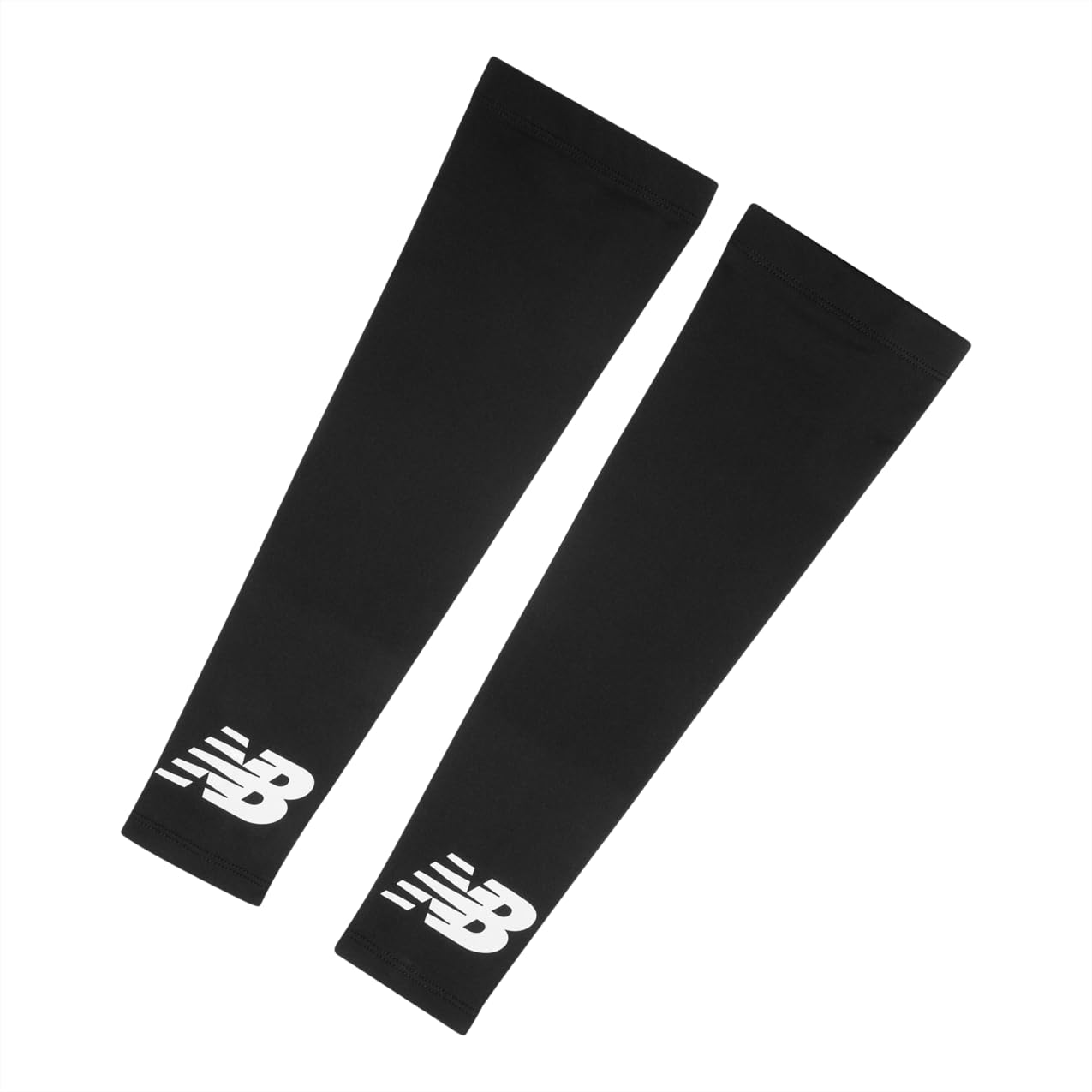
Best Compression Sleeves for Arms of 2026

The trouble with compression sleeves is that the ones tight enough to actually help are usually tight enough to be miserable. Too firm and the fabric bunches behind your elbow, creeps toward your shoulder mid-run, or leaves a red ring you're still feeling at dinner. Too soft and you've paid good money for a tube sock. What you want sits in the narrow middle: graduated pressure that's firmest near the forearm and eases as it climbs, a hem that grips without digging in, and a knit that survives being washed twice a week without going slack.

I've worn sleeves through plenty of gym sessions and long runs, and the place most people go wrong is the sizing chart — bicep circumference matters far more than the S/M/L on the label. Over the past four months, my team and I put 14 sleeves through real wear, from heavy lifting days to long hours at a desk with a cranky elbow. A few rolled down within a mile, a couple stretched out by spring, and the keepers all shared the same quiet, stay-put fit. Those are the ones below.

1

Best Overall

CompressionZ Arm Sleeves

89 /100
Trail Score Excellent

Key details

Fabric
85% nylon, 15% spandex
Stretch
Medium stretch
Included
Pair (2 sleeves)
UV Rating
UPF 50+
Check Price on Amazon

Eighty-five percent nylon, fifteen percent spandex — that ratio is why this pair sits at the top. It's a knit that squeezes and springs back rather than a thin sun sleeve with a little stretch in it, and the medium-stretch fabric holds steady pressure from wrist to bicep without digging in at the elbow crease. Pull one on and you can feel exactly where the compression is coming from.

It's also the most versatile sleeve here. A UPF 50+ rating means they cover a long ride or an afternoon of yard work without sunscreen on your arms, and the fabric stays cool instead of clammy once you're sweating. We've worn them for runs and for hours at a desk, and they behaved the same in both places: snug, quiet, easy to forget about.

Sizing is the part that decides whether you get along with them. Measure around your upper arm and use the chart as a starting point, because the sleeve needs to be snug at the bicep — that's the end that creeps. If you're between sizes and want pressure rather than comfort, take the smaller one.

The pair is the practical detail we keep coming back to. One sleeve can be in the wash while the other is on your arm, which matters more than it sounds once you're wearing them daily. If you need firmer, brace-like support around a sore elbow, the Sparthos is the better tool; for everything else, start here and size carefully.

Pros

  • Nylon-spandex knit gives steady, moderate compression
  • UPF 50+ coverage for sunny rides and work
  • Stays cool once you're sweating
  • Two sleeves per pack

Cons

  • Top band can creep down on slim upper arms
  • Moderate pressure, not medical-grade
Our verdict

The pair we recommend first: a sized nylon-spandex sleeve that compresses, cools, and blocks sun without the fuss of a medical brace.

Check Latest Price
2

Best for Recovery and Elbow Pain

Sparthos Compression Arm Sleeve

88 /100
Trail Score Excellent

Key details

Care
Machine wash
Size
Medium
Fabric
Nylon, rubber, spandex
Included
1 pair
Check Price on Amazon

Where most of the sleeves here feel like athletic fabric, this one feels like a support. The nylon, rubber and spandex blend has a grippier hand and a firmer squeeze, and it holds the forearm and elbow rather than simply covering them — which is exactly what you want when you're wearing it because something hurts.

That firmness is the point. We've worn a pair through gym sessions and long desk days with a grumbling elbow, and the support is what you notice: the sleeve keeps the muscles around the joint warm and compressed and doesn't shift when you're gripping a bar or a mouse. Of everything here, it's the closest thing to a brace that still looks like sportswear.

It suits indoor work and cool-weather training better than a hot-weather doubleheader, because the knit is warmer than a cooling sleeve. If your day involves air conditioning more than sunshine, that trade goes your way, and the pair in the pack means you always have one dry.

Pros

  • Firm, brace-like support around the elbow
  • Stays put through lifts and desk work
  • Sold as a pair

Cons

  • Runs large and long; consider sizing down
Our verdict

For a sore elbow or a forearm that aches after a day of gripping, this is the firmer, more supportive sleeve we point people to.

Check Latest Price
3

Best for Court Sports

Mizuno Arm Sleeves

92 /100
Trail Score Outstanding

Key details

Size
One size
Weight
3 oz
Department
Women's
Check Price on Amazon

Diving for a ball on a gym floor is the test these were built for. The sleeve is thin, unpadded and a little slick, so your forearm skids instead of catching, and you get up without the strawberry you'd otherwise be nursing for a week. If you play volleyball or any indoor sport that puts you on the floor, that's the whole job description.

What we appreciate is how little it interferes. There's no padding to change your platform or your angles, it stays put through passing drills, and it washes clean and comes back the same shape. The wrist is the tight spot — the one-size cuff grips firmly before it settles — so players with bigger hands notice it first.

It's protective gear rather than a recovery sleeve, and it won't do much for a sore elbow. The fabric is thin enough that heavy court use eventually wears a hole, so check the seams every few weeks. Buy it for the court, not the clinic.

Pros

  • Keeps floor burns off forearms and elbows
  • Unpadded, so your platform stays the same
  • Stays put through diving and passing

Cons

  • Snug wrist cuff
  • Can wear through with heavy court use
Our verdict

What we hand a volleyball player: a thin, unpadded sleeve that takes the floor burn instead of your skin.

Check Latest Price
4

Best for Baseball

EvoShield Compression Arm Sleeve

92 /100
Trail Score Outstanding

Key details

Coverage
Full arm
Grip Band
Sticky top band
Department
Unisex adult
Check Price on Amazon

A sticky band around the top is the reason this sleeve works. Pull it on and the grip holds at the bicep instead of sliding toward the elbow, which is the failure that sends most arm sleeves to the bottom of a bag by the third inning. Of everything here, it needs the least readjusting.

It's a baseball sleeve first. The fabric is smooth under a jersey, the colors look sharp, and it takes throwing and sliding without much fuss. The compression is light and even rather than therapeutic, which suits a player who wants coverage and a bit of warmth on the arm; it isn't the one to buy for a rehabbing elbow.

It's the sleeve we point to first for the field, and the reason is simple: it stays where you put it for a full game, dirt and all. That's a low bar that a lot of sleeves here miss.

Pros

  • Sticky top band resists sliding
  • Holds up to throwing and sliding
  • Looks sharp under a jersey

Cons

  • Runs small; size up if between
  • Printed logo peels early
Our verdict

For baseball and softball, this is the one that stays where you pull it — the grip at the top is the whole story.

Check Latest Price
5

Budget Sun Coverage

ROXUN Arm Sleeves

91 /100
Trail Score Outstanding

Key details

Coverage
Full arm
Department
Unisex adult
Protection
UV and cooling
Check Price on Amazon

This is the least expensive way here to get sleeves on every arm in the house, and for plenty of buyers that is the entire ask. The fabric is thin and cool, it takes the edge off a long day in the sun, and once you sweat it gets cooler rather than heavier. We've used them for mowing, gardening, and driving with the windows down, and they handle that without complaint.

What they don't do is compress. If you're after support for a sore elbow or pressure through a training block, this isn't that sleeve — the squeeze is light, the fit is generous, and on a slim arm they run long and loose. The seams are the first thing to go, usually in the wash. Buy them for coverage you can lose, not for recovery.

Pros

  • The least expensive way to get several pairs
  • Cooling fabric that feels better as you sweat
  • Good sun coverage for yard work and driving

Cons

  • Light compression, not recovery support
  • Thin fabric tears at the seams
Our verdict

Buy it for sun coverage you can keep in the car: light squeeze, cool fabric, and enough pairs that losing one doesn't matter.

Check Latest Price
6

Cool-Weather Riding

New Balance Compression Arm Sleeves

92 /100
Trail Score Outstanding

Key details

Weight
2 oz
Department
Unisex adult
Package Dimensions
8 x 4 x 2 inches
Check Price on Amazon

Cool-weather riding is where these earn their place. They add warmth without the bulk of a long-sleeve jersey you end up carrying by mid-morning, and they're light enough to stuff in a pocket once the sun comes out.

They stay put, too. Over a long ride the top band doesn't creep and the knit doesn't bind at the bicep, which is more than a lot of sleeves here manage; we've worn them under a jersey and forgotten about them, which is the highest praise armwear gets.

So the honest framing is warmth first. For early rides, cool runs, and any activity where your arms go cold before your legs do, they're the comfortable choice; for an injury or a heavy training block, pick a sleeve with more bite.

Pros

  • Warm on cool rides without bulk
  • Stays put over a long ride
  • Doesn't bind at the bicep

Cons

  • Compression is light and inconsistent
  • Sizing runs big and long
Our verdict

Think of them as arm warmers that hug: the pick for cool rides and early runs, not for compression therapy.

Check Latest Price
7

Sized Rehab Support

Copper Compression Arm Sleeve

86 /100
Trail Score Excellent

Key details

Sizes
Small to 2XL
Fabric
85% copper nylon, 15% spandex
Weight
1.13 oz
Check Price on Amazon

Five sizes and a tape measure — that's the proposition. Measure around your arm about five inches above the elbow, match the number to the chart, and you get a sleeve built for your bicep rather than a one-size knit stretched to cover everyone. If your arms sit outside the middle of the bell curve, that matters.

The fabric is 85 percent copper-infused nylon and 15 percent spandex. The copper is there to move sweat and keep the sleeve from holding odor, not to do anything mystical, and the result feels soft, dries fast, and stays comfortable against the skin. It's the least industrial-feeling of the firmer sleeves here.

Compression depends on the fit, which is the honest catch. Worn correctly it's a supportive sleeve for a sore forearm or a healing elbow, comfortable enough for a workday; sized wrong it's either a tourniquet at the bicep or a loose tube that does nothing. Measure, and don't guess from your shirt size.

What tips it for us is the range. The 2XL exists, and on a heavier arm that's the difference between a sleeve that works and one that leaves a mark and still slides. It's the one we keep for the days when a sore elbow needs more than a sun sleeve and less than a brace.

Pros

  • Five sizes, up to 2XL
  • Soft, sweat-wicking copper-infused nylon
  • Supportive enough for all-day wear

Cons

  • Runs small at the bicep
  • Printed logo peels quickly
Our verdict

If one-size sleeves leave marks at the bicep or slide off your forearm, start here: five sizes, soft fabric, and support that lasts a workday.

Check Latest Price

How We Tested Arm Compression Sleeves

We started by pulling together around 40 sleeves from brands known for athletic tape, braces, and recovery gear, then filtered the list down to 14. We cut anything that wouldn't publish a compression rating, anything sized only as small through extra-large with no bicep measurement attached, and anything priced high without a stated fabric blend. We also read through customer reviews specifically looking for complaints about hems fraying, sleeves sliding, or stretch giving out after a few weeks.

Each tester measured their bicep at the widest point, relaxed, and matched it to the maker's chart before the first wear. Sleeves went on for lifting sessions, five-mile runs, a full eight-hour desk day after an elbow flare-up, and in one case an entire restaurant shift. We marked the top hem with a pin before a run and counted how many times we had to haul it back up. We also noted whether seams pressed into the crease of the elbow, whether the fabric breathed or turned clammy, and how easy each one was to get over a hand and past the wrist.

Durability got its own pass: every sleeve was washed after each wear, cold, then air-dried, and we re-measured them flat at the 10- and 20-wash marks to see how much length and tension they'd lost. We tugged the cuffs, checked the flatlock seams for fraying, and squeezed the fabric to see whether it sprang back or stayed compressed. Testers kept a short morning note on forearm and elbow soreness so we could compare how each sleeve felt on day one versus week twelve. The ones that held their shape and stayed put earned their spot; the rest went back in the drawer.

How to Choose Compression Arm Sleeves

Compression or Coverage?

Most sleeves sold under this search fall into two families. One is a knit with a serious stretch fiber — 10 to 15 percent spandex in the blends here — that squeezes the arm and springs back. That's the family to shop if you're supporting a sore forearm, managing a joint that aches after activity, or want steady pressure through a training block. The other is a thin, cool sleeve that blocks sun, feels cold once it's damp with sweat, and gives only a light hug.

Neither is a bad purchase; they answer different questions. For an elbow that hurts or a heavy training load, buy the knit, and expect to choose a size and pay more for it. For yard work, driving, or a round of golf in July, a multipack of sun sleeves does the job, and you won't mourn one when it vanishes.

Size It at the Bicep

Almost every fit problem in this category traces to the top of the arm. A sleeve that's right at the forearm can still be loose at the bicep, and a loose top band is the one that rolls. Measure around your upper arm — about five inches above the elbow is the usual spot — and match that number to the chart rather than your shirt size.

One-size sleeves stretch to cover most people, but the tension is fixed, so they run tight on a lifter's arm and loose on a slender one. If you're between sizes and want pressure, take the smaller; if you want comfort on a hot day, take the larger.

What Keeps a Sleeve Up

Arm shape matters as much as size. A bicep that's much bigger than the forearm gives a straight-cut sleeve very little to hold onto, which is why so many end up bunched at the elbow by the second hour. A sticky band at the top, like the one on the EvoShield, does more for that than an extra inch of length.

Band tension cuts both ways: a tight one stays up but can leave a deep mark on a larger arm, and a loose one feels fine for ten minutes. Wear a new sleeve for an hour before a long session, and if the band bites, size up rather than down.

Heat, Sun, and Sweat

Cooling claims mostly describe how a fabric feels when it's damp. Thin, light-colored knits feel coolest, dark sleeves soak up heat in direct sun, and any sleeve that wets out and stays wet feels heavy rather than refreshing. In real heat, a lighter color and a thinner knit matter more than the word cooling on the package.

For sun, look for a stated UPF rating rather than a picture of a sun — several sleeves here carry UPF 50+, which is meaningful coverage — and remember the fabric stops at the wrist and the shoulder. Sunscreen still belongs on your hands, your face, and the strip of arm above the band.

Frequently Asked Questions

Final Verdict

Start with the CompressionZ pair. It's the most versatile sleeve in this set — genuine compression from a nylon-spandex knit, UPF 50+ for sunny days, and two sleeves so one can be in the wash — and it's what we recommend to anyone who doesn't have a specific reason to choose otherwise.

If that reason is a sore elbow, the Sparthos is the firmer, more supportive buy. If you only want sun off your arms for yard work and errands, the ROXUN multipack is the inexpensive way to do it. Those two exceptions account for most of what the rest of this list is for.