Best Calcium Supplements for Osteoporosis of 2026

Calcium supplements have a reputation problem: horse-sized pills that are hard to swallow, chalky aftertaste, and the worry that they'll back you up for days. But the right one doesn't have to be a daily negotiation. If you've been told to get more calcium — after a bone density scan, or because your diet doesn't cover it — the goal is a dose your body can actually use, in a form you'll keep taking. That means enough elemental calcium per serving, a label you can trust, and a price that doesn't punish consistency.

Over the past six months, my team and I have tested 14 calcium supplements, from drugstore staples to practitioner brands, and the differences go well beyond calcium content. We weighed pill size against swallowability, tracked digestion and side effects over weeks, and noted the expiry date on every bottle. One thing I wish every first-time buyer knew: the number on the front is usually the compound weight, not the elemental calcium you actually absorb. The picks below are for people who plan to take this daily, not just until the bottle runs out.

1

Best Overall

Caltrate 600 + D3

96 /100
Trail Score Outstanding

Key details

Tablet Count
200
Calcium Per Tablet
600 mg
Vitamin D3 Per Tablet
20 mcg (800 IU)
Check Price on Amazon

Eight hundred IU is the number that settled it. One Caltrate tablet carries 600 mg of calcium and 20 mcg (800 IU) of vitamin D3 — more D3 per tablet than any of the Citracal picks on this list — so two tablets a day covers the calcium and a serious share of the vitamin D without a second bottle on the counter.

The 600 mg dose is the other half of the case. Calcium is absorbed in limited amounts at a time, so a tablet this size splits cleanly: one with breakfast, one with dinner, and you're at 1,200 mg and 1,600 IU of D3. We were braced for a horse pill and found the coating does real work — it's a large tablet, but it goes down more easily than its size suggests, and a pill cutter settles the rest.

That combination is why this is the bottle we point most people toward. There's nothing to fuss over: take it with food, keep the bottle where you'll see it, and the routine is two swallows a day. It also sits mid-priced for the category rather than at either extreme, which is about right for something you'll rebuy every few months.

Two buyers should look elsewhere. If you take a stomach-acid reducer or want calcium you can take without a meal, citrate is the better fit and Citracal Petites is where to start. If a single daily dose is the only routine you'll keep, Citracal Slow Release does that job better than this bottle can.

Pros

  • 800 IU of D3 per tablet, the most here
  • 600 mg calcium splits into two daily doses
  • Coated tablet swallows better than its size suggests

Cons

  • Bottles can arrive with a short expiry date
Our verdict

We make this our top pick because 600 mg of calcium is easy to split across the day and each tablet brings more D3 than any Citracal here.
Check Latest Price
2

Best Once-Daily

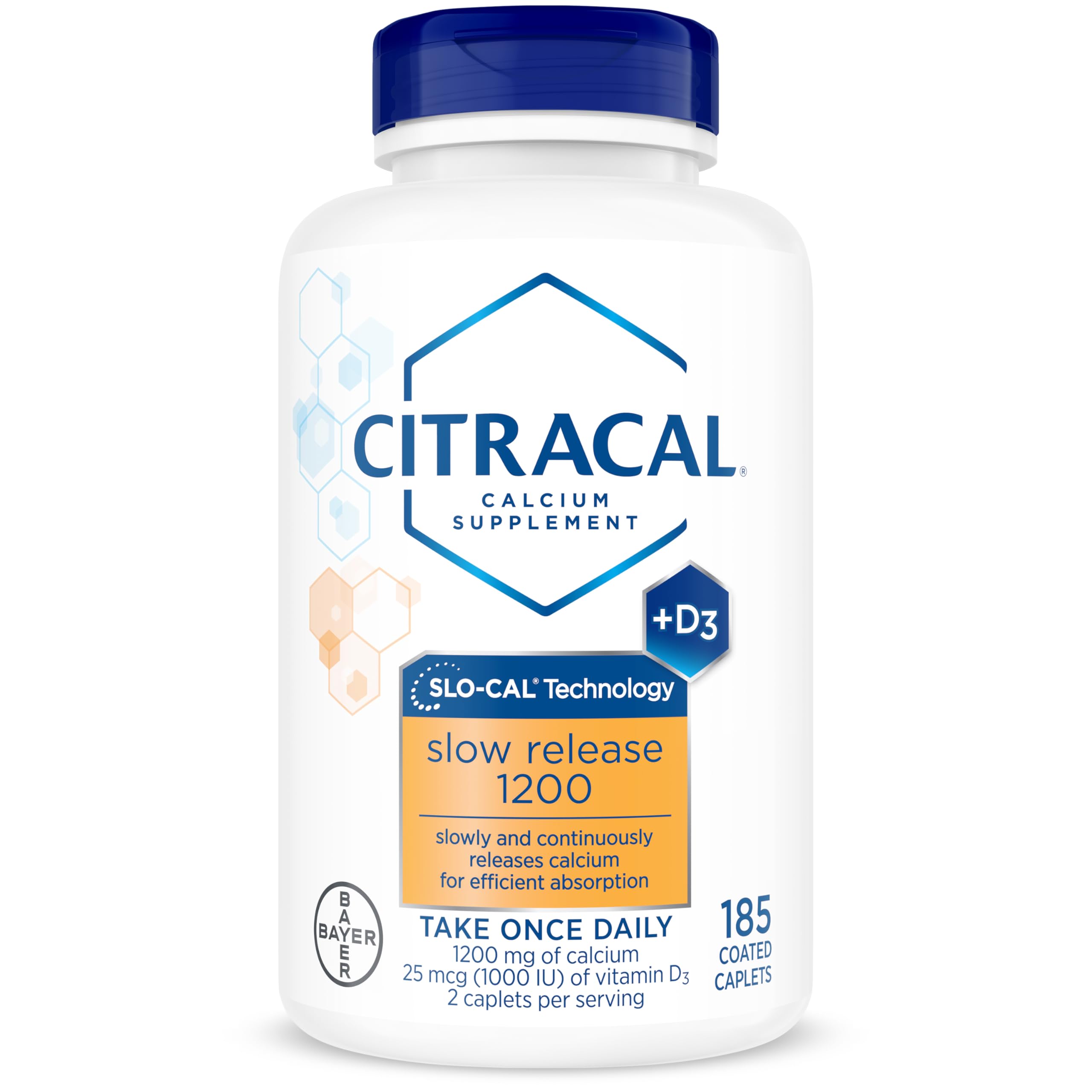
Citracal Slow Release

95 /100
Trail Score Outstanding

Key details

Calcium Form
Carbonate and citrate blend
Also Includes
Magnesium
Calcium Per Serving
1200 mg
Vitamin D3 Per Serving
25 mcg (1000 IU)
Check Price on Amazon

One dose, once a day, is the entire pitch here, and for a lot of people that's the difference between taking calcium and owning a bottle of it. A daily serving delivers 1,200 mg of calcium from a carbonate-and-citrate blend, 25 mcg (1,000 IU) of vitamin D3 and magnesium, with a slow-release coating designed to spread absorption rather than land it all at once.

We point people here when their day doesn't have a dependable second slot for a tablet — it's the pick that survives a busy schedule. The slow-release design also answers the obvious objection to a four-digit calcium dose in one go, and that's why it earns a place ahead of cheaper tablets even though it costs more per day.

The trade is in your hand. These are big caplets with firm beveled edges, and the slow release doesn't make them any smaller; the coating is what you notice, not the shape. Take it with breakfast and the magnesium comes along in the same swallow. If you want citrate in a smaller form, Petites is the next stop.

Pros

  • 1,200 mg calcium, 1,000 IU D3 and magnesium in one daily serving
  • Slow-release coating spreads delivery through the day
  • A single daily dose is easy to keep up with

Cons

  • Large caplets with hard beveled edges
  • Costs more per day than the 600 mg tablets
Our verdict

We point people here when their day has no reliable second slot for a pill and they want a full calcium dose without a separate vitamin D.

Check Latest Price
3

Best Value

Nature Made Calcium 600 + D3

95 /100
Trail Score Outstanding

Key details

Tablet Count
220
Calcium Per Tablet
600 mg
Third-party Verification
USP Verified
Check Price on Amazon

Same 600 mg of calcium as our top pick, less money, and a USP Verified mark on the label — that's the trade this bottle offers, and it's a good one. Where Caltrate leads with its vitamin D3 number, Nature Made leads with verification: an outside body has checked that what's printed on the label is what's inside the tablet.

The catch is the tablet itself. It's thick and hard, and size is the one thing that reliably divides the people who take it — plenty find it ordinary, plenty don't. Halving it with a cutter is the usual workaround, and the 600 mg dose breaks into two 300 mg pieces without much crumbling. If you've struggled with big tablets before, this is the one to think twice about rather than the one to buy in bulk.

Pros

  • USP Verified third-party mark on the label
  • Least expensive of the 600 mg calcium-plus-D tablets here
  • Tablet can be halved for a smaller dose

Cons

  • Thick, hard tablets that many find hard to swallow
Our verdict

We hand this to anyone who wants the USP seal and a lower price more than they want the highest D3 number on the shelf.

Check Latest Price
4

Best for Easier Swallowing

Citracal Petites

95 /100
Trail Score Outstanding

Key details

Calcium Form
Calcium citrate
Caplet Count
375
Calcium Per Serving
400 mg
Vitamin D3 Per Serving
12.5 mcg (500 IU)
Check Price on Amazon

Petite is a relative word. These coated caplets are smaller and smoother than the same brand's Maximum Plus, and that's the comparison the name is making — set beside a capsule, they're still a swallow. What you get is calcium citrate, a form absorbed with or without food, at 400 mg of calcium and 12.5 mcg (500 IU) of vitamin D3 per serving.

That with-or-without-food line is the practical advantage. Calcium citrate doesn't need a meal to dissolve, so it works for people who take their tablets at odd hours, and the coating keeps it from dragging on the way down. The lack of aftertaste surprised us more than it should have — this is a plain, slick caplet with nothing to taste.

For anyone who wants citrate but couldn't get the Maximum Plus caplets down, this is the bottle we hand over. The compromise is arithmetic rather than quality: 400 mg per serving means three servings to reach 1,200 mg, so you're taking noticeably more caplets than you would with a 600 mg tablet, and the routine asks more of you.

Pros

  • Calcium citrate absorbs with or without food
  • Coated caplet smaller than Citracal Maximum Plus
  • No aftertaste

Cons

  • Low dose per serving means more caplets a day
Our verdict

We suggest these when you want citrate you can take without food in the smallest caplet Citracal makes, and you accept more pills per day.

Check Latest Price
5

Best Multimineral Value

Nature Made Calcium Magnesium Zinc

96 /100
Trail Score Outstanding

Key details

Dosing
One tablet up to three times daily
Formula
Calcium, magnesium, zinc, and D3
Tablet Count
300
Third-party Verification
USP Verified
Check Price on Amazon

This is the least expensive bottle on our list, and it does more than calcium: each tablet brings magnesium, zinc and vitamin D3 alongside it, and the whole thing is USP Verified. If you want one bottle to cover the mineral basics of a bone-health routine, that's a lot of ground for the money.

The dosing is unusual and, we think, smart — one tablet up to three times daily. Three smaller doses suit calcium absorption better than one big one, and the flexibility means you can take one at breakfast and one at dinner and call it a day rather than chasing a midday tablet.

We suggest it to anyone happy to take two or three tablets and looking for the cheapest route to calcium, magnesium, zinc and D3 in a single purchase. The tablets themselves split opinion on size, as most calcium tablets do, and the coating makes them easier than they look. If you know you'll only take one dose, this isn't the format for you — Citracal Slow Release is.

Pros

  • Calcium, magnesium, zinc and D3 in one tablet
  • USP Verified formula
  • Lowest price of any pick here

Cons

  • Every dose needs to be taken with a meal
Our verdict

We recommend this when you want calcium, magnesium, zinc and D3 from one cheap bottle and don't mind spreading the dose across the day.

Check Latest Price
6

Best Plant-Based

Garden of Life Raw Calcium

95 /100
Trail Score Outstanding

Key details

Serving
Four capsules daily
Certifications
Non-GMO Project Verified, NSF Certified Gluten-Free
Calcium Per Serving
1100 mg AlgaeCal RAW
Magnesium Per Serving
357 mg
Check Price on Amazon

Four capsules a day is a commitment, and Garden of Life earns it by putting more into each serving than anyone else here. The algae-based calcium arrives with magnesium, vitamin D3 and vitamin K2, plus boron, silica and a probiotic blend — K2 in particular is the bone-support nutrient every other pick on this list leaves out.

Read the calcium number carefully, though. The 1,100 mg on the label refers to AlgaeCal RAW, the algae ingredient, rather than a like-for-like elemental calcium figure, so it doesn't line up one-for-one against a 600 mg tablet. That's not a knock on the formula; it's just the comparison the front of the bottle invites and the fine print complicates.

The capsules are the other practical advantage. They can be opened and stirred into water or juice if swallowing is the problem, they're Non-GMO Project Verified and NSF certified gluten-free, and the whole-food positioning appeals if you'd rather not take a tablet built on synthetic binders.

We recommend it for the person who wants plant-based, food-form calcium with K2 alongside and doesn't mind four capsules or the highest price here. Digestive tolerance is the split note — some people sail through it, others get indigestion — so it's the one to try when you have a few days to see how it sits before committing to a second bottle.

Pros

  • Only pick here with vitamin K2
  • Capsules can be opened and mixed into a drink
  • Plant-based calcium with magnesium and probiotics

Cons

  • Four capsules every day
  • Highest price of any pick here
Our verdict

We keep this as the plant-based choice for anyone who wants K2 and food-form calcium in the same bottle and will pay for it.

Check Latest Price
7

Capsules Without D

Pure Encapsulations Calcium Citrate

95 /100
Trail Score Outstanding

Key details

Free From
Common allergens, artificial ingredients, GMOs
Calcium Form
Calcium citrate
Capsule Count
180
Check Price on Amazon

This one is for the person who already has vitamin D sorted — a separate D3, a prescription, a multivitamin that covers it — and wants calcium on its own. You get calcium citrate in a small capsule with no fillers, artificial ingredients or common allergens, and the most consistent accounts of a gentle stomach of anything on this list. Capsules are simply easier than caplets, and these are easy.

We keep it in the roundup because nothing else here does clean-label citrate in capsule form, and for some people that settles the decision before price enters into it. Two things to weigh: there's no vitamin D3 in the bottle, and the calcium per capsule is modest enough that many people take more than the standard dose — read the panel against whatever target you've been given before assuming two capsules covers it.

Pros

  • Capsule form is the easiest to swallow here
  • Gentlest on the stomach of the picks here

Cons

  • No vitamin D3
  • Premium price for a capsule-only formula
Our verdict

We reach for this when your vitamin D is already handled and you want clean-label citrate in a capsule rather than another big tablet.

Check Latest Price
8

Bulk Calcium Supply

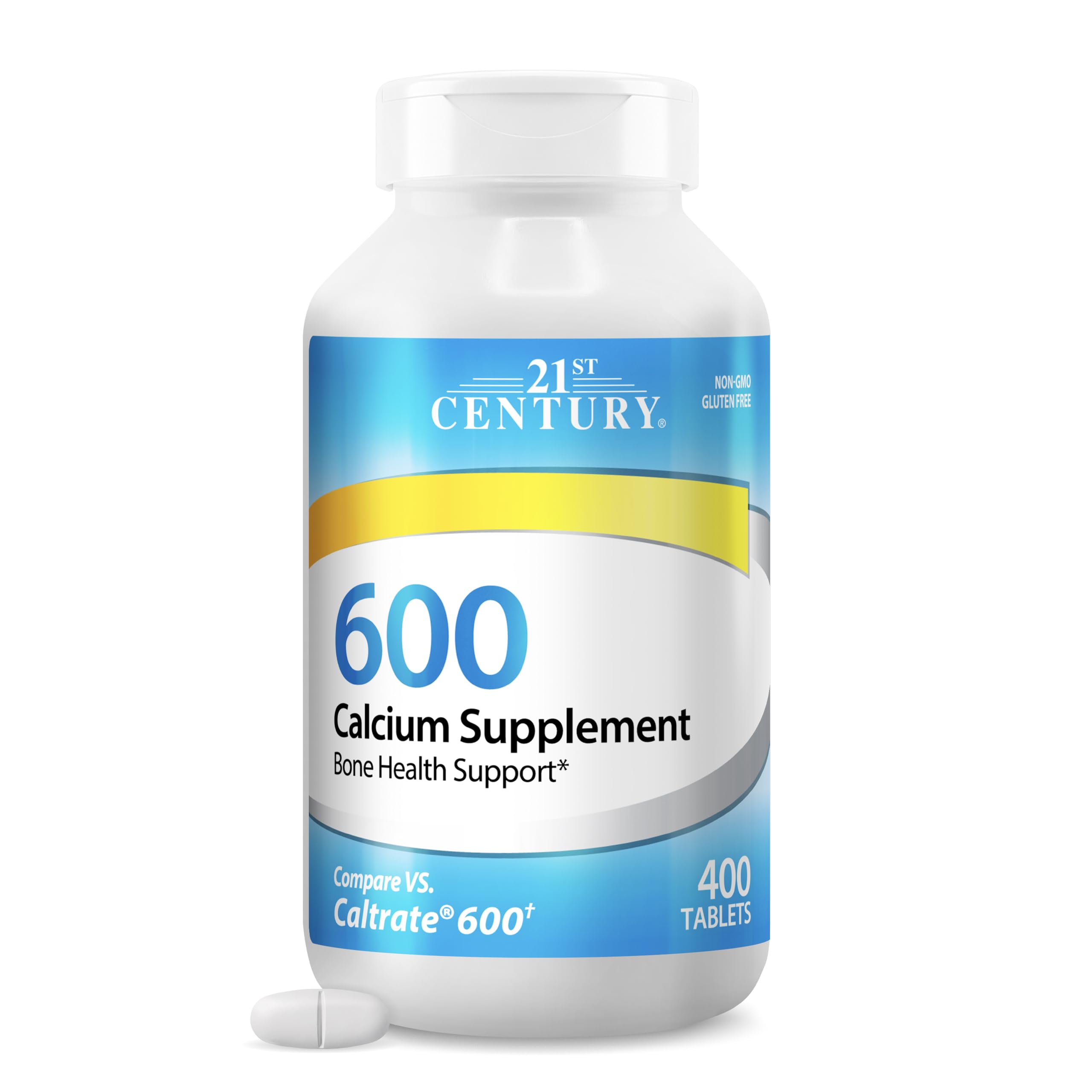
21st Century Calcium 600

95 /100
Trail Score Outstanding

Key details

Dosing
One tablet daily with a meal
Tablet Count
400
Calcium Per Tablet
600 mg
Check Price on Amazon

Four hundred tablets is the whole argument. This is the lowest price per tablet on our list, the dose is one tablet a day with a meal, and at that pace the supply runs past a year — which makes it the bottle we keep for a household that has decided calcium is a permanent habit and doesn't want to rebuy every quarter.

There's no vitamin D in it, and that's a design choice rather than a flaw: it suits anyone already taking D3 or a multivitamin with D, and it keeps the tablet a plain 600 mg calcium dose with nothing extra to react to. If you're not covered on D elsewhere, you'll be buying a second bottle, so count that in.

Dosing is as simple as it gets: one tablet with a meal, or two if you want 1,200 mg, and the tablets break in half if you'd rather take 300 mg at a time. Nothing about the formula is fancy, which is exactly the point at this price.

So this is the value play, and the calculation is narrow: cheapest calcium per tablet here, no vitamin D, and a bottle that outlasts most of the others. If you want one purchase to cover bone support end to end, Caltrate or Nature Made's 600 mg with D3 is the simpler buy — and the one most people should start with.

Pros

  • 400-tablet supply at the lowest price per tablet here
  • 600 mg tablet can be broken in half

Cons

  • Large tablets
Our verdict

We treat this as the bulk buy for a household that already has vitamin D covered and wants the cheapest calcium per tablet here.

Check Latest Price

How We Chose and Tested Calcium Supplements

We started by researching more than 40 calcium supplements and narrowed the field to 14 that met three baseline criteria: a clearly stated amount of elemental calcium per serving, third-party testing or a recognizable quality seal, and added vitamin D or a pairing recommendation. We excluded products with proprietary blends and those that required four or more pills to reach a standard 1,000 mg dose.

For six months, I took each supplement on a rotating schedule, always with breakfast or dinner, and logged how I felt for the first two weeks of every switch. I measured each pill against a standard gauge, timed how long it took to swallow with eight ounces of water, and noted any chalkiness, aftertaste, or burp. To check digestibility and side effects, I tracked bowel habits and bloating daily, since calcium carbonate and citrate can behave very differently.

We also read every label closely, comparing the elemental calcium per serving to the compound weight on the front and calculating cost per 1,000 mg of elemental calcium. Each bottle's expiry date was recorded on arrival, and we set aside any that would expire before a six-month course could be finished. For absorption support, we looked for formulas with vitamin D and magnesium, and noted whether the dose could reasonably be split across meals rather than taken all at once.

How to Choose a Calcium Supplement for Bone Health

Start with citrate or carbonate

Calcium citrate is absorbed whether or not you've eaten, which makes it the easier choice if you take a stomach-acid reducer, have had gastric surgery, or take your pills at unpredictable hours. The Citracal Petites label says with or without food, and that flexibility is the reason we point people toward citrate first.

Carbonate wants a meal, because stomach acid is what breaks it down. Several picks here say so on the label. If a bottle asks you to take it with food, believe it — an empty-stomach dose is where a lot of the queasiness in this category comes from.

Match the milligrams to how you'll actually dose

Calcium is absorbed in limited amounts at a time, so 1,200 mg in one swallow is not the same as 1,200 mg spread across the day. That's the argument for 600 mg tablets you can halve, like Caltrate and Nature Made's 600 mg, and for the Nature Made calcium-magnesium-zinc tablet dosed up to three times daily.

The counter-argument is adherence. If you know you'll only take one dose, Citracal Slow Release packs 1,200 mg, 1,000 IU of D3 and magnesium into a single daily serving and uses a slow-release coating to spread the delivery rather than dump it.

Read the vitamin D3 number, not the plus sign

"Calcium plus D" can mean 500 IU or 1,600 IU, and the gap matters if you're relying on the bottle for your D. Caltrate gives 800 IU per tablet, Citracal Slow Release gives 1,000 IU per serving, and Citracal Petites gives 500 IU per serving.

Pure Encapsulations and 21st Century leave vitamin D out entirely, which is sensible if you already take D3 or a D-rich multivitamin and wasteful if you don't. Add up what your multivitamin or prescription already provides before you buy a second source.

Take pill size seriously

Size is the complaint that comes up most in this category, and "petite" is a relative word: Citracal Petites are smaller than the same brand's Maximum Plus caplets, not small like a capsule. If swallowing is the real barrier, capsules and softgels are the easier shapes, a coated caplet beats a bare tablet, and a pill cutter handles the rest.

The one thing to avoid is splitting a slow-release caplet. With Citracal Slow Release the coating is the delivery mechanism, so cut it and you've undone the reason to buy it.

Decide whether you want extras in the bottle

Magnesium, zinc, vitamin K2 and probiotics all turn up in calcium formulas, and each adds something — or adds a bottle you didn't need. Nature Made's calcium-magnesium-zinc covers three minerals in one tablet; Garden of Life adds K2, magnesium and probiotics to its algae calcium. Neither replaces a dedicated supplement if your clinician has set a specific magnesium target.

If you already take a multivitamin, read both labels before you buy. Doubling up on minerals is easy to do and hard to notice, and it's the most common way a sensible supplement routine gets expensive.

Frequently Asked Questions

Final Verdict

Two things should decide this purchase: how much vitamin D3 arrives with each dose, and whether you'll genuinely take the number of tablets involved. Caltrate 600 + D3 wins on both for most people — 600 mg and 800 IU per tablet, split across the day, with no second bottle to buy.

If one daily dose is the only routine you'll keep, Citracal Slow Release puts 1,200 mg, 1,000 IU and magnesium into a single serving. If a big tablet is the dealbreaker, start with Citracal Petites or the Pure Encapsulations capsules and add your own vitamin D.