Best Body Lotions for Keratosis Pilaris of 2026

Keratosis pilaris is the kind of skin issue that makes you turn your arm and wonder why the bumps won't budge. Scrubs help for a day, but the rough, dotted texture on upper arms and thighs returns because the real job is keeping those follicles moisturized and calm without irritating them. A body lotion can't cure KP, but the right one can soften bumps, improve skin softness and appearance, and make the difference between hiding your arms and forgetting about them. My team and I spent four months testing sixteen formulas to find the ones that helped.

What surprised me was how often the most moisturizing formulas left a heavy film, and how many fragranced lotions stung before they smoothed a bump. We judged texture and consistency by how easily each one spread, and skin feel by whether we could dress soon afterward—non-greasy mattered as much as softness. We also tracked irritation, ease of use, and value for money, since a lotion only works if you'll use it daily. The picks earned a permanent spot on the bathroom counter.

1

Best Overall

CeraVe SA Moisturizing Cream

95 /100
Trail Score Outstanding

Key details

Size
16 oz
Fragrance
Fragrance-free
Exfoliating Acids
Salicylic acid and lactic acid
Barrier Ingredients
3 ceramides, niacinamide, hyaluronic acid
Check Price on Amazon

Salicylic acid and lactic acid in the same cream, plus three ceramides, niacinamide, and hyaluronic acid: on paper this is two products in one, an exfoliant and a barrier cream, and that's roughly how it behaves. Keratosis pilaris needs both, an acid to loosen the keratin plugging the follicle and a moisturizer rich enough that the skin doesn't rebound into roughness overnight.

We used it on the backs of the arms and the outer thighs after a shower, the two places KP settles in most people, and what struck us first was that it never felt like a treatment. No sting on intact skin, no sour smell, no film to wait out. The softening shows up in the texture before it shows up in the color, which is what we expected: roughness answers to the acids sooner than redness does.

The cream is thick enough to scoop and rich enough that dry shins don't need a second layer, and it doesn't sit on the surface the way a heavy urea cream can. Sixteen ounces goes a long way when you're treating arms and legs, and this is one of the few jars here we never found ourselves rationing.

Where it falls short is scope. It's a body cream, not a fast fix, and if you've already plateaued on over-the-counter acids, the 15% lactic acid cream in this guide is the step up. There's no added fragrance anywhere in it and no perceptible smell at all, which is more than the lactic acid lotions here can claim.

Pros

  • Combines salicylic and lactic acid in one step
  • Ceramides and niacinamide support the skin barrier
  • Fragrance-free with no noticeable scent
  • Rich cream that still absorbs

Cons

  • Doesn't state its acid percentages
  • Jar means scooping with fingers
Our verdict

We recommend it as the default: salicylic and lactic acid plus ceramides in one fragrance-free cream, so smoothing your arms doesn't need a separate routine.
Check Latest Price
2

Best Urea Lotion

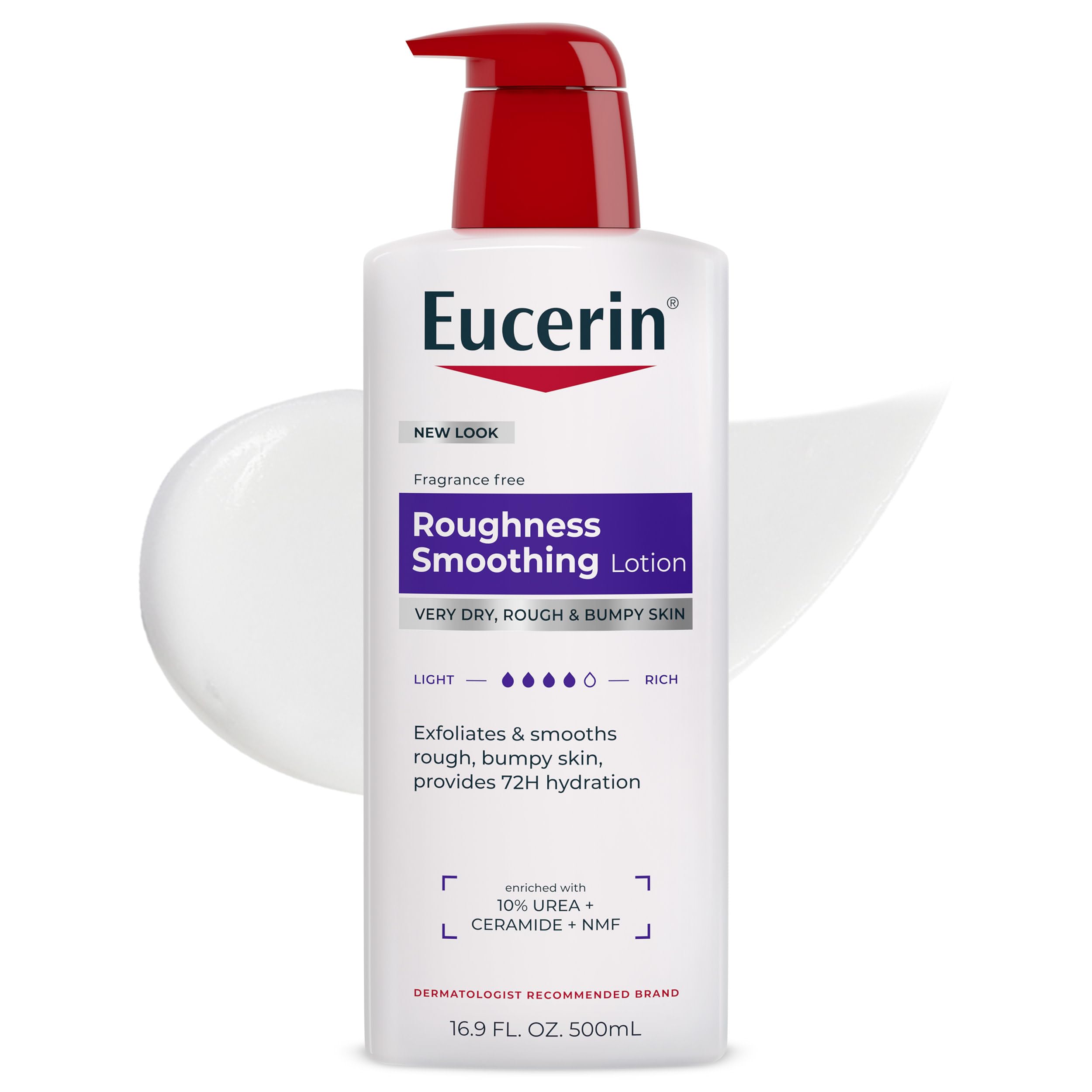
Eucerin Roughness Smoothing Lotion

93 /100
Trail Score Outstanding

Key details

Size
16.9 fl oz
Urea
10%
Fragrance
Fragrance-free
Hydration Claim
72 hours
Check Price on Amazon

Ten percent urea is the number that matters here. At 5% urea mostly holds water in the skin; at 10% it also breaks down the keratin that blocks the follicle, which is why this is the Eucerin bottle aimed at rough, bumpy skin rather than the one aimed at ordinary dryness. Ceramides and natural moisturizing factors round it out so the exfoliation doesn't leave you tight, and we think that balance makes it the right first bottle for most people with KP and dry legs.

It comes out of the pump thin and covers a whole leg in two or three pushes. Fragrance-, dye-, and paraben-free, nothing to object to on sensitive skin. The finish is the catch: it can stay tacky for several minutes, and pulling jeans on straight afterward is unpleasant. Apply it before bed, or give it five minutes with the bathroom fan on before you dress.

Where it wins is tolerance and cost. It's the cheaper of the two 10% urea lotions in this guide, and the 16.9-ounce bottle is big enough to use on heels and elbows without rationing. If the bumps have been there for years, start here anyway, and let a few weeks tell you whether urea alone is enough before you move on to the stronger acids.

Pros

  • 10% urea at a genuinely exfoliating strength
  • Fragrance-, dye-, and paraben-free
  • Large pump bottle works for feet and elbows too

Cons

  • Milder on hard bumps than the acid lotions
Our verdict

If your KP comes with genuinely dry, flaky legs, we think 10% urea in a fragrance-free pump bottle is the most sensible place to start.

Check Latest Price
3

Best for Stubborn Texture

Amlactin Daily Nourish Body Lotion

89 /100
Trail Score Excellent

Key details

Size
14.1 oz
Format
Lotion
Fragrance
Fragrance-free
Lactic Acid
12%
Check Price on Amazon

Unscrew the cap and the smell tells you what you're dealing with: a sour, faintly vinegar note that comes from the lactic acid itself, not from added fragrance. It fades as the lotion dries, and by the time you're dressed it's mostly gone, but those first few minutes are the price of the most exfoliation you'll get from any lotion here.

The formula is thin, closer to a serum than the CeraVe cream, and it comes out fast, so pump it into your palm rather than onto your leg. Twelve percent lactic acid is a real concentration: it turns over surface cells, which is what smooths the bumps, and it's buffered to a pH that lets it work without being caustic. Fragrance-free, dye-free, paraben-free.

We think of it as the second bottle, not the first. If a 5% urea lotion or a salicylic cream hasn't budged the bumps after a month of daily use, 12% lactic acid is the step that usually does, and a full 14 ounces means two pumps a leg twice a day still lasts.

Two practical notes. It can sting on legs you shaved that morning, so use it at night instead. And because the smell lingers on hands, wash them after, otherwise you'll catch it on everything you touch for the next hour.

Pros

  • 12% lactic acid, the strongest lotion in this guide
  • Fragrance-free despite the acid's own smell
  • Light enough for twice-daily use

Cons

  • Sour lactic acid smell while it dries
  • Thin, watery texture compared with the creams
Our verdict

We reach for this when a gentler lotion hasn't moved the bumps: 12% lactic acid works hard, as long as you can get past the smell.

Check Latest Price
4

Best Budget

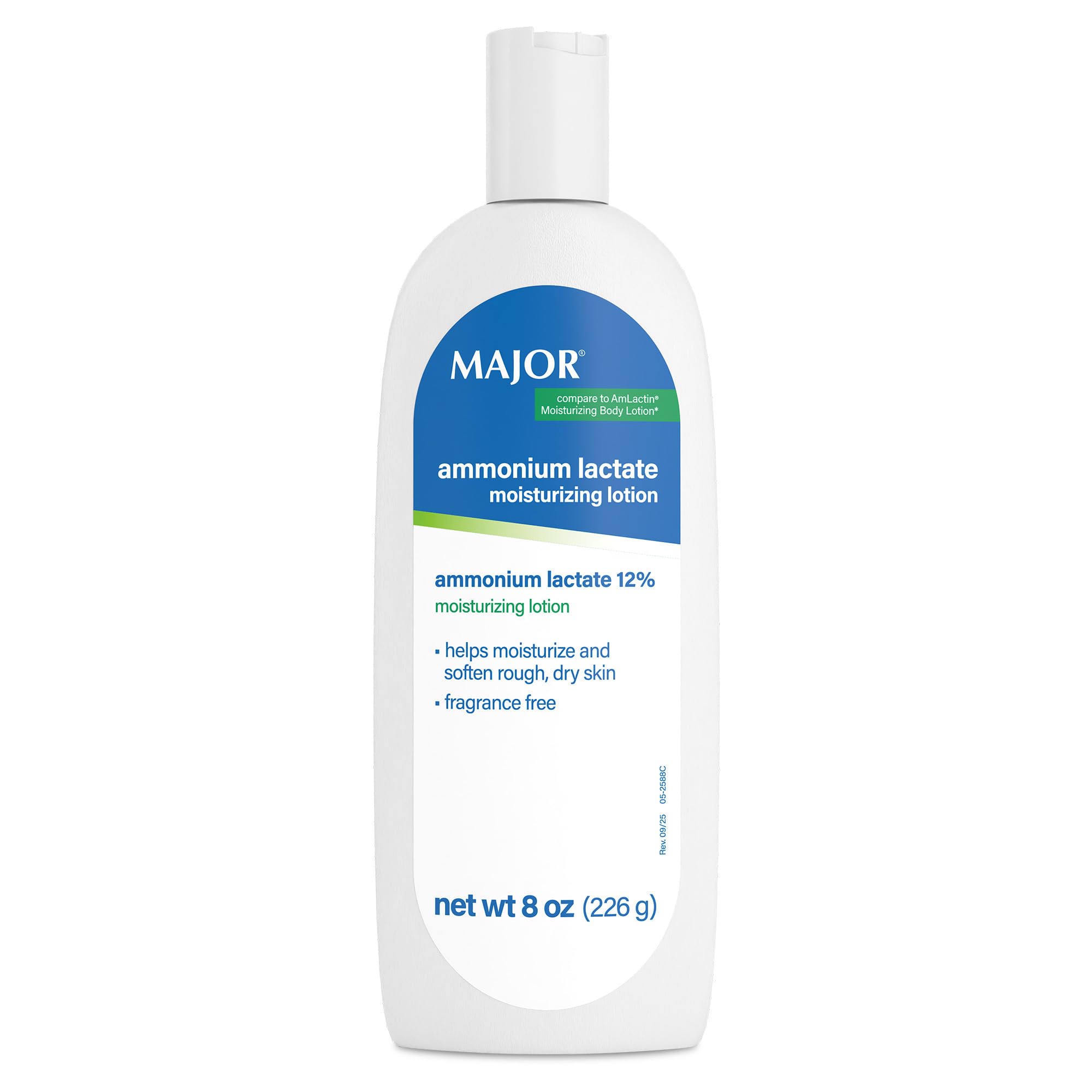
MAJOR Ammonium Lactate 12% Lotion

92 /100
Trail Score Outstanding

Key details

pH
4.5 to 5.5
Size
8 fl oz
Active
Ammonium lactate 12%
Fragrance
Fragrance-free
Check Price on Amazon

Twelve percent ammonium lactate is the same active in the brand-name lactic acid lotions, neutralized to a pH between 4.5 and 5.5 so it exfoliates without burning, and this eight-ounce bottle is the least expensive way to get it. We keep it by the shower and use it without thinking about the cost, which is exactly what a daily body lotion should allow.

It's thicker than the Amlactin lotion and takes longer to work in, with a tacky stretch before it dries, the trade for a formula that doesn't run off your shin. On dry, itchy legs and rough heels it holds its own against the pricier bottles, and while it's fragrance-free, the ammonium lactate still carries an odor of its own for the first few minutes. If you've never used a lactic acid lotion before, this is the one to test the idea with: same active, smaller commitment, no great loss if you hate the feel.

Pros

  • 12% lactic acid for the least money here
  • Fragrance-free formula
  • Reliable on dry, itchy legs and heels

Cons

  • Smallest bottle here, so it runs out fast
Our verdict

Our budget pick: the same 12% lactic acid as the brand-name lotions, at a price that makes daily full-body use easy to justify.

Check Latest Price
5

Best Lightweight Urea Option

La Roche-Posay Lipikar Urea 10% Lotion

94 /100
Trail Score Outstanding

Key details

Size
13.5 oz
Urea
10%
Hydration Claim
48 hours
Supporting Ingredients
Shea butter and allantoin
Check Price on Amazon

Same 10% urea as the Eucerin bottle, a different supporting cast: La Roche-Posay pairs it with shea butter and allantoin and builds a lighter lotion around it. On paper the two should behave alike. In the hand they don't.

This one is creamier, spreads further, and doesn't leave the tacky stretch the Eucerin does. The shea is doing that work, helping restore the skin's lipid film, and the allantoin is why it feels soothing on the red, itchy patches that often come along with KP rather than merely smoothing over them. It's the bottle we reach for after a shower when the backs of the arms are both bumpy and pink.

The label promises 48 hours of hydration, a number nobody can check from the outside. What we can say is that a morning application is still comfortable by evening and that it layers under sunscreen without pilling, which is more than the thicker creams in this guide manage.

Where we land: this is the urea lotion for someone who doesn't want to feel like they're applying a treatment. It's the most pleasant of the urea options to use, it soothes while it smooths, and it earns its counter space.

Pros

  • 10% urea with soothing shea butter and allantoin
  • Fragrance-free and light on the skin
  • 48-hour hydration per the label

Cons

  • Costs more per ounce than the Eucerin urea lotion
  • 10% urea smooths more slowly than the acids
Our verdict

We keep this for anyone who finds urea lotions heavy: 10% urea in the lightest, best-feeling formula here, with a premium to match.

Check Latest Price
6

Stubborn Rough Patches

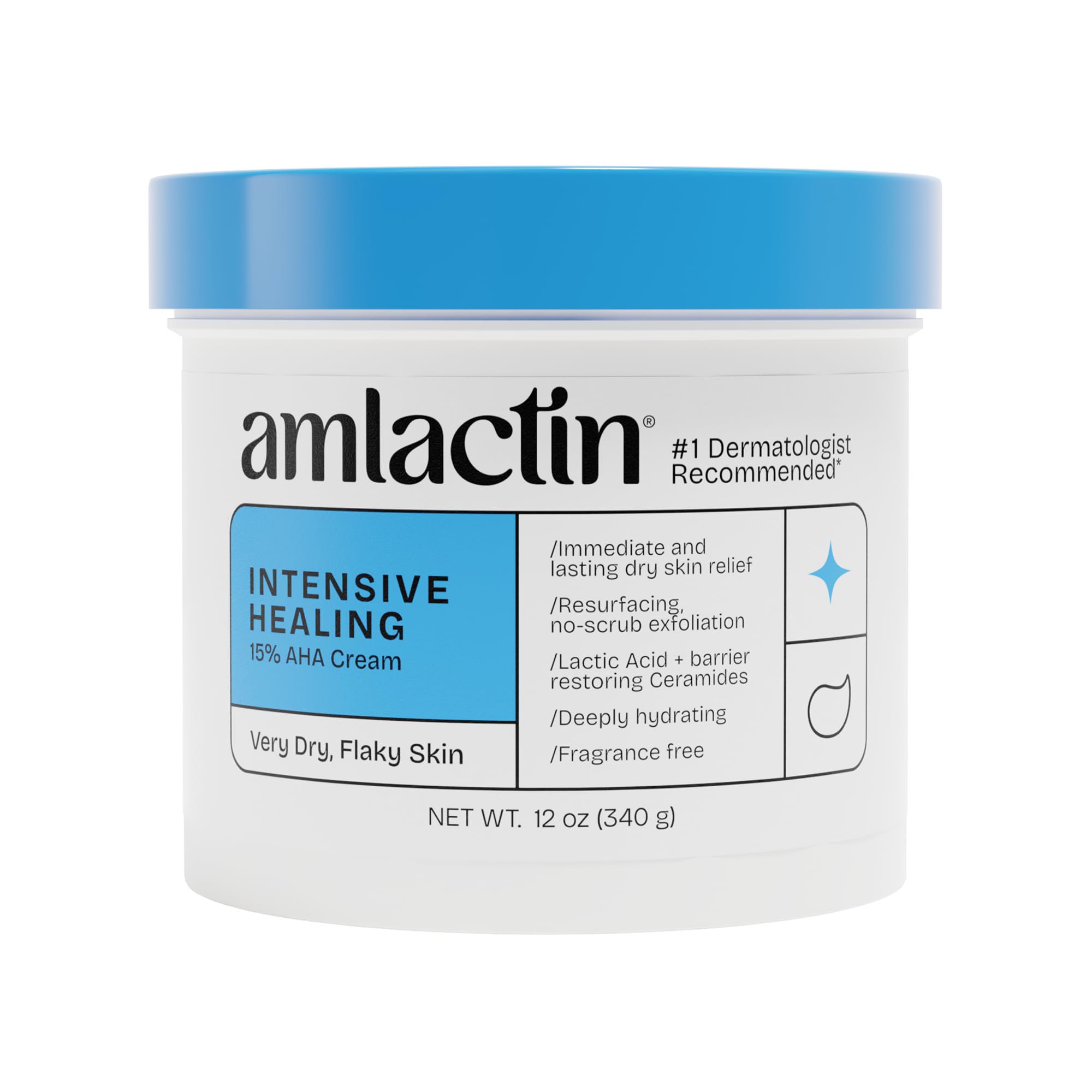
Amlactin Intensive Healing Body Cream

93 /100
Trail Score Outstanding

Key details

Size
12 oz
Format
Cream
Lactic Acid
15%
Barrier Ingredient
Ceramide 3
Check Price on Amazon

Fifteen percent lactic acid is the top of the range here, three points above the Amlactin lotion. That extra strength is for skin that has stopped responding to 12%, not for skin that's already irritated.

It's a cream, and a properly rich one, built with ceramide 3 to put back some of what the acid takes. On shins and the backs of the arms it stays where you put it. Whether it feels sticky depends on how much you use, and the answer is less than you think: a 12-ounce jar lasts a winter.

The smell is the same sour lactic note as the lotion and fades over the same half hour. If you're sensitive to it, this is a bedtime product: apply, wash your hands, and you'll barely register it.

We treat it as the escalation rather than the starting point. Give the 12% lotion six weeks of daily use first; if the roughness has stopped improving but hasn't cleared, move up to this, then drop to every other day if your skin starts to sting. It's the strongest exfoliating combination in this guide, and the only one here that pairs 15% lactic acid with ceramides.

Pros

  • 15% lactic acid, the strongest exfoliant here
  • Ceramide 3 offsets the acid's drying effect
  • Rich cream that stays where you put it

Cons

  • Can sting at this concentration
  • Costs more per ounce than the 12% lotion
Our verdict

Move to this if six weeks of 12% lactic acid has plateaued: 15% plus ceramides is the strongest exfoliating combination we tested.

Check Latest Price
7

Texture and Tone

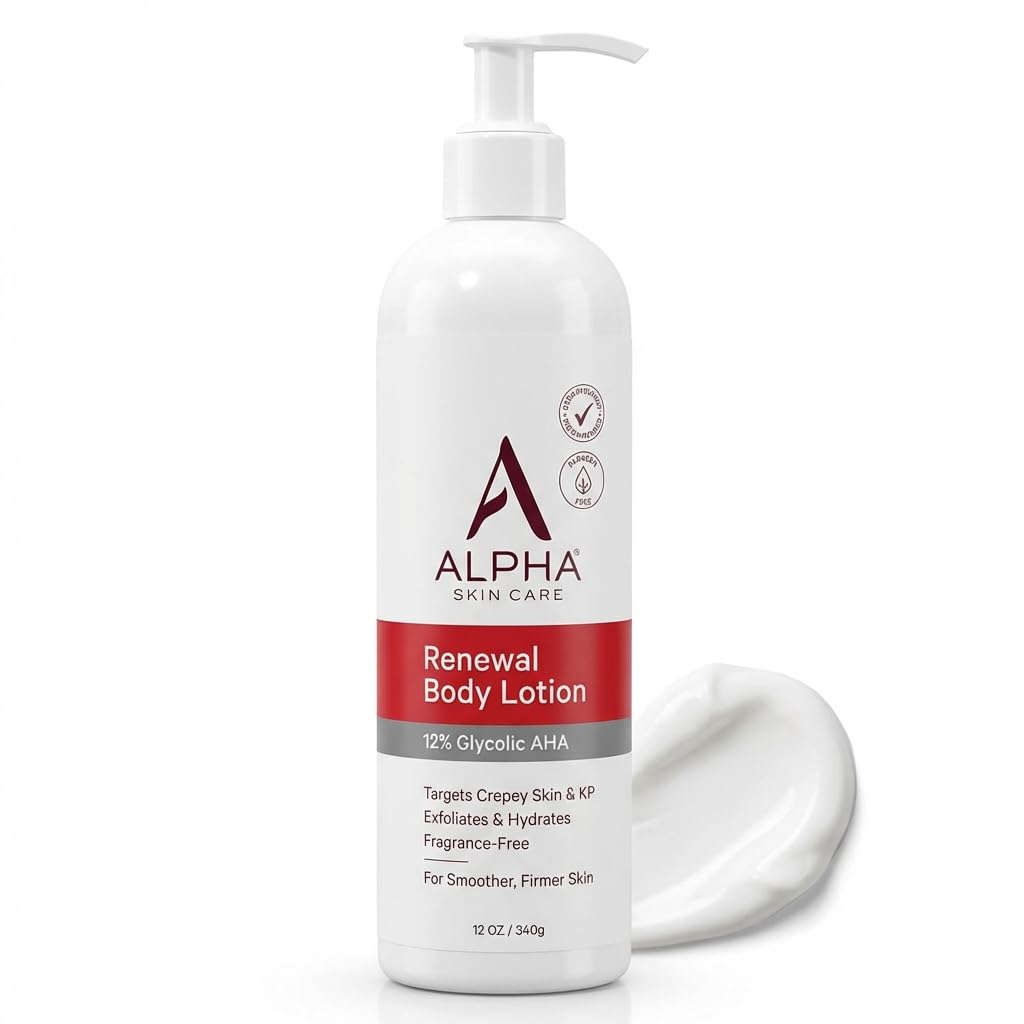
Alpha Skin Care Renewal Body Lotion

91 /100
Trail Score Outstanding

Key details

pH
4.0
Size
12 oz
Fragrance
No artificial fragrance
Glycolic Acid
12%
Check Price on Amazon

The bottle is the first thing you'll have an opinion about. Alpha's 12% glycolic lotion is thick enough that it fights its way out of a small flip-top opening, and getting the last third out takes real effort. Store it upside down, or transfer it to a pump.

What's inside is a genuine 12% glycolic acid at pH 4.0, the smallest of the AHAs, so it gets into the pore faster than lactic acid does. That makes it good at tone and texture: the crepey skin on the arms, the dullness on the shins, the places where KP has left the surface looking tired rather than bumpy. There's no added fragrance, and the formula is free of parabens.

We see it as a second bottle rather than a first. Use it when the roughness has already softened but the color hasn't evened out, or when you want an AHA with none of the sour-lactic smell. It's the least proven of these on the bumps themselves, so don't buy it expecting the same result as the salicylic and urea options.

Pros

  • 12% glycolic acid at a true pH 4.0
  • Noticeably improves tone and crepey texture
  • No added fragrance

Cons

  • Thick formula is hard to squeeze from the bottle
  • Can sting on freshly shaved legs
Our verdict

A good second bottle for texture and tone rather than bumps, as long as you can put up with the packaging.

Check Latest Price
8

Affordable Arm Care

Gold Bond Rough & Bumpy Cream

91 /100
Trail Score Outstanding

Key details

Format
8 oz cream
Testing
Dermatologist tested, non-irritating
Best For
Arms and legs
Moisturizers
7 moisturizers and 3 vitamins
Check Price on Amazon

Eight ounces of thick cream in a tub, aimed squarely at the backs of the arms and the fronts of the thighs. Gold Bond builds it on seven moisturizers and three vitamins rather than a named acid, so it works mostly by softening: the bumpiness eases, and the redness tends to hang on longer than the texture does.

We think of it as the entry-level cream. It's the least expensive way here to get a product aimed at rough, bumpy arms and legs, thick enough that a tub lasts, and easy to hand to someone who isn't ready to commit to a 12% acid. Apply it thin and work it in rather than layering it on. Buy it for skin that feels rough to the touch and for the habit of moisturizing daily; buy something with a named exfoliant if the bumps themselves are the problem.

Pros

  • Aimed squarely at rough, bumpy arms and legs
  • Cheapest cream in this guide
  • Softens skin noticeably with daily use

Cons

  • Dries to a film that can pill and crumble
  • Doesn't name its exfoliating ingredient
Our verdict

Worth it if you want the cheapest cream aimed at bumpy arms and legs and can live with a finish that pills.

Check Latest Price

How We Tested the Best Body Lotions for Keratosis Pilaris

We built the shortlist from body lotions marketed for rough, bumpy skin, then filtered by ingredient lists, fragrance-free options, and package formats that would survive daily use. That left sixteen lotions, which we tested for four months. I used each one after showering, before bed, and on rushed mornings, focusing on upper arms, thighs, and the backs of my arms where KP tends to show up.

Every formula went on freshly washed skin, then again on a freshly shaved leg to see whether it stung or turned the skin red. We photographed the same patch under the same lamp at the start and every four weeks, counting visible bumps and noting whether the skin looked calmer or rougher. Moisture was checked with a simple fingertip test before application and again six hours later, especially on dry office days.

Texture and consistency got judged at the pump: we noted whether a lotion came out thin, thick, or gel-like, how far one pump spread over a forearm, and whether it disappeared or left a sheen. After five minutes, we pulled on dark jeans and a long-sleeve shirt and checked for tackiness and transfer; that is how non-greasy earned its place on our list. We also tracked fragrance, ease of use, and value: whether a scent lingered or irritated, whether a pump or tube worked with wet hands, and how many applications we got from a package before it sputtered. The formulas that lasted were the ones that softened bumps without making us dread the next application.

How to Choose a Body Lotion for Keratosis Pilaris

Start With the Active, Not the Cream

Four actives do the work in this category, and they aren't interchangeable. Urea at 10% both holds water in the skin and loosens the keratin plugging the follicle; below about 5% it's mainly a moisturizer. Lactic acid at 12% is the classic KP strength, with 15% as the escalation. Salicylic acid is the gentlest of the group and pairs well with lactic acid, which is the combination in our top pick. Glycolic acid has the smallest molecule and penetrates fastest, which makes it better for tone than for bumps.

Start with a salicylic-and-lactic cream or a 10% urea lotion, and move up a strength only when the texture stops changing rather than when it hasn't changed overnight.

Fragrance-Free Doesn't Mean Odorless

The smell people object to in KP lotions usually isn't perfume, it's the acid. Lactic acid and ammonium lactate carry a sour, fermented note that lingers while the lotion dries, and a fragrance-free label does nothing about it. Urea formulas are close to odorless.

If you know from experience that you'll stop reaching for a lotion that smells, buy urea even though the acids work faster. A bottle you finish beats a stronger one you avoid.

Texture Decides Whether You Keep Using It

A cream you skip is worth less than a lotion you use twice a day. Creams such as the CeraVe, the Gold Bond, and Amlactin's 15% suit thick skin on the backs of the arms and the fronts of the thighs, and they belong at night, when a few minutes of tackiness costs you nothing. Lotions go on faster and layer under clothes without waiting.

Test thick creams on a small patch before committing to a full leg: some dry to a film that pills under leggings or a watch band, and no ingredient list warns you about that.

Build Tolerance, Then Cover Up

Acid lotions sting on skin that's cracked, freshly shaved, or already inflamed. Start with every other day for the first week, apply to dry skin rather than damp, and keep the lotion off anything broken. A faint tingle is normal; a burn that lasts more than a minute or two means washing it off and dropping to a gentler strength.

AHAs also leave skin more sun-sensitive, so put sunscreen on exposed arms and legs if you're treating them through the summer.

Match the Bottle to the Job

You'll use this daily over large areas, so size and dispenser matter more than they do for a face cream. A pump is easiest for a full-body routine, a squeeze bottle travels better, and a jar is simply the price of a thick cream.

The lactic acid generics come in 8 ounces and the CeraVe cream in 16; if you're treating arms and legs twice a day, the larger bottle is the one that won't run out mid-month, and the generics give you the most product for the least money.

Frequently Asked Questions

Final Verdict

The CeraVe SA Cream is the one we point most people to: salicylic and lactic acid in a cream rich enough for the dry, rough patches KP leaves behind, fragrance-free, and easy to use every day after a shower. It does the exfoliating and the moisturizing without asking you to build a routine around it.

If a month of that hasn't moved the bumps, step up to Amlactin's 15% cream. If your skin flinches at acids, start with the Eucerin 10% urea lotion instead and let tolerance build before you go stronger.