Best Automatic Pill Dispensers of 2026

The worst part of a complicated medication schedule isn't the pills — it's the doubt. Did I take the morning dose, or was that yesterday? An automatic pill dispenser is supposed to remove that doubt: load it, set the schedule, and it locks each dose away until the alarm says it's time. The best ones make the routine feel almost invisible; the worst ones add a new layer of anxiety — I've counted pills into a weekly organizer and set up a dispenser for a parent, so I know the difference.

Over the past six months, our team tested 12 automatic dispensers, from simple rotating trays to app-connected models. We paid attention to the things that matter day to day: whether the alarm is loud enough to pull you out of a deep sleep, how many doses fit in the carousel, whether it's small enough for a crowded nightstand, and whether the price makes sense. The picks below are the ones that made the routine feel lighter, not more complicated.

1

Best Overall

Med-E-Lert Automatic Pill Dispenser

86 /100
Trail Score Excellent

Key details

Lock
Barrel key
Alerts
Three tones + red LED
Dose Rings
Six
Compartments
28
Check Price on Amazon

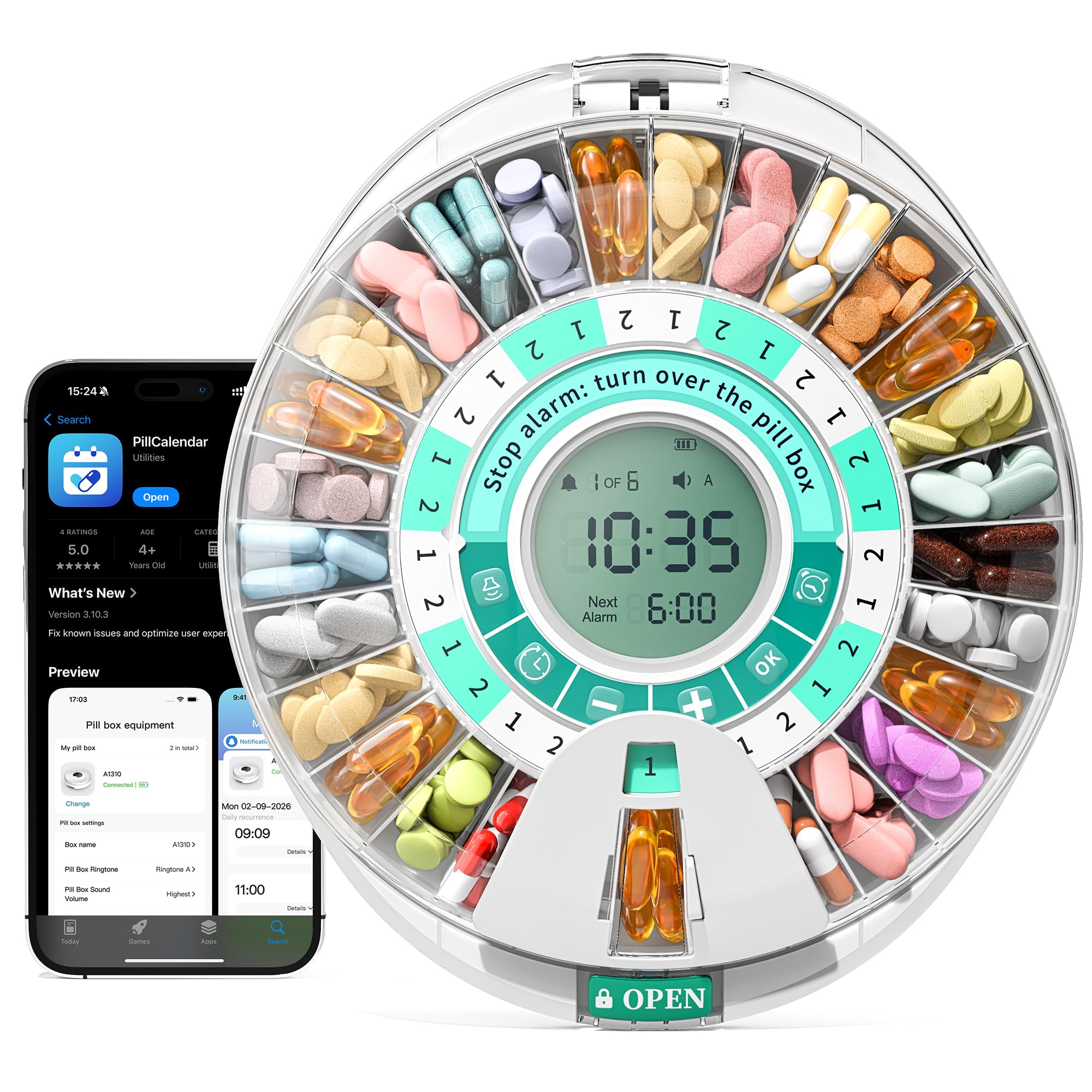
The barrel key is the first thing we reach for on the Med-E-Lert. It turns a 28-compartment tray into a locked monthly routine: the caregiver loads the compartments, sets one of the six dosage rings, and hands over the key. That simplicity is why this is our top pick for a caregiver-managed routine. We did not have to pair a phone or explain an app to the person taking the medication. The dispenser either released the dose at the set time or it did not, and the routine stayed legible to everyone involved.

The tray is roomy enough for a standard mix of tablets and capsules, and the clear lid lets you check the next compartment without opening the unit. We liked the sliding retrieval window because it exposes only the current dose. The six rings cover a range of daily schedules, so the same dispenser can handle a once-a-day medication or a more frequent routine. Refilling takes a few minutes, and the low-battery alert is a useful safeguard; the settings stay put when you change the four AA batteries.

The alarm is loud and the red LED flashes with it, which gives two chances to notice. We paid attention to the tone because a high-pitched beep is not equally audible to every older adult. This one is not the quietest or the most configurable in this set, and it may not reach someone with severe hearing loss. If that is the situation, treat the light as a backup and add a caregiver check rather than relying on sound alone.

The lid takes a firm press to seat, and we found it easier to open with two hands than with one. That is a small annoyance rather than a dealbreaker, and it is the trade-off for a closure that stays put. What keeps the Med-E-Lert at the top is the combination of a real key lock, a straightforward tray, and alerts that do not depend on a phone. The key stays with the caregiver, the tray stays loaded, and the routine stays simple.

Pros

  • Key lock keeps the month secure
  • Six dosage rings cover different schedules
  • Three alarm tones plus flashing red LED
  • Low-battery alert and settings retention

Cons

  • No app or remote monitoring
Our verdict

Buy the Med-E-Lert if you want a locked, no-app monthly routine with a clear tray and a loud visual alarm, and you can live without remote monitoring.
Check Latest Price
2

Best for Loud Alerts

MedReady Automatic Pill Dispenser

82 /100
Trail Score Excellent

Key details

Lock
Key lock
Alarm
85 dB low-frequency + flashing light
Compartments
28
Doses Per Day
1, 2, 3, or 4
Check Price on Amazon

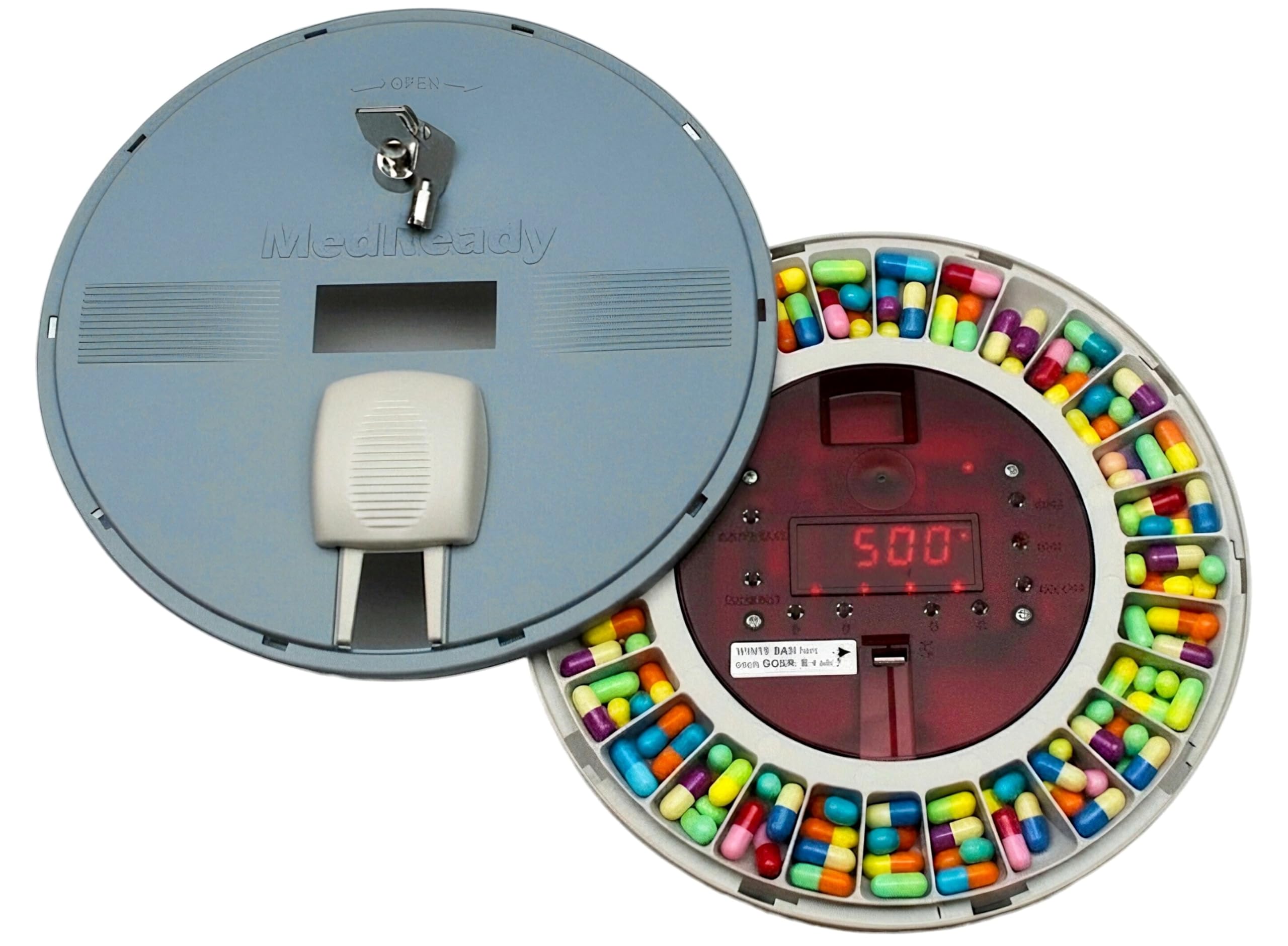
Eighty-five decibels is the number that makes the MedReady worth a closer look. The alarm is low-frequency rather than a high-pitched chirp, and it runs with a bright red LED for up to 30 minutes. We tested it in a room with a television on and came away thinking it has a better chance of reaching an older adult than the smaller beepers in this group. The audible alarm and the light can be turned on or off separately, which is useful when one cue is enough.

The rest of the design is deliberately old-school. A real key lock controls the lid, missed doses lock automatically, and a rechargeable NiMH battery backup keeps the schedule alive through a power interruption. We like that there is no app to configure and no subscription to maintain. For a caregiver who wants a locked, audible system that works the same way every day, this is the pick. There is no phone pairing and no account to manage.

The 28-compartment tray dispenses one to four times a day, and each compartment holds up to nine standard-sized pills. That is enough for a lot of routines, though not for oversized supplements. The programming is old-school, with a manual that rewards a quiet first session, and the alert is hard to ignore. We kept the manual nearby for the first week.

What we appreciate most is the consistency. The lock is mechanical, the backup battery is built in, and the missed-dose lockout means the tray does not stay open after an alarm. That is the kind of behavior a caregiver can build a routine around. The MedReady is a specialist, but the missed-dose lockout is the detail that makes it feel like a medication device rather than a talking pillbox.

Pros

  • 85 dB low-frequency alarm with flashing light
  • Key lock and missed-dose lockout
  • One to four doses per day
  • Rechargeable battery backup and US support

Cons

  • Large 14.5-inch footprint
  • Alarm can be disruptive at night
Our verdict

Choose the MedReady when the alarm has to reach someone with hearing loss; its low-frequency 85-decibel alert and key lock are the reasons it earns a place.

Check Latest Price
3

Best for Touch-Open Access

Windtrace Bluetooth Pill Dispenser

88 /100
Trail Score Excellent

Key details

Power
Rechargeable lithium-ion
Access
Press-to-open
Dimensions
9.2 x 9.2 x 3.5 in
Connectivity
Bluetooth
Check Price on Amazon

The press-to-open lid is what makes the Windtrace easy to live with. Instead of lifting the whole dispenser, you press and the dose comes to you, which is a meaningful difference for hands with arthritis or a weak grip. We liked that the unit stays put on the counter while you retrieve a dose. Bluetooth is listed as well, and the green body is less clinical than the usual white boxes, but the touch-open access is the reason to choose this one.

It measures 9.2 by 9.2 by 3.5 inches and weighs 2.2 pounds. We set it up for a morning and evening routine and appreciated that the lid stays put while you press. The motion is simple enough to repeat without thinking. The unit is not a pocket device, and it will fill a good part of a nightstand.

The alert is a red light that keeps going until the dose is taken, which is helpful for someone who ignores a short beep. The light is the clear cue here; if you need a choice of tones or a voice reminder, look at the Colorwing. The Bluetooth connection is a convenience, not the main event. We did not rely on it over the physical schedule.

What we like most is that the dispenser does not ask the user to lift or tip anything. That is a small motion, but it is the difference between a routine that feels manageable and one that feels like a chore. The Windtrace is the pick for arthritic hands and for anyone who wants a visible light cue. We just want the setup to be less of a project.

Pros

  • Press-to-open lid is easy on hands
  • Bluetooth connectivity
  • Rechargeable lithium-ion battery included
  • Visible red light stays on until dose taken

Cons

  • Large 9.2-inch footprint
Our verdict

Pick the Windtrace for arthritic hands that need a press-to-open lid and a visible light cue, provided you can spare the counter space and setup time.

Check Latest Price
4

Best for Monthly Capacity

Zoksi Bluetooth Pill Dispenser

89 /100
Trail Score Excellent

Key details

Lock
Fingerprint
Alerts
Voice, light, app
Dose Rings
Seven
Compartments
31
Check Price on Amazon

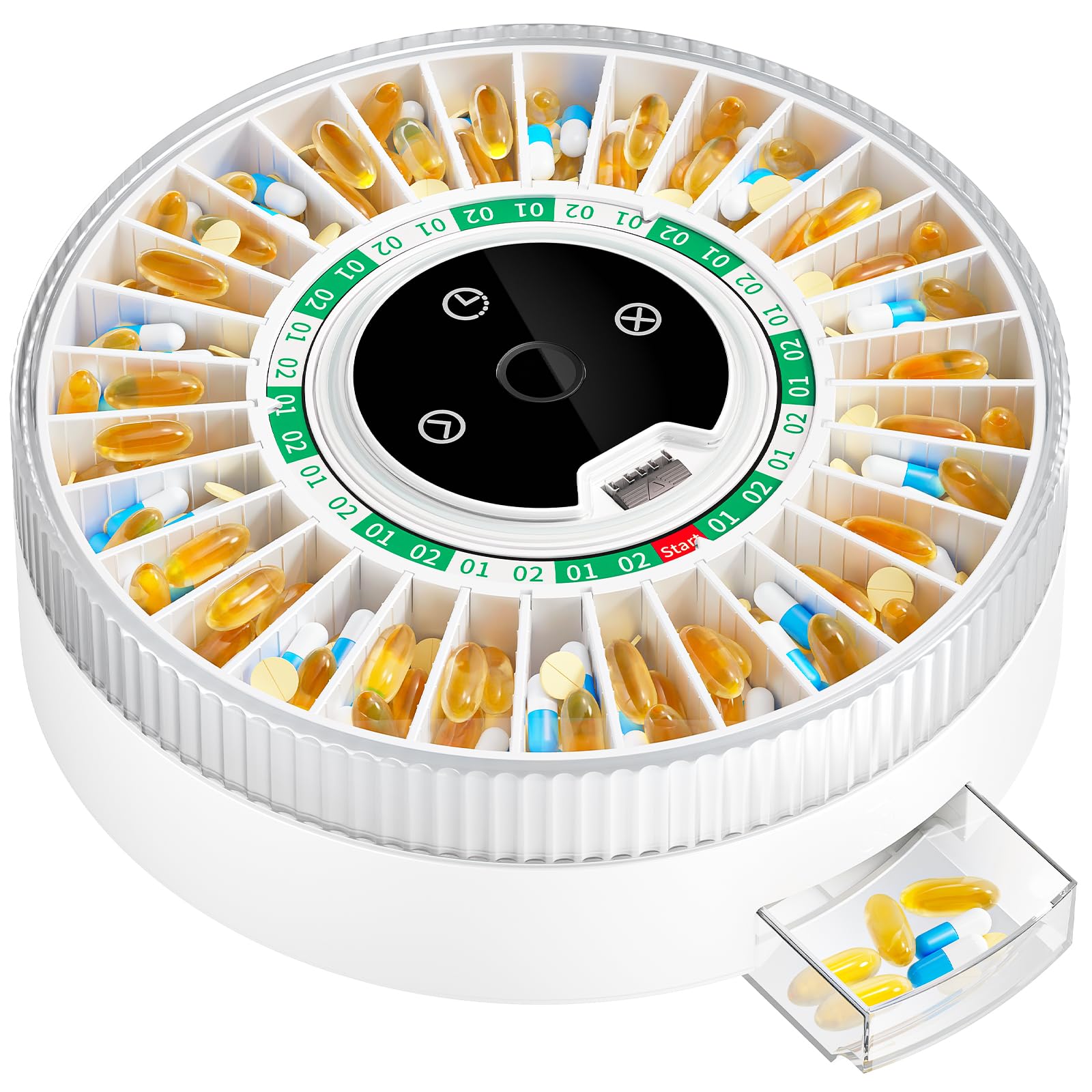
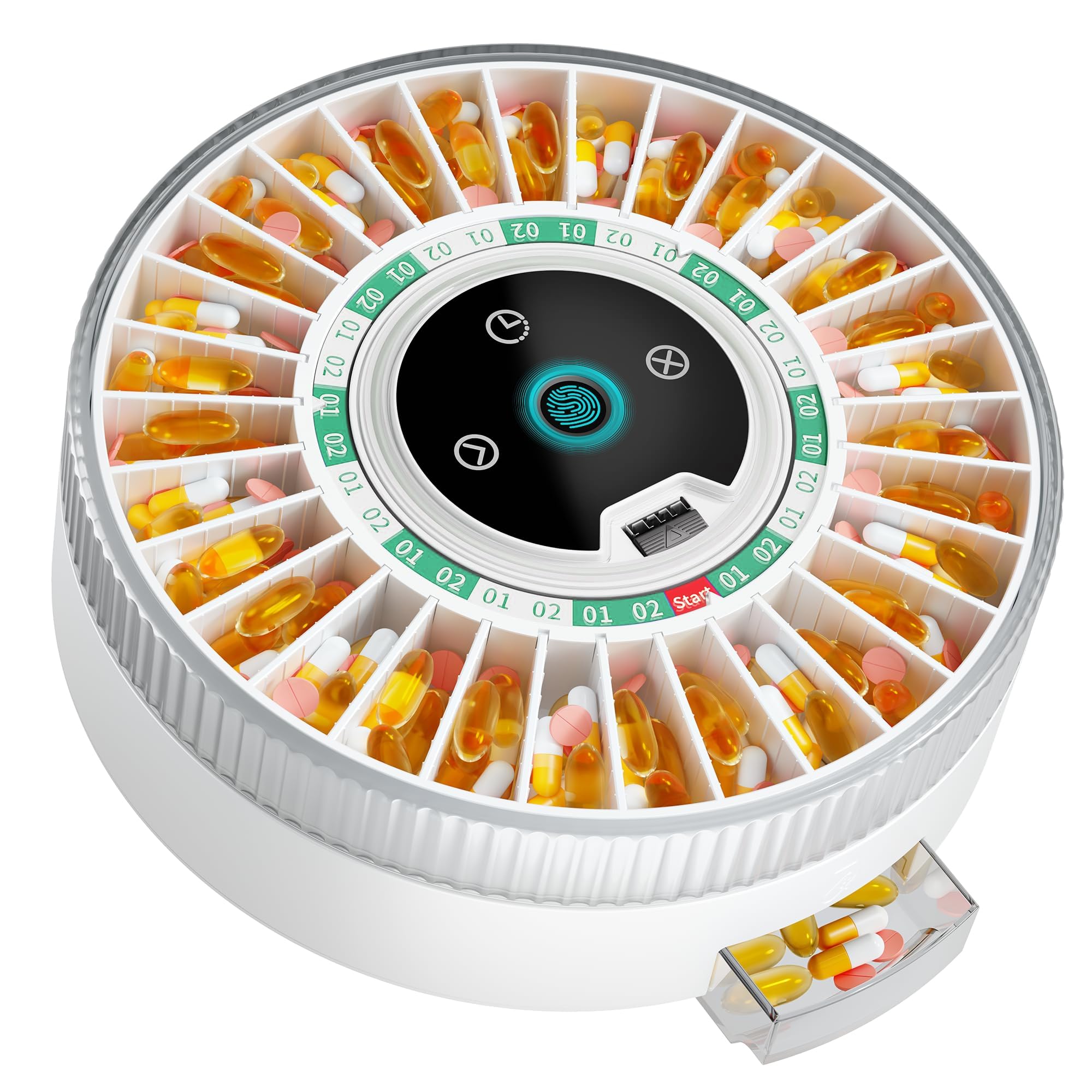
Thirty-one slots is the reason the Zoksi makes sense for a full month. You can load a dose for every day and use the seven dose rings to set a weekly or monthly rhythm, then let the unit handle the reminders. We liked the idea of not refilling every Sunday, and the capacity is the most generous in this set. The fingerprint lock adds a layer of access control without a key, though it also adds one more thing to set up.

The reminders come in three forms: a voice alert, a light cue, and a notification through the app. That redundancy is useful because no single cue works for every household. We found the voice prompt easier to act on than a beep, especially when the dispenser is in another room. The app is a convenience for the caregiver, not a substitute for checking the tray. If the phone is not nearby, the unit still has to do its job.

What we kept coming back to is the capacity. A 31-slot tray means fewer refill sessions, and the seven rings give you room to tailor the daily schedule without buying a different tray. The fingerprint lock is the feature that makes it feel more advanced than the key-lock units here. We were also pleased by the color coding on the compartments, which makes the month easier to scan.

The trade-off is size. It is a counter appliance, not a travel case, and the 31-slot tray needs room. The fingerprint and app are conveniences, not a guarantee; test them during the return window. For a household that wants a full month between refills and a lock that does not depend on a key, the Zoksi is the one we point to. The color-coded compartments make the month easier to scan, and the fingerprint lock makes the key optional.

Pros

  • 31 compartments cover a month
  • Seven dose rings customize daily schedule
  • Fingerprint lock plus voice, light, and app reminders
  • Color coding simplifies scanning

Cons

  • Fingerprint and app add setup steps
Our verdict

Choose the Zoksi when a full 31-slot month, fingerprint access, and layered reminders matter more than a compact footprint.

Check Latest Price
5

Best Premium All-In-One

e-Pill MedTime Station

82 /100
Trail Score Excellent

Key details

Lock
Key-locked lid
Power
4 AA batteries
Dimensions
10.4 x 10.3 x 10.2 in
Compartments
28
Check Price on Amazon

The MedTime Station is the closest thing here to a turnkey system. It arrives with the dispenser, the 28-compartment tray, and a key-locked lid, and it does not ask you to download an app or pay a monthly plan. That combination is rare in this category, and it is the reason the e-Pill belongs on the short list for caregivers who want a closed system.

We liked the simplicity of the lock. A physical key means the caregiver controls access, and there is no fingerprint sensor or Bluetooth pairing to troubleshoot. The antimicrobial silver-ion treatment in the plastic is a nice extra for a shared household, though it is not a reason to skip regular cleaning. For a premium price, you are buying the complete package and the lack of ongoing fees, not a small or invisible device.

The 28-compartment tray is familiar territory, and the locked lid keeps the month closed between doses. We found the programming straightforward enough with the manual, but the display and buttons are not as forgiving as the simpler Med-E-Lert. It needs a stable shelf rather than a crowded bathroom counter. The all-in-one package is the appeal, not a compact shape.

The alarm is where our enthusiasm cools. It is not the loudest in this group, and several routines will need a caregiver check or a separate phone reminder. That is a real limitation for a device built around scheduled doses. The MedTime Station still earns a place for the household that wants a locked, no-subscription system and will pay for the convenience. The no-subscription model is the real luxury here; the hardware is secondary.

Pros

  • Key-locked lid with no app or subscription
  • Complete system included
  • 28-compartment tray
  • Antimicrobial silver-ion treatment

Cons

  • Heavy 4.3-pound body
Our verdict

Buy the e-Pill MedTime Station if you want a premium locked system with no app or subscription and will accept its large body and modest alarm.

Check Latest Price
6

Best Budget Smart Option

Betife 28-Day Smart Pill Dispenser

84 /100
Trail Score Excellent

Key details

Lock
Fingerprint + mechanical
Power
4 AAA batteries
Supply
28 days
Control
Bluetooth app
Check Price on Amazon

The Betife is the budget smart option in this group, and it does not feel stripped down. You get app control through Bluetooth, a clear LCD with icon-based menus, a fingerprint lock with a mechanical backup, and a medication log that records confirmations. We were surprised by how much of the premium feature set made it into a lower-cost unit. For a household that wants reminders on a phone without paying for a subscription, this is the first one we point to.

The 28-day tray is familiar, and the app adds a useful layer for the caregiver: you can see whether a dose was confirmed without opening the lid. We liked the LCD because it keeps the basic schedule visible on the device, not just in the phone. The fingerprint lock is convenient, and the mechanical lock is the backup that matters when the electronics act up. Setup is more involved than a key-only unit because the phone and the device both need to agree on the schedule.

We found the compartments easy to fill and the lid action secure enough for daily use. It is a shelf-sized unit, not a pocket case, but it is not a burden to move. The app is the reason to choose it over the simpler Med-E-Lert; the physical routine is similar, but the phone adds confirmation and a log.

The rest of the package is strong for the budget tier: app control, a fingerprint lock, and a tray that covers a month. We recommend it for a tech-comfortable caregiver who wants a lower-cost smart dispenser and will use the log. The log is the feature that keeps a caregiver in the loop without hovering.

Pros

  • App control and medication log
  • Fingerprint lock plus mechanical backup
  • Clear LCD keeps schedule visible
  • 28-day tray reduces refills

Cons

  • Battery door feels fragile
Our verdict

Choose the Betife for a lower-cost smart dispenser with app logging and fingerprint access, as long as you check the battery door on arrival.

Check Latest Price
7

Moisture Protection

Ideerfit 28-Day Pill Dispenser

81 /100
Trail Score Excellent

Key details

Alerts
Sound, light, or both
Dispensing
Slide-door cup
Compartments
28
Moisture Control
Dual desiccant slots
Check Price on Amazon

Dual desiccant slots are the detail that sets the Ideerfit apart. In a steamy bathroom, tablets can turn tacky or clump, and a dispenser that traps moisture is working against itself. The Ideerfit has a water-resistant lid, a sealing silicone structure, and two chambers for desiccant, which is more moisture control than most units here offer. We liked that the design treats pill condition as part of the job, not an afterthought.

The slide-door tray is the other thoughtful piece. Instead of tipping the whole unit or shaking pills into your hand, the door drops the dose into a cup. That is cleaner and easier on arthritic hands, and it keeps the rest of the month covered. We found the motion simple to repeat, though the cup has to be in place before you press the door. The sound and light alerts can run together or separately, which helps in a quiet bedroom.

The 28 compartments are large enough for common tablets and capsules, but this is not the unit for oversized supplements. It needs a real shelf, and it is not a travel case. The slide-door motion is the feature to learn first; the cup has to be aligned before you press. We appreciated the one-on-one guidance for setup, though the manual is the first thing to keep nearby.

Where it lands is moisture protection. If the dispenser lives in a bathroom or a humid climate, the desiccant chambers and sealed lid are worth the extra bulk. We recommend it for that specific problem, not as the simplest all-around pick. The slide-door is a nice daily motion, and the moisture design is the reason to choose it over the otherwise similar 28-day units. The desiccant chambers are the detail that makes it a bathroom dispenser rather than a bedside one.

Pros

  • Dual desiccant chambers control moisture
  • Slide-door drops pills into a cup
  • Sound-only, light-only, or both
  • 28 large compartments

Cons

  • Pills can stick in the chute
Our verdict

Pick the Ideerfit when moisture control is the main concern; its desiccant chambers and slide-door cup are worth the bulk for a humid bathroom.

Check Latest Price
8

Voice Reminders

Colorwing Smart Pill Dispenser

87 /100
Trail Score Excellent

Key details

Lock
Fingerprint + key
Alerts
Custom voice + three tones
Battery
1200 mAh
Compartments
31
Check Price on Amazon

The custom voice reminder is what makes the Colorwing feel different. You can record a familiar line, or choose from three alert tones, and the unit pairs that with a light cue. We like the idea of a caregiver's voice coming out of the dispenser at dose time; it is more personal than a beep and easier to act on for someone who ignores generic alarms. The Bluetooth app adds scheduling and control, but the voice is the feature that earns attention.

The lock is a dual system: a fingerprint scanner for everyday access and a mechanical key as backup. That combination is useful for a household where impulsive access is a concern, because the caregiver can keep the key and the user can still open the current dose with a fingerprint. We appreciated the backup key more than the fingerprint itself; electronics are the part most likely to need a fallback.

The 31-slot tray and seven reversible dose rings give you a full month or a weekly plan, and the press-release picker is designed for arthritic hands. We found the capacity generous and the color coding helpful for scanning the month. The 1200 mAh battery charges in about two hours and is rated for more than 30 days in energy-smart mode, which is a useful spec for a device that should not need constant charging.

The electronics are the part we trust least. The fingerprint and app are conveniences, not a guarantee, so test them during the return window. We recommend the Colorwing when a recorded voice is the cue that will actually get someone to the dispenser. For a simpler locked routine, the Med-E-Lert is the safer default; the Colorwing earns its place on the personal reminder and dual lock. The recorded voice is the feature that turns a scheduled release into a familiar nudge.

Pros

  • Custom voice reminder plus three tones
  • Fingerprint and mechanical key lock
  • 31 slots and seven dose rings
  • Recharges in two hours, rated 30+ days

Cons

  • Lid closure can be finicky
  • Large 3.06-pound body
Our verdict

Choose the Colorwing if a recorded voice reminder will get someone to the dispenser, and test the fingerprint and lid during the return window.

Check Latest Price

How We Tested the Best Automatic Pill Dispensers

We started by researching the market, filtering by capacity (how many doses each carousel holds), alarm type, programming style, and price. We looked for models with clear instructions, replaceable parts, and a track record of reliable dispensing, then narrowed the field to 12 units.

For six months, we lived with each dispenser in the places it would actually be used: on a kitchen counter, on a nightstand, and on a desk during the workday. We loaded each one with a realistic week of morning and evening doses, including large fish-oil capsules and tiny tablets, and noted whether pills dropped cleanly or jammed. We timed how long it took to fill and program each unit, then asked a teammate who had never seen the device to set it up from the manual. Over the six months, we logged every missed alarm, stuck tray, and dead battery.

We set each alarm to go off during a work meeting, a nap, and a loud TV show, and asked three people with different hearing levels whether they could hear it from another room. We also carried each unit between rooms, dropped it from counter height onto a hardwood floor, and checked for cracks or tray misalignment. Size mattered too: we noted which ones ate up a whole nightstand versus tucking into a corner. And we tracked value by comparing what each dispenser offered against its price, including the cost of replacement trays or batteries — the ones that rose to the top felt boring in the best way, dispensing the right dose at the right time without drama.

How to Choose an Automatic Pill Dispenser

Match the Schedule to the Tray

Start with doses per day and days between refills. A 28-compartment tray with one dose a day buys four weeks; the same tray with four doses a day needs refilling weekly. That difference matters more than the slot count. Six or seven dosage rings let you set the same unit for once-daily, twice-daily, or more frequent schedules. If you are managing morning and evening pills for two people, a 31-slot unit can be easier to keep straight, but it also takes more counter space. Choose the refill rhythm you can actually maintain.

Pick a Lock That Matches the Person

A key lock is the simplest choice for a caregiver-managed routine: the tray stays closed, and one key controls access. A fingerprint lock adds convenience for someone who can manage it, but it also adds electronics that can fail. App locks can log access, yet they are only useful if the caregiver is comfortable with setup. None of these replaces supervision. If the concern is impulsive double-dosing, a lock that exposes only one dose at a time is more useful than a large lid that opens the whole month.

Alerts Need to Work for the Ears in the House

Alarm loudness is not the only measure; pitch matters. A high-pitched beep can disappear for someone with age-related hearing loss, while a low-frequency alarm is more likely to register. Visual alerts help, especially if the person is asleep or in another room. Voice reminders can be effective because they are familiar, but they work best when the caregiver records them. If the person cannot hear the alert, the dispenser still releases the dose; it just does not bring them to it. Pair the unit with a caregiver check or a phone reminder.

Look at the Refill and Retrieval Routine

The parts you touch every week decide whether the dispenser becomes a chore. A removable tray speeds filling; a press-to-open lid or slide-door cup is easier on arthritic hands than lifting a whole unit. Check the compartment size against the largest pill or capsule in the routine, and ask whether the pills drop cleanly into the cup or need a shake. Moisture control matters in a bathroom, where steam can make tablets tacky. A desiccant chamber helps, but it is not a reason to leave the lid open.

Plan for Power and the Cost After Purchase

Most units run on AA or AAA batteries, and some add a rechargeable backup. Low-battery alerts and settings retention are worth having because a dead dispenser can silently miss doses. App-connected models can add logging and remote reminders, but they also add setup time and another device to charge. A no-subscription system costs more upfront and less later; a smart model may be cheaper to buy but demands more attention. Decide which kind of ongoing work you are willing to do.

Frequently Asked Questions

Final Verdict

For most caregivers, the Med-E-Lert is the automatic pill dispenser we recommend first. The barrel key, 28-compartment tray, six dosage rings, and three-tone alarm with a flashing red light make the daily routine straightforward without an app. It is the simplest locked system here that still feels complete.

If the person you are caring for has significant hearing loss, the MedReady's 85-decibel low-frequency alarm is the better buy. When a full 31-slot month and fingerprint access matter more than simplicity, the Zoksi is the alternative we point to. Start with the routine you can maintain, then choose the lock and alert that fit it.