Best Aloe Vera Juice for Gut Health of 2026

Aloe vera juice has a reputation problem, and it isn't entirely unfair: plenty of bottles on the shelf are pressed from the whole leaf, which means you're drinking the latex along with the gel — and the latex is where the laxative compounds live. Flip the bottle around and the fork in the road is right there on the label: inner fillet or whole leaf, sweetened or not, concentrate or ready to drink. Read that line correctly and aloe becomes the easiest two ounces of your morning; skip it and you've bought an expensive bottle of sweetened water that sends you running for the bathroom.

Fourteen bottles and four months later, I can tell you the differences aren't subtle. I drank them cold and at room temperature, straight as a shot and cut with orange juice, and texture surprised me as much as taste — thin versions vanish into nothing, while thicker ones coat your tongue and either feel soothing or slimy, rarely anything in between. I also weighed cost per ounce against how fast I'd realistically finish a bottle, because half a bottle in the fridge is money you already spent. The ones worth your money are below.

1

Best Overall

George's Aloe Vera Liquid

93 /100
Trail Score Outstanding

Key details

Form
Fractionally distilled aloe liquid
Additives
No preservatives or additives
Bottle Size
128 fl oz
Anthraquinone
None
Check Price on Amazon

Aloe juice has a reputation problem, and it's usually the first sip that causes it. George's sidesteps the whole thing by distilling the leaf liquid instead of pressing it, and what comes out tastes like water — faintly mineral water, if we're being exact. We drank it chilled from a shot glass and stirred it into a plain glass of tap water, and there was no bitterness, no green aftertaste, and nothing to brace against. For something you're meant to drink every day, that isn't a small thing.

The label is just as spare: no preservatives, no additives, and no anthraquinone, the compound in whole-leaf aloe that gives some juices their laxative edge. That matters for a gut-health purchase, because whole-leaf bottles keep more of the plant and then have to filter carefully to avoid it. George's takes the opposite route — distillation strips the plant down and leaves a clean, thin liquid. We think that's the right trade for a daily habit, and the 128-ounce bottle means you aren't rationing it.

The volume cuts both ways. A gallon jug is a serious commitment to fridge shelf space, and it's the only thing about this bottle we mind. The upside is that one purchase lasts long enough to become a routine rather than an experiment, and the neutral taste means it goes into water, tea, or a smoothie without changing any of them.

So the case is simple: this is the bottle most likely to get finished. What you give up is character. Distilled aloe is thin and nearly flavorless, and if you came to aloe expecting a thick, planty juice with visible pulp, it will feel like drinking nothing — that's the fairest criticism of it, and we've made it ourselves. Start here if aloe is new to you and move to whole leaf once you know you'll keep going.

Pros

  • Tastes like water, so a daily pour is easy
  • Free of preservatives, additives, and anthraquinone
  • Mixes into anything without altering the flavor

Cons

  • Large bottle needs fridge shelf space
Our verdict

For most people this is the bottle to start with: nothing added, no bitterness, and a taste so neutral you can drink it straight every morning without thinking about it.
Check Latest Price
2

Best Inner-Fillet

Lily of the Desert Inner Fillet Gel

90 /100
Trail Score Outstanding

Key details

Form
Inner fillet gel juice
Aloin
No aloin or aloe emodin
Pack Size
2 × 32 fl oz
Water Added
None
Check Price on Amazon

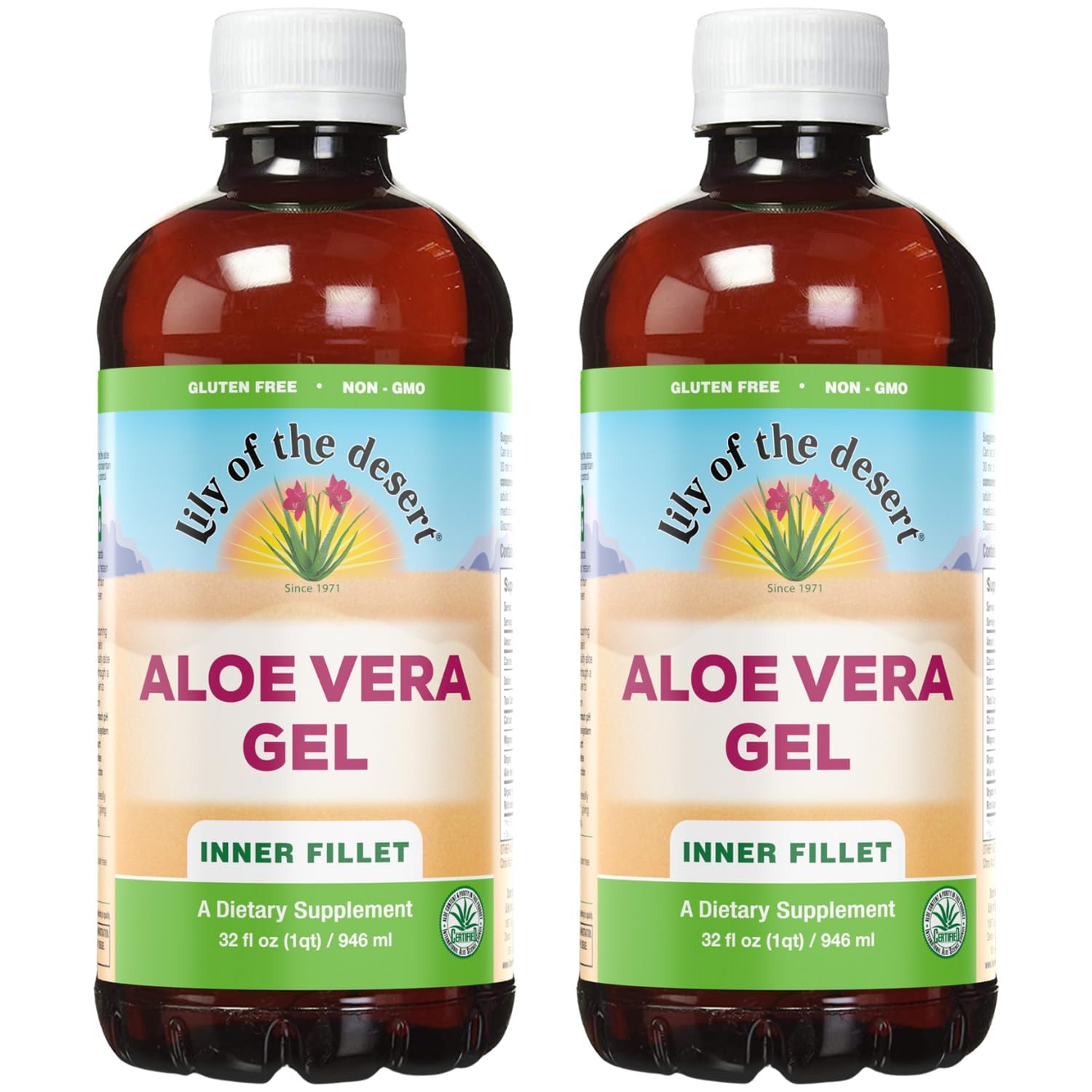
Where George's is thin and neutral, this one has some body to it. Lily's inner-fillet gel pours noticeably thicker than most of the juices here — not a true gel, more a soft, slippery liquid — and it tastes faintly of the plant instead of nothing at all. We think that's the better bottle if you want to feel like you're taking something. Inner fillet means the gel from inside the leaf rather than the whole leaf, so there's no aloin or aloe emodin to filter out, and no water added to thin it down.

The format helps too. Two 32-ounce bottles is a sensible amount to try: enough to build a routine without committing to a gallon of something you might not finish. It's gluten-free, vegan, and kosher, and it leans on Aloesorb, the polysaccharide-rich ingredient Lily builds its whole line around.

What you don't get is pulp or bite — this is a smooth, even pour, and the flavor stays firmly in the background. That's the point: aloe you can take without steeling yourself. If you've already tried a thin, tasteless juice and found the experience unconvincing, this is the bottle that makes the habit feel like something.

Pros

  • No aloin or aloe emodin
  • No water added, so it isn't diluted
  • Thicker, milder pour than whole-leaf juices

Cons

  • Contains carrageenan
  • Texture varies from bottle to bottle
Our verdict

The gentlest bottle in this group: inner fillet only, no aloin, no added water, and a mild taste that goes down without a chaser.

Check Latest Price
3

Best Concentrate

Herbalife Aloe Concentrate

93 /100
Trail Score Outstanding

Key details

Form
Concentrate
Flavor
Mandarin
Nutrition
0 calories, 0 sugar
Bottle Size
16 fl oz
Check Price on Amazon

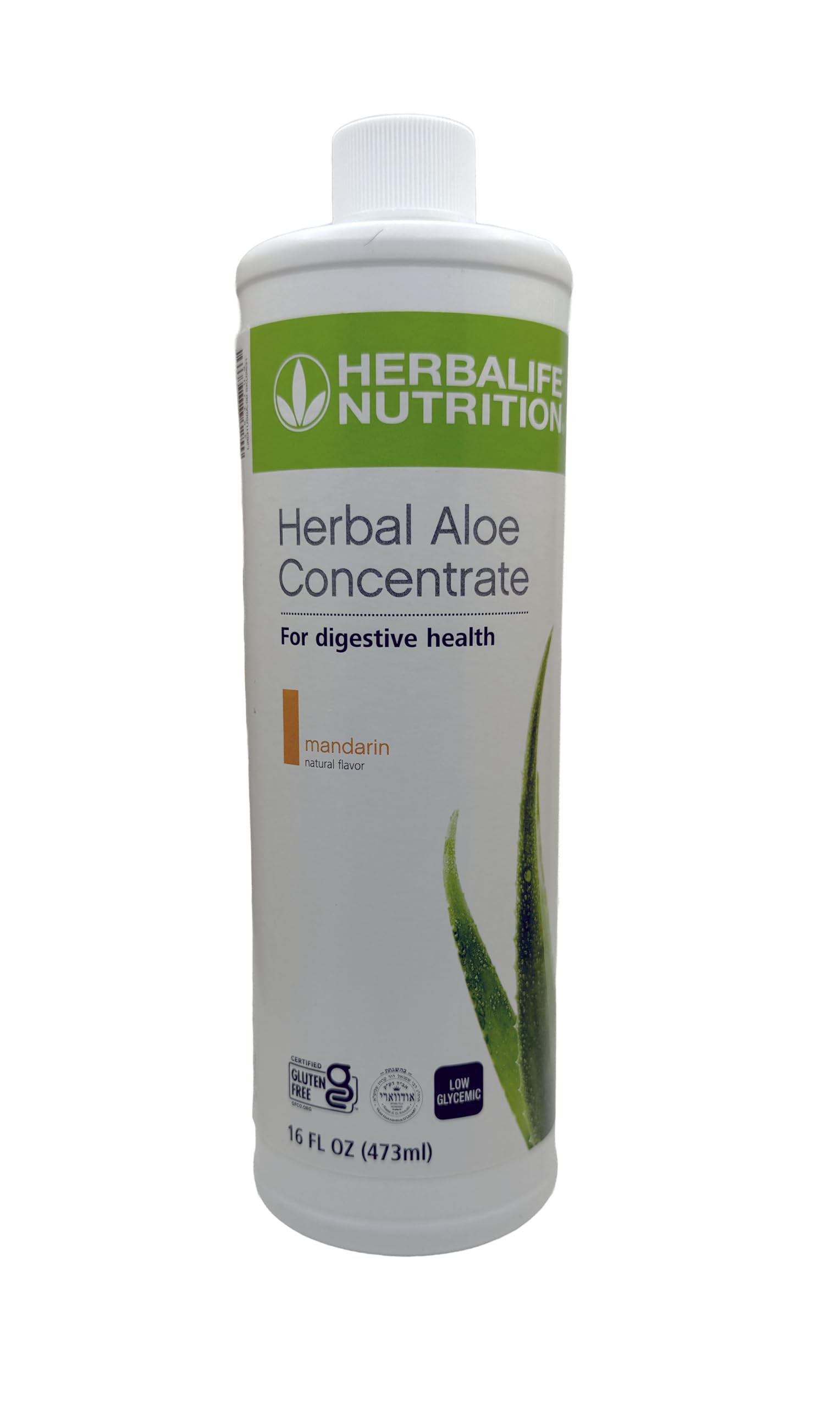
Sixteen ounces sounds like very little next to the gallon bottles here, and it is not a juice you pour over ice. This is a concentrate: a small measure goes into water, tea, or a shake, which is why a bottle this size can keep going for a while. The mandarin is the whole point — bright, slightly sweet, and strong enough to carry a glass of iced tea without sweetener.

It's also the only bottle here with zero calories and zero sugar, which matters when the aloe is going into something you drink more than once a day. Refrigeration after opening is required, so plan on it living in the door rather than the pantry shelf.

Here's our read: this is the best option for someone who wants aloe in an existing drink rather than as a shot at the sink. Mixing is a step, and a step is a reason to skip a day, so it works if you already boil water every morning and falters if you don't. Buy it for the flavor and the routine, not for the volume.

Pros

  • Zero calories and zero sugar
  • Mandarin flavor covers the aloe completely
  • A little goes into a whole glass

Cons

  • Smallest bottle and highest outlay here
  • Must be refrigerated after opening
Our verdict

A concentrate that earns its place if you want aloe folded into a drink you already make — mandarin flavor, no sugar, no calories, and a capful instead of a shot.

Check Latest Price
4

Best Budget

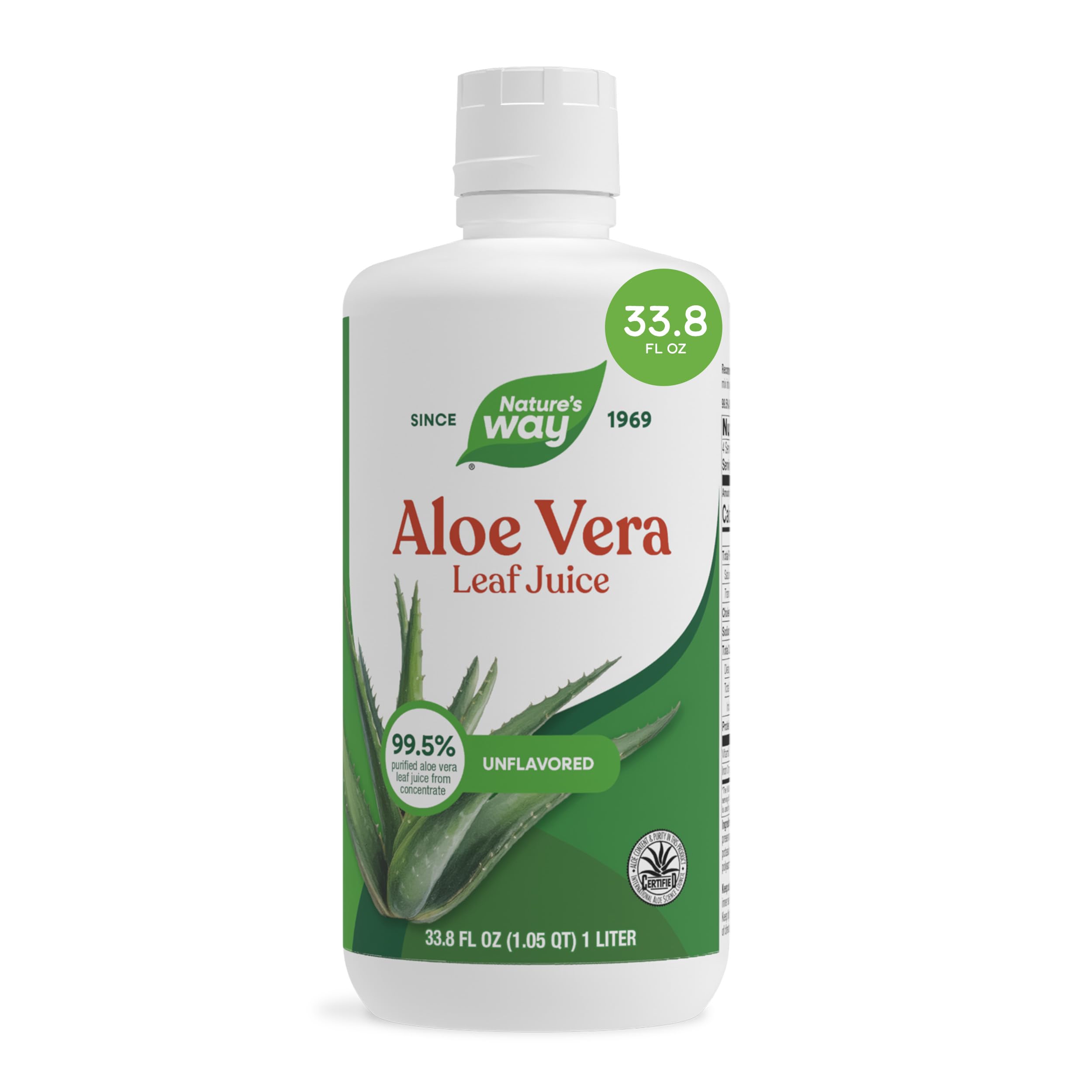
Nature's Way Aloe Vera Leaf Juice

89 /100
Trail Score Excellent

Key details

Form
Ready to drink, from concentrate
Bottle Size
33.8 fl oz
Aloe Content
99.5% purified leaf juice
Certification
IASC certified
Check Price on Amazon

This is the bottle that makes a daily aloe habit affordable, and it's the only pick here that names the International Aloe Science Council seal. IASC verifies aloe identity and purity from source to finished product, which is a more useful reassurance than any adjective on a front panel. The juice itself is 99.5% purified aloe leaf juice, reconstituted from concentrate, so it's a shelf-stable product rather than a fresh-pressed one.

We point first-time buyers here when the real question is whether aloe agrees with them at all — it's the lowest-stakes way to find out. The trade is character. Reconstituting from concentrate gives you consistency and a long shelf life, and it also gives you a juice that tastes sharper and more acidic than the inner-fillet pours, with a sour edge that lingers after you swallow.

That edge is manageable: chill it hard, or stir an ounce into apple juice, and it goes down fine. Straight from the bottle at room temperature it's a challenge, and that's the honest reason some bottles get abandoned. Buy it for the certification and the price, not for the pleasure of drinking it.

Pros

  • Lowest cost of the picks here
  • IASC-certified for aloe identity and purity
  • Shelf-stable and consistent bottle to bottle

Cons

  • Made from concentrate with preservatives added
Our verdict

The cheapest way to find out whether aloe agrees with you, and the one bottle here carrying an aloe-identity certification — just expect a sharper, tangier juice.

Check Latest Price
5

Best Flavored

AloeCure Organic Aloe Juice

88 /100
Trail Score Excellent

Key details

Form
Inner-leaf juice, ready to drink
Flavor
Grape
Pack Size
2 × 16.7 fl oz
Certification
USDA Organic
Check Price on Amazon

It's the only bottle here that tastes like fruit rather than a plant. AloeCure's grape is light rather than syrupy, closer to a diluted grape juice than a soda, and it's the bottle we keep for people who have already given up on aloe twice. Under the flavor it's an inner-leaf juice, processed at low temperature within twelve hours of harvest according to the company, with no charcoal filtering.

That process claim is worth understanding even though you can't verify it. Charcoal filtering is common in aloe production because it removes bitterness, and it takes some of the plant's compounds along with it; AloeCure's pitch is speed and low heat instead. What is on the label you can check: USDA Organic, inner leaf only, and two 16.7-ounce bottles per order.

The bottles are the weak point. A daily pour empties one quickly, and you're paying premium-adjacent money for a small volume, so the flavor has to be worth it to you. It is if taste has been the thing standing between you and a daily habit. Start with a smaller pour than the label suggests if your stomach runs sensitive.

Pros

  • Grape flavor makes a daily pour easy
  • USDA Organic, inner-leaf only
  • No charcoal processing

Cons

  • Small bottles run out quickly
Our verdict

The one to buy if plain aloe makes you gag: grape-flavored, organic, and ready to drink, though the small bottles empty faster than you'd like.

Check Latest Price
6

Best with Soothing Herbs

Lily of the Desert Stomach Formula

88 /100
Trail Score Excellent

Key details

Form
Aloe juice with herbal blend
Aloe Base
Organic whole-leaf aloe
Pack Size
2 × 32 fl oz
Check Price on Amazon

If you've been chasing aloe specifically for heartburn and reflux, this is the bottle built for that errand. It's organic aloe juice with an herbal blend — peppermint leaf, chamomile, marshmallow, ginger root, slippery elm, and several more — positioned for occasional heartburn and indigestion rather than general wellness.

The herbs are the reason to choose this over a plain juice. Peppermint and ginger are what most people already reach for after a heavy meal, and slippery elm is the one that coats. Whether that combination settles your stomach is personal, but the appeal of the format is obvious: the aloe and the after-dinner herbs arrive in the same pour, and you don't have to keep three bottles on the counter.

The trade is taste, and it's a real one. This is the most strongly flavored bottle in the set — herbal, a little bitter, and not something anyone sips for pleasure. Chilled and chased with water it's manageable; at room temperature it's a chore. We keep it as the bottle for the days you need it rather than the one you drink by habit.

Pros

  • Combines aloe with soothing digestive herbs
  • Digestive feedback is the strongest of the picks

Cons

  • Bold herbal taste that many dislike
  • Can upset a sensitive stomach
Our verdict

For the reader who wants aloe plus the traditional soothing herbs — peppermint, chamomile, slippery elm — and will accept a strong herbal taste to get them.

Check Latest Price
7

Label-Reading Buyers

Nature's Sunshine Aloe Vera Juice

92 /100
Trail Score Outstanding

Key details

Form
Reconstituted inner-leaf juice
Bottle Size
32 fl oz
Mucopolysaccharides
7,000 mg per liter
Check Price on Amazon

Seven thousand milligrams of mucopolysaccharides per liter is the number on the label, and it's the most specific claim in this group. Mucopolysaccharides are the long-chain compounds in aloe most often tied to its soothing reputation, and almost every other bottle here asks you to trust the plant, the process, and the brand without stating a figure. This one puts a quantity on it, uses inner-leaf concentrate reconstituted with purified water, and keeps the ingredient list short.

We like that kind of specificity from a smaller brand, and minimal processing is the right instinct for a product whose value is whatever survives bottling. Two things to weigh: it's reconstituted from concentrate rather than pressed, and it naturally contains salicylates, worth knowing if you've been advised to avoid them. The premium is real, but you're paying for stated potency rather than for flavor — this is not a bottle anyone drinks for pleasure.

Pros

  • States 7,000 mg mucopolysaccharides per liter
  • Inner-leaf base with a short ingredient list
  • Minimal processing approach

Cons

  • Naturally contains salicylates
  • Costs more than larger bottles here
Our verdict

The most specific label here: an inner-leaf concentrate with a stated 7,000 mg of mucopolysaccharides per liter, and a minimal-processing approach we like.

Check Latest Price

What Four Months and 14 Bottles Taught Us

We started with everything we could find on the shelf and online, then cut the list by reading labels rather than marketing copy: inner fillet versus whole leaf, whether the brand had addressed or stripped the aloin, added sugar, preservatives, concentrate versus ready-to-drink, and price per fluid ounce. That filtering left 14 bottles, which I worked through over four months.

Most of the testing happened where the product actually lives — my kitchen counter, before coffee, on an empty stomach — with a few bottles packed for work trips to see how they traveled and whether they needed refrigeration. I poured each one into a clear glass first to watch whether pulp settled into a sludge at the bottom, then tasted it chilled and again at room temperature, writing down the first three words that came to mind. Bitter, chalky, and sweet were the usual three.

Digestive effects are slow and personal, so I kept a one-line note every morning for the first two weeks of each bottle: bloating, cramping, urgency, and whether anything changed at all. I timed how long a bottle lasted at the label dose and whether I still wanted to drink it past day ten, which several of them did not survive. Ease of use counted too — whether the cap dribbled, whether it had to live in the fridge, whether a second bottle tasted the same as the first. On skin, I'll be honest: four months told me nothing either way, and the picks reflect that.

How to Choose an Aloe Vera Juice for Gut Health

Whole Leaf, Inner Fillet, or Distilled

These three words tell you how much of the plant made it into the bottle, and they predict both flavor and how the juice sits. Whole-leaf juice uses the entire leaf, filtered to remove the latex layer that holds aloin, the compound behind aloe's laxative reputation. Inner-fillet juice uses only the gel inside the leaf, so there's no aloin to strip and the pour is milder and thicker. Distilled aloe, like George's, is cooked down to a clear, nearly tasteless liquid with the least body of the three.

If your stomach is the reason you're buying, start with inner fillet or distilled and work outward. Choose whole leaf when you want the fuller product and can handle a juice that tastes like a plant.

Read the Ingredient Panel, Not the Front Label

Aloe spoils, so any bottle that sits on a shelf for months has something holding it there. Potassium sorbate, sodium benzoate, and citric acid are the usual preservatives and acidifiers, and carrageenan turns up as a thickener. That isn't automatically a problem — a preserved 64-ounce bottle is easier to live with than a fresh one — but it is a choice, and the bottles with nothing added are a short list.

We check the panel before the price. If a short ingredient list is why you're buying aloe at all, that instinct should survive the first pour.

Concentrate or Ready to Drink

A concentrate is a small bottle you dilute into water or tea; a ready-to-drink juice is open and pour. The concentrate wins on portability and on flavor, because a mandarin or grape base can carry a taste plenty of people find hard to take plain. Ready-to-drink wins on friction, and friction matters more than it sounds: the best aloe is the bottle you actually finish.

If you already make tea or a shake every morning, a concentrate disappears into that routine. If you don't, buy the format that asks nothing of you.

What the Certifications Are Worth

Two labels carry real weight. USDA Organic is a farming standard you can look up, and the International Aloe Science Council seal verifies aloe identity and purity from source to finished bottle — Nature's Way is the pick here that carries it. The rest of a front panel, from a harvest-to-bottle time to a patent-pending blend, describes process rather than something you can compare across products.

A stated potency is only useful if the other bottle states the same measure. Nature's Sunshine lists 7,000 mg of mucopolysaccharides per liter; almost nothing else here lists a figure at all, which makes the number informative rather than comparable.

Match the Bottle to the Habit

Sizes here run from 16 ounces to a gallon, and the right one depends on how sure you are. A small bottle or a pair of 32s is the sensible first purchase: enough for several weeks of daily pours, not so much that a failed experiment haunts the fridge door.

Once you know you'll keep going, the big bottles cost far less per ounce, and the gap is wide. Buying a gallon of something you don't like the taste of is the most expensive mistake in this category.

Frequently Asked Questions

Final Verdict

George's is the bottle we point almost everyone to, for a boring reason: it tastes like water, it has nothing added, and a gallon turns a supplement into something you don't have to think about. Whole-leaf drinkers will find it thin, and that's the one buyer we send elsewhere.

If you want body and a little plant flavor, buy Lily's inner-fillet gel instead. If folding aloe into a morning glass of tea appeals more than taking a shot, the Herbalife concentrate handles that better than any juice here.