Best Probiotics for Weight Loss and Gut Health of 2026

The number on the front of a probiotic bottle — 10 billion, 50 billion, 100 billion CFU — is the least useful thing about it. What matters is which strains are inside, whether they're still alive when you swallow them, and whether your gut notices anything after a few weeks. I learned that the slow way, after finishing a whole bottle of something that did exactly nothing. Probiotics marketed for weight loss promise a lot; what they can realistically deliver is a steadier gut, which for many people is the piece that makes eating well feel less like a fight.

Over four months, my team and I worked through 14 probiotic supplements — capsules, gummies, chewables — comparing strain lists and CFU counts against the labels, pricing out cost per serving, and logging what actually happened in our guts. One thing nobody tells a first-time buyer: a higher CFU number isn't automatically better, and jumping straight to 50 billion can buy you a week of gas rather than results. Give any new probiotic three to four weeks before you judge it. The ones that held up follow.

1

Best Overall

Physician's Choice 60 Billion

93 /100
Trail Score Outstanding

Key details

Supply
84 capsules (12 weeks)
Potency
60 billion CFU
Strains
10 strains
Prebiotic
Organic prebiotic fiber
Check Price on Amazon

Eighty-four capsules is the first number that matters. At one a day that's a twelve-week run from a single bottle, long enough to decide whether a probiotic suits you rather than guessing your way through a three-week sample. The 60 billion CFU dose sits in the middle of this group — below the 100 billion formulas, comfortably above the drugstore single strains — paired with 10 cultures and organic prebiotic fiber in the same capsule.

That combination is why it's our default. A broad blend plus prebiotic fiber is the closest thing here to a complete daily formula, and the third-party purity and potency testing answers the question we care about most with any probiotic: are the cultures actually alive when you swallow them? The acid-resistant capsule and shelf-stable bottle handle the next two problems, stomach acid and the kitchen cabinet, without asking you to reorganize your fridge.

It won't move the scale on its own, and that's true of everything on this page. What it can do is make your gut less of a variable — less bloating, more predictable mornings, fewer days where a meal sits wrong. If the first week brings gas or loose stools, that's the dose announcing itself. Taking the capsule with a meal rather than on an empty stomach is the easiest fix, and it usually settles within a week.

The compromise is strain breadth. Ten cultures is under a third of what the premium high-potency bottles offer, and if you're chasing one specific organism — LGG, Bifidobacterium 35624 — this bottle doesn't have it. For anyone starting without a target, the twelve-week supply, the prebiotic fiber and the tested, shelf-stable capsule make this the easiest bottle here to commit to.

Pros

  • 60 billion CFU with 10 strains and prebiotic fiber
  • Twelve-week supply from one bottle
  • Third-party tested, acid-resistant and shelf-stable
  • Mid-range price for the potency

Cons

  • Fewer strains than the largest blends here
Our verdict

Our default pick: 60 billion CFU across 10 strains plus prebiotic fiber, third-party tested and shelf-stable — the most balanced starting point here for gut support and the regularity that follows it.
Check Latest Price
2

Best Maximum Strength

Wholesome Wellness 100 Billion

91 /100
Trail Score Outstanding

Key details

Extras
Prebiotics and digestive enzymes
Supply
30 capsules
Potency
100 billion CFU
Strains
34 strains
Check Price on Amazon

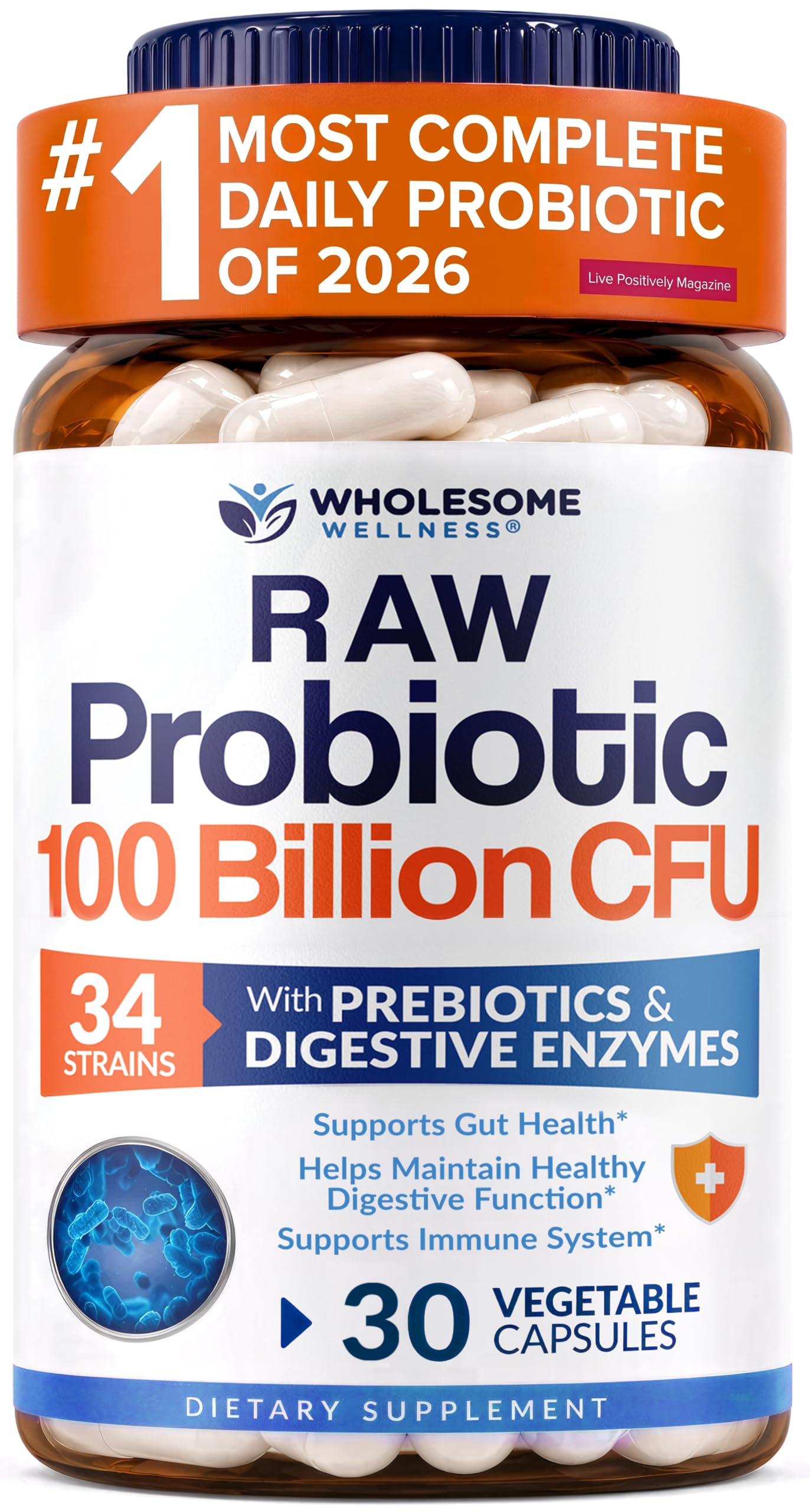
Thirty-four strains is more variety than anything else in this group, and the formula stacks prebiotic fiber and a digestive enzyme blend on top of 100 billion CFU. One capsule a day, no refrigeration, and a capsule small enough to take without a second thought.

Jumping straight to 100 billion is a real decision rather than a free upgrade. It's the fastest route to a rough first week — gas, cramping, a couple of loose days — and the people who get on with it tend to be the ones already running a 25 or 50 billion capsule and wanting more headroom. Starting from zero, the sensible move is a mid-range bottle first and this one second.

For the right person it's the strongest single capsule on this page. The strain list covers the lactobacillus and bifidobacterium families most often studied for digestion, the prebiotic fiber gives those cultures something to feed on, and the enzyme blend is a genuine extra if heavy meals are what sit badly. Breadth is the entire pitch here, and nothing else in this group packs more of it into one capsule.

Pros

  • 100 billion CFU, the highest in this group
  • 34 strains plus prebiotics and digestive enzymes
  • Small, easy-to-swallow capsule with no refrigeration

Cons

  • Only 30 capsules per bottle
Our verdict

The strongest single capsule in our set: 100 billion CFU, 34 strains, plus prebiotics and digestive enzymes — worth it if you already know your gut handles a high dose.

Check Latest Price
3

Best Potency Guarantee

Garden of Life Ultimate Care

93 /100
Trail Score Outstanding

Key details

Potency
100 billion CFU
Strains
34 strains
Certifications
Non-GMO Project, NSF gluten-free
Potency Guarantee
Through expiration date
Check Price on Amazon

Potency guaranteed through the expiration date is the line that separates this bottle from almost everything else here, and it's the reason to consider it. Most labels quote CFU at the time of manufacture; Garden of Life promises the 100 billion holds until the best-by date, which is the figure still true when the capsule reaches your hand. Thirty-four strains, a protein-digesting enzyme blend, Non-GMO Project verification and NSF gluten-free certification come along with it, and it stays shelf-stable.

That guarantee earns its keep. Live cultures die in heat, and a bottle that spent an afternoon in a delivery van in July is a bottle with a question mark over it. A formula tested at expiry, from a manufacturer that certifies both the ingredient list and the gluten-free claim, removes one variable from a category where you can't see what you're buying.

The container is the one thing that feels off — a bottle sized for three times the thirty capsules inside, which is a small irritation every time you open it. Otherwise this is the premium buy, and the only one here promising the same potency on the last capsule as on the first.

Pros

  • Potency guaranteed through the expiration date
  • 34 strains with a digestive enzyme blend
  • Non-GMO Project and NSF gluten-free certified

Cons

  • Costliest per day in this group
Our verdict

Potency guaranteed through the expiration date rather than at manufacture, with 34 strains and real certifications — the pick we point to when a bottle has to still be alive at the end.

Check Latest Price
4

Best Budget

NewRhythm 50 Billion

93 /100
Trail Score Outstanding

Key details

Supply
60 capsules
Capsule
Targeted-release, acid-resistant
Potency
50 billion CFU
Strains
20 strains
Check Price on Amazon

Value is the whole argument. Fifty billion CFU across 20 strains, in targeted-release capsules designed to open past the stomach, at the lowest price per capsule of any high-potency bottle in this group. Non-GMO, gluten-free, independently tested, no refrigeration, and made in a GMP-certified facility in New York.

What you don't get is polish or explanation. There's no prebiotic fiber in the capsule and no strain-level story on the label — you get a list of 20 cultures and not much about what each one is meant to do. That's a fair trade for the money, and it makes the bottle a good first experiment: if a multi-strain probiotic is going to do anything for you, this is the cheapest way to find out.

Pros

  • 50 billion CFU across 20 strains
  • Lowest cost per capsule among high-potency bottles here
  • Targeted-release, acid-resistant capsules

Cons

  • Cramping or nausea can follow the first doses
Our verdict

The least expensive route here to 50 billion CFU and 20 strains in a targeted-release capsule — our budget pick for trying a serious multi-strain dose.

Check Latest Price
5

Best Studied Strain

Culturelle Pro Strength

95 /100
Trail Score Outstanding

Key details

Strain
Lactobacillus rhamnosus GG
Supply
60 capsules
Potency
12 billion CFU
Refrigeration
Not required
Check Price on Amazon

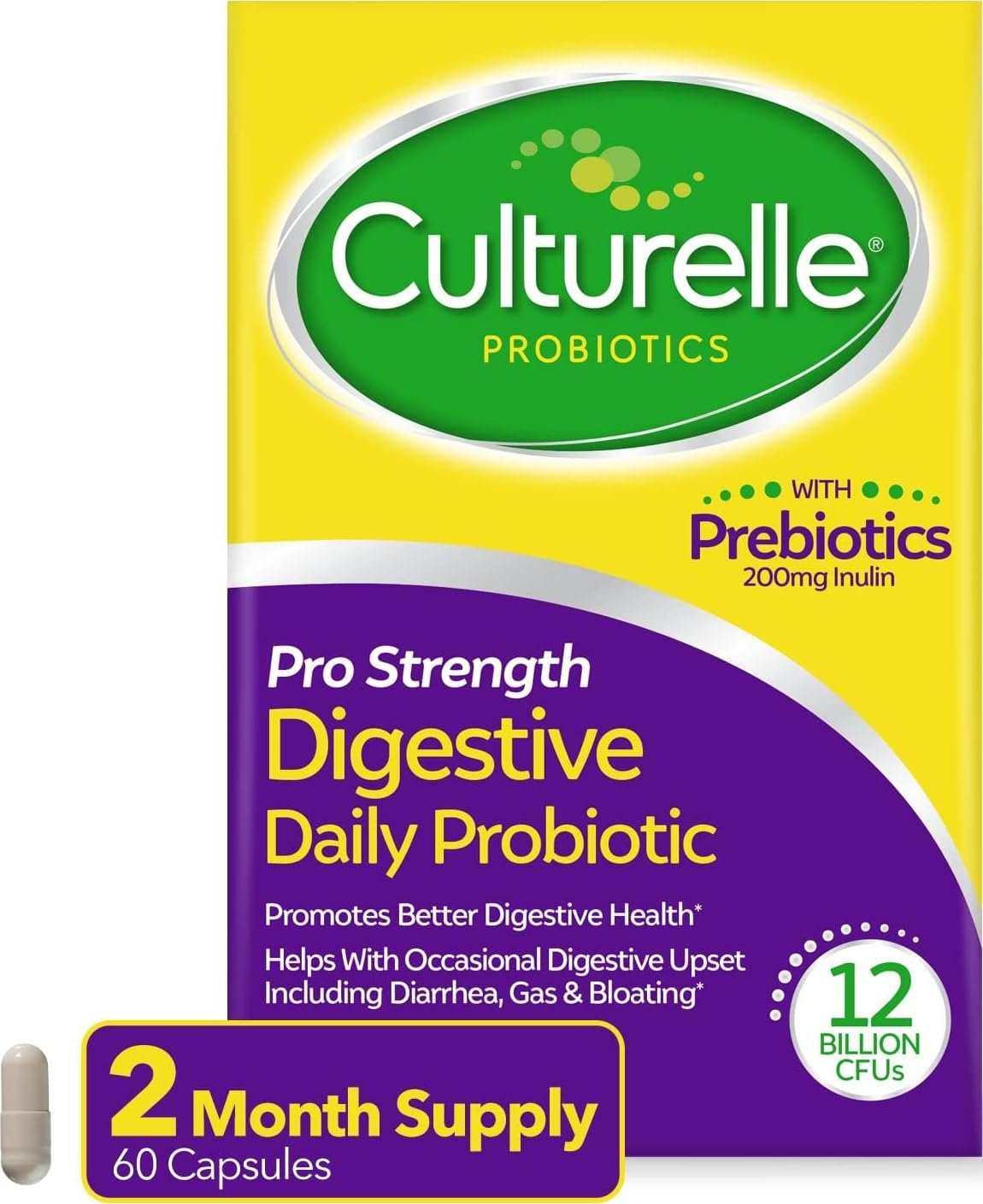
Lactobacillus rhamnosus GG has more research behind it than any other strain on this page, and Culturelle built the product around it: 12 billion CFU of LGG, one capsule a day, no refrigeration. That's a deliberate contrast with the 34-strain blends — one organism, studied hard, dosed to match.

Twelve billion looks small next to 100 billion, and it is small, but CFU count isn't a score. A single strain with a deep research file at a dose close to the studied amount is a different bet from a broad blend, and it's the better bet when you want to know exactly what you're taking. The capsule is easy to swallow with no aftertaste, which matters more than it sounds for something you take every morning.

The trade-off is coverage. One strain does one job, and if your goal is general gut diversity rather than a specific culture, a blend spends your money better. What this offers instead is the most defensible single-strain choice here — the bottle to hand someone who reads labels and wants the shortest line between the capsule and the evidence.

Pros

  • LGG, the most clinically studied probiotic strain
  • No refrigeration and easy to swallow
  • Dose matched to the studied strain

Cons

  • Pricier per capsule than our 60 billion pick
Our verdict

Built around Lactobacillus rhamnosus GG, the most-studied strain there is, at a moderate 12 billion CFU — our choice when you want evidence behind the exact culture.

Check Latest Price
6

Best for Bloating

Align Pro Formula

95 /100
Trail Score Outstanding

Key details

Strain
Bifidobacterium 35624
Supply
63 capsules (2 months)
Dietary
Gluten-free, vegetarian
Refrigeration
Not required
Check Price on Amazon

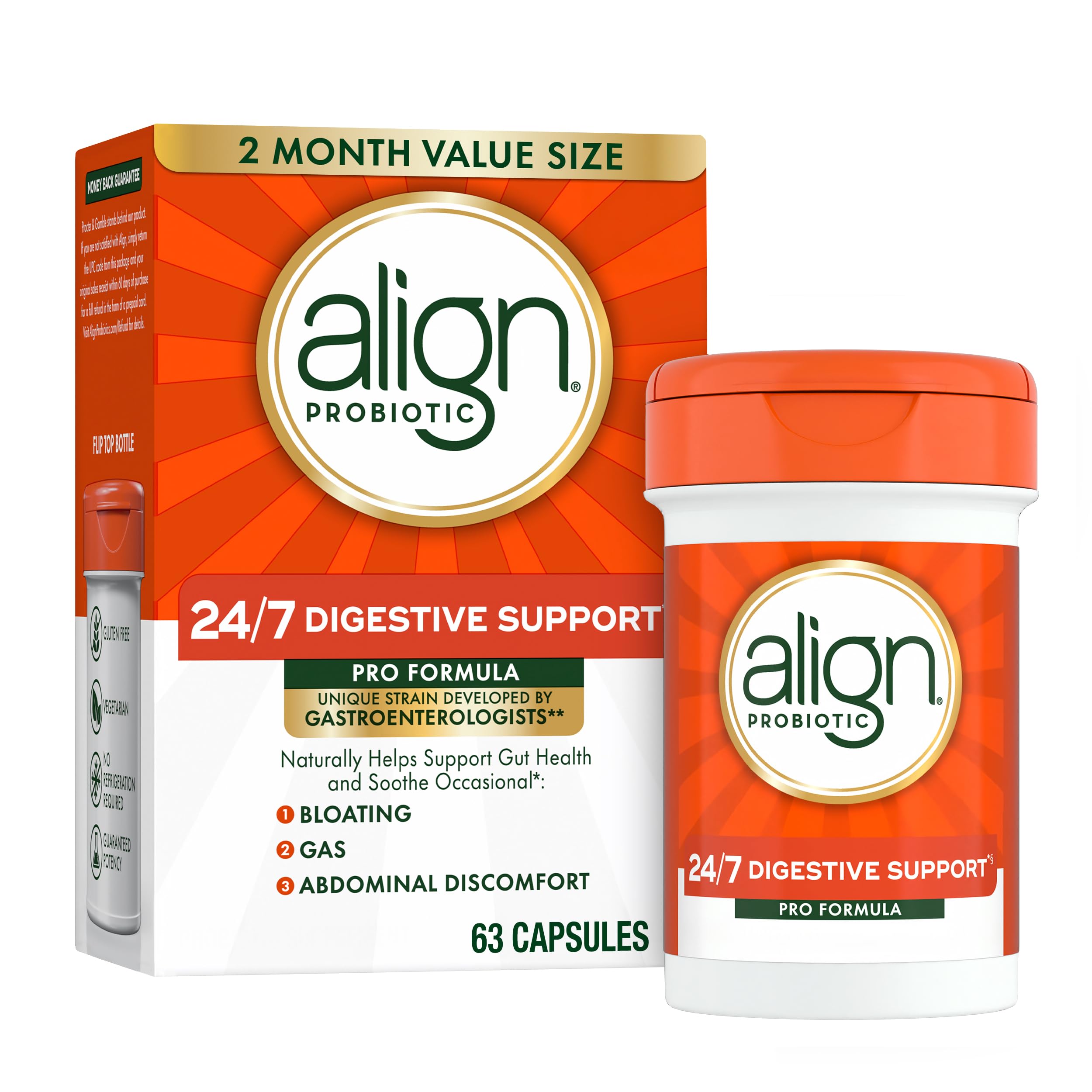
Occasional bloating and gas are the two things Align puts on the front of the box, and the entire formula is built around one organism: Bifidobacterium 35624, selected from 1,500 candidates and researched for more than 20 years. No strain buffet, no prebiotic fiber, no digestive enzymes. One culture, 63 capsules, two months.

That narrowness is the appeal when your complaint has a name. A 34-strain blend spreads its bets across the whole gut; a single studied strain is a targeted bet on one symptom, and it's the one to reach for if a gassy, distended belly after meals is the specific thing you want gone.

The capsule is easy to swallow and easy to load into a weekly pill case, it's gluten-free and vegetarian, and it doesn't need refrigeration. The desiccant bottle is a sensible touch for something that lives in a bathroom cabinet for two months.

The honest caveat is tolerance: stomach discomfort and headaches can follow use, and that's worth knowing before you commit to a two-month bottle. That aside, this is the most focused product in the group — the one to buy when bloating is the symptom, not when you're shopping for general gut support.

Pros

  • One strain with two decades of research behind it
  • Positioned specifically at bloating and gas
  • Two-month supply, no refrigeration, vegetarian

Cons

  • Expensive for a single-strain capsule
Our verdict

One researched strain, Bifidobacterium 35624, aimed squarely at occasional bloating and gas with a two-month supply — our pick when a distended belly is the specific problem.

Check Latest Price
7

Long Daily Supply

NOW Probiotic-10 25 Billion

93 /100
Trail Score Outstanding

Key details

Supply
100 capsules
Potency
25 billion CFU
Strains
10 strains
Certification
NPA A-rated GMP
Check Price on Amazon

One hundred capsules is the longest supply in this group, and 25 billion CFU across 10 strains puts the daily dose in the sensible middle — enough to matter, not so much that the first week is unpleasant. The strains are chosen for acid resistance, and there's no refrigeration requirement.

The manufacturing story is what we keep coming back to. NOW has been making supplements since 1968, and its NPA A-rated GMP certification covers the laboratory and testing methods as well as the plant itself, which is the part of a probiotic label you can't inspect for yourself. A hundred capsules also means fewer reorders, and that matters more than it sounds when the whole point is taking something every day.

Where it's weakest is proof of effect. This is the pick in the group with the thinnest effectiveness signal, and plenty of people finish a bottle noticing nothing at all. Buy it as a long, low-cost daily from a manufacturer with real credentials — not as a step up in potency, and not as a targeted fix.

Pros

  • 100 capsules, the longest supply here
  • NPA A-rated GMP certification
  • Lowest cost per capsule in this set

Cons

  • Least consistent results in this group
Our verdict

A hundred capsules of a 10-strain, 25 billion CFU formula from a manufacturer with serious quality credentials — our pick for a long, low-cost daily run.

Check Latest Price
8

Pill-Free Routine

OLLY Probiotic Gummies

91 /100
Trail Score Outstanding

Key details

Strain
Bacillus coagulans
Potency
500 million CFU
Serving
1 gummy daily
Prebiotic
FOS
Check Price on Amazon

A peach gummy you chew thoroughly, no water, no capsule, no counting pills into a case. That's the entire proposition, and for a lot of people it's the difference between a daily probiotic habit and a bottle that goes stale in a drawer.

The culture is Bacillus coagulans, a spore-forming organism that survives stomach acid better than most, paired with prebiotic FOS. The spore form is what lets a gummy carry live cultures at all — it's the hardiest thing in this category, which is how OLLY can put a probiotic into something that sits on a shelf for months.

The taste is genuinely good, closer to a fruit snack than a supplement, and it's the one product here that nobody has to talk themselves into taking. One a day, chewed thoroughly, and the routine is finished before you've left the kitchen.

So we recommend it for adherence rather than for results. If you've bought capsules before and quit inside two weeks, a gummy you actually eat beats a 60 billion capsule you don't — and that's the only comparison that ends up mattering.

Pros

  • Tastes good enough to take without prompting
  • Spore-forming strain survives stomach acid
  • Prebiotic FOS included with the culture

Cons

  • 500 million CFU, far below the capsules here
  • Gummies can arrive hard or clumped together
Our verdict

A peach gummy carrying 500 million CFU of Bacillus coagulans and prebiotic FOS — our pick for anyone who won't take a capsule, provided you accept the light dose.

Check Latest Price

How We Chose and Tested the Best Probiotics for Weight Loss

We started with every probiotic we could find that made weight, metabolism, or gut-health claims, then cut the list by reading labels the way a skeptical pharmacist would: full strain names rather than vague blends, CFU counts stated through expiration instead of at manufacture, third-party testing language, and price per serving rather than price per bottle. Anything that hid its strains or counts behind a proprietary blend got dropped. That left 14 products — capsules, gummies, and chewables, from 5 billion to 50 billion CFU — which four of us took one at a time over four months, with a two-week break in between each.

Every product got a full month inside a normal routine: with breakfast on weekdays, on an empty stomach before coffee when the label asked for it, and tossed into a carry-on during travel weeks. We kept a shared daily log covering bowel regularity, bloating after meals, cramping, and gas, and we noted whether side effects faded after the first week or stuck around long enough to make us stop.

We also recorded the physical experience. We noted whether a capsule went down with one mouthful of water or needed three, whether a chewable was genuinely soft or gritty and chalky enough to dread, and how many days a bottle actually lasted compared with the serving count on the panel. Each bottle was checked on arrival for a broken seal and a count that matched the label, and value was calculated from the real number of days we got out of it, not the label's ideal math.

How to Choose a Probiotic for Weight Management

What a probiotic can and can't do for your weight

Probiotics shift the mix of bacteria in your gut. They don't change the arithmetic of calories in and calories out. The research connecting gut bacteria to body weight is real but early, and it doesn't support the idea that a bigger CFU number means a smaller waist. What these products do well enough to build a habit around is digestion: firmer stools, less gas, a belly that feels less distended after a meal.

Buy one for that, and treat any change on the scale as a side effect of eating better because you feel better. When a listing leads with weight loss, read the claim as marketing rather than evidence.

How much CFU actually matters

CFU — colony-forming units — is the live-culture count, and it's printed biggest for a reason. Bigger isn't linear. A 100 billion capsule isn't five times as useful as a 20 billion one, and starting at the top is the quickest route to a week of gas and cramping. For a first probiotic, 25 to 60 billion is the useful band; 100 billion formulas are for people who already know their gut tolerates a high dose.

The better question is when that count is measured. A number quoted at manufacture can be half gone by the time you open the bottle. Garden of Life guarantees its 100 billion through the expiration date, and that testing is a large part of why the bottle costs more than others carrying the same number on the front.

Single strain or broad blend

A blend spreads its bets — 10, 20 or 34 strains, each in smaller amounts, covering more of what might be missing. A single-strain product puts the whole dose behind one organism with a research file: Lactobacillus rhamnosus GG in Culturelle, Bifidobacterium 35624 in Align. Neither approach is automatically better than the other.

The choice follows your complaint. If it has a name — bloating, irregularity, discomfort after meals — match the strain to the symptom and buy the concentrated version. If you simply want general support, buy breadth and let a blend cover more ground.

Storage, shipping and dead cultures

Live bacteria don't like heat, and the weakest link in most bottles is the trip to your door. Shelf-stable formulas are built to hold potency at room temperature, which is what makes them practical for a kitchen cabinet. If a label says refrigerate, refrigerate, and don't leave the bottle in a hot car on the way home.

A delivery that sat in a metal mailbox through an August afternoon is worth a second thought. Collect the package, or buy that particular bottle in a store during a heat wave.

Capsule, tablet or gummy

The best formula is the one you don't skip. Capsules dominate this category because they carry doses a gummy can't — OLLY's gummy delivers 500 million CFU, a fraction of what a capsule formula holds — but a gummy you eat every morning beats a 60 billion capsule that stays in the drawer. Tablets are the smallest format and the easiest to swallow.

If you've abandoned a supplement before, be honest about why. Texture, taste, size and the number of pills per serving all decide whether a bottle gets finished, and a finished bottle is the only one that does anything.

Frequently Asked Questions

Final Verdict

Buy Physician's Choice 60 Billion if you want one bottle to find out whether probiotics do anything for you. It has the best balance here of potency, strain variety, prebiotic support and a supply long enough to judge a result, and it's third-party tested and shelf-stable — the two details that decide whether the cultures are alive when you swallow them.

If you already know your gut tolerates high doses, Wholesome Wellness gives you 100 billion across 34 strains. If the problem you're solving is bloating specifically, Align's single strain is the sharper tool. And keep the expectation honest: the scale moves when your diet and activity do, not because of a capsule.