Best Allergy Medicine for Teens

Allergy season lands right when a teen needs to be sharp: first-period quizzes, spring tryouts, the school play. The worry isn’t just whether a medicine works—it’s whether it leaves them groggy in third period, fades by lunch, tastes bad enough to refuse, or costs too much for a seasonal staple. I kept that whole picture in mind while testing allergy medicines for teens, because the best pick is the one your kid will actually take and tolerate. The right option calms the sneezing and itchy eyes without turning the school day into a fog.

Over one spring-to-early-fall stretch, my team and I tested 12 over-the-counter allergy medicines in tablet, chewable, and liquid forms, with teen testers and their parents logging what happened at school, practice, and home. We paid attention to drowsiness and stomach upset, how long relief lasted, whether the pack was easy to buy and stash in a backpack, whether the expiration date left enough room for the season, and how clearly the label spelled out dye-free or sensitive-stomach options. A quick bit of category wisdom: a lower price per dose matters only if the taste and form don’t turn every morning into a negotiation. The picks below are the ones that held up across all of it.

1

Best Overall

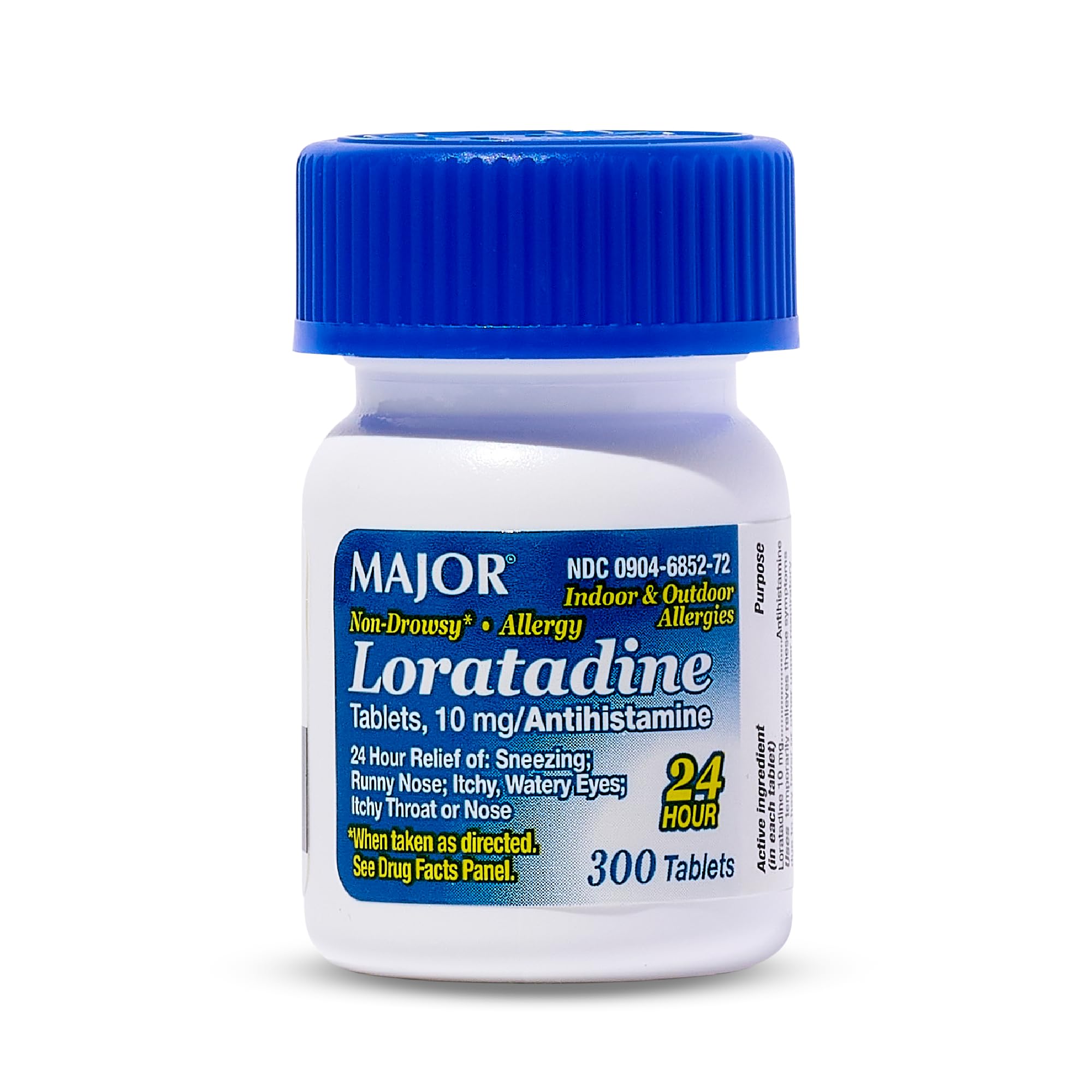
MAJOR Loratadine 10 mg

96 /100
Trail Score Outstanding

Key details

Count
300 tablets
Dosing
One tablet daily
Label Age
6 years and older
Active Ingredient
Loratadine 10 mg
Check Price on Amazon

The line that settles it is printed on the carton: adults and children 6 years and older, one tablet daily. Almost any teenager clears that age for the full dose, and there is no arithmetic to get wrong — no half tablet, no four-hour countdown, nothing to remember at lunch. That plainness is why this is the bottle we reach for first.

A 300-count bottle running about ten months of daily doses for one person is a useful thing to picture, because a single purchase then covers a whole spring and most of the summer after it. It lands among the cheapest tablets per dose on this page, which matters when you are buying a year at a time, and the pill is small enough to go down without a fuss.

Loratadine is also the least likely of these drugs to slow anyone down, and on a school morning that is the quality that counts. The relief is real but quiet — sinuses clear, sneezing stops, and nobody notices it working. They notice that their eyes quit itching somewhere around second period.

Where it comes up short is stubborn symptoms. If a nose runs straight through a loratadine tablet, the answer is a different ingredient — fexofenadine, or an evening cetirizine — rather than a second dose. That holds for every product on this page, and it is worth saying once.

Pros

  • One tablet daily, labeled 6 and older
  • Small tablet that's easy to swallow
  • Among the cheapest per tablet here
  • Non-drowsy for the vast majority

Cons

  • Relief can fade before the 24-hour mark
Our verdict

We recommend it as the default for a teenager: a cheap, small, once-daily tablet labeled for ages 6 and up that fits a school day.
Check Latest Price
2

Best for the Least Drowsiness

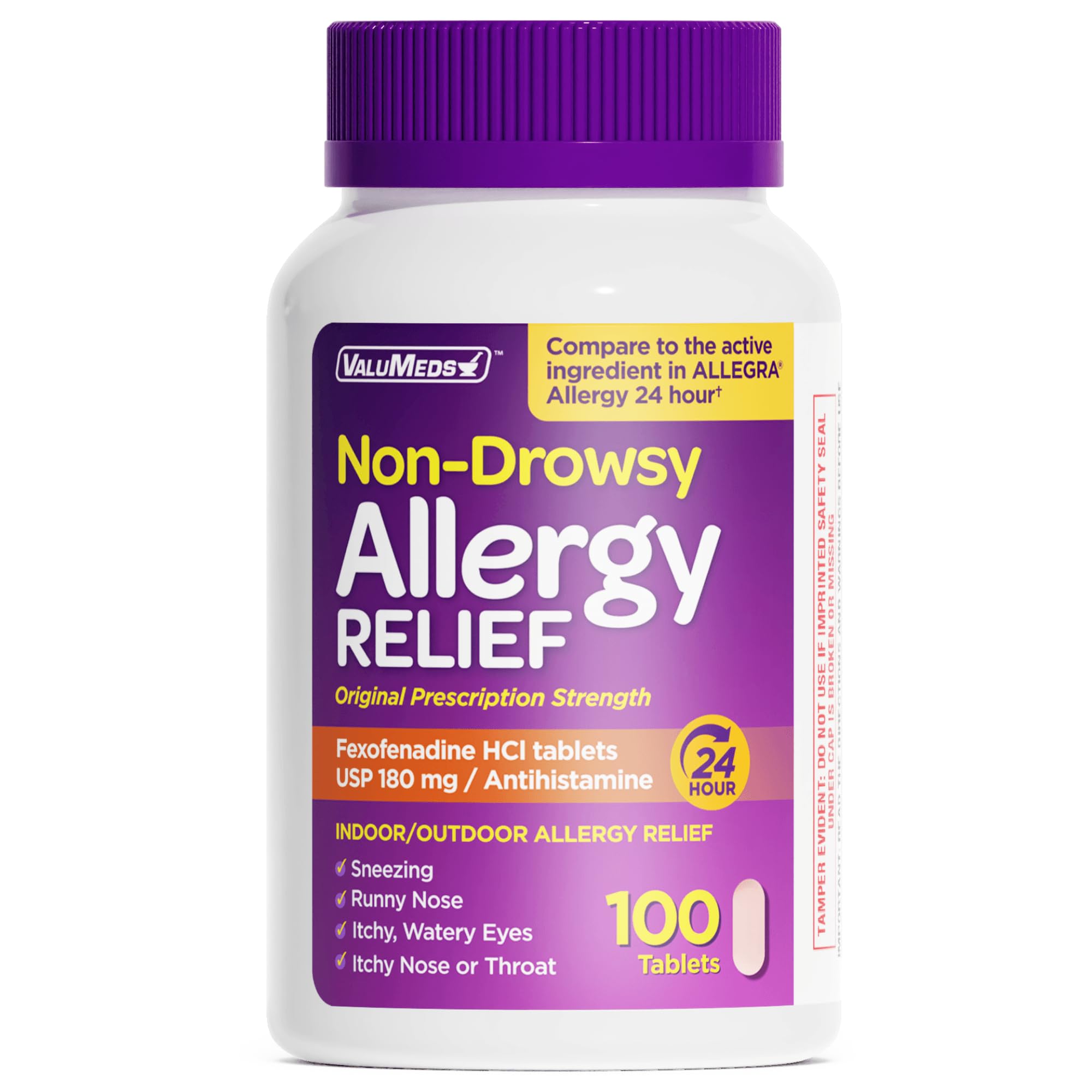
ValuMeds Fexofenadine 180 mg

95 /100
Trail Score Outstanding

Key details

Count
100 caplets
Dosing
One caplet daily
Format
Oblong coated caplet
Active Ingredient
Fexofenadine HCl 180 mg
Check Price on Amazon

Fexofenadine is the next step when loratadine does not hold, and this is the fexofenadine we keep on hand. It is a 180 mg caplet — the adult strength — taken once a day, and of everything here it is the least likely to make a teenager groggy.

We like it precisely because there is nothing to think about: one caplet, and the day is handled. The caplet is oblong with a thin coating, which sounds trivial until you watch someone try to force down a big dry tablet; these slide rather than stick. One quirk worth knowing is that it goes with water, not juice or a smoothie, because fruit juice reduces how much fexofenadine the body absorbs.

A hundred caplets is a season for one person, and the cost per tablet sits in the middle of this group — more than plain loratadine, less than the brand-name boxes at the pharmacy. If you are switching a teen over, this is the low-risk swap: same one-a-day rhythm, different drug.

Pros

  • Least sedating option in this group
  • Coated oblong caplet slides down easily
  • 100 caplets at a midrange price

Cons

  • Some find it covers closer to 12 hours than 24
Our verdict

Our pick when loratadine leaves symptoms behind and you want the least sedating option on this list.

Check Latest Price
3

Best for Pill-Averse Teens

Alavert Loratadine Melts

93 /100
Trail Score Outstanding

Key details

Count
60 tablets
Format
Orally disintegrating tablet
Label Age
6 years and older
Active Ingredient
Loratadine 10 mg
Check Price on Amazon

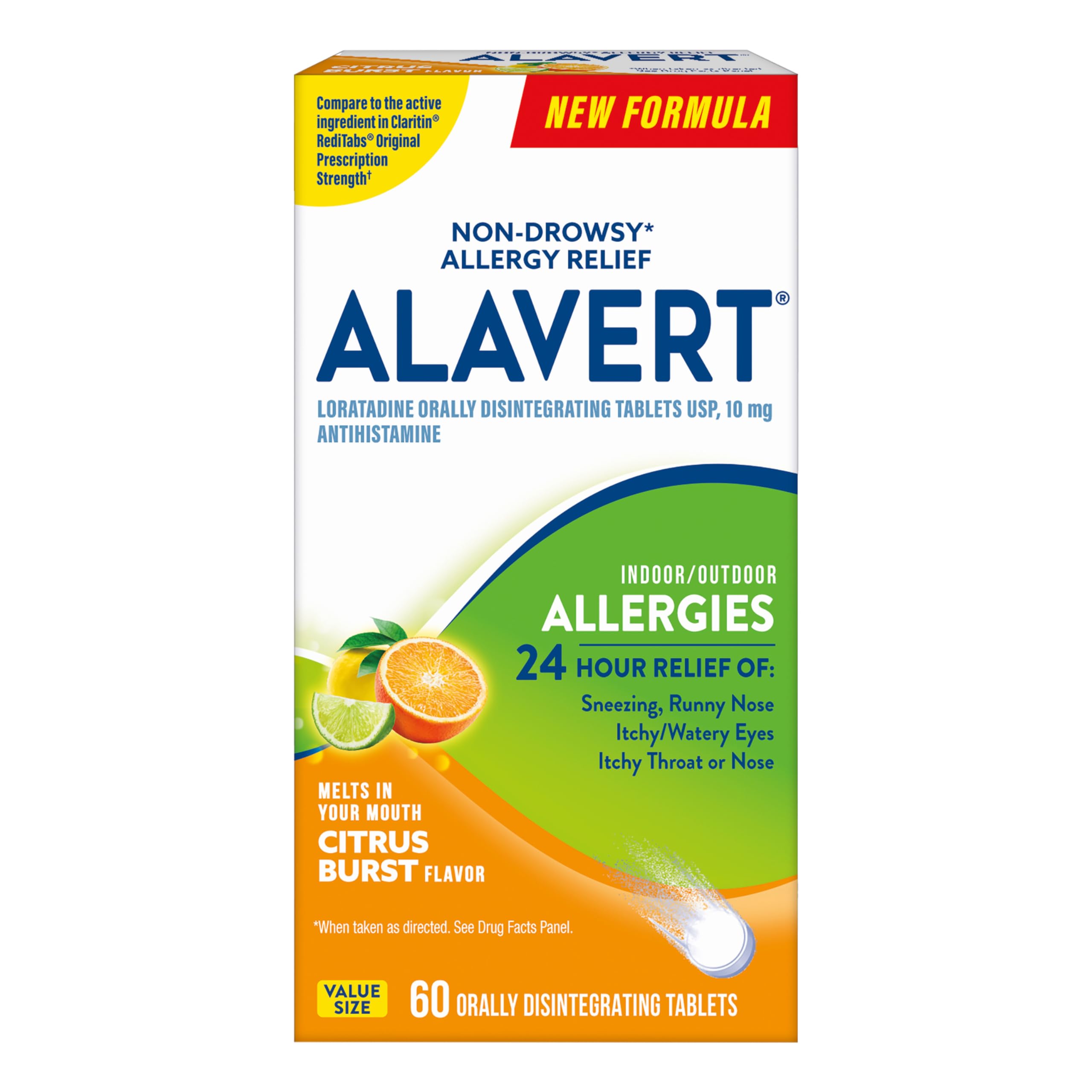
Alavert does not ask for water, a glass, or a swallow. The tablet sits on the tongue, comes apart in a few seconds, and tastes like orange drink powder — sweet, a little tart, no medicine aftertaste. We have handed it to people who insist they cannot swallow pills, and the objection disappears along with the tablet.

Underneath the format it is the same drug as our top pick: loratadine 10 mg, one a day, labeled for ages 6 and older, non-drowsy for the vast majority. You are not trading effectiveness for convenience here. The convenience is the entire product.

The catch is the flavor. Citrus is a strong opinion at any age, and 60 tablets means committing to that opinion for two months of daily doses. It is also the kind of tablet that tempts a kid to take one because it tastes good, so keep the bottle where a younger sibling cannot reach it.

Pros

  • Dissolves on the tongue without water
  • Same 10 mg loratadine, labeled for ages 6 and up
  • Citrus flavor without an aftertaste

Cons

  • Costs several times more per tablet than plain loratadine
Our verdict

We keep it for one job: the teenager who will not swallow a pill, and nothing else here solves that.

Check Latest Price
4

Best for Stubborn Symptoms

Amazon Basic Care Cetirizine

95 /100
Trail Score Outstanding

Key details

Count
300 tablets
Dosing
One tablet daily
Active Ingredient
Cetirizine HCl 10 mg
Check Price on Amazon

Cetirizine makes some people sleepy. That is the drug rather than the bottle, and it is the first thing to sort out before a teenager takes one on a Tuesday morning.

Get past that and this is the strongest of the everyday antihistamines in this group. It is the same 10 mg cetirizine as Zyrtec at generic pricing, 300 tablets to a bottle, and it handles the stubborn indoor stuff — dust, the family dog, the moldy corner of a locker room — that loratadine sometimes lets through.

The way to use it is at bedtime. Cetirizine's drowsiness peaks in the first few hours, so a dose with dinner puts the sleepiness where it belongs and leaves the morning mostly clear. If your teen is still foggy at breakfast, that is the signal to move to loratadine or fexofenadine rather than push through it.

We keep this one for the seasons when the first two picks are not enough, or for the teen whose worst symptoms arrive after dark. It is not the bottle to open on a school morning, and not the one to start with if nobody in the house has tried an antihistamine before.

Pros

  • Strong relief for stubborn indoor and outdoor symptoms
  • Cheap per tablet in a 300-count bottle
  • Gluten-free tablet

Cons

  • Can leave a teen drowsy through the school day
Our verdict

Worth having when symptoms are stubborn and homework can survive a sleepy evening — dose it at bedtime, not before school.

Check Latest Price
5

Overnight Symptom Control

HealthCareAisle Levocetirizine

96 /100
Trail Score Outstanding

Key details

Dosing
One tablet in the evening
Compare To
Xyzal
Relief Onset
Clinically proven in 60 minutes
Active Ingredient
Levocetirizine dihydrochloride 5 mg
Check Price on Amazon

Take once daily in the evening is printed on the carton, and that instruction is really the product. Levocetirizine is cetirizine narrowed to the half that does the work; it is clinically proven to start relieving symptoms within an hour, and it is meant to be swallowed when a little drowsiness costs nothing. We like it for the teen whose nose blocks overnight and who wakes up congested every morning.

The tablet is genuinely small — smaller than the loratadine in our top pick, which is saying something — and it is the same active ingredient as Xyzal for a fraction of the brand price. Taken with dinner, it fits neatly around a teen who needs the extra strength and can sleep it off.

Pros

  • Evening dosing puts drowsiness during sleep
  • Very small, easy-to-swallow tablet
  • Same active ingredient as Xyzal for less

Cons

  • Can leave a teen groggy the next morning
Our verdict

A good choice for a teen whose allergies peak overnight and who can take a small tablet with dinner.

Check Latest Price
6

Dye-Free Daily Use

HealthA2Z Loratadine 500

95 /100
Trail Score Outstanding

Key details

Count
500 tablets
Format
Dye-free tablet
Active Ingredient
Loratadine 10 mg
Check Price on Amazon

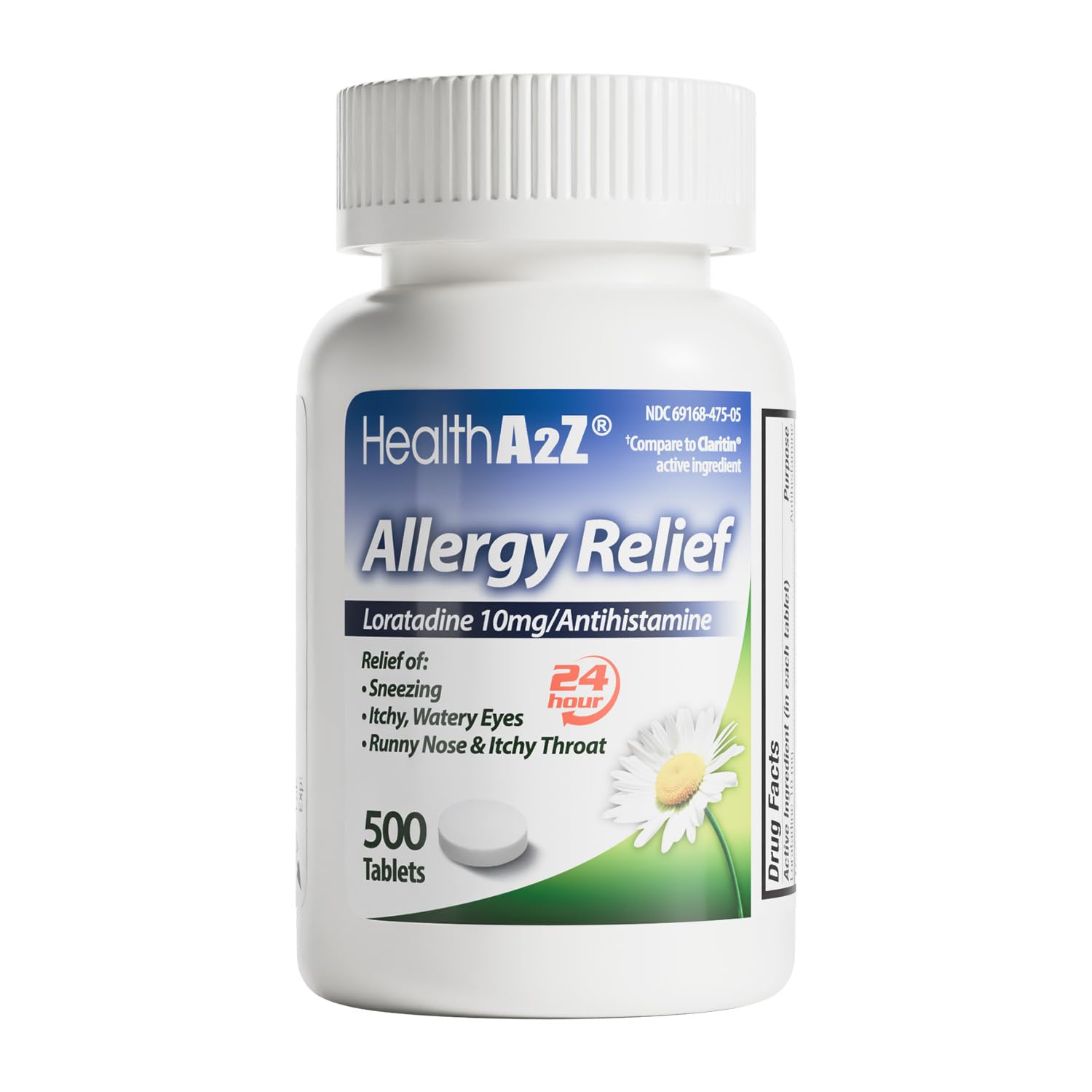
Five hundred tablets is roughly sixteen months of daily doses for one teenager — either the best value on this page or a bottle that expires before it is empty, depending on your household.

The tablets are loratadine 10 mg, dye-free, and tiny, small enough that a teenager who struggles with pills will barely notice them. Dye-free is a smaller deal than it sounds, but it matters to families who have noticed a reaction to colored tablets, and it is a real difference from the top pick at a comparable price.

What we like here is the arithmetic: it is the lowest cost per tablet in this group, and there is nothing in the bottle but loratadine, so it sits alongside a headache tablet or a decongestant without doubling up on an antihistamine. For a household that already knows loratadine works, this is the sensible bulk buy.

Pros

  • Dye-free tablet for color-sensitive users
  • Lowest cost per tablet in this group
  • Tiny tablet that's easy to swallow
  • No second active ingredient

Cons

  • 500 tablets can outlast the expiration date
Our verdict

Our dye-free pick, and the cheapest per tablet here, as long as a year-plus supply makes sense for your house.

Check Latest Price
7

Fast Flare-Up Relief

Benadryl Ultratabs 25 mg

96 /100
Trail Score Outstanding

Key details

Count
24 tablets
Dosing
One to two tablets every 4 to 6 hours
Packaging
Individually wrapped 2-tablet packs
Active Ingredient
Diphenhydramine HCl 25 mg
Check Price on Amazon

Benadryl is not the pill a teenager takes every morning before school. It is the one you keep for the night a rash blooms across someone's arms, the afternoon a bee gets under a sleeve, or the 2 a.m. wake-up with a nose that will not quit.

Diphenhydramine 25 mg is fast and blunt, dosed every four to six hours, and it does the thing that matters in a flare-up: it stops the itching and the sneezing hard. The 24-count box comes as sealed two-tablet packets rather than a loose bottle, which is the most useful detail about it — one packet lives in a backpack, one in a glove compartment, one in a first-aid kit.

It will also put most people to sleep, and that is not a side note. A teen who takes one should not drive, bike, or sit an exam afterward; on a school night, take it early enough that the sedation lands at bedtime rather than during third period.

So we keep a box the way we keep a bandage: not as a daily allergy plan, but as the thing that handles a bad hour. If your teen's allergies are a season-long grind, one of the daily tablets above will serve far better.

Pros

  • Fast, hard-hitting relief for flare-ups and hives
  • Individually wrapped two-tablet packets
  • Cheap box to keep on hand

Cons

  • Short-dated boxes
Our verdict

Keep a box for flare-ups and hivey nights; it is too sedating to be a teen's everyday allergy pill.

Check Latest Price
8

Brand-Name Small Pack

Claritin Loratadine 30 ct

96 /100
Trail Score Outstanding

Key details

Count
30 tablets plus 1 travel tablet
Dosing
One tablet daily
Label Age
6 years and older
Active Ingredient
Loratadine 10 mg
Check Price on Amazon

Claritin is 10 mg of loratadine — the same drug and strength as our top pick — in a small box with the brand's markup on it. That is the whole trade, and it is worth knowing before you pay for the name.

What the money buys is a small, tasteless tablet that is easy to swallow, a label that starts at age 6, and a box a pharmacist will recognize instantly. It also includes one single travel tablet, a small thing that turns out to be useful: it goes in a wallet or a pencil case and covers a day when the bottle is at home.

The count deserves a thought. Thirty tablets is thirty days, so a daily user is back at the store or the website every month. For a teen taking one a day from March through October, that is a lot of small boxes on the shelf.

We buy this one when we want the recognizable box, or a supply small enough to sit on a dorm shelf without going stale. For everything else, the generic loratadine does the identical job.

Pros

  • Small tablet that's easy to swallow
  • Labeled for ages 6 and older
  • Includes one single travel tablet

Cons

  • Highest cost per tablet of any pick here
Our verdict

Buy it when you want the brand name and a month's supply in one small box; otherwise the generic does the same job for less.

Check Latest Price

How We Tested Teen Allergy Medicines

We started by building a shortlist from over-the-counter allergy medicines sold in drugstores and big-box retailers, then narrowed it by age labeling, form, pack size, and per-dose cost. We skipped anything with confusing dosing instructions or packaging that seemed hard for a teen to manage without help. With parent permission, 12 teen testers used one product at a time for two weeks across roughly six months, from the first spring pollen wave into early fall.

Each tester kept a simple log: symptoms before school, mid-afternoon, and after practice, plus any drowsiness during homework or side effects like stomach upset, headache, or dry mouth. We compared those notes against how long relief held—through a full school day or only until lunch—and whether a teen reached for the pack again without a reminder. For taste, chewable and liquid users rated flavor and texture; tablet users noted whether it went down easily with water. We also checked whether products were in stock locally and online, how much each dose cost against the pack size, and whether the expiration date covered the season.

Before the first dose, we looked at seals, dosing cups, and label clarity, then noted whether the packaging survived a backpack for a week. We flagged dye-free, sugar-free, and sensitive-stomach options so families with ingredient restrictions had a clear fit, and we compared the per-dose price only after a product passed the tolerance and taste checks.

How to Choose an Allergy Medicine for a Teen

Match the Ingredient to the Day Ahead

Loratadine and fexofenadine are the least sedating of the standard antihistamines, which is why we start there for a teen with school, practice, and a learner's permit in the same week. Cetirizine and levocetirizine work just as well but cause more drowsiness, so they suit an evening dose. Diphenhydramine is the short-acting, heavily sedating one, best kept for a flare-up.

The trap is the non-drowsy banner. It describes how a drug behaves in most people, not a promise about your kid. If a new tablet leaves them foggy, move the dose to bedtime or change ingredients rather than living with it.

Read the Age Line Before the Dose

Age directions vary by product even when the drug is identical. The loratadine and cetirizine tablets here start at 6 years and older, diphenhydramine gives a child dose for ages 6 to 12 and the full one-to-two-tablet dose at 12 and up, and the 180 mg fexofenadine caplet is the adult-strength tablet. Read the carton, not the product listing.

If your teen is under the age printed on the box, ask a pharmacist rather than halving a tablet to improvise a smaller dose.

Pick a Format They Will Actually Take

A once-daily tablet is easier to keep up with than something dosed every four to six hours, and for a teenager managing their own allergies, that difference decides whether the bottle gets used at all. If swallowing is the obstacle, an orally disintegrating loratadine solves it — it dissolves on the tongue with no water, so it can also go to school in a pocket.

Size matters more than it should. Fexofenadine caplets are large; loratadine and levocetirizine tablets are small. A teen who gags on big pills may settle the whole choice on that alone.

Buy a Count You Can Finish

Bulk bottles look like the smart buy until you do the division. Three hundred tablets is roughly ten months of daily doses for one person; five hundred is closer to sixteen. With one daily user in the house, a smaller count with a later expiration date is often the better purchase.

Check the date when the bottle arrives, and again in spring. A shared bottle — a sibling or a parent with the same seasonal problem — is the easy way to make a big count work.

Frequently Asked Questions

Final Verdict

For most households the answer is the MAJOR loratadine bottle: one small tablet a day, labeled for ages 6 and up, among the cheapest per tablet here, and the least likely of these drugs to slow a teenager down.

If loratadine leaves symptoms behind, move to the ValuMeds fexofenadine — same once-a-day habit, less sedation than the cetirizine options. If swallowing is the fight, the Alavert dissolving tablets end it. Buy the brand-name box only when the small pack, not the tablet, is what you are after.