Best Air Purifiers for Large Rooms of 2026

A large-room air purifier has an awkward tradeoff baked into it: to turn over the air in an open-plan living space, it has to move a lot of it, and the machines that move the most air tend to be the ones you can hear from across the room. Get that balance right and a single unit quietly handles the whole floor — cooking smoke, pet dander, the dust that settles the moment you stop looking.

My kitchen opens straight into the living room, so a seared steak means cracking a window in January. Over the past ten months, my team has run eight large-room purifiers through that space and through a bedroom with the door shut, tracking how quickly each one actually cleared the air and how loud it was at the speed you'd leave on overnight. Two units with nearly identical readings on paper can differ by a few hundred dollars in filters over three years, so we kept the math alongside the numbers. The picks below earned their spot on both counts.

1

Best Overall

Winix 5510

93 /100
Trail Score Outstanding

Key details

Weight
13.3 lb
Filtration
True HEPA + advanced carbon filter
Max Room Size
1,882 sq ft in 1 hr
Certified Coverage
392 sq ft (AHAM)
Check Price on Amazon

The number to read on the Winix 5510 is not the 1,882 square feet. It is the AHAM-verified 392 square feet printed beside it, which is the coverage an independent certification actually backs. Plenty of purifiers here quote a big figure and stop there; Winix gives you both, and that gap is the most useful thing a large-room shopper can learn before spending anything.

Living with it was uneventful in exactly the way we want. Auto mode picks up smoke from a pan and settles back to a murmur once the air clears, the carbon stage is a real deodorization filter rather than the token sheet we have found in cheaper units, and on low the fan disappears under conversation. It is also the pick here with app support, so you can schedule it without crouching behind the sofa.

Two things to plan around. It stands 25 inches tall on an 11-by-16-inch footprint, so it wants a corner or a stretch of wall rather than a slot between furniture, and the air quality light glows brightly enough that we switched to sleep mode to keep a bedroom dark. Maintenance is the easy part: the fine mesh pre-filter rinses under the tap, and the combined HEPA and carbon cartridge is the only thing you buy again.

Pros

  • AHAM-verified coverage alongside the headline figure
  • Thick carbon deodorization filter for odors
  • Auto mode reacts to real-time air quality
  • Quiet low and sleep settings

Cons

  • Turbo is loud enough to leave the room
Our verdict

Buy this if your large room is one open space you want handled by a single machine: certified coverage, a thick carbon filter, and auto mode that does the thinking.
Check Latest Price
2

Best for Allergies

Coway AP-1512HH

93 /100
Trail Score Outstanding

Key details

Weight
12.5 lb
Coverage
1,748 sq ft in 60 min
Warranty
3 years
Filtration
Four-stage with true HEPA
Check Price on Amazon

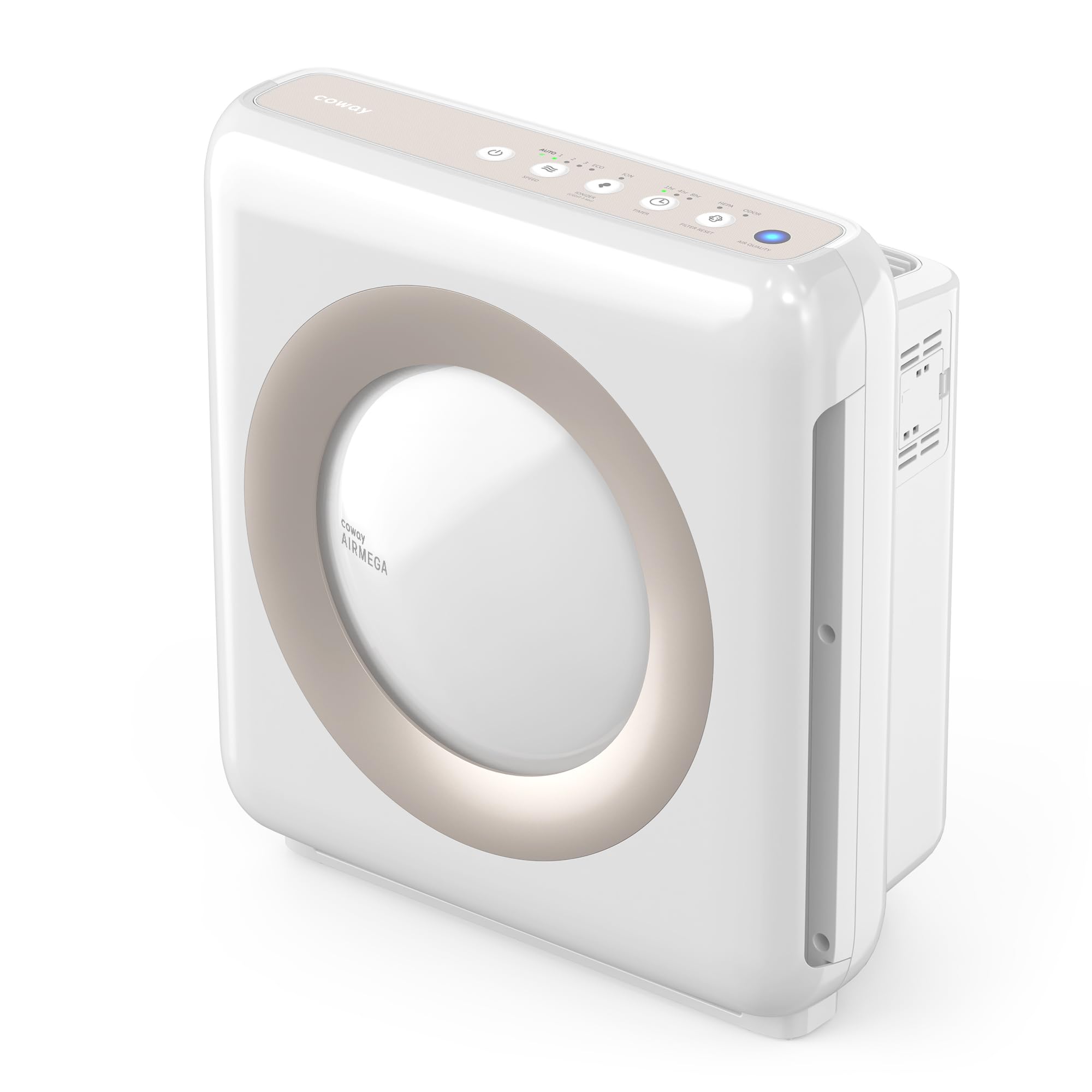
A three-year warranty is the detail that separates the Coway AP-1512HH from everything else here, and it is the reason this is the one we point allergy sufferers toward. The design has been on sale since 2015 with only modest changes, which in a category crowded with brand-new names is its own kind of reassurance: the obvious problems were found and fixed years ago.

Four stages do the work — a washable pre-filter, a deodorization layer, a bipolar device and true HEPA rated for 99.97% of particles down to 0.3 microns — and Coway quotes 1,748 square feet cleaned in an hour. In our testing we kept checking whether it was on, because low and medium are close to inaudible. Turbo is a different animal: a jet-engine setting for after a kitchen mishap, not for watching television.

Ownership is refreshingly plain. The pre-filter lifts out and rinses under the tap, the filter alert is a light rather than a notification on a phone, and at 12.5 pounds with a recessed handle it moves between rooms without a second thought. Set it in the corner of the living room and it quietly does its job, which is most of what we want from an appliance.

Pros

  • Three-year warranty backs the purchase
  • Close to inaudible on low and medium
  • Long-running, well-established design
  • Washable pre-filter lowers upkeep

Cons

  • Odor removal is inconsistent on cooking smells
Our verdict

Allergy sufferers get the longest warranty here and a proven, quiet design refined since 2015 — the low-drama choice in this group.

Check Latest Price
3

Best for Pet Hair

Levoit Vital 200S-P

95 /100
Trail Score Outstanding

Key details

Weight
13.2 lb
Coverage
1,875 sq ft (AHAM verified)
Dimensions
14.96 x 8.66 x 19.69 in
Air Intakes
Front plus U-shaped inlet
Check Price on Amazon

If a dog or cat shares your living room, the Vital 200S-P's second intake is the feature worth paying for. Alongside the usual front grille there is a U-shaped inlet that pulls from a wider arc, and the hair and dander that collect along baseboards in a big room are exactly what that catches.

The rest of the package points the same way. Coverage runs to 1,875 square feet with AHAM verification behind it, the pre-filter traps visible hair before it reaches the HEPA layer, and the machine stays quiet on the settings you leave on all evening. We also appreciated how little floor it takes: under nine inches deep, so it tucks into places a round purifier will not go.

It is tall, though — nearly 20 inches — and the wide intake wants a little breathing room rather than a tight corner against a bookcase. For pet households weighing cost against the certified alternatives, this is where the money goes furthest.

Pros

  • Extra U-shaped intake targets pet hair
  • AHAM-verified large-room coverage
  • Shallow footprint fits tight spots
  • Quiet enough for sleep mode

Cons

No notable drawbacks to flag.

Our verdict

For a home with a shedding pet, this is our pick: certified coverage, a second intake that catches hair, and quiet running at the speeds you will actually use.

Check Latest Price
4

Best Budget

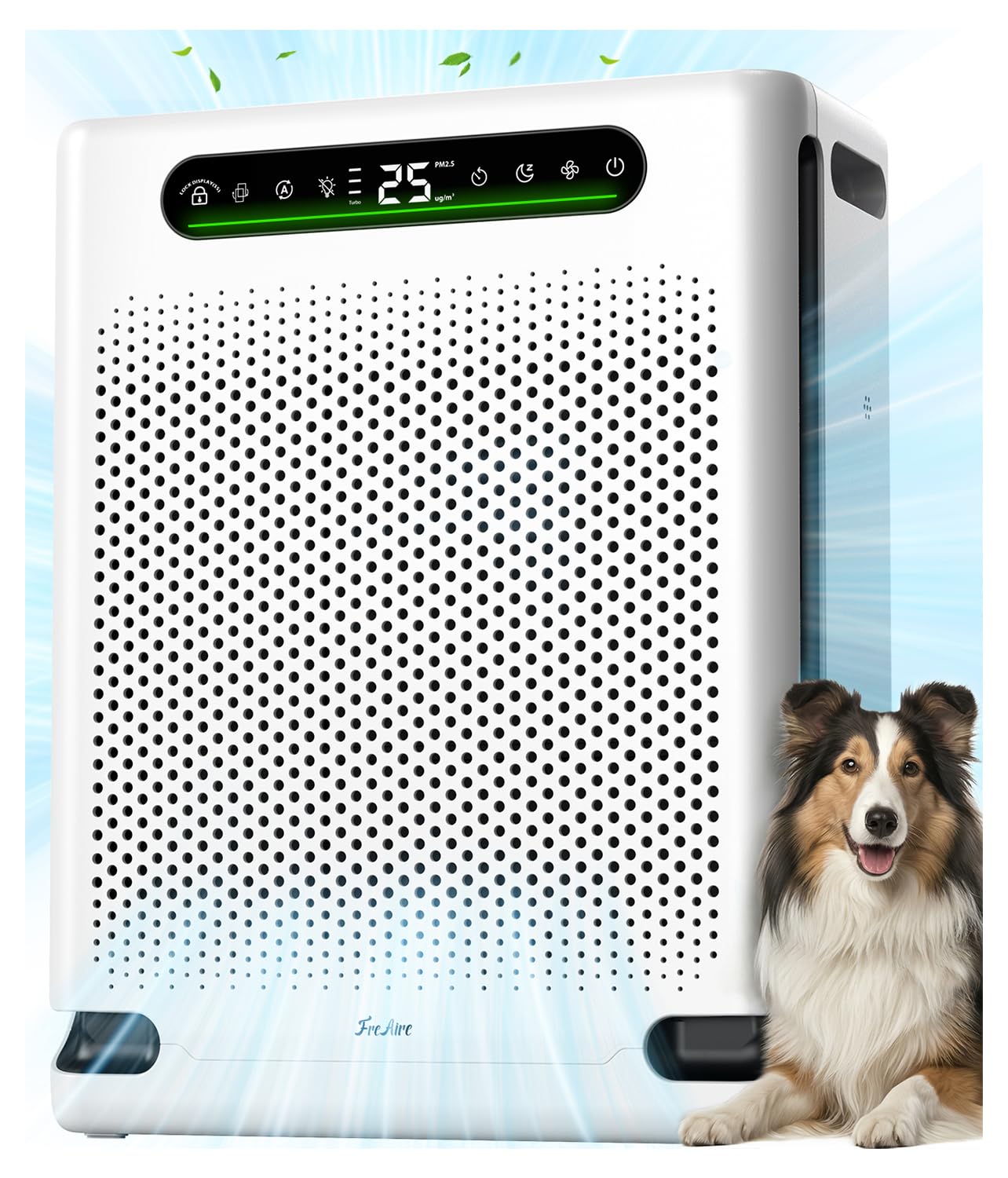
FreAire HAP605

91 /100
Trail Score Outstanding

Key details

Weight
6.73 lb
Coverage
2,600 sq ft
Sleep Mode
20 dB, display off
Air Intakes
One front, two side
Check Price on Amazon

Three intakes in a case that weighs under seven pounds: the HAP605 draws from a wide front grille and both sides, and FreAire's figure for that is 2,600 square feet. The case is barely 16 inches tall, so the number deserves a raised eyebrow — and yet the design is not a gimmick, because pulling from three directions really does move more air through a given filter.

We came away liking it more than its spec sheet suggests we should. The PM2.5 readout reacts quickly when something burns in the kitchen, auto mode steps the fan up and then back down on its own, and sleep mode runs at 20 dB with the display going dark after a few seconds — a small courtesy that matters a great deal in a bedroom.

What you give up is certainty. This is a new model without a certified coverage figure or the years of history the Winix and Coway carry, and in a genuinely big room you will hear it working harder than the premium picks. For a first purifier, a rental, or a room that is large without being cavernous, the trade is a fair one.

Pros

  • Three-direction intake moves more air
  • Auto mode with a real PM2.5 sensor
  • Sleep mode darkens the display
  • Light enough to move room to room

Cons

  • New model with a short track record
Our verdict

A lot of purifier for the money — three intakes, a real PM2.5 sensor and a 20 dB sleep mode — as long as you accept a shorter track record.

Check Latest Price
5

Best for Very Large Spaces

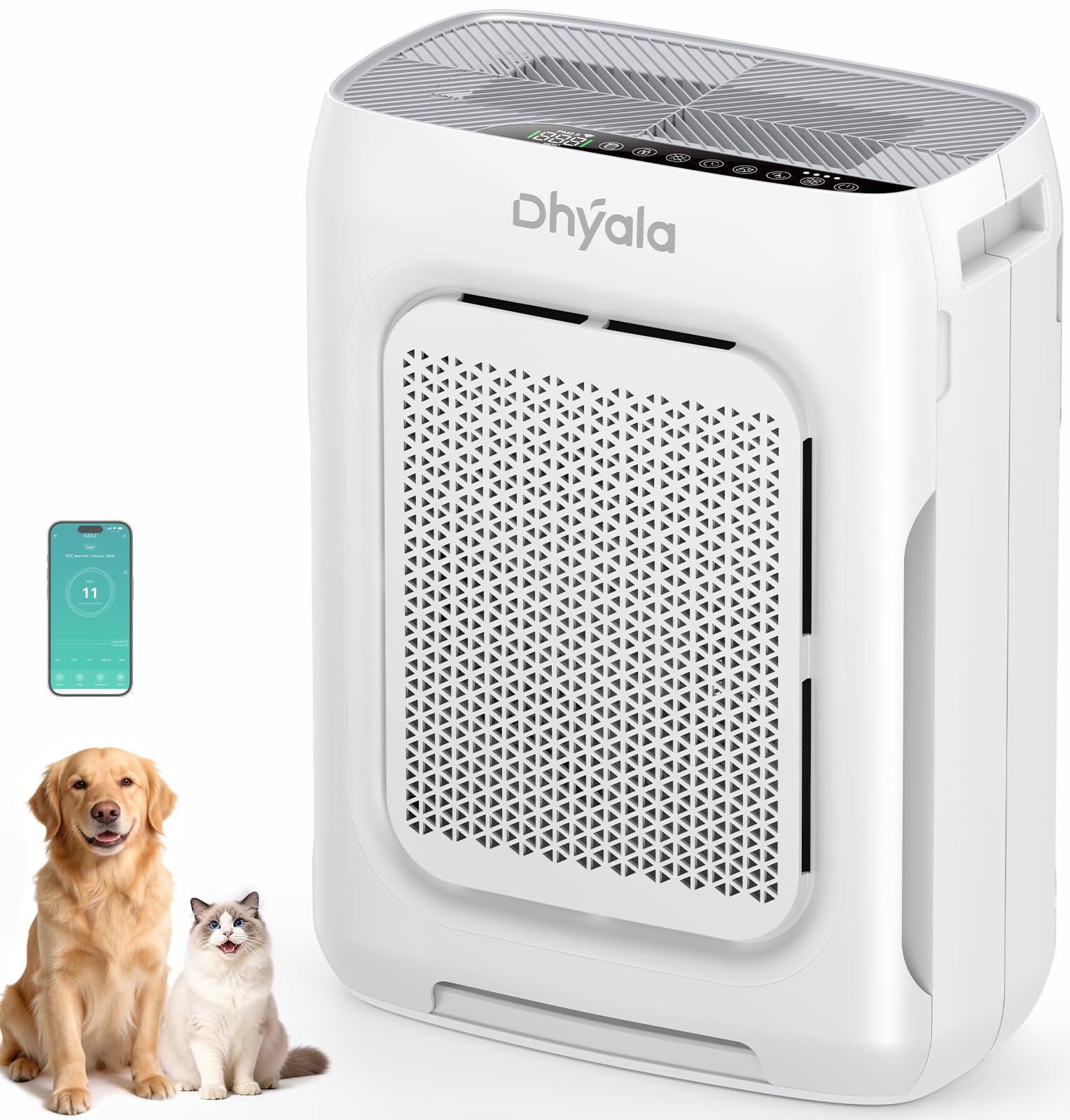
Dhyala KJ03

92 /100
Trail Score Outstanding

Key details

Coverage
3,000 sq ft
Filtration
Two separate 3-stage filters
Sleep Mode
15 dB
Smart Control
Wi-Fi, Alexa, Google Assistant
Check Price on Amazon

Four intakes, two filter stacks and a small aromatherapy drawer on top: the Dhyala KJ03 is the only purifier here that gives you somewhere to put a scent pad, and the most fully equipped unit in this group overall.

The dual-filter design is what matters in a big room. Air enters from the front, the back and both sides, passes through two separate three-stage filters, and the result is a claimed 3,000 square feet from a body that weighs under nine pounds. Twice the filter surface means the fan does not have to work as hard for the same airflow, which is usually the difference between a purifier you notice and one you forget.

Around that sits a genuinely useful feature set: Wi-Fi with Alexa and Google Assistant, a PM2.5 readout on the top panel, auto mode, a child lock, and an anti-chew cord that households with pets will value more than they expect. Sleep mode drops to 15 dB.

Our hesitation is arithmetic. Two filters means two cartridges at every change, so upkeep costs more than on a single-filter machine, and for much the same money you can have the Winix's certified number and longer record. Choose the KJ03 when the room is genuinely huge or awkwardly shaped and you want the app; choose the Winix when running costs matter more.

Pros

  • Dual filter stacks and four intakes
  • Wi-Fi with Alexa and Google Assistant
  • Very quiet 15 dB sleep mode
  • Child lock and anti-chew cord

Cons

  • Two cartridges needed at every filter change
Our verdict

The pick for very large or awkward spaces: dual filter stacks, 3,000 square feet of claimed coverage and app control, at the cost of two filters per change.

Check Latest Price
6

Easy Upkeep

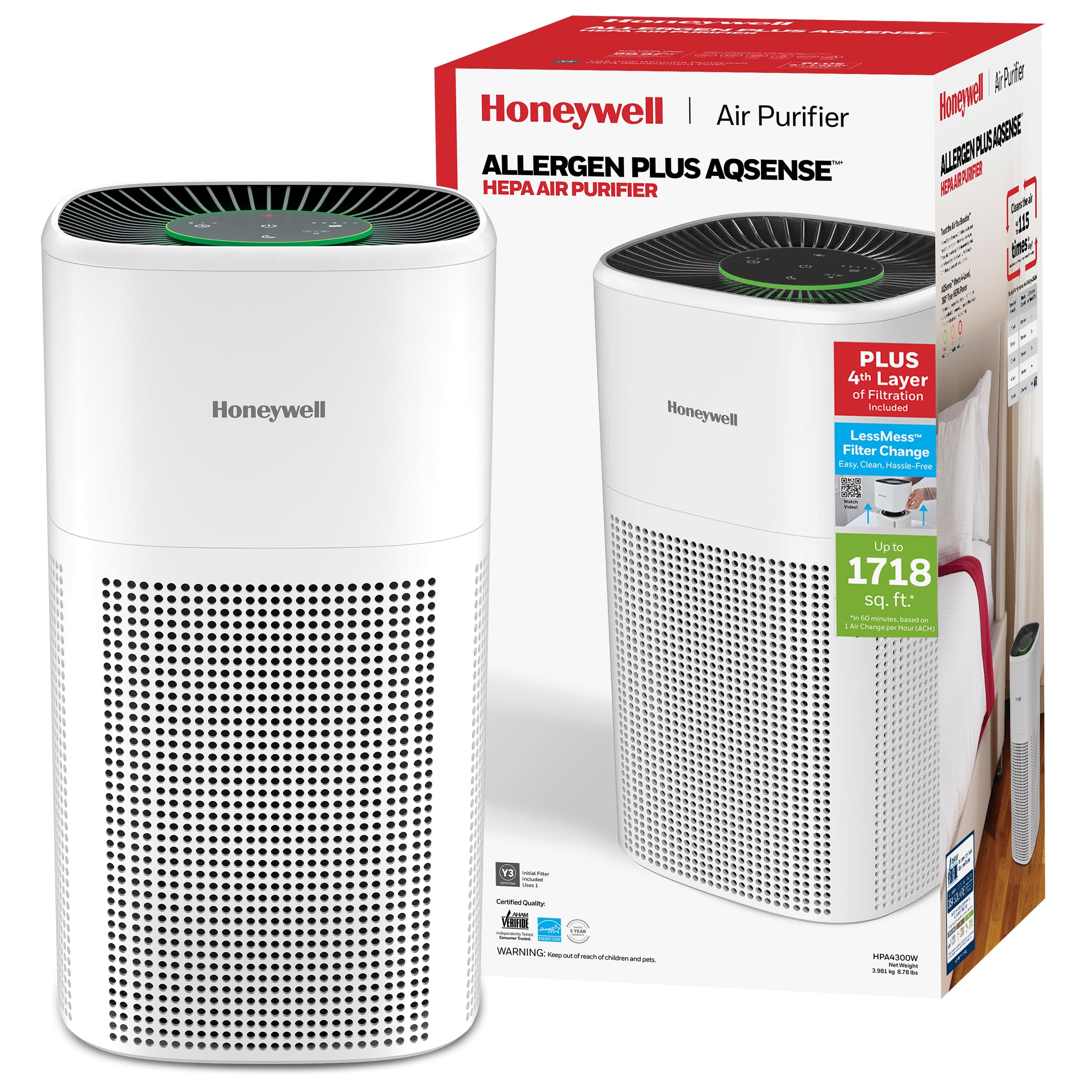
Honeywell HPA4300W

89 /100
Trail Score Excellent

Key details

Coverage
1,718 sq ft at 1 air change/hr
Filtration
4-layer HEPA, 99.98%
AHAM Rating
4.8 air changes at 354 sq ft
Filter Changes
One-click LessMess system
Check Price on Amazon

A molded carry handle and a filter door that opens with one click are the two details that define the Honeywell HPA4300W. Neither shows up in a spec comparison, and both matter more the longer you own a purifier: a filter change you can do in half a minute is a filter change that actually happens.

That practicality is why we keep recommending it to people who do not want a project. The four-layer stack is AHAM Verifide for 4.8 air changes an hour in a 354-square-foot room and rated for one air change an hour up to 1,718 square feet, with true HEPA capturing 99.98% of allergens and a 360-degree intake that lets you stand it out in the room rather than flat against a wall. Four speeds, a timer, sleep mode and a child lock round it out.

The honest limitation is history. This is the newest model on the page, with far less real-world mileage behind it than the Coway or the Winix, so you are buying certified numbers and a well-considered design rather than a long record. For a name-brand unit with the easiest upkeep here, that is a trade we are comfortable with.

Pros

  • One-click, mess-free filter changes
  • AHAM Verifide with 360-degree intake
  • Four levels plus sleep mode and child lock

Cons

  • Shortest real-world history in this group
Our verdict

Best for anyone who dreads maintenance: a carry handle, a one-click filter door and certified 360-degree cleaning, with less history behind it.

Check Latest Price
7

Small Footprints

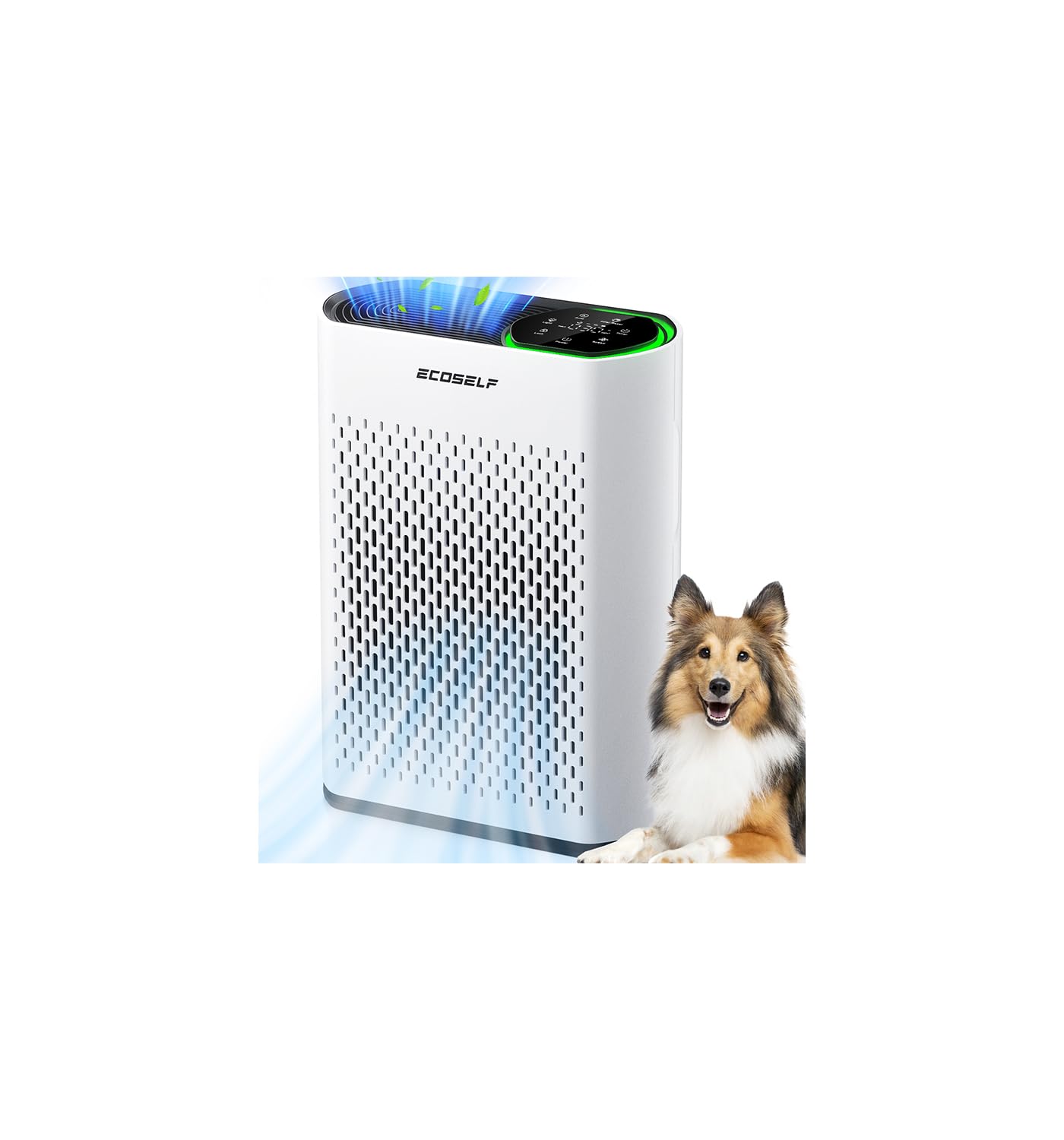
ECOSELF HAP602

93 /100
Trail Score Outstanding

Key details

Depth
5.7 in
Coverage
2,400 sq ft in 30 min
Sleep Mode
20 dB
Air Quality Display
PM2.5 sensor
Check Price on Amazon

What we like most about the ECOSELF HAP602 is how little space it asks for: 5.7 inches of depth, a shade over 15 inches of width, and a footprint that disappears behind a sofa. Then you notice it also carries a PM2.5 sensor, auto mode and a 20 dB sleep setting for less than most of this group, and it becomes the value pick of the roundup.

The feature list is unusually complete for the money: three fan speeds, a three-stage filter, a display that dims at night, and a case light enough to carry up a flight of stairs with one hand. It slides along a hallway wall, under a console table or into the gap beside a recliner where a round purifier simply will not go.

The sensor reads particles rather than gases, so it will not ramp up for a burnt-toast smell the way it does for visible smoke — worth knowing if odors are your main complaint. For dust, pollen and dander in a living room or primary bedroom, it does what the bigger units do at a smaller scale.

Pros

  • Very shallow case fits awkward gaps
  • PM2.5 sensor feeding auto mode
  • Quiet sleep mode with dimmed display
  • Filters reasonably priced

Cons

  • Room-size claim is a best case
Our verdict

A genuinely good small-to-mid-room purifier at a low price, provided you read its coverage claim as the best case rather than a promise.

Check Latest Price
8

Buying Two

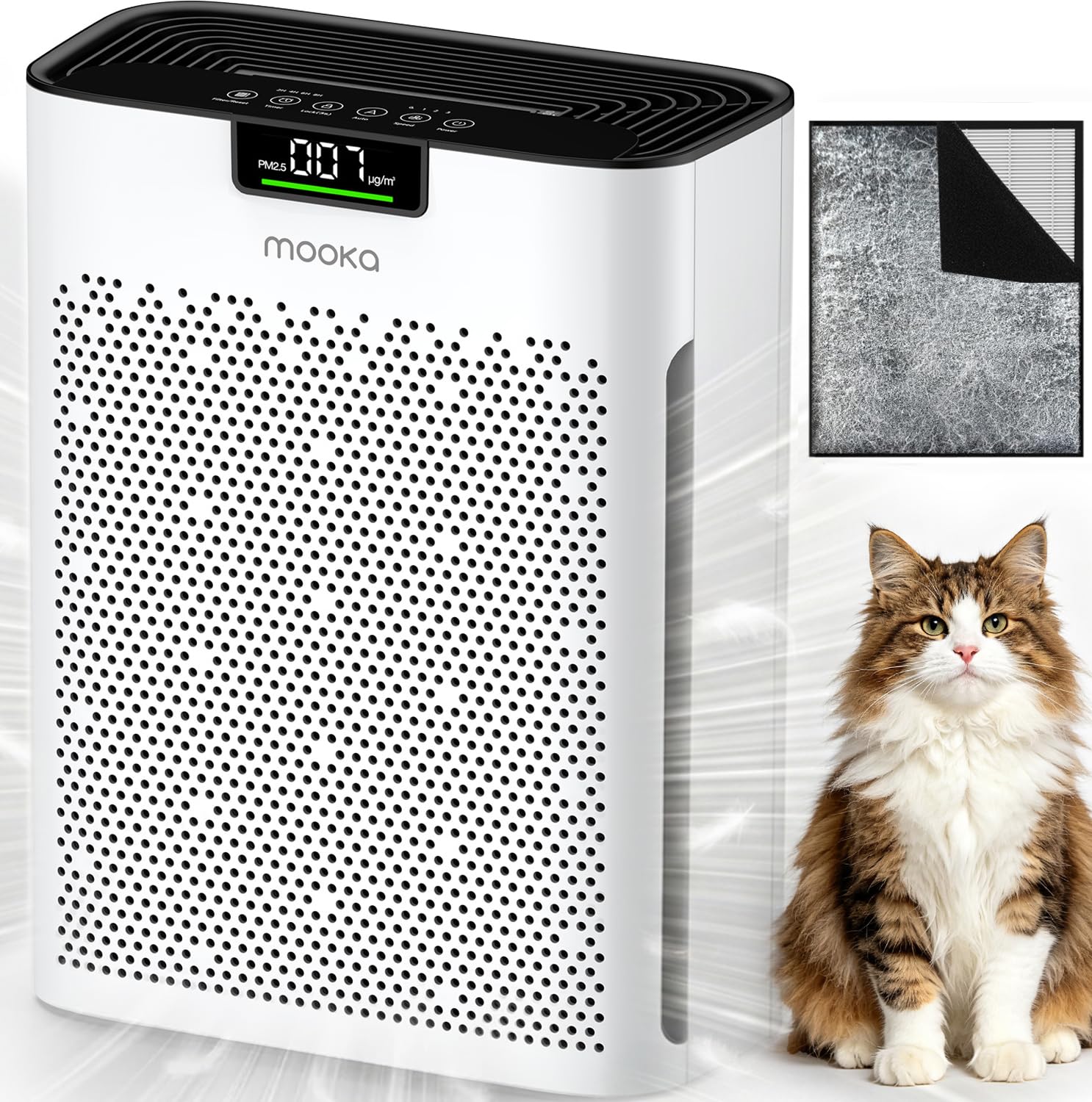
MOOKA KJ190H

91 /100
Trail Score Outstanding

Key details

Weight
6.7 lb
Coverage
2,200 sq ft
Filtration
3-stage with washable pre-filter
Sleep Mode
20 dB
Check Price on Amazon

Two of these cost less than one of our midrange picks, and for a long, split or awkwardly shaped room that arithmetic is the smartest move on this page. The MOOKA KJ190H is a small purifier with a big coverage claim, and the useful way to read it is as a per-room unit rather than a whole-floor solution.

For the money it is surprisingly complete: a three-stage filter with a washable pre-filter, a PM2.5 readout on the front, four fan speeds, a timer and a 20 dB sleep mode with the display dimmed. At 6.7 pounds and roughly 16 inches tall it sits on a dresser, a shelf or a side table without drama.

The catch is physical. This is a 12-inch-wide body handling a claimed 2,200 square feet, and no amount of clever design changes how much air a small fan can move. In a big open room, one of these is a background helper rather than the whole answer; two, placed at opposite ends of the space, get there.

Which is exactly what we recommend: a pair for a large room, or one as a bedroom companion to a bigger unit elsewhere. It is the least expensive way to put real filtration in two places at once, and the washable pre-filter keeps the upkeep close to nothing.

Pros

  • Lowest price per unit in this group
  • Washable pre-filter cuts upkeep
  • PM2.5 display and auto mode at this price
  • Quiet 20 dB sleep mode

Cons

  • Front grille pops loose when lifted by the sides
Our verdict

Buy two of these instead of one big unit when your space is long or split — cheap, quiet and easy to live with.

Check Latest Price

How We Tested Eight Large-Room Air Purifiers

We started with published CADR figures, keeping only units rated for rooms of roughly 500 square feet and up, then cut anything whose replacement filters were discontinued, chronically out of stock, or priced high enough that three years of changes would cost more than the machine itself. Eight purifiers came through over ten months, some from filtration specialists and a few that mostly compete on price.

Each one ran continuously for at least two weeks in a roughly 700-square-foot open living-dining-kitchen and spent at least two nights in a closed bedroom. We set a particle counter at sofa height on the far side of the room and logged readings before, 15, 30, and 60 minutes after searing a pan of oil on the stove, which showed us which units pulled smoke down fast and which mostly churned the air around themselves. Noise we measured with a decibel meter at three feet on low, medium, and maximum, then lived with it — talking over the unit from the couch, and lying in bed three feet away at the speed we'd actually leave on overnight. We also checked each unit's own air-quality readout against our counter to see whether auto mode was reacting to real particles or drifting with kitchen humidity.

Value came down to arithmetic: yearly filter cost at the manufacturer's stated replacement interval, energy draw from a week on a watt meter, and what the thing was like to own. We opened every housing to see how the filter seated, carried each unit up a flight of stairs, and listened for rattles at top speed and for display lights bright enough to bother us at 2 a.m. A couple of models with strong numbers buzzed against a wood floor or glowed blue all night, and those notes ended up mattering as much as the particle counts.

How to Choose an Air Purifier for a Large Room

Read the Coverage Number the Way It Was Written

A purifier sold as cleaning 2,200 square feet is usually quoting one air exchange an hour — a single pass over the room's air, not the four or five exchanges most of us want in a living space. Certified figures tell you more. The Winix 5510 is AHAM-verified at 392 square feet, which is the room size it can genuinely keep up with, and it separately claims 1,882 square feet in an hour. Both numbers are true; they describe different things.

Our rule: if a listing only gives a big cleans-up-to figure, treat it as a best case for a room with open doors and ordinary ceilings. For an open-plan space, buy on the certified number — or the CADR rating if one is published — and expect to run the unit a speed or two higher than the label suggests.

Noise Is the Spec You Actually Live With

Every purifier here is quiet on its lowest setting and loud on its highest; what separates them is where the quiet stops. Look for a stated sleep-mode level — 15 to 24 dB across this group — and check whether the display dims or shuts off, because a bright air-quality light can disturb sleep more than the fan does.

Then think about placement. A unit on the far side of a large room can run a step higher without bothering anyone, while one beside the sofa needs its low setting to be genuinely low. Front-intake machines can sit against a wall; 360-degree designs like the Honeywell want to stand out in the open, and any of them will lose performance behind a curtain.

HEPA Handles Particles; Odor Is a Carbon Question

True HEPA captures dust, pollen, dander and smoke particles, and it does nothing about the gases behind cooking smells, pet odor or VOCs. That job belongs to activated carbon, and carbon is where inexpensive purifiers cut corners: a thin impregnated sheet is spent in weeks, a proper deodorization filter lasts months. If smoke or kitchen odor is why you are shopping, compare the carbon stage before anything else — the Winix's advanced odor filter and Coway's deodorization layer are the two here built for that work.

Keep the source in mind, too. A range hood moves far more greasy kitchen air than any purifier will, and a purifier running next to an open window is fighting a losing battle.

What It Costs to Keep Running

Two filters, not one, is the detail that surprises first-time buyers. A washable filter on a listing almost always means the pre-filter; the HEPA cartridge behind it is not washable and does get replaced — a point worth settling before you order. Machines with two filter stacks, like the Dhyala, need two cartridges at every change, and that upkeep can outrun the purchase price over a few years.

Before buying, check that replacements are in stock and sensibly priced, and plan to rinse the pre-filter every few weeks. Airflow, and therefore noise and cleaning speed, depends on it.

Frequently Asked Questions

Final Verdict

For most large rooms, buy the Winix 5510. Its coverage is certified rather than merely claimed, the carbon stage handles the cooking and pet smells HEPA alone leaves behind, and auto mode means you will actually leave it running instead of switching it on when the air already smells bad.

If someone in the house has hay fever and you want the longest warranty here, the Coway AP-1512HH is the calmer, better-supported choice. And if a shedding dog owns the sofa, go straight to the Levoit Vital 200S-P — the second intake earns its keep.