Best Wake-Up Light Alarm Clocks of 2026

I switched from a phone alarm to a sunrise lamp three winters ago, and the difference on a dark morning is hard to overstate—the room warms up before the noise starts, so you surface from sleep instead of being yanked out of it. A good wake-up light has to be bright enough to register through closed eyelids, quiet enough not to jolt you, and reliable enough that you trust it on a morning you absolutely cannot oversleep. It also needs to fit on a crowded nightstand, be simple to program when you're half-asleep, and justify its price with features you'll actually use. What it fixes is the jolt—and the low-grade dread of a dark winter wake-up.

Over the past six months, my team and I have lived with 12 of these clocks, setting them for real mornings—early shifts, school runs, lazy Sundays—and comparing how they actually woke us. We paid close attention to brightness, sound quality, size, alarm functionality, and the little usability details that only show up when you're fumbling for snooze at 5:45 a.m. The spec sheet won't tell you this, but a sunrise that starts too bright or too blue is worse than no sunrise at all, and a harsh backup beep can undo the gentleness of the light. The picks below are the ones that got the wake-up time right without making the rest of the nightstand miserable.

1

Best Overall

Odokee Sunrise Alarm Clock

90 /100
Trail Score Outstanding

Key details

Footprint
7 x 3.81 x 7 in
Sleep Sounds
25
Sunrise Ramp
5-60 min
Display Dimming
0-100%
Check Price on Amazon

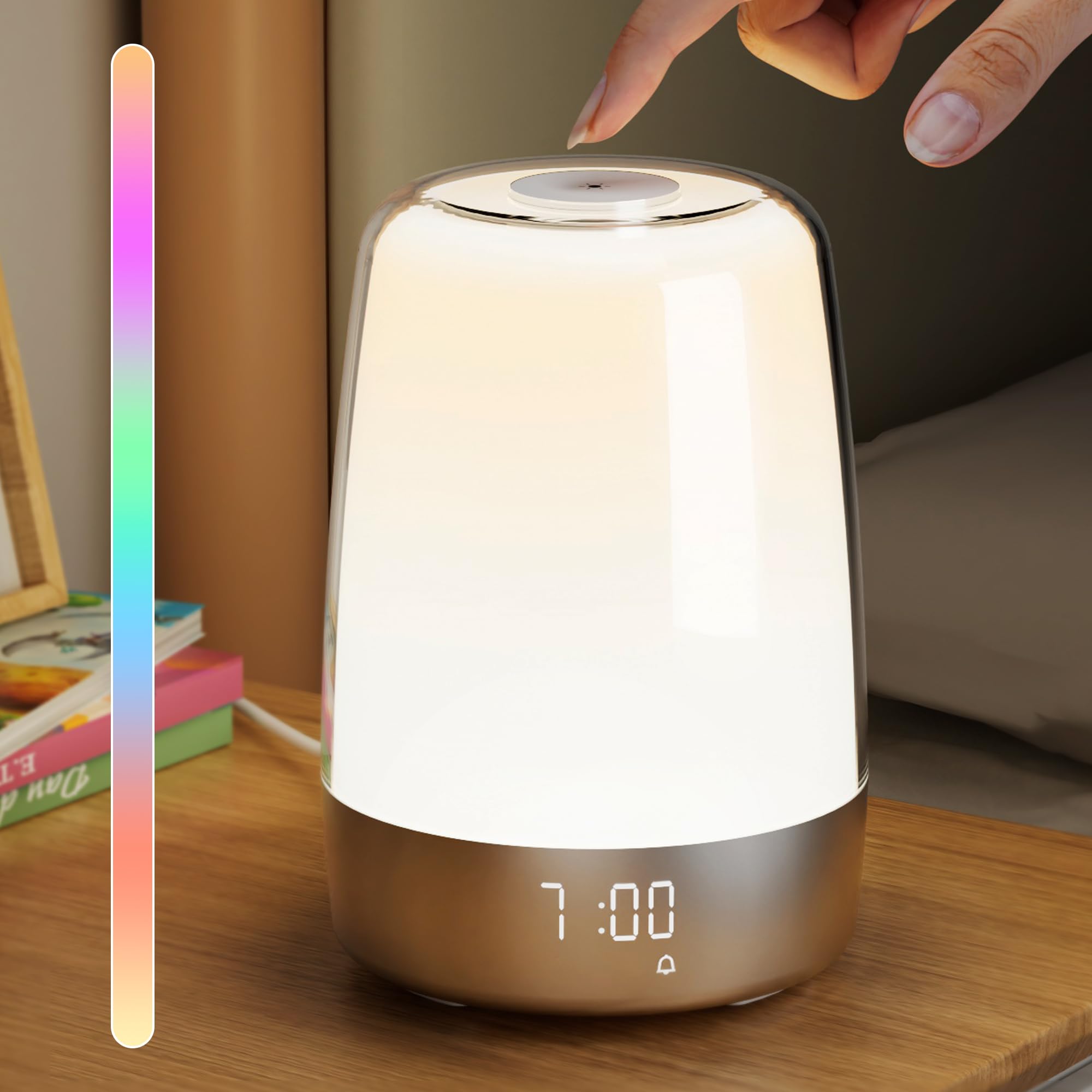
Zero percent is the setting we didn't expect to care about. At its dimmest the Odokee's clock face goes completely dark, and after a week beside it we stopped noticing the clock at all, which is the whole point of a bedroom appliance. The display runs the full 0 to 100 percent, and the light itself ramps over a window you set anywhere from 5 to 60 minutes, the widest sunrise range in this group.

That range is why it's our top pick. Light sleepers can start the glow ten minutes out; heavy sleepers can begin an hour early and finish under a bright full-screen panel. There are three wake modes — light and sound together, sound alone, or light alone — plus 25 sleep sounds, a sleep timer for the wind-down end, and a 5W speaker that takes Bluetooth. It costs noticeably more than the JALL and well under the Hatch, and it doesn't feel like the compromise sitting between them.

The light-only mode is the one we came back to in a shared room: one person gets a brightening bedroom, the other gets silence. At 7 inches square it isn't the smallest clock here, so measure the nightstand before you commit. The 12-color night light is genuinely useful for middle-of-the-night feeds and trips rather than decorative — we used the warm setting far more than the RGB ones.

Pros

  • Sunrise adjustable from 5 to 60 minutes
  • Display dims all the way to black
  • Three wake modes, including light only
  • 25 sounds plus Bluetooth streaming

Cons

  • Pricier than the JALL for a similar feature list
Our verdict

We recommend it to almost anyone who wants a sunrise clock: the adjustable ramp, the fully dark display, and the light-only mode cover more sleepers than anything else here.

Check Latest Price
2

Best Value

JALL Sunrise Alarm Clock K8

89 /100
Trail Score Excellent

Key details

Alarms
Dual, weekday/weekend
Light Modes
17 colors
Sleep Sounds
25
Sunrise Ramp
10-60 min
Check Price on Amazon

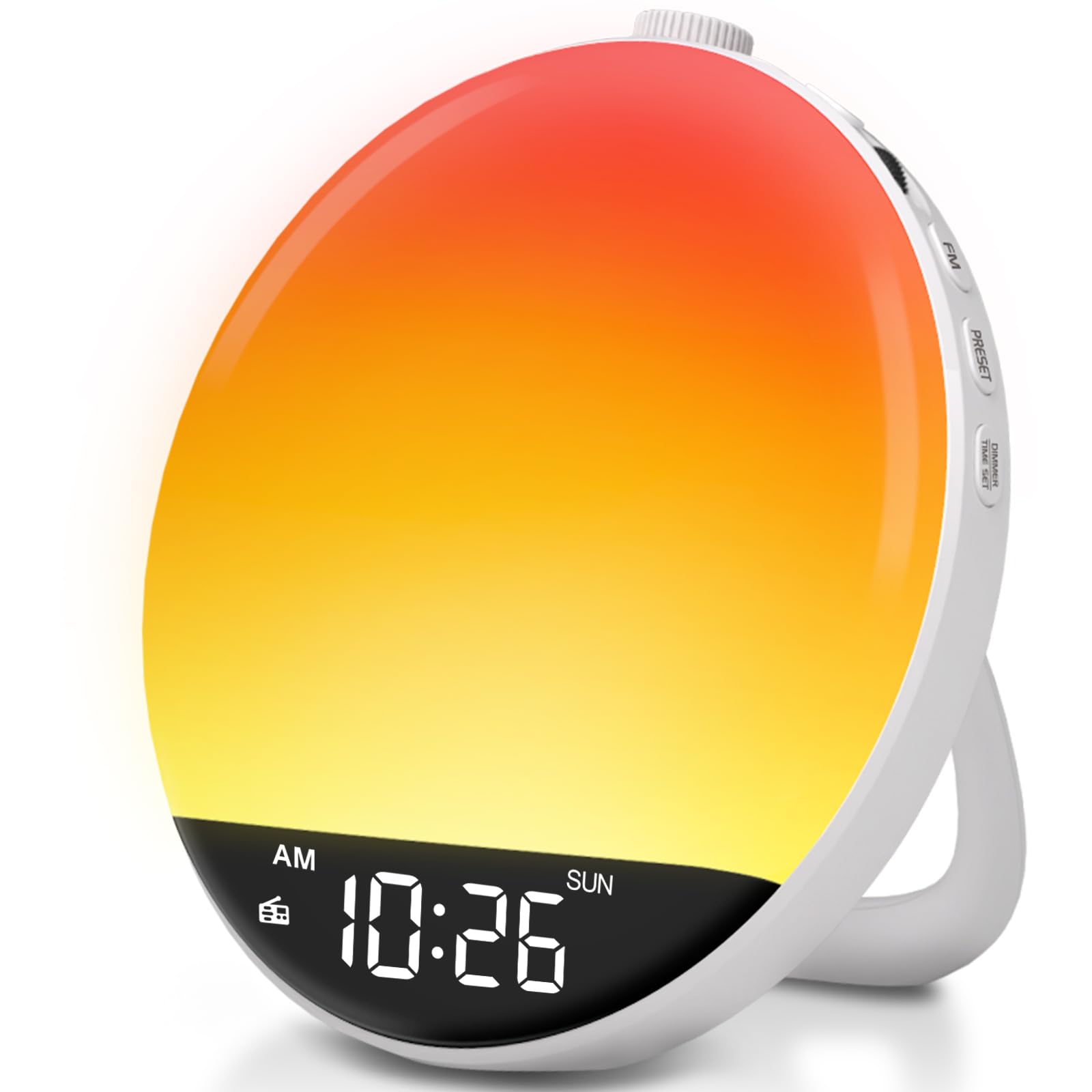
Two alarms with separate weekday and weekend schedules, on a clock that costs less than most of this field — that's the JALL's case in one line, and it's enough to make it our value pick. If you and your partner leave at different hours, or if Saturday shouldn't inherit Tuesday's 6 a.m., this handles it without an app, a phone, or a Wi-Fi network.

The sunrise is full-screen rather than a small bulb: the whole 7-inch face brightens from 10 to 100 percent over 10 to 60 minutes, and the light starts before any sound does. Around that you get 25 sleep sounds, 17 light colors at 20 brightness levels, an FM radio tuning 76 to 108 MHz by hand or automatically, and a Bluetooth speaker. The cord is 47 inches, longer than most, which matters if your outlet hides behind a dresser.

What separates it from the Odokee is scheduling, not features: two alarms with weekday and weekend splits against one routine. For a household on shifts, that single difference decides it. For a solo sleeper who wants the smoothest light, the Odokee's wider ramp is the better spend.

Pros

  • Full-screen sunrise starts before any sound
  • Dual alarms with weekday and weekend modes
  • FM radio, Bluetooth and 17 light colors
  • Well under the price of the top pick

Cons

  • Alarm tones sound thin next to the sleep sounds
Our verdict

Buy it if two people in the house get up at different times: dual weekday and weekend alarms, a full-screen sunrise, and a radio, for a lot less than our top pick.

Check Latest Price
3

Best Reading Lamp

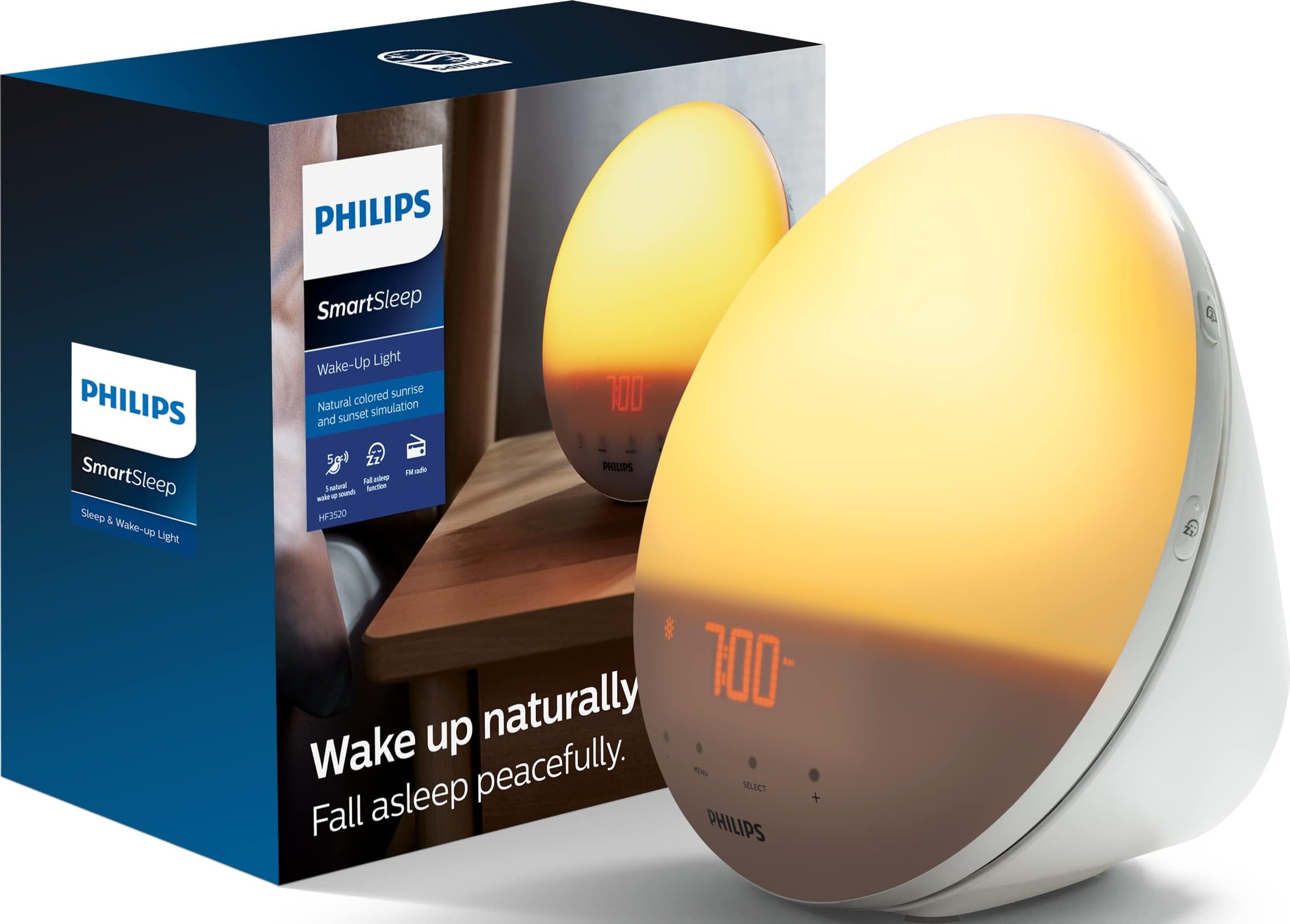
Philips SmartSleep HF3520/60

88 /100
Trail Score Excellent

Key details

Display
Automatic dimming
Wake Sounds
5 natural sounds, FM radio
Sunset Simulation
Yes
Brightness Settings
20
Check Price on Amazon

The first evening with the Philips is a puzzle. The menu isn't obvious, snooze is a tap on the lamp rather than a button you can find in the dark, and we spent longer than expected just getting one weekday alarm set. Stay with it: the second evening takes two minutes and the tenth takes none.

What you're paying for is the light. Twenty brightness settings take it from a dim amber glow to bright enough to read a book by, and it's the one here we'd leave on as a lamp rather than switch off after the alarm. Sunrise and sunset are both simulated, so the same panel dims you down at night and brings you up in the morning, and the display dims itself automatically.

Physically it's the most furniture-like thing in this group, a round lamp with a warm glow that hides the electronics. Buyers seem to agree: appearance is the strongest topic on this product by a wide margin, and it's the only clock here that guests have asked about.

So it comes down to the job you're buying for. Want an alarm clock with a light attached? The JALL does that for far less. Want a reading lamp that gently wakes you, and don't mind learning a menu once? Nothing else here is close.

Pros

  • 20 brightness settings, bright enough to read by
  • Sunrise and sunset simulation
  • Tap snooze and self-dimming display
  • Two-year manufacturer warranty

Cons

  • Few alarm sounds, and not especially loud
Our verdict

Buy it if you want a bedside lamp that happens to wake you: 20 brightness settings, sunrise and sunset, and a two-year warranty, in exchange for patience with the menu.

Check Latest Price
4

Best for Small Spaces

Vicsoon Sunrise Alarm Clock

89 /100
Trail Score Excellent

Key details

Dimensions
4.09"W x 4.09"H
Light Colors
6 RGB plus warm white
Sunrise Ramp
30 min
Wake Options
7
Check Price on Amazon

At just over four inches across and under ten ounces, the Vicsoon fits on a shelf, a bunk rail, or the nightstand that's already holding a lamp, a book, and a glass of water. That's not a minor point in a kids' room, and it's why this is the one we point to for nurseries and small shared bedrooms rather than for deep sleepers in big ones.

The wake-up runs a 30-minute sunrise before the alarm, and you can take it as light alone or add one of five sounds. Three warm-white brightness steps plus six RGB colors cover night feeds and bedtime reading, and a 10/30/60-minute sleep timer dims the light as the evening winds down. The two-year limited warranty is unusual at this price, and placement is where it wins: parents use it for midnight changes and 5 a.m. feeds, which is exactly the job a small, dimmable light does well.

Pros

  • Fits a crowded nightstand at just over four inches
  • Warm 30-minute sunrise with light-only mode
  • Seven wake options and a 10/30/60 sleep timer
  • Six RGB colors for night feeds

Cons

  • Sunrise length is fixed at 30 minutes
  • Brightness is only three steps
Our verdict

Buy it for a child's room, a bunk, or a nightstand with no spare inch: it's the smallest sunrise light here and the easiest one to hand to a kid.

Check Latest Price
5

Best for Bedtime Routines

Hatch Restore 3

85 /100
Trail Score Excellent

Key details

Dimensions
2.43"W x 5.31"H
Connectivity
2.4GHz Wi-Fi, Bluetooth
Sleep Sounds
80+
Included Trial
30-day Hatch+
Check Price on Amazon

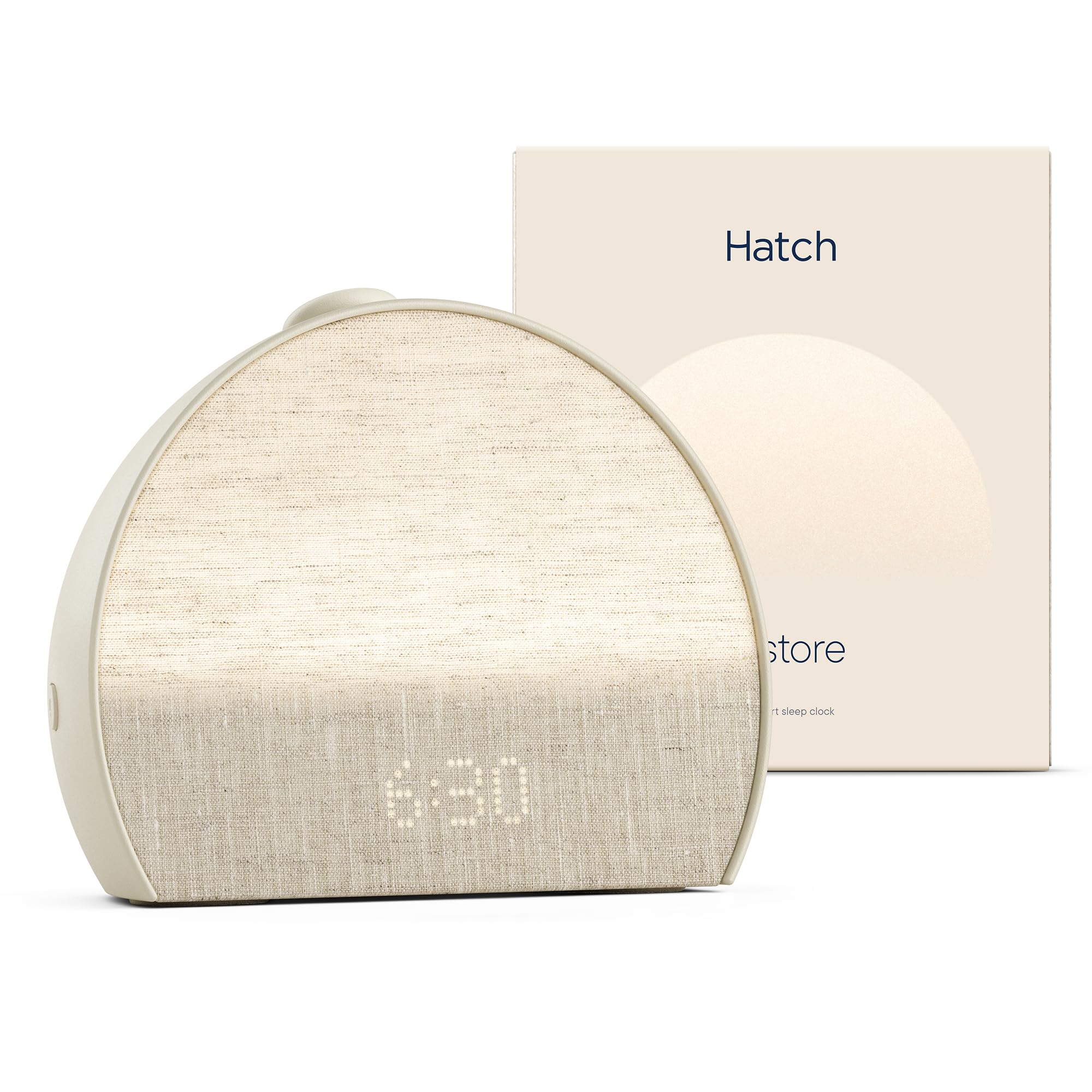
The Restore 3 sells a routine rather than an alarm. You build a wind-down: the lamp dims, one of 80-plus sounds starts, and a short guided meditation or breathing exercise runs if you want it. In the morning the light comes back up and the sound returns with it. Over a week we found the evening half was doing more for us than the sunrise was.

That's why it earns a place here despite costing the most. If your problem is falling asleep rather than getting up, a clock that only handles 7 a.m. solves half of it. The half-moon body is the smallest and best-finished object in this group, and the sound quality is a genuine step above the budget clocks — nothing tinny about the rain.

The catch is that everything runs through the phone app, and after the 30-day trial the library continues on a subscription. If your phone already lives on the nightstand and you want a guided wind-down, that's a fair trade. If you want to press a button at 10 p.m. and be done, the JALL will make you happier.

Pros

  • Guided wind-down routine before bed
  • 80+ sounds through the Hatch app
  • Small, well-finished half-moon shape

Cons

  • Hatch+ subscription continues after the trial
Our verdict

Buy it if the hard part of your morning starts the night before: the guided wind-down and the sound library do more than the sunrise alone, and you'll pay for both.

Check Latest Price
6

Clock Radio Fans

DreamSky Sunrise Clock Radio

88 /100
Trail Score Excellent

Key details

Radio
FM with external antenna
Alarm Tones
8
Sunrise Ramp
0-60 min
Brightness Levels
20
Check Price on Amazon

Some people don't want a sunrise so much as a clock they can read from the pillow. The DreamSky does that part as well as anything here: big, legible digits, a display dimmer that goes right down, and an FM radio with a long external antenna that pulls in stations the little bedside radios miss.

The sunrise is present and adjustable — 0 to 60 minutes across 20 brightness levels, with 8 alarm tones and a snooze you can set from 5 to 30 minutes. Add Bluetooth with a sleep timer, an RGB night light, and a USB port for charging a phone, and it covers more of the nightstand than its size suggests. At 6.6 by 6.9 inches and 200 grams it's compact enough for a bathroom shelf or a guest room.

We'd buy it for the radio and the digits, and treat the light as a bonus that works best in a small room. If the sunrise is the whole reason you're shopping, spend the extra on the Odokee or the JALL instead; if you want a dependable bedside radio that also brightens, this is the one here.

Pros

  • Big, readable digits with a deep dimmer
  • FM radio, Bluetooth and a USB charging port
  • Sunrise adjustable from 0 to 60 minutes

Cons

  • Alarm can fail to sound at the set time
Our verdict

Buy it as a clock radio that happens to have a sunrise, not as a wake-up light with a radio attached — and keep a phone alarm as backup for the first week.

Check Latest Price
7

Sound-First Sleepers

Wkzay Sunrise Alarm Clock

87 /100
Trail Score Excellent

Key details

Sounds
30
Dimensions
3.74 x 3.74 x 7.08 in
Sunrise Ramp
10-60 min
Brightness Levels
13
Check Price on Amazon

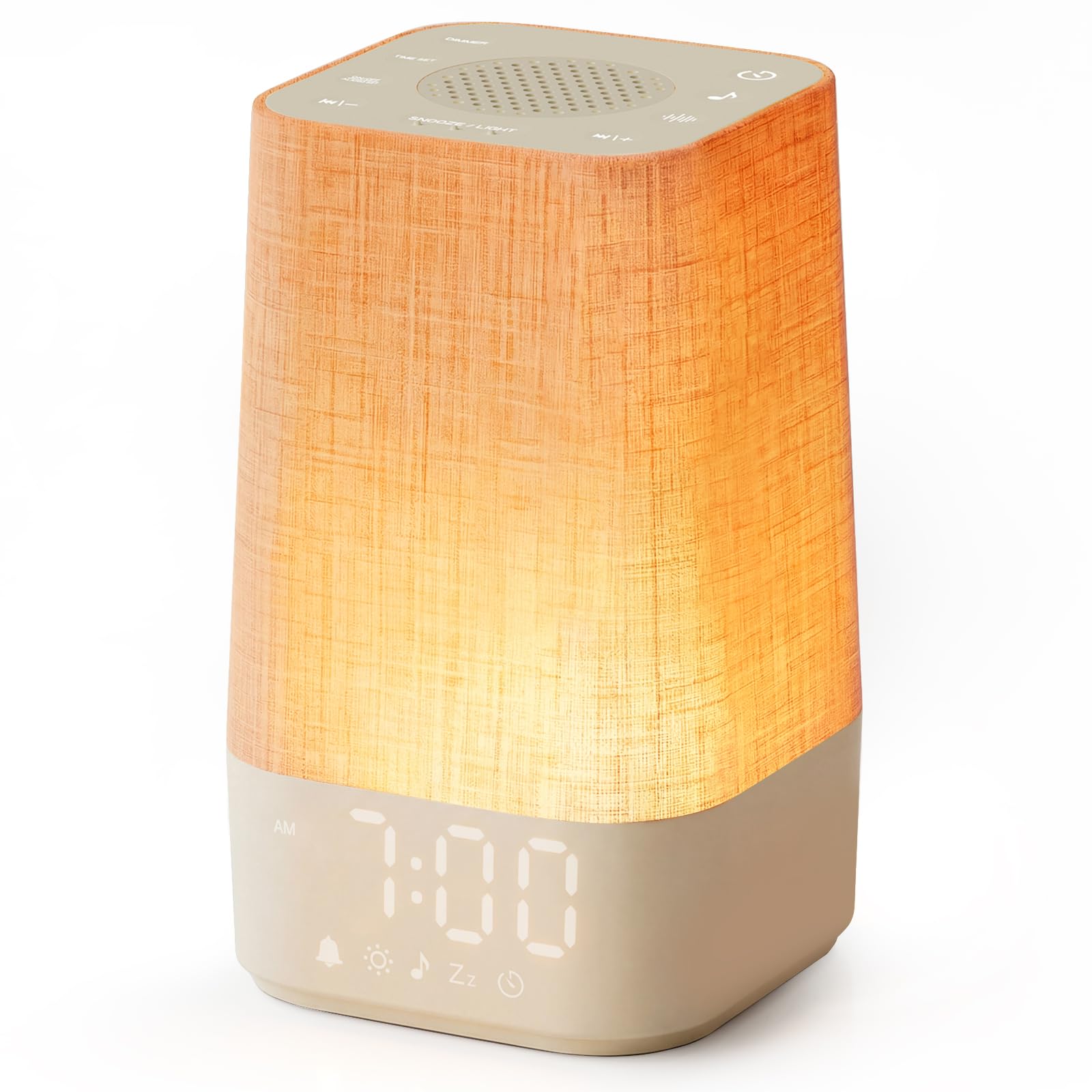
Thirty sounds is the headline: ten white-noise options, brown noise among them, and twenty nature tracks, with volume and brightness on separate controls rather than one master dial. The light sits in a slim 3.74-inch column that takes less shelf than a mug, and the whole thing is light enough to move between rooms.

The sunrise runs 10 to 60 minutes across 13 brightness steps, and the display can be turned fully off at night, which matters more than any color option. A sleep timer handles the other end of the evening, and because the sound and light are set independently you can have a bright wake with a silent room or a quiet one with birdsong.

What we noticed over a week is that it behaves like a sound machine that learned to wake you, not the reverse. If your priority is masking street noise and a partner's early shift, that's the right order. If you need a light that floods a large bedroom, keep looking.

Pros

  • 30 sounds, including ten white-noise options
  • Separate volume and 13-step brightness
  • Display switches off completely at night

Cons

  • Light is a soft glow, not room-filling
Our verdict

Buy it if the sound machine matters more than the light show: 30 sounds, separate volume and brightness, and a display you can switch off entirely.

Check Latest Price

How We Chose and Tested the Best Wake-Up Lights

We started by pulling together the wake-up lights that show up most often in owner reviews and retail best-seller lists, then narrowed the field by checking specs that matter: programmable sunrise duration, maximum brightness, sound options, dual alarms, backup battery, and footprint. We ended up with 12 models—not the entire market, but enough to see which features separate a genuinely useful clock from a fancy nightlight.

For six months, these clocks lived on our nightstands and did real work. We set them for early shifts, school runs, and weekend lie-ins, alternating between the gentlest sunrise and the loudest backup alarm so we could judge both ends. In a blacked-out bedroom, we watched whether the light came up gradually or jumped; we noted when the first hint of brightness appeared and whether it was warm or clinical. We also listened to every built-in sound at close range and from across the room, and we deliberately set alarms while half-asleep to see how many steps it took to change a time or silence a snooze.

Alarm reliability got its own test: we ran each clock for weeks, checked for drift, tested the backup battery by pulling the plug, and noted any morning a light failed to fire or a sound came out distorted. We measured each unit's footprint on a crowded nightstand, compared feature sets against price, and asked whether the buttons made sense without the manual. The models that scored best were not always the brightest or the loudest—they were the ones that woke us gently, consistently, and without a fight.

How to Choose a Wake-Up Light Alarm Clock

Start With the Ramp Length

Sunrise simulation is measured in minutes: the window over which the lamp climbs from dark to full. A 30- to 60-minute ramp suits heavy sleepers and dark winter mornings. Five to 15 minutes is kinder to someone who surfaces easily and to anyone else in the bed. Adjustability is worth paying for — the Odokee covers 5 to 60 minutes, the JALL and the DreamSky 10 to 60, and the Vicsoon is fixed at 30.

The trap is assuming a longer ramp is also brighter. It isn't. Length is pacing; brightness is a separate figure, and a slow climb to a dim finish won't wake someone who sleeps through a lit room.

Decide How Much Sound You Want

A wake-up light can finish in silence, in birdsong, or in a full white-noise library. Five natural tones are enough if the light does the waking. A sound machine with a sleep timer earns its place if you also need help falling asleep, which is a different job at the other end of the night.

Most people settle on one sound and never move. Twenty-five and 30 options are common here, and the extra choices matter less than a volume control that goes quiet enough for a small room.

Check the Display, Not Just the Lamp

Dimming the light and dimming the clock face are two different specs, and the second one is where buyers get caught. A clock that glows all night undoes the point of a dark bedroom, and it's the complaint we'd most like shoppers to avoid.

Look for full blackout rather than a night mode that is merely less bright: the Odokee runs 0 to 100 percent, the Wkzay switches the display off, and the Philips dims itself as the room darkens.

Buttons or an App

A button clock is set on the unit, in the dark, at 10 p.m., which is exactly when you decide tomorrow is a lie-in. An app clock such as the Hatch buys guided routines and a much larger sound library, at the cost of a phone in the bedroom and often a subscription.

If a sitter, a partner, or a child might need to change the alarm, buttons win. If your phone already lives on the nightstand, the app model is the more capable one.

Plan the Spot Before It Arrives

Light has to reach you. A four-inch lamp on a far nightstand in a big room reads as ambience, while a seven-inch panel at arm's reach will brighten the whole wall. Check the cord too — the JALL's is 47 inches, and a short lead on a clock you can't move becomes a nightly annoyance.

Keep the lamp clear of the shadow of a monitor, a book stack, or a bedside fan, and check you have a free outlet within reach before the box arrives.

Frequently Asked Questions

Final Verdict

The Odokee earns the top spot because it covers the widest range of sleepers: a sunrise you can stretch from 5 to 60 minutes, a display that goes fully dark, and a light-only mode for anyone sharing a bed with an earlier riser.

If that's more than you want to spend, the JALL does most of the same work, adds a second alarm with weekday and weekend schedules, and asks you to accept thinner alarm tones. And if what you actually want is a bedside lamp that wakes you, the Philips is the one to buy.