Best Tea for a Cold of 2026

The first sign of a cold usually arrives as a faint scratch at the back of your throat—easy to ignore until it isn't. By evening, swallowing feels like a chore, and all you want is something warm that doesn't taste like medicine. A good cup of tea won't shorten a cold, but it can quiet a cough, loosen congestion, and make the next few hours at your desk or on the couch a little more bearable. The trick is finding one you'll actually finish.

Over four months, I sipped my way through 18 different teas—bagged, loose-leaf, herbal, and everything in between—while nursing two real colds and a few stubborn coughs that lingered. The good ones shared a few traits: a clean, strong flavor that cut through congestion, a texture that coated a raw throat instead of prickling it, and an aroma that felt soothing before the first sip. I also paid attention to what happened afterward—whether a cup settled my stomach or left it churning, and whether the price per cup felt fair once I was reaching for a third mug before noon. The picks below are the ones I kept restocking.

1

Best Overall

Traditional Medicinals Breathe Easy

95 /100
Trail Score Outstanding

Key details

Blend
Eucalyptus, fennel, licorice, Bi Yan Pian
Count
16 tea bags
Caffeine
Caffeine-free
Certification
USDA Organic, Non-GMO
Check Price on Amazon

Eucalyptus is the first thing you notice, and that is a large part of why this is our top pick. Traditional Medicinals built Breathe Easy around a respiratory blend of eucalyptus, fennel, licorice, and Bi Yan Pian, so it tastes like a cool, floral mint rather than a plain herbal tea. We kept a box in the kitchen through a round of colds, and it was the cup we chose when congestion was the main problem.

The licorice does more than sweeten. It rounds off the eucalyptus and leaves a soft sweetness that makes the tea drinkable without honey, which matters when your throat is raw and you do not want to fuss. The scent is strong enough to feel like part of the remedy; if you dislike mentholated aromas, brew it a little shorter and see how you feel.

What convinced us to keep it at the top is the fit with the job: it is aimed at breathing, not at sleep or general wellness. A cup before bed felt clearing rather than sedating, and it stayed pleasant as it cooled. That is a narrow job, but it is the one a cold usually hands you.

It is not the tea for a scratchy throat alone—the slippery elm blends do that job better—but for the congested, foggy stage of a cold, it has the clearest purpose of anything here.

Pros

  • Purpose-built for respiratory comfort
  • Cool, floral mint with natural sweetness
  • Caffeine-free and easy to drink plain
  • Strong aroma feels like part of the remedy

Cons

  • Only 16 bags per box
Our verdict

For a cold that settles in your chest or nose, this is the tea we reach for: a minty eucalyptus blend built for respiratory comfort, not just a warm drink.

Check Latest Price
2

Best for Sore Throats

Traditional Medicinals Throat Coat

93 /100
Trail Score Outstanding

Key details

Blend
Eucalyptus, licorice root, slippery elm
Count
16 tea bags
Caffeine
Caffeine-free
Certification
USDA Organic
Check Price on Amazon

Breathe Easy is the congestion tea on this list; Throat Coat Eucalyptus is the one for the throat itself. The blend leads with slippery elm bark and licorice root, two ingredients that make the cup feel thicker and more coating than a standard herbal tea. We noticed the texture before we noticed the flavor—slightly earthy, gently sweet, with eucalyptus lifting the finish.

That slippery texture is exactly why we rate it so highly for sore-throat days. It coats in a way that feels purposeful, and the eucalyptus keeps it from tasting like medicine. We reached for it after a night of coughing and found it easier to finish than the thicker, sweeter cold blends. It is the cup we hand to someone with a raw throat.

The catch is the texture itself. Slippery elm can feel slightly viscous, especially if you let it steep long, and that is not for everyone. We found a shorter steep kept it pleasant; if you are sensitive to sliminess, start there. The eucalyptus aroma is also milder than Breathe Easy's, which makes this the easier cup for a skeptical tea drinker.

Pros

  • Coats a sore throat
  • Eucalyptus keeps it from tasting medicinal
  • Caffeine-free and organic

Cons

  • Small 16-bag box
Our verdict

When a cold turns into a raw, scratchy throat, this is the pick: slippery elm and licorice give it a coating, soothing texture that plain mint tea cannot match.

Check Latest Price
3

Best Everyday Lemon-Ginger

Twinings Lemon & Ginger

95 /100
Trail Score Outstanding

Key details

Blend
Lemon peel, lemongrass, ginger, blackberry leaves
Count
100 tea bags
Format
Individually wrapped
Caffeine
Caffeine-free
Check Price on Amazon

A hundred individually wrapped bags is the first thing to like here. A cold rarely lasts one day, and a box that stays fresh in the pantry makes it easy to keep the routine going without opening a new sleeve every morning. Twinings blends lemon peel, lemongrass, ginger, and blackberry leaves into a cup that is tart and warming without turning medicinal.

The balance is the selling point. Some lemon-ginger teas let the ginger burn or the lemon turn into candy; this one keeps both in check. We drank it plain and with honey, and it held up either way. It is also mild enough for a second cup in the afternoon, which is more than we can say for the spicier ginger blends.

We think this is the best all-purpose cold tea in the group because it does not demand a specific symptom. Sore throat, chills, a queasy stomach from congestion—it fits. The 100-count box makes it a practical household staple rather than a single-illness purchase.

The box is the practical advantage: we kept a few bags in a desk drawer and the rest in the pantry, and the individually wrapped bags stayed fresh. It is the tea we restock without thinking.

Pros

  • Balanced lemon and ginger
  • 100 individually wrapped bags
  • Mild enough for all-day sipping
  • Caffeine-free and easy to brew

Cons

No notable drawbacks to flag.

Our verdict

For the everyday cold cup you will actually finish, this is our pick: a balanced lemon-ginger tea in a big box, mild enough to drink all day and sharp enough to feel useful.

Check Latest Price
4

Best Peppermint

Twinings Pure Peppermint

95 /100
Trail Score Outstanding

Key details

Blend
Pure peppermint
Count
20 tea bags
Format
Individually wrapped
Caffeine
Caffeine-free
Check Price on Amazon

This is not a cold formula. It is pure peppermint, and that is either the reason to buy it or the reason to skip it. There is no eucalyptus, no licorice, no elderberry—just a clean mint tea that is naturally caffeine-free and sealed in individual bags.

The appeal is its simplicity. The aroma is strong when the bag hits hot water, and the flavor is fresh rather than bitter, which is not a given with budget peppermint. On a stuffy afternoon, the steam and mint felt clearing; on a queasy stomach, it was gentler than ginger.

The 20-count box is small, but the bags are individually wrapped, so it travels well. We kept a couple in a bag and they survived without picking up the smell of everything else. That matters if you want a cold-day tea for the office or a commute.

Our verdict is that this is the best peppermint here for a straightforward cup: not the most medicinal, not the most complex, but the one we trusted to taste like peppermint every time. Pair it with honey and lemon when you need more, or use it alongside a throat blend. It is the plainest box on the list, and sometimes that is exactly what a cold needs.

Pros

  • Pure, fresh peppermint flavor
  • Individually wrapped for travel
  • Caffeine-free and simple
  • Strong mint aroma

Cons

No notable drawbacks to flag.

Our verdict

If you want one plain, reliable peppermint tea for sinus pressure and queasy cold days, this is the box we keep coming back to.

Check Latest Price
5

Best Variety Pack

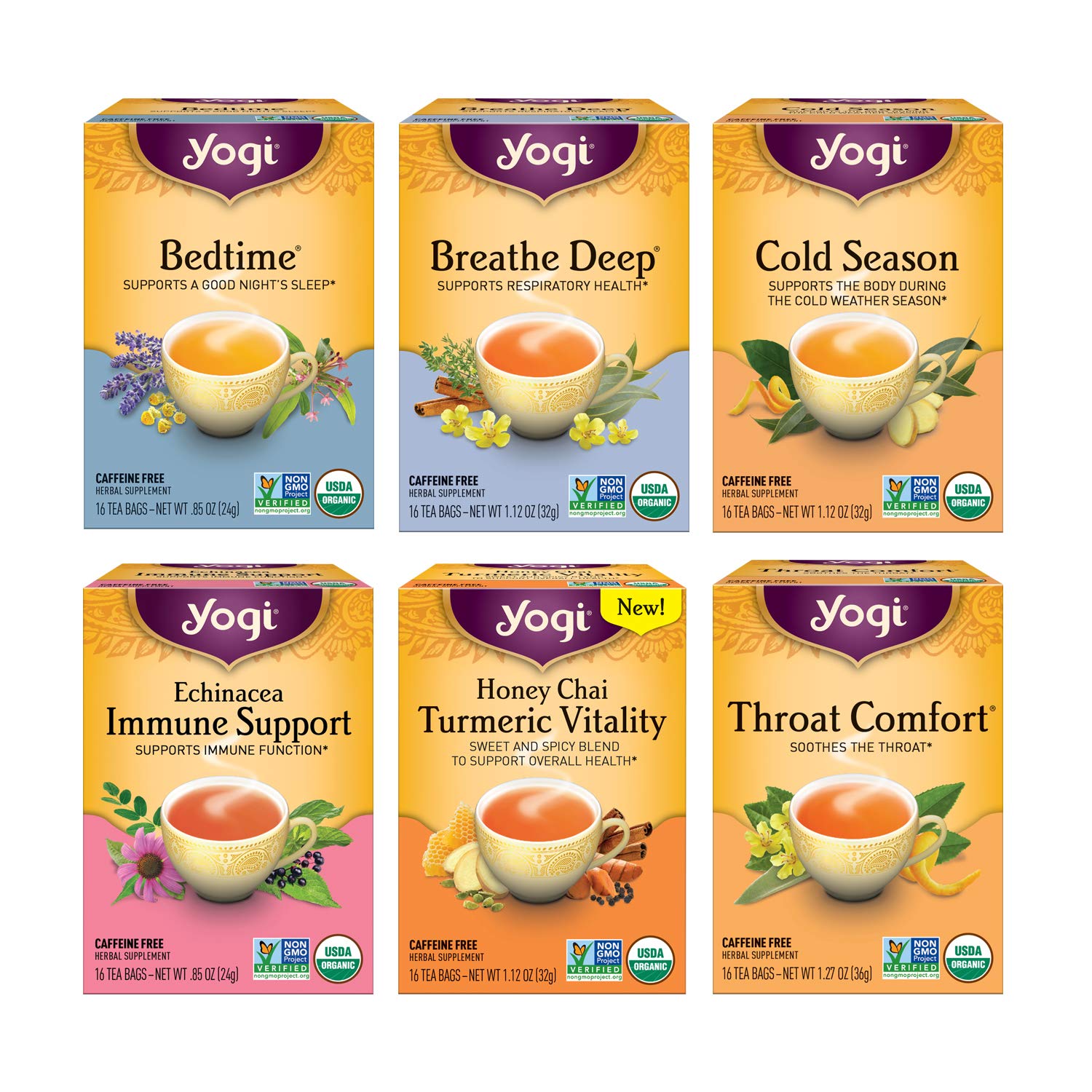
Yogi Get Well Sampler

96 /100
Trail Score Outstanding

Key details

Pack
6 boxes, 16 bags each
Blend
Six get-well herbal blends
Count
96 tea bags
Caffeine
Caffeine-free
Check Price on Amazon

Six boxes, 96 bags, and a different blend for each stage of feeling under the weather—that is the appeal of Yogi's Get Well sampler. The set covers blends aimed at throat comfort, cold season, and bedtime, so you can pick by symptom instead of opening the same box for a week. It is the opposite of a single-purpose tea.

We rate it highly for variety, not for one standout flavor. The sampler solves the problem of buying three boxes to find the one you like, and it keeps a household from getting bored of the same cup. The tea bags are sturdy enough for a second steep, which stretches the value.

The flavor range is wide. Some cups are spicy and warming, others are sweet or herbal, and not every bag will suit every palate. If you want one reliable flavor, a single-box pick is safer. If you want options for a family, this is more useful.

The packaging is also sensible for a sick household: each box is separate, so you can keep the bedtime blend by the kettle and the sharper ones in the pantry. It is not a minimalist purchase, but it is a useful one.

Pros

  • Six different get-well blends
  • 96 bags total
  • Caffeine-free herbal options
  • Good for shared households

Cons

No notable drawbacks to flag.

Our verdict

For a household that wants a few different cold-day cups without committing to one flavor, this six-box sampler is the practical buy.

Check Latest Price
6

Best Budget Lemon-Ginger

Stash Lemon Ginger

94 /100
Trail Score Outstanding

Key details

Type
Herbal tisane
Blend
Ginger, lemongrass, lemon flavor, hibiscus
Count
20 tea bags
Format
Foil-wrapped bags
Check Price on Amazon

Stash's lemon ginger is the most bracing tea in this group, and that is the appeal. Ginger and lemongrass give it a sharp, warming edge, while hibiscus adds color and a fruity finish. It tastes more like a strong home-brewed infusion than a soft, sweet cold tea.

The ginger is prominent, and the cup has a pleasant bite. We found it especially good with honey when a sore throat made everything taste dull. The 20-count box is modest, but the price is low enough to keep a spare in the cupboard for the next cold.

Hibiscus is the detail that makes it different. It adds color and a tart, fruity note that some lemon-ginger teas avoid. If you want the cleanest classic flavor here, Twinings is the safer pick; if you want something with more punch, Stash earns its place. It is also the one we reach for when nausea joins the cold.

Pros

  • Strong ginger heat
  • Tart hibiscus color and flavor
  • Good with honey
  • Low-cost backup box

Cons

No notable drawbacks to flag.

Our verdict

When you want a cheap, bracing lemon-ginger cup for a sore throat or queasy stomach, this is the one we keep as a backup.

Check Latest Price
7

Best Turmeric-Ginger

Rishi Turmeric Ginger

93 /100
Trail Score Outstanding

Key details

Brew
200 degrees F for 5 to 7 minutes
Blend
Turmeric, ginger, citrus
Count
50 sachets
Certification
USDA Organic, Non-GMO
Check Price on Amazon

The brewing instructions are the first clue: 200 degrees Fahrenheit for five to seven minutes, one sachet per eight ounces. Rishi expects you to treat this like a real infusion, not a quick dip, and the tea rewards that. The mesh sachet holds a lot of turmeric, ginger, and citrus, and the cup comes out golden and aromatic.

Turmeric can taste earthy and flat; this blend avoids that with ginger heat and a natural sweetness that recalls licorice. It tastes rich without being muddy, and the spice lingers in a pleasant way. It is caffeine-free, so it works as an evening cup when you want something more savory than peppermint.

The 50-count box is large, and the sachets are biodegradable and BPA-free. They feel more substantial than a standard paper bag, which suits the slow brew. If you drink turmeric tea regularly, the format makes sense.

The flavor is not universal. Turmeric has an earthy, savory side, and the sweetness does not hide it completely. If you want a bright, simple lemon-ginger, this will taste like health food. If you want a turmeric blend with real presence, that is the point.

We keep it for the days when a cold leaves us wanting something strong and savory, not another sweet mint. It is the best turmeric option here, and the one we choose when we want the cup to feel like a tonic.

Pros

  • Strong turmeric-ginger flavor
  • 50 biodegradable sachets
  • Naturally sweet, no sweetener needed
  • Caffeine-free for evening cups

Cons

  • Premium price
Our verdict

For a turmeric-ginger cup that tastes strong enough to be worth the trouble, this is our premium pick—especially if you like a sweet, spicy, caffeine-free brew.

Check Latest Price
8

Probiotic Lemon-Ginger

Bigelow Lemon Ginger Probiotics

94 /100
Trail Score Outstanding

Key details

Blend
Lemon, ginger, BC30 probiotic
Count
18 tea bags
Format
Individually foil-wrapped
Caffeine
Caffeine-free
Check Price on Amazon

Bigelow adds BC30 probiotic to its lemon-ginger tea, which is the reason to notice this box. The rest is familiar: lemon, ginger, and a caffeine-free herbal base, individually wrapped in foil. It is a cold-season comfort tea with a digestive angle rather than a pure sore-throat formula.

The flavor is where it gets complicated. The cup has a strong cinnamon-like scent and a sweeter spice profile than a classic lemon-ginger, and the ingredient list includes more than lemon and ginger. We did not find it as clean as Twinings or Stash, but it was pleasant enough with honey.

We think it earns a place for the probiotic addition, not as the best-tasting lemon-ginger here. If digestion is part of your cold-day misery, the BC30 strain gives this box a distinct job; if you just want a sore-throat tea, a simpler blend is more direct.

A single box is the right way to try it. With honey, it rounds into a comforting cup; plain, the spice is louder than expected. If you like the flavor, the probiotic angle is a nice extra; if not, you have not committed to a case.

Pros

  • BC30 probiotic added
  • Individually foil-wrapped bags
  • Caffeine-free lemon-ginger blend
  • Good with honey

Cons

  • Small 18-bag box
Our verdict

If you want a lemon-ginger cup with a probiotic angle for cold-season digestive sluggishness, this is worth a try—but check the flavor before you commit.

Check Latest Price
9

Get-Well Gifts

Hey Girl Get Well Soon

93 /100
Trail Score Outstanding

Key details

Count
18 tea bags
Format
Gift box
Caffeine
Caffeine-free
Key Herbs
Elderberry, echinacea
Check Price on Amazon

The packaging is half the product here. Hey Girl's Get Well Soon tea arrives as a care package, with a name that tells the recipient exactly what it is for. If you are sending something to a friend with a cold, that presentation does more work than a plain grocery box.

The blend is more elaborate than most cold teas, with elderberry, echinacea, lemongrass, dehydrated honey, goldenseal, ginseng, and stevia among the ingredients. It is caffeine-free and naturally sweet, and the honey and stevia make it drinkable without adding anything. The sweetness is pleasant, though it leans dessert-like rather than herbal.

The 18-bag box is small, and the ingredient list is a kitchen-sink approach. That is not a problem if you want a gift with a story; it is a problem if you want a simple daily cold tea. The tea is soothing, but it is not the cleanest or most traditional cup here.

Our take: it is the best gift option in this group, not the best everyday value. The sweet, lemony cup and the care-package framing make it easy to hand to someone who is sick; for your own pantry, a simpler box goes further.

Pros

  • Care-package presentation
  • Elderberry and echinacea blend
  • Naturally sweet, no sweetener needed
  • Caffeine-free herbal blend

Cons

  • Premium price for 18 bags
Our verdict

For a sick friend or a care package, this is the tea we send: a sweet elderberry-echinacea blend with a get-well presentation and a price to match.

Check Latest Price

How We Tested the Best Teas for a Cold

We started by pulling together a shortlist of 18 teas from grocery shelves, online retailers, and a few specialty shops, focusing on blends marketed for colds, sore throats, and general comfort. We filtered out anything with artificial flavoring or a price per cup that felt hard to justify, and we made sure to include bagged, loose-leaf, caffeinated, and herbal options so the list wasn't all one style.

Testing ran for four months, from late fall into winter, which meant most of our cups were brewed during real colds—mine included. I kept a mug on my desk during workdays, next to the bed for midnight coughs, and in the kitchen while making dinner, steeping each tea according to the package directions first and then again a minute longer to see how it held up.

At each sitting, I noted whether the first sip tasted clean or dusty, whether the leaves looked whole or like dust, and whether the aroma opened my sinuses before I drank. I paid attention to how I felt 20 minutes after finishing a cup—did the cough quiet down, did my stomach stay settled after a second or third mug—and I compared how many cups I got per box against what I paid. The teas that rose to the top were the ones I reached for again the next morning, sick or not.

How to Choose a Tea for a Cold

Match the blend to the symptom

A cold can settle in the chest, the throat, or the stomach, and the blends are not interchangeable. Eucalyptus and mint are the ones to reach for when congestion and chest pressure are the main complaint; slippery elm and licorice are the throat specialists; ginger and peppermint are gentler on a queasy stomach. If you want one box for a household, a sampler or a balanced lemon-ginger is more flexible than a single-herb tea.

Our rule is to buy for the symptom that bothers you most, not for the longest ingredient list. A focused eucalyptus blend can feel more useful than a tea that claims to do everything.

Read the ingredient list

The name on the box is not the whole formula. Licorice adds sweetness and a coating feel, hibiscus brings tartness and color, and slippery elm gives a thicker texture. Those are useful clues: if you dislike sweet herbal teas, a licorice-forward blend may not be for you; if you want a clean lemon-ginger, a hibiscus-heavy cup will taste fruitier.

Check for the herb that matches your symptom and for the flavor you can tolerate three cups of. A tea you dread will not help you keep sipping.

Choose a box size for your routine

A 16- or 20-count box is a trial; a 100-count box is a household staple. Individually wrapped bags stay fresh in a desk drawer or travel bag, while mesh sachets suit a slower brew at home. If you are buying for one person with a short cold, start small; if you are stocking a kitchen for winter, the larger box is the practical choice.

Do not assume a bigger box is always the better value. The tea has to match the symptom you get most often, or the extra bags will sit in the pantry.

Expect strength to vary

Steep time and water temperature change the cup as much as the blend does. Rishi, for example, recommends 200 degrees Fahrenheit for five to seven minutes for its turmeric-ginger sachets; a delicate peppermint bag can turn bitter if you walk away. Start with the package directions, then adjust.

If a cup tastes thin, use two bags or steep a little longer; if it tastes harsh, shorten the next steep. Strength is a dial you control, not a fixed setting.

Frequently Asked Questions

Final Verdict

Start with Traditional Medicinals Breathe Easy if your cold is mostly congestion and chest pressure; its eucalyptus-mint blend is the most purpose-built cup here. When your throat is the sore part, switch to Throat Coat Eucalyptus for the slippery elm coating. Twinings Lemon & Ginger is the box we keep for all-day sipping, and the Yogi sampler makes sense for a household that wants options. These picks cover the usual cold-day decisions without asking you to stock a whole shelf.