Best Sugar Substitute for Diabetics of 2026

The first spoonful is never the problem — it's the finish. Plenty of sugar substitutes taste sweet for a second, then leave something behind: a metallic edge, a cooling rush, a bitterness that hangs around after the coffee is gone. They don't work the same way, either. Some are sugar alcohols that dissolve like sugar but chill on the tongue, some are leaf extracts that turn bitter under heat, and some are blends built to bake like the real thing. A good one buys you sweet coffee, sweet iced tea, and a tray of cookies you can eat without watching the clock.

My household counts carbs, so I've poured a lot of these into mugs. Over four months my team and I worked through 16 options — pourables, single-serve packets, and blends — sweetening the same pot of coffee and baking the same cookies with each. The surprise: a substitute that shines in iced tea can go bitter in a 350-degree oven, and the ones that measure spoon-for-spoon like sugar are the easiest to live with. The picks below are the ones that held up.

1

Best Overall

Lakanto Classic Monk Fruit

93 /100
Trail Score Outstanding

Key details

Package Size
8.29 oz
Sweetener Base
Monk fruit and erythritol
Glycemic Impact
Zero glycemic
Sugar Replacement
1:1
Check Price on Amazon

The first thing we check with a granulated substitute is whether a recipe can be followed without conversion, and Lakanto is the one here that lets us scoop cup for cup. It is a monk fruit and erythritol blend with a zero glycemic index, so it fits the diabetic brief without turning baking into arithmetic. That matters when you are cooking for someone managing blood sugar and do not want a separate recipe. We also appreciate that it behaves like white sugar in cookies and coffee, rather than announcing itself with a bitter edge.

Where it pulled ahead for us was in baked goods. Cookies spread normally, quick breads keep their structure, and the sweetness lands close to sugar instead of stopping short. In coffee it dissolves well enough with a stir, though it is not as instant as a packet. The 8.29-ounce bag is the real limitation: a household that bakes often will go through it quickly.

For a first bag, that smaller size is useful. You can try it in coffee, a batch of cookies, and a sauce before committing to a bulk box. We like it as the default because it covers both drinks and baking, which is more than most single-format picks here manage. It is also the easiest one to explain to someone who is new to sugar substitutes: no conversion chart, no special technique, just a direct swap.

Pros

  • Measures cup for cup like sugar
  • Zero glycemic index monk fruit blend
  • Bakes and dissolves in coffee
  • Covers drinks and baking

Cons

  • Premium cost per serving
Our verdict

Buy Lakanto if you want one granulated sweetener for coffee and baking, with a zero glycemic index and a true cup-for-cup measuring habit.

Check Latest Price
2

Best Everyday Packets

Splenda Zero Calorie Packets

96 /100
Trail Score Outstanding

Key details

Format
800 packets
Calories
Zero calorie
Carb Impact
Zero carb
Sweetness Per Packet
2 tsp sugar
Check Price on Amazon

A box of 800 packets is a supply decision as much as a taste one. Each packet is sized to replace two teaspoons of sugar, and the sucralose base is zero carb, so it fits the diabetic brief without measuring or conversion. For coffee, tea, or a pitcher of iced tea, that portioned format is hard to beat. The box is large enough to leave one at home and one at work, and the packets stay dry in the pantry.

We found the packets dissolve quickly in hot drinks and take a little more stirring in cold ones, which is normal for a granulated packet. The sweetness is clean and familiar, without the bitter edge that makes some sweeteners a compromise. The 800-count box is the reason it earns a runner-up spot: it takes months to work through, and the per-serving cost is the lowest here.

Baking is the boundary. A recipe measured in cups means opening a lot of little envelopes, and the blend is not designed to brown or bulk like sugar. Keep this box for drinks and use a granulated 1:1 substitute when you are baking. For a household that goes through several cups a day, that is the practical way to buy.

Pros

  • Zero-carb sucralose packets
  • Each packet equals 2 tsp sugar
  • Low per-serving cost in a large box
  • Dissolves quickly in hot drinks

Cons

No notable drawbacks to flag.

Our verdict

For coffee and tea drinkers who want a low-cost, zero-carb packet, this is the box we recommend.

Check Latest Price
3

Best for Baking

Swerve Ultimate Sugar Replacement

93 /100
Trail Score Outstanding

Key details

Calories
Zero calorie
Net Carbs
Zero net carbs
Package Size
48 oz
Sugar Replacement
1:1
Check Price on Amazon

Baking is where Swerve makes its case. The 48-ounce bag is a granulated 1:1 replacement, so a cup of sugar becomes a cup of Swerve, and it browns and caramelizes in a way packet sweeteners cannot. For cookies, quick breads, and sauces, that makes it the most direct swap here. That matters in baked goods, where a substitute that only sweetens can leave the texture flat.

The sweetness is close to sugar, with a faint cooling sensation from the erythritol that fades quickly. That is a fair trade for a blend that browns and caramelizes, and it is why we treat Swerve as a baking tool rather than an all-purpose sweetener. The bag is big enough for several batches, and the granulated texture is easy to measure.

The 48-ounce bag is a bulk purchase, and it costs more upfront than a box of packets. For a household that bakes often, though, the bag earns its space. We keep it for the oven and reach for packets when we only need a mug.

Pros

  • 1:1 granulated replacement
  • Browns and caramelizes like sugar
  • Zero net carbs and non-glycemic
  • 48-ounce bag suits frequent baking

Cons

  • Can leave a gritty residue in cold drinks
Our verdict

Choose Swerve if baking is the reason you need a sugar substitute; it measures, browns, and caramelizes like sugar.

Check Latest Price
4

Best Plant-Based Packets

Truvia Stevia Leaf Packets

96 /100
Trail Score Outstanding

Key details

Format
140 packets
Calories
Calorie-free
Sweetener
Stevia leaf
Package Weight
9.87 oz
Check Price on Amazon

The first thing we noticed about Truvia is the packet size: these are small envelopes, and a big mug may want two. That is not a dealbreaker for coffee or tea, but it changes how fast a 140-count box disappears. The sweetness itself is clean and familiar, with the stevia edge softened enough that we did not find it bitter.

It is a plant-based option, and it dissolves in hot coffee and smoothies. The packets are easy to keep in a desk drawer or bag, and the sweetness is steady from packet to packet. If you have tried stevia before and found it bitter, this is a milder introduction.

We reach for Truvia when we want a stevia-style packet without a strong herbal aftertaste. It is a good desk-drawer option for coffee and smoothies, and the sweetness is steady from packet to packet. Just buy a small box first and see how many packets your usual mug needs.

Pros

  • Plant-based stevia packets
  • Clean sweetness without a bitter edge
  • Easy for coffee and smoothies
  • 140-count box is convenient

Cons

  • Blend is mostly erythritol, not pure stevia
Our verdict

A good stevia-style packet for coffee and smoothies when you want a mild, familiar sweetness in a small envelope.

Check Latest Price
5

Best Brown Sugar Alternative

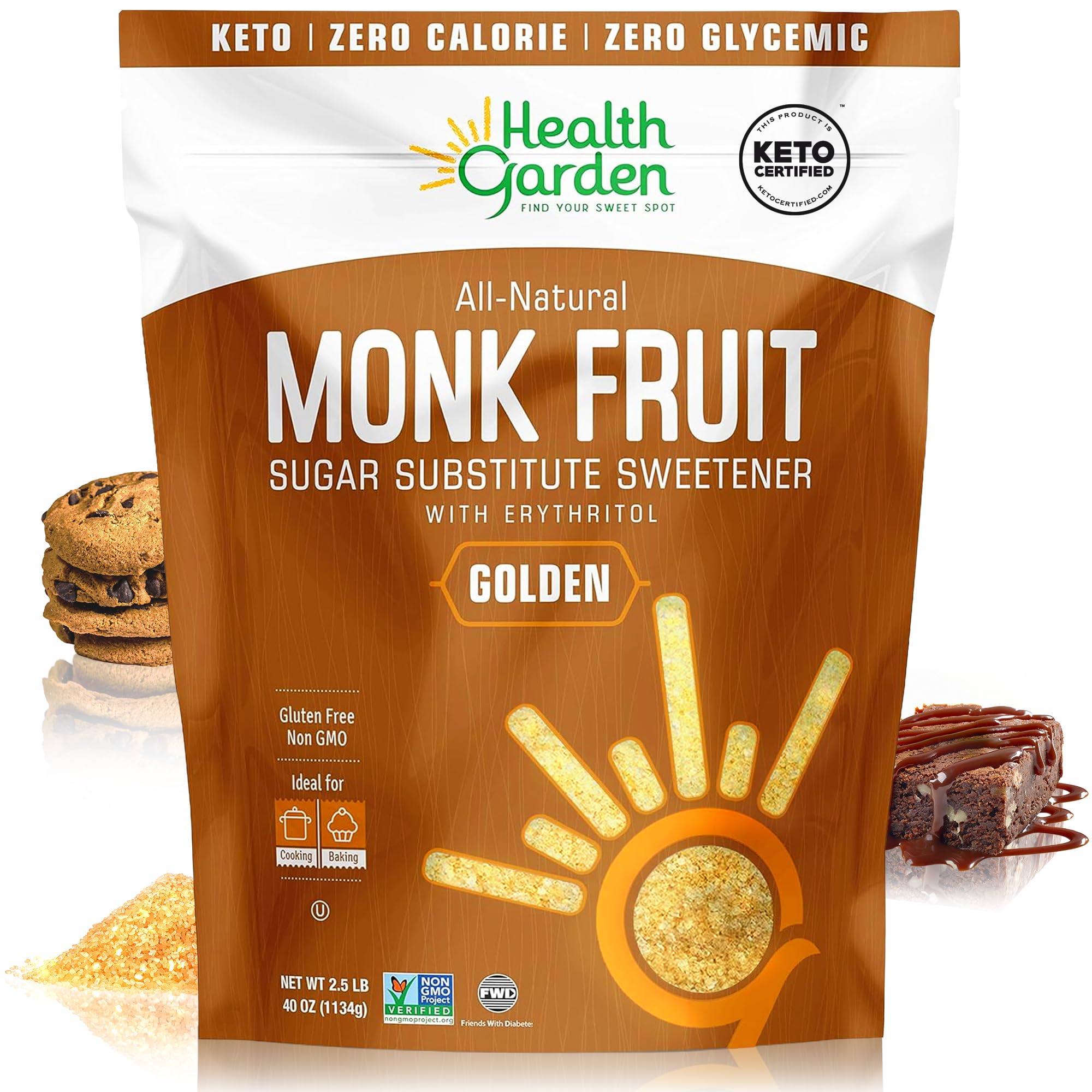
Health Garden Golden Monk Fruit

95 /100
Trail Score Outstanding

Key details

Package Size
2.5 lb
Sweetener Base
Monk fruit and erythritol
Glycemic Impact
Zero glycemic
Sugar Replacement
1:1
Check Price on Amazon

Brown sugar is the harder swap. Health Garden's golden monk fruit blend has the color, moisture, and molasses-like flavor that white-sugar substitutes miss, which makes it the one we reach for in BBQ sauce, oatmeal, and cookies. It is a 1:1 granulated replacement with no glycemic impact, so it fits the diabetic brief without a conversion chart.

In baking, it performs more like brown sugar than the white-sugar clones here. Cookies keep a softer center, and the flavor holds up in sauces where a plain sweetener would taste flat. The sweetness is close to sugar, though a little less deep, so a recipe that leans on molasses may still want a touch of extra flavor.

The 2.5-pound resealable pouch is practical, but this sweetener can harden if you move it to an open sugar bowl. We keep it sealed and press the air out, and it stays workable. That is a storage habit, not a reason to avoid it.

When a recipe needs brown sugar, this is the bag we reach for. It is not the all-purpose default, but it is the closest brown-sugar match in this group.

Pros

  • Mimics brown sugar color and flavor
  • 1:1 replacement with no glycemic impact
  • Bakes well in cookies and sauces
  • Resealable 2.5-pound pouch

Cons

  • Premium price for a specialty swap
Our verdict

Buy this if a recipe needs brown sugar and you want a zero-glycemic monk fruit blend that tastes and bakes the part.

Check Latest Price
6

Bulk Keto Baking

Morning Pep Birch Xylitol

95 /100
Trail Score Outstanding

Key details

Calories
40% fewer calories
Package Size
5 lb
Sweetener Base
Birch xylitol
Glycemic Impact
Low glycemic
Check Price on Amazon

A five-pound bag of xylitol is a commitment, and Morning Pep is the bulk option for people who already know xylitol agrees with them. It is birch-derived rather than corn-derived, with a clean, sugar-like taste and about 40% fewer calories than sugar. For baking and large batches of iced tea, the bag is practical. The granules dissolve cleanly in coffee and tea.

The bag is a large upfront purchase, which makes more sense for a household that already uses xylitol regularly than for someone trying a new sweetener for the first time. It is also not calorie-free, so it is not a free pass on calories. A five-pound bag takes up pantry space, so measure out a smaller jar for the counter and keep the rest sealed.

What we like most is the taste: it dissolves cleanly, does not bring the bitter edge of stevia, and works in coffee without a gritty finish. For a committed xylitol user, the big bag is the practical way to buy it.

Pros

  • 5-pound bag for bulk baking
  • Birch-derived xylitol, not corn
  • Clean sugar-like taste with no aftertaste
  • About 40% fewer calories than sugar

Cons

  • Can cause digestive upset in larger amounts
  • Not calorie-free
Our verdict

Choose the big bag if you already bake with xylitol and want a birch-derived option with a clean taste; start small if you are new to it.

Check Latest Price
7

Budget Coffee Sweetening

Sweet'N Low Packets

96 /100
Trail Score Outstanding

Key details

Format
100 packets
Calories
Zero calorie
Sweetener Base
Saccharin
Sweetness Per Packet
2 tsp sugar
Check Price on Amazon

Saccharin has been the diner-table default for generations, and Sweet'N Low still does the one thing many packets struggle with: it keeps its sweetness when heated. That makes it a useful budget option for coffee, tea, and simple baked goods, even though it is not a 1:1 granulated replacement. That heat stability is why it works in a simple cake or a glaze, not just a mug.

The 100-count box is small and cheap, and each packet matches two teaspoons of sugar. We found the sweetness direct and familiar, with none of the metallic edge people sometimes expect from saccharin. It is the one we keep for a quick cup, not for a recipe that needs volume. The box is small enough to stash in a drawer, and the packets are easy to tear when you are half awake.

Pros

  • Zero-calorie saccharin packets
  • Heat-stable sweetness for baking
  • Each packet equals 2 tsp sugar
  • Low-cost 100-count box

Cons

  • Packets can arrive clumpy or hard
Our verdict

A budget box for coffee and tea if you like saccharin's heat-stable sweetness and want a small, familiar packet.

Check Latest Price

How We Tested 16 Sugar Substitutes

We started with ingredient labels rather than front-of-box claims, sorting a few dozen products by what actually does the sweetening: stevia leaf extract, monk fruit, erythritol, allulose, maltitol, and blends of those with a bulking agent. We cut anything that wouldn't dissolve in a cold drink without a fight, anything sold only in bulk sizes nobody needs, and anything whose carbohydrate count per serving didn't square with the zero-sugar banner. That left 16, ranging from single-serve packets to one-pound pourables.

Each one went through the same week of ordinary use: a 12-ounce mug of black coffee, a pint of iced tea stirred over ice, a bowl of oatmeal, and a weekend batch of drop cookies baked side by side. We weighed the contents of a single packet, counted how many packets it took to match the sweetness of one teaspoon of sugar, and timed how long each one took to dissolve in cold water.

We noted whether the powder disappeared or left grit at the bottom of the glass, whether it clumped in the canister between uses, and whether it brought a cooling sensation or a bitter tail. In baking we watched how the dough spread and browned. We also did the math on cost per serving, since a box that needs three packets per mug isn't a bargain, and read every ingredient list for what was actually in it. The keto eaters in the house checked carb counts alongside us.

How to Choose a Sugar Substitute for Diabetes

Start With Glycemic Impact and Ingredients

For a diabetic household, the useful question is whether the product is formulated to have zero or low glycemic impact, and whether the ingredient line supports that. A stevia packet that lists dextrose or maltodextrin first is a different purchase from a monk fruit and erythritol blend, even if both boxes use the word stevia. Read the ingredient line before you commit to a large bag, and choose a product with a clear sweetener base.

Lakanto and Health Garden both build their blends around monk fruit and erythritol and state a zero glycemic index. That is the kind of label claim to look for, but the ingredient list is what tells you whether the sweetener is the main event or a small part of a bulked-up packet.

Match the Format to the Job

Packets are for drinks: portioned, portable, easy to keep by the kettle. Granulated blends are for baking: they measure cup for cup, brown, and bulk. A single product rarely does both well. Splenda's 800 packets are a coffee-and-tea supply; Swerve's 48-ounce bag is a baking tool. If you do both, budget for two formats rather than forcing one to cover everything.

The trap is assuming a packet can stand in for a cup of sugar. It can sweeten a mug, but a cake needs the volume and behavior of a granulated substitute.

Taste Is Personal, So Buy Small First

Sweeteners carry different aftertastes: stevia can read herbal, erythritol can feel cooling, saccharin can taste metallic to some. The only reliable test is the drink you actually make. Buy a small box or bag, try it in coffee and in a simple recipe, and only then commit to bulk.

Truvia's small packets are a useful trial size; a five-pound xylitol bag is not. If you are switching a household, start with the format each person uses most and add the second format later.

Plan for Sugar Alcohols and Storage

Erythritol and xylitol are sugar alcohols. They can cause gas, bloating, or diarrhea when eaten in quantity, so start with a small serving and increase slowly. A sweetener that tastes fine in a teaspoon can be a different experience in a large batch.

Granulated blends can clump or harden in humidity, so keep them sealed and dry. A resealable pouch is worth choosing over a decorative sugar bowl, especially for the brown-sugar-style blends.

Frequently Asked Questions

Final Verdict

For most diabetic households, Lakanto Classic is the best single bag: it measures 1:1, has a zero glycemic index, and works in both coffee and baked goods. If you mostly drink coffee or tea, the Splenda 800-count box is the lower-cost, lower-effort choice. Choose Swerve when baking is the priority and you want a granulated blend that browns and caramelizes.