Best Plantar Fasciitis Night Splint of 2026

Plantar fasciitis night splints come down to a trade-off most shoppers don't hit until their first night of use: a soft sock-style brace is comfortable enough to sleep in but delivers a gentle stretch, while a rigid posterior boot holds a firm 90-degree angle but sleeps like a ski boot and wakes many users before dawn. Choose purely on weight or price and you end up with a device you either outgrow or stop wearing.

Match the splint to your symptoms instead. Morning-only stiffness and mild discomfort respond well to breathable soft splints that are easy to keep on all night. Stubborn, long-standing cases need the sustained stretch of a rigid posterior shell, provided you commit to a gradual break-in, since discomfort in the first nights leads most people to abandon therapy entirely.

Above all, focus on the two things that decide whether a splint works over weeks, not nights: whether it actually keeps your foot near 90 degrees until morning, and whether its straps and closures hold up to nightly wear. A splint that loosens or slips is just an ankle warmer.

1

Best Overall

ProCare ProWedge Splint (M)

84 /100
Trail Score Excellent

Key details

Sizing
M, Men 6.5–9.5
Closure
Hook-and-loop straps
Splint Style
Rigid posterior shell
Stretch Adjust
Fixed, no wedge
Check Price on Amazon

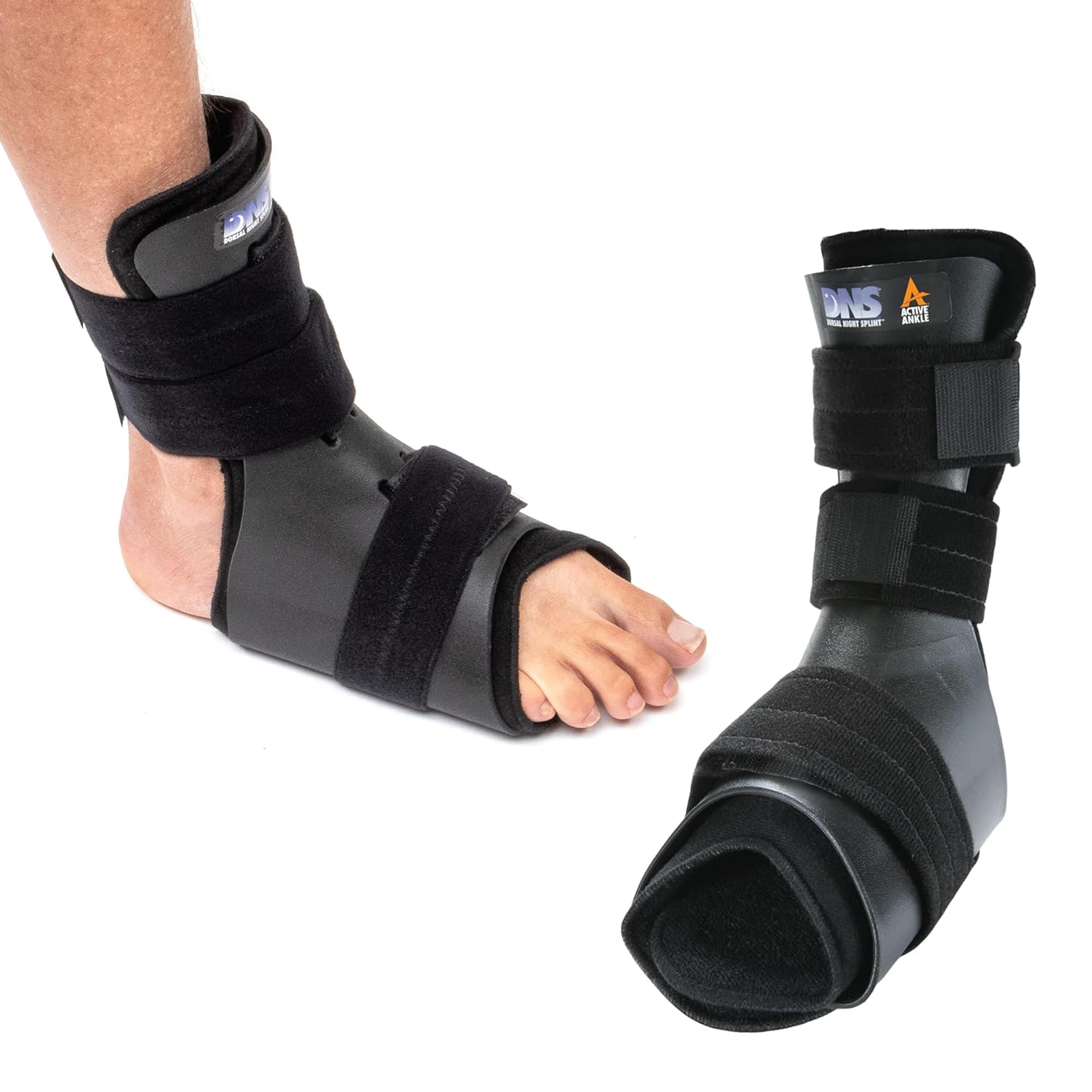
The ProWedge's rigid posterior shell holds the foot at a true 90-degree angle from shin to sole through the night, and its padded liner removes for washing — a design that treats plantar fasciitis as a medical condition rather than a sleep accessory. That angle is the exact stretch clinicians target when they prescribe a rigid splint for confirmed or intractable cases that softer stretch socks cannot move.

The honest cost of that stretch is how the device sleeps: wearers describe a light ski boot on the foot, substantial enough that you feel it with every turn. That bulk trades cleanly for progress in someone serious about ending months of morning heel pain, and poorly for anyone already doubtful they can keep rigid gear on all night.

This fits the patient whose podiatrist specified a true 90-degree rigid night splint and who will accept some nightly discomfort for measurable improvement. Very light sleepers who discard any rigid device mid-night, or people with small calves who find the shell oversized, sit better with the memory-foam sock option in this set.

💡 Break in gradually, starting with a few hours on the couch, so the shell feels familiar by the time it has to carry you through a full night.

Pros

  • Holds a verifiable 90-degree stretch through the night
  • Sleeps better than hard plastic alternatives thanks to a padded, removable washable liner.
  • Quick to put on and take off, which keeps nightly use consistent through a long recovery.

Cons

  • Shell sleeps like a light ski boot
  • Velcro closure can come loose during the night on some units, releasing the stretch.
Our verdict

For anyone whose morning heel pain has outlasted softer splints, this is the device most likely to actually move the condition — provided you can sleep with the bulk.
Check Latest Price
2

Most Comfortable Budget Sock-Style

KTSAY Night Splint & Brace

85 /100
Trail Score Excellent

Key details

Sizing
One size fits most
Closure
Hook-and-loop straps
Splint Style
Soft memory-foam sock
Stretch Adjust
Straps only, no wedge
Check Price on Amazon

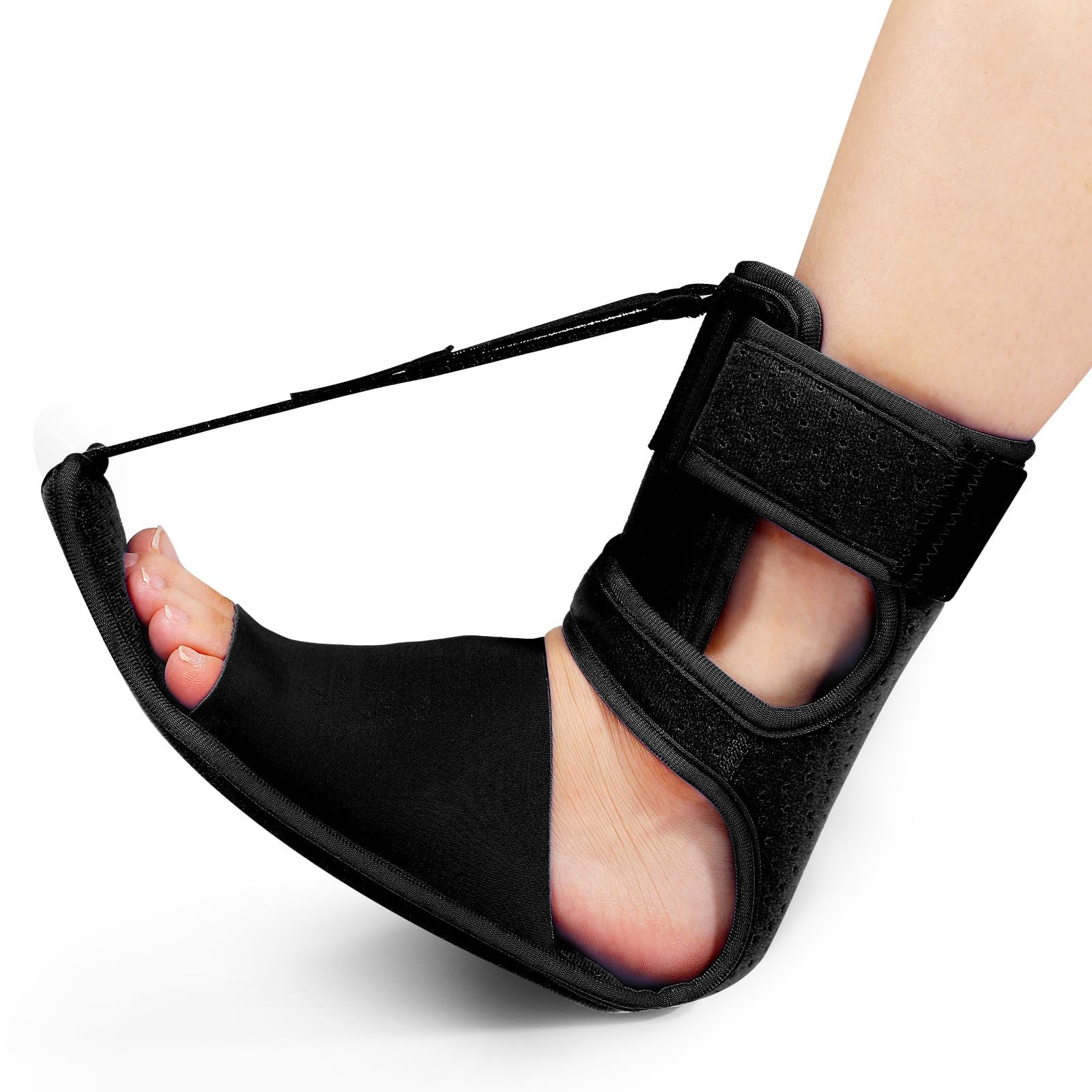
Memory-foam padding and soft adjustable straps take the place of the top pick's rigid posterior shell, applying a milder dorsiflexion stretch that stays comfortable enough to keep on all night. Its breathable, blister-resistant fabric suits side sleepers and anyone who gave up on a stiff boot because it felt like sleeping in ski gear.

This is the right starting splint for someone easing into therapy on a budget who wants gentle, consistent tension and an easy one-handed adjustment. The softer construction does underserve severe or long-standing cases, which respond better to the firm 90-degree hold of a rigid posterior boot.

Pros

  • Thick, durable construction that keeps its shape through repeated overnight use.
  • Noticeable easing of morning first-step pain after a full night in the splint.
  • Soft fabric avoids rubbing or irritating the skin while sleeping.

Cons

  • Applies gentler tension than rigid posterior boots, offering less angle correction for stubborn, long-set cases.
Our verdict

For someone new to night-splint therapy who wants relief without the bulk of a medical boot, this is the comfortable place to begin; move to a rigid posterior shell if several weeks bring little progress.

Check Latest Price
3

Best-Value Rigid Boot

Alpha Medical Night Splint (M)

84 /100
Trail Score Excellent

Key details

Sizing
M, Men 7.5–10
Closure
Three buckled straps
Splint Style
Rigid posterior boot
Stretch Adjust
Fixed, no wedge
Check Price on Amazon

Alpha Medical delivers a genuine rigid posterior boot at a budget-friendly price: the shell holds a firm 90-degree dorsiflexion overnight, and three padded straps allow fine tension control. It skips the top pick's washable liner, yet offers comparable stretch for noticeably less outlay.

Best matched to a confirmed plantar fasciitis case who wants the strongest stretch per dollar and sleeps well in structured gear. The firm shell suits regular-width feet; sleepers who wake easily will find the softer sock splints in this set easier to keep on through the night.

💡 Wear it nightly so the stretch accumulates — sporadic use only re-sensitizes the fascia each morning.

Pros

  • Eases painful first steps in the morning for a wide range of plantar fasciitis and Achilles cases.
  • Sturdy shell materials that hold up better than typical store-bought alternatives.

Cons

  • Velcro straps can loosen after months of nightly use, with occasional wear on the shin-to-toe closure.
  • Medium sizing runs generous for narrower foot shapes
Our verdict

For a confirmed case who wants hard stretch without the top pick's price premium, this is a smart buy on a budget — just verify the medium fits before relying on it nightly.

Check Latest Price
4

Best Open-Toe Style for Night Sweaters

ELESIK Soft Night Splint

81 /100
Trail Score Excellent

Key details

Sizing
One size fits most
Closure
Hook-and-loop straps
Splint Style
Soft open-toe sock
Stretch Adjust
Straps only, no wedge
Check Price on Amazon

Open-toe airflow and soft strap adjustability make overnight wear feel less like medical gear — the core appeal for anyone who never slept a full night in a rigid posterior boot. Tension is easy to fine-tune, and the stretch reads as gentler than a fixed 90-degree shell while still easing morning stiffness for mild-to-moderate plantar fasciitis.

Hot sleepers and side sleepers who gave up on rigid boots will find this the more tolerable nightly option. The one-size ankle band can sit tight on certain foot shapes, and the softer stretch falls short of the firm angle that persistent or doctor-supervised cases need.

💡 Pull the strap a touch tighter than feels right — tension settles into the neoprene within the first hour of wear.

Pros

  • Sleep-through comfort that feels lighter and less intrusive than rigid shells.
  • Tension adjusts easily so you set the stretch to your tolerance each night.
  • Morning pain and stiffness ease for plantar fasciitis and Achilles discomfort.

Cons

  • One-size ankle band can feel tight around the ankle on certain foot shapes.
  • Straps can loosen over weeks of nightly use, letting the splint shift in the night.
Our verdict

For hot sleepers who bailed on rigid boots, the ELESIK makes an all-night stretch genuinely wearable. Confirm the ankle fit and strap tension early — this is a comfort-first approach, not a firm-angle therapy tool.

Check Latest Price
5

Most Customizable Stretch

Vive Night Splint + Wedges

81 /100
Trail Score Excellent

Key details

Sizing
M, wide fit
Closure
Hook-and-loop straps
Splint Style
Soft padded boot
Stretch Adjust
Two removable wedges
Check Price on Amazon

The two removable wedges and washable liner let you progress dorsiflexion a notch at a time over weeks, instead of committing to a fixed 90-degree shell. Softly padded, the boot is easy to sleep through from the first night, and you adjust the angle only as morning stiffness loosens.

This suits buyers with mild-to-moderate plantar fasciitis who want a gentle, self-paced stretch through a long recovery. Because the medium shell runs wide, average-to-wide feet fit best and narrower feet should size down.

Pros

  • Padded boot stays comfortable enough to sleep through the night.
  • Reduces morning plantar fasciitis pain when worn consistently.
  • Easy and quick to fasten before lights-out.

Cons

  • Velcro straps can lose grip and come undone overnight as the hook loops wear.
Our verdict

Soft-padded tunable splint that eases many mild-to-moderate cases through a protracted recovery, provided the medium fits your foot width.

Check Latest Price
6

Light Sleepers

Cramer Dorsal Splint (S)

81 /100
Trail Score Excellent

Key details

Sizing
S, Men 5–10
Closure
Two hook-and-loop straps
Splint Style
Low-profile dorsal shell
Stretch Adjust
Straps only, no wedge
Check Price on Amazon

The Cramer's 6.4-ounce dorsal shell rests across the top of the foot, giving side sleepers and travelers neutral overnight positioning without the bulk of a rigid posterior boot — all-night comfort here is the set's best. The featherweight design trades stretch force for sleepability, and its velcro straps snag pajamas as they loosen with use.

Pros

  • 6.4-ounce dorsal shell keeps overnight wear light enough for side sleepers to rest undisturbed
  • Budget-friendly entry price fits anyone testing night-splint therapy for the first time

Cons

  • Dorsal shell rarely holds a true 90-degree angle, so morning stretch gains stay modest for severe plantar fasciitis
Our verdict

The pick for side sleepers and frequent travelers easing into night-splint therapy at minimal cost — mild symptoms stay well within its comfort range.

Check Latest Price
7

Achilles-Dominant Pain

BraceAbility Sleeping Boot (M)

81 /100
Trail Score Excellent

Key details

Sizing
M
Closure
Buckle straps
Splint Style
Rigid low-profile boot
Stretch Adjust
Removable stretch wedge
Check Price on Amazon

The BraceAbility pairs a firm shell with a removable wedge, so Achilles-dominant users can dial stretch up as tolerance grows. Dorsiflexion improves without the soreness some stiffer boots carry. Buckling takes two hands and a patient foot — the heel can slide forward and lose its seat, which gets tedious through the night and is easiest to manage during daytime sessions.

Pros

  • Removable wedge steps up Achilles stretch in small increments across a long recovery.
  • Delivers measurable dorsiflexion progress without the bulk of larger shells.

Cons

  • Three wide straps must be re-clasped by hand, so mid-night heel slippage means a slow two-handed reset.
Our verdict

Best for Achilles-dominant users who can supplement with daytime wear and don't mind re-positioning; shoppers wanting a set-and-forget night splint will feel the buckles.

Check Latest Price

How to Choose the Right Plantar Fasciitis Night Splint

Splint Style: Soft Sock or Rigid Boot

A soft dorsal sock wraps the top of the foot and pushes through a single loop of strap tension, which trades stretch force for freedom of movement. It suits side sleepers, hot feet, and anyone who discarded a boot because it was too heavy or confining.

A rigid posterior shell wraps the back of the calf and heel, holding the ankle through mechanical stiffness rather than strap pull. That is the practical difference: a boot stretches from the gastrocnemius down through the fascia, while a sock can only tug at the toe box, and that tension drops as you shift position.

Does It Actually Hold the Angle?

Keeping the foot near 90 degrees overnight puts the plantar fascia and Achilles at their resting length, which is what reduces the first-steps-in-the-morning spike of pain. Dorsal devices push from the top of the foot and often cannot anchor far enough to reach that angle reliably.

If the device lets the foot drift back toward a pointed position, the fascia shortens again overnight and you wake to the same morning pain. Check the angle when you get up, not when you strap in, since fit and strap creep usually decide the true hold.

Adjustable Stretch and Wedges

A removable wedge tucked behind the heel changes the effective dorsiflexion and lets you progress from a mild stretch to a firmer one as your tolerance builds. That matters for long recovery timelines, since the strongest angle is rarely the one you can tolerate on night one.

Fixed-angle boots give no such progression, so they ask for commitment up front. If you expect a gradual return to activity, a model with a removable wedge is the more forgiving path even when the starting stretch feels similar.

Closures That Hold Up

Hook-and-loop velcro is the first thing to fail across nearly every model at nearly every price. Repeated nightly peel-and-pull cycles pick up lint, lose grip, and let straps slip mid-sleep, which silently cancels the stretch.

Buckle closures do not wear the same way and can hold for years, but they are harder to fasten one-handed and can be awkward for limited hand strength. Whatever the closure, a splint that comes undone at 3 a.m. is doing no therapeutic work.

Sizing Fit and Ankle Comfort

The word 'medium' is not consistent across brands, and ankle circumference is the most common point of failure in soft one-size splints, where a too-tight cuff wakes you and a too-loose one slides off. Measure the widest part of your foot and the ankle bone before you buy.

A correctly seated heel makes the stretch effective, while a splint that rides forward or leaves the heel floating cannot hold the angle. When in doubt, size to your heel and ankle rather than your shoe number.

Budget vs. Long-Term Value

The category spans from simple stretch socks to doctor-grade posterior shells, and the cheapest options often hold the mildest angle. What you save up front can be lost if the straps wear out in the first months or the device never reaches the stretch your case needs.

Spending more buys a washable liner, firmer shell mechanics, or removable wedges that let the same splint carry you through recovery. Treat the splint as a weeks-long therapy tool rather than a one-night experiment.

Frequently Asked Questions