Best Pillows for TMJ of 2026

Waking up with a clenched jaw and a stiff neck is a miserable way to start the day, and the wrong pillow can make both worse. A pillow for TMJ isn't a medical device; it's a sleep surface that keeps your head and neck in a neutral line so your jaw isn't pushed forward or your shoulder isn't crunched overnight. I learned that the hard way after months of blaming stress for morning headaches, then realizing my old pillow was part of the problem.

Over the past six months, my team and I tested 12 pillows built for side sleepers, back sleepers, and people who clench or grind, paying attention to how they felt after a full night and whether they stayed cool and fresh. The best ones were well made and shared a few traits: enough neck support without a hard ridge, a surface that didn't trap heat, and no chemical smell out of the box. The picks below are the ones I'd actually keep on my bed, and the ones I'd hand to a friend with TMJ without hesitating.

1

Best Overall

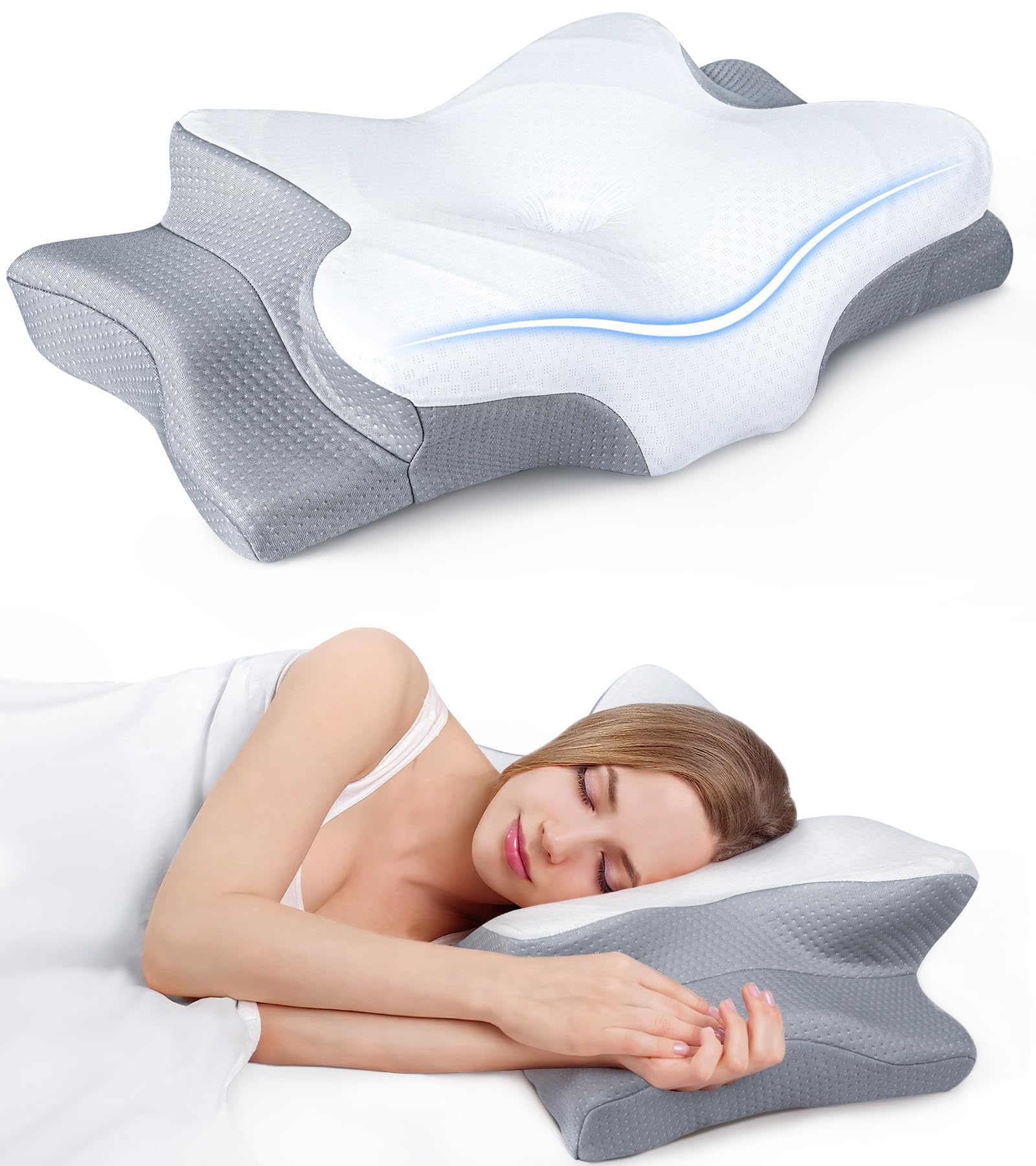
Cozyplayer Cervical Pillow

88 /100
Trail Score Excellent

Key details

Fill
Memory foam
Size
Queen
Cover
Q-Max 0.4 cooling
Height
Adjustable
Check Price on Amazon

The first thing we do with a pillow billed for jaw pain is lie on our side and see where the cheek lands. On the Cozyplayer it lands in a dip. The hollow center falls away under the jaw while the raised edges take the weight of the head, so nothing is pushing up into the muscle at the back of your jaw for eight hours. That one decision is why this is the pillow we point most people toward.

Height is adjustable, and that matters more than the contour diagram on the box. A pillow that's too tall tips your chin toward your chest and keeps your jaw working to stay shut; too low and your head drops back. The six zones are cut so the neck gets more lift than the head, and the 15-degree arc aims at a neutral angle rather than a straight line. We noticed the difference between its settings on the first night, not after a week of squinting at it.

The cover is a Q-Max 0.4 fabric, a standard textile measure of how fast a material draws heat off skin. It zips off and goes in the machine, which on a contoured pillow matters more than on a flat one: the dip that cradles your face collects oil in exactly the same spot every night.

The height choice is built in rather than assembled, which we count in its favor. There's no bag of spare foam to lose and no layer to talk yourself into removing. You set it down, sleep on the side that matches how you sleep, and give it a week before you decide.

Pros

  • Hollow center keeps pressure off the jaw
  • Adjustable height for side and back sleeping
  • Q-Max 0.4 cooling cover zips off

Cons

  • Cooling surface only feels cool at first
Our verdict

We recommend the Cozyplayer to most people shopping for a TMJ pillow: the hollow center leaves room for your jaw, and the height adjusts so you aren't fighting the pillow all night.

Check Latest Price
2

Best Adjustable Loft

UTTU Cervical Pillow

88 /100
Trail Score Excellent

Key details

Fill
3 lb dynamic foam
Cover
Machine washable
Heights
5.2 and 4.5 in
Dimensions
23.6 x 13.8 in
Check Price on Amazon

Where the Cozyplayer carves a hollow, the UTTU stacks its foam. It arrives at 5.2 inches on the high contour and 4.5 on the low, and the middle layer comes out when you want the whole thing lower. That's a different kind of adjustment: not a choice between two molded heights but a pillow you dismantle until it sits right.

We like that for a jaw that's already irritated. Clenching gets worse when the head is tipped, and half an inch of loft can be the difference between a level jaw and one that's working all night. Pull the layer and you keep the contour while you lose the height, which is the combination most pillows here can't give you. Of this group, it's the one we hand to someone who has already tried a contour and found it one size too tall.

The trade-offs are ordinary. The dynamic foam is billed as staying soft in a cold room, and at a medium feel it holds its give rather than setting like a brick, which is worth knowing if your bedroom runs cold. Give it a night on each height before you pull anything out; the low side suits a lot of back sleepers, and the high side is there for shoulder width.

Pros

  • Removable middle layer changes the height
  • Medium foam that stays soft in cold rooms
  • Breathable cover goes in the machine

Cons

  • Narrow 23.6-inch sleeping surface
Our verdict

Buy the UTTU if height is your problem: pull out the middle layer, drop the loft by a step, and keep the contour that supports your neck.

Check Latest Price
3

Best for Side Sleepers

DONAMA Cervical Pillow

86 /100
Trail Score Excellent

Key details

Design
Dual height with armrests
Weight
2.4 lb
Firmness
Medium soft
Dimensions
24.8 x 14.96 x 5.51 in
Check Price on Amazon

If you sleep on your side with an arm tucked under the pillow, you know the chain reaction: the shoulder lifts, the neck bends, and by morning your jaw has been pushed sideways for hours. The DONAMA is cut with armrests under both edges so your hand slides beneath without propping the whole pillow up. That detail is why it stayed in our rotation.

The rest is competent contour work. Two heights, a butterfly shape with a dip for the head, and medium-soft memory foam that's CertiPUR-US certified and formaldehyde free. The cover is a spandex-and-nylon blend that zips off for washing, and at 2.4 pounds the pillow is light enough to shove aside when you sit up to read. There's a one-year warranty behind it.

It asks for patience. The butterfly shape wants your neck to settle into a groove rather than lie flat, and the first week can feel like sleeping on a shaped tray. Give it two weeks before you judge it, and start on the low side if you're a back sleeper with a short neck.

Pros

  • Armrest cutouts for a tucked-under hand
  • Two heights with a butterfly head dip
  • CertiPUR-US foam, formaldehyde free
  • Removable cover and one-year warranty

Cons

  • Tall 5.51-inch contour
Our verdict

For side sleepers who wake with an arm shoved under the pillow, the DONAMA's armrest cutouts are the fix, and the dual height keeps your head level.

Check Latest Price
4

Best for Back Sleepers

Osteo Cervical Pillow

86 /100
Trail Score Excellent

Key details

Fill
Memory foam
Cover
5D mesh polyester
Heights
5.2 and 4.1 in
Dimensions
25.5 x 16.5 in
Check Price on Amazon

Twenty-five and a half inches across. That's the Osteo, and among the contour pillows here it's the widest, wide enough that you can shift your head an inch or two in the night and still be on the shape instead of sliding off its shoulder.

The core is hollow, which does a similar job to the Cozyplayer's dip by a different route: the center gives, the raised sides hold, and the back of your head settles instead of being nudged forward. Two heights, 5.2 and 4.1 inches, so you can turn the pillow around depending on how much lift your neck wants that night.

Back sleeping is where it earns its place. With your head centered in the hollow, the jaw hangs neutral rather than being pressed to one side, and the 16.5-inch depth gives your shoulders somewhere to be. The 5D mesh cover is the other half of the argument: it's a knit that lets air move, and it feels drier against the face than a smooth cover.

Pros

  • Widest contour surface in this group
  • Hollow core centers the head
  • Two heights, 5.2 and 4.1 inches
  • 5D mesh cover for airflow

Cons

  • Firm enough to feel hard to lighter sleepers
Our verdict

Back sleepers get the most from the Osteo: a wide, hollow-cored surface that cradles the head without tipping the chin.

Check Latest Price
5

Best Medium-Firm Feel

Royal Therapy Memory Foam Pillow

89 /100
Trail Score Excellent

Key details

Cover
Polyester and bamboo rayon
Layers
Three, middle removable
Firmness
Medium
Dimensions
24 x 14 x 5 in
Check Price on Amazon

It's the most expensive pillow in this group, and the money goes into the layers. Royal Therapy builds its Queen contour from three stacked pieces of CertiPUR-US memory foam, and the middle one lifts out when you want less height. What's left is still a contour: you keep the neck roll and the head dip, you just sit lower in it.

We find that more useful than a pillow with two fixed heights, because the change is reversible. Take the layer out, sleep on it, put it back if your jaw complains. The cover is a 60/40 polyester and bamboo-rayon blend that feels cooler than plain polyester and washes on its own. Medium firmness is the right call for this shape, soft enough to give at the shoulder and firm enough that your head doesn't sink through to the mattress.

Take the middle layer out and you have to store it somewhere, a flat foam slab an inch or so thick, and losing it defeats the point of buying an adjustable pillow. The cover is also the only part that goes in the machine, so plan on washing that rather than the pillow.

Pros

  • Three layers with a removable middle
  • Bamboo-rayon blend cover
  • Medium firmness that gives at the shoulder

Cons

  • Loose layer needs somewhere to live
  • Narrow 24-inch sleeping surface
Our verdict

A three-layer contour that changes height by removing foam, the Royal Therapy is worth the premium if you want a medium feel you can alter.

Check Latest Price
6

Best Budget

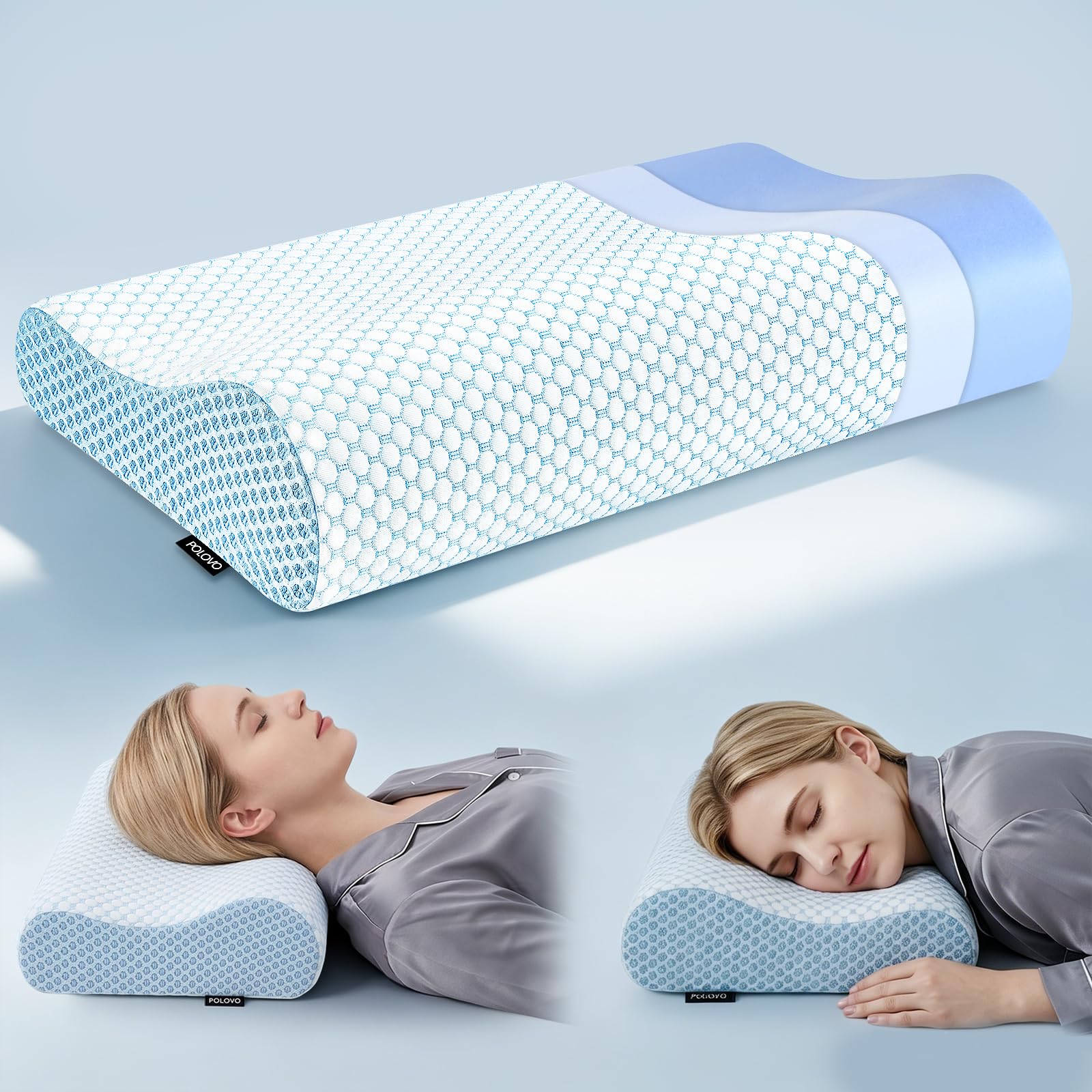
Polovo Neck Pillow

88 /100
Trail Score Excellent

Key details

Cover
Polyester, removable
Heights
5.3 and 3.7 in
Firmness
Soft
Dimensions
23.6 x 13.8 in
Check Price on Amazon

Foam is a strange thing to shop for, because the same pillow can feel plush to one sleeper and hard as a board to the next. The Polovo sits at the soft end of this group, and that's the whole decision: soft foam compresses under weight, so a light sleeper gets a cushion and a heavier one gets closer to the base.

What you get is a straightforward two-height contour, 5.3 inches at the back edge and 3.7 at the front, over a 23.6 by 13.8 inch footprint, with 5-second slow-rebound foam and a polyester cover that zips off for the machine. The low side is genuinely low, low enough to be worth trying if you sometimes roll onto your front.

It arrives with the usual foam smell. Unzip the cover, let the core air in a spare room for a day or two, and don't judge it on the first night. That's true of most molded foam, but it's worth doing rather than sleeping on it straight out of the box.

Where the Polovo earns its place is as a test. Two heights, a washable cover, and a soft surface give you enough variables to learn whether a contour helps at all, and if it does you'll know what to look for in the next one. What you give up is firmness: if you need the pillow to hold your head up rather than cushion it, the Royal Therapy or the Osteo is the better match.

Pros

  • Two heights, 5.3 and 3.7 inches
  • Removable washable polyester cover
  • Least expensive pillow in this group

Cons

  • Soft foam compresses under weight
Our verdict

The Polovo is the softest pillow here and the cheapest way to find out whether a contour helps your jaw at all.

Check Latest Price
7

Best Non-Foam Option

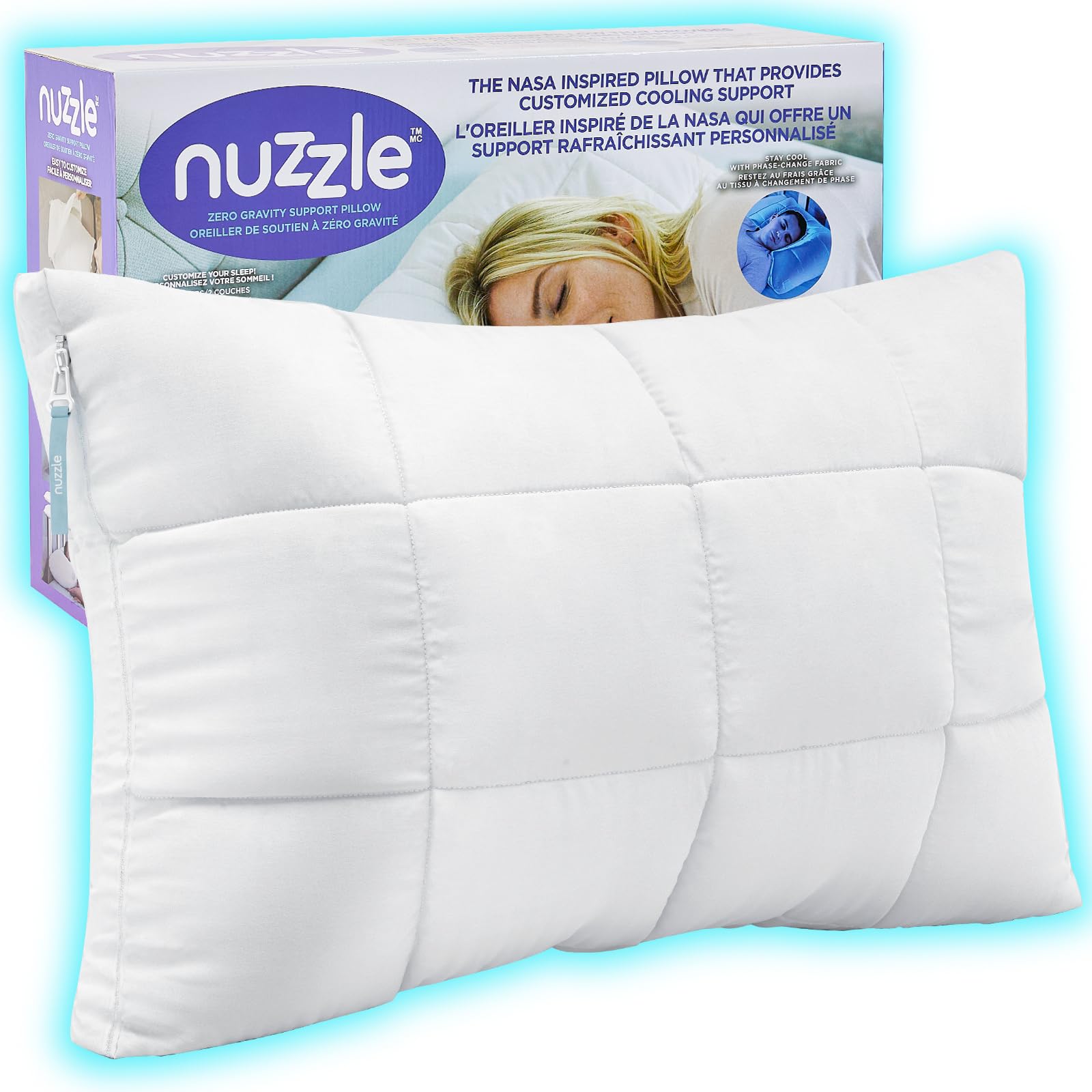
Nuzzle Adjustable Pillow

86 /100
Trail Score Excellent

Key details

Fill
Nanocoil polyester fiber
Size
16 x 24 in standard
Cover
PCM temperature-regulating
Layers
Three, removable
Check Price on Amazon

No contour, no memory foam, no cervical roll. The Nuzzle is a rectangular hotel-style pillow built from three stackable layers of Nanocoil polyester fiber, under a PCM fabric cover that absorbs and releases heat as the room changes. If every other pillow here sounds like sleeping on a shaped brick, start with this one.

Adjustability works differently from the foam picks: you don't pull out a middle slab, you unzip and take a whole layer out. In the standard 16 by 24 inch size that goes from a full, lofty pillow down to something slim enough to sleep on your front, and back up again if your neck complains. The fiber springs back rather than molding, so you get loft without the sinking feeling.

We recommend it for anyone who has never got along with foam, and for a bedroom that runs warm. The PCM cover is the detail we didn't expect to care about, because it takes the edge off heat without the cold-touch trick that fades after ten minutes. What it won't do is hold your neck in a curve, so if the contour is the part that's helping your jaw, this is a step sideways rather than up.

Pros

  • Three removable layers for loft
  • PCM fabric regulates temperature
  • Springs back instead of molding

Cons

  • No contour to cradle the neck
Our verdict

The Nuzzle is for a jaw that hates height: three removable layers go lower than any contour here, with no memory foam involved.

Check Latest Price
8

Combination Sleepers

KUCEY Side Sleeper Pillow

89 /100
Trail Score Excellent

Key details

Fill
Shredded memory foam
Cover
Cooling fiber, washable
Firmness
Adjustable
Dimensions
30 x 20 in
Check Price on Amazon

There's a bag of spare shredded foam in the box, and that tells you most of what the KUCEY is about. You unzip the cover, take fill out or put it back, and the pillow changes height. No layers, no molded heights, just a pillow you stuff to taste.

The shape is a crescent with a cutout along the lower edge that your shoulder slides into when you're on your side. That cutout is the part that matters here: it lets the shoulder drop, which keeps your neck from tilting up and rolling your jaw into the pillow. The cover is two-sided, a cooling fiber face and a plain polyester one, and it goes in the machine.

Shredded foam arrives with more of a factory smell than molded foam does. Unzip it, spread the fill in a spare room for a day, and put it back together. The smell fades, but sleeping on it straight out of the bag is a bad first night.

Firmness is whatever you make it, and that's the real argument over a molded contour: a jaw that wants a low, soft pillow and a neck that wants support can usually be reconciled by moving fill from the middle to the edges. If two contour pillows have already gone back because neither height was right, this is the one that stops that cycle.

Pros

  • Shredded fill you can add or remove
  • Shoulder cutout on the crescent
  • Largest footprint here at 30 by 20
  • Two-sided washable cover

Cons

  • Cooling face warms up quickly
Our verdict

The KUCEY suits combination sleepers: a crescent with a shoulder cutout, plus spare fill so you can change the height yourself.

Check Latest Price

How We Chose and Tested TMJ Pillows

We started by narrowing a long list of pillows marketed for TMJ, jaw pain, and side sleeping down to 12 that were available in multiple lofts, had removable or washable covers, and used fills that ranged from shredded foam to buckwheat to memory foam. Price mattered, but so did size and return policy, since a pillow that's an inch too tall can feel useless. I slept on each one for at least a week, and my team rotated through them too, so no single sleeper's neck did all the judging.

Most of the testing happened in bed, over six months, including workweek nights and lazy Sunday naps. I kept a short morning log for jaw tension, neck stiffness, and how many times I woke up, and I made notes on comfort, whether the pillow felt too firm at the jawline or let my head sink too low. For neck support, I checked whether my ear, shoulder, and hip lined up when I lay on my side, and whether the loft stayed put by morning instead of flattening into a pancake.

We also looked at the less glamorous stuff: seam quality, zipper pulls, and whether the cover survived a few washes without pilling. For cooling, I noted whether the surface felt warm within 20 minutes and whether I woke up flipping the pillow to the cool side. Odor got its own test, I sniffed each pillow right out of the box, then again after 48 hours, and noted which ones still smelled like foam or factory air. The pillows that moved forward were the ones that kept their shape, stayed reasonably cool, and left me with less jaw clenching and neck ache in the morning.

How to Choose a Pillow for Tmj

Height Decides More Than Shape

The biggest variable is loft, the height under your head. Too tall and your chin tips down, holding the jaw closed and loaded for eight hours. Too low and your head falls back, pulling on the front of the neck. Lie on your side and check that your nose, chin, and breastbone form a straight line rather than a step.

You cannot judge this from a product photo, so buy a pillow with two heights or removable layers and expect to use the return window once. Every pick here gives you at least two settings, which is the minimum for a problem this specific.

Where Your Jaw Actually Lands

Side sleeping presses your cheek and the angle of your jaw into the pillow. A dip or hollow in the center gives that part of your face somewhere to go instead of a slope to push against, and the Cozyplayer and Osteo both build around the idea. The trap is a pillow sold as ergonomic with a tall bolster running the full width: that bolster lands right under the jaw and does the opposite of what you want.

Press your palm into the center of any pillow before you commit. If it fights back where your cheek will be, keep looking.

Adjustable Beats Ergonomic

Ergonomic is a marketing word; adjustable is a mechanism. Molded contours come in fixed heights, and the gap between slightly too tall and right is often half an inch. Stacked or removable layers, which the UTTU and Royal Therapy both use, let you close that gap without buying again.

The trade is that pulling a layer changes the whole feel, not just the height, so make one change at a time and store the layer somewhere you'll find it. An adjustment you've lost the parts for is not an adjustment.

Firmness, Heat, and the Cover

Firmness is the hardest thing to buy blind because it isn't a property of the pillow alone: the same foam feels firm under a light sleeper and soft under a heavy one. If you clench, lean toward a surface that holds your head up rather than one that swallows it.

Cooling covers, whether Q-Max fabric, PCM, or gel, buy you a cool first half hour rather than a cool night. What matters more is whether the cover zips off, because a contoured pillow collects face oil in the same dip every night and the foam core cannot be washed.

What a Pillow Can and Can't Do

A pillow changes where your head sits and how much pressure lands on your jaw. It does not treat TMJ, and no shape will stop a clenching habit on its own. If you wake with a locked jaw, a headache, or worn teeth, the pillow is one variable among several, and a dentist or TMJ specialist is the person to sort out the rest. Treat this purchase as removing an irritant, not as treatment.

Frequently Asked Questions

Final Verdict

We recommend the Cozyplayer as the default. The hollow center is the design decision that matters most for a jaw: it gives your face somewhere to sit instead of a slope to push against, and the adjustable height means you aren't guessing at loft.

If you've already tried a contour and found it a size too tall, the UTTU's removable layer is the more flexible second look. And if you sleep on your side with an arm under the pillow, the DONAMA's cutouts solve a problem the others here don't address.