Best Oatmeal of 2026

Oatmeal looks like the simplest thing in the cereal aisle, until you're standing in front of a wall of canisters and packets that all promise the same thing. The oat in the bag has already been steamed, rolled, cut, or left whole, and that one decision sets how long it cooks, how creamy it turns out, and whether it survives a night in the fridge. Get it right and breakfast is warm, filling, and cheap enough to repeat every morning; get it wrong and you're eating paste and quitting by February.

We've spent three months cooking 16 oatmeals — instant packets, rolled oats, steel-cut, and a few flavored — and eating them for breakfast far more often than anyone planned. The gap between the best and the rest isn't subtle. One tip before you buy: ignore the cooking time on the front of the box and read the serving size on the back, because that's where the real value math lives. Below are the ones that earned a permanent spot in our cabinets.

1

Best Overall

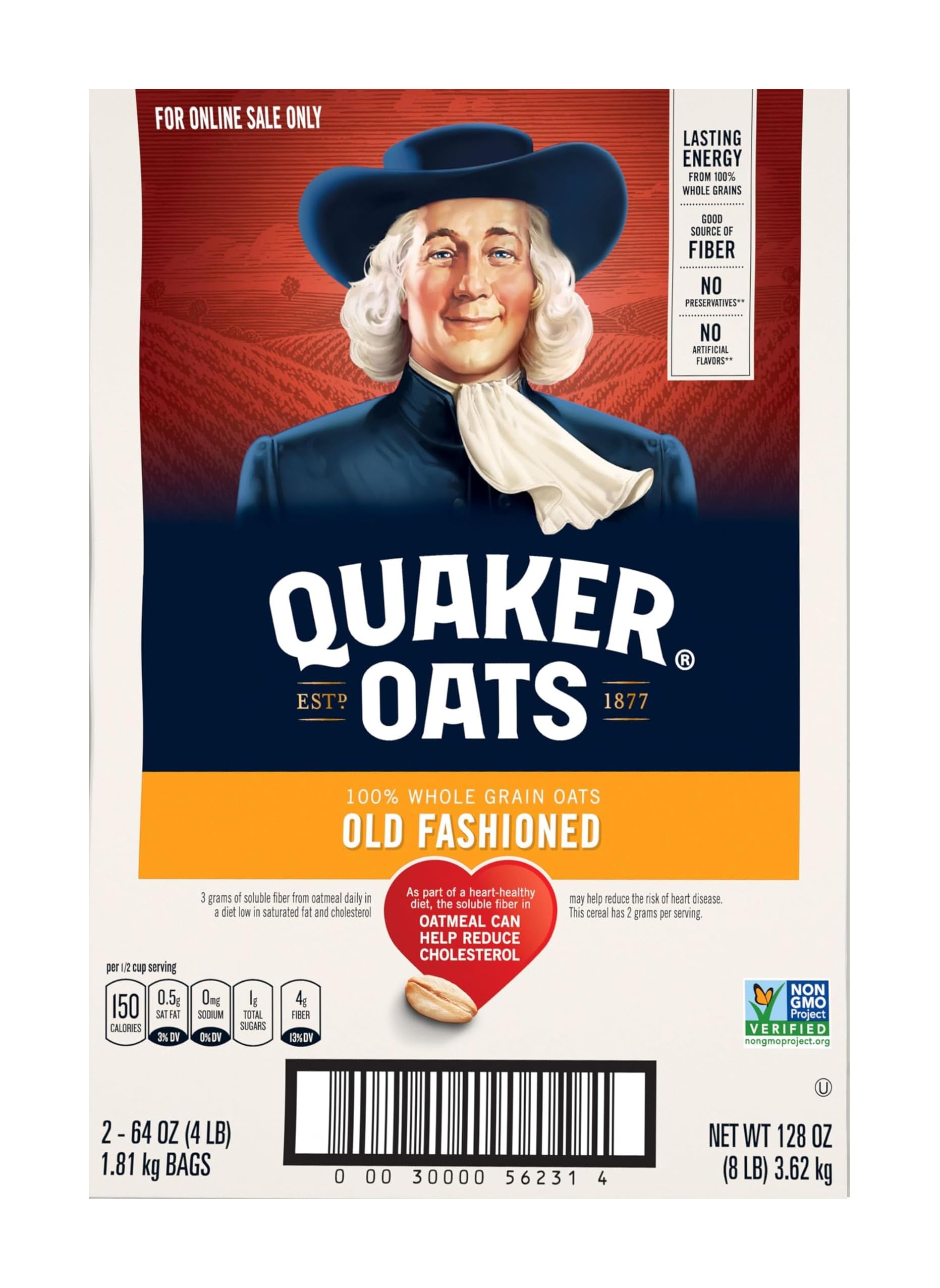
Quaker Old Fashioned Rolled Oats

96 /100
Trail Score Outstanding

Key details

Grain
100% whole grain
Oat Type
Old-fashioned rolled
Servings
90
Total Weight
8 pounds (two 64-ounce bags)
Check Price on Amazon

Old-fashioned rolled oats take four or five minutes longer than the instant kind, and that is the whole trade: you get oats that hold their shape instead of collapsing into paste. We think it's the best deal in breakfast, and this is the box we keep rebuying — eight pounds split into two 64-ounce bags, at the lowest cost per bowl of anything in this guide.

The two-bag split earns its keep. You open one, leave the other sealed, and an eight-pound box doesn't turn stale while you work through it. Plain rolled oats are also the most adaptable thing in the pantry: the same bag goes into overnight oats, granola, and cookies, and it cooks on the stove or in the microwave without changing the result much.

What it isn't is sweetened, flavored, or certified gluten-free, and that boundary is the honest reason to look further down this page. If you want a maple packet with your name on it, the Quaker instant box handles it. If you're cooking for someone with celiac disease, you need a bag that says certified gluten-free. For everyone else, this is the box that makes oatmeal a habit rather than an occasion.

Pros

  • Lowest cost per bowl in this set
  • Two sealed bags keep the second half fresh
  • Works for breakfast, overnight oats, and baking
  • 100 percent whole grain with nothing added

Cons

  • No flavoring or sweetener in the box
  • An eight-pound box needs its own shelf
Our verdict

Our default for most kitchens: plain rolled oats that cook in a few minutes, cost the least per bowl here, and work for breakfast, overnight oats, and baking.

Check Latest Price
2

Best Steel-Cut

Bob's Red Mill Steel Cut Oats

96 /100
Trail Score Outstanding

Key details

Protein
5 grams per serving
Oat Type
Steel-cut
Total Weight
96 ounces (four 24-ounce bags)
Whole Grains
44 grams per serving
Check Price on Amazon

Steel-cut oats are chopped into small pieces rather than rolled flat, and the difference shows up in the first spoonful: the grains stay separate and chewy instead of blending into a smooth porridge. Bob's Red Mill packs them in four 24-ounce bags with one ingredient on the label, 5 grams of protein and 44 grams of whole grains per serving.

That chew is why these earn a place here. Simmered slowly and stirred now and then, they go creamy at the edges while keeping a bite in the middle, which is the thing rolled oats simply can't do. The Golden Spurtle medal on the bag is marketing, but it's marketing about flavor rather than about fiber, and the reputation holds up in the bowl.

The cost is time: 15 to 25 minutes on the stove, and no microwave shortcut that gets you the same result. We cook a big pot early in the week and reheat bowls from the fridge, which turns the simmer into one decision instead of five. If you want steel-cut texture in two and a half minutes, Better Oats below is the compromise.

Pros

  • Nutty, chewy texture that survives the simmer
  • One ingredient, 5 grams of protein per serving
  • Four separate bags, so less is open at once

Cons

  • Needs 15 to 25 minutes on the stove
Our verdict

If you want oatmeal with chew instead of paste, these are the steel-cut oats we reach for: nutty, creamy at the edges, and worth the longer simmer.

Check Latest Price
3

Best Gluten-Free

Bob's Red Mill Gluten Free Rolled Oats

96 /100
Trail Score Outstanding

Key details

Protein
6 grams per serving
Oat Type
Old-fashioned rolled
Total Weight
128 ounces (four 32-ounce bags)
Certification
Gluten free
Check Price on Amazon

If oatmeal is a daily habit and gluten is off the table, this bag keeps breakfast simple. Bob's Red Mill certifies these gluten-free, and they're old-fashioned rolled oats rather than a specialty product pretending to be oats — thick flakes that cook up creamy without going gluey, with 6 grams of protein per serving. Of the two gluten-free picks here, it's the one we buy.

You pay for the certification, and if nobody in your house needs it, the Quaker box does the same job for less. The four 32-ounce bags are also a friendlier shape than one big sack: a one- or two-person household has two pounds open at a time instead of eight, and the rest stays sealed until it's needed.

Pros

  • Certified gluten-free
  • Creamy texture that doesn't turn mushy
  • 6 grams of protein per serving
  • Four 32-ounce bags, less open at once

Cons

  • Costs more than regular rolled oats
Our verdict

Our pick if you need certified gluten-free oats: creamy, plain rolled oats in four manageable bags, at a premium that's only worth paying when the label matters.

Check Latest Price
4

Best Flavored Instant

Quaker Instant Maple & Brown Sugar

96 /100
Trail Score Outstanding

Key details

Flavor
Maple & brown sugar
Format
48 single-serve packets
Serving Size
1.51 oz
Total Weight
72 oz
Check Price on Amazon

Forty-eight packets of maple and brown sugar is a real commitment, and the flavor is what justifies it: sweet, mapley, closer to a treat than to plain porridge. The maple reads as flavor rather than as syrup, which is not always true of flavored instant oatmeal.

Preparation is the other half of the appeal. Tear, tip into a bowl, add water, microwave for a minute or two, stir. No pot, no simmer, nothing to measure beyond the water — which is why a box like this earns shelf space in households where the stove doesn't get used before eight in the morning.

We keep these for mornings when cooking isn't happening, and we ended up liking them more than we expected to. Forty-eight packets goes a long way for one person, and the box stores in a cupboard corner without any decanting. It's the least ambitious product on this page and, on a Tuesday, often the most useful one.

Pros

  • Sweet maple flavor with no work
  • Microwave only, no pot to wash
  • 48 packets per box

Cons

  • 1.51-ounce packets make a light breakfast
  • Sweetened, so it isn't a plain oatmeal
Our verdict

Our pick for a sweet, fast breakfast: maple-forward packets that are ready in a couple of minutes, as long as you accept that one packet is a light bowl.

Check Latest Price
5

Best Quick Steel-Cut

Better Oats Steel Cut with Flax

96 /100
Trail Score Outstanding

Key details

Format
Six boxes of 10 pouches
Oat Type
Steel-cut with flax seed
Cook Time
About 2.5 minutes
Total Weight
69.6 oz
Check Price on Amazon

The water line is printed inside the pouch, which sounds trivial until you're filling one at a hotel kettle or a break-room sink. Tear, fill to the line, microwave for about two and a half minutes, eat out of the same pouch. Inside is steel-cut oatmeal with flax seed, unsweetened, in six boxes of ten.

We like the texture they manage in that time — chewier and more interesting than a rolled instant packet, with the flax adding a little body. They aren't a pot of Bob's Red Mill steel cut; the pieces are smaller and soften further, and that's the trade. What they are is the best compromise here between steel-cut flavor and a two-minute morning, and the ones we pack for travel.

Pros

  • Ready in about 2.5 minutes
  • Fill line measures the water for you
  • Steel cut with flax, unsweetened
  • Single pouches travel well

Cons

  • Softer pieces than a pot of steel cut
  • Costs more per serving than bulk oats
Our verdict

Steel-cut texture in about two and a half minutes, with a fill line that takes the guesswork out — our pick for desks, hotel rooms, and mornings with no pot.

Check Latest Price
6

Best Traditional

McCann's Irish Steel Cut Oats

96 /100
Trail Score Outstanding

Key details

Grain
100% whole grain Irish oats
Oat Type
Steel-cut Irish oats
Total Weight
112 ounces (four 28-ounce packs)
Certification
Non-GMO Project verified
Check Price on Amazon

McCann's has been milling oats for more than 150 years, and the packaging leans into it: four 28-ounce cans, foil-sealed, the kind you keep and refill. Inside are coarse Irish steel-cut oats, Non-GMO Project verified and 100 percent whole grain.

The cut is coarser than Bob's Red Mill's, and the bowl is different for it — a firm, almost crunchy chew with a nutty finish, closer to Grape-Nuts than to porridge if you undershoot the water. Get the liquid right and the starch goes creamy around grains that still have something to say.

The catch is the clock. These take longer than anything else here, and no microwave trick closes the gap; soak them overnight or run a batch in a slow cooker and the weekday problem mostly disappears.

We keep a can in the cupboard anyway, because nothing else on this page has that chew, and the foil seal means the last serving tastes like the first. It's porridge as a small project, and the can is the reason we never end up with a stale half-bag at the back of the shelf.

Pros

  • Firm, nutty chew nothing else here matches
  • Non-GMO Project verified, whole grain Irish oats
  • Foil-sealed can keeps the oats fresh

Cons

  • Longest cooking time in this set
  • Only sold here in a four-can pack
Our verdict

For anyone who wants porridge with real bite: coarse Irish steel-cut oats with a firm, nutty chew, sold in foil-sealed cans that keep them fresh.

Check Latest Price
7

Small Households

Anthony's Organic Rolled Oats

96 /100
Trail Score Outstanding

Key details

Oat Type
Old-fashioned rolled
Ingredients
Whole grain oats only
Total Weight
3 lb
Certification
USDA Organic, gluten free
Check Price on Amazon

Three pounds is an unusual size in a category that runs to eight-pound boxes and forty-eight-packet cartons, and for plenty of kitchens it's the right one: a single bag, gone before it goes stale. These are certified organic and gluten-free, old-fashioned rolled, with nothing but whole grain oats on the ingredient list.

They cook quickly for a rolled oat and come out creamy, and we noticed the oats run softer than the Quaker and Bob's Red Mill bags — closer to porridge than to distinct grains. That's a preference more than a fault, and it happens to suit overnight oats, where a firmer flake can stay stiff in the morning.

Where Anthony's earns its place is the combination: organic and gluten-free in the same bag, at a size that doesn't outlast your enthusiasm. If only one of those labels matters to you, other bags here cover it; if both do, this is the one that doesn't force eight pounds of oats into the cupboard.

Pros

  • USDA Organic and gluten-free in one bag
  • Three-pound size suits small households
  • Whole grain oats with nothing added

Cons

  • Priciest per ounce in this set
Our verdict

Organic and gluten-free in a three-pound bag a small household can finish — the pick when you want both labels without an eight-pound commitment.

Check Latest Price

How We Tested 16 Oatmeals Over Three Months

We started by gathering every oatmeal we could find on the shelves at three grocery chains and two online retailers, then narrowed the field to 16. Duplicate styles from the same brand family were cut, as was anything priced far above the rest per serving, and boxes that read more like candy than breakfast.

Each oatmeal was cooked plain first — water only, no salt, no sugar — so we could taste the oat itself. We timed every batch from kettle boil to bowl, on the stove and in the microwave, and checked whether the package timing was anywhere close to reality. Then each bowl sat for ten minutes while we watched which ones stayed creamy and which stiffened into wallpaper paste. Overnight oats went into the fridge for 12 hours; steel-cut got cooked on a Sunday morning, when nobody was rushing.

Flavored packets were judged on whether the cinnamon tasted like cinnamon or like a candle, and on how much sugar was doing the heavy lifting. We noted how each package opened, whether the canister actually resealed, and how much dusty oat silt sat at the bottom of the bag, which tells you a lot about how the product was handled. Value came down to cost per cooked serving rather than cost per box, since serving sizes swing wildly from one label to the next.

How to Choose Oatmeal

Start With the Cut, Not the Brand

Instant and quick oats are rolled thin and steamed, so they soften in a minute or two and land firmly on the soft side — the right call when the alternative is skipping breakfast. Old-fashioned rolled oats are thicker flakes that hold their shape after about five minutes in a pot or a bowl, and they are the most useful all-rounder of the four. Steel-cut oats are chopped groats rather than flakes, so they need a real simmer but are the only ones that stay chewy.

Choose rolled for everyday bowls and baking, steel-cut when the texture is the point, and instant when speed beats everything else. If your household splits down the middle, keep a bulk bag and a box of packets rather than trying to find one product that does both.

Do the Math on the Package

Bulk is almost always the better value per bowl, and the gap is bigger than the shelf makes it look. Compare cost per ounce rather than the sticker: an eight-pound box of rolled oats and a forty-eight-packet carton can sit side by side at similar prices and be nowhere near each other per serving.

The counterweight is space and freshness. A bulk box takes a cupboard shelf to itself and wants an airtight container once opened, while single-serve packets cost more per bowl, take up more room than you expect, and never go stale. Buy bulk if you eat oatmeal four or more mornings a week; buy packets if you don't.

Flavored Packets or Plain Oats

Flavored instant packets are a convenience product with sugar built in, and the sweetener is doing much of the work that makes them taste good. Read the sugar figure per packet rather than per hundred grams — a packet is a small serving, so the number looks modest until you eat two, which is what most people do.

Plain oats cost less per bowl and let you decide how sweet breakfast gets, and they're the ones that also work in cookies, granola, and overnight jars. Keep a box of flavored packets for the mornings when nothing else will happen, and a bulk bag for the ones when something will.

When Gluten-Free or Organic Matters

Oats are naturally gluten-free, but they're grown and milled alongside wheat, so for someone with celiac disease the certification is what makes them safe — not the grain. Look for certified gluten-free or batch-tested on the bag; ordinary oats don't carry that assurance, and a product that simply doesn't mention gluten isn't the same thing.

Organic is a farming claim rather than a nutrition one, and it costs more. If it's a preference, buy it where the price makes sense; if gluten-free is medical, don't substitute a bag that doesn't say so.

Frequently Asked Questions

Final Verdict

Most people should buy the Quaker Old Fashioned box and stop shopping: it's the lowest cost per bowl here, it cooks in a few minutes, and the same oats go into breakfast, overnight jars, and cookies.

Two things change that answer. If someone in the house has celiac disease, buy the Bob's Red Mill gluten-free bag instead. If you want chew rather than softness, go steel-cut — Bob's Red Mill for value, McCann's for the coarse, traditional bowl.