Best Mineral Sunscreen for Face of 2026

Mineral sunscreen is the gentle, reef-friendly option—until you catch your reflection and realize you look like a mime. The trade-off is real: physical filters can be thick, chalky, and prone to sliding off by lunch, which is why so many people give up on them. But a good mineral formula can protect your face without the ghost cast or greasy film, and it can feel pleasant enough that you actually reapply. That's what we went looking for.

I've tested sunscreens on my own easily irritated cheeks for years, and I'm picky about white cast, tint, and whether a formula pills under makeup. Over four months, we put 16 mineral sunscreens through daily morning routines, lunchtime reapplications, and a few long weekend hikes. We looked at broad-spectrum protection and coverage, but also the less glamorous stuff: how each one spread, whether it left skin tight or moisturized by afternoon, and if it washed out of collars and towels. The best ones earned a spot in my bathroom cabinet—and the ones below are the formulas we'd actually reach for again.

1

Best Overall

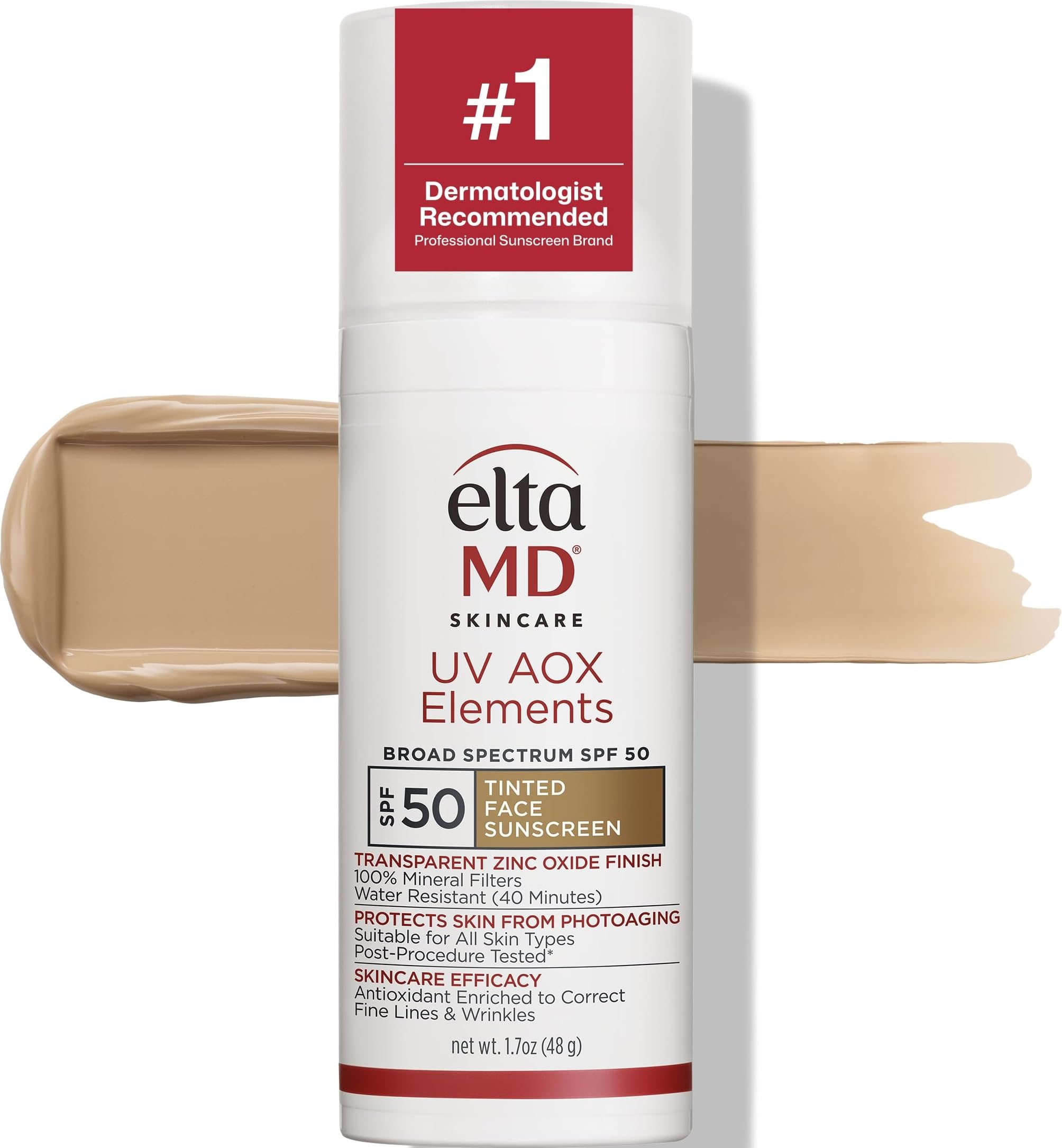
EltaMD UV AOX Elements SPF 50

93 /100
Trail Score Outstanding

Key details

SPF
50
Size
1.7 oz
Skin Types
Dry, combination, sensitive
Active Filters
Titanium dioxide, zinc oxide
Check Price on Amazon

SPF 50 from two mineral filters, in a tinted cream that blurs rather than ghosts — this is the tube we reach for when we want protection that also makes our skin look better than it did a minute ago. Titanium dioxide and zinc oxide do all the UV work, and the tint solves the white-film problem that makes most mineral formulas a chore to wear.

Coverage is where it pulls ahead. It softens redness around the nose and evens tone without reading as foundation, and it sits under a base when we do wear one. The texture is a cream rather than a fluid, and it covers a full face with less product than expected.

Hydration is the other half of the pitch: hyaluronic acid, bisabolol and ginger root extract make it feel like a moisturizer going on, so dry and combination skin can skip a separate cream in summer. It is fragrance-free and oil-free, and the finish stays comfortable rather than tight through an afternoon indoors.

The pump is a small thing we ended up caring about. A measured dose makes it easier to apply enough, and applying enough is where mineral sunscreen usually fails — thin formulas get sheered out to a fraction of a full dose and the label number stops meaning much. That detail is what turns a good formula into a daily habit.

Pros

  • SPF 50 from zinc oxide and titanium dioxide
  • Tint blurs redness instead of leaving a cast
  • Hyaluronic acid and antioxidants for dry, sensitive skin
  • Measured pump makes a full dose easy

Cons

  • Single tint that skews dark on fair skin
  • Premium price for 1.7 ounces
Our verdict

This is the mineral sunscreen we recommend first: SPF 50, a tint that blurs instead of ghosting, and enough hydration to replace a morning moisturizer.

Check Latest Price
2

Best Matte Finish

TIZO3 Facial Mineral Sunscreen SPF 40

95 /100
Trail Score Outstanding

Key details

SPF
40
Finish
Sheer tint, matte
UVA Rating
PA+++
Water Resistance
80 minutes
Check Price on Amazon

Matte is the word that separates TIZO3 from nearly everything else in this group. Where most mineral sunscreens leave a sheen you have to powder down, this one dries to a silky, almost powdery finish — the reason it is sold as a primer as much as a sunscreen.

That finish is why we like it for oily and combination skin, and for anyone who wears foundation. The sheer tint evens tone without fighting a base, and makeup stays where you put it instead of sliding by early afternoon. It also carries a PA+++ UVA rating and 80 minutes of stated water resistance, more than most picks here can claim.

A little goes a long way, which takes some of the sting out of the price, and there is no fragrance or oil in it. Dry skin is the exception — the finish holds no moisture at all, so put a cream underneath and it behaves. Give it a minute to set before foundation; that is when the primer effect shows up.

Pros

  • Silky matte finish doubles as a primer
  • PA+++ UVA rating and 80-minute water resistance
  • Sheer tint evens tone without a cast
  • Fragrance-free and oil-free

Cons

  • One sheer tint built for light to medium skin
Our verdict

We point anyone who wears foundation, or fights shine by noon, to TIZO3 — it is the only pick here that states 80 minutes of water resistance.

Check Latest Price
3

Best Budget

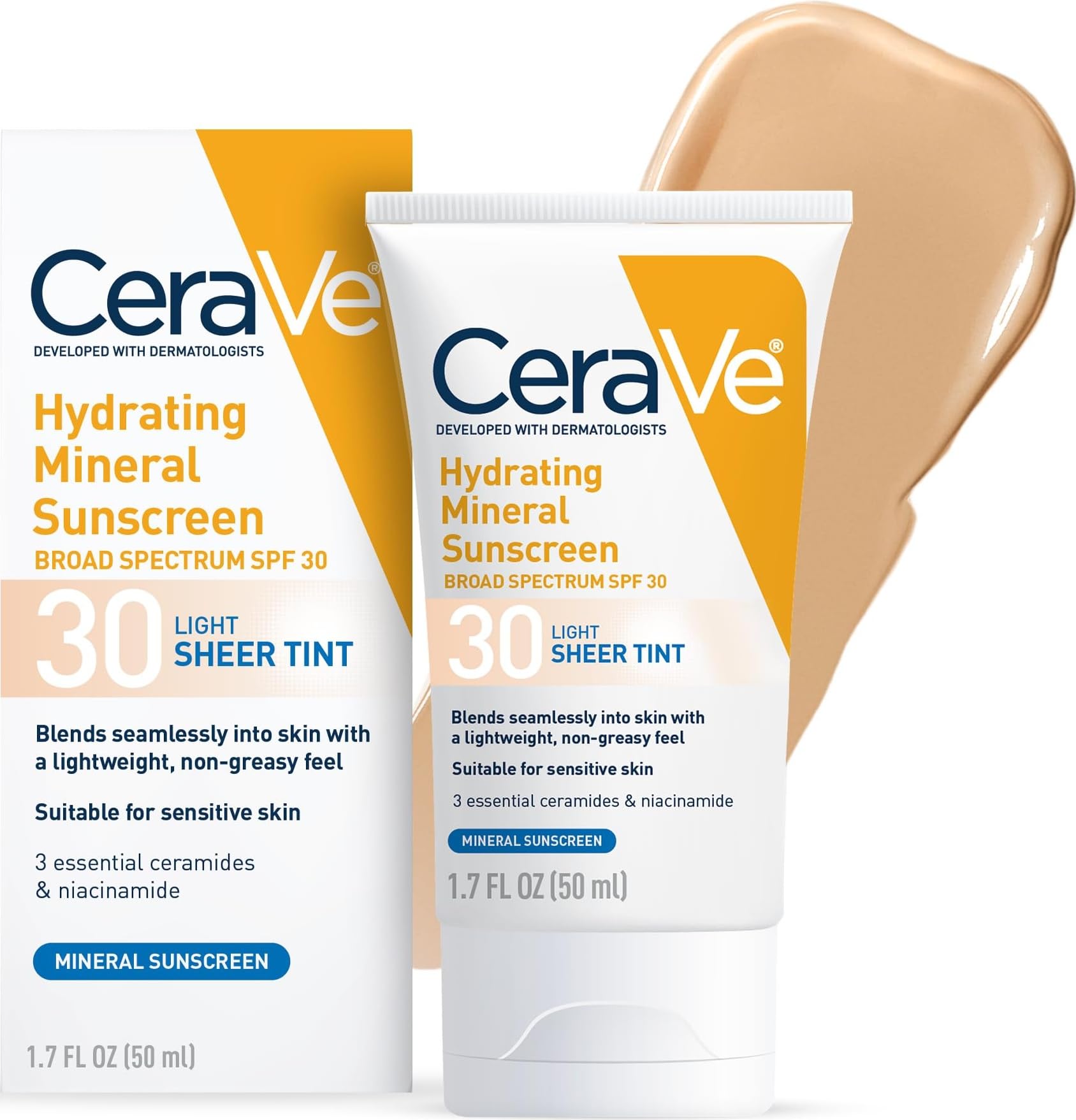
CeraVe Tinted Mineral Sunscreen SPF 30

89 /100
Trail Score Excellent

Key details

SPF
30
Size
1.7 oz
Shades
3 tinted shades
Active Filters
Zinc oxide, titanium dioxide
Check Price on Amazon

Three tinted shades, iron-oxide pigments and a drugstore price — this is the one we point to when someone wants to try a tinted mineral sunscreen without gambling much. All three are built to leave a glow rather than a white film, and the lightest still reads warm, so very fair or cool-toned skin should see the color in person before committing.

The formula is a moisturizer with SPF first: niacinamide, three ceramides and hyaluronic acid, with SPF 30 from zinc oxide and titanium dioxide. It spreads quickly and a little covers the face, which is why the tube lasts longer than the price suggests.

For dry and normal skin it is an easy daily default, and the coverage is honest about what it is: closer to a tinted moisturizer than a foundation, enough to even things out, not enough to hide a blemish. Set expectations there and it is the strongest value in this guide.

Pros

  • Three shades with iron-oxide pigments
  • Niacinamide, ceramides and hyaluronic acid
  • Least expensive tinted formula in this group
  • Spreads easily under makeup

Cons

  • Can feel greasy in heat and humidity
  • Tint can transfer onto clothing
Our verdict

The lowest-cost way into a tinted mineral sunscreen, and one we are happy to use daily on dry or normal skin.

Check Latest Price
4

Best for Oily, Sensitive Skin

EltaMD UV Physical SPF 41

91 /100
Trail Score Outstanding

Key details

SPF
41
Tint
Lightly tinted, fair to medium tones
Active Filter
Zinc oxide
Water Resistance
40 minutes
Check Price on Amazon

Water resistance is the reason to pick this one. The UV Physical states 40 minutes of it, the formula is built for oily and sensitive skin, and the zinc oxide sits light enough that we forget it is there — not something we say often about a mineral cream.

The tint is light and leans fair to medium. It evens redness and takes the edge off a cast without reading as makeup, and the finish is natural rather than dewy, so combination skin does not turn shiny by lunch.

Compared with the UV AOX Elements, this is the more utilitarian formula: less hydration, less glow, better suited to a hot day and a sweaty forehead. It is fragrance-free, it stays comfortable as it migrates toward the eyes, and it layers under makeup without pilling. If you want one tube for a beach week and a work week, this covers both better than most.

Pros

  • 40 minutes of stated water resistance
  • Natural, semi-matte finish for oily skin
  • Light tint evens redness without makeup
  • Fragrance-free and comfortable around the eyes

Cons

  • Tint built for fair to medium skin tones
Our verdict

Our choice for oily, sensitive skin that needs sunscreen to survive sweat: 40 minutes of water resistance and a light, fair-to-medium tint.

Check Latest Price
5

Best Full-Coverage Finish

Colorescience Face Shield Flex SPF 50

91 /100
Trail Score Outstanding

Key details

SPF
50
Size
1.8 oz
UVA Rating
PA++++
Active Filter
Zinc oxide
Check Price on Amazon

The Flex starts white and changes as you blend — iron oxide pigments bloom into a tint on contact, which sounds like a gimmick until you watch it even out a red patch. Worn alone, it covers more than any other tinted pick in this guide.

Coverage is the thing we appreciated most, because it is controllable. One thin layer reads as skin; two give a demi-matte finish that genuinely replaces foundation, and neither needs powder on top. For anyone who wants sunscreen to be their base, this is the most convincing option in the group.

Underneath, it is zinc oxide at SPF 50 with a PA++++ rating, water and sweat resistant, and free of chemical filters — a serious protection profile for something that behaves like cosmetics. The bottle is small but three thin lines cover a full face, so a tube outlasts its size.

Through a workout and a humid afternoon it holds better than the tinted moisturizers here, and a second layer goes on without caking. That is the difference between a base and a sunscreen that merely looks like one.

Pros

  • Tone-adapting tint covers redness and blemishes
  • SPF 50 with a PA++++ rating
  • Water and sweat resistant
  • Holds up through a long day

Cons

  • Tint can pull orange on cool undertones
  • Dries tight on dry or flaky skin
Our verdict

Worth the splurge if you want your sunscreen to be your base — the tone-adapting tint covers more than anything else here.

Check Latest Price
6

Invisible Finish

ISDIN Eryfotona Actinica SPF 50+

91 /100
Trail Score Outstanding

Key details

SPF
50+
Finish
Untinted
Skin Types
All skin types and tones
Active Filter
Zinc oxide
Check Price on Amazon

Some people do not want coverage at all, and this is the pick for them. The Eryfotona Actinica goes on nearly clear, layers under anything, and is thin enough that you forget it is there — rare for a zinc-only formula.

Zinc oxide at SPF 50+, an ultralight emulsion, and a formula aimed at skin that already has sun damage; the photolyase story is about repairing visible signs of accumulated sun, which is why it turns up in dermatology offices. The repair claim is the story. The texture is the reason to buy: it absorbs in seconds and leaves no greasy film.

If your priority is a sunscreen you will reapply because it feels like nothing, this is the one. Fair skin should build it in thin layers and let each settle — the cast shows up when you put a full dose on at once, and a full dose is what the stated protection assumes. Two thin passes beat one thick one.

Pros

  • Ultralight, non-greasy finish
  • SPF 50+ from zinc oxide alone
  • Layers under makeup without pilling
  • Fragrance-free

Cons

  • Premium price for a daily staple
Our verdict

The pick for anyone who hates the feel of sunscreen: an untinted, ultralight zinc formula that layers under everything.

Check Latest Price
7

Dry, Mature Skin

ALASTIN HydraTint Pro SPF 36

92 /100
Trail Score Outstanding

Key details

SPF
36
Form
Mineral lotion
Size
3.2 oz
Finish
Sheer tint
Check Price on Amazon

The tube is the first thing you notice: 3.2 ounces, close to double most of the bottles here, which changes the arithmetic on a premium sunscreen.

It is a sheer tinted lotion at SPF 36 — below most of this group — with a finish that evens tone and leaves skin looking healthy rather than made up. Coverage is light but real: redness and unevenness soften, and it does not settle into fine lines the way heavier tinted formulas do.

Texture is soft, it absorbs quickly, and it does not look cakey when you build a second layer. It is built for skin that wants moisture and polish at once, which makes it a natural fit for mature skin and anyone whose foundation has started to feel like too much.

Where it earns its place is the size-to-price math: cost per ounce lands close to tubes holding half as much, and a tube used daily lasts accordingly. If you have been nursing a tiny tinted sunscreen and resenting it, this is the fix.

Pros

  • 3.2-ounce tube, the largest here
  • Sheer tint evens tone without foundation
  • Does not settle into fine lines or cake

Cons

  • SPF 36 sits below most of this group
Our verdict

A large, elegant tube for mature skin that wants moisture and a sheer tint, as long as SPF 36 is enough for your day.

Check Latest Price
8

Shade Range

La Roche-Posay Anthelios Mineral Light Fluid

89 /100
Trail Score Excellent

Key details

Size
1.8 oz
Finish
Tinted matte
Shades
4 shades
Active Filter
Titanium dioxide
Check Price on Amazon

Four shades is the headline, and it is a real one: the Anthelios Mineral comes in Tinted, Medium, Medium-Deep and Deep, more choice than anything else here. For medium and deeper skin tones tired of a single universal tint, that alone earns a look.

The fluid itself is genuinely light — it absorbs fast, leaves a tinted matte finish, and does not aggravate oily or breakout-prone skin. Of everything here, it is the one that feels most like a chemical sunscreen and least like a mineral one.

The catch is the scent. It is noticeable on application and it lingers, which is an odd choice for something you wear on your face every day. If fragrance in skincare bothers you, or your skin reacts to it, this one asks you to compromise on something the others do not.

Where that leaves it: the best shade range in this guide for anyone whose problem is matching, and a good fluid for oily skin. If scent is the thing that stops you, the ISDIN Eryfotona Actinica gives you a light, untinted feel without it.

Pros

  • Four shades, including Medium-Deep and Deep
  • Lightweight fluid that absorbs fast
  • Tinted matte finish for oily, breakout-prone skin

Cons

  • Tint runs dark on fair skin
Our verdict

The shade range is the reason to buy: four tints, including Medium-Deep and Deep, on a light fluid that suits oily skin.

Check Latest Price
9

Touch-Ups

CeraVe Mineral Sunscreen Stick SPF 50

91 /100
Trail Score Outstanding

Key details

SPF
50
Size
0.47 oz
Format
Stick
Active Filters
Zinc oxide, titanium dioxide
Check Price on Amazon

A 0.47-ounce stick that lives in a coat pocket is a different product from a pump bottle on a bathroom shelf, and that is exactly why this one made the list.

The format is the argument. Reapplication is the weakest link in every sunscreen routine, and a stick removes most of the friction: no hands, no mirror, no excuse. It is SPF 50 from zinc oxide and titanium dioxide, water resistant, and small enough to forget you are carrying it.

Application takes a moment to learn. Warm the stick against skin for a beat before dragging, or it tugs in cool weather, and pat it over makeup rather than swiping, or it takes the base with it.

It is also the easiest way to get protection onto someone who will not stand still, which is why it turns up in beach bags as often as in pockets.

As a top-up, we are glad to have it. A stick you actually carry beats a lotion you left at home, and that is the whole case: keep a bottle for the morning application and this for everything after.

Pros

  • Fits in a pocket for reapplication
  • SPF 50 with both mineral filters
  • Water resistant and easy to apply on the move

Cons

  • Noticeable white cast on deeper skin
  • Runs out fast if used as a primary sunscreen
Our verdict

Buy it as a top-up, not a primary: the format is what makes reapplication actually happen.

Check Latest Price

How We Tested the Best Mineral Sunscreens for Face

We built the shortlist by scanning ingredient lists for zinc oxide or titanium dioxide as the active filters, then cross-checking broad-spectrum SPF 30 or higher. Customer reviews helped us flag the formulas that tended to leave a white cast, feel greasy, or irritate sensitive skin. After that filtering, 16 sunscreens made the cut for four months of testing.

Each formula went home with a tester for at least a week. Our panel covered dry, oily, and sensitive skin across a range of skin tones, and we wore the sunscreens through morning routines, commutes, lunchtime reapplications over makeup, and a couple of long weekend hikes. We noted whether skin felt moisturized or tight by afternoon, whether shine built up on the forehead and nose, and whether anyone burned during extended time outside.

Application was judged by how easily each formula spread, whether it pilled under foundation, and how it behaved when reapplied over makeup. We checked white cast in daylight and in phone photos, and asked testers with deeper skin tones whether the tint blended or turned ashy; coverage counted only if redness looked softened rather than masked. We tracked how far a tube went with daily use, and washed swatches with collars and towels to see whether any formula left a yellow stain. The last question was the most telling: which tube did we reach for without thinking?

How to Choose a Mineral Sunscreen for Your Face

Read the Active Ingredients, Not the Front Label

Mineral on the front of a bottle does not guarantee a physical-only formula, so turn it over. A true mineral sunscreen lists zinc oxide, titanium dioxide, or both as its UV filters, with no avobenzone, oxybenzone, or octinoxate alongside. Zinc oxide covers a broader stretch of UVA on its own, while titanium dioxide is stronger against UVB and leaves less of a cast at high SPF.

Formulas that use both, like the EltaMD UV AOX Elements, can reach SPF 50 with less white film than a zinc-only product, though zinc-only picks such as the ISDIN Eryfotona Actinica manage a remarkably light finish too. Read the actives list before you read the claims.

A Universal Tint Is Never Universal

Single-tint products are the biggest source of disappointment in this category. A warm tint aimed at medium skin can turn orange on a cool, fair complexion, and the same tint can read chalky or grey on deeper ones. If your skin sits at either end of the range, buy into a shade line or a tone-adapting formula.

The La Roche-Posay Anthelios Mineral offers four shades, including Medium-Deep and Deep, and the Colorescience Face Shield Flex adapts as you blend. If you land in the middle of the range with neutral undertones, a single sheer tint is a reasonable gamble.

Match the Finish to Your Skin, Not the Season

Finish decides whether you will wear the stuff. Matte, primer-like formulas such as TIZO3 and the EltaMD UV Physical keep shine down and hold makeup, which makes them the better call for oily and combination skin. Creamier, hydrating formulas like the UV AOX Elements or the ALASTIN HydraTint suit dry and mature skin and can replace a morning moisturizer.

The trap is reading lightweight as oil control. A fluid can feel weightless and still leave a shine by noon, so choose on the finish you want to see in the mirror at three o'clock.

Water Resistance and Honest Reapplication

Stated water resistance here runs from 40 minutes to 80, and it measures swimming and sweating rather than a full day. Whatever you buy, plan to reapply every two hours outdoors, which is a format question as much as a formula one.

A stick like the CeraVe Mineral Sunscreen Stick makes a midday top-up realistic in a way that a pump bottle in a bathroom cabinet never will be. Buy the format you will actually carry, and keep the elegant tube for the morning application.

What the Price Actually Buys

Mineral formulas cost more than chemical ones because the filters are expensive and harder to make elegant. The gap between a budget tube and a premium one is mostly texture, tint, and how the product wears over a long day, not protection.

Cost per ounce matters more than the sticker on the shelf. A 3.2-ounce tube like the ALASTIN HydraTint works out close to the smaller bottles here, while a cheap tube you abandon after a week is the expensive outcome.

Frequently Asked Questions

Final Verdict

We recommend the EltaMD UV AOX Elements as the default: two mineral filters at SPF 50, a tint that blurs rather than ghosts, and a hydrating base that lets dry or sensitive skin skip a separate cream.

Change the pick when the requirement changes. If it has to survive a pool or a sweaty commute, TIZO3 and its 80-minute water resistance are the better buy. Shopping on a budget, or unsure whether you even like tint? Start with the three-shade CeraVe Tinted and learn your preference before spending more.