Best Magnesium Supplements of 2026

Magnesium is the rare supplement where the form on the label matters as much as the milligrams. Magnesium oxide is cheap and common, but it can also be the reason you spend the night in the bathroom instead of asleep. The right pick depends on what you want it to do—wind down, recover after a workout, or stay regular—and how much pill you're willing to swallow. It's the mineral your body uses for muscle relaxation, sleep, and hundreds of other jobs, but the bottle in front of you is where most people get stuck.

Over the past four months, I've tested 14 magnesium supplements—powders, capsules, and gummies—alongside my team, paying attention to effectiveness, sleep quality, relaxation, and overall quality, not just the label claim. We also weighed value: how many servings you actually get, and whether a pricier bottle earns its keep. Some formulas were gentle and easy to swallow; others were a bedtime gamble. The ones that made the list are the ones I kept reaching for after the four months were up.

1

Best Overall

NatureBell Magnesium Glycinate

95 /100
Trail Score Outstanding

Key details

Count
240 veggie capsules
Serving
1 capsule daily
Elemental Dose
90 mg per capsule
Magnesium Form
Glycinate
Check Price on Amazon

Read the back of the NatureBell bottle before the front. The front says 500 mg; what the capsule actually delivers is 90 mg of elemental magnesium, because the rest of that 500 mg is the glycine the mineral is bound to. That isn't a trick — it's how glycinate is measured — but 90 mg is the number that counts toward your day, and this is the one bottle here that prints both figures side by side.

That clarity is a big part of why it's our top pick. The other part is dose control: at 90 mg a capsule you can take one as a light daily top-up, or two or three if you're aiming at the 300 to 400 mg a full day's magnesium runs to. Two before bed is where we landed, and it's the bottle that stayed on the nightstand.

The capsules are easy to swallow, with one caveat we found the hard way: don't let one sit on your tongue. There's a faint chemical taste if you do, and none at all if you just drink.

Two hundred and forty capsules is up to eight months at one a day and four at the two-capsule dose, which puts the cost per day below most of this group. Glycinate is the gentlest common form, though it isn't invisible — some people still get an unsettled stomach from it, and starting at one capsule for the first week is the cheap way to find out whether you're one of them.

Pros

  • Elemental dose printed next to the compound weight
  • Gentle glycinate form
  • 240 capsules lasts months
  • Capsules are easy to swallow

Cons

  • Only 90 mg elemental per capsule, so higher doses mean several capsules
Our verdict

For most people, this is the bottle: a gentle glycinate that prints its true elemental dose, in a supply that lasts months.

Check Latest Price
2

Best Clean-Label Pick

Pure Encapsulations Magnesium Glycinate

95 /100
Trail Score Outstanding

Key details

Count
180 capsules
Free From
Common allergens, artificial ingredients, GMOs
Magnesium Form
Glycinate
Check Price on Amazon

This is the most expensive bottle here, and it's worth being clear about what that money buys: a capsule with almost nothing in it but magnesium glycinate. No fillers, no artificial ingredients, none of the common allergens that turn up in cheaper formulas, and a small capsule that's easy to take last thing at night. If your reason for buying a premium brand is a shorter ingredient list, this is the one that justifies it.

Sleep is where it earns its reputation in our use — this is the bottle we reach for when winding down matters more than milligrams per dollar. The capsule is small enough to take with a sip of water at bedtime, and it leaves no taste behind.

What it doesn't do is make the per-milligram arithmetic look good. There's no big milligram number on the front, so you'll be reading the supplement facts panel to work out what you're taking, and per capsule it's the priciest formula in this group. That's the whole trade: you're paying for what's left out, not for how much magnesium is in the bottle.

Pros

  • Shortest ingredient list here
  • Small, easy-to-take capsule
  • Strong record on sleep and relaxation

Cons

  • Heartburn and headaches for some
Our verdict

Buy it if a clean formula matters more than cost per milligram — it's the most stripped-back glycinate here.

Check Latest Price
3

Best One-Tablet Dose

Nature's Bounty Magnesium 500 mg

95 /100
Trail Score Outstanding

Key details

Dose
500 mg per tablet
Count
200 coated tablets
Serving
1 tablet daily
Daily Value
119% per tablet
Check Price on Amazon

Two hundred tablets at one a day is a bottle that outlasts most New Year's resolutions: better than six months from a single container, and no decision to make beyond filling a glass of water.

The dose is the headline. Each tablet carries 500 mg, 119 percent of the daily value, so one tablet clears a full day's magnesium with room to spare. If you were aiming for 200 or 300 mg, this is more than you're after in a single swallow.

Leg cramps and sleep are where it has built its following, and the numbers are hard to argue with: this is the lowest cost per tablet in this group, and the coating does help it go down. Six months of nights from one bottle is a genuine convenience if you're the type to run out and forget to reorder.

Where that leaves us: buy it if you want a plain, high-dose daily tablet at the lowest cost per tablet here and don't need the packaging to be pretty. If a sensitive stomach has pushed you toward chelated glycinate, start with one of the others — this one is about volume and value, not finesse.

Pros

  • One tablet covers 119% of the daily value
  • 200-count bottle lasts over six months
  • Lowest cost per tablet here

Cons

  • Large tablet for some to swallow
  • Tablets aren't scored, so splitting takes a knife
Our verdict

The value pick for a high daily dose: one coated tablet covers a full day's magnesium at the lowest cost per tablet here.

Check Latest Price
4

Best Powder

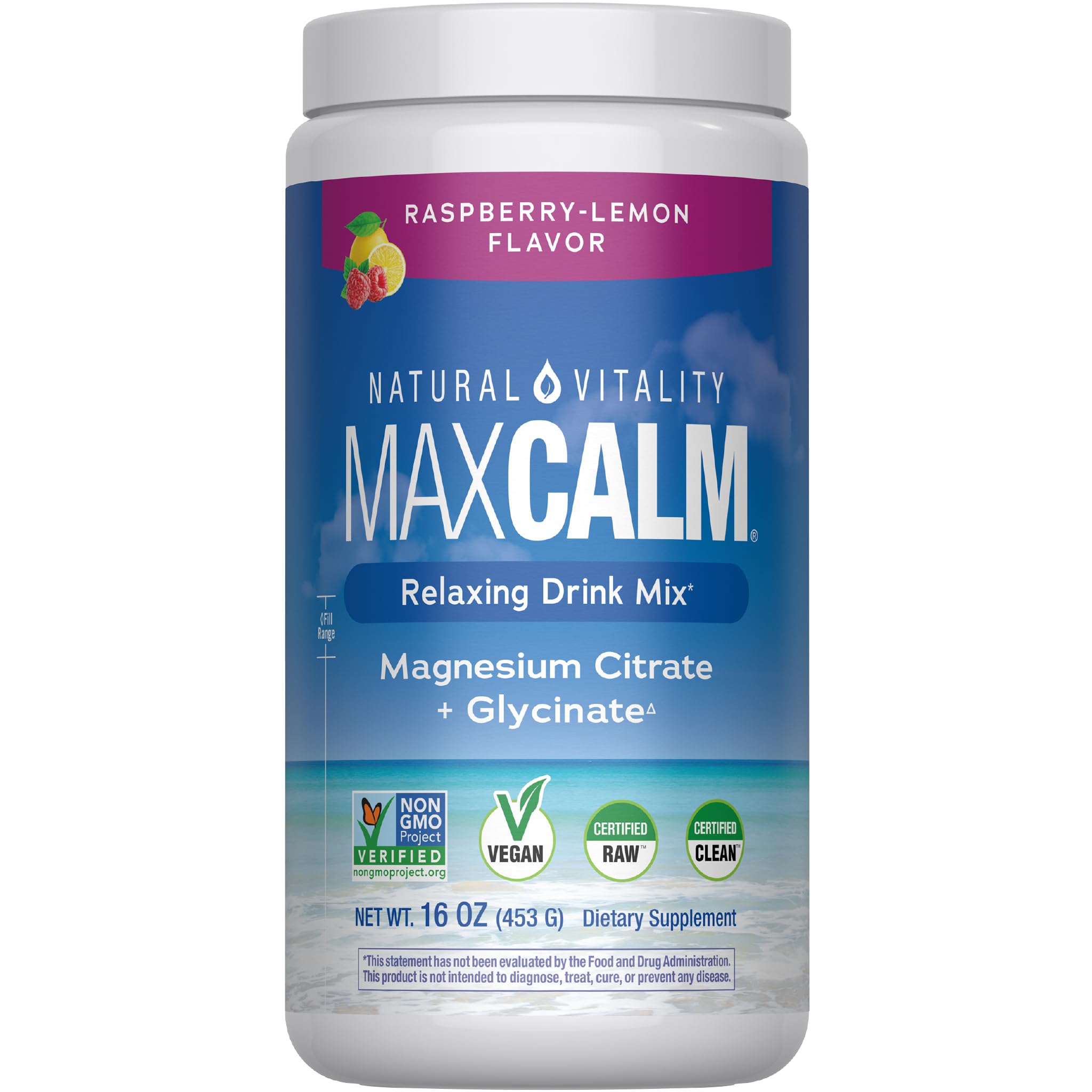
Natural Vitality Calm Powder

93 /100
Trail Score Outstanding

Key details

Size
16 oz
Flavor
Raspberry lemon
Format
Powder
Check Price on Amazon

Magnesium as a drink rather than a pill: a scoop of raspberry-lemon powder stirred into water, usually an hour or so before bed. The taste surprised us — tangy rather than chalky, closer to a soft drink than a supplement, which is not something we expected to say about a mineral.

Powder earns its place for two reasons. It's the answer for anyone who has given up on capsules, and a drink is easier to build into an evening than a pill bottle is. The dose is adjustable in a way a capsule isn't, too: half a scoop on a quiet night, a full one when you've been sleeping badly.

The ritual is where it wins. A drink you look forward to is easier to keep up than another tablet, which makes this our pick for anyone who has bought magnesium twice and stopped taking it both times. The catch is in the scoop, because powder makes it easy to take more than you meant, and magnesium at higher doses pulls water into the bowel. Start below the label scoop and work up over a week.

It's also the wrong tool if you want to know exactly how many milligrams you took; a capsule answers that better. And if a sweet drink at bedtime sounds like a chore rather than a treat, you'll resent the ritual instead of keeping it.

Pros

  • Genuinely good raspberry-lemon flavor
  • Adjustable dose in a drink
  • Best option for anyone who won't take pills

Cons

  • Scoop dosing is less precise than a capsule
Our verdict

If you've never managed to keep a magnesium habit going, this powder is the version you'll actually take.

Check Latest Price
5

Best Budget

Life Extension Magnesium Caps

95 /100
Trail Score Outstanding

Key details

Dose
500 mg per capsule
Count
100 vegetarian capsules
Magnesium Forms
Oxide, citrate, succinate
Check Price on Amazon

Five hundred milligrams of magnesium in one small capsule is a lot of mineral in a single swallow, and it gets there with three salts at once — oxide, citrate and succinate. That's why it's the budget pick here: one capsule covers a full day's magnesium, and the bottle is the cheapest in this group.

The blend is worth understanding before you buy. Oxide is the workhorse — compact, cheap, and the form most likely to loosen your stools. Citrate is well absorbed but pulls water into the bowel, which is either the point or the problem depending on why you're taking magnesium. Succinate is the rarer third, there to round the formula out.

Taken daily, one capsule is a full day's requirement and the bottle runs a little over three months. If your gut has handled magnesium without complaint before, this is the least expensive way here to run a daily habit, and the capsule is small enough to take without a second thought.

Pros

  • A full day's magnesium in one capsule
  • Lowest bottle price here
  • Small, easy capsule

Cons

  • Oxide is the least absorbable of the common forms
Our verdict

The cheapest way here to get a full day's magnesium in one capsule, ideal if your stomach already tolerates oxide and citrate.

Check Latest Price
6

Best Citrate

NOW Magnesium Citrate

95 /100
Trail Score Outstanding

Key details

Count
240 veg capsules
Certifications
Kosher, vegan, non-GMO, halal, keto-friendly, soy-free
Magnesium Form
Citrate
Check Price on Amazon

The back of the NOW bottle reads like a checklist: kosher, vegan, halal, non-GMO, soy-free, keto-friendly, and made under an NPA A-rated GMP certification. For something you take every night, that's more useful than a marketing claim — it means the bottle fits almost any set of dietary restrictions in a household.

It's citrate, and that matters more than any of the copy. Citrate is well absorbed and pulls water into the bowel, which is why people reach for it when regularity is part of the goal and why it can catch you out when it isn't. If you've taken magnesium citrate before, you already know which way you'll land.

As a citrate, this is the one we point people to. Two hundred and forty capsules is a long supply, the certification list clears most restrictions, and the price sits in the middle of this group. Buy it because you want citrate; if you just want magnesium and nothing else, the glycinates here are gentler.

Pros

  • Kosher, vegan, halal, non-GMO and more
  • Citrate suits anyone chasing regularity
  • 240 capsules is a long supply

Cons

  • Large capsules are harder to swallow
Our verdict

The citrate to buy if regularity is part of why you're here, with a certification list that clears almost any diet.

Check Latest Price
7

Leg Cramps

Doctor's Best Magnesium Glycinate

93 /100
Trail Score Outstanding

Key details

Dose
200 mg per serving
Count
240 tablets
Magnesium Form
Glycinate lysinate
Check Price on Amazon

Chelated means the magnesium is bound to an amino acid — glycine and lysine here — so it arrives in the gut attached to something your body recognizes rather than as a bare mineral salt. The label claims up to six times better absorption, a figure printed without the comparison behind it; the part that matters in practice is that chelated forms tend to be gentler than oxide.

Cramps are where this one stands out. If leg cramps or restless legs are the reason you're shopping, it sits near the top of this group for exactly that, and 240 tablets at a mid-range price makes it a low-drama bottle to keep in the cabinet.

If you already take a chelated magnesium that agrees with you, there's no reason to switch. If you're moving off an oxide because it upset your stomach, this is the step most people take, and the tablet count gives you plenty of nights to decide whether it's working.

Pros

  • Chelated glycinate and lysinate, easy on the gut
  • Near the top of this group for cramp relief
  • Generous 240-tablet bottle

Cons

  • Large, uncoated tablets are hard to swallow
  • A 200 mg serving takes more than one tablet
Our verdict

When leg cramps are what brought you here, this chelated glycinate-lysinate has one of the strongest records in this group.

Check Latest Price
8

Trying a Blend

BioEmblem Magnesium Complex

93 /100
Trail Score Outstanding

Key details

Dose
300 mg per serving
Count
90 capsules
Testing
Third-party tested
Magnesium Forms
Glycinate, malate, citrate
Check Price on Amazon

Most of the picks here are one magnesium salt. BioEmblem's is three — glycinate, malate and citrate — at 300 mg of magnesium per serving. The pitch is that no single salt carries the whole dose, so you're not leaning entirely on one form's strengths or its weaknesses.

Whether a blend beats a single form is the real question. The argument for it is tolerance: if glycinate alone left you flat and citrate alone sent you to the bathroom, a mix spreads the load across three salts. It's also a reasonable bottle to try if you've never worked out which form suits you, with the caveat that you won't learn which one did what.

Sleep and muscle cramps are where this one performs best in our use, and the capsules are small enough to take without thinking about it. It's third-party tested, which is a meaningful line on a supplement label.

It earns its place if you've already tried a single form and want to see whether a blend treats you better. As a first bottle it asks a lot: you're paying for three forms before you know whether one would have done.

Pros

  • Three magnesium forms in one capsule
  • Third-party tested
  • Easy-to-swallow capsules
  • Strong on sleep and muscle cramps

Cons

  • Shortest supply here at 90 capsules
  • Nausea and heartburn for some
Our verdict

Worth trying if you've cycled through single-form magnesium supplements without settling on one; it's a considered buy, not a first bottle.

Check Latest Price

How We Tested Magnesium Supplements

We started with a shortlist of more than 40 bottles, then narrowed it by form (glycinate, citrate, oxide, threonate), elemental magnesium per serving, third-party testing, added ingredients, and price per serving. That left 14 supplements—capsules, gummies, and powders—which we tested for four months.

Each supplement got a two-week window in my nightly routine. I took it at the same time each evening, logged how quickly I fell asleep and how many times I woke up, and rated next-day relaxation and muscle soreness after workouts. I also noted whether a formula sent me to the bathroom within an hour or sat fine—digestive effects were the fastest way to knock a product out of contention.

For capsules, I measured pill length and tried each one with a normal sip of water; anything that needed more than that got marked down for swallowability. I counted the actual number of servings per bottle and compared cost per serving to see whether a higher price bought a better form or just prettier packaging. Every label was checked against the elemental magnesium dose and any third-party seal, because 500 mg of magnesium oxide is not the same as 500 mg of magnesium glycinate.

How to Choose a Magnesium Supplement

Read the elemental dose, not the front label

Magnesium is sold bound to something else — glycine, citric acid, oxygen — and the milligram figure on the front usually describes the whole compound. The figure that counts toward your daily needs is the elemental magnesium on the supplement facts panel. NatureBell prints both, 500 mg of glycinate and 90 mg of elemental magnesium, which is unusually clear; a 500 mg tablet of another form may be nearly all elemental magnesium by comparison.

Before you compare value, divide the price by the elemental magnesium you actually get per serving. A bottle that looks cheap per capsule can be the most expensive per milligram in the room.

Match the form to what you're taking it for

Glycinate is bound to glycine and is the gentlest of the common forms, which is why it's the one we start people on when sleep or a sensitive stomach is the reason they're shopping. Citrate is well absorbed but pulls water into the bowel — useful if regularity is part of the goal, inconvenient if it isn't. Oxide is cheap and compact but the least absorbable. The trap is reading a laxative effect as proof a supplement is working; it's proof of the form, not the benefit.

Blends hedge. If you don't know which form suits you, a glycinate is the safer first bottle. If you've already reacted badly to one form, a blend like BioEmblem's is a way to try something different without giving up on magnesium.

Count servings, not capsules

Bottle sizes are flattering by design. Supplements are sold by capsule count, but what you take is a serving, and a serving is often two capsules. Doctor's Best lists 200 mg per serving rather than per tablet, and NatureBell's 240 capsules are eight months at one a day but four at two.

Work it out before you buy: capsules per serving times servings per day. That number, not the count on the front, tells you what the bottle really costs you per month.

Pick a format you'll keep taking

A supplement only helps if you swallow it, which makes pill size a real buying criterion rather than a fussy one. Big uncoated tablets are the hardest to get down, small capsules and softgels the easiest, and a powder suits anyone who has quietly given up on pills.

The trap is the phrase easy to swallow, which every brand prints. If you already know big pills are a problem, buy a small count first or start with a powder like Calm rather than committing to a 240-tablet bottle you dread opening.

Frequently Asked Questions

Final Verdict

Most people asking this question want one bottle that's gentle, honest about its dose, and cheap enough to keep buying. That's NatureBell: 90 mg of elemental magnesium per capsule, printed next to the compound weight, in a form that's easy on most stomachs and a bottle that lasts months at either dose.

If a short ingredient list matters more than the per-milligram math, choose Pure Encapsulations. And if you've already given up on pills, Calm's raspberry-lemon powder is the one you'll actually keep taking.