Best Iron Supplements for Heavy Periods

Heavy periods turn iron into a math problem: you lose more, you need more, and the supplement meant to help can leave you constipated, nauseated, or tasting metal for hours. I’ve watched iron levels barely budge on a pill that looked fine on paper. What you want is something absorbable enough to matter, gentle enough to take daily, and easy enough to keep taking when your energy is already low. Over eight months, my team and I tested 14 iron supplements and tracked our routines, labs, and stomachs.

The difference wasn’t just milligrams. The ones we reached for had ingredients we could understand, a dose that slid into breakfast, and a taste—or lack of one—that didn’t make us dread the bottle. Some formulas were more effective for energy; others were gentler but still kept iron levels steady. Below, I’ll explain how we tested those tradeoffs, then get to the picks.

1

Best Overall

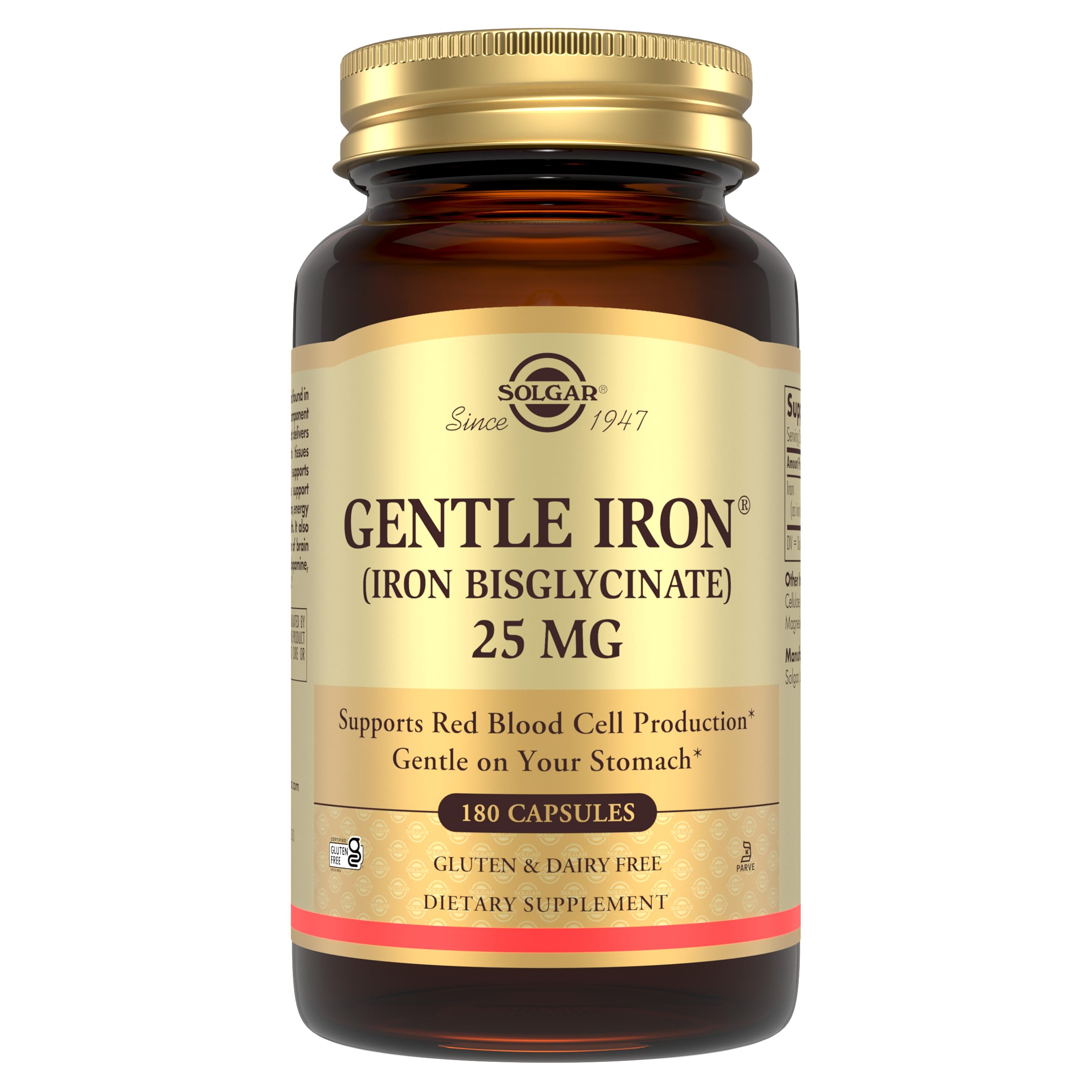
Solgar Gentle Iron 25 mg

95 /100
Trail Score Outstanding

Key details

Count
180 vegetable capsules
Iron Form
Patented gentle form
Iron Per Serving
25 mg
Check Price on Amazon

Every iron supplement is a trade between the dose that will move your numbers and the dose your stomach will accept for a week straight, and Solgar's 25 mg capsule lands nearer the middle of that trade than anything else here. That's why it leads. It's a small vegetable capsule that goes down with a swallow of water, and we noticed none of the metallic repeat that ferrous sulfate tablets leave behind half an hour later.

The bottle is where the practical advantage shows up. One capsule a day, 180 to a bottle, so a single purchase covers half a year of cycles and you're never hunting for a pharmacy the night before your period starts. It's built as a vegan capsule with no gluten, dairy, soy, or artificial colors, and it lands in the middle of the pack on cost per day — not the cheapest here, but a long way from the premium prices on this page.

What it won't do is carry a high-dose regimen. At 25 mg this is a moderate, sustainable dose; if a blood test has you on 65 mg a day, you need a different product, not two of these. The label also names a patented form of iron rather than spelling out the compound, which is less transparent than Thorne's plain "iron bisglycinate" on the front of the bottle. We'd have preferred the chemistry in print.

Pros

  • Gentle enough to take daily through a bleed
  • 180 capsules covers half a year of cycles
  • Small vegan capsule, easy to swallow
  • Midrange cost per day for a gentle form

Cons

  • 25 mg is a moderate dose, not a repletion one
  • Label names a patented form, not the compound
Our verdict

Our pick for most people: 25 mg is enough to matter and gentle enough to take every day of a bleed, and 180 capsules means one bottle lasts months.

Check Latest Price
2

Best Slow-Release

Slow Fe 45 mg

95 /100
Trail Score Outstanding

Key details

Count
60 tablets
Delivery
Controlled release
Iron Per Serving
45 mg
Check Price on Amazon

The tablets arrive in foil blister cards, and freeing one takes a thumbnail and some patience — it's the first thing we noticed and the only real annoyance in the box. Past that, the tablet is small, there's no iron taste to speak of, and the dose is the interesting part.

Slow Fe puts 45 mg of iron into a controlled-release tablet that delivers it gradually rather than dropping the whole dose into your stomach at once. That's the mechanism behind the fewer-digestive-side-effects claim on the box, and it's the reason this sits so usefully between the gentle 25 mg capsules and the 65 mg ferrous sulfate tablets: more iron than Solgar, far less of a jolt than Nature Made.

Forty-five milligrams is a sensible target for heavy periods that have left you properly depleted, which is where we'd place it — someone with a ferritin result in hand rather than someone topping up on a hunch. Sixty tablets is a two-month supply at one a day, so you'll reorder roughly every other cycle. We keep it because the release system does something the cheap tablets don't, and because nobody in our group had to stop.

Pros

  • Controlled release softens a mid-range dose
  • 45 mg sits between gentle and high potency
  • Small, tasteless tablet

Cons

  • Foil blister cards are fiddly to open
  • 60 tablets per box means frequent reordering
Our verdict

For anyone told to take more than a gentle capsule, this controlled-release 45 mg tablet is the step up that most people can keep taking.

Check Latest Price
3

Best with B12 and Folate

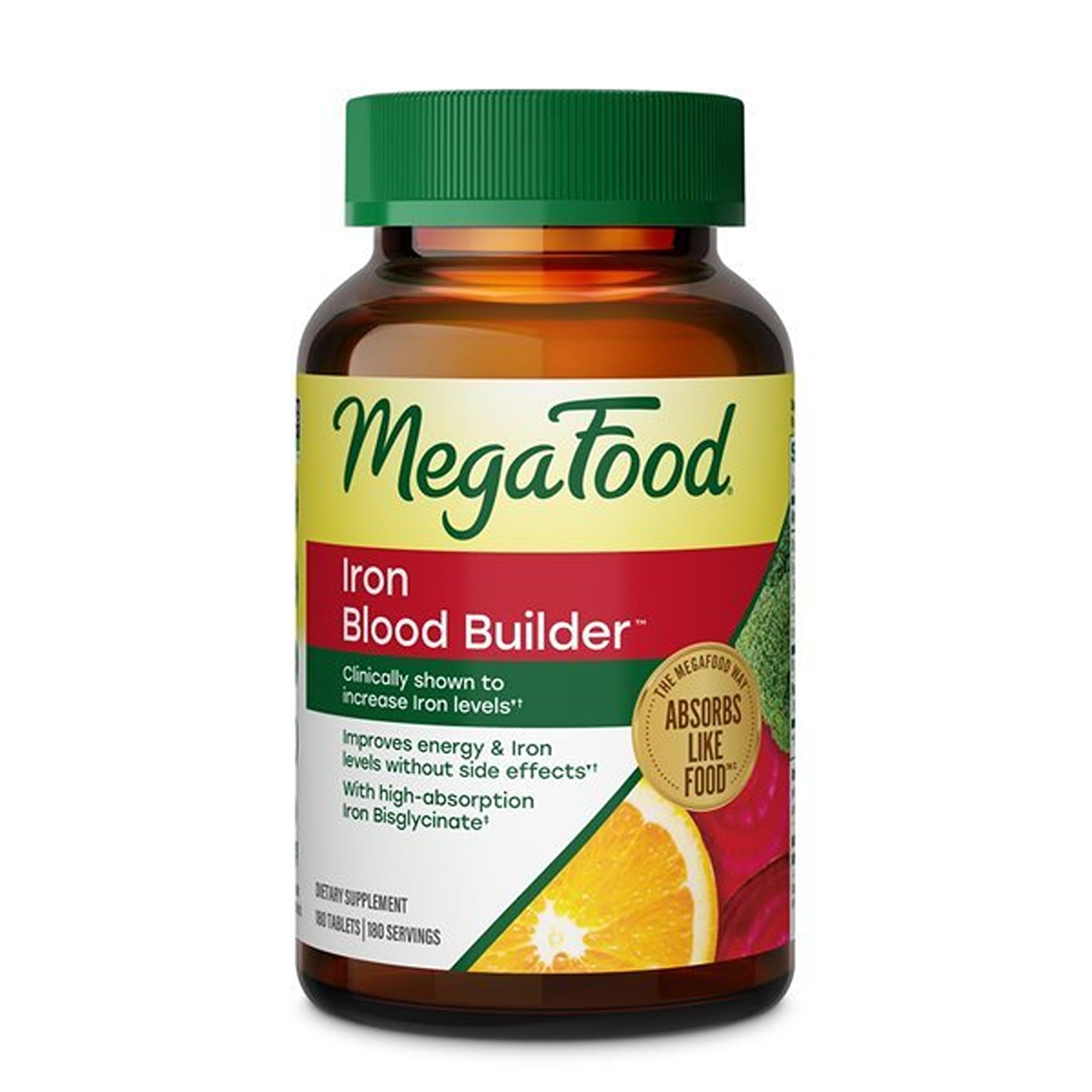
MegaFood Blood Builder

93 /100
Trail Score Outstanding

Key details

Count
180 tablets
Added Nutrients
Folic acid and B12
Iron Per Serving
26 mg
Check Price on Amazon

MegaFood prints an eight-week clinical trial on the label: Blood Builder was shown to raise iron levels without GI side effects like nausea or constipation. You're taking a manufacturer's claim on a manufacturer's word, as with any label, but it's a specific one rather than a vague "gentle" badge, and the formula behind it is unusual — 26 mg of iron plus folic acid and B12, the nutrients your body needs to build red blood cells rather than just absorb the mineral.

What sold us is the flexibility. This is designed to be taken any time of day with a beverage, even on an empty stomach, and empty-stomach iron is exactly where most people get into trouble. Being able to take it when you remember rather than building a meal around it is what turns a supplement into a routine, and it's the reason we hand this to readers who have quit iron over nausea before.

You pay for that. It's the most expensive product per tablet here by a clear margin, and 180 tablets is a six-month supply you're buying all at once. Taste is the other honest note: there's a mineral edge that becomes noticeable if you let the tablet sit, and it goes down more easily with juice than with plain water. One tablet a day and no separate B-vitamin pill is a real simplification, though, and for a lot of people that's the difference between finishing the bottle and not.

Pros

  • Label says it can be taken without food
  • Iron plus B12 and folate in one tablet
  • Formula aimed at menstruating women

Cons

  • Most expensive per tablet in this group
  • Metallic taste some people notice
Our verdict

The one-tablet, no-planning option: 26 mg of iron with B12 and folate, designed to be taken with or without food, for people whose problem is nausea.

Check Latest Price
4

Best Third-Party Tested

Thorne Iron Bisglycinate

95 /100
Trail Score Outstanding

Key details

Count
60 capsules
Iron Form
Iron bisglycinate
Iron Per Serving
25 mg
Check Price on Amazon

There's a certification on this label that none of the other bottles here carry: NSF Certified for Sport, which means the contents were tested against the label and screened for roughly 300 substances banned in competition. If you're a tested athlete, that ends the conversation. If you're not, it still tells you someone outside the company verified that 25 mg is 25 mg, which is more than most supplement labels offer.

The iron itself is bisglycinate, named plainly rather than dressed up as a proprietary blend — a chelated form that has been one of the two gentlest things in our testing, alongside Solgar. Twenty-five milligrams a capsule, one a day, small enough to swallow without drama and with no iron aftertaste that we could detect. If ferrous sulfate has sent you running for a stool softener, this is the kind of switch worth making.

The trade is quantity and packaging. Sixty capsules is two months, which makes it the priciest per day of the 25 mg options, and the bottle arrives roughly half empty — a lot of plastic for a small amount of product. We minded that more than we expected to, given the price. Buy it for the certification and the named compound; don't buy it expecting a bargain.

Pros

  • NSF Certified for Sport testing
  • Bisglycinate named plainly on the label
  • Small capsule with no aftertaste

Cons

  • Highest cost per day of the 25 mg picks
  • Bottle is far larger than 60 capsules need
Our verdict

The bottle to buy if you want independent testing and the compound named on the front; 25 mg of bisglycinate that behaves itself.

Check Latest Price
5

Best Budget High-Potency

Nature Made Iron 65 mg

95 /100
Trail Score Outstanding

Key details

Count
180 tablets
Iron Form
Ferrous sulfate (325 mg)
Iron Per Serving
65 mg
Check Price on Amazon

Sixty-five milligrams of elemental iron from 325 mg of ferrous sulfate is the dose most iron tablets get measured against, and Nature Made sells it for less per tablet than anything else on this page. One hundred eighty tablets to a bottle, one a day, which works out to roughly a year of cycles. If you want the most iron for the least money, the arithmetic here is not close.

The label's instruction to take it with water and a meal is doing real work rather than covering the lawyers. Ferrous sulfate on an empty stomach is the classic route to twenty minutes of queasiness, while with food it's manageable at the cost of a little absorption. Take it at breakfast and don't chase it with coffee — the tannins compete with the iron you just paid for.

The tablets themselves are small and coated enough to go down easily, with no synthetic dyes and no gluten. What you don't get is any tailoring or any gentleness in the formulation: it's a straightforward ferrous sulfate tablet, and that's the whole design. The big bottle is a commitment too — 180 tablets is a lot to have on the shelf if you turn out not to get along with the form.

This is the bottle we'd hand to someone who has taken ferrous sulfate before and knows it suits them, especially if they've been told to hit a higher daily number. If you've never taken iron, start with one of the gentler picks and come back here only if you need more horsepower. Ferrous sulfate at this dose is the one that tends to remind you it's working.

Pros

  • Full 65 mg dose at the lowest cost per tablet
  • 180 tablets is roughly a year of cycles
  • Small tablets with no synthetic dyes

Cons

  • Ferrous sulfate is the hardest form here on a stomach
  • Fixed 65 mg per tablet with no smaller option
Our verdict

The high-dose workhorse: 65 mg of ferrous sulfate, 180 tablets, and the lowest cost per tablet here — buy it if iron has never bothered you.

Check Latest Price
6

Best Liquid

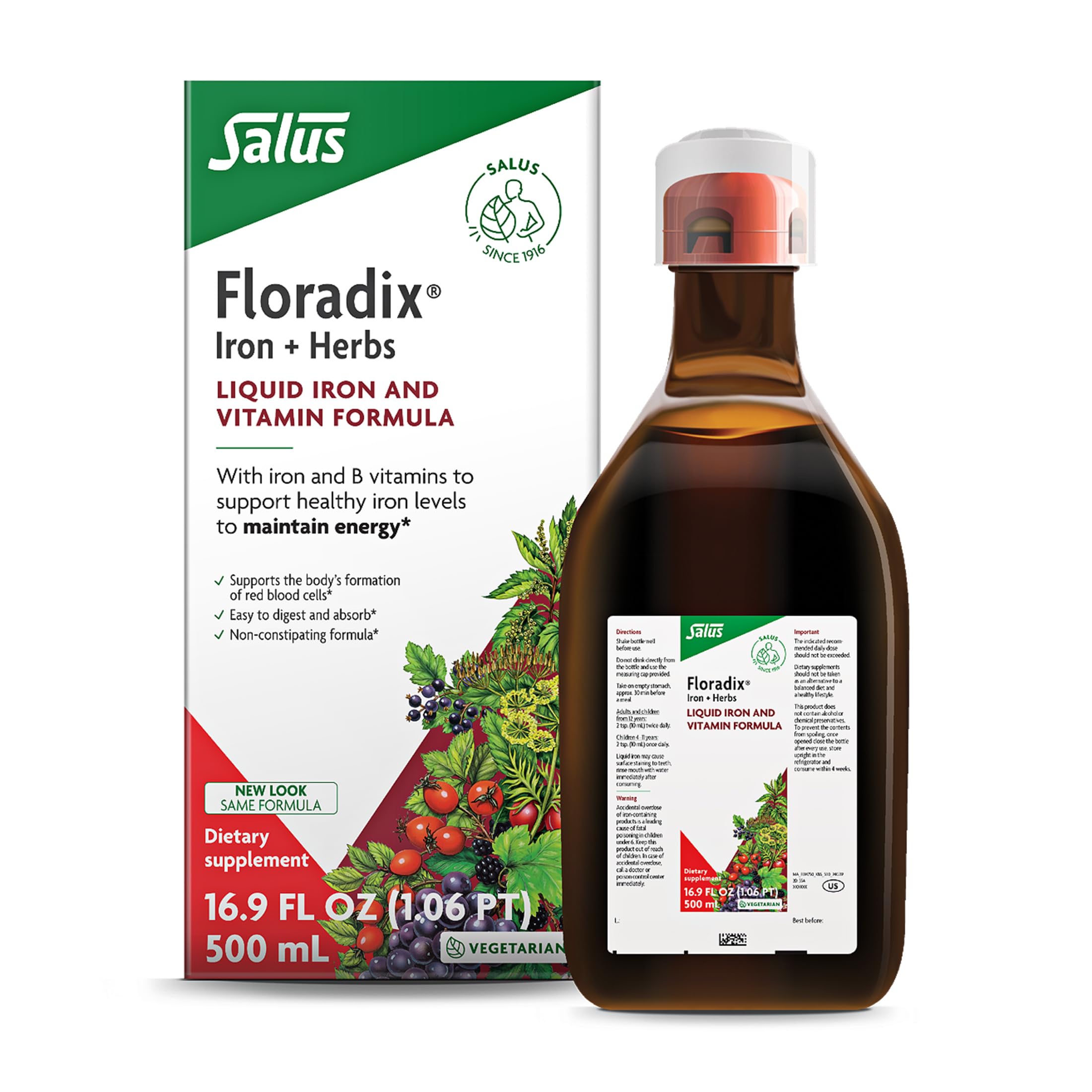
Floradix Iron & Herbs

93 /100
Trail Score Outstanding

Key details

Form
Liquid with B vitamins and vitamin C
Size
16.9 fl oz
Iron Per Serving
10 mg ferrous gluconate
Check Price on Amazon

Iron in a bottle you pour, not a tablet you swallow. If you've stood at the sink with a pill in your hand and given up, that's the entire argument: Floradix is a dark, herbal, faintly sweet liquid you measure into a small cup and drink. It's vegetarian, lactose free, and alcohol free, and it has been made in Germany for long enough that the formula feels settled rather than novel.

The dose is modest on purpose. Each serving gives 10 mg of ferrous gluconate alongside a B-complex, vitamin C, and a list of herbal extracts, which puts it in maintenance territory rather than the repletion doses on the rest of this page. Read the serving size before you assume you're getting a tablet-equivalent dose — you aren't.

We keep it on the list because it's genuinely easy to take every day, and because it's what tends to stay down when tablets don't. Two things to plan for. It pours generously, so measure over the sink rather than the counter, and the taste is a real hurdle even for people who like it — take it like a shot and chase it with orange juice, which does double duty for absorption. Per milligram of iron it's the most expensive thing here by a wide margin, so buy it for the format, not the potency.

Pros

  • Removes pill-swallowing from the equation
  • B vitamins and vitamin C built in
  • Gentle, non-constipating formulation

Cons

  • Lowest iron dose per serving of any pick here
  • Premium price for the iron it delivers
Our verdict

Best for anyone who can't face a pill: a drinkable herbal iron at a modest 10 mg a serving, which makes it maintenance rather than repletion.

Check Latest Price
7

High-Potency Repletion

NaturesPlus Hema-Plex

95 /100
Trail Score Outstanding

Key details

Count
60 softgels
Iron Form
Chelated iron softgels
Iron Per Serving
85 mg
Check Price on Amazon

Eighty-five milligrams is the biggest serving on this page, and that number is the entire pitch. This isn't a bottle to keep on the shelf just in case — it's what you take when blood work has come back properly low and someone has given you a target and a timeframe.

The softgel is large but slippery, and it goes down more easily than its size suggests — the gelatin shell is doing you a favor on the way past. NaturesPlus also bundles in vitamin C and a bioflavonoid complex, so you're not adding a separate C tablet to the routine to help absorption.

Sixty softgels is two months at one a day, which lines up neatly with the kind of short, aggressive course this suits. Per serving it's midrange, and the chelated form is part of what you're paying for over a plain ferrous sulfate tablet at twice the dose count.

Two things to settle before you order. The softgel is gelatin, so it's not one for vegetarians, and 85 mg is more iron than most people should take without a reason. Used as a short course and then stepped down to something in the 25 mg range for maintenance, it's the most direct tool here for pulling a low number back up.

Pros

  • Highest single serving in this set at 85 mg
  • Vitamin C and bioflavonoids built into the softgel
  • Large softgel swallows easily

Cons

  • Gelatin softgel rules out vegetarians
  • 85 mg is more than most people should take unsupervised
Our verdict

The highest single serving in this group at 85 mg, built for a short repletion stretch with a clinician's number behind it, not for casual topping up.

Check Latest Price
8

Cheap Slow Release

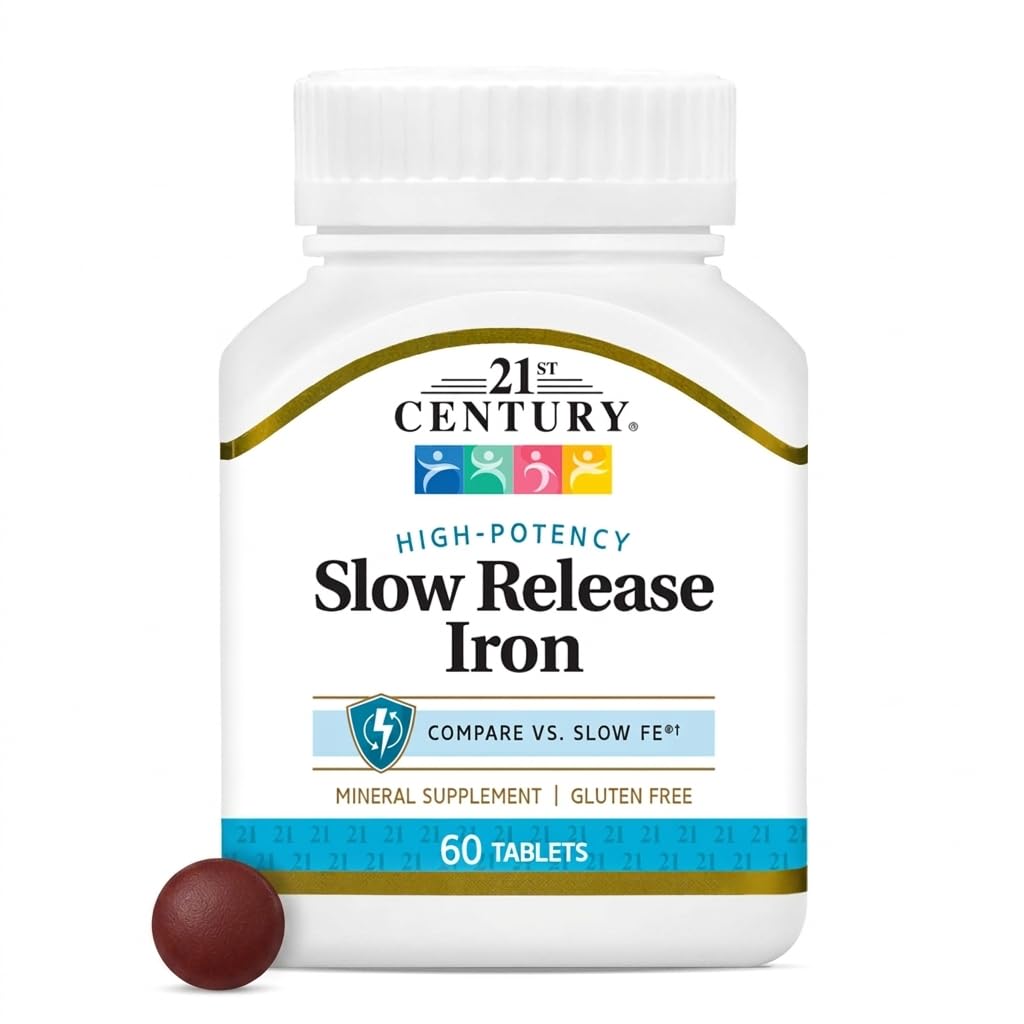
21st Century Slow Release Iron

93 /100
Trail Score Outstanding

Key details

Count
60 tablets
Iron Form
Slow-release ferrous sulfate (142 mg)
Iron Per Serving
45 mg
Check Price on Amazon

Slow Fe and this bottle do the same job — 45 mg of iron in a tablet that releases gradually rather than all at once — and 21st Century does it for a fraction of the price. That's the entire case, and it's a strong one if you're buying iron month after month and don't care what the bottle looks like.

The tablet is small and the schedule is one a day with a meal. That 45 mg arrives as 142 mg of ferrous sulfate, and the slow release is what keeps a mid-range dose from landing in your stomach all at once, which is the same principle the pricier brand charges for. Gluten free, no added yeast, no artificial flavors.

Where the savings show is the packaging. The bottle is roughly the size of a coffee mug for 60 small tablets, and the cap is a genuinely stiff child-resistant design — we needed two hands and a bit of wrist the first few times. For a pill that's dangerous to a toddler, a stubborn cap is the right call, but it's not a bottle you open one-handed in the dark.

Pros

  • Slow-release 45 mg at a budget price
  • Small, easy-to-swallow tablets
  • One tablet a day with a meal

Cons

  • Bottle far larger than 60 tablets need
  • Stiff child-resistant cap takes two hands
Our verdict

The budget route to slow-release iron: the same 45 mg idea as Slow Fe for far less money, with the savings paid back in packaging.

Check Latest Price

How We Tested Iron Supplements for Heavy Periods

We started by pulling together more than 40 iron supplements sold in capsules, tablets, chews, liquids, and gummies, then cut the list using ingredient panels, elemental iron dose, form of iron, serving size, third-party testing, and cost per day. We ruled out anything with a confusing label or a dose that would be hard to adjust. The final 14 went into an eight-month test with team members who have heavy periods and had already been tracking their cycles and energy.

Each supplement got at least two weeks of daily use, including at least one heavy-flow stretch where possible. We took them the way the label directed—with breakfast, between meals, or with vitamin C—and logged whether the routine actually fit into a workday. We noted whether a capsule was easy to swallow, whether a chew tasted chalky or metallic, and how long any aftertaste lingered. We also read every ingredient list before and after testing, watching for added sugars, fillers, and forms of iron we’d had trouble with before.

The most important log was how we felt and what our bodies did. We recorded nausea, constipation, cramping, and headaches, plus any change in energy through the day. Those who had routine lab work shared whether ferritin and hemoglobin moved in a direction that matched how they felt; we treated that as context, not a diagnosis. By the end, the formulas that stood out were the ones we could take consistently, digest comfortably, and point to a clear reason for choosing—whether that was a gentler iron form, a smaller daily dose, or an ingredient list that didn’t require a translator.

How to Choose an Iron Supplement for Heavy Periods

The Milligrams on the Front Are Elemental Iron

Iron labels carry two numbers and only one of them is the dose. Nature Made's 325 mg is the weight of the ferrous sulfate compound; the 65 mg beside it is the elemental iron your body actually uses. The picks here run from 10 mg to 85 mg of elemental iron, and that's the figure to compare.

Bigger isn't automatically better when the side effects are what make you stop. We'd rather see you take 25 mg daily for months than 65 mg for four days, which is why the gentle end of this list leads. If a blood test has given you a target, choose the product whose tablet matches it instead of stacking two.

The Form of Iron Decides How Your Stomach Reacts

Ferrous sulfate is cheap and potent, and it's also the form most associated with constipation and nausea. Chelated and bisglycinate iron (Solgar, Thorne) and slow-release tablets (Slow Fe, 21st Century) trade some cost or payload for a gentler landing; liquid ferrous gluconate goes lower still on dose.

If you've abandoned an iron bottle before, change the form before you change the dose. Moving from 65 mg ferrous sulfate to 25 mg bisglycinate fixes the problem for a lot of people who assumed they simply couldn't take iron.

Timing, Vitamin C, and What Blocks Absorption

Iron absorbs best on an empty stomach and that's also when it's most likely to make you nauseous. A meal softens the blow and costs you a little absorption — usually a fair trade. Vitamin C pulls the other way and helps; calcium, tea, coffee, and antacids all compete with iron for the same slot.

The routine that works: take your tablet with orange juice at breakfast, move any calcium supplement or antacid to another meal, and don't chase it with coffee. MegaFood Blood Builder is the one here that the label says can be taken with or without food, which is worth knowing if morning nausea is your sticking point.

Format, Count, and the Habit You're Building

A 30-capsule bottle is one month. If you take two a day, it's two weeks. Check the count against how you actually dose, because running out mid-bleed is how a supplement habit dies. Bottles vary wildly in size too: 21st Century puts 60 small tablets in a container the size of a coffee mug.

Then there's the swallow. A large softgel like Hema-Plex slides down more easily than its size suggests, capsules are simpler still, and Floradix removes the question entirely. If you've gagged on iron tablets before, format is a legitimate reason to choose one product over another.

Frequently Asked Questions

Final Verdict

Solgar Gentle Iron is the one we point most people to. At 25 mg it's a real dose without the constipation that ends most iron routines, it's easy to swallow, and the 180-capsule bottle means you're covered for months of cycles instead of reordering every few weeks.

If a blood test has put you on something stronger, Slow Fe's 45 mg controlled release is the step up we recommend, and Nature Made gets you to 65 mg for less money — as long as ferrous sulfate has never given you trouble. Start gentle, escalate on evidence, and don't buy the biggest number first.