Best Interdental Brushes of 2026

Interdental brushes look simple, but most 'it bends' complaints trace back to one root cause: the brush head is the wrong diameter for the gap. A single listing almost always sells only one size, and colour-coding is not consistent across brands, so the pack that works for one person can kink and fold the first time someone else tries it.

Size first, brand second. Because every mouth holds a mix of gaps, the best brush is the one that matches your tightest contacts without forcing, and your wider spaces without feeling flimsy.

These four picks span the range of real-world spacing, from ISO 000 micro-tight to a standard 0.8mm profile, so you can match the tool to the gaps your hygienist measures rather than guessing by colour.

1

Best Overall

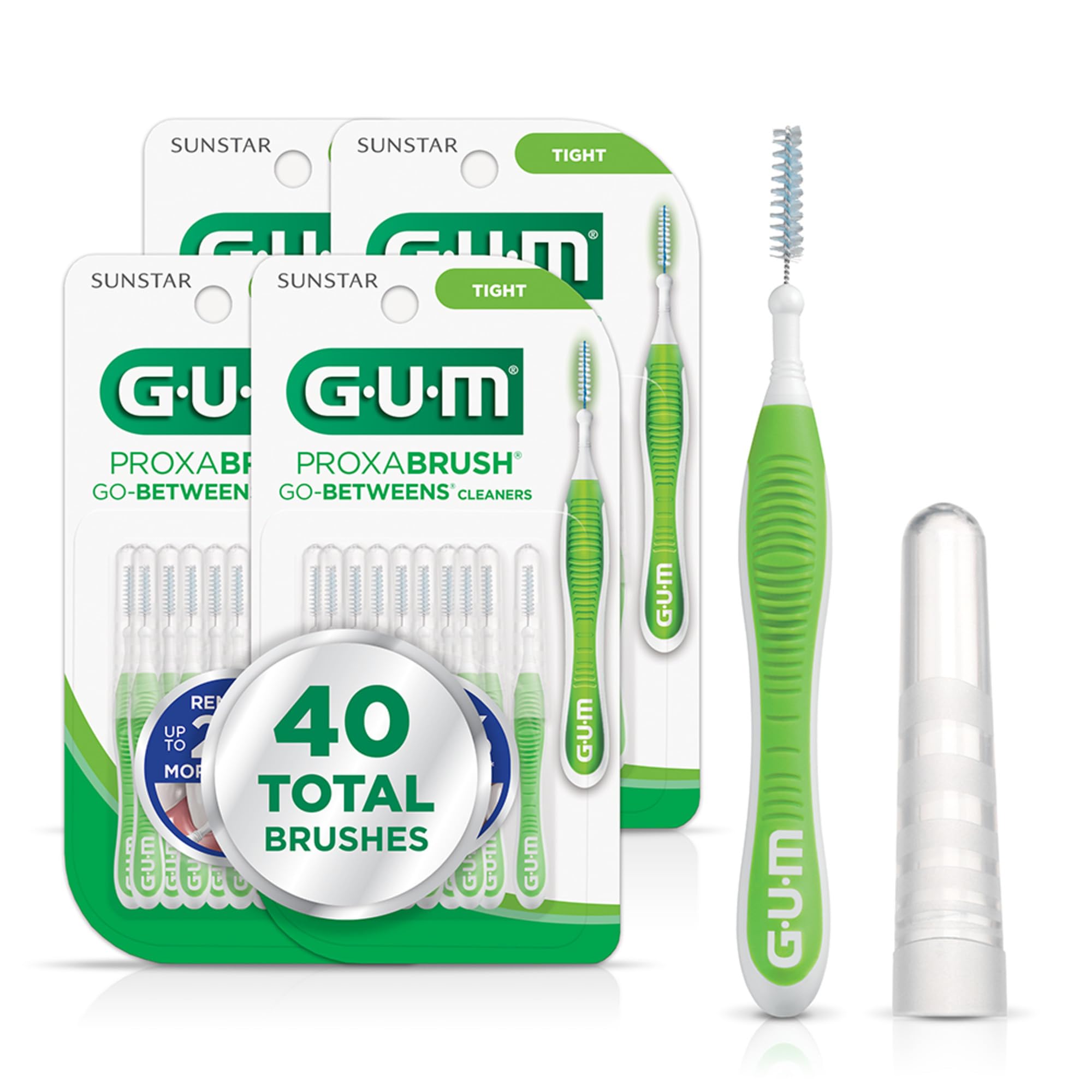
GUM Proxabrush Tight

95 /100
Trail Score Outstanding

Key details

Wire Core
Nylon-coated steel
Handle & Cap
Compact, travel caps
Pack Size & Cost
40 count, mid per-brush
Diameter & ISO Size
Tight (872 profile)
Check Price on Amazon

The GUM Proxabrush Tight slides into close contacts that floss routinely misses, and its soft double-wire bristles lift trapped food without the scraping feel of a toothpick. Every brush ships with a travel cap, so a spare can live in a pocket or a desk for cleaning right after a meal rather than waiting for the nightly floss. Daily use takes seconds even on the tighter posterior contacts, and wearers with braces, implants, or fixed retainers find the gentler flex easier on tender gum tissue than string floss. It supplements flossing instead of replacing it, and many keep both because the brush clears what the string tangles on.

This green Tight gauge fits adult mouths whose spaces run from close front contacts to mild or moderate gaps. Postoperative openings that read as wide for this wire call for a thicker ISO in the same range, while contacts narrower than this gauge sit with the finer specialist pair in this lineup, so choose by your tightest gap rather than your widest. Tucked under the premium rival in per-brush price, the capped design and soft flex make it the everyday option for anyone who cleans between teeth after more than one meal a day.

Pros

  • Lifts plaque from close contacts that floss skips, supplementing the nightly routine.
  • Soft double-wire bristles clear tight spaces gently, sparing tender gums the scrape of a toothpick.
  • Travel cap fits a pocket for cleaning right after meals, faster than floss for small mouths.

Cons

  • Per-brush price sits above the 100-count economy stashes when only a few get used.
  • Forced into a contact narrower than its gauge, the fine wire core can bend permanently and retire that brush early.
Our verdict

For close front contacts and mild gaps, the travel-capped Tight gauge is the everyday clean that spares the gum-snapping of floss.

Check Latest Price
2

Premium Alternative

TePe Interdental Original Green

93 /100
Trail Score Outstanding

Key details

Wire Core
Plastic-coated wire
Handle & Cap
Long ergonomic handle
Pack Size & Cost
20 count, premium per-brush
Diameter & ISO Size
0.8mm, ISO size 5
Check Price on Amazon

TePe’s size 5 sits at the comfort end of this group: the longest handle here and a balanced, contoured grip make between-teeth cleaning feel like a quick routine rather than fiddly dental work.

The premium build targets daily reusable use, and the green 0.8 mm head locks onto average interdental gaps and nothing else. Budget-first shoppers will find comparable daily cleaning from cheaper disposable brushes for far less per use.

Pros

  • Long, ergonomic handle keeps rear-tooth cleaning controlled and gentle.
  • Premium build quality rarely questioned by owners after repeated use.
  • Easier and friendlier than flossing for a repeatable daily habit.

Cons

  • Sits at the highest per-brush price on this list, so cheaper sticks do the same daily job.
  • Size 5 is fixed to average gaps; micro or wider mouths must swap to another TePe color.
Our verdict

Pick the Green when your gaps run average and daily comfort outweighs per-brush cost; casual budget cleaners will step down to the disposables without missing much.

Check Latest Price
3

Best for Micro-Tight Gaps

Piksters Micro Tight Navy

89 /100
Trail Score Excellent

Key details

Wire Core
Plastic-coated, kink-resistant
Handle & Cap
Cap doubles as extension
Pack Size & Cost
40 count, mid per-brush
Diameter & ISO Size
ISO 000, micro-tight
Check Price on Amazon

The Piksters Micro Tight operates at ISO 000, the finest gauge in this set: its ultra-fine wire slides through close-set contacts with little gum pressure, while holding shape better than the flexible core in the budget braces workhorse. Clicking the cap onto the tail converts the brush into an extension handle, opening comfortable reach into second molars and implant sites.

This 000-size buy is only practical where the arch's tightest spots — close-set teeth, brackets, or implants — genuinely measure micro. Standard-to-wide gaps receive a finer gauge that loses purchase, so the Micro Tight complements a wider brush rather than replacing it.

💡 Cap the brush after each cleaning — the connector keeps the delicate 000 wire from kinking in storage while doubling as a reach handle during brushing.

Pros

  • Coated 000 wire holds its line better than budget flexible cores over repeated passes.
  • Cap slides onto the tail to gain molar-length reach mid-brushing.
  • Wire glides through close-set contacts with light gum pressure for comfortable daily cleaning.

Cons

  • Every pack holds a single 000 gauge; mouths mixing micro with wider gaps need a separate brush for the latter.
Our verdict

A specialist that clears micro-tight molars with the rigidity budget fine wires lack.

Check Latest Price
4

Best Value for Braces

DenTek Advanced Clean Slim

91 /100
Trail Score Outstanding

Key details

Wire Core
Flexible wire, taper head
Handle & Cap
Nonslip grip
Pack Size & Cost
32 count, budget per-brush
Diameter & ISO Size
Extra-tight spaces
Check Price on Amazon

DenTek backs the Advanced Clean Slim with 32 narrow tapered heads on a flexible wire that slips around orthodontic brackets and fixed retainers, at a budget per-brush cost. The slim profile clears tight daily contacts cleanly, and angling the bendable core past appliances is what separates it from the more rigid premium option in this set.

That flexible core is the real boundary: it rewards a light touch, so it suits braces patients cleaning between brackets and anyone trialing interdental brushes before upgrading to a pricier brand. Users who bear down hard will shorten each brush's life.

💡 Ease the brush in at a slight angle instead of forcing it straight through tight contacts.

Pros

  • Narrow tapered head clears tight contacts and bridge work better than string floss
  • Flexible wire reaches around braces and retainers where fixed hardware blocks floss

Cons

  • Forcing the slim wire through a contact narrower than its fit can kink the core, cutting each brush's usable life short
Our verdict

Reach for this when per-brush cost and bracket access matter more than the durability the premium pick offers — and brush gently.

Check Latest Price
5

Also Great

The 100-piece Patelai pack keeps a brush at every sink at a budget price, and wearers report it clears braces wiring well enough to replace post-meal flossing. The trade-off is construction variance: occasional heads spin loose on their stems and thinner wires kink mid-pass when forced through tight contacts. As a disposable stash where another brush sits a few centimetres away, that compromise rarely bites.

Pros

  • Fast post-meal clean-out between brackets without threading floss
  • Budget 100-piece count means one brush in every car, desk, and bag

Cons

  • Occasional heads spin loose on the handle and thinner wires can kink mid-pass
Our verdict

Best for braces households that keep a whole pack at every sink and treat each unit as disposable — per-brush quality matters less when the next one is a drawer away.

Check Latest Price
6

Also Great

This 100-brush pack scatters a mixed-color spare at every sink for budget money, and its nylon-coated wire slides into orthodontic crevices well enough for daily upkeep. Reseating the stiff caps mid-day is fiddly, and the wire is thinner than dentist-brand alternatives, so it reads as an expendable quantity play — not a polished daily tool.

Pros

  • Reaches tight orthodontic crevices well enough for day-to-day upkeep in a hundred-count pack.
  • Cost per brush suits keeping spares in bags, cars, and every bathroom.

Cons

  • Caps are stiff to draw off, so reseating them mid-day can involve fiddling at a work sink.
Our verdict

Best for color-coding orthodontic users who drop spares in bags and cars and reset at each home sink — treat it as fast-moving disposables rather than a precision daily kit.

Check Latest Price
7

Also Great

The DenTek standard handle eases cleaning of regular tight teeth, braces, implants, and bridges, with stronger plaque removal than floss in everyday gaps. This 16-count box shares its flexible, bend-prone wire with the larger Advanced Clean pack, so it adds nothing beyond a standard head profile suited to brand-loyal travel buyers.

Pros

  • Gentle on braces, implants, and bridges while lifting debris from everyday tight gaps.
  • Shows stronger plaque removal than floss in standard interdental spacing.

Cons

  • Flexible wire can lose shape and bend under firm pressure before the row is done.
Our verdict

Best for DenTek loyalists who want a pocketable standard-head count; anyone weighing per-brush value will find more in the larger Advanced Clean pack.

Check Latest Price

How to Choose Interdental Brushes

Brush Head Diameter and ISO Size

Interdental spaces are not uniform, front incisors sit tight while molars often gape wider, so a 'one size fits all' pack is a compromise. ISO sizes run from 000 (0.4mm) up through 8 (1.6mm); many people need two or three sizes to cover a full mouth.

Ask your hygienist to measure the gaps at your next visit, which takes seconds, and buy in that recorded size range. If you buy blind based on the word 'tight' in a listing title, you risk choosing a brush that is still too wide for your narrowest contacts.

Wire Gauge and Kink Resistance

The wire gauge determines how much lateral pressure the brush can survive before it fatigues. Bent wires are the top complaint across the category, and they almost always come from applying force the core was not built to absorb.

Nylon and plastic-coated cores glide more gently along the gums, but coated wire still kinks permanently if rammed into a gap that is smaller than the intended size. Push with a gentle in-and-out twisting motion; if the brush resists, you need a smaller diameter rather than more pressure.

Bristle Firmness and Gum Comfort

Firm bristles shift plaque more aggressively but can irritate delicate gum tissue, especially around implants and recession sites. A sturdier feel often comes with a denser nylon bristle pack that patients describe as rough during the first two weeks of use.

Start with the gentlest pass once a day to let the interdental papillae adapt, then build frequency. Sensitivity that persists past a fortnight, or bleeding on every use, signals a size or firmness mismatch you should not push through.

Pack Size and Per-Brush Cost

A single reusable brush lasts roughly a month of daily cleanings before bristles splay or the core feels soft, so a 100-count economy bundle is often a 3-year supply at a fraction of premium per-brush pricing. Cheaper mass packs, however, show a small rate of heads that rotate or detach mid-tooth.

Mid-priced 40-count multipacks hit the sweet spot: a per-brush cost low enough to replace worn heads without guilt, and enough units to stock the sink, travel bag, and desk. Count out your monthly budget in weeks, not in unboxing excitement.

Handle Ergonomics and Travel Cap

A longer working length improves reach to the back molars; a squatter handle suits front-tooth contacts. Extension handles, whether integrated or a cap that slides on, add leverage and control where it matters.

Caps do more than keep a brush pocket-friendly, they protect the bristles from splaying when tossed in a bag. If you carry a brush for post-meal cleaning away from home, a secure cap becomes a deciding factor. Buy the one you will actually keep with you.

Colour Codes: Not Standard Across Brands

Colour-coding is the single most dangerous shortcut in this category. TePe's green is a 0.8mm average size, while other manufacturers use green to signal the tightest profile in their range; the same colour can mean tight or medium depending on which box you pick.

Ignore the handle colour entirely and read the diameter on the label in millimetres or ISO. If a pack does not state either figure, treat the fit claim as a marketing description rather than a measurement you can compare across brands.

Frequently Asked Questions