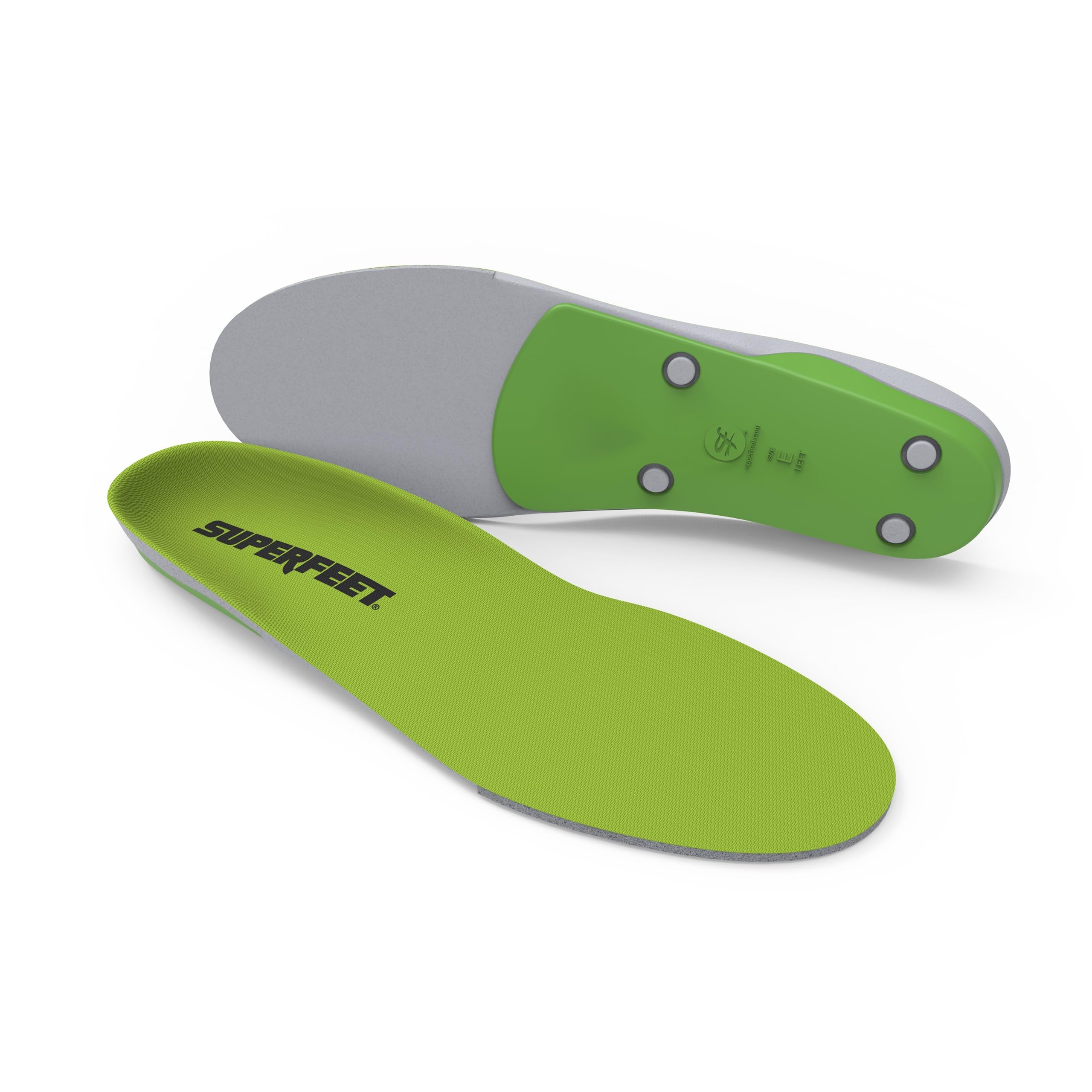
Best Overall for Knee Pain

PowerStep Pinnacle
Key details
- Length
- Full length
- Arch Support
- Semi-rigid arch
- Heel Control
- Deep heel cradle
- Activity & Weight
- Walkers, light runners
The arch sits at the center of the Pinnacle's approach, and walking and running both show measurable easing of knee and shin strain — exactly the outcome a flat-footed or mildly pronating buyer is after. A semi-rigid footbed and deep heel cradle check the inward roll that pulls at the knee on every stride, yet dual-layer cushioning keeps the support comfortable from the first day. It stands as the podiatrist-recommended pick in this group and delivers orthotic-grade control well below what a fully custom insole usually runs.
People carrying knee pain alongside plantar fasciitis — flat-footed walkers and light runners logging daily miles — match this insole best; they receive steady, broad-spectrum alignment without custom fitting. The Pinnacle occupies a middle band rather than an extreme end: runners needing a firmer high-arch shell, or anyone who wants a soft gel underfoot, will do better with other options here. Within that middle, its semi-rigid construction favors control over pillow-soft comfort.
💡 Ease in gradually — a few hours a day for the first week gives the arch time to settle.
Pros
- Eases knee and shin strain on runs and long walks for mild overpronators and flat feet.
- Delivers clearer plantar-fasciitis and heel-pain relief that keeps daily wear consistent.
- Podiatrist-recommended build lands well below prescription insole pricing.
Cons
- The semi-rigid footbed feels pronounced during the first days until the arch settles.
- Top-cover separation can appear after heavy daily mileage over several months.
For walkers and light runners whose knee strain starts with mild pronation or plantar fasciitis, this is the safest first buy before stepping up to prescription insole pricing.