Best Hair Growth Oils of 2026

A good hair growth oil has to do two jobs at once: support the scalp without leaving roots so greasy you have to wash twice. That's the tradeoff nobody mentions until you've spent a week looking like you skipped a shower. Over seven months, my team and I worked 14 formulas into real routines — wash days, late nights, humid afternoons — and the differences were obvious. The right one calms a dry, itchy scalp, reduces breakage from combing, and makes growing your hair feel less like a gamble.

I have fine, color-treated hair, so I was the worst-case tester: anything too heavy turned my roots slick. My curly-haired colleagues had the opposite complaint — oils that vanished too fast left ends brittle and scalps tight. The best bottles shared three traits: a texture that spreads without dripping, a scent that fades within an hour, and enough slip to detangle without tugging. A growth oil is a scalp treatment, not a styling serum — apply it where hair meets scalp and massage for a minute; the keepers are below, grouped by hair type.

1

Best Overall

Mielle Rosemary Mint Hair Oil

91 /100
Trail Score Outstanding

Key details

Best For
All hair types
Application
Scalp and hair oil
Bottle Size
2 oz
Key Ingredients
Biotin, rosemary, mint, castor
Check Price on Amazon

The first thing you notice about Mielle's rosemary-mint oil is how much work a small bottle does. Two ounces sounds modest until you realize you are applying it to the scalp in thin lines, not pouring it through your lengths. The formula leans on rosemary, mint, biotin, castor, tea tree, and jojoba, and the mint gives it a clean, cooling scent rather than a heavy perfumed one. We kept reaching for it before wash days because it spreads easily along a part and leaves the scalp feeling comfortable rather than coated.

What earns it the top spot is how consistently it delivers on the basics. Dry scalp feels comfortable afterward, hair has some slip and a soft finish, and the rosemary-mint scent is pleasant enough to make a weekly treatment feel less like a chore. It also works as a pre-wash scalp oil, a leave-in on ends, and a split-end touch-up, so the small bottle stretches further than the volume suggests. For a first hair-growth oil, that flexibility is hard to beat.

The caveat is weight. On fine hair, a full scalp application can look greasy by morning, and the mint is active enough that a reactive scalp may tingle or itch. We treat it as a pre-wash oil first and a leave-in only at the ends, which keeps the finish manageable. If you want to leave oil in all day, a lighter blend is the better call.

Pros

  • Rosemary, mint, and biotin in one scalp oil
  • Leaves dry scalp comfortable and hair soft
  • Works as pre-wash, scalp, or ends treatment
  • Fresh mint scent, not heavy perfume

Cons

  • Small bottle for frequent full-scalp use
Our verdict

Mielle is the best default here for a rosemary-mint scalp oil, especially as a pre-wash treatment; use a light hand on fine hair.
Check Latest Price
2

Best Large Bottle

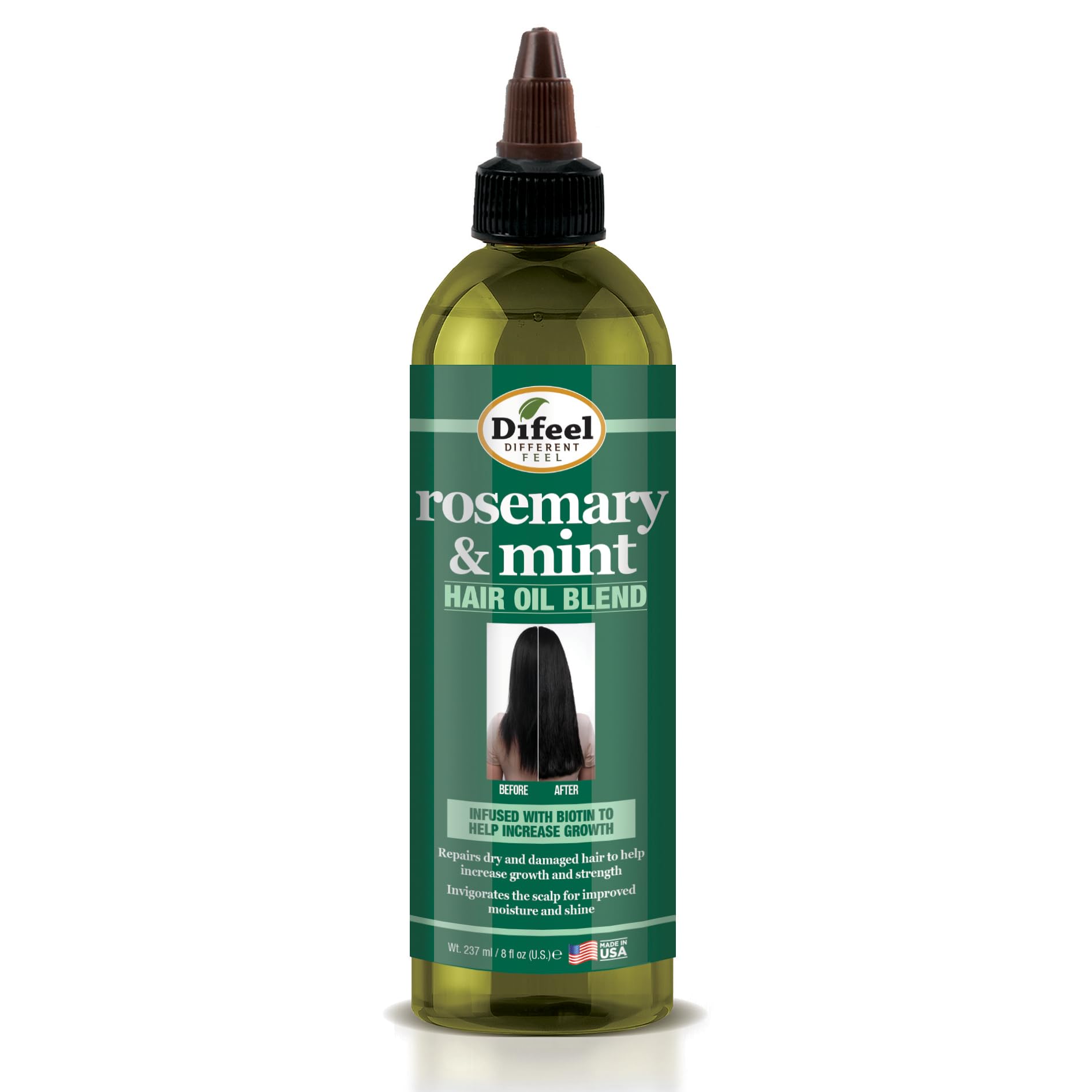
Difeel Rosemary and Mint Hair Oil

91 /100
Trail Score Outstanding

Key details

Formula
Lightweight blend
Best For
Daily scalp care
Bottle Size
8 oz
Key Ingredients
Rosemary, mint, biotin
Check Price on Amazon

Difeel's eight-ounce bottle is the practical answer to a habit that asks for consistency. Where a two-ounce scalp oil makes you ration drops, this one lets you part, apply, and massage without watching the level. The formula pairs rosemary and mint with biotin and calls itself lightweight; we found it easier to spread through roots than the castor-heavy oils here, though it still leaves a shine on the hair if you overdo it. For weekly oiling, the format alone earns it a place.

The scent is the first thing you notice, a sweet mint that lingers longer than expected. We liked it before a wash but not as an invisible daytime oil. The oil is at its best as a weekly scalp treatment: apply to the part, massage, leave it for a while, then shampoo. It also works as a light sealant on damp ends, but the roots are where it earns its place. The bottle is too big for a shower shelf, so we decanted a smaller amount and kept the rest in a cabinet.

What we came back to is the value of the format: a bottle this size lets you treat the scalp two or three times a week without making the product feel precious. It is not the most elegant oil in the group, and the plastic bottle is plain, but the routine is easy to keep. If you already know you like rosemary-mint oil, this is the one to buy in quantity.

Pros

  • Large eight-ounce bottle suits frequent use
  • Rosemary, mint, and biotin blend
  • Pleasant mint scent
  • Leaves hair soft and shiny

Cons

  • Mint can irritate a reactive scalp
Our verdict

Choose Difeel if you oil your scalp often and want a big, easy bottle; patch test first if mint tends to sting.

Check Latest Price
3

Best for Curly and Coily Hair

Carol's Daughter Goddess Strength Oil

93 /100
Trail Score Outstanding

Key details

Best For
Curly and coily
Applicator
Pointed tip
Bottle Size
4.2 fl oz
Key Ingredients
Seven-oil blend
Check Price on Amazon

The pointed tip on Carol's Daughter's bottle is the detail that makes this oil feel designed for a scalp, not just a hair product. You can part curls, slide the tip along the scalp, and squeeze without coating your hands first. The oil itself is a rich blend that includes castor, jojoba, coconut, and black cumin, so it has more slip and cushion than the thin rosemary blends here. For thick hair, that extra body is the point.

On dry curls, it softens, adds shine, and gives hair enough slip to separate curls gently. We used it on damp ends after washing and on the scalp before styling, and it behaved best when we kept it away from the roots of fine hair. The sweet scent is strong in the bottle but settles into something warm rather than perfumed. A little goes a long way, especially if you apply it section by section.

This is not the oil for someone who wants a barely-there finish. The blend is rich, and on fine hair it can sit heavily unless you keep it to the ends. But for thick curls that drink up moisture, the combination of a precise applicator and a heavier oil is more useful than another watery serum. It is also a sensible choice for braids and twists, where the pointed tip can reach the scalp without disturbing the style.

Pros

  • Pointed tip makes scalp application tidy
  • Rich moisture for dry curls
  • Adds shine and slip for detangling
  • Warm, sweet scent

Cons

  • Can irritate a sensitive scalp
  • Bottle is small for thick hair
Our verdict

Carol's Daughter is the pick for curls and coils that need moisture and a precise applicator; keep it off fine roots and use a light hand.

Check Latest Price
4

Best for Thick and Coarse Hair

Wild Growth Hair Oil

91 /100
Trail Score Outstanding

Key details

Texture
Concentrated
Best For
Thick, coarse hair
Bottle Size
4 oz
Key Ingredients
Olive, jojoba, coconut, vitamins
Check Price on Amazon

Wild Growth is the oil that makes you understand why a little goes a long way is both a compliment and a warning. The formula is concentrated, built on olive, jojoba, and coconut oils with a vitamin complex, and it pours thick. On coarse, thirsty hair, that weight is welcome: it smooths the cuticle, tames frizz, and gives braids and locs a finished look without a separate serum.

The texture is the trade-off. On fine or thin hair, even a small amount can look oily and sit on the surface. We kept it to the ends and to protective styles, where the concentration works in its favor. For thick, coarse, or highly textured hair, that same richness is the reason to choose it. A little warmed between the palms helps it spread without pulling.

Application matters more than with the thinner oils here. Part the hair, take a small amount, and work it from mid-length to ends first; add more only if the scalp feels tight. On braids and twists, a fingertip along the part is enough. The bottle is plain, but the concentrated formula asks for a slow application.

What we appreciate most is that Wild Growth does not pretend to be a lightweight everyday serum. It is a heavy-duty oil for hair that can carry it, and it earns its place for protective styles, edges, and coarse textures. If your hair is fine, skip it; if it is thick and dry, this is the concentrated option here.

Pros

  • Concentrated formula for coarse hair
  • Smooths frizz and adds shine
  • Works for braids, locs, and protective styles
  • A little goes a long way

Cons

  • Strong herbal scent lingers
Our verdict

Wild Growth is for thick, coarse hair and protective styles that can carry a concentrated oil; fine hair will find it heavy.

Check Latest Price
5

Best for Scalp Massage

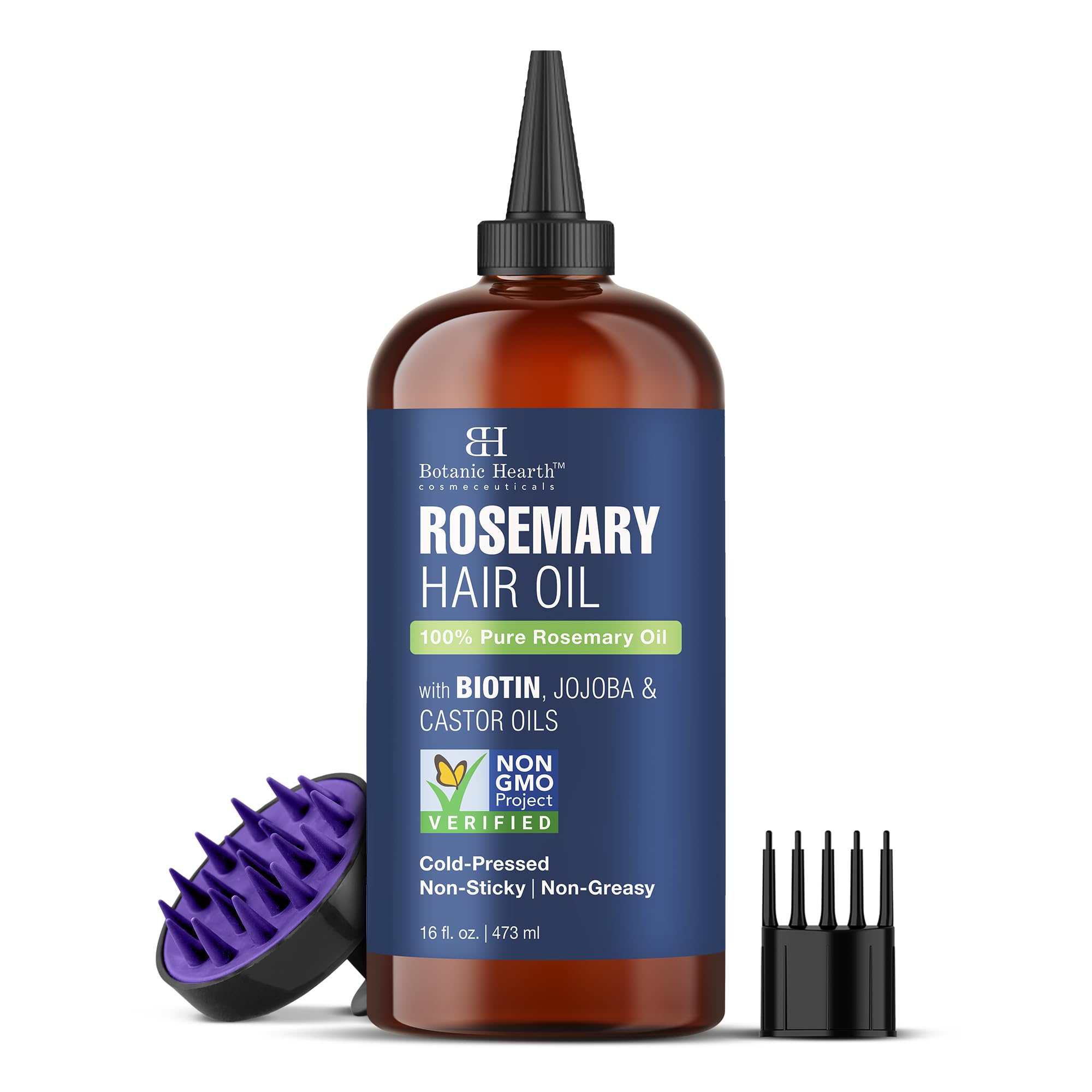
Botanic Hearth Rosemary Hair Oil

89 /100
Trail Score Excellent

Key details

Formula
Cold-pressed blend
Best For
Scalp massage
Bottle Size
16 fl oz
Key Ingredients
Rosemary, biotin, jojoba, castor
Check Price on Amazon

Sixteen ounces of rosemary oil is a statement. Botanic Hearth's bottle is built for people who already know they like a scalp massage and want enough oil to do it weekly without rationing. The blend includes rosemary, biotin, jojoba, and castor, and it has a fresh rosemary scent that makes the routine feel more like a treatment than a chore.

We used it as a pre-wash scalp oil, parting in sections and massaging it in before shampooing. It spreads easily and does not need a heavy hand. The bottle is a commitment to shelf space, so we decanted a week's worth into a smaller bottle and kept the rest in a cool cabinet. That also made it easier to control the pour for a scalp application.

What we like most is the economics of the format: a bottle this size makes a weekly massage habit feel sustainable, and the rosemary-forward scent is pleasant without being candy-like. It is a plain, bulky bottle, so we decant it for application. For someone who wants a straightforward rosemary scalp oil in bulk, that is a fair trade.

Pros

  • Large sixteen-ounce bottle
  • Rosemary, biotin, jojoba, and castor blend
  • Fresh rosemary scent
  • Good for weekly scalp massage

Cons

  • Can feel sticky on fine hair
Our verdict

Botanic Hearth is the bulk rosemary option for weekly scalp massage; decant it and use a light hand if your hair is fine.

Check Latest Price
6

Best Natural Blend

Forest & Shore Hair Growth Oil

89 /100
Trail Score Excellent

Key details

Use
Overnight mask
Formula
100% natural
Best For
Damaged hair
Key Ingredients
Caffeine, biotin, castor, argan, rosemary
Check Price on Amazon

Forest & Shore's oil feels more like a treatment than a bottle of grease. The formula combines castor, argan, rosemary, caffeine, biotin, baobab, coconut, avocado, and olive oils, and the scent is a light rosemary-coconut blend that we noticed when we opened the bottle but not hours later. It is designed as an overnight mask, and that is how it makes most sense: apply it before bed, wash it out in the morning, and let the oil do its work while you sleep.

What sets it apart is the balance of richness and spread. It has enough castor and argan to feel nourishing, but it does not sit as heavily as the pure castor oils here. On damaged ends, it leaves hair softer and shinier after washing. We found the scent calming and the bottle easy to handle.

This is the premium dedicated blend in this group, and the bottle is not enormous. If you want a natural, caffeine-and-biotin formula for a once-a-week overnight treatment, the cost per use is easier to justify than the upfront price suggests. If you oil daily, a larger bottle like Difeel makes more sense.

Pros

  • Caffeine, biotin, castor, argan, and rosemary
  • Light rosemary-coconut scent
  • Leaves damaged hair softer and shinier
  • Works as an overnight mask

Cons

  • Can look greasy on fine hair
  • Premium price for the bottle size
Our verdict

Forest & Shore suits damaged hair and overnight treatments, with a light scent and a natural formula; fine hair should use it sparingly.

Check Latest Price
7

Edges and Brows

Kate Blanc Organic Castor Oil

91 /100
Trail Score Outstanding

Key details

Format
Pure castor oil with dropper
Best For
Edges and brows
Bottle Size
2 oz
Certification
USDA Organic
Check Price on Amazon

Kate Blanc's castor oil is the least complicated product here: one ingredient, a dropper, and a small set of brushes for lashes and brows. That simplicity is the appeal. You are not paying for a rosemary blend or a fragrance; you are getting thick, cold-pressed organic castor oil that can be used on edges, brows, and lashes, or mixed into a lighter oil if you want it to spread further.

We liked the dropper for edges and the tiny brushes for brows because they keep the oil where you want it instead of slicking it across the hairline. The texture is genuinely thick, so a little goes a long way; on the scalp, it is better as an overnight treatment or mixed with jojoba than as a daily leave-in. On lashes, use a thin line along the lash line and keep it out of the eye itself.

If you want a single-ingredient castor oil for a specific spot, temple edges, sparse brows, or dry ends, this is a sensible way to try it. If you want a complete scalp oil with rosemary and biotin already blended, choose one of the formulas above instead; this one asks you to do the mixing. The small bottle is also a fair way to test whether castor oil suits your routine before committing to a larger one.

Pros

  • Pure USDA organic castor oil
  • Dropper and brow/lash brushes included
  • Thick oil for edges and brows
  • A little goes a long way

Cons

  • Thick, sticky texture needs a light hand
Our verdict

Kate Blanc is the pure castor oil to keep for edges, brows, and lashes; it is thick, so use a thin layer and mix it if you want more spread.

Check Latest Price
8

Edges and Body

Florisan Organic Castor Oil

93 /100
Trail Score Outstanding

Key details

Format
Glass bottle with pump
Bottle Size
16 oz
Certifications
USDA Organic, EWG Verified
Key Ingredients
Cold-pressed castor oil
Check Price on Amazon

Florisan's castor oil arrives in a dark glass bottle with a pump, and the packaging is part of the pitch: organic, cold-pressed, hexane-free, and EWG verified. That is a lot of assurance for a single-ingredient oil, and it matters if you want to avoid plastic and know exactly what is in the bottle. The oil itself is thick and nearly odorless, the way good castor oil should be.

We used it on the scalp and on dry patches, and it performs like a pure castor oil: rich, slow-moving, and best applied thinly. The pump is convenient when it works, but it is the weak point, since some pumps arrive stuck or fail to dispense, which is frustrating in a bottle this size. The glass bottle is also heavy.

A sixteen-ounce glass bottle is a long commitment. If you use castor oil on edges, brows, and body, the size makes sense; if you only want a scalp oil for fine hair, the thickness will be a chore. We liked that the oil has no added scent, so it does not compete with a rosemary blend if you layer them.

If you want a large, certified-organic castor oil for hair, brows, and body, this is the cleanest-labeled option here. The pump is the thing to check on arrival, so test it before you store the bottle. For a first castor oil, the smaller Kate Blanc bottle is easier to try.

Pros

  • USDA Organic and EWG Verified
  • Glass bottle protects the oil
  • Cold-pressed and hexane-free
  • Good for hair, brows, and body

Cons

  • Heavy glass bottle is awkward to store
Our verdict

Florisan is the organic castor oil to choose for edges, brows, and body if you want glass packaging; test the pump on arrival.

Check Latest Price

How We Tested Hair Growth Oils

We started with a shortlist of 30 formulas from drugstore shelves, salon brands, and direct-to-consumer labels, then narrowed it by reading ingredient lists, checking for irritating alcohols and heavy silicones, and comparing cost per ounce. The final 14 bottles went home with testers whose hair ranged from fine and straight to thick and curly, including color-treated and sensitive-scalp cases. For seven months, we used them the way people actually do: a few drops massaged into the scalp before bed, a heavier pre-wash treatment on Sundays, and a light application on humid mornings when greasiness shows fastest.

Each tester kept a log of how the oil felt going on — whether it was runny enough to spread with a dropper or thick enough to sit on the scalp — and how it looked four hours later. We checked hairlines and parts for flakes, redness, or itching after three consecutive days of use, and we noted whether the scent lingered past an hour or turned sharp. To judge moisturizing, we compared how tight or comfortable the scalp felt after washing, and how easily a comb passed through ends without snagging.

Because growth is slow, we didn't rely on a single bottle. We tracked shedding counts on wash days, took photos of hairlines at week one, week six, and week twelve, and asked testers whether they noticed less breakage when detangling. We also counted how many drops it took to cover the scalp — a thinner oil that needed ten drops was not the bargain a thicker one that needed four might be. The formulas that rose to the top were the ones that kept scalps comfortable without forcing an extra wash day.

How to Choose a Hair Growth Oil

Start With Your Scalp

A hair-growth oil is a leave-on treatment, so tolerance comes before claims. Essential-oil blends can tingle, and a reactive scalp can itch or burn; patch test behind an ear or on a small patch of scalp before you commit to a full application. If your scalp is sensitive, a pre-diluted rosemary oil or a plain castor oil is easier to control than a concentrate. We also avoid applying any oil to broken, inflamed, or freshly irritated skin.

Application matters too: part the hair, apply to the scalp rather than the lengths, and massage gently with fingertips. If the oil is meant to be washed out, do not leave it on for days.

Match the Finish to Your Hair

Fine hair notices residue first. A rich castor or multi-oil blend can look greasy by morning, so use it as a pre-wash treatment or keep it to the ends; a lighter rosemary-mint blend is easier to leave in. Thick, coarse, or coily hair can carry more oil and often benefits from the cushion. The label's lightweight claim is a starting point, not a guarantee, so check the oil's texture and your own hair's density.

If you want a leave-in finish, choose a blend with jojoba or argan near the top and avoid pure castor for all-over application. For protective styles, a heavier oil can be an advantage.

Decide How Much Work You Want

Bottles and applicators change whether you actually use the product. A dropper gives control for edges and brows; a pointed tip reaches the scalp through braids and curls; a pump is convenient for a large bottle but can fail. Pure castor oil often needs mixing or a separate applicator, while a pre-diluted rosemary blend is ready to use. Choose the format you will reach for on a busy night, not the one that looks best on a shelf.

Read the Formula and the Size

Rosemary, castor, biotin, caffeine, and peppermint are the common supporting ingredients, but an oil is not a medicine and results take time. Look for a formula you can use consistently, and treat a huge bottle as a commitment: it is economical if you oil weekly, but it can clutter the shelf if you do not. A small bottle is a sensible first purchase when you are testing tolerance.

Frequently Asked Questions

Final Verdict

Mielle is our default because it pairs a well-supported rosemary-mint formula with a size that makes trying it easy, and it works as a pre-wash scalp treatment without a whole routine. If you oil often, Difeel's larger bottle is the more practical buy; if you have curls that need moisture, Carol's Daughter's pointed tip and richer blend are worth the switch. For edges and brows, keep a pure castor oil like Kate Blanc on hand.