Best Foot Cream for Cracked Heels of 2026

A deep heel crack announces itself in the worst places: the tile floor at 6 a.m., the inside of a wool sock, the strap of a sandal. The creams that actually close those cracks tend to be thick, tacky, and unpleasant enough that most people quit by week two, while the ones that feel lovely going on rarely do much beyond a temporary sheen. That's the real problem with this aisle — you need something heavy enough to work and light enough that you'll still reach for it a month from now.

I've bought a tub, used it three times, and buried it in a drawer, so I went in biased toward anything that sinks in fast. We worked through 15 creams over about four months, and the pattern held: the ones that softened rough skin fastest were also the ones you had to plan around, and price had little to do with it. Urea and lactic acid are what actually break down thickened skin; glycerin and shea mostly just hold water in. The picks below earned a permanent spot by my shower.

1

Best Overall

O'Keeffe's Healthy Feet

93 /100
Trail Score Outstanding

Key details

Size
3.2 oz jar
Scent
Unscented
Formula
Concentrated cream
Skin Suitability
Hypoallergenic, safe for diabetic skin
Check Price on Amazon

There's no pump and no squeeze here: the cream in the jar is dense, closer to a salve than a lotion, and that's the whole reason it works on heels that have gone hard and grey. It stays where you put it, holds moisture against the skin, and is still doing its job in the morning if you apply it before bed. We kept coming back to it after working through everything else on this list.

It has no fragrance, which matters more than it sounds when you're applying something to your feet at night, and it's labeled hypoallergenic and safe for people with diabetes. A little goes a long way — one nightly application from a 3.2-ounce jar covers both heels with cream to spare.

What earns it the top spot is range. Flaky winter roughness and the deep, split kind both improved on the same routine: cream, socks, sleep. Apply it after a shower while the skin is still damp and the softening comes faster, which is the advice on the jar and the one bit of technique worth following.

What settles it is that nothing about it is fussy. No scent in the bedroom, no waiting around, no decisions to make — it's the cream we restock without thinking about it.

Pros

  • Dense cream holds moisture on hard heels
  • Fragrance-free and labeled safe for diabetic skin
  • Works on both flaky and deeply split heels

Cons

  • Jar packaging is messier than a tube
  • Leaves a waxy film if you over-apply
Our verdict

The one we point most people to: a thick, unscented cream that softens hard heels overnight and stays comfortable under socks.

Check Latest Price
2

Best for Deep, Stubborn Cracks

Kerasal Intensive Foot Repair

91 /100
Trail Score Outstanding

Key details

Base
Soft white petrolatum
Size
1 oz tube
Recognition
APMA accepted
Active Ingredients
5% salicylic acid, 10% urea
Check Price on Amazon

Kerasal isn't a moisturizer with a treatment bolted on — it's a treatment. Salicylic acid at 5% loosens thickened, dead skin, 10% urea softens what's underneath, and a soft white petrolatum base seals the whole thing in. That three-part approach is why it's the one we reach for when a heel has actually split rather than just gone rough.

It comes in a small tube and goes on heavy, so plan on socks and bedtime rather than a quick rub before you leave the house. Used that way it's the fastest-acting product here: the label promises visible results in a day, and the American Podiatric Medical Association's acceptance is a reasonable signal if you want something a foot specialist has looked at.

Once the crack closes, we go back to a plain cream for upkeep — this is repair, not maintenance. If your heels are merely dry rather than split, our top pick does the same job far more comfortably.

Pros

  • Exfoliates with salicylic acid while urea softens
  • Visible results promised within a day
  • Accepted by the American Podiatric Medical Association

Cons

  • Small 1-ounce tube runs out fast
Our verdict

For heels that have genuinely split, this small ointment does more repair work than anything else here, thanks to salicylic acid, urea and a petrolatum seal.

Check Latest Price
3

Best High-Strength Urea

Flexitol Heel Balm Twin Pack

93 /100
Trail Score Outstanding

Key details

Size
Two 4 oz tubes
Results
Visible results in 1 day
Texture
Non-greasy
Urea Strength
25%
Check Price on Amazon

Twenty-five percent urea is the number to notice on the Flexitol tube. At that strength urea does two jobs at once: it pulls water into the skin and it breaks down the bonds holding thick, dead cells together, which is why it shifts heels that have gone hard rather than merely dry. The label promises visible results in a day.

The two-tube pack is the practical part, and we ended up using it exactly as intended — one tube by the bed, one in the gym bag, no hunting for the one left downstairs. It absorbs quickly enough to pull socks on a minute later, so it slots into a nightly routine without any ceremony.

If you've never used a high-urea product, start with one application a day rather than two; this is a working cream, not a pampering one. Once the crack has closed, drop back to something gentler like our Gold Bond pick and keep the second tube for next winter.

Pros

  • 25% urea exfoliates and moisturizes at once
  • Two tubes to keep in two places
  • Visible results promised in a day

Cons

  • Noticeable medicinal scent
Our verdict

A 25% urea balm sold as a pair — enough strength to change hard heel skin, plus a spare tube so you keep going long enough to see it.

Check Latest Price
4

Best Everyday Lotion

Gold Bond Softening Foot Cream

95 /100
Trail Score Outstanding

Key details

Size
4 oz tube
Scent
Fresh scent
Texture
Non-greasy, quick absorbing
Key Ingredients
Shea butter, jojoba, silk peptide matrix
Check Price on Amazon

Not everyone needs a treatment. If your feet are dry and a little rough rather than split, most of the high-urea creams here are more work than the problem deserves, and that's the gap Gold Bond's Softening Foot Cream fills.

It goes on like a good body lotion: shea butter and jojoba, a silk peptide matrix with three vitamins, and a finish that dries down instead of leaving you walking carefully across the bathroom tile. Of everything here, this is the one we reach for in the morning, because there's no waiting around in socks before shoes.

A week of daily use smooths the roughness around the heel rim without turning your feet into a project. It won't resurface a heel that's already cracked open, but it's the cream we leave in the shower and use without thinking, which is most of the battle with foot care.

Pros

  • Absorbs fast enough to use before shoes
  • Shea butter and jojoba soften rough skin
  • Budget-priced for daily use

Cons

  • Scented formula limits it for reactive skin
Our verdict

A light, pleasant foot lotion for dry feet that haven't split yet — quick to absorb, comfortable in shoes, and easy to use every morning.

Check Latest Price
5

Best for Rough, Callused Heels

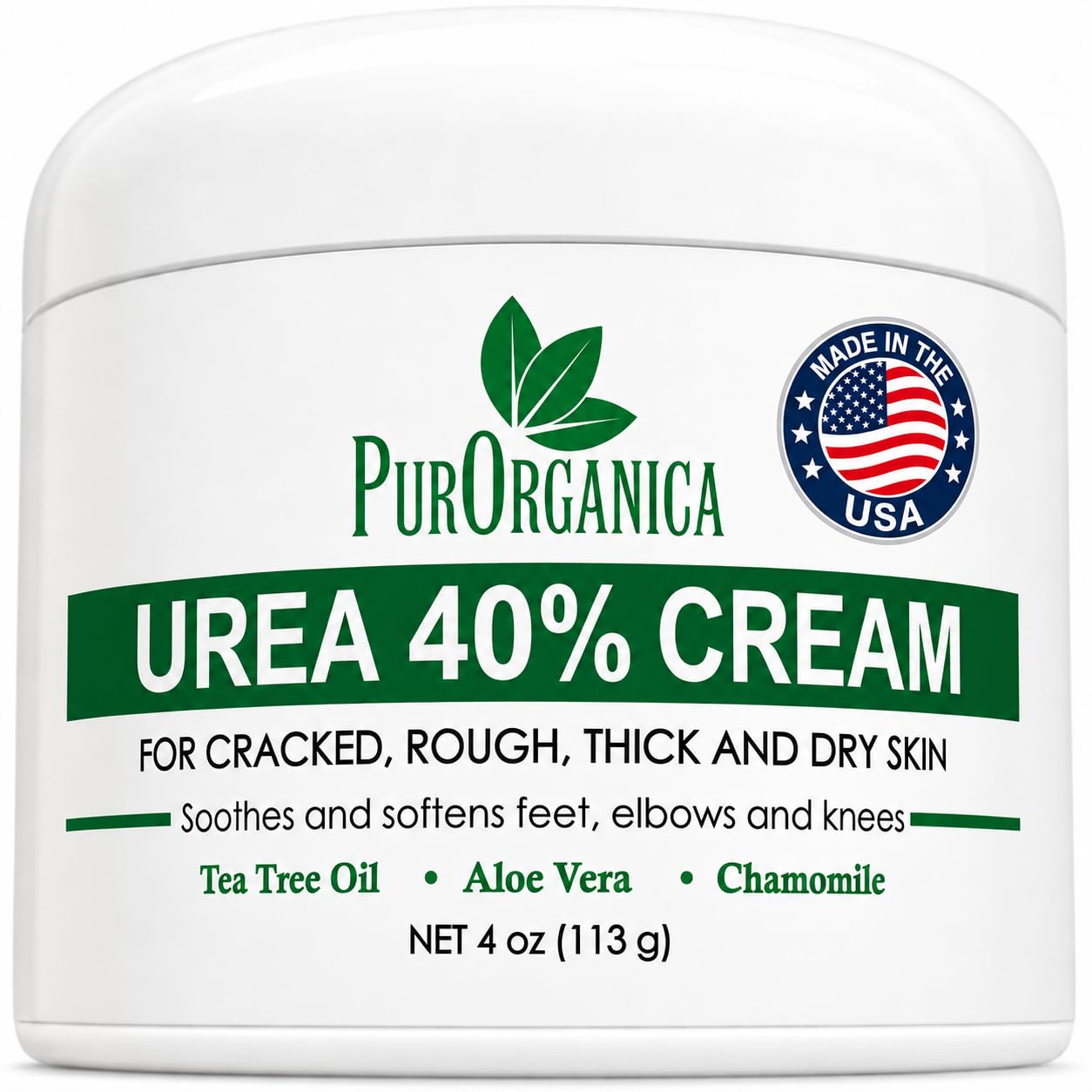
PurOrganica Urea 40% Foot Cream

91 /100
Trail Score Outstanding

Key details

Size
4 oz
Made In
USA
Skin Types
All skin types
Urea Strength
40%
Check Price on Amazon

If 25% urea sounds strong, PurOrganica goes to 40% — the highest concentration here and the closest thing in this set to a chemical file. That's not a marketing number; it changes what the cream does.

At 40%, urea is exfoliating as much as it's moisturizing, and the place it shows is the thick, pale callus that builds around the heel rim and catches on socks. The formula pairs it with glycerin and other humectants, so skin doesn't end up tight once the dead layer comes off.

We put this on the roughest pair of heels in our testing, and the change after a week was the most obvious of anything here: the hard edge around the heel had gone soft enough to stop snagging. The 4-ounce tub is generous for a treatment product, and once a day is plenty.

One caution applies to any cream this strong: it will sting if it gets into a crack that's actually open. Keep it for intact, thickened skin and use something plainer until a fresh split closes.

Pros

  • 40% urea shifts thick, callused skin
  • Cracked heels softened within a week
  • Generous 4-ounce tub for a treatment

Cons

  • Leaves a tacky, powdery residue until it dries
Our verdict

The strongest urea formula here, and our choice when heel skin has gone thick and callused rather than merely dry.

Check Latest Price
6

Best Fragrance-Free Multipack

Eucerin Advanced Repair Foot Cream

94 /100
Trail Score Outstanding

Key details

Pack
Three 3 oz tubes
Scent
Fragrance-free
Also Contains
Ceramides and natural moisturizing factors
Urea Strength
10%
Check Price on Amazon

Three 3-ounce tubes arrive in the Eucerin pack, which sounds like a bulk purchase and turns out to be the most useful format here: one in the bathroom, one in a gym bag, one in a desk drawer, and no decanting into travel bottles.

The formula is 10% urea with ceramides and natural moisturizing factors — the same thinking as a barrier-repair moisturizer. It's fragrance-free, dye-free and paraben-free, and it absorbs quickly enough to use in the morning without a wait.

Ten percent is gentle, and that's the point. It won't resurface a thick callus the way the 25% and 40% products do. What it does is hold the ground you've gained, which after a couple of weeks of a stronger cream is exactly the job that's left.

Pros

  • Fragrance-free and gentle enough for daily use
  • Ceramides support the skin barrier
  • Three tubes to spread between bags

Cons

  • Too gentle for thick, callused heels
Our verdict

The pick for sensitive skin and for anyone who wants a tube in every bag: fragrance-free, gentle, and easy to keep using.

Check Latest Price
7

Best Big Bottle

Miracle Foot Repair Cream

95 /100
Trail Score Outstanding

Key details

Size
32 oz
Formula
Aloe-based cream
Aloe Content
60% ultra aloe
Skin Suitability
Diabetic safe
Check Price on Amazon

Thirty-two ounces is a lot of foot cream. It arrives in a bottle that takes up real shelf space, and that's either the entire argument for it or the reason you scroll past.

The base is 60% ultra aloe, which makes it lighter and more slippery than the urea balms here, and it's labeled safe for diabetic skin. It soaks in fast — we had no greasy footprints on the bathroom tile — and it's soothing on feet that ache at the end of a day.

Where it earns a place is a household. If two people are creaming their feet every morning, if someone is on their feet all day, or if you want something light enough to use after every shower, a bottle this size stops being excessive.

What surprised us is how well it works as a daily cream despite having no urea or acid in it at all — the finish is the nicest of the big-format options. Just don't expect it to close a split that's already open; that's a job for the stronger products here.

Pros

  • 32 ounces lasts months of daily use
  • 60% aloe base is light and soothing
  • Labeled safe for diabetic skin

Cons

  • Too bulky for a small bathroom or a suitcase
Our verdict

A big, light aloe cream for households that go through foot lotion fast — daily softness without a treatment-strength formula.

Check Latest Price
8

Exfoliating Acid Option

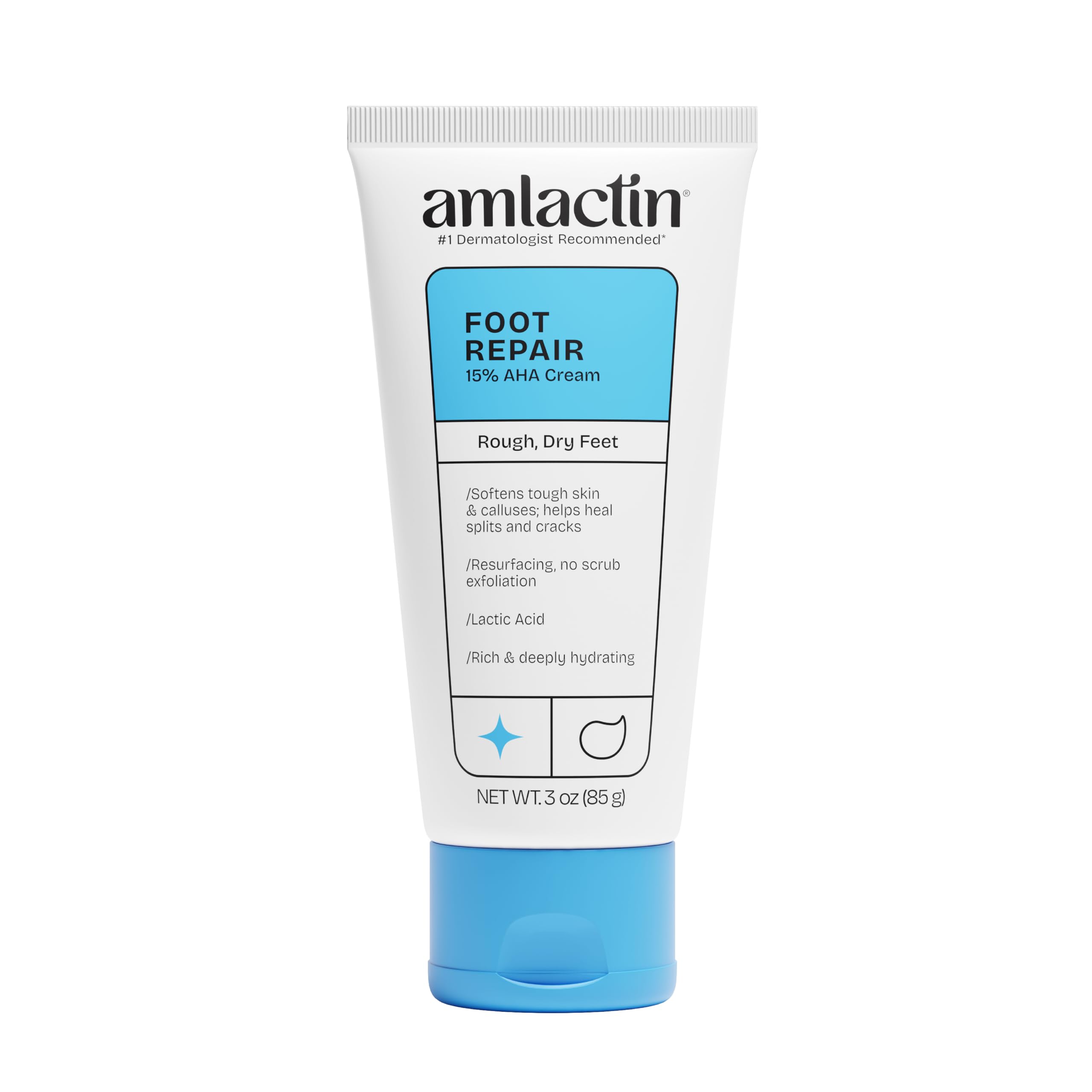
Amlactin Foot Repair Cream

93 /100
Trail Score Outstanding

Key details

Size
3 oz tube
Scent
Fragrance-free
Free From
Dyes, parabens, phthalates
Active Ingredient
15% lactic acid
Check Price on Amazon

Amlactin takes a different route to the same place: instead of urea, it uses 15% lactic acid, an AHA that dissolves the dead cells holding a rough heel together and lets newer skin show.

The formula is fragrance-free, dye-free, paraben-free and pH balanced, and it goes on much thinner than the urea creams — closer to a serum than a balm, which some people will prefer in the morning and others won't.

It plays best with a file or pumice stone once a week, since the acid loosens what the file then takes off, and one application a day after a shower is enough.

Where it works best is on thickened, hardened skin rather than a raw crack — the acid needs something to dissolve. As a second option for anyone who dislikes the tacky finish of high-urea creams, it earns its place; it just doesn't displace the stronger picks.

Pros

  • 15% lactic acid exfoliates rough skin
  • Fragrance-free, dye-free formula
  • Absorbs fast with no scrubbing or rinsing

Cons

  • Thin, watery texture
  • Small 3-ounce tube
Our verdict

A lactic-acid route to smoother heels — effective on rough, thickened skin and fragrance-free, though the formula is thinner than we prefer.

Check Latest Price

What Four Months of Testing Taught Us About Foot Creams

We started by reading labels rather than marketing copy. Anything that didn't list urea, lactic acid, or salicylic acid — the ingredients that actually loosen thickened skin — got set aside, as did anything whose cost per ounce only made sense in a travel size. That filter left us with 15 creams, from drugstore tubes to the thick salve a podiatrist would recognize, and we lived with each one for at least three weeks across a four-month stretch.

Testing happened where feet actually live: on the bathmat right after a shower, at the kitchen counter after dishes, on the bedroom floor before socks and shoes in the morning. We timed how long each cream took to stop feeling tacky, then pulled on a sock at the five-minute mark and noted the drag. At ten minutes we pressed a tissue to the sole to see what would transfer onto sheets. Fragrance got judged by a colleague who can't sit near a scented candle; consistency got noted by whether we could pump it one-handed or had to dig it out of a tub.

Every two weeks we photographed the same heels under the same lamp, looking for whether the white dry rim had softened, whether the deep cracks had closed enough to stop snagging socks, and whether standing barefoot on tile still stung. Value came down to cost per ounce weighed against how often we actually reached for the jar — a cheap cream you abandon is the expensive one.

How to Choose a Foot Cream for Cracked Heels

Match the strength to the crack

Think of these products as a ladder. Plain moisturizers — shea butter, aloe, petrolatum — soften and seal dry skin. Urea at 10% hydrates and gently smooths; at 25% to 40% it also breaks down thick, dead cells. Acids such as salicylic and lactic work from the same direction, dissolving the hardened surface so newer skin can show.

The trap is buying the strongest thing first. High-urea and acid creams can sting on a crack that is actually open, so start at 10% to 25% if your heels are rough, and step up to 40% or an acid only when the skin is thick, pale and callused. Once it is smooth, step back down.

Finish decides whether you keep using it

A cream only works if you apply it often enough, and that comes down to how it feels. Occlusive, waxy balms need socks and a bedtime slot; light lotions can go on in the morning before shoes. Neither is better — they suit different moments in a day.

Treat the words non-greasy on a label as a claim rather than a fact. It is the least consistent thing in this category, and the same cream can dry matte on one pair of feet and stay tacky on another. Buying blind, choose a balm for night and a lotion for day.

Scent, sensitive skin and diabetic feet

Fragrance is the most underrated specification here. A scented cream is pleasant in the morning and less so on a pillow, and if your skin reacts easily it is the first thing to cut. O'Keeffe's and Eucerin are the two most obviously unscented picks in this guide.

If you have diabetes or reduced feeling in your feet, look for a cream labeled suitable for diabetic skin — several here are — and treat any crack as something to show a clinician rather than something to self-treat indefinitely.

Format, size and what you are really paying for

A 1-ounce treatment tube and a 32-ounce pump bottle are not comparable purchases, even though both say foot cream. The small tube is used sparingly, only until a crack closes; the big bottle is for daily maintenance and shared bathrooms.

Buy the format that matches the job, then check the per-ounce figure if you are weighing two similar creams. Twin packs and multipacks are the better buy only once you know the formula suits you.

Frequently Asked Questions

Final Verdict

If you want one jar on the shelf and no decisions, buy O'Keeffe's Healthy Feet: unscented, thick enough to still be working in the morning, and effective on rough and split heels alike.

Step up to PurOrganica's 40% urea when the skin has gone thick and callused, and reach for Kerasal's salicylic ointment when a crack has actually opened. That is the whole decision — strength for the damage, and a texture you will keep using.