Best Fiber Powders of 2026

Fiber powder has one job, and it's a quiet one: disappear into water or a smoothie without turning it into something you have to chew. In practice, plenty of them clump at the bottom of the glass, taste faintly of chalk, or work so aggressively that you spend the afternoon negotiating with your digestive system. A good one closes a real nutrition gap without asking you to change how you eat. Over three months we worked through 14 of them, stirring, sipping, and noting what happened afterward.

The pattern was hard to miss: the powders we kept reaching for dissolved cleanly and tasted like almost nothing. Texture mattered as much as dose — a scoop that quietly delivered 5 grams beat one that promised 12 and left grit on your teeth. We read every label for added sugar and tracked how each one sat with us over weeks, not days. Whatever you stir it into, the picks below won't ruin it.

1

Best Overall

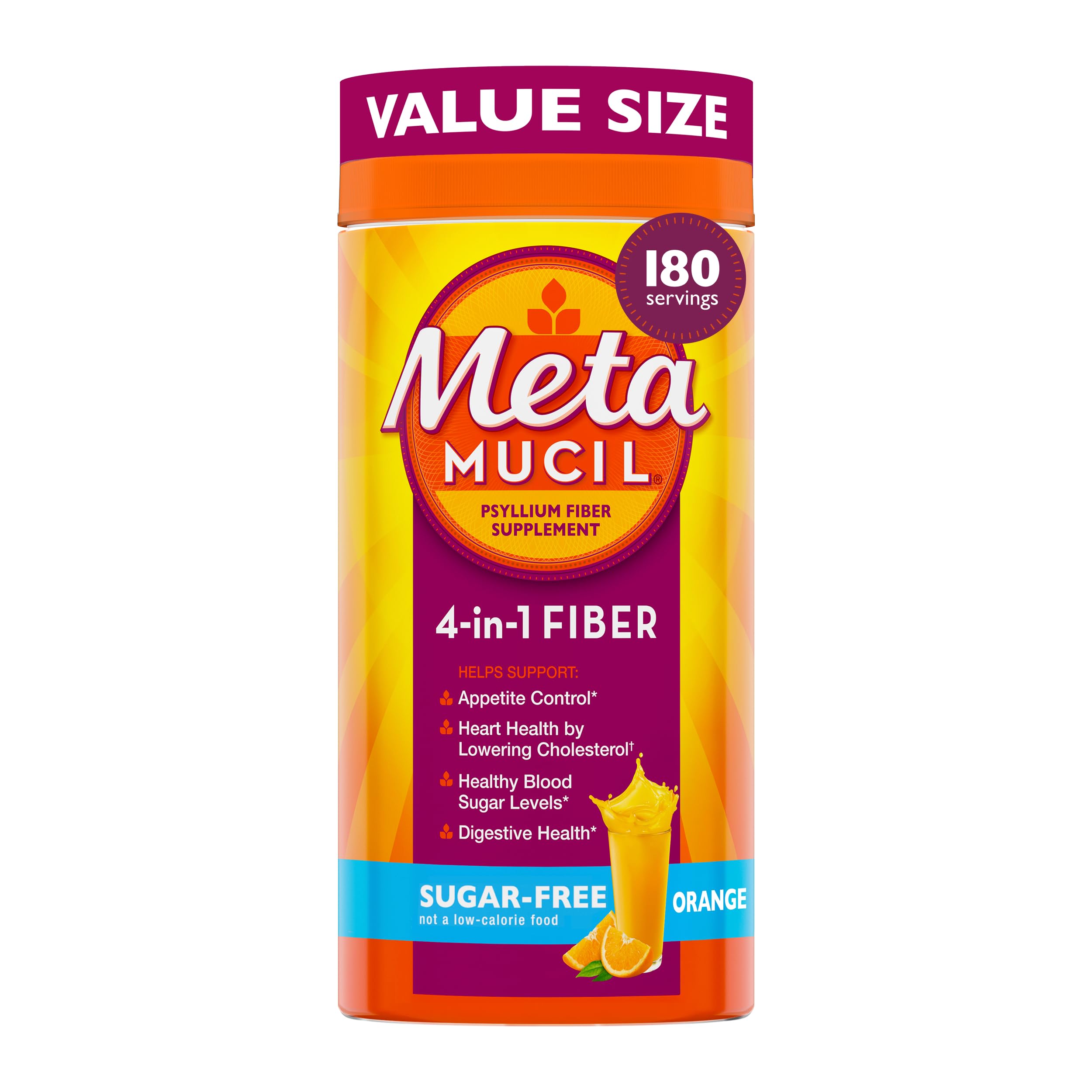
Metamucil 4-in-1 Psyllium

95 /100
Trail Score Outstanding

Key details

Form
Powder tub
Flavor
Sugar-free orange
Servings
180 teaspoons
Fiber Type
Psyllium husk
Check Price on Amazon

Orange-flavored fiber sounds like something you tolerate, and this one we finished and reached for again the next morning, which is the whole ballgame with fiber. Metamucil's psyllium husk is bulk-forming, so it gives the gut material to work with rather than only feeding bacteria, and the tub holds 180 teaspoons, enough to carry a daily habit for months without reordering.

The four claims on the label, digestive health, cholesterol, blood sugar, and appetite, all come back to psyllium's soluble fiber, and the heart claim carries the standard caveat about a diet low in saturated fat. What we paid attention to was regularity, and this is the most convincing psyllium powder in the group on that count. The flavor is why it gets taken; the psyllium is why it works.

The catch is texture, literally. Psyllium starts thickening the moment it meets water, so stir it into a full glass and drink it down rather than walking it to the desk. A glass left standing for a few minutes turns into something closer to a soft gel than a drink, and no amount of stirring brings it back.

The 180 teaspoons are also the reason we keep a tub rather than single-serve packets: one scoop, one glass, nothing to unwrap. It is the least fussy version of a supplement that is inherently a little fussy.

Pros

  • Genuinely drinkable orange flavor
  • Bulk-forming psyllium that supports regularity
  • 180 teaspoons per tub, months of daily doses
  • Four claimed benefits from one daily scoop

Cons

  • Sugar-free formula still carries additives some avoid
Our verdict

Our pick for most people: a genuinely drinkable orange psyllium that turns daily fiber into a habit rather than a chore.

Check Latest Price
2

Best for Travel

Benefiber On the Go Sticks

95 /100
Trail Score Outstanding

Key details

Form
Pre-measured sticks
Flavor
Unflavored
Servings
28 stick packs
Fiber Type
Wheat dextrin
Check Price on Amazon

Twenty-eight foil sticks, each a pre-measured dose of wheat dextrin. That format is the product: tear one into a water bottle, a coffee, or a cup of yogurt, stir, and there is nothing to see, taste, or chew. Nothing else here is as easy to take somewhere that is not your kitchen.

For travel and for anyone who has given up on fiber because of texture, this is the pick. What we appreciate is that the powder disappears rather than merely dissolving, so you can get distracted halfway through a cup and come back to something still drinkable. The prebiotic action is a bonus on top of the fiber itself.

Twenty-eight sticks is under a month at one a day, so plan on two boxes if this is replacing a tub rather than supplementing one. The cost per serving is the price of that convenience, and the fact that wheat dextrin comes from wheat is the detail that rules it out for some households before price ever enters the conversation.

Pros

  • Dissolves clear with no taste or grit
  • Pre-measured sticks for bags and travel
  • Works in hot and cold liquids
  • Prebiotic fiber that feeds gut bacteria

Cons

  • Priciest per serving of the picks here
  • Made from wheat dextrin, so not for wheat avoiders
Our verdict

Buy these if the powder has to leave the house: pre-measured wheat dextrin sticks that vanish into any drink, at a premium per serving.

Check Latest Price
3

Best Unflavored

GOBIOTIX Fiber Supplement

89 /100
Trail Score Excellent

Key details

Diet
Keto, vegan, gluten-free
Flavor
Unflavored
Servings
35
Fiber Type
Plant-based soluble fiber
Check Price on Amazon

If your reference point for fiber powder is a glass of orange sludge you have to finish before it sets, this resets it. GOBIOTIX is a plant-based soluble fiber with prebiotics, unflavored, and it stirs into hot coffee, cold water, or a smoothie without gelling, thickening, or leaving grit behind.

That is why it earns a place here: it is the one we point someone toward when they want fiber to vanish into a routine they already have. The label is clean by the standards of this category as well, keto, vegan, gluten-free, and free of artificial sweeteners and refined sugar, and 35 servings is a fair run for a tub this size.

What it does not do is bulk. Without psyllium's gelling action it feeds the bacteria you already have rather than adding mass, which is exactly why it stays smooth in the glass and why someone chasing a stronger laxative effect should look at the psyllium tubs instead.

Pros

  • Mixes into hot coffee without gelling
  • No taste, no grit, no aftertaste
  • Keto, vegan, and gluten-free with no artificial sweeteners
  • Prebiotic soluble fiber for daily gut support

Cons

  • Premium price for a 35-serving tub
Our verdict

The one to buy if you want fiber you cannot detect: unflavored, grit-free, and happy in hot coffee, at a premium price.

Check Latest Price
4

Best Bulk Buy

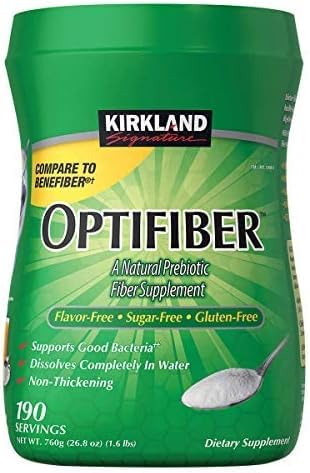
Kirkland Signature Optifiber

95 /100
Trail Score Outstanding

Key details

Pack
Two 25.6 oz tubs
Flavor
Unflavored
Texture
Non-thickening, grit-free
Servings
190
Check Price on Amazon

Two 25.6-ounce tubs, 190 servings, and a powder that dissolves and does not thicken. Kirkland's Optifiber is the least interesting product on this page and, for a lot of households, the one that makes the most sense.

How it behaves depends on the liquid. In hot coffee or tea it disappears and leaves nothing behind, which is the use we kept coming back to. Cold water is slower going and needs steady stirring rather than one decisive swirl. Put the liquid in the glass first and sprinkle the powder in as you stir, and most of the trouble never happens.

Our call: if you already know an unflavored powder is what you want, this is the most fiber for the money in the group, and the two-pack means you are not reordering every few weeks. The one annoyance is that no scoop comes in the tub, so the first week is guesswork until you settle on a teaspoon that suits you.

Pros

  • Tasteless and non-thickening
  • Dissolves cleanly in hot drinks
  • 190 servings across two tubs
  • Budget price for a long supply

Cons

  • Leaves grit when mixed into cold water
Our verdict

The bulk buy we recommend to anyone who has settled on an unflavored daily powder and does not want to think about it again.

Check Latest Price
5

Best Budget Psyllium

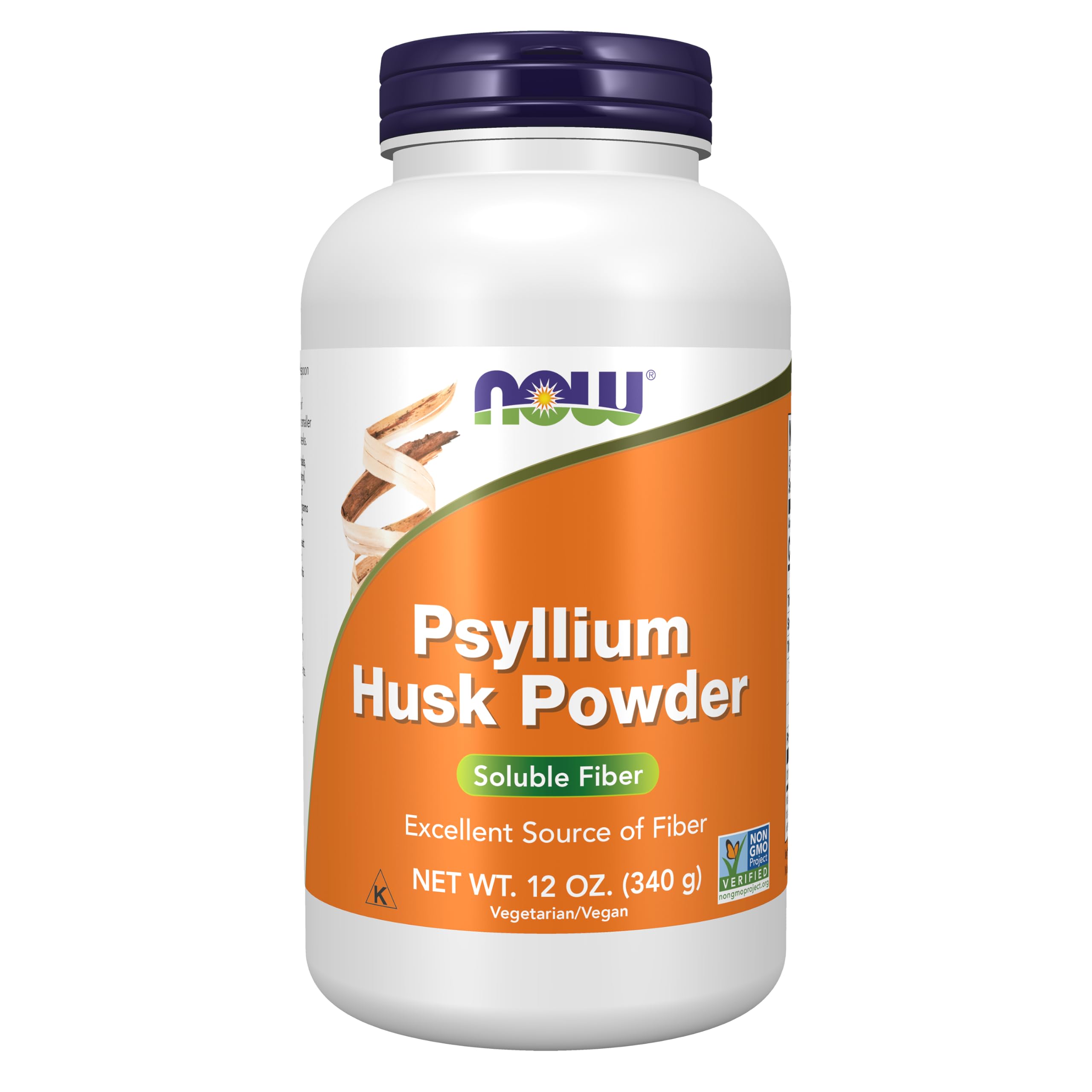
NOW Psyllium Husk Powder

91 /100
Trail Score Outstanding

Key details

Fiber Type
Psyllium husk powder
Serving Size
1 level tablespoon
Certification
Non-GMO Project Verified
Soluble Fiber
6 grams per tablespoon
Check Price on Amazon

Cheapest, plainest, and the most demanding of the psyllium powders here. NOW's 12-ounce tub is nothing but psyllium husk, no sweetener, no flavor, no color, with 6 grams of soluble fiber in a level tablespoon and Non-GMO Project verification on the label. It is our budget pick, and it asks more of you than the flavored brands do.

The directions are unusually specific: one level tablespoon whisked vigorously into at least 12 ounces of water or juice and drunk immediately. Take them seriously. This powder clumps if you stir it in a glass, and it thickens fast enough that a drink left standing is no longer a drink. A shaker bottle does the job a spoon cannot, and a wide glass helps more than a narrow one.

What the effort buys is a fiber with no additives at all, which is the reason it is on this list, and a texture that thickens soups and smoothies as readily as it thickens water. Mix it into something with flavor of its own. On its own it tastes like exactly what it is.

Pros

  • 6 grams of soluble fiber per tablespoon
  • Nothing but psyllium, no additives
  • Non-GMO Project Verified and vegan
  • Budget price for a 12-ounce tub

Cons

  • Requires a full 12 ounces of liquid per tablespoon
Our verdict

The budget psyllium we keep for people who want nothing added and do not mind doing the mixing properly.

Check Latest Price
6

Best for Sensitive Stomachs

Tomorrow's Nutrition Sunfiber

91 /100
Trail Score Outstanding

Key details

Diet
Low FODMAP certified
Flavor
Unflavored
Fiber Type
Sunfiber soluble fiber
Soluble Fiber
6 grams per serving
Check Price on Amazon

Six grams of soluble fiber, no taste, no grit, and a certification that matters if you have ever abandoned a fiber because of gas: Sunfiber is low FODMAP certified. It ferments slowly in the gut, which is the mechanism behind both its gentleness and the price you pay for it.

In the glass it behaves like the best of the unflavored powders. It dissolves quickly, disappears into coffee or water without clumping, and does not congeal if you take your time drinking it. What separates it from the cheaper tubs is not texture, it is the following morning.

Our judgement: this is the one to try if psyllium or inulin left you bloated, and it is the most expensive pick in this guide by a wide margin. For an uncomplicated gut the cheaper powders do the same daily job. For a sensitive one, the premium buys something the others cannot offer, and that is a fair trade.

Pros

  • Low FODMAP certified and typically well tolerated
  • Tasteless, grit-free, and clump-free
  • 6 grams of soluble fiber per scoop
  • Dissolves easily in hot and cold liquid

Cons

  • The most expensive pick in this guide
Our verdict

Worth the premium if gas has ended a fiber experiment before: low FODMAP certified, tasteless, and slow-fermenting.

Check Latest Price
7

Organic Buying

Organic India Whole Psyllium Husk

91 /100
Trail Score Outstanding

Key details

Pack
2 x 12 oz
Flavor
Unflavored
Sourcing
Organic
Fiber Type
Whole husk psyllium
Check Price on Amazon

Whole husk psyllium, organic, two 12-ounce containers, and nothing else in the tub. Organic India's powder is for the buyer who reads the ingredient line before the supplement facts, and it is the only organic whole-husk psyllium we recommend here.

It behaves the way whole husk behaves: no real flavor or smell, thick, and cooperative in warm or cold drinks as long as you keep it moving. In smoothies and in baking it does double duty as a thickener, which is more than most of the flavored tubs can claim.

Where it stands apart in this group is sourcing rather than performance. The fiber itself is the same soluble fiber as the cheaper psyllium tubs, and the price reflects the certification, not a difference you can taste in the glass.

Our call: worth it if organic sourcing is the reason you are shopping, and the two-pack spreads the outlay over a long supply. If it is not, the plain tub does the identical job for less, and we would rather you spent the difference on a shaker bottle and a better coffee.

Pros

  • Organic and single-ingredient
  • No flavor or smell to work around
  • Works in drinks, smoothies, and baking
  • Two 12-ounce containers is a long supply

Cons

  • Costs more than plain psyllium for the same fiber
Our verdict

Buy it if organic and single-ingredient are lines you do not cross; otherwise the plain psyllium does the same job for less.

Check Latest Price
8

Prebiotic Support

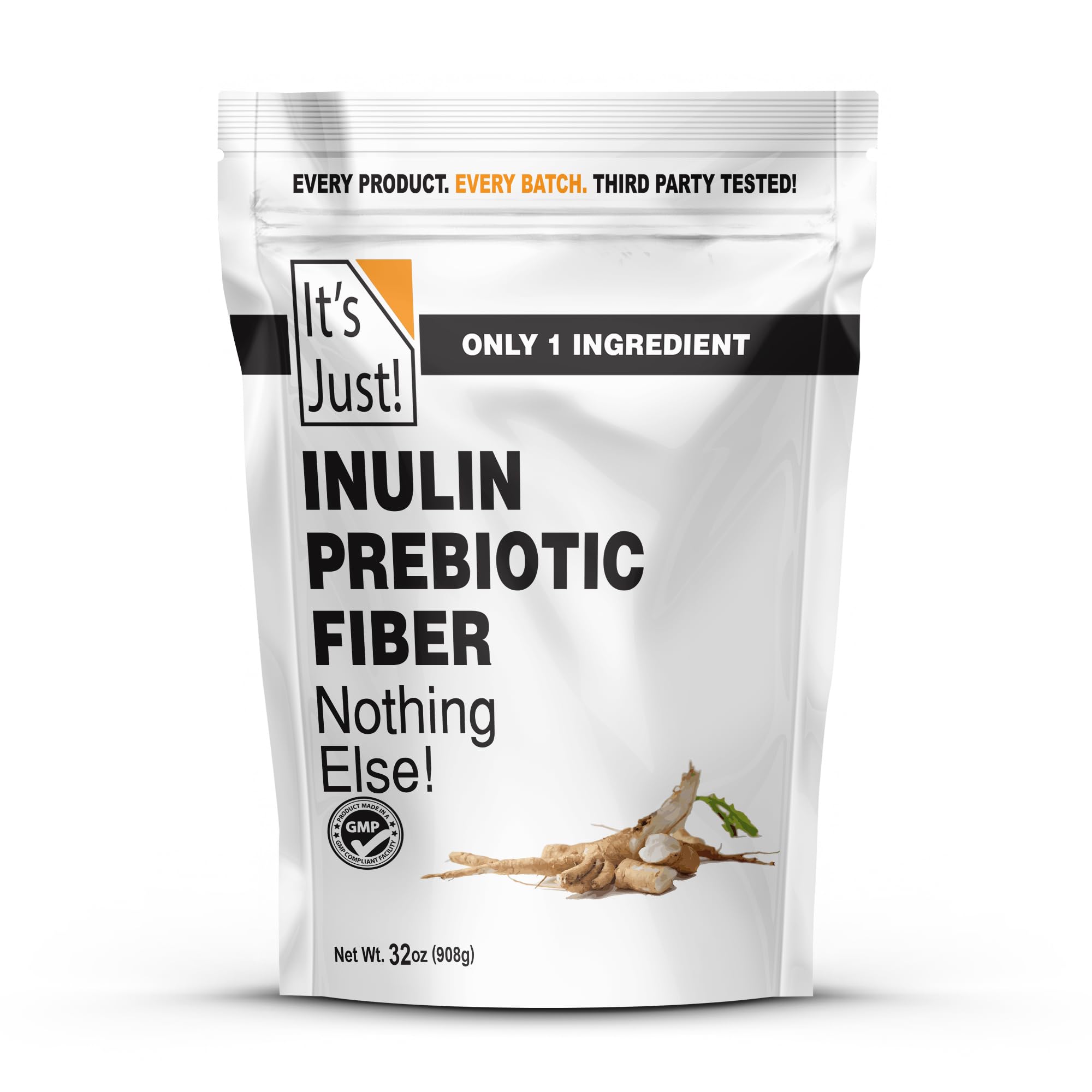
It's Just! Inulin Prebiotic Fiber

94 /100
Trail Score Outstanding

Key details

Flavor
Unflavored
Weight
2 lb
Calories
Zero-calorie
Fiber Type
Inulin from chicory root
Check Price on Amazon

Inulin works differently from everything else on this page. It is a water-soluble fiber from chicory root that gut bacteria ferment, so it feeds the microbiome rather than adding bulk, and a two-pound bag is a low-cost way to find out whether that approach suits you.

The powder comes as micro-granules rather than dust, faintly sweet, and it dissolves cleanly in warm water or coffee. Put the liquid in the cup first and the powder second. Do it the other way around and it clumps, which is the one handling mistake this powder punishes.

Because it ferments, gas is the thing to watch. Start with part of a scoop for the first week and build up, and the difference between a fiber that suits you and one you resent is usually just that ramp. Anyone who already knows fermentable fibers disagree with them should start with Sunfiber instead.

What we think: this earns a place because it does a job none of the psyllium tubs do, feeding the bacteria rather than moving the contents along, and it is pleasant enough to use daily. It is a partner to a fiber routine, not the whole routine.

Pros

  • Prebiotic inulin from chicory root
  • Zero calories and dissolves clear
  • Faint sweetness works in coffee and yogurt
  • Two-pound bag goes a long way

Cons

  • Not a bulk-forming fiber, so it will not do psyllium's job
Our verdict

A good prebiotic for people who already take a probiotic or make yogurt, not a replacement for psyllium.

Check Latest Price

How We Tested 14 Fiber Powders (and What We Looked For)

We started by gathering every widely available fiber powder we could find, then cut the list by reading labels: fiber type and grams per serving, added sugars and sugar alcohols, artificial sweeteners, and whether the scoop size was something a person could reasonably drink. That left 14 powders we were willing to use daily for three months straight.

Each one got the same first test in my kitchen: one scoop into 8 ounces of cool tap water, stirred for 10 seconds, then left alone for two minutes. I noted whether it went clear or sank into a gel at the bottom, and whether a second stir rescued it. From there it went into hot coffee, where clumping shows up fast, and into a blender smoothie, where gritty texture is harder to hide. We tasted each one plain and as directed, scoring flavor, sweetness, and mouthfeel — slick, sandy, or oddly thick.

Then we lived with them. I kept a container at my desk and mixed one into a water bottle most afternoons; other testers used theirs before breakfast or after dinner, wherever it fit their routine. Each powder got at least two consecutive weeks of daily use, and we logged how quickly things became regular, whether there was bloating or gas in the first few days and whether it faded, and whether we actually wanted a second glass. Cost per serving came last, because a powder you dread drinking is expensive at any price.

How to Choose a Fiber Powder

Start With the Fiber Type

Psyllium is bulk-forming: it absorbs liquid and adds mass, which is why it is the usual choice for regularity and why it gels in the glass. Wheat dextrin and inulin work the other way around, feeding gut bacteria rather than adding bulk, and Sunfiber splits the difference by fermenting slowly enough to be gentle.

Match the mechanism to the goal. If the aim is softer, more predictable bowel movements, choose psyllium. If the aim is invisible daily fiber or prebiotic support alongside a probiotic, wheat dextrin or inulin is the easier habit.

Mixability Decides Whether You Keep Taking It

A powder that thickens is not a flaw, it is psyllium doing its job, and the fix is behavioral: stir it into a full glass and drink it straight down instead of carrying it to your desk. For the plain psyllium tubs, a shaker bottle beats a spoon every time.

The trap is the phrase no grit. Grit depends on how you mix, not just on the powder. Put liquid in the cup first and sprinkle the powder in while stirring; powder-first is what produces the lumps people blame on the product.

Read the Ingredient Line, Not the Sugar-Free Badge

Sugar-free describes the sweetener, not the rest of the formula, and flavored fiber tubs can still carry maltodextrin, artificial sweeteners, and colors. If a clean label is the reason you are buying, look for a single-ingredient psyllium or a short unflavored blend and check the panel before the front of the tub.

Allergens belong here too. Benefiber is made from wheat dextrin, so anyone avoiding wheat should stay with psyllium. Inulin is fermentable, which is a real consideration if gas has ended a fiber experiment before.

Count Servings, Not Tub Size

The useful comparison is cost per serving, and the container size rarely tells you. A 180-teaspoon tub, a 190-serving two-pack, and a box of 28 sticks all look similar on a shelf, but a box of sticks is under a month at one a day, while the big tubs run for months.

Pay for the format you need. Pre-measured sticks cost more per serving and earn it if the powder has to leave the house; a tub is cheaper and better value as long as the scooping happens at your own counter.

Frequently Asked Questions

Final Verdict

Metamucil's orange psyllium is the pick for most people. It is the most convincing psyllium powder in this group, the easiest to drink every day, and the tub lasts for months, which is what a fiber habit actually needs.

Change one requirement and the answer changes. Traveling means Benefiber's sticks; fiber you cannot detect in coffee means GOBIOTIX; a gut that has rejected psyllium before means Sunfiber, and the premium is the price of that tolerance.