Best Facial Serums for Aging Skin of 2026

The ingredients that do the most for aging skin — retinoids, acids, vitamin C — are also the ones most likely to sting, flake, or leave your face pink by mid-morning, which is why so many serums end up abandoned behind the bathroom mirror. A good one balances that: enough active to make a visible difference over weeks, in a formula comfortable enough that you'll actually keep using it. What you're buying is smoother texture, a little more bounce, and skin that holds onto moisture instead of feeling tight an hour after you wash it.

I've finished bottles that did nothing and quit ones that worked because they made my skin burn. So we spent six months with 12 serums — thin and watery, milky, a few that smelled loudly of rose — using each long enough to see past the first week. The lesson: give anything new six to eight weeks before you judge it, and patch test first if your skin runs reactive. The picks below are the ones that earned their spot on the shelf.

1

Best Overall

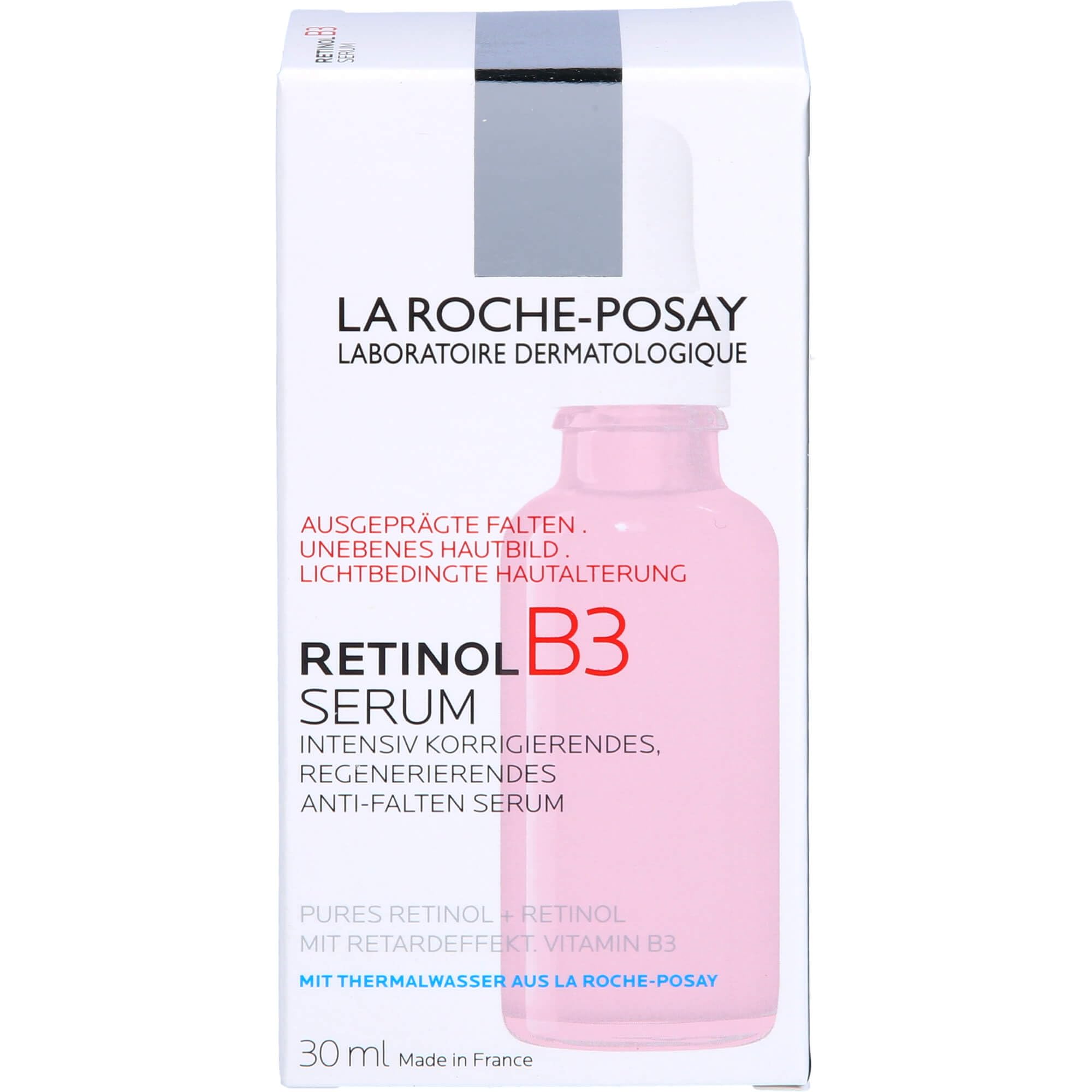
La Roche-Posay Retinol B3 Serum

93 /100
Trail Score Outstanding

Key details

Use
Evening
Size
1 oz
Texture
Lightweight, fast-absorbing
Key Actives
Pure retinol, niacinamide, hyaluronic acid
Check Price on Amazon

Retinol has the longest track record of anything in this category for fine lines and texture, and it is also the active most likely to send mature skin back to a gentle cleanser and nothing else. La Roche-Posay's Retinol B3 is the version we hand to someone who has been told their skin is too sensitive for a retinoid: pure retinol in a gradual-release formula, cushioned with niacinamide and hyaluronic acid, in a light serum that absorbs in seconds.

That gradual release is the part that matters. A bare retinol can land all at once; this one is built to unfold slowly, with niacinamide supporting the barrier while the retinol works. It doesn't feel like a treatment — no sting, no tightness, no film — which is why it survives in a routine that already has a cream and an SPF crowding it.

The base is oil-free and non-comedogenic, and that is the detail separating it from the squalane-based retinol further down this list. If heavier retinol formulas have left your face shiny or your pores congested, this one goes on and disappears, and it layers under a night cream without pilling.

What you won't get is a dramatic overnight change. Tone and texture shift over weeks, and the lines around the eyes and mouth soften gradually rather than lift away. If an instant glow is what you're after, a vitamin C or peptide serum will do more for you in the first ten days.

Of the nine serums here, this is the one we point to first. It pairs the best-supported anti-aging ingredient with a formula most skin can actually tolerate, and for a first retinol that combination beats a stronger percentage every time: you get further with a retinoid you can use four nights a week than with one you have to abandon in week two.

Pros

  • Gradual-release retinol suits reactive skin
  • Niacinamide and hyaluronic acid cushion the active
  • Oil-free and non-comedogenic
  • Layers under cream and sunscreen without pilling

Cons

  • Noticeable scent for a sensitive-skin formula
Our verdict

We tell anyone starting a retinol to buy this one first: a gradual-release formula buffered with niacinamide that mature, easily irritated skin can usually keep using.

Check Latest Price
2

Best for Glow and Hydration

medicube PDRN Pink Peptide Serum

93 /100
Trail Score Outstanding

Key details

Use
Daily
Texture
Lightweight pink serum
Skin Type
All skin types
Key Actives
Salmon DNA PDRN, niacinamide, peptides, adenosine
Check Price on Amazon

The finish is what sells this one, and the finish is why we rate it the best of this group for glow: a lightweight pink serum that disappears within seconds of contact and leaves the kind of sheen that reads as well-slept rather than greasy.

The ingredient list is the current K-beauty playbook — salmon DNA PDRN, niacinamide, peptides, and adenosine — aimed at firmness, tone, and moisture rather than at resurfacing. Used daily, it does most of its work on plumpness. Skin feels bouncier in the morning, and moisturizer sits on top of it rather than sliding around, which is not something we can say for every serum here.

Where it loses ground is tolerance. Breakouts and closed comedones are the real risk, mostly along the chin and jaw, so patch test the jawline for a week before you commit your whole face. Anyone who already knows their skin likes niacinamide and peptides tends to get on with it; anyone who has never used either is taking a small gamble on a full bottle.

Pros

  • Best glow of the group
  • Leaves skin plump and soft overnight
  • Lightweight and easy to layer daily

Cons

  • Can cause breakouts along the chin and jaw
Our verdict

Buy this if you want visible plumpness and glow without a retinol, and your skin has handled peptides and niacinamide before without breakouts.

Check Latest Price
3

Best Vitamin C Value

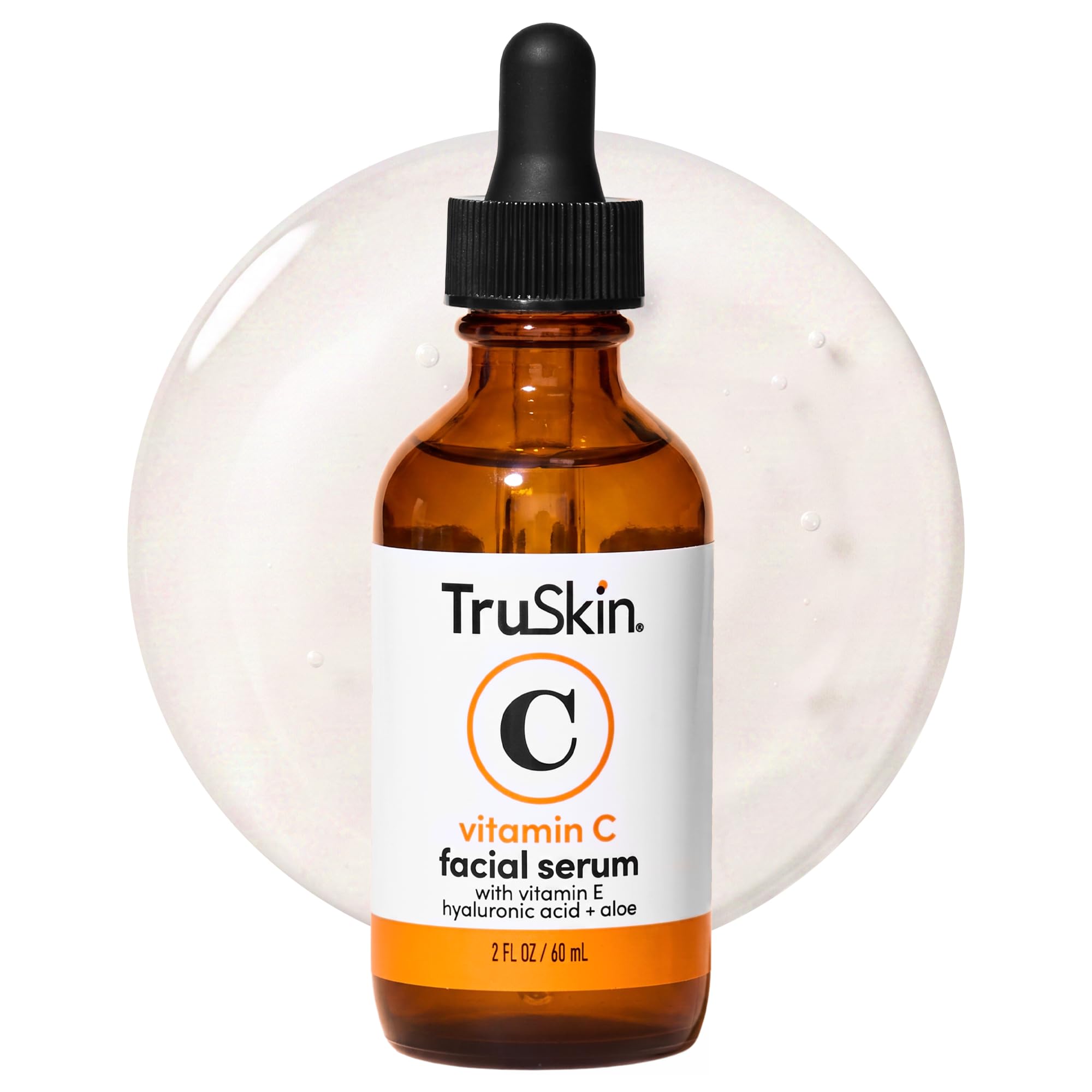
TruSkin Vitamin C Serum

89 /100
Trail Score Excellent

Key details

Size
2 fl oz
Scent
Fragrance-free
Key Actives
Vitamin C (SAP), hyaluronic acid, vitamin E
Check Price on Amazon

Two fluid ounces is the number to notice here. Most serums on this list come in one, and vitamin C is a daily product if you're serious about tone, so the bottle that lasts is the one you'll actually finish. TruSkin's is the biggest here, and the price per ounce lands well below the department-store serums in this group.

The vitamin C is SAP, a stable derivative rather than the L-ascorbic acid in Naturium's formula further down, and that's the trade you're making: gentler, less sting, slower. Brightening is where it earns its place — tone evens out and dark spots fade gradually — and the serum dries down completely, so sunscreen goes on over it without rolling.

This is our pick for brightening on a budget, and especially for anyone who has tried a strong vitamin C and given up because it stung. It won't resurface: fine lines and firmness are retinol territory, and this serum doesn't pretend otherwise. Patch test first if your skin breaks out easily, because vitamin C is one of those ingredients that suits most people and not everyone.

Pros

  • Largest bottle here for daily use
  • Gentle SAP vitamin C won't sting
  • Dries down and layers cleanly
  • Fragrance-free

Cons

  • Can break out reactive skin
Our verdict

This is the vitamin C we suggest for anyone who has tried a strong one and given up on the sting, and the two-ounce bottle makes daily use affordable.

Check Latest Price
4

Best for Dehydrated Skin

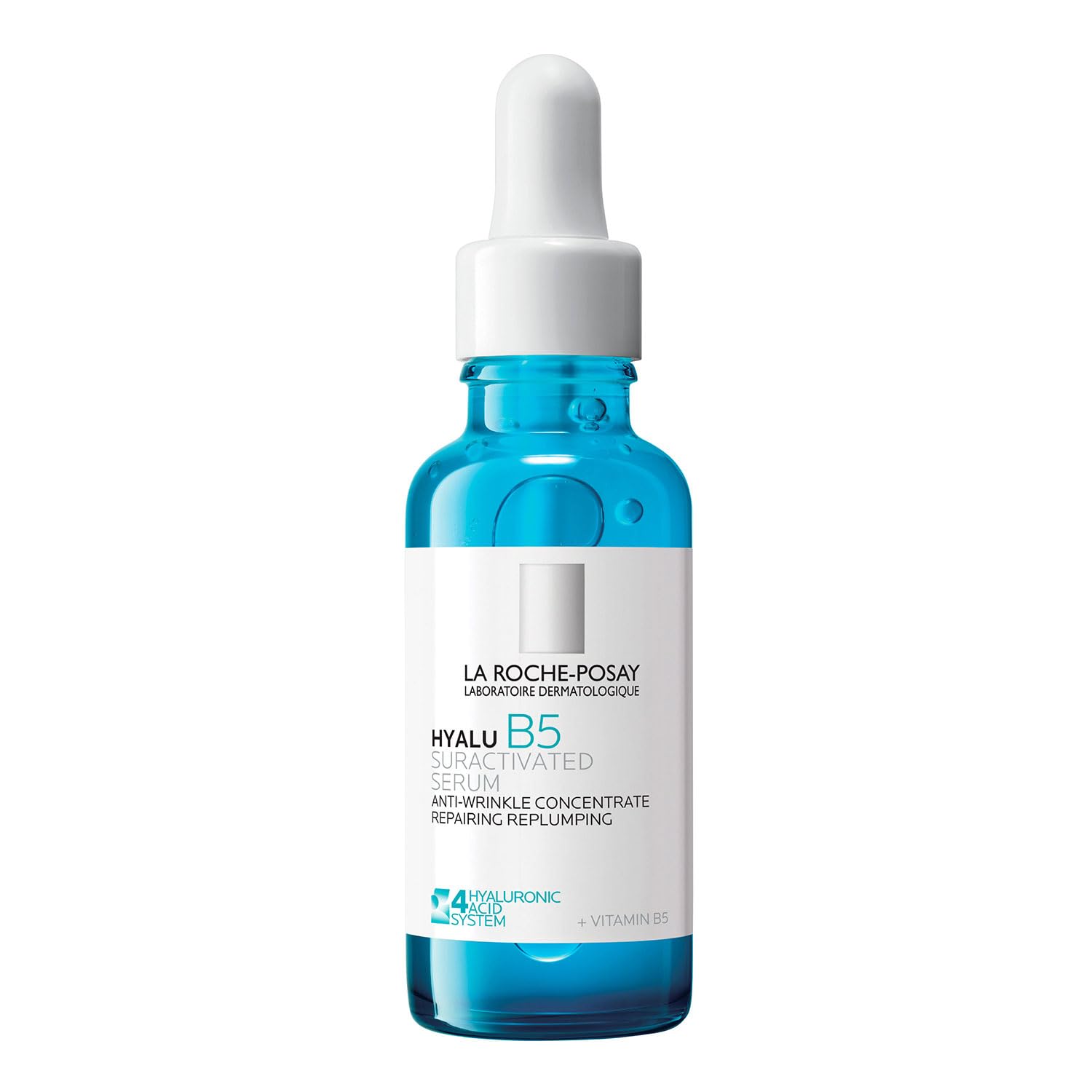
La Roche-Posay Hyalu B5 Serum

93 /100
Trail Score Outstanding

Key details

Texture
Rich, lotion-like
Skin Type
All skin types, sensitive included
Key Actives
Hyaluronic acid, vitamin B5, glycerin
Check Price on Amazon

La Roche-Posay calls this texture rich, and it is — closer to a light lotion than to the watery serums most of us picture when we hear the word serum. For skin that has thinned and dried with age, that's the appeal: it plumps on contact, and the tight feeling after cleansing is gone within a minute.

The formula is hyaluronic acid, glycerin, and vitamin B5, which makes it hydration rather than resurfacing. There's no retinol to build tolerance to and no acid to sting, so it's the one here you can add to a routine that already contains a retinoid — most nights, over the retinol rather than instead of it.

If your complaint is thirsty, crepey skin rather than lines, this is the pick we reach for first. It's also the one to put on your neck and chest, where a retinoid is usually more trouble than it's worth, and it wears under makeup without sliding. Judge it on how your skin feels at four in the afternoon rather than how it looks in the mirror at seven in the morning.

Pros

  • Immediate plumping for dehydrated skin
  • Gentle enough to layer over a retinoid
  • Rich enough for neck and chest

Cons

  • Pronounced fragrance
Our verdict

Choose this if tightness and crepey texture bother you more than lines, or if you want hydration that layers on top of an existing retinol rather than replacing it.

Check Latest Price
5

Best Budget Retinol

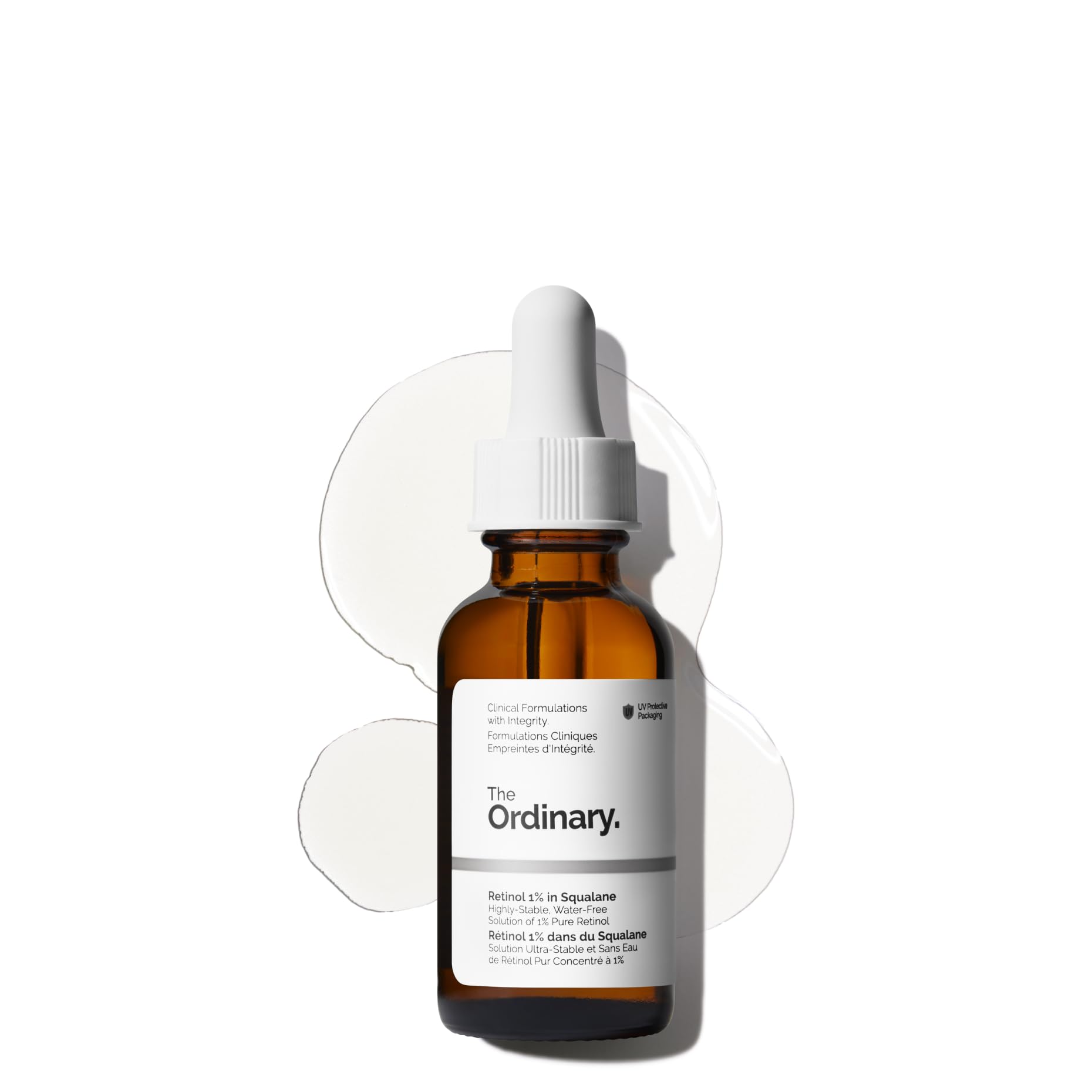
The Ordinary Retinol 1% in Squalane

93 /100
Trail Score Outstanding

Key details

Use
Evening
Storage
Refrigerate after opening
Suited To
Retinol-tolerant skin
Key Active
1% retinol in squalane
Check Price on Amazon

One percent is the number that decides who this is for. It's the strongest plain retinol in the group, it comes suspended in squalane rather than a water-light base, and it is the least expensive route to a real retinol routine here — a bargain for someone who has already been through the flaking phase, and a mistake for anyone who hasn't.

The squalane is the other half of the story. It's an oil, so it takes a while to sink in and leaves a sheen; go to bed five minutes later and your pillowcase will know. Give it twenty and it's fine, and the conditioning genuinely helps with the dryness retinol causes. The label's own instructions are worth following exactly: evenings only, sunscreen the next day, no other retinoids on top, and refrigerate after opening.

Pros

  • Cheapest retinol in this group
  • Squalane offsets retinol dryness
  • Clear high-strength option for tolerant skin

Cons

  • Oily finish takes twenty minutes to settle
  • Not a starting strength
Our verdict

Buy it if you have already been through the flaking phase with a gentler retinol and want the strongest, cheapest step up in this group.

Check Latest Price
6

Best Lightweight Everyday Serum

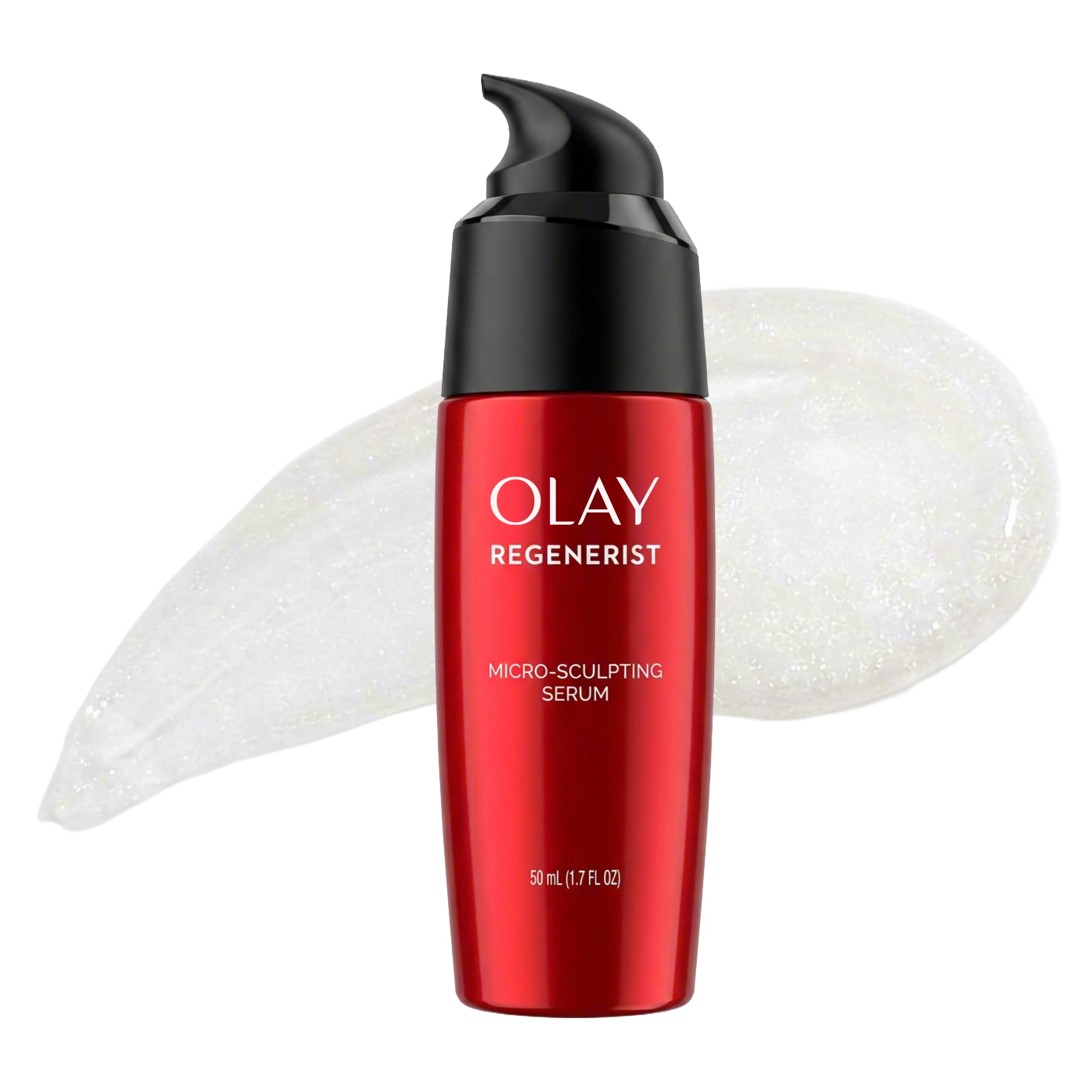
Olay Regenerist Micro-Sculpting Serum

95 /100
Trail Score Outstanding

Key details

Use
After cleansing, AM or PM
Size
1.7 oz
Texture
Silky, fast-absorbing
Key Actives
Amino-peptide complex II, niacinamide
Check Price on Amazon

No retinol, no acids, no vitamin C: this is peptides and niacinamide in a silky, fast-absorbing serum, and the restraint is the point. It's the one to reach for when your skin has become reactive to everything else, or when you want a single step in the morning rather than a layered project.

We like it best as an everyday serum for someone who wants a firmer look without a tolerance curve. It's non-comedogenic, it sits under makeup without pilling, and it's light enough to serve as your moisturizer step in summer — the brand lists it as either a serum or a moisturizer, and in humid weather that's exactly how it behaves.

Two caveats. The 1.7-ounce bottle empties quickly at twice a day, and in winter dry skin will still want a cream over the top. Neither is a dealbreaker; both are the cost of a texture this light.

Pros

  • Silky texture with no tolerance curve
  • Doubles as a light moisturizer
  • Non-comedogenic and fast-absorbing

Cons

  • Fragrance-free label, but not scent-free
  • Small bottle empties quickly
Our verdict

A good pick if your skin has turned reactive and you want one gentle step in the morning that leaves you looking polished rather than treated.

Check Latest Price
7

Targeted Wrinkle Care

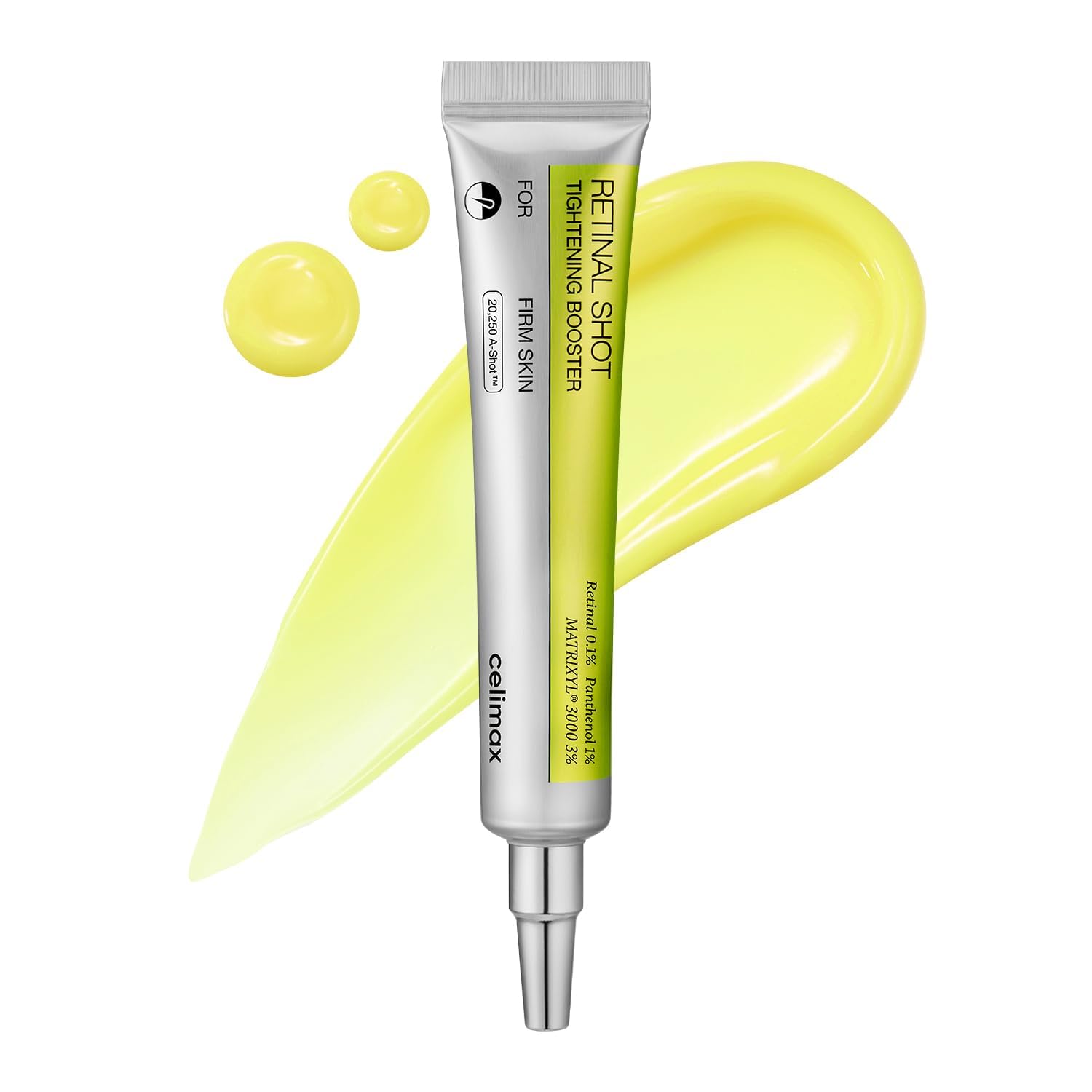
celimax The Vita A Retinal Shot

89 /100
Trail Score Excellent

Key details

Use
Nighttime only
Size
0.51 fl oz
Key Actives
0.1% retinal, Matrixyl 3000
Starting Routine
Every other night for two weeks
Check Price on Amazon

Half an ounce. That's the whole tube — 0.51 fluid ounces — and it's the first thing to weigh with this one, because the formula inside is the strongest retinoid here and the strongest formulas are the ones you use sparingly anyway.

Retinal sits one step closer to the retinoic acid your skin eventually uses than ordinary retinol, and 0.1% is a serious concentration of it. Matrixyl 3000, a peptide, rides along for firmness. It's nighttime only, and the brand's own guidance is every other night for the first two weeks — that isn't caution for its own sake.

Tolerance is where this splits. Some skin takes to it with nothing more than a little tightness, and other skin burns, with redness and soreness the reaction to watch for. Start on the forehead and around the mouth, keep it off the eye area as the label says, and stay on alternate nights until your skin stops noticing it.

Buy it if you've already used retinol and want to step up: pores and texture are what it targets, and the small tube means you aren't committing to a year of something your skin might reject. If you've never used a retinoid, start with the La Roche-Posay instead and come back to this one later.

Pros

  • Strongest retinoid in this group
  • Targets pores and texture, not just lines
  • Small tube limits the commitment

Cons

  • Burns easily on skin new to retinoids
  • Half-ounce tube runs out fast
Our verdict

A step-up retinoid for skin that has already met retinol and wants faster work on pores and texture, in a tube small enough to trial.

Check Latest Price
8

Sensitive Skin Brightening

Naturium Vitamin C Complex Serum

93 /100
Trail Score Outstanding

Key details

Use
AM and PM
Size
1 fl oz
Formula
Fragrance-free, vegan
Key Actives
Vitamin C complex, sodium hyaluronate, vitamin E
Check Price on Amazon

Vitamin C usually announces itself — a sting, a smell, a slightly metallic tang. This one doesn't. The formula pairs a stabilized L-ascorbic acid complex with sodium ascorbyl phosphate and a fruit blend, and it's fragrance-free, which puts it at the front of this group for anyone whose skin reacts to scent or to strong acids.

It's a one-ounce bottle, affordable against the rest of this list, and designed for morning and night — follow with moisturizer and sunscreen, which the label is explicit about. Brightening is the payoff: tone looks more even and old marks fade slowly over weeks rather than overnight.

One practical wrinkle: this serum can pill under the wrong cream, so give it a minute to dry before whatever goes on next. That aside, it's the gentlest vitamin C here and the one we point to for sensitive skin — it brightens without the sting that sends people back to their old routine.

Pros

  • Brightens without stinging sensitive skin
  • Fragrance-free and vegan formula
  • Twice-daily use with clear sunscreen reminder

Cons

  • Can pill under the wrong moisturizer
Our verdict

Our choice when vitamin C has stung before: a fragrance-free complex gentle enough for reactive skin, provided you let it dry before the next layer.

Check Latest Price
9

Post-Acne Texture

CeraVe Resurfacing Retinol Serum

93 /100
Trail Score Outstanding

Key details

Use
Evening
Size
1 oz
Formula
Fragrance-free, non-comedogenic
Key Actives
Encapsulated retinol, niacinamide, licorice root
Check Price on Amazon

CeraVe sells this as a post-acne serum — niacinamide and licorice root for marks, encapsulated retinol for texture — and plenty of people with fine lines skip past it because of that. They shouldn't. Encapsulated retinol is encapsulated retinol, and this is the least expensive way to get it onto your face from this group.

The encapsulation matters for tolerance: it releases slowly rather than all at once, and the three ceramides in the base are there to keep the barrier intact while it works. The texture is a light gel that disappears, fragrance-free and non-comedogenic, which makes it an easy layer under a night cream.

Where it goes wrong is sensitive skin. Burning on the cheekbones is the reaction to watch for, and the same formula that suits oily, acne-prone faces can be too much for thin, dry skin. Start twice a week and add a night only after two weeks pass without redness.

We keep it on the list because it's the retinol to try when you don't want to spend much to find out whether your skin tolerates the ingredient at all, and because the pore-and-texture focus is exactly what plenty of aging skin wants alongside the line-smoothing. If your skin is dry and reactive, the La Roche-Posay is the safer first step.

Pros

  • Lowest-cost retinol in this group
  • Encapsulated release plus ceramides
  • Fragrance-free gel that layers easily

Cons

  • Burning on the cheeks for sensitive skin
Our verdict

The retinol we suggest for anyone who wants to try the ingredient on a small budget, as long as their skin isn't dry and reactive.

Check Latest Price

How We Tested a Dozen Serums for Aging Skin

We started with a long list of roughly 60 serums and read ingredient lists before ordering anything, checking which actives were actually present and where they sat in the formula, and cutting the ones that led with fragrance or alcohol. Price per ounce and packaging counted too — a bottle you can't get the last third out of is poor value. Twelve made the cut, and each went to at least two people on our six-person panel, who used their assigned formulas for a minimum of six weeks, some for the full six months we ran this.

Testing happened in ordinary bathrooms, not a lab. We applied each serum to a clean face in the morning before sunscreen and makeup, and again at night after cleansing, and we deliberately overlapped the test with a stretch of dry indoor heating and a humid spell to see how formulas behaved in both. Every few days we noted what happened in the first minute — stinging, tightness, a film — and again by mid-afternoon, when redness or shine tends to appear.

Every formula also went on an oily T-zone and a dry-cheeked face, and two testers with reactive skin patch-tested first, since compatibility varies so much. Scented serums were judged on whether the fragrance lingered past the first few minutes, and we recorded how fast each turned greasy under moisturizer and whether makeup slid by lunch. We watched the liquid itself as well: some darkened in the bottle by week four. Bottles were tracked by the pump to see how long one truly lasted at the label's dose, weighed against cost per ounce, and results were judged at six weeks and again at three months — fine lines, tone, firmness, and whether skin felt hydrated rather than merely coated.

How to Choose a Facial Serum for Aging Skin

Match the Active to What You Actually See

Four actives do most of the work in this category. Retinol and retinal handle lines, texture, and pores, and they are the ones that demand a build-up period. Vitamin C is for tone, dark spots, and dullness rather than firmness. Peptides and PDRN are the newer route to plumpness and a firmer look, usually gentler and quicker to show in how skin feels. Hyaluronic acid and vitamin B5 resurface nothing — they refill and smooth, which is why dehydrated mature skin often wants one of them underneath whatever else it uses.

Judge strength against your own history rather than the label's drama. The celimax retinal is a step-up product for someone who has already used a retinoid; the La Roche-Posay gradual-release retinol and CeraVe's encapsulated formula are built for people starting out. A vitamin C derivative such as the SAP in TruSkin's serum is the gentler entry; an L-ascorbic complex like Naturium's does more, faster, on skin that can take it.

Tolerance Decides More Than Percentage

Almost every retinoid and acid here can sting, peel, or cause breakouts in the first weeks, and a formula you can use four nights a week beats a stronger one you abandon in week two. Start every other night, apply to dry skin, and put moisturizer on top while your skin adjusts. Keep sunscreen part of the morning routine from day one.

Don't stack two retinoids and don't introduce a new vitamin C in the same week you start a retinol — if something goes wrong you want to know which bottle did it. If your skin burns rather than tingles, back off to twice a week before you decide the product is wrong for you.

Texture, Format, and What You Get Through

These serums run from watery to oil-based, and that difference decides whether you actually use one. Squalane-based retinol is an oil and needs time to sink in before a pillow; a gel or lotion texture can go under sunscreen in the morning without pilling. Think about the texture you will tolerate at 11 p.m., not the one that photographs well.

Look at size alongside price. A half-ounce tube is a trial, a two-ounce bottle is a habit, and cost per ounce matters more than the number on the shelf for something you use daily. A pump also limits how much air reaches a vitamin C formula between uses, which is worth having if you plan to keep a bottle for months.

Fragrance and Reactive Skin

Fragrance is the quiet deciding factor here. Several serums in this group, including a couple sold for sensitive skin, carry a noticeable scent, and on reactive skin that alone can produce redness and itching. If you've reacted before, choose a fragrance-free formula — TruSkin, Naturium, and CeraVe all are — and patch test behind the ear for three nights before you commit your face.

The same logic applies to actives: a serum that irritates you is not a serum you are using. Gentleness is a feature, not a compromise, especially once skin has thinned with age.

Frequently Asked Questions

Final Verdict

Buy the La Roche-Posay Retinol B3 Serum. Retinol still has the best case of anything in this category for fine lines and texture, and this is the version most skin can stick with — gradual release, cushioned with niacinamide and hyaluronic acid, light enough to layer under a night cream.

If you're not ready for a retinoid, the medicube PDRN Pink Peptide Serum delivers plumpness and glow with no tolerance curve to climb. If brightening is the goal, TruSkin's two-ounce vitamin C is the one we reach for, gentle enough to use daily and big enough to finish.