Best Face Moisturizer for Rosacea of 2026

The tricky part of moisturizing rosacea-prone skin is that the usual advice pulls in two directions: go rich enough to calm tightness and flaking, or go light enough to avoid the sting-and-shine problem. I’ve tried both, and neither is a great answer. What you want is something that feels almost boring on contact — no heat, no tingle, no fragrance cloud — and still leaves your cheeks cushioned hours later. Over eight months, my team and I tested 14 moisturizers, from pharmacy staples to department-store jars, through cold-morning walks, dry office afternoons, and hot showers that turn the bathroom into a sauna. The good ones sank in fast, sat well under sunscreen, and didn’t turn a small flush into an afternoon of regret.

But rosacea skin is personal: a cream that feels silky on my cheeks can sting someone else’s. I watched for signs — whether a pea-sized amount spread easily, left a greasy film, or pilled under makeup — and whether my skin felt calm by evening. These picks made moisturizing feel uncomplicated: effective enough to settle dryness, pleasant enough for daily use.

1

Best Overall

Vanicream Daily Facial Moisturizer

93 /100
Trail Score Outstanding

Key details

Size
3 fl oz
Free From
Fragrance, dye, lanolin, botanical extracts
Certification
National Eczema Association Seal
Key Ingredients
Hyaluronic acid, 5 ceramides
Check Price on Amazon

The first thing we look at for rosacea is not the ingredient list's star player but what the formula leaves out. Vanicream Daily Facial Moisturizer skips fragrance, dye, lanolin, parabens, botanical extracts, and essential oils, which is a shorter list of potential triggers than most facial lotions manage. That restraint is the reason we keep it at the top of this group: it gives sensitive skin ceramides and hyaluronic acid without asking it to tolerate a lot of extras.

The texture is where it earns its daily-use place. It spreads like a light lotion, sinks in quickly, and leaves enough moisture behind for normal to dry skin without the tight, coated feeling we associate with heavier barrier creams. The 3-ounce tube is small enough for a medicine cabinet and large enough to use morning and night; we also like that it layers under sunscreen without balling up. It has the National Eczema Association Seal of Acceptance, which is a useful signal for a formula built around sensitive skin.

What it does not do is act like a treatment. There is no dedicated redness-calming ingredient here, and we did not expect one; the job is to keep the barrier comfortable and let the rest of your routine do its work. For most people, that simplicity is the point: it is the moisturizer we reach for when the goal is comfort rather than a long ingredient story.

Pros

  • Fragrance-free and free of common irritants
  • Lightweight enough for morning and night
  • Ceramides and hyaluronic acid support the barrier
  • National Eczema Association Seal of Acceptance

Cons

  • Not rich enough for very dry, flaky patches
Our verdict

We recommend Vanicream Daily Facial Moisturizer as the first buy for most rosacea-prone skin: it is fragrance-free, free of common irritants, and light enough to wear twice a day without a heavy finish.

Check Latest Price
2

Best Lightweight Nighttime

CeraVe PM Facial Moisturizer

95 /100
Trail Score Outstanding

Key details

Size
3 oz
Formula
Oil-free, fragrance-free
Delivery
MVE controlled release
Key Ingredients
Niacinamide, 3 ceramides, hyaluronic acid
Check Price on Amazon

The pump bottle and thin lotion texture are the first things we notice. CeraVe PM looks more like a serum than a cream, and that is exactly why it works for rosacea-prone skin that gets oily by midday. It spreads easily, disappears quickly, and does not leave the slippery film that can make a heavier cream feel like a mask.

The formula pairs niacinamide with three ceramides and hyaluronic acid, which is a sensible combination for barrier support without a long list of plant extracts. We like it as a nighttime layer because it is light enough to use after a serum and does not compete with a prescription routine. The pump also makes it easy to dispense a small, consistent amount, which matters when your skin is reactive and you are trying not to overapply.

If your skin is oily, combination, or simply hates heavy textures, this is the one we reach for after cleansing. It is the lightest nighttime option in this group, and that is its whole appeal.

Pros

  • Thin, fast-absorbing lotion
  • Niacinamide and ceramides
  • Fragrance-free and non-greasy

Cons

  • Not rich enough for very dry skin
Our verdict

We keep CeraVe PM Facial Moisturizer for oily or combination rosacea-prone skin that wants a thin, fragrance-free lotion with niacinamide and ceramides, especially at night.

Check Latest Price
3

Best for Dry, Reactive Skin

La Roche-Posay Toleriane Double Repair

93 /100
Trail Score Outstanding

Key details

Size
3.2 oz
Finish
Lightweight cream
Moisture Claim
48 hours
Key Ingredients
Ceramide-3, niacinamide, prebiotics
Check Price on Amazon

The Toleriane Double Repair is the richer pick in this group, and that is the reason we recommend it for dry, reactive skin. It is built around ceramide-3, niacinamide, glycerin, and prebiotics, and the cream has more cushion than the thin lotions here. When our skin feels tight after cleansing, this is the texture that feels like a drink of water rather than a layer sitting on top.

The 48-hour moisture claim is a marketing number, not something we timed, but the cream does leave a lasting softness that makes it a good nighttime choice. It spreads smoothly and has a lightweight-cream feel despite the richer finish, so it does not feel like a heavy ointment. We like it under a night routine, and it is especially useful when the weather turns cold or the skin barrier is already stressed.

The trade-off is layering. It can pill if you rub it in too long or apply it over too many serums, so we press it in rather than massage it. Dry skin that needs the cushion will not mind the richer finish, but if you wear makeup most days, CeraVe PM is the easier choice.

Pros

  • Ceramides, niacinamide, and prebiotics
  • Cushioned cream for dry, tight skin
  • Lightweight-cream feel despite richer finish

Cons

  • Premium price
Our verdict

We reach for La Roche-Posay Toleriane Double Repair when rosacea-prone skin feels dry and tight, thanks to its ceramide-and-niacinamide barrier repair and cushioned cream finish.

Check Latest Price
4

Best Morning Moisturizer with SPF

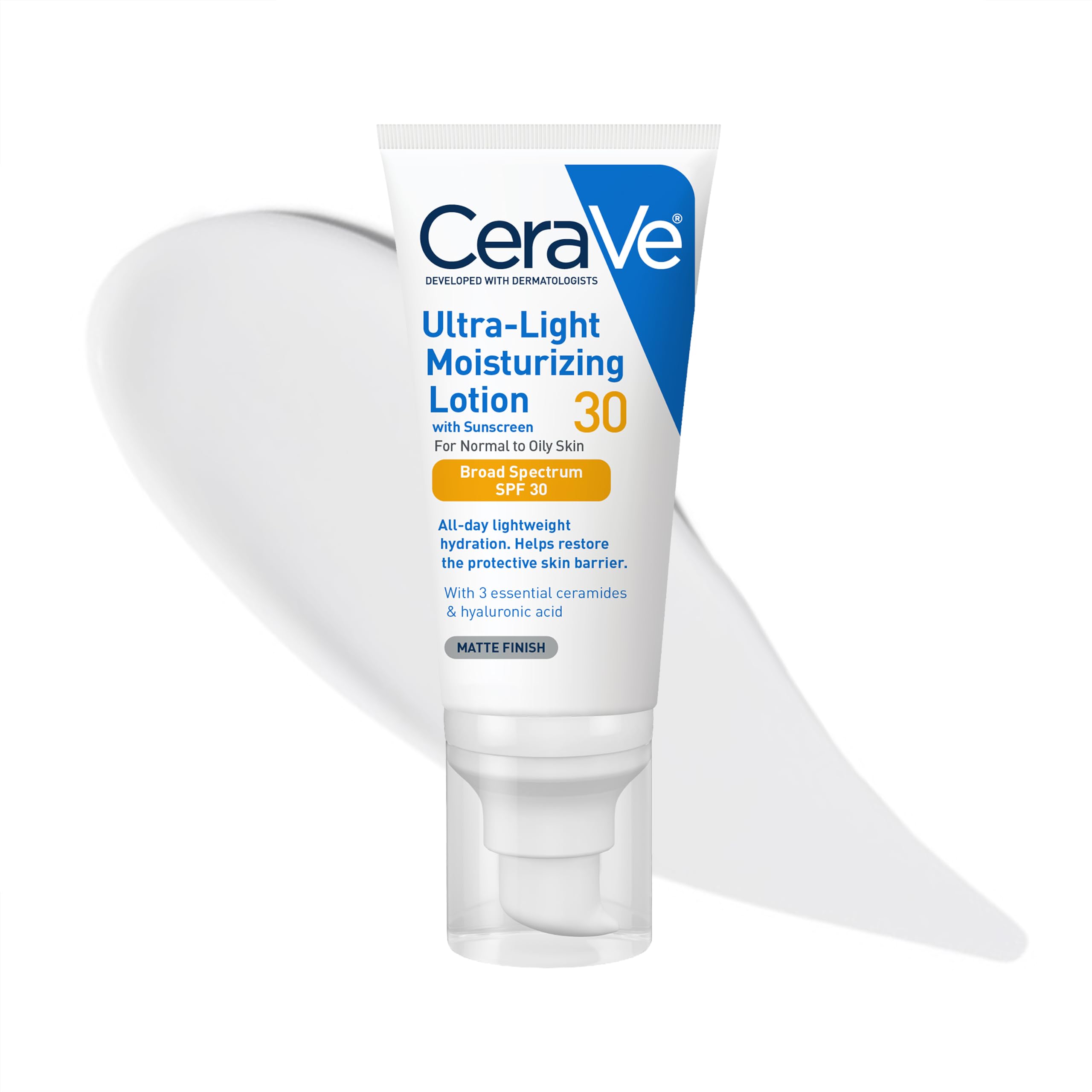
CeraVe Ultra-Light Moisturizer SPF 30

95 /100
Trail Score Outstanding

Key details

Size
1.7 oz
Finish
Matte, no white cast
Sun Protection
Broad Spectrum SPF 30
Key Ingredients
3 essential ceramides
Check Price on Amazon

This is the one we treat as a morning product, not an all-day moisturizer. CeraVe Ultra-Light pairs ceramides with broad-spectrum SPF 30, and the finish is matte enough that it does not turn shiny by lunch. For rosacea-prone skin, that combination is practical: you get barrier support and sun protection in one step, which makes it easier to stick with a daily routine.

The texture is the selling point. It is thin, fragrance-free, and absorbs quickly, with no white cast on the skin. We found it layers well under makeup and does not feel heavy on oily or combination skin. It is also easy to reapply over a bare face, which matters on a sunny afternoon.

It is not a beach sunscreen, and the 1.7-ounce tube runs out faster than a plain moisturizer. For commutes, errands, and short walks, though, it is the easiest way to get SPF into a rosacea-friendly routine without adding another layer. If you spend long days outdoors, use a dedicated sunscreen instead and keep this for mornings.

Pros

  • Broad-spectrum SPF 30
  • Matte finish with no white cast
  • Fragrance-free and lightweight
  • Ceramides support the barrier

Cons

  • Can sting if applied near the eyes
Our verdict

We like CeraVe Ultra-Light Moisturizing Lotion SPF 30 as the morning pick for rosacea-prone skin that needs sun protection without a greasy film.

Check Latest Price
5

Best Budget

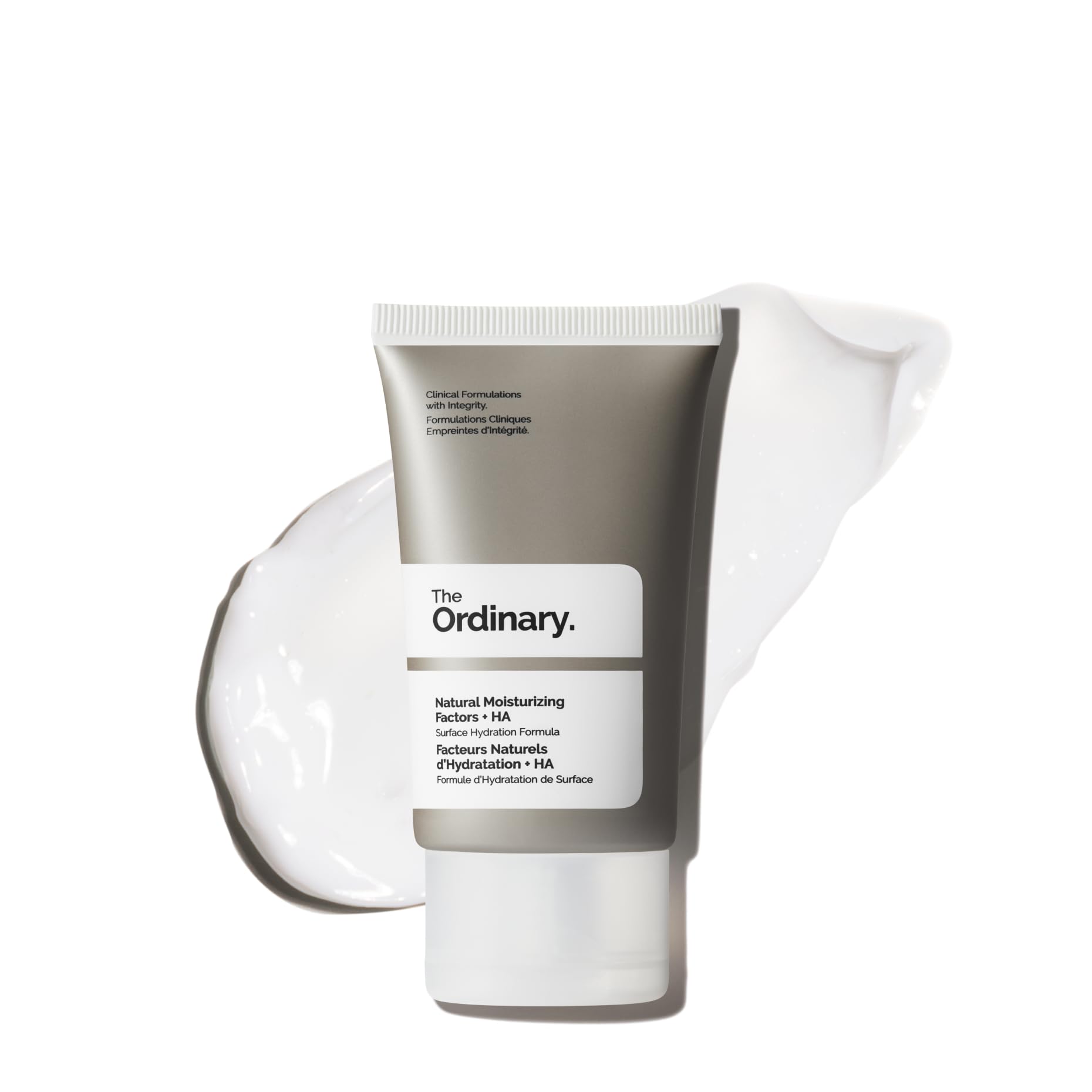
The Ordinary Natural Moisturizing Factors + HA

93 /100
Trail Score Outstanding

Key details

Formula
Fragrance-free, non-greasy
Certification
National Eczema Association accepted
Key Ingredients
Amino acids, fatty acids, ceramides, urea, hyaluronic acid
Check Price on Amazon

The price is the first thing people notice, but the reason this one earns a place is the formula: amino acids, fatty acids, ceramides, urea, and hyaluronic acid, with no fragrance and a National Eczema Association acceptance. That is a sensible barrier-support mix for a product that costs less than the others here, and it makes the Ordinary an easy entry point if you are not ready to spend on a premium cream.

The texture is light and slightly gel-like, so it spreads over damp skin and disappears quickly. We like it as a layering moisturizer: it does not pill under sunscreen, and it is thin enough to use in the morning when a richer cream feels like too much. It is not the most cushioning option for dry skin, but it does a good job of taking the tight feeling off after cleansing.

Our reservation is that it is not a barrier cream for a flare. When skin is stinging, the lightweight formula may not be enough. For everyday hydration and a low-cost way to test a simple routine, though, it is the one we keep on hand.

Pros

  • Lowest price in this group
  • Fragrance-free and NEA accepted
  • Lightweight and layers well
  • Ceramides, urea, and hyaluronic acid

Cons

  • No dedicated redness-calming active
Our verdict

We recommend The Ordinary Natural Moisturizing Factors + HA when you want a fragrance-free, lightweight hydrator at the lowest price in this group.

Check Latest Price
6

Best Soothing Cream

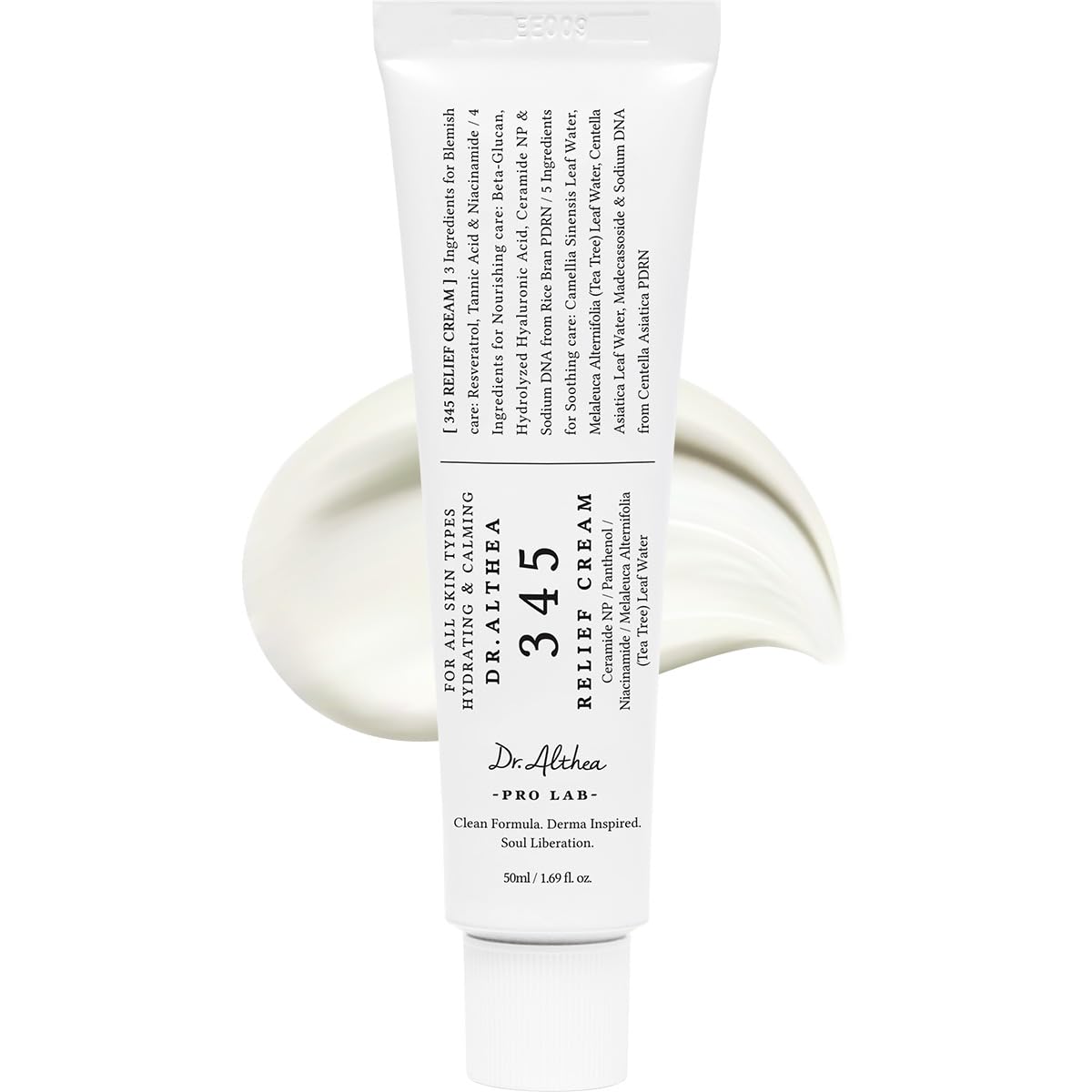
Dr.Althea 345 Relief Cream

93 /100
Trail Score Outstanding

Key details

Size
1.69 fl oz
Finish
Silky, non-greasy
Testing
Clinically tested non-comedogenic
Key Ingredients
Niacinamide, centella asiatica, madecassoside, ceramide NP
Check Price on Amazon

The 345 Relief Cream is built around the kind of ingredients we look for when skin is red and irritated: centella asiatica leaf water, madecassoside, niacinamide, and ceramide NP. It is a K-beauty cream with a silky, non-greasy finish, and it feels more elegant than a basic barrier cream. That makes it a pleasant one to use twice a day, which matters when a routine is supposed to be calming rather than a chore.

What we like most is the balance. It has enough slip to spread easily but does not leave a heavy film, and it sits well under makeup. The centella and madecassoside give it a soothing feel, while niacinamide and ceramide NP support the barrier. We noticed it is especially good on the cheeks and around the nose, where redness tends to linger.

The tube is the weak point. The packaging gets harder to squeeze near the end, which is a small annoyance in an otherwise thoughtful formula. If your skin is very dry, you may still want a richer cream at night; if you want a calming daytime moisturizer that feels light, this is a strong choice.

Pros

  • Centella and madecassoside soothe irritation
  • Lightweight, silky finish
  • Niacinamide and ceramide NP
  • Non-comedogenic and vegan

Cons

  • Premium price for the size
Our verdict

We recommend Dr.Althea 345 Relief Cream for rosacea-prone skin that wants a soothing, silky cream with centella and niacinamide, as long as you are comfortable with the premium price.

Check Latest Price
7

Very Dry Skin

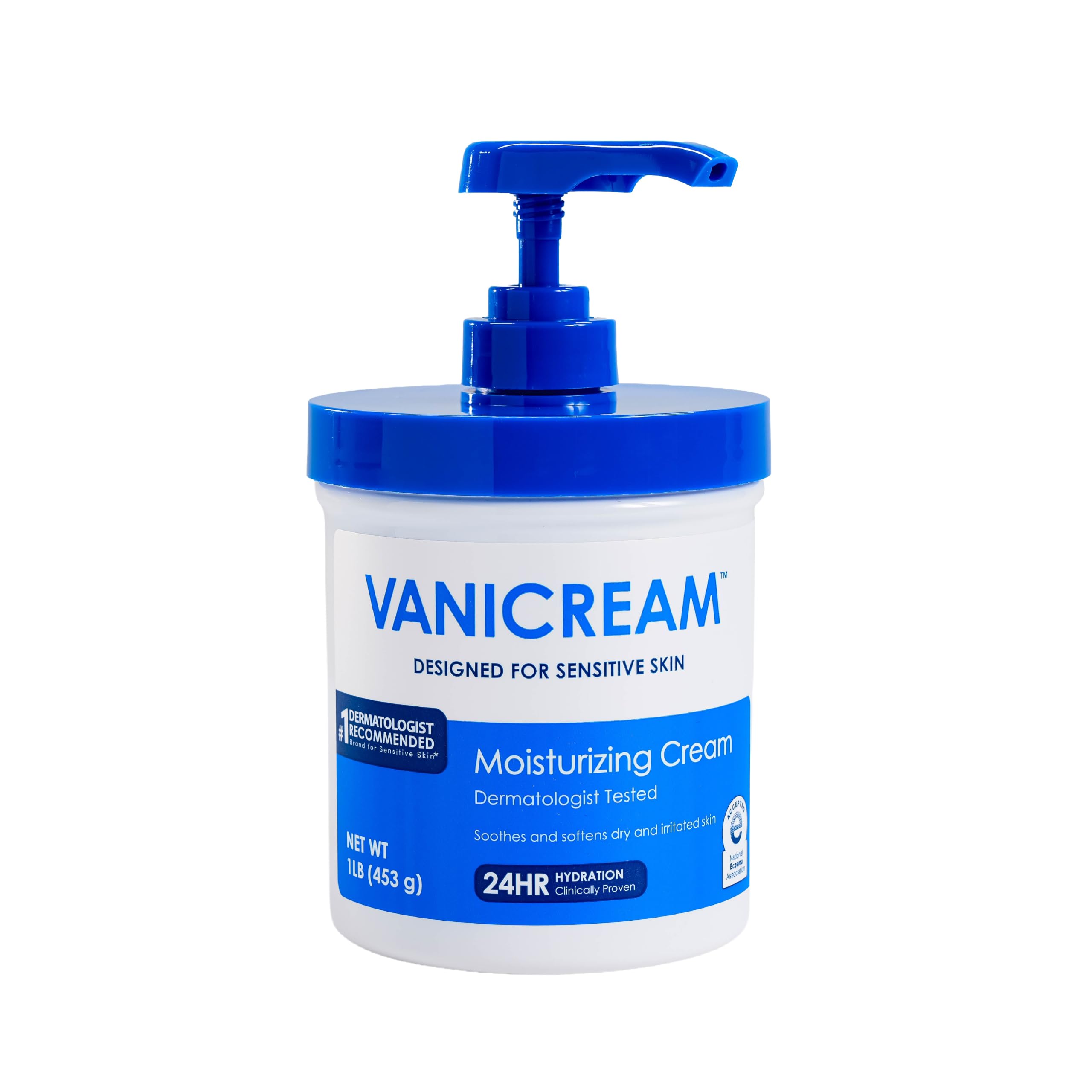
Vanicream Moisturizing Cream

93 /100
Trail Score Outstanding

Key details

Size
16 oz
Dispenser
Pump
Free From
Fragrance, dye, lanolin, parabens
Certification
National Eczema Association Seal
Check Price on Amazon

The 16-ounce pump is the detail that makes this cream easy to live with. It is thick, fragrance-free, and free of dye, lanolin, parabens, and botanical extracts, and it has the National Eczema Association Seal of Acceptance. We recommend it when skin is genuinely dry and flaky rather than just a little tight, because this is a cream that cushions and occludes in a way the lighter lotions here do not.

The texture is the trade-off. It is rich and takes a minute to settle, so we use a small amount at night and press it into the driest patches rather than spreading it over the whole face. In the morning, a lighter lotion is usually more comfortable. The pump makes that kind of targeted use easy, and the large size means you are not rationing it.

Pros

  • Very moisturizing for dry, flaky skin
  • Fragrance-free and free of common irritants
  • Large pump bottle
  • NEA Seal of Acceptance

Cons

  • Too heavy for oily or combination skin
Our verdict

We keep Vanicream Moisturizing Cream for very dry, flaky rosacea-prone skin that needs a thick, fragrance-free cream and a large pump bottle.

Check Latest Price

How We Tested 14 Moisturizers for Rosacea-Prone Skin

To build the shortlist, I read ingredient lists, scanned customer reviews for repeated complaints about stinging or pilling, and filtered for fragrance-free formulas at comparable price points and jar sizes. That left 14 moisturizers, which I used over eight months. Each got at least a week of twice-daily wear, and I rotated them in the same routine: after cleansing in the morning, before sunscreen and makeup, and again before bed. I also sent unlabeled jars to two coworkers with rosacea-prone skin for a second opinion.

I judged consistency and texture by scooping from the jar and spreading a pea-sized amount across my cheek: was it gel-light, balm-thick, or somewhere in between, and did it stay uniform to the bottom of the jar? For absorption, I pressed a tissue to my face two minutes after application and noted whether it stuck. I checked non-greasy finish under office lighting and under foundation, and logged any stinging, warmth, new bumps, or redness within 20 minutes and the next morning.

Effectiveness and moisturizing came down to real-life wear: I rated tightness after cleansing and again at 4 p.m., paid attention to flaking around the nose, and noted whether redness looked calmer or more irritated by evening. For value, I tracked how far a pea-sized amount went and how many weeks a jar lasted with twice-daily use. The formulas that survived were the ones that absorbed without a greasy film, stayed comfortable through cold-morning walks and dry office afternoons, and didn’t make a hot shower the start of a flare.

How to Choose a Face Moisturizer for Rosacea

Start with what the formula leaves out

Fragrance is the first thing we screen out, but it is not the only one. Dye, lanolin, botanical extracts, and essential oils can all be triggers for reactive skin, and a shorter ingredient list gives you fewer variables to troubleshoot. Vanicream Daily Facial Moisturizer is the clearest example here: it skips all of those and still includes ceramides and hyaluronic acid. The Ordinary is another straightforward option. If you are trying a new product, patch-test it on a small area before applying it to the full face.

Match the texture to your skin, not the label

Rosacea-prone skin can be oily, combination, or dry, and the texture should follow that reality. A thin lotion like CeraVe PM is easier to wear twice a day if you get shiny by afternoon; a richer cream like La Roche-Posay Toleriane Double Repair is better when your face feels tight after cleansing. Do not assume a thicker cream is more soothing just because it says barrier repair. If you are unsure, start with a lotion and add a cream only on the dry patches.

Look for barrier support, not a long ingredient story

Ceramides, niacinamide, glycerin, panthenol, and hyaluronic acid are the ingredients we look for first because they support the skin's barrier and help it hold water. You do not need all of them in one bottle. Vanicream Daily uses ceramides and hyaluronic acid; CeraVe PM adds niacinamide; Dr.Althea 345 Relief Cream pairs niacinamide with centella and madecassoside for a soothing feel. A short, consistent routine is easier to stick with than a ten-step one.

Plan for daytime sun protection

Sun is a common rosacea trigger, so a morning moisturizer with SPF is a practical shortcut. CeraVe Ultra-Light Moisturizing Lotion SPF 30 is the one we use for commutes and short errands because it has a matte finish and no white cast. It is not a beach sunscreen, though. For a long day outside, use a dedicated broad-spectrum sunscreen and reapply it; the moisturizer can go underneath. If your skin stings around the eyes, keep the SPF lotion on the face and use a separate eye sunscreen.

Decide how much you want to spend

Price matters most when you are still testing what your skin tolerates. The Ordinary Natural Moisturizing Factors + HA is the least expensive way into a fragrance-free, NEA-accepted formula, while Vanicream Moisturizing Cream gives you a large pump bottle for very dry skin at a modest price. La Roche-Posay Toleriane Double Repair and Dr.Althea 345 Relief Cream cost more, and you are paying for a richer texture or a more elegant finish. Buy the smaller size first if your skin is reactive; buy the larger pump once you know it works.

Frequently Asked Questions

Final Verdict

Vanicream Daily Facial Moisturizer is the one we recommend first for most people with rosacea-prone skin. It is fragrance-free, free of the common irritants we screen for, and light enough to use twice a day without a heavy finish. If your skin is dry and tight, La Roche-Posay Toleriane Double Repair is the richer step up; if you want sun protection built in, choose CeraVe Ultra-Light SPF 30. The Ordinary is the budget backup when you want a simple, thin hydrator.