Best Derma Rollers for Face of 2026

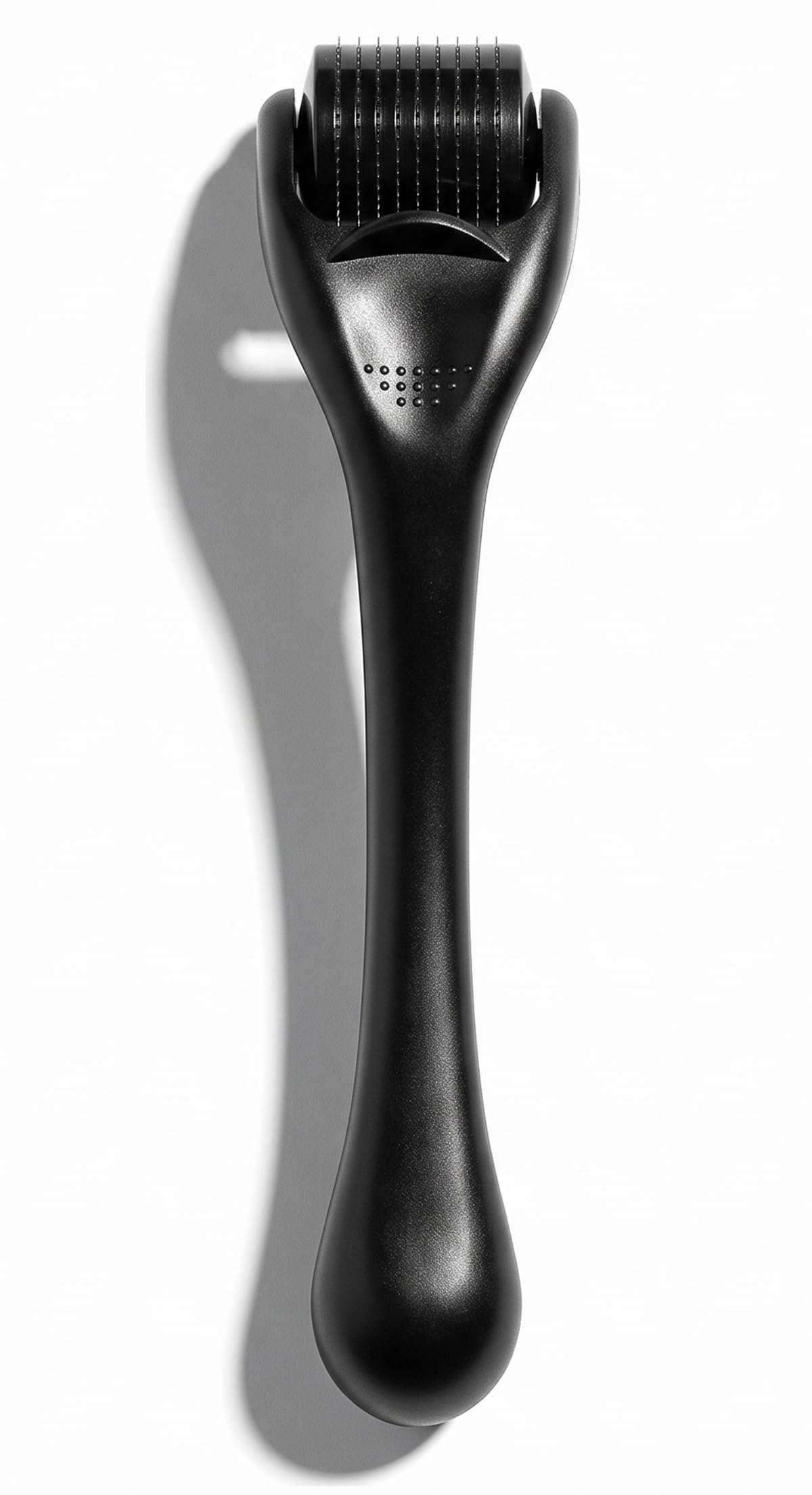
A derma roller is about as low-tech as skincare gets: a handle, a spinning drum, and a couple hundred microneedles that prick the surface of your skin so the serum you apply afterward has somewhere to sink in. What separates a good one from a bad one comes down to the needles themselves — how sharp they arrive, how smoothly the drum turns, whether a pass feels like a light massage or a tiny ordeal. Do it right and your skin feels smoother and calmer within a few weeks.

I've been rolling 16 of them across my jaw and cheeks after cleansing at night for the past four months, and the cheap ones gave themselves away fast: squeaky drums, needles that dulled, redness that lingered past breakfast. One thing worth knowing before you buy: needle length matters more than price, and anything past about 0.3 millimeters belongs in a professional's hands, not at your bathroom mirror. The picks below are the ones that earned a permanent spot on my counter.

1

Best Overall

Sdara Derma Roller

89 /100
Trail Score Excellent

Key details

Weight
1.44 oz
Use Areas
Face, hair, and beard
Storage Case
Included
Check Price on Amazon

A face roller only earns its keep if you keep reaching for it, and this is the one we hand to people who flinch at the idea of needles. The roll reads as a light, scratchy massage rather than a prickle, and because the pressure is easy to modulate, a cautious first pass across the cheek doesn't turn into a wince.

That comfort is most of why it's our top pick. Consistency does the work with any home roller, and a tool you dread is a tool that ends up at the back of a drawer. What we noticed first was texture: skin feels softer the next morning, and serum sinks in rather than sitting on the surface. Over a few weeks the change stays in that territory — smoother, a little more even, a bit more glow — rather than in anything dramatic.

The gap is the number we look for first. Sdara doesn't publish the needle depth on this roller, and depth decides how much sensation and after-rolling redness you're signing up for. If you want it in writing, the CLETINA below states 0.25 mm for about the same money; we still prefer the Sdara's head and case for handling every day.

The case deserves more credit than it gets. Fine needles left loose in a bathroom drawer pick up lint and bend against whatever else is in there, and a bent needle is a scratch waiting to happen. Ours lives in its case between sessions, and the head still sits straight.

Pros

  • Gentle enough that beginners keep using it
  • Case keeps fine needles clean and straight
  • Softer texture and glow within a few weeks
  • Face, hair, and beard use in one tool

Cons

  • Needle depth isn't published
Our verdict

Our pick for most faces, beginner or not: the roll stays comfortable enough to keep up with, and the case keeps fine needles clean and straight.
Check Latest Price
2

Best Budget Face Roller

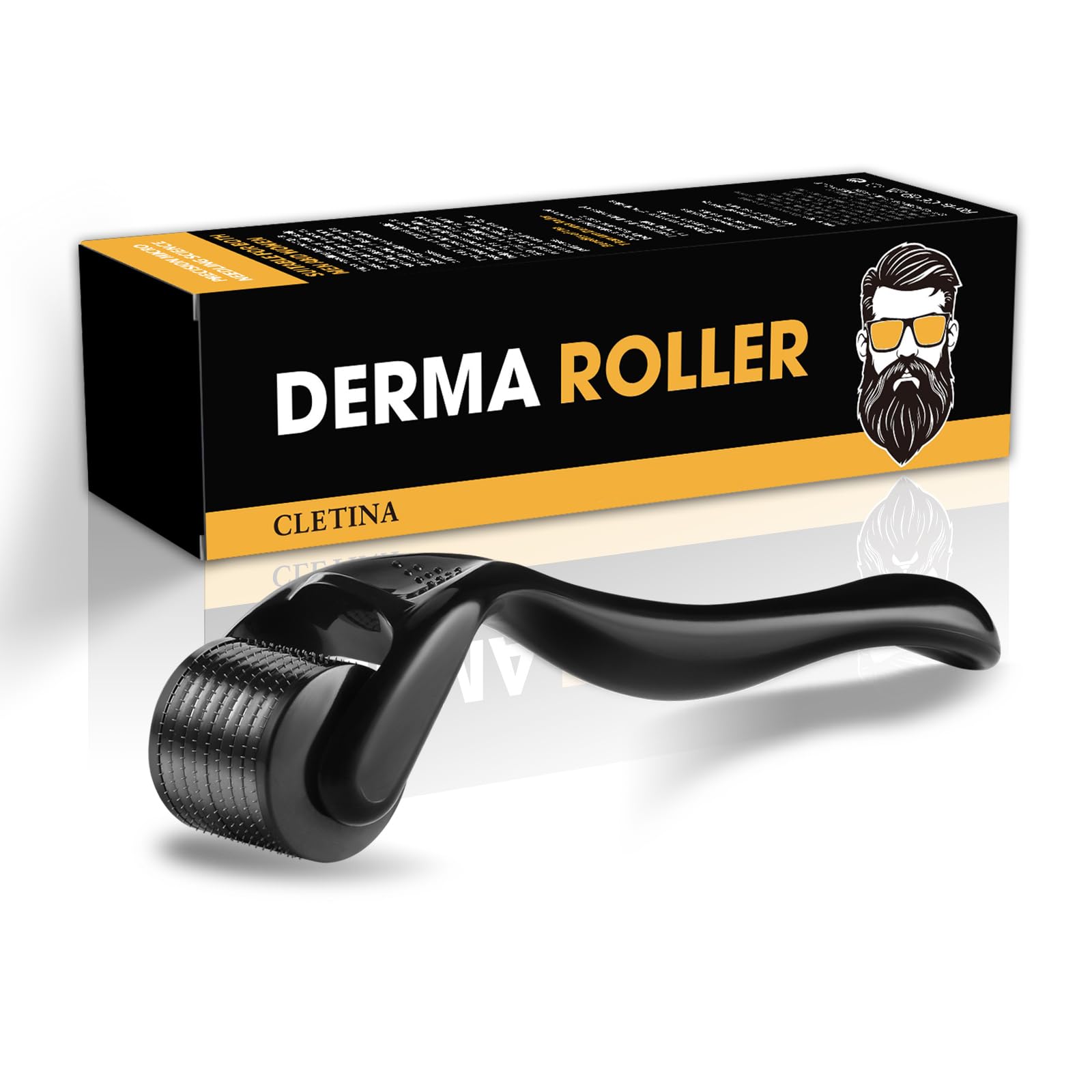
CLETINA 540 Derma Roller

90 /100
Trail Score Outstanding

Key details

Needle Count
540
Needle Depth
0.25 mm
Needle Material
Titanium
Check Price on Amazon

The number we look for first on a face roller is printed on this one: 0.25 mm. That's the shallow, cosmetic end of the microneedling scale, enough to feel like something is happening and gentle enough that you aren't planning around redness. Add 540 titanium needles and a head that turns smoothly, and you have our budget pick for a first face roller.

Build is where cheap rollers usually give themselves away, and this one holds up. There's enough weight in the handle to keep strokes even instead of skittering, and the case has a small well that holds the head clear of the bottom while it dries. That last detail sounds minor until you've had to rinse a needle head again because it was sitting in a puddle.

Sharpness fades, as it does on every roller at this end of the market. The needles start crisp and the roll feels purposeful; after a stretch of sessions the points soften and the roll starts to drag. That's the signal to replace it, not to press harder — extra pressure is what turns a light tingle into a sting.

Where it fits: this is the roller we point to when someone wants to find out whether needling suits their skin without turning it into a project. Keep it in the case, rinse it before and after, and see how a month goes.

Pros

  • Depth stated as 0.25 mm
  • 540 titanium needles
  • Case holds the head clear while drying
  • Weighted handle keeps strokes even

Cons

  • Needles soften and start dragging after a stretch of use
Our verdict

If you want the needle depth in writing before you buy, this is the one: a stated 0.25 mm, 540 titanium needles, and a smooth roll.

Check Latest Price
3

Best for Face and Beard

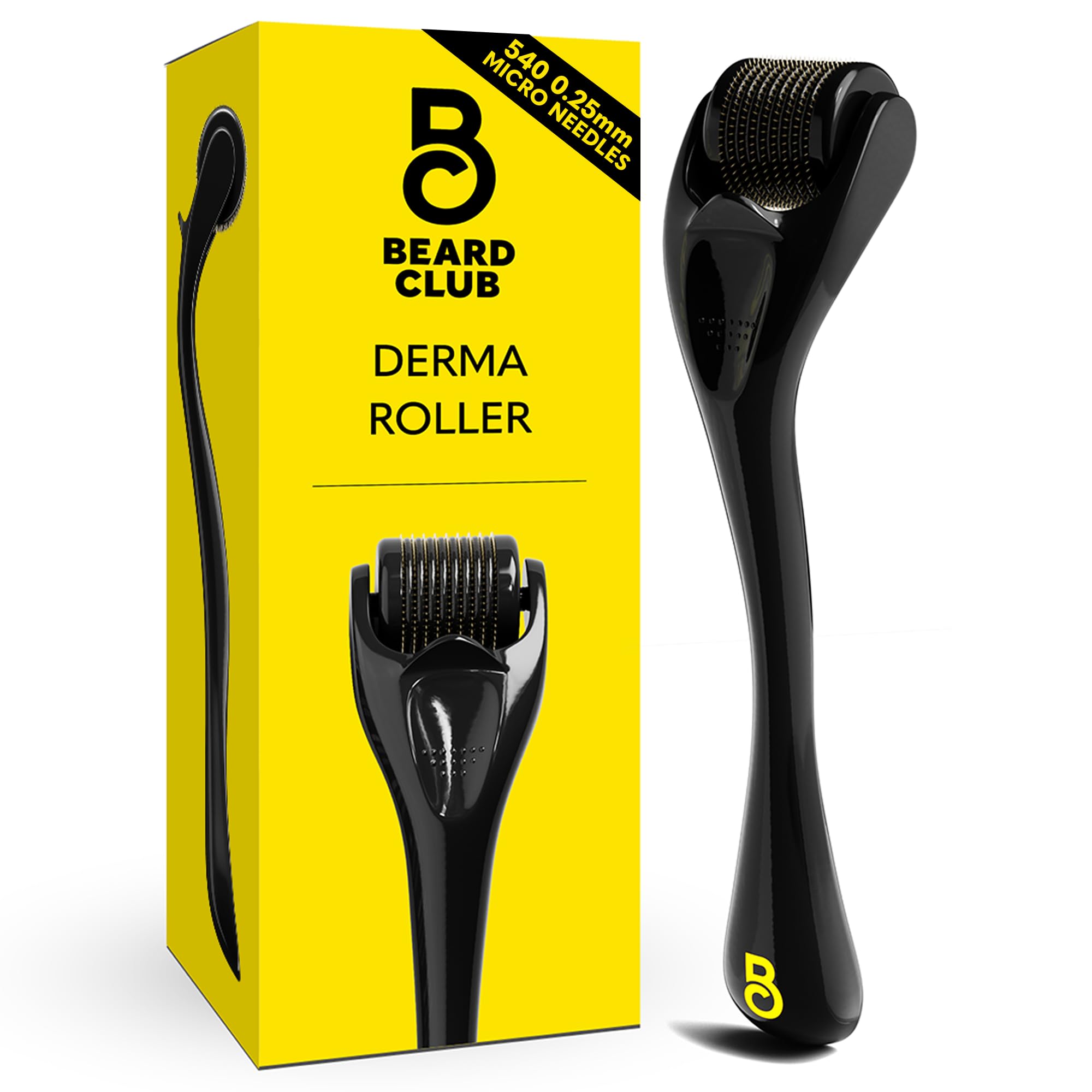
Beard Club Derma Roller

91 /100
Trail Score Outstanding

Key details

Needle Count
540
Needle Depth
0.25 mm
Storage Case
Included
Needle Material
Titanium-coated
Check Price on Amazon

Ignore the beard on the box. The needles here are 540 titanium-coated points at 0.25 mm — the same depth the other stated-spec face rollers in this guide use — and the tool works a cheek and a jawline exactly like the ones marketed to women.

It earns its place as the one-roller answer for a household that wants face and facial-hair coverage without buying two tools. We found the head tracks a jawline without skipping, and 0.25 mm is forgiving enough to take across the forehead in the same session. At about an ounce it's light enough that long strokes don't tire your wrist, and the case means it travels without shedding needles into a toiletry bag.

Depth is the limit. If the goal is beard or scalp work rather than face, 0.25 mm sits at the gentle end of what people use there; this is a tool for keeping a routine going, not for pushing a beard line hard. The head is also on the small side, which is fine across cheeks and slower going over a full scalp.

Pros

  • 540 titanium-coated needles at 0.25 mm
  • Light handle for long jawline passes
  • Case included for travel
  • Covers face and facial hair with one tool

Cons

  • 0.25 mm is gentle for beard and scalp work
  • Small head slows full-scalp coverage
Our verdict

One roller for a face and a beard line: stated 0.25 mm needles, an included case, and a light handle that makes jawline passes easy.

Check Latest Price
4

Best Kit for Multiple Areas

Angel Kiss 4-in-1 Derma Roller Kit

89 /100
Trail Score Excellent

Key details

Roller Heads
3
Storage Case
Disinfection case included
Needle Counts
1,200, 720, and 300
Needle Depths
0.25 mm and 0.3 mm
Check Price on Amazon

The head most kits forget is the small one, and it's the reason this set stays in the roundup. Three hundred needles on a narrow head reach the sides of the nose, the corners of the mouth, and the line above the lip — places a full-width 540 head skates straight past.

The other two heads cover ground: 720 needles at 0.25 mm for the face and 1,200 at 0.3 mm for body, all clicking onto one handle. Swapping takes a second, which matters more than it sounds. A kit that's fiddly to change is a kit whose extra heads never leave the case.

Three heads also mean three things to rinse, dry, and eventually replace, and the set asks noticeably more than a single 0.25 mm roller. That's a fair trade if your routine already runs from face to hairline and you want it in one purchase; if you only ever roll cheeks and forehead, one good single roller is simpler and does the same job.

The storage case is the quiet win: it has a disinfection tray, which turns the rinse-and-dry routine into something you'll actually do with three heads in rotation.

Pros

  • Three heads on one handle
  • Small 300-needle head for tight areas
  • Quick, easy head swaps
  • Disinfection tray built into the case

Cons

  • Three heads to clean and replace
  • Pricier than a single-headed roller
Our verdict

The kit to buy if your routine runs from face to hairline and body, with a small head that finally reaches nose and mouth corners.

Check Latest Price
5

Precise Small-Area Work

Koi Beauty 200 Derma Roller

92 /100
Trail Score Outstanding

Key details

Needle Count
200
Storage Case
Included
Needle Material
Individual titanium pins
Check Price on Amazon

Two hundred needles sounds like less roller than 540, and it is — deliberately. These are individual titanium pins set into the head rather than a stamped wheel, and we found the difference in the roll: fewer, sharper points let you put pressure on one small area instead of spreading it across a whole cheek.

That makes it the precision pick. A scar on the cheekbone, a line above the lip, the edge of the jaw — the Koi lets you work an area the width of a fingertip and stop. Across a full face it's slower going, and the sensation is more convincing than on the 540-needle heads here, which is either exactly the point or a good reason to take the Sdara instead.

Watch the head. Bent needles and a head that quits early turn up on this model, and at premium money that's a risk to weigh before you commit. Check the pins against a bright light every few uses; if they lean, or the roll starts to scrape rather than glide, retire it.

Pros

  • Individual titanium pins, not a stamped wheel
  • Precise pressure on small areas
  • Case included for safe storage

Cons

  • Bent needles turn up on this head
  • Sharper sensation than 540-needle rollers
Our verdict

For a small, specific area, the individual titanium pins give you placement the 540-needle wheels can't — check the pins for bending as you go.

Check Latest Price
6

Gentle Everyday Use

ROSELYNBOUTIQUE Derma Roller

89 /100
Trail Score Excellent

Key details

Weight
2.4 oz
Needle Material
Titanium
Package Dimensions
6.5 x 1.85 x 1.77 inches
Check Price on Amazon

If the idea of needles still makes you hesitate, start here. This is the mildest roll in the group: a light tingle, no drag, and nothing that lingers once you've finished.

Titanium needles, a plain handle, and a compact shape that fits in a toiletry bag — there's nothing precious about it, which suits a tool you're meant to rinse in alcohol and replace once the points go soft.

The head is the part to watch. It's the piece that comes loose or gives out over time, so check it before each session and stop using it if it starts to wobble. A loose head near your face isn't worth another session.

What it earns is a place as the low-risk entry point: mild enough to build the habit, simple enough that the routine is rinse, roll, dry, done, and easy to replace when the needles stop biting.

Pros

  • Mildest feel of the rollers here
  • Titanium needles
  • Compact enough for a travel bag

Cons

  • Head can work loose at the axle
Our verdict

Start here if needles still make you hesitate: this is the gentlest roll in the group, and checking the head for wobble is the only real upkeep.

Check Latest Price
7

Light Daily Rolling

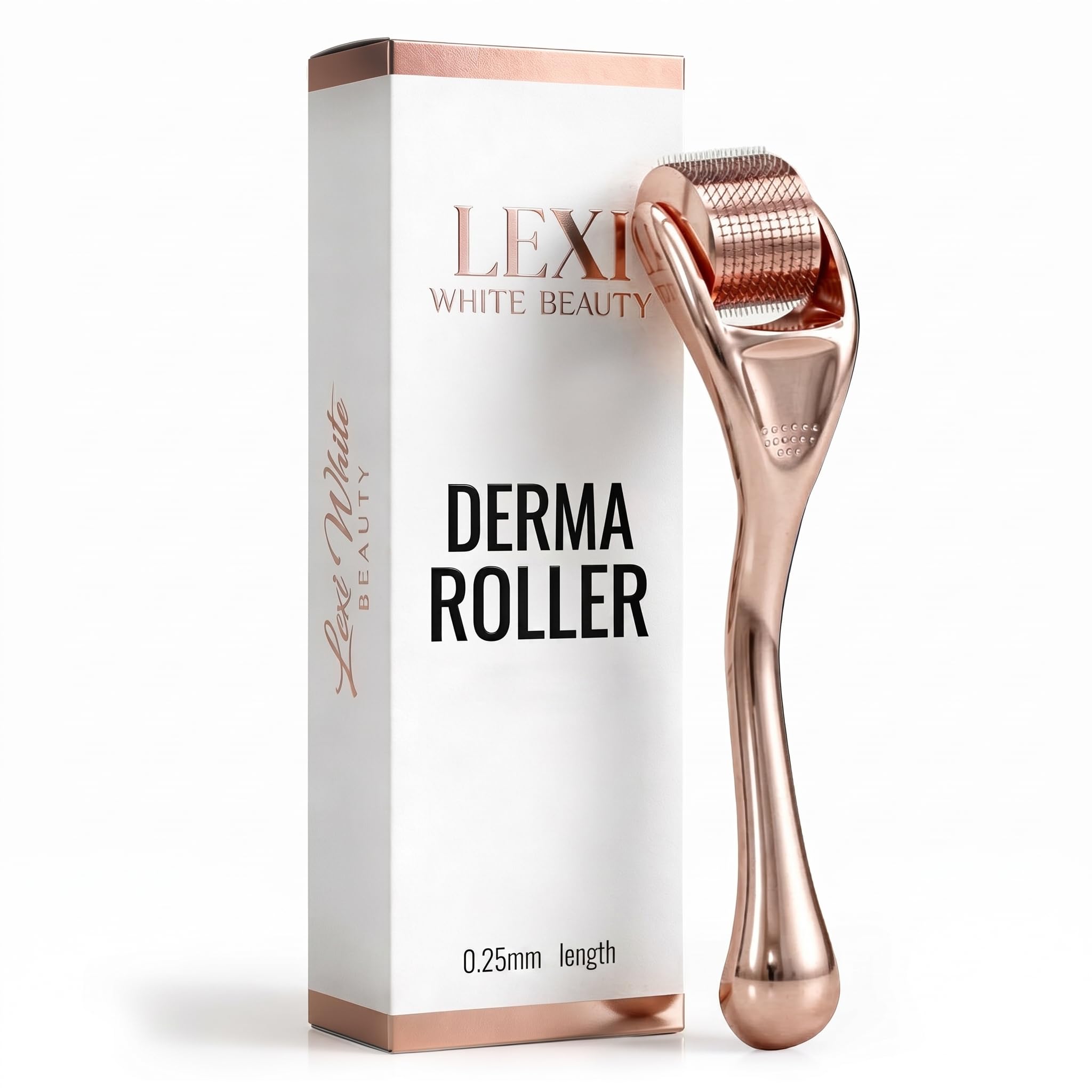
Lexi White Derma Roller

89 /100
Trail Score Excellent

Key details

Weight
2.4 oz
Needle Count
540
Needle Depth
0.25 mm
Needle Material
Titanium
Check Price on Amazon

Rose gold looks lovely on a bathroom shelf, and it's also the reason to read the care note before you start. Wipe this one down rather than soaking it: rubbing alcohol can dull and tack up the finish, so keep the handle out of the rinse and let the head dry in the case.

Underneath the finish is a straightforward 0.25 mm, 540-needle titanium head, which is exactly the specification we want for face use. The roll is light and smooth, and the handle sits comfortably for the small, slow passes a first-timer should be making anyway.

What that adds up to is the easiest first roller to say yes to: the right stated depth, a pleasant roll, and nothing about it demanding technique. It won't be the last roller you buy — none of these are — but it's a sensible place to start.

Pros

  • Stated 0.25 mm titanium head
  • Smooth, light roll for beginners
  • Easy-grip handle in a slim profile

Cons

  • Head can loosen from the handle
Our verdict

A stated 0.25 mm, 540 titanium needles, and a smooth, light roll make this a sensible first face roller rather than a lifelong one.

Check Latest Price
8

All-Round Home Use

Koi Beauty 540 Derma Roller

93 /100
Trail Score Outstanding

Key details

Weight
2.89 oz
Needle Count
540
Needle Material
Titanium
Check Price on Amazon

The fiddliest part of any roller is the part nobody photographs: the gap between the needles. On the Koi 540 that's where lint, tissue fibers, and dried serum collect, and getting them out takes a soft brush and more patience than the rolling itself.

What you get for the trouble is a well-finished tool. The matte, frosted handle is the nicest in this group to hold — grippy without being sticky, even with damp hands — and the roller head turns quietly with no squeak.

Comfort lands in the middle of the set. Most passes read as a light scratch, but on tighter ground like the jaw and above the lip the same pressure feels sharper, so start lighter than you think you need to. It ships with a case, and ours has stayed in it between sessions rather than loose in a drawer.

Buy it if you value how a tool feels in the hand and don't mind the upkeep. If cleaning a needle head is the chore you know you'll skip, the CLETINA's wider-set head rinses out faster.

Pros

  • Frosted handle is the best in the hand here
  • Quiet, smooth-turning head
  • Titanium needles resist bending and rust
  • Case included for storage and travel

Cons

  • Lint and fibers catch between the needles
  • Sharper feel on the jaw and upper lip
Our verdict

A nicely made roller with the best handle in this group — budget time for cleaning between the needles, because that's where it tests you.

Check Latest Price

What Four Months of Rolling 16 Derma Rollers Taught Us

We started with specs — needle length, needle material, drum width, needles per row — and cross-checked them against customer reviews and return complaints before narrowing the field to 16 rollers across three price bands. Every one had to be labeled for home use, with needles between 0.2 and 0.5 millimeters, since that's the range a first-time buyer is actually choosing between.

Each roller then lived on a bathroom shelf for four months and got used the way anyone would use it: on clean, dry skin three nights a week, one pass in four directions over forehead, cheeks, jaw, and chin, followed by a hydrating serum and moisturizer. We noted how each pass actually felt — a light tickle versus a prickly sting — and checked the mirror the next morning for redness, flaking, or tightness. Handles were gripped with wet, serum-slick fingers, drums were spun to see whether they rolled freely or skipped mid-pass, and every roller was spritzed with 70 percent alcohol before and after use, the same way we'd expect a reader to clean one.

At the end of the run we looked at the needle tips again under a bright lamp for bends, rust, or dullness, and asked whether each roller still felt worth its price per use given a realistic replacement schedule. The ones that rose to the top were the ones nobody winced at, that kept a smooth roll past week eight, and that left skin feeling softer the morning after rather than irritated.

How to Choose a Derma Roller for Your Face

Get the Needle Depth in Writing

For home use on the face, shop in the 0.25 mm to 0.3 mm range. That's shallow enough to feel like a scratch and short enough that you aren't managing a wound afterward; anything deeper belongs in professional hands. A listing that won't state a depth is a listing to keep scrolling past, because you can't judge what the seller won't name.

Three picks here print 0.25 mm — the CLETINA, the Lexi White, and the Beard Club — which makes them easy to judge against each other. Where a listing stays quiet on depth, assume the number won't be there when you want to compare.

Look for Individual Needles, Not a Stamped Wheel

Some budget heads are a disc with teeth cut into the edge; better ones set individual pins into the head. Real pins roll more cleanly and are less likely to drag or scrape. The Koi Beauty 200 is the clearest example here, with 200 separate titanium pins, and its head does more precise work on a small area than any of the wider wheels in this guide.

More needles isn't automatically better. A 540-needle head covers a cheek in a few passes; a 200-needle head concentrates pressure, which is what you want on a single line or a spot of uneven texture.

Treat the Roller as a Consumable

Needles dull, and a dull needle drags instead of gliding. Plan on replacing a home roller after a couple of months of regular use, or sooner if the roll starts to tug or the pins look bent. Cleaning is the other half of the job: rinse the head with isopropyl alcohol before and after, shake off the excess, and let it air-dry in its case rather than on a towel where it picks up lint.

Lint and dried serum collect at the base of the needles, and a head you can't get a soft brush into is a head that quietly stops being clean. A case with a tray or a well makes the routine short enough that you'll actually keep doing it, which matters more than any feature on the box.

Match the Head to the Area

A standard wheel handles cheeks and forehead well and struggles at the sides of the nose. If your routine runs to the hairline, the upper lip, or the body, a set with swappable heads makes more sense than buying two tools — the Angel Kiss kit's 300-needle head is narrow enough for the corners of the mouth, and its 1,200-needle, 0.3 mm head is built for body work.

If you only ever roll cheeks and forehead, skip the kits. A single 0.25 mm roller with a case costs less, is simpler to keep clean, and does the same job.

Frequently Asked Questions

Final Verdict

Our default for most faces is the Sdara. It's the roller that's easiest to keep using — the roll stays comfortable, the head glides, and the case keeps the needles clean between sessions — and consistency is what actually produces results at home.

Two exceptions are worth knowing. If you want the needle depth printed on the listing before you buy, the CLETINA states 0.25 mm and rolls just as smoothly. And if your routine already runs from face to hairline or body, the Angel Kiss kit's three heads save you buying twice.