Best Collagen Powders with Purity Testing, of 2026

The trouble with collagen powder is that the thing you're taking it for — stronger nails, easier mornings on your knees — requires you to take it every single day, for months. That's a long time to keep drinking something you're not quite sure about. Collagen is rendered from bones and hides, which is precisely where heavy metals tend to collect, so a trace amount per serving can add up over a habit that consistent. What separates a trustworthy tub from a cheap one usually isn't the promise on the front label; it's whether the brand publishes an independent lab panel you can actually read.

I've been through a lot of these powders — some vanish into coffee without a whisper, others sit on top in a gritty raft no amount of stirring fixes. Over the past six months, my team and I have worked through 12 tubs, mixing them into hot coffee, cold smoothies, and plain water while tracking taste, odor, clumping, and how our skin, nails, and joints felt at the 30-, 60-, and 90-day marks. A powder only earns a place here if it clears the paperwork check and the drinkability test, because the best-sourced collagen in the world is useless if you dread the second scoop. The picks below did both.

1

Best Overall

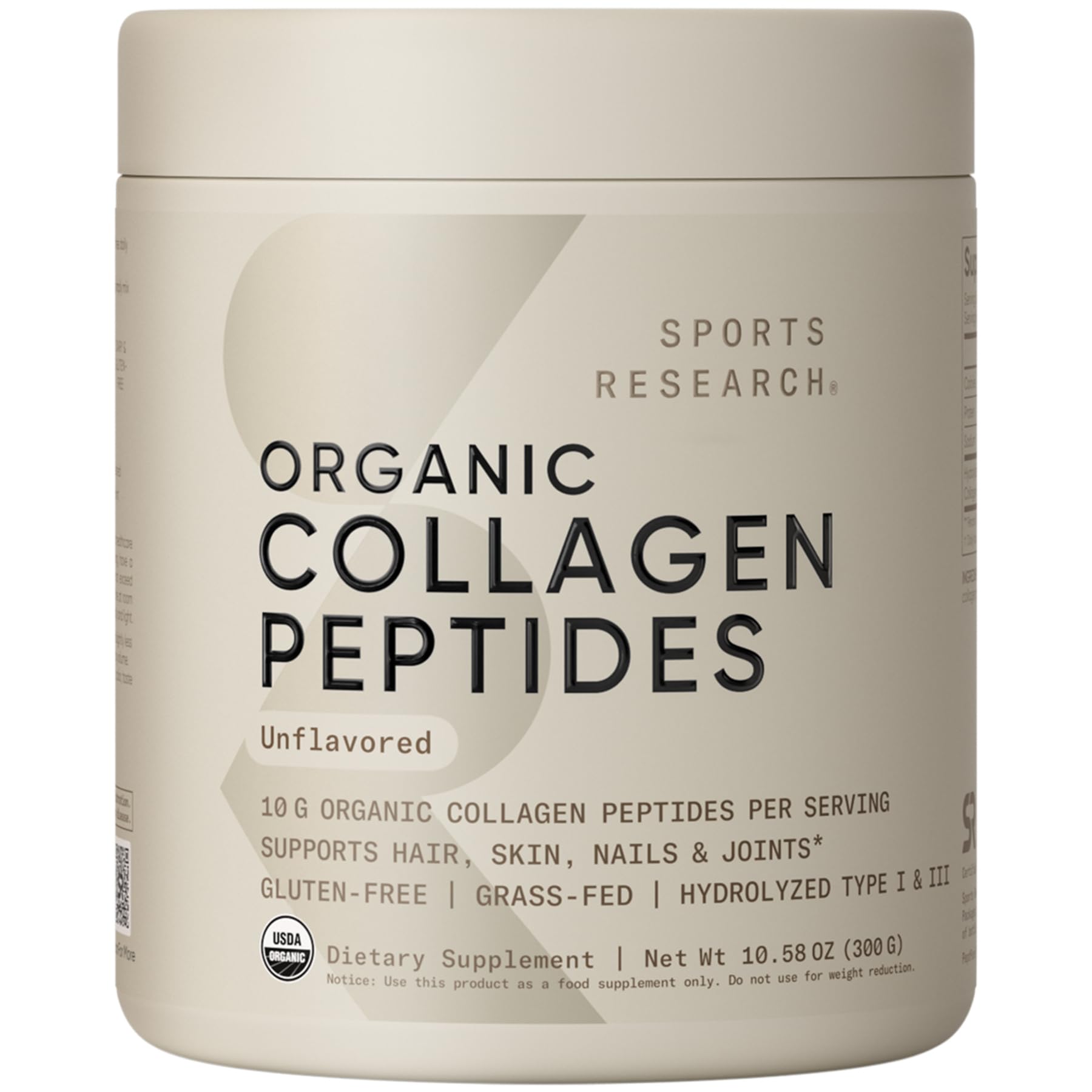
Sports Research Organic Collagen

93 /100
Trail Score Outstanding

Key details

Testing
3rd party tested
Certifications
USDA Certified Organic, Keto Certified, Certified Paleo Friendly, Non-GMO
Collagen Types
Type I & III
Collagen Per Serving
0.35 oz
Check Price on Amazon

USDA Organic certification is unusual in this group, and Sports Research pairs it with a stated third-party test. That combination is why we make it our default for purity-focused shoppers: organic sourcing and outside testing are the two paper-trail details worth paying attention to, even though the label still does not publish a heavy-metal result. The formula is simple, with 10 grams of types I and III peptides from grass-fed, pasture-raised bovine per serving.

What we noticed in the cup mattered as much as the certificate. The powder disappears into hot coffee with a stir and leaves little grit in cold water, which is not a given with unflavored collagen. It is genuinely neutral, so it does not turn a morning coffee savory or sweet. The 10-gram scoop is moderate; if you want a higher dose, you will use more powder and go through the tub faster.

The limitation is that this is a bovine-only formula, so it does not offer the type II or fish-derived collagen some multi-source powders do. We are comfortable with that because the simpler ingredient list is easier to check, and the organic claim is meaningful for shoppers who want more than grass-fed marketing. If you need the broadest collagen type profile, choose one of the five-type picks below; for a clean everyday bovine scoop, this is the one we reach for first.

Pros

  • USDA Certified Organic
  • Stated third-party testing
  • 10g types I and III per serving
  • Mixes cleanly in coffee

Cons

No notable drawbacks to flag.

Our verdict

We recommend Sports Research Organic as the default: it is the only pick here with USDA Organic certification and stated third-party testing, and it mixes cleanly.

Check Latest Price
2

Best Value

Micro Ingredients Multi Collagen

93 /100
Trail Score Outstanding

Key details

Testing
Each batch 3rd party lab tested
Collagen Types
Types I, II, III, V, X
Collagen Per Serving
0.39 oz
Servings Per Container
82
Check Price on Amazon

The first thing you see is the size: a 2-pound tub with 82 servings, which is why Micro Ingredients belongs in the value conversation. Each serving delivers 11 grams of collagen peptides across types I, II, III, V, and X, plus hyaluronic acid, vitamin C, and biotin. That is a lot of formula per scoop, and the batch-testing statement gives it a stronger purity paper trail than most powders here.

We think it is the best bulk buy in this set, but not the easiest everyday scoop. The powder can clump in cold liquid and needs more stirring than the top pick; hot coffee is friendlier. The unflavored claim mostly holds, though the multi-source blend can carry a faint odor that is more noticeable in water than in a smoothie. If you drink it in coffee and do not mind a little extra stirring, the serving count makes the trade-off easy to accept.

The 82-serving count is the practical reason to choose it. This is the tub we keep for stretches when we want one powder to cover several collagen types without buying three products. It is not the smoothest mixer here, but it is the one that makes the daily habit cheapest to sustain. The wide opening and simple scoop also make it easy to get through a full tub without a mess.

Pros

  • 82 servings per tub
  • Five collagen types plus extras
  • Batch-tested formula
  • 11g collagen per serving

Cons

  • Contains fish, chicken, and eggshell
Our verdict

We keep Micro Ingredients around for its 82-serving tub, batch testing, and five collagen types, which make it the value leader in this set.

Check Latest Price
3

Best Multi-Source Blend

Wholesome Wellness Multi Collagen

91 /100
Trail Score Outstanding

Key details

Sources
Grass-fed beef, chicken, fish, eggshell membrane
Testing
Third-party tested for purity and potency
Manufacturing
GMP-certified facility in USA
Collagen Types
Types I, II, III, V, X
Check Price on Amazon

Wholesome Wellness takes the kitchen-sink approach to collagen: types I, II, III, V, and X from grass-fed beef, chicken, fish, and eggshell membrane. The label also states third-party testing for purity and potency and manufacturing in a GMP-certified facility. That breadth is useful if you want a single powder to cover collagen types that a plain bovine peptide does not, but it also means the ingredient list deserves a careful read before you commit.

We put this one in the rotation for people who want a multi-source scoop without stepping up to a premium price. The unflavored powder mixes readily in coffee and smoothies, and the flavor stays neutral enough for a morning drink. What we like most is the combination of five types and a stated purity test at a midrange price. The shorter tub is the trade-off: heavy users will reorder sooner than with the bulk picks.

If you want one powder to cover several collagen types, it is a sensible middle path between a bare-bones bovine peptide and a fully loaded beauty blend. The formula earns its place on breadth rather than novelty, and the neutral taste makes it easy to keep in the routine. The tub is not the biggest here, so heavy users will reorder sooner, but the formula earns its place on breadth rather than on novelty.

Pros

  • Five collagen types from four sources
  • Third-party tested for purity
  • Unflavored and easy to mix
  • Midrange price for a multi-source formula

Cons

  • Contains fish and eggshell membrane
Our verdict

Choose Wholesome Wellness if you want five collagen types from four sources and a stated third-party purity test in one unflavored scoop.

Check Latest Price
4

Best with Probiotics

Garden of Life Grass Fed Collagen

91 /100
Trail Score Outstanding

Key details

Testing
Third-party tested
Probiotics
250 million CFU
Protein Per Serving
0.63 oz
Collagen Per Serving
0.71 oz
Check Price on Amazon

Garden of Life gives you 20 grams of collagen and 18 grams of protein per serving, plus 250 million CFU of probiotics. That is a bigger daily scoop than the 10-gram picks, and the protein number makes it feel more like a functional food than a minimalist supplement. We like that combination for someone who wants collagen and a little digestive support in the same scoop.

The catch is texture. This powder clumps more than the best mixers here, especially in cold liquids, and it can leave a coating on the glass if you do not stir or blend thoroughly. Hot coffee works better, but even then it needs more agitation than Sports Research or Micro Ingredients. If you already make a smoothie in a blender, that is less of a problem; if you stir powder into a shaker cup and walk out the door, it will annoy you.

The probiotics are the reason to choose it over a plain bovine powder, and the 18 grams of protein is a real bonus for a collagen supplement. We just wish the texture matched the formula. For readers who want the highest protein scoop in this group and do not mind blending, Garden of Life is the pick. For a quick stir into coffee, one of the smoother powders makes more sense.

Pros

  • 20g collagen and 18g protein
  • 250 million CFU probiotics
  • Third-party tested
  • Good for smoothies

Cons

No notable drawbacks to flag.

Our verdict

Garden of Life earns a place for its 20 grams of collagen, 18 grams of protein, and added probiotics, a combination none of the others here matches.

Check Latest Price
5

Best Five-Type Formula

Codeage Multi Collagen Protein

93 /100
Trail Score Outstanding

Key details

Testing
Third-party tested
Amino Acids
18
Collagen Types
Types I, II, III, V, X
Servings Per Container
63
Check Price on Amazon

Codeage packs five collagen types, 18 amino acids, and 63 servings into one unflavored tub. The formula draws on grass-fed bovine hide and bone, chicken bone, fish, and eggshell membrane, and the label states third-party testing. On paper, it is the broadest multi-collagen value here; the question is whether the powder is pleasant enough to finish.

We found it a solid daily mixer, especially in coffee and warm water, with a creamy texture that surprised us for a multi-source powder. Cold water takes more work, and the odor is the weak point: some scoops smell stronger than a plain bovine peptide, which is the trade-off for the wider source list. If you are sensitive to fishy or barnyard notes, start with a small serving in a flavored drink rather than plain water.

The 63-serving count is the practical reason to choose it. It costs more up front than the smaller tubs, but the scoop goes further, and the five-type profile saves you from stacking separate powders. It is not the best-tasting option here; it is the most complete multi-collagen in this group for someone who wants one tub to last. The large tub is also easy to scoop from without a mess.

Pros

  • Five collagen types and 18 amino acids
  • 63 servings per tub
  • Third-party tested
  • Mixes well in coffee and warm water

Cons

  • Contains fish, chicken, and eggshell
Our verdict

Codeage is the five-type pick we suggest when serving count matters: 63 servings and 18 amino acids from one unflavored powder.

Check Latest Price
6

Best Simple Bovine Pick

Bulletproof Collagen Peptides

93 /100
Trail Score Outstanding

Key details

Source
Grass-fed, pasture-raised bovine
Testing
Lab-tested ingredients
Collagen Types
Types I & III
Collagen Per Serving
0.71 oz
Check Price on Amazon

Bulletproof is the simple, two-type option: 20 grams of types I and III collagen from grass-fed, pasture-raised bovine per serving, with lab-tested ingredients and no multi-source blend. We like that directness. If you want a bovine peptide and do not need fish, chicken, or eggshell membrane in the scoop, the shorter ingredient list is easier to read and less likely to introduce an allergen you were not expecting.

It mixes cleanly in coffee and cold liquids, and the unflavored powder stays neutral in tea and smoothies. The 20-gram serving is generous, so you get a meaningful protein contribution, but it also means the 17.6-ounce jar empties faster than the bigger tubs. This is the pick we reach for when the priority is a straightforward high-protein scoop rather than the lowest cost per gram.

The narrow formula is the reason it sits behind Sports Research for most people. The value is in the simplicity and the brand, not in a broader collagen profile or added probiotics. If you already know you want only types I and III and you value a clean, neutral mix, Bulletproof earns its place. If you are shopping on value or want five types, Micro Ingredients or Codeage will stretch further.

Pros

  • 20g collagen per serving
  • Simple types I and III formula
  • Lab-tested ingredients
  • Mixes cleanly in hot or cold liquids

Cons

  • Premium price for the jar size
Our verdict

Bulletproof is the simple bovine option we choose when we want 20 grams of types I and III collagen and a clean, neutral mix.

Check Latest Price

How We Tested 12 Collagen Powders — and Read the Paperwork First

We started with more than 40 collagen powders sold in the U.S. and vetted them before opening a single tub: third-party heavy metal panels, source material (bovine hide, marine, eggshell membrane), peptide type, protein per scoop, and cost per gram of actual collagen rather than per container. Anything without a public lab report, or with a certificate covering only one batch, got cut, as did powders that padded the scoop with sweeteners or proprietary blends to make the number look bigger. That narrowed the field to 12 tubs, which we bought at retail like anyone else.

Every tester got a tub and a routine. We stirred each powder into black coffee at 6:45 a.m., where heat is the hard part, watching for clumps that survived a spoon and powder that glued itself to the mug's rim. We blended the same powders into cold smoothies and shook them into plain water, noting whether they sank, foamed, left a film on the glass, or needed a second round of shaking. Each tub was opened and sniffed fresh, since collagen can smell faintly of wet hide, and that odor is a big reason people quietly stop taking it.

Taste got its own pass: we drank each one in plain water and rated the aftertaste rather than the first sip, since that's the part that lingers. Testers with sensitive stomachs started at half a scoop and reported back on bloating and any other side effects within the first week. We compared cost per gram of collagen instead of cost per tub, because a giant container of a low-dose powder is often the more expensive habit. And because the whole point is the long game, everyone logged skin, nail, and joint notes at 30, 60, 90, and 180 days — some of those notes were glowing, and some were a shrug.

How to Choose a Collagen Powder with Purity in Mind

Read the Testing Claim, Not the Front Label

The phrase third-party tested is the first thing we look for, because it means someone outside the seller checked the product. It still does not tell you which contaminants were tested or at what limit; for heavy metals, ask for a certificate of analysis or a batch-specific result. USDA Organic is a useful extra, but it is a farming standard, not a heavy-metal test. A product that only says lab tested without naming the lab or the contaminants is a weaker signal.

Match the Collagen Type to Your Routine

Most bovine powders here supply types I and III, which is the simple choice for coffee and smoothies. Multi-collagen formulas add type II, V, or X through chicken, fish, or eggshell membrane. That breadth sounds appealing, but it also adds allergens. If you have a fish or egg allergy, stay with a bovine-only powder and read the label every time. If you want one scoop to cover several types, a five-type formula makes more sense than stacking two products.

Look at the Dose and the Serving Count

Ten grams is a common collagen dose; 20-gram scoops are also common and can double as a protein top-up. Neither is automatically better. What matters is how many scoops make a serving and how many servings the tub holds. A big tub with a small scoop can be better value than a smaller tub with a large one. We compare cost per serving, not sticker price, because the daily habit is what you are really buying.

Test Mixability in the Liquid You Actually Drink

Collagen dissolves more easily in hot coffee or tea than in cold water, and a powder that disappears in a smoothie can still clump in a shaker bottle. If you drink it cold, look for a powder described as fast-dissolving and give it a whisk or blender rather than a spoon. Unflavored does not mean odorless, especially in multi-source formulas. Buy a smaller size first if you are sensitive to smell, then commit to the bulk tub.

Decide Whether Added Ingredients Earn Their Place

Vitamin C, hyaluronic acid, biotin, and probiotics can make a collagen powder more useful or just more complicated. We like added vitamin C in a beauty-focused formula and probiotics in a higher-protein scoop, but only when the label gives the amount. If you already take those separately, a plain peptide powder is easier to dose. Added ingredients also raise allergen and interaction questions, so check them before you buy.

Frequently Asked Questions

Final Verdict

Sports Research Organic is the pick we start with for a purity-focused shopper: USDA Organic, stated third-party testing, 10 grams of types I and III, and a powder that mixes cleanly. It is not the broadest formula or the best bulk value, but it is the easiest one to justify as a daily default.

If cost per serving drives your decision, Micro Ingredients is the alternative we name, with 82 servings and five collagen types; expect more stirring and a fish and eggshell allergen check. Garden of Life is the one to choose when you want 20 grams of collagen and added probiotics, provided you are willing to blend it.