Best Bed Exit Alarms of 2026

The sound nobody wants at 2 a.m. is a body hitting the floor. A bed exit alarm can't stop a fall, but it can turn twenty minutes on a cold floor into twenty seconds before someone reaches the doorway. That gap is the entire product — which is why the difference between a good alarm and a bad one usually isn't the siren. It's whether the thing goes off when it should and stays quiet when it shouldn't.

Over six months, my team and I lived with 12 of them, clamped under mattresses and taped down at the baseboards. The pattern was clear: sensor sensitivity matters far more than maximum volume. A pad set too light screams every time someone shifts in their sleep; set too heavy, it waits until both feet are already on the floor — and either way, the caregiver stops trusting it, which is the moment the device gets switched off for good. The picks below held their settings, ran on cheap batteries, and armed in under five minutes.

1

Best Overall

Lunderg Early Alert Bed Alarm

88 /100
Trail Score Excellent

Key details

Pad Size
10 x 33 inches
Detection
PreRise pressure pad
Alert Modes
Volume or vibration
Pager Range
400 feet
Check Price on Amazon

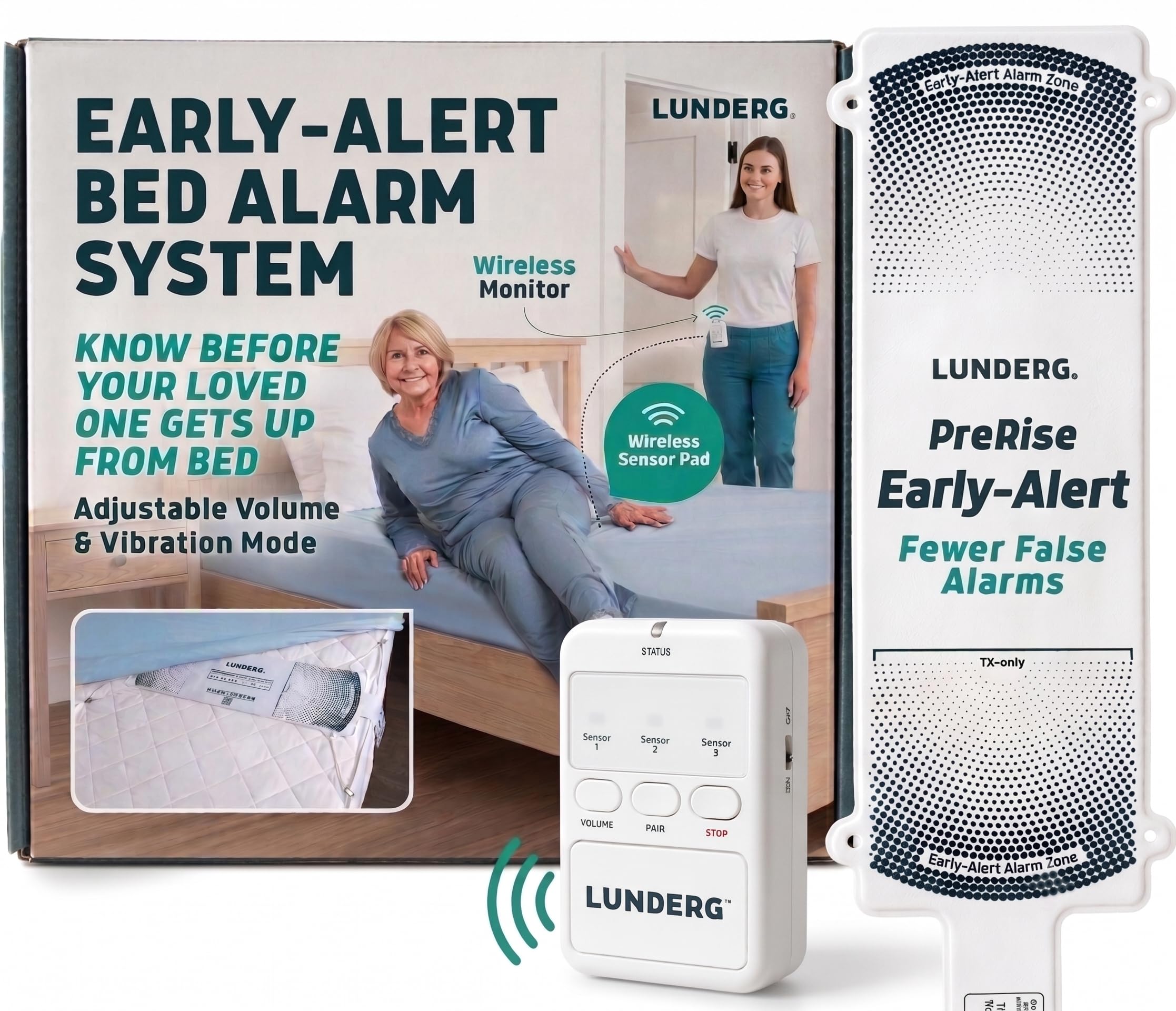
The alert from this one arrives while your mother is still sitting up, and that is the whole reason it leads this list. Its PreRise pad is designed to trip on the weight shift that happens before someone stands — the difference between meeting your father at the side of the bed and meeting him in the hallway.

The pager is the part you live with. It clips to a waistband, drops in a pocket, or hangs on the wall bracket, and it holds up to 400 feet, which covers a bedroom, a kitchen, and a laundry room in a single-story house. Set it to vibrate and it wakes you without putting a sudden noise in the room, which matters when a startled person with dementia is exactly the person who stands up.

Setup is as plain as this category gets: the 10-by-33-inch pad goes under the fitted sheet, the pager arrives paired, and the batteries, bed clips, and bands are all in the box. Use the clips. A pad that slides out from under a restless sleeper is a leading cause of middle-of-the-night false alarms, and the hardware in the box is what keeps it flat.

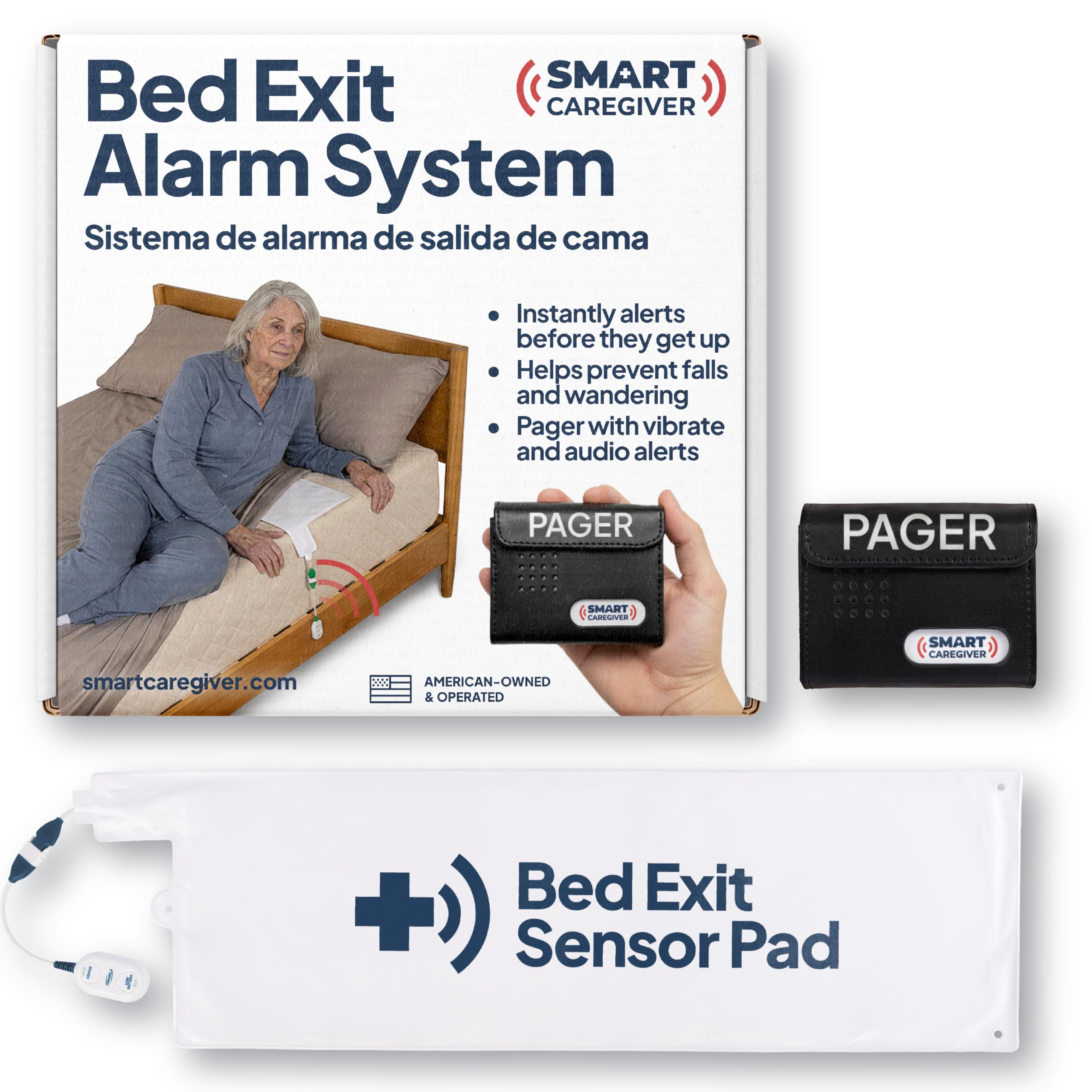
Where it gives ground is money and longevity. It costs more than most of the alarms here, and the pad and pager are the parts that wear out — a unit that quits after a few months is the failure worth knowing about, so register the warranty and keep a spare pad in the closet rather than be caught without one. If the price feels steep for a monitor, the Smart Caregiver pager set does the core job for less, and the Nesthao covers one room for a fraction of the money.

Pros

  • Warns before your parent is on their feet
  • 400-foot pager range with vibration only
  • Silent in the room, so it won't startle
  • Batteries, bed clips, and bands included

Cons

  • Costs more than most alarms here
Our verdict

This is the alarm we recommend first: it warns you while your parent is still sitting up, reaches 400 feet, and stays silent in their room.

Check Latest Price
2

Best Invisible Option

Lunderg Under-Mattress Bed Alarm

86 /100
Trail Score Excellent

Key details

Pad Size
10 x 30 inches
Alert Modes
High, low, or vibration
Pager Range
300 feet
Pad Placement
Under the mattress
Check Price on Amazon

Use this one when the equipment itself is the problem. Someone with dementia who pulls a pad out from under the sheet, or who refuses anything that looks medical, will have a surface sensor on the carpet by the second night. Here the pad goes under the mattress: nothing to see, nothing to pick at, and no box beside the bed with a switch to find.

That invisibility is what you pay for, and it is the highest price in this guide by a wide margin. What you get for it is the same PreRise early warning as our top pick — the alert fires as your parent starts to rise — plus a pager that clips to you across 300 feet, on tone or vibrate, with the volume dialed down for a small apartment.

The trade-off for that sensitivity is a pad that can sound when someone is only shifting in bed. Start on vibrate for the first week and move to tone once you know what a normal night looks like for them. And because the system is silent in the room by design, a heavy sleeper across the hall wants the tone rather than the buzz.

Pros

  • Sensor hides under the mattress
  • Early warning as your parent rises
  • Pager clips on with adjustable volume

Cons

  • The highest price in this guide
Our verdict

Buy it if a visible pad would end up on the floor — it hides under the mattress and still warns you as your parent starts to rise.

Check Latest Price
3

Best Whole-Home System

Smart Caregiver Wireless Pager Alarm

87 /100
Trail Score Excellent

Key details

Pad Size
10 x 30 inches
Alert Modes
Tone or vibration
Pager Range
300 feet
Sensor Capacity
Up to six sensors
Check Price on Amazon

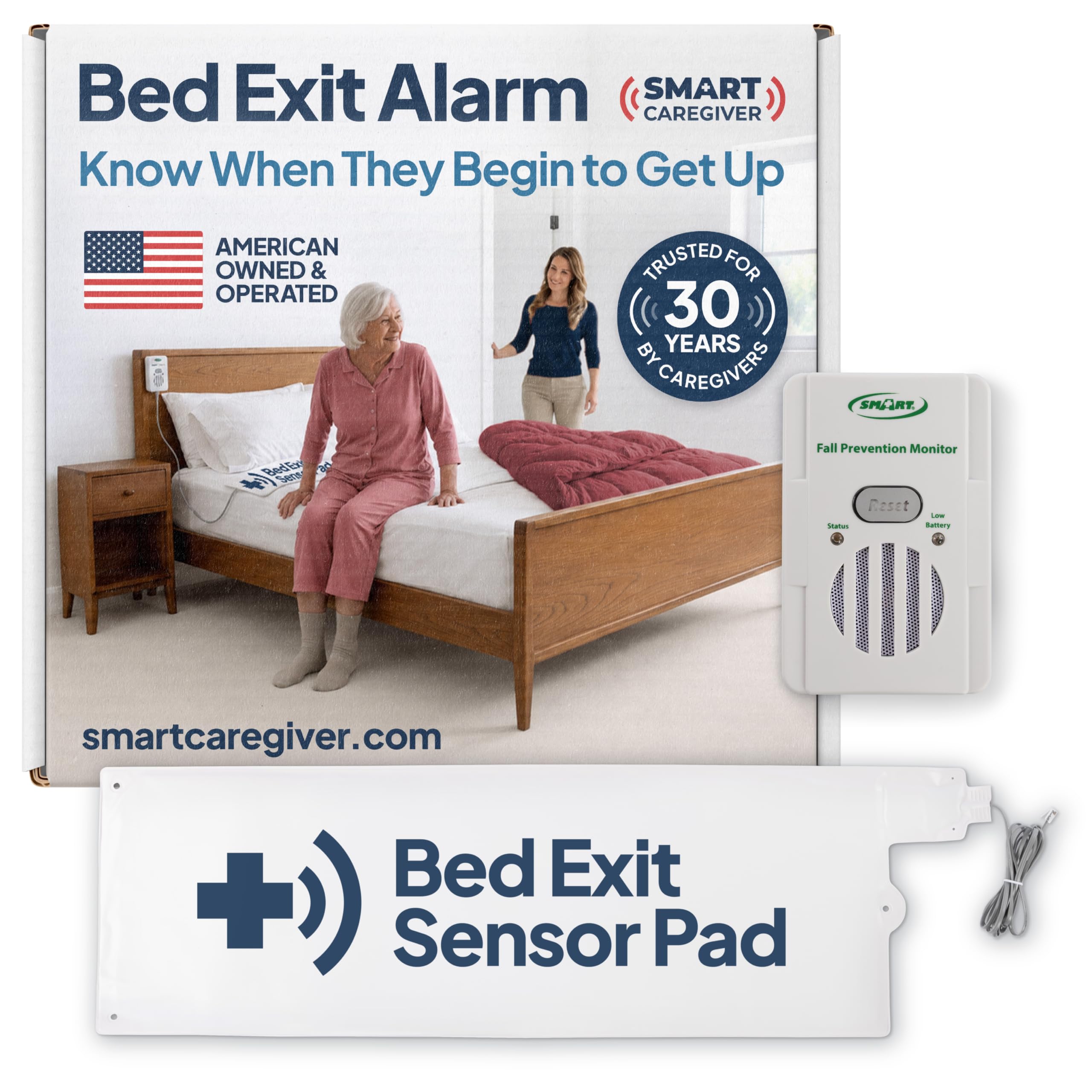
The receiver in this kit doesn't care what it is listening to. It pairs with up to six Smart Caregiver sensors, so the same pager on your waistband can watch a bed pad, a chair pad, a door sensor, and a floor mat. In a house where the risk isn't only the bed — up at night, up from the recliner, out the front door — that is the difference between one system and three.

The bed pad is a 10-by-30-inch pressure sensor with an extra layer built to cut down on nuisance alarms, which is the right priority for something that lives under a fitted sheet. Range is 300 feet and it holds through closed doors, and the pager can buzz or chime; the chime is a soft tone rather than a klaxon, which we appreciated at 3 a.m.

This is our second choice for a household with more than one room to cover, and the better choice if you need door coverage. The small hardware is where it niggles: the belt clip is tight enough that threading it onto a waistband takes a minute, and the instructions assume you already know which sensor to pair first.

Pros

  • One pager runs up to six sensors
  • 300-foot range through closed doors
  • Pad built to cut nuisance alarms

Cons

  • Alarm volume is fixed, with no adjustment
  • Pad can slide under a fitted sheet
Our verdict

One pager that grows with the care plan — bed, chair, and door on the same receiver, if a fixed-volume alarm suits your house.

Check Latest Price
4

Best Budget

Nesthao Bed Sensor Alarm

89 /100
Trail Score Excellent

Key details

Power
Batteries or Micro USB
Detection
Floor motion sensor
In The Box
Pager, sensor, tape
Volume Settings
5 levels
Check Price on Amazon

If you want monitoring working tonight without threading a pad under a sheet, start here. A motion sensor sits on the floor beneath the bed and the pager fires as a foot swings off the mattress — nothing to wipe down, nothing to reposition, and the lowest price of anything we recommend.

The trade-off is timing. A pressure pad feels the weight come off while your parent is still sitting up; a floor sensor waits for the leg to move, so you get a warning measured in the walk to the bathroom rather than in the sit-up. For a caregiver who sleeps lightly and can be at the door in seconds, that is plenty. For a heavy sleeper at the far end of the house, those extra seconds are the whole margin.

It runs on AAA batteries or Micro USB, so a flat pager is a charging cable away rather than a trip to the store. The one thing to get right is the sensor: aim it at the floor on the side of the bed your parent actually gets out of, because a sensor covering the wrong half of the room alerts you to nothing.

Pros

  • Nothing to place under the sheet
  • The lowest price of our picks
  • Batteries or Micro USB power

Cons

  • Alerts later than a pressure pad
  • Even the lowest volume setting is loud
Our verdict

The cheapest way to start monitoring: a floor sensor, a loud pager, and no pad to wrestle under the sheet.

Check Latest Price
5

Best Plug-In Receiver

CallToU Plug-In Bed Alarm

86 /100
Trail Score Excellent

Key details

Range
500 feet
Setup
No app or WiFi
Sensors
2 motion sensors
Receiver
Plug-in chime and flash
Check Price on Amazon

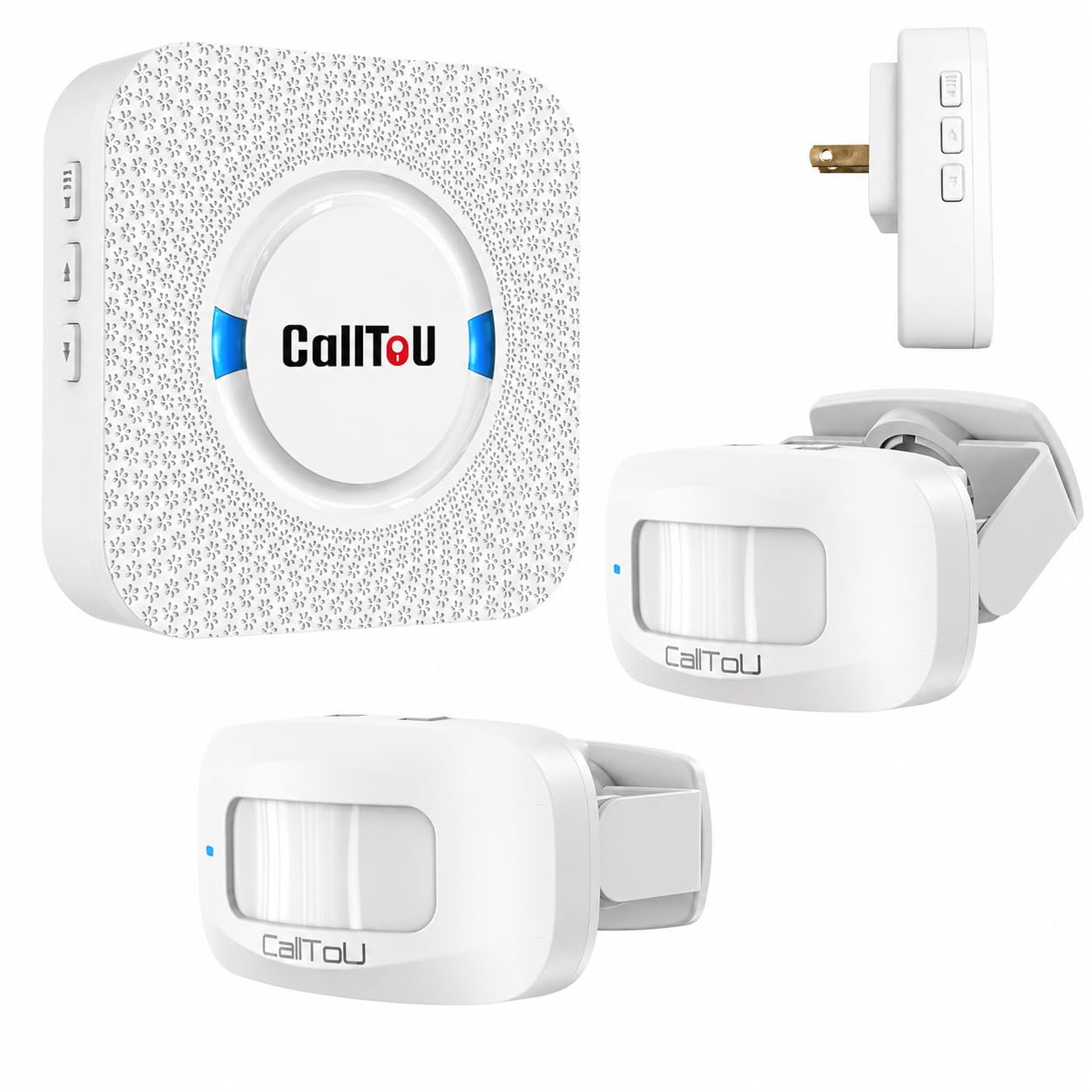
The receiver here lives in a wall outlet, which quietly solves the problem you don't think about until the first dead battery: the thing making the noise cannot go flat. It chimes and flashes, which helps if you sleep with a fan on or you are across the room with your back turned. Two motion sensors come in the box — one under the bed edge, one at the doorway — and they reach the receiver from up to 500 feet, with no app, no WiFi, and nothing to pair.

We like this one for the job of covering a bedroom and the hallway outside it, with the receiver plugged in beside the caregiver's bed. What to watch is false alerts: keep these sensors away from curtains, fans, pets, and busy walkways, because a motion sensor watching a doorway doesn't know your father from the dog.

Pros

  • Receiver stays powered from the outlet
  • Two motion sensors included
  • 500-foot range, no app or WiFi

Cons

  • Chime stays loud even at its lowest setting
Our verdict

A plug-in receiver and two motion sensors: no battery to swap in the alarm, plus coverage for the bedroom and the doorway.

Check Latest Price
6

In-Room Reminders

Smart Caregiver Corded Bed Alarm

84 /100
Trail Score Excellent

Key details

Power
1 9V battery
Mounting
Wall mount
Pad Size
10 x 30 inches
Alarm Volume
80 dB
Check Price on Amazon

Most of the alarms here are built to make no sound in the room where the person sleeps. This one can make plenty, on purpose: the monitor mounts on a wall or sits on a nightstand and sounds at the bedside, so the reminder to stay put lands on the person getting up, not only on you.

The 10-by-30-inch pad is soft vinyl over foam, sealed so it wipes clean after an accident, and it slides under the fitted sheet. The alarm runs at 80 dB, loud enough to pull you down a hallway, and an optional remote receiver puts the alert somewhere other than the bedside.

Sensitivity is where this one earns its keep and where it costs you. The pad notices weight coming off quickly — that is the point — but rolling over can set it off, so for a restless sleeper put it under the hips rather than the shoulders and accept a slightly later warning in exchange for fewer false alarms.

Buy it if you want the alarm heard in the bedroom and you prefer your parent warned rather than surprised. Seat the 9-volt firmly before you trust it: the compartment is snug, and a battery that isn't home is an alarm that isn't watching.

Pros

  • Alarm sounds in the room to remind
  • Sealed pad wipes clean
  • Wall mount plus optional remote

Cons

  • No on/off switch; unplug the pad to silence it
Our verdict

Worth it if you want the alarm to sound in the bedroom, so the reminder reaches the person getting up and not just you.

Check Latest Price
7

Flexible Mounting

Patient Aid Bed Alarm

83 /100
Trail Score Excellent

Key details

Mounting
Rail clip, wall, velcro
Pad Size
10 x 30 inches
Warranty
1 year
Alarm Volume
80 or 90 dB
Check Price on Amazon

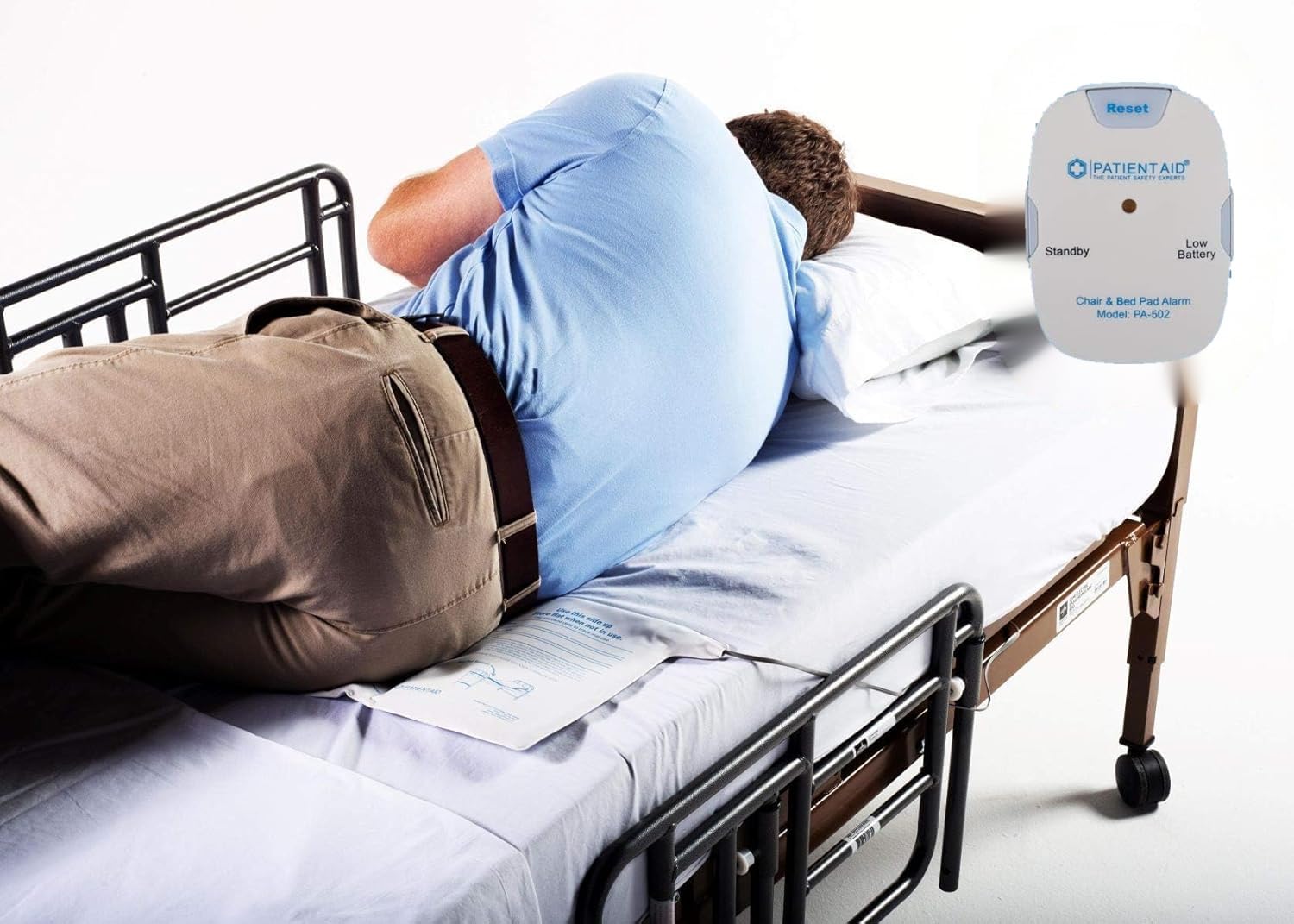
Three ways to mount a monitor is two more than most alarms here give you. This one clips to a bed rail with a U-bracket, screws to a wall, or sticks to a flat surface with velcro, so the box can go where the person in the bed can't reach it without you hunting for a shelf first.

The sound is your choice too: an alarm tone or a musical chime, at 80 dB or 90 dB, with a test button that previews the ring before anyone is asleep. The 10-by-30-inch vinyl pad is latex-free and water-resistant, and it folds in half, so it can do duty on a chair as well as a bed.

The pad plugs straight into the monitor rather than into a separate transmitter, which is one less thing to lose and one more constraint: the monitor has to live within reach of that lead. Measure the run from the far side of the mattress to your chosen wall spot before you commit, and check the plug seating now and then — a loose jack is a silent alarm.

We rate it the flexible mid-priced option: three mounting choices, two sounds, and two volumes for about what the simplest corded kits cost. It is the right pick for a bed pushed against a wall, where you need the monitor up and out of the way rather than on a nightstand.

Pros

  • Three mounting options in the box
  • Choice of alarm tone or chime
  • Pad folds for chair use

Cons

  • Vinyl pad crinkles under the sheet
Our verdict

A flexible mid-priced kit with three mounting options and a choice of chime or alarm, for a bed you have to work around.

Check Latest Price
8

Restless Sleepers

Secure Safety Solutions Bed Exit Alarm

82 /100
Trail Score Excellent

Key details

Reset
Tamper-resistant
Pad Size
12 x 30 inches
Warranty
1 year monitor, 45-day pad
Alarm Volume
80 dB
Check Price on Amazon

Twelve inches is the number to notice. Every other pressure pad here is 10 inches wide, and those extra two are what keep a sleeper who rolls, curls, and drifts sideways from sliding off the sensor at 3 a.m.

The monitor is a plain yellow box with an 80 dB alarm, a flashing light, a low-battery indicator, and a tamper-resistant reset. That last item cuts both ways: a confused parent can't silence the alarm and settle back down, and you are the one pressing a deliberately stubborn button in the dark while someone is already on their feet. The mounting holder screws to the wall so the box sits above reach.

For a restless sleeper in a corded setup, this is the one we point to, and the wider pad is the reason. What to accept: the alarm volume is fixed at 80 dB, which reaches the next room and not much further, so if your bedroom is at the far end of the house, plan on a baby monitor as backup.

Pros

  • Widest pad in this group at 12 inches
  • Tamper-resistant reset button
  • Mounting holder keeps it out of reach

Cons

  • Pad warranty runs far shorter than the monitor's
Our verdict

The pick for a sleeper who won't stay on a 10-inch pad: a wider sensor, a tamper-resistant reset, and a plain 80 dB alarm.

Check Latest Price

How We Tested the Best Bed Exit Alarms

We started with roughly 40 bed exit alarms sold to families and home care agencies, then narrowed the field to 12. The biggest filter was how each unit senses an exit — pressure pad under the sheet, chair pad, or cordless floor mat — because that choice determines where the alarm can physically be used and what it costs to keep running. We also cut anything that required proprietary replacement pads selling for nearly the price of the alarm itself.

Every unit was installed the same way: pad beneath the fitted sheet, cord routed down the side of the bed and taped at the floor, control box on the nightstand. We timed each setup from opening the box to a live, armed alarm with a stopwatch, and only consulted the manual after that first solo attempt. Sensitivity got its own workout — a 200-pound colleague and a 120-pound one each sat up, swung their legs over the edge, and stood, and we noted whether the alarm fired on the shift of weight or only once both feet hit the carpet.

Volume we measured with a decibel meter at the doorway and at the far end of a hallway, and we counted how many adjustment steps each unit offered, since a fixed siren in a shared house wakes everyone but the person who needs to respond. We ran each alarm continuously on one set of batteries and logged the date it died, and we tallied false alarms across a week of sheet changes, bed-making, and repositioning. At the end, we added up a year of replacement pads and batteries against the sticker price to see which ones were actually cheap to own.

How to Choose a Bed Exit Alarm

How early do you need the warning?

The three designs here fire at different moments. A pressure pad under the shoulders or hips reacts as weight comes off, roughly when someone sits up. An under-mattress pad with early-alert electronics aims for the same moment from below the mattress. A floor-level motion sensor waits for a leg to swing off the bed, a beat later — which matters if the walk to their room takes you any time at all.

If your parent is unsteady the instant they are upright, pay for the pressure pad. If they sit on the edge for a while before standing, the motion sensor is fine and far simpler to live with.

Where the alert has to land

An in-room alarm and a caregiver pager solve different problems. A bedside alarm warns the person getting up, which works for someone who can still follow a reminder and fails for someone who panics at sudden noise. A pager keeps the room quiet and puts the alert on you: vibration for a caregiver sleeping in the next room, tone for one across the house.

Quoted ranges of 300 to 500 feet assume a clear path between the pad and the pager. Count on less through two walls and a floor, and walk the pager to the furthest room you would actually be in before you trust it.

False alarms and a pad that stays put

Early warning and quiet nights pull against each other. The more sensitive the pad, the more often a roll or a shift sets it off, and a pad that slides out of position is a leading cause of 3 a.m. wake-ups. Clips, anti-slip stickers, and a wider pad all help, and so does placement: under the hips catches a sit-up later, under the shoulders earlier and with more triggers.

Match the sensor to the sleeper. Someone who thrashes needs a pad that stays under them; someone who barely moves is well served by a motion sensor aimed at the floor on the side they get out of.

Who is in the bed

An alarm is a piece of equipment in someone's bedroom, and some people will not tolerate it. Pads get pulled out from under sheets, bedside boxes get unplugged, and a loud alarm in the room can agitate a person with dementia into standing up. When that is the household, choose an under-mattress pad or a silent pager, and mount the controls out of reach.

Worth knowing as well: in-room bed alarms have been treated as a restraint in some care settings. If your parent lives in a facility, check the care plan before you buy anything.

Batteries, pads, and the running cost

Nothing here is a one-time purchase. Monitors run on 9-volt, AA, AAA, or D cells, or from a wall outlet, and a plug-in receiver is the one component that cannot go flat. The pads are the real consumable: warranties across this group run from 45 days on a pad to a year on a monitor, and a pad that stops sensing looks exactly like a quiet night.

Change the batteries on a date you will remember, test the pad weekly by lifting weight off it, and check the pad warranty before you choose — it is often much shorter than the monitor's.

Frequently Asked Questions

Final Verdict

Start with the Lunderg Early Alert. It warns you while your parent is still sitting up, reaches 400 feet through a house, and stays silent in the room where they sleep — the three things that decide whether an alarm actually gets used. If the pad would end up on the floor because they refuse it, the under-mattress Lunderg is worth the premium.

And if the budget is tight or you want monitoring working tonight, the Nesthao floor sensor will tell you when feet reach the floor, a beat later than a pad and for a fraction of the money.