Best Antiseptic Mouthwash of 2026

Antiseptic mouthwash has a built-in tradeoff: the more it feels like it's working, the more likely it is to sting your gums, dry the corners of your mouth, and taste like a hospital supply closet. That burn is not a reliable scorecard for strength—and it's a big reason so many bottles end up half-full under the sink. A good antiseptic rinse should knock down the bacteria behind bad breath and gum irritation, leave your mouth feeling clean rather than scalded, and taste pleasant enough that you actually finish the bottle. That's the bar we set.

My team and I spent three months with 16 formulas, swishing morning and night and paying attention to the things you can't learn from a label: how quickly the freshness fades, whether your gums feel soothed or irritated afterward, and whether the bottle is worth rebuying. The shortlist below is what survived—picks that balance effectiveness with gentleness, and strength with a taste you won't dread.

1

Best Overall

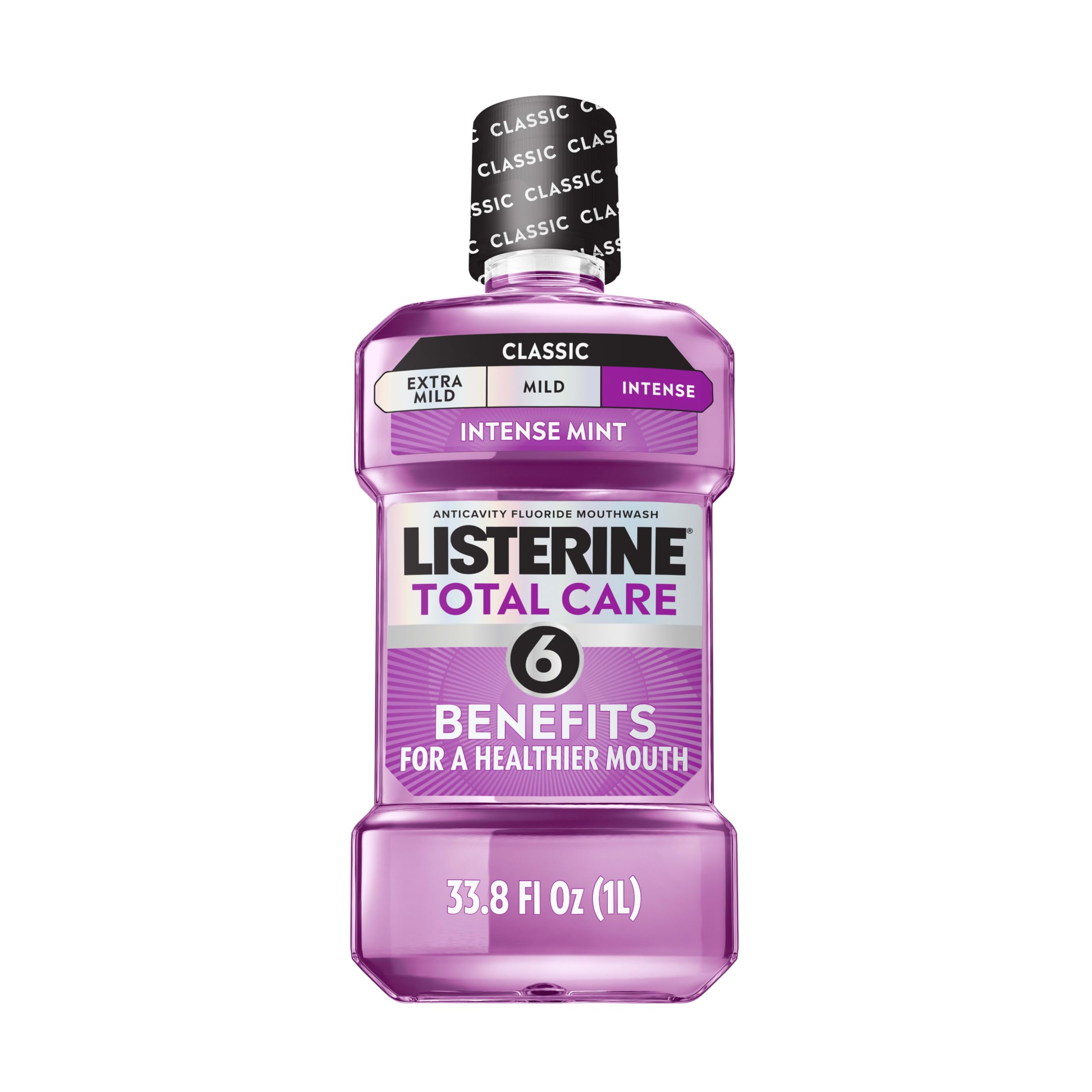
Listerine Total Care Anticavity

96 /100
Trail Score Outstanding

Key details

Size
33.8 fl oz (1 L)
Rinse Time
60 seconds
ADA Accepted
Yes
Active Ingredients
Essential oils plus fluoride
Check Price on Amazon

Two jobs in one bottle is what earns this Listerine the top spot on our list. It kills 99.9% of the germs that cause bad breath — table stakes for an antiseptic — and it adds fluoride for cavity protection and enamel repair on top of that. The American Dental Association accepts it, and the label counts six benefits, from stronger teeth to a cleaner-feeling mouth. If you want one bottle doing the most work by the sink, this is the one we hand people.

Intense mint is not marketing modesty. It tingles hard and it lingers, and it splits opinion more sharply than anything else here — some of us like a rinse that announces itself, and others find it too much for a daily habit. We think it is right for most adults and wrong for anyone with tender gums or a low tolerance for sting. If that is you, the alcohol-free Crest below handles the daily germ-killing without the fireworks.

The rest is sensible. A liter is the right size for one sink, the price sits in the middle of this group, and the difference over a plain antiseptic buys you the fluoride. Where it fits best: cavity-prone adults, anyone whose dentist has raised enamel or decay, and households that would rather buy one rinse than three.

Pros

  • Kills 99.9% of bad breath germs
  • Fluoride for cavity protection and enamel repair
  • ADA accepted, six benefits in one bottle

Cons

  • Label asks for a full 60 seconds twice a day
Our verdict

We recommend it as the default because it kills 99.9% of germs and adds fluoride for enamel, in a bottle the ADA accepts — provided you can take an intense mint.

Check Latest Price
2

Best Alcohol-Free

Crest Pro-Health Advanced

96 /100
Trail Score Outstanding

Key details

Size
1 L (2-pack)
Alcohol-free
Yes
Active Ingredients
CPC plus fluoride
Check Price on Amazon

If the sting in our top pick is what would keep you from rinsing twice a day, start here. Crest Pro-Health Advanced is alcohol-free, so the swish is a cool mint swirl rather than a test of will, and it goes after germs with CPC instead of the essential oils in the classic Listerines.

That makes it the best alcohol-free rinse in this set for most people. It still carries fluoride, so you keep the cavity and enamel benefits that justify our top pick while giving up only the sensation, and the mint is mild enough that you can hold it for the full rinse without negotiating with yourself. The mild flavor also makes it the reasonable one to try in a water flosser's reservoir, where a harsher rinse would be overwhelming.

Two liters arrive as a pair of bottles, and that is where the value is: by the liter this is the least expensive rinse we are recommending, and it lasts months at two rinses a day. The mild mint means you will not ration it, which matters more than it sounds — the rinse you use generously is the one that does its job.

Pros

  • Alcohol-free, so no sting
  • CPC plus fluoride in one rinse
  • Two liters, lowest cost per liter here

Cons

  • No gingivitis-reduction claim of its own
Our verdict

Our pick if you want antiseptic-level cleaning without the burn: alcohol-free CPC plus fluoride, in a two-bottle pack that covers months of twice-daily rinsing.

Check Latest Price
3

Best for Sensitive Gums

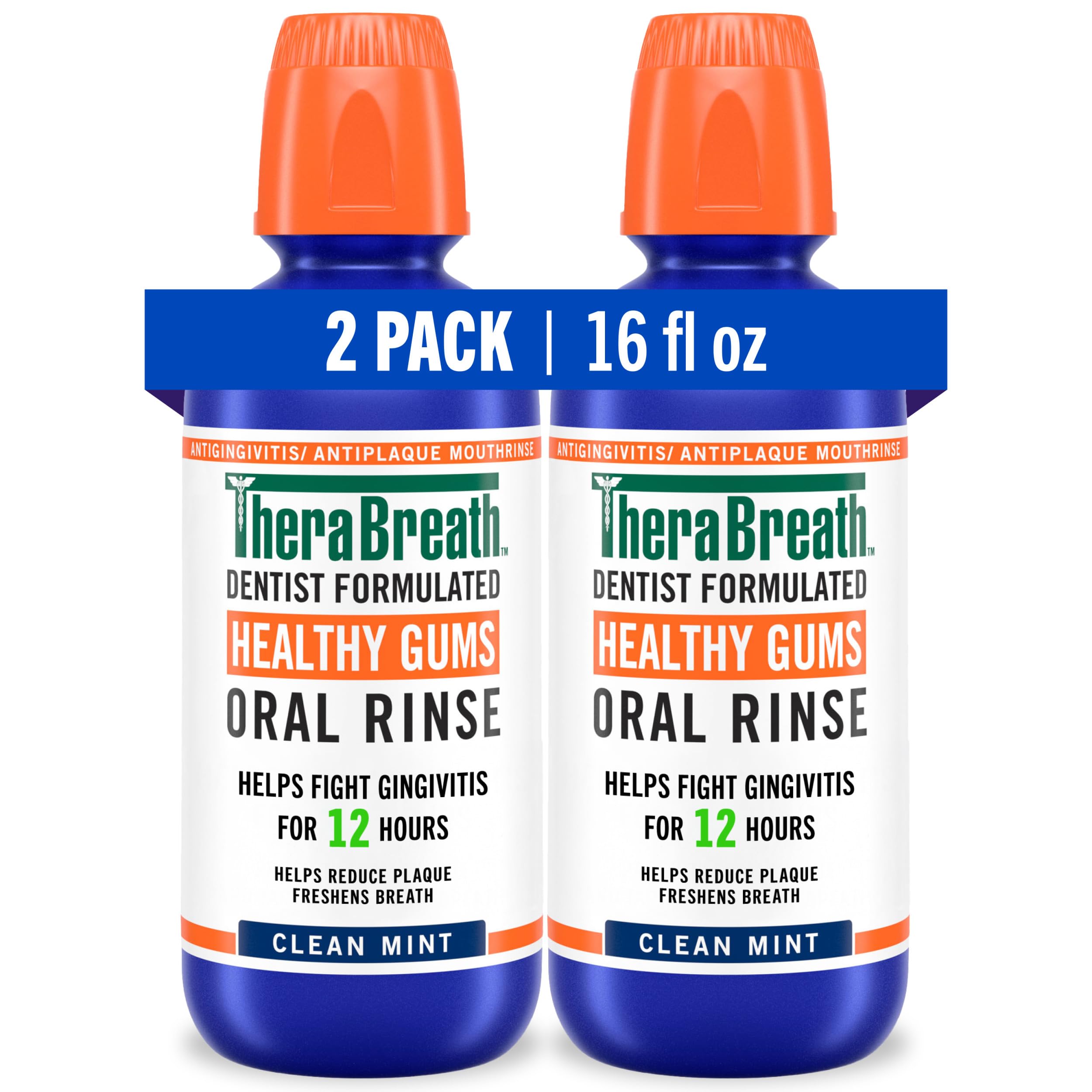
TheraBreath Healthy Gums

95 /100
Trail Score Outstanding

Key details

Size
16 fl oz (2-pack)
Free From
Dyes, SLS, parabens
Alcohol-free
Yes
Active Ingredients
CPC
Check Price on Amazon

Most rinses in this aisle give you a bright color, a name in capital letters and a sting. TheraBreath's Healthy Gums skips the dye, the colors, the SLS and the parabens and goes alcohol-free, which is why it is the bottle we reach for when gums are tender rather than when breath is the complaint.

The active here is CPC, aimed at the plaque that leads to bleeding gums and gingivitis, and the formula is certified vegan, gluten-free, halal and kosher — a longer list of credentials than anything else in this group. In use it is the mildest of the five: clean mint, no burn, and no aftertaste to speak of. If you have ever given up on a mouthwash because it hurt, this is the one to restart with.

Where it earns its place: gum tenderness, bleeding when you brush, a hygienist who has mentioned plaque. If you also want fluoride in the rinse, our top pick covers that ground, and this bottle is built around gum care instead. Two 16-ounce bottles is a size worth noting too — small enough to keep one in a travel bag, which is not true of anything else we are recommending here.

Pros

  • Targets plaque and bleeding gums
  • No burn, no dyes, no SLS
  • Mild clean mint, easy to hold

Cons

  • Costs the most per ounce here
Our verdict

The one we reach for when gums are tender or bleeding: an alcohol-free CPC rinse with no dye, no burn, and a mild mint that is easy to keep swishing.

Check Latest Price
4

Best for Early Gingivitis

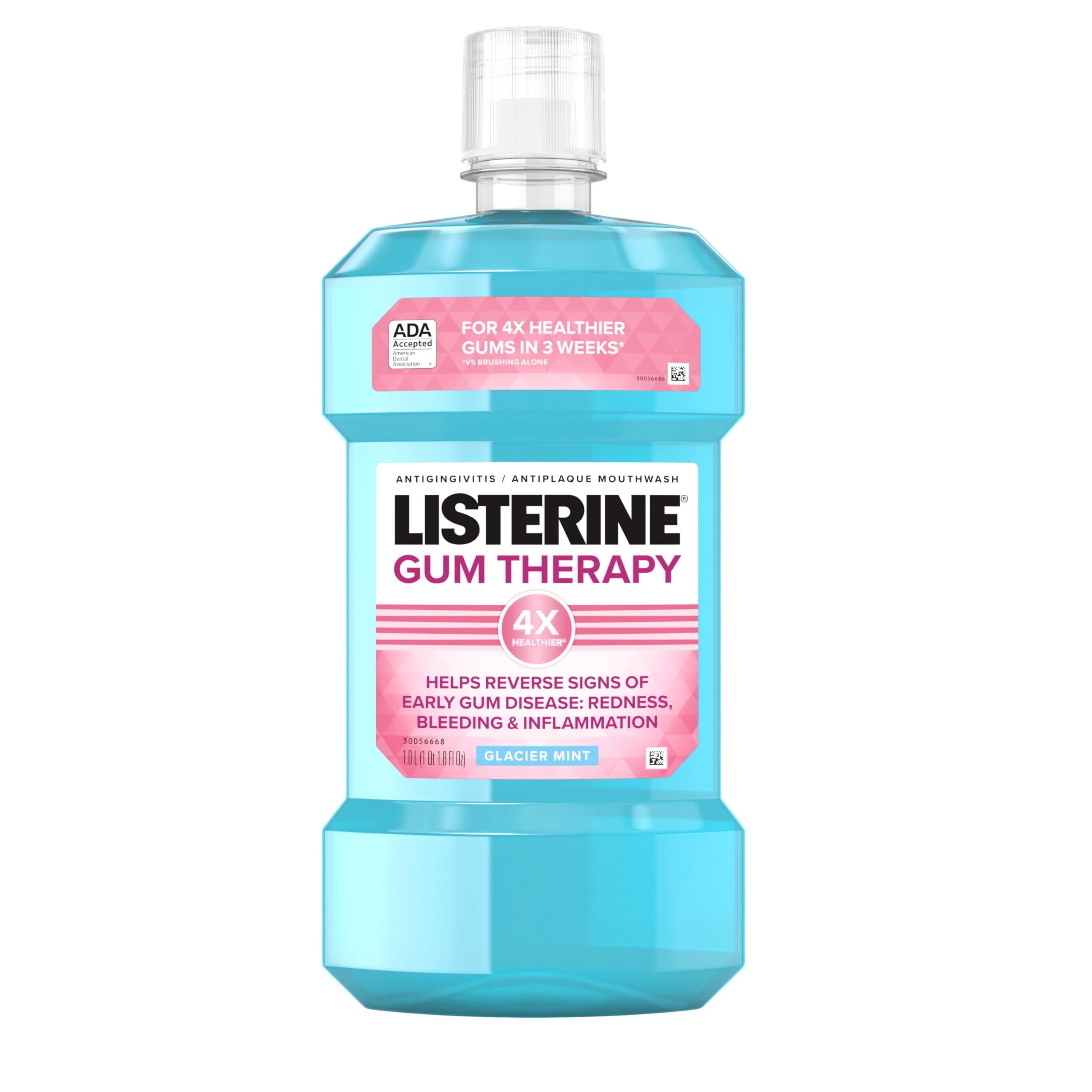
Listerine Gum Therapy

95 /100
Trail Score Outstanding

Key details

Size
33.8 fl oz (1 L)
Gum Claim
4x healthier gums in 3 weeks
ADA Accepted
Yes
Plaque Claim
5x more effective than flossing
Check Price on Amazon

Pink in the sink after brushing is the problem this bottle was built for. Listerine Gum Therapy targets early gingivitis — bleeding, redness, inflammation — rather than breath alone, and it carries the most specific promise in this set: 4x healthier gums in three weeks compared with brushing alone, and plaque removal the brand compares favorably to flossing. Those are Listerine's own claims rather than results we can hand you, but they describe exactly the job someone with sore gums is shopping for.

In use, it feels like a gum treatment. The glacier mint leaves your mouth stripped clean, the American Dental Association accepts the formula, and two details suggest someone thought about the bathroom rather than the shelf: a child-resistant cap, and a label that shrugs off a wet counter.

This is our pick for early gum trouble, and the case is consistency rather than magic. It is the cheapest of the gum-specific bottles here, so restocking at the three-week mark is not painful, and the routine is the same 30 seconds twice a day you are already doing. If the bleeding has not eased inside that window, the next dental appointment matters more than the next bottle.

Pros

  • Targets bleeding, redness and inflammation
  • Most specific gum claim in this set
  • Child-resistant cap, water-resistant label
  • Cheapest of the gum-specific rinses

Cons

  • Glacier mint is strong enough to cut a rinse short
Our verdict

The most purpose-built gum rinse here: it targets bleeding and inflammation with a three-week claim, and it costs less than the other gum-focused pick.

Check Latest Price
5

Bulk Buyers

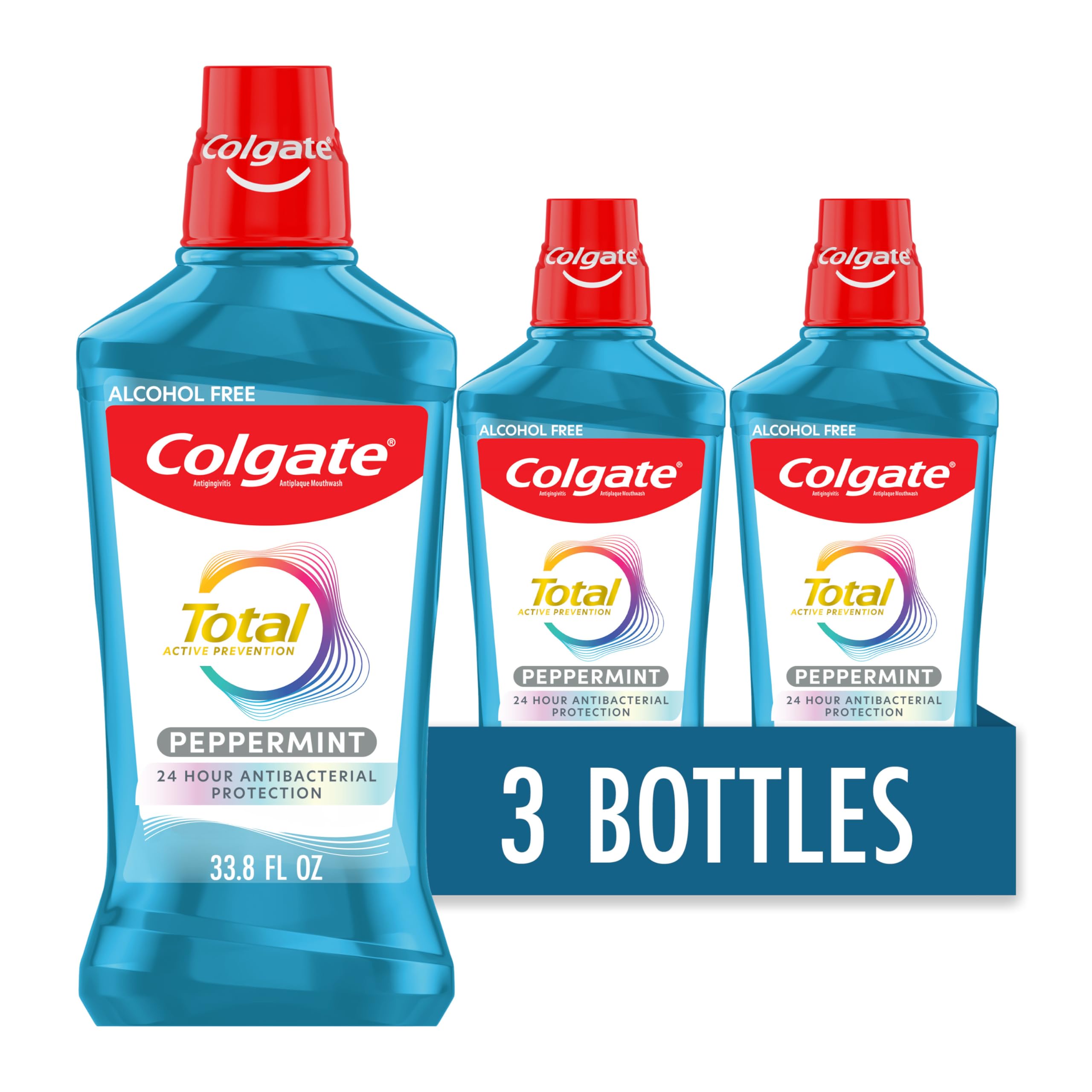
Colgate Total Alcohol Free

95 /100
Trail Score Outstanding

Key details

Size
1 L (3-pack)
Alcohol-free
Yes
Protection Claim
24-hour antibacterial
Active Ingredients
CPC
Check Price on Amazon

Three liters arrives as a case, and that is the first thing to know: this is a commitment to a flavor and a formula before you have tried either. If you have one bathroom shelf and a habit of buying mouthwash a bottle at a time, the box will sit in the closet for a while.

As a rinse, it is genuinely good. CPC and alcohol-free, with a 24-hour antibacterial claim, ADA acceptance, and the plaque, tartar and gingivitis language you want from a daily antiseptic, in a peppermint that makes a change from the mint-blitz everywhere else. It sits just behind the Crest for us, because Crest pairs CPC with fluoride and arrives in a pack that does not require shelf planning.

The case logic is the whole argument. Split it with a housemate or stock two bathrooms and the per-liter cost lands among the cheapest rinses here; buy it for a single sink and you are storing mouthwash into next year. That is the reason it lands behind the others on this page — a good rinse weighed down by a pack size most people do not need.

Pros

  • 24-hour antibacterial protection claim
  • Alcohol-free CPC, ADA accepted
  • Three liters in a single order

Cons

  • Peppermint leaves a metallic edge
  • Can leave the mouth dry
Our verdict

A good alcohol-free CPC rinse whose real story is the three-bottle case: buy it for two bathrooms or a shared house, not for a single sink.

Check Latest Price

How We Tested Antiseptic Mouthwash

We started with a list of more than 40 antiseptic rinses and narrowed it to 16 based on active ingredients, alcohol content, bottle size, and cost per ounce. Then the bottles moved into our bathrooms for three months. We used them after brushing morning and night, after coffee, and after garlicky lunches—the moments when you actually want a mouthwash to prove itself.

Each time, we swished for the full 30 seconds and noted how quickly the sting hit, how strong it was, and whether it faded or lingered. We checked for dryness, peeling, or irritation at the corners of the mouth, and we paid attention to how our gums felt afterward—soothed, tight, or tender. To judge freshness, we checked back in an hour and again three hours later; to judge gum health, we kept notes on tenderness and bleeding when flossing over the full test period.

We also tracked the unglamorous stuff: whether the cap measured cleanly, whether the bottle leaked, how many full doses each one yielded, and whether we actually wanted to reach for it again. A rinse that felt effective but tasted terrible or burned too much didn't make the cut, and neither did a gentle formula that left breath stale by mid-morning. The picks below are the ones that balanced strength, gentleness, freshness, and value well enough to earn a permanent spot on the counter.

How to Choose an Antiseptic Mouthwash

Germ Kill Is the Floor, Not the Selling Point

All five rinses here go after the bacteria behind bad breath; the difference is the active doing the work. The classic Listerines rely on a blend of essential oils, while the alcohol-free picks from Crest, Colgate and TheraBreath use CPC, a germ-killer that does not need alcohol to function. Both approaches earn ADA acceptance on the bottles we recommend.

So do not shop by the word antiseptic alone. Look for the ADA seal and a named active ingredient, then choose on the extras and on whether you can stand the taste. A rinse you will use every day beats a stronger one you keep avoiding.

Fluoride Changes What the Bottle Is For

An antiseptic rinse cleans and freshens; a fluoride rinse also helps teeth resist decay and repair enamel. Our top pick does both, which is why it suits a household that wants one bottle by the sink rather than a rinse plus a separate fluoride step.

Here is the trap nobody mentions at checkout: rinsing straight after brushing washes away the fluoride toothpaste you just applied. Use the rinse at a different point in the day — after lunch, say — and let the toothpaste do its work at bedtime.

Alcohol-Free Does Not Always Mean Mild

Going alcohol-free removes the burn that makes people cut a rinse short, but it does not guarantee a gentle taste. Colgate's peppermint arrives with real force, and plenty of alcohol-free formulas still bring a strong mint. If you want the mildest experience here, look for alcohol-free and a mild-mint label together; the Crest and TheraBreath both fit.

And do not read a sting as proof of strength. The CPC rinses kill germs without it, and a rinse you can hold for the full time on the label is doing more than one you spit out early.

Match the Formula to the Problem You Actually Have

Breath alone? The cheapest antiseptic on this list does the job. Prone to cavities, or has a dentist mentioned enamel? Buy fluoride. Bleeding or tender gums? That is a different formula entirely: Listerine Gum Therapy makes the most specific three-week claim in the set, and TheraBreath's CPC rinse is the gentler version of the same idea.

Buy one, use it twice a day for a month, and judge it on your mouth rather than on the label. If bleeding continues past that first month, book the dentist instead of buying a bigger bottle.

Frequently Asked Questions

Final Verdict

The bottle we recommend to most people is Listerine Total Care. It kills 99.9% of the germs behind bad breath, adds fluoride for enamel and cavity protection, and carries ADA acceptance — the most complete daily rinse in this set, as long as the intense mint does not put you off.

If it does, switch to Crest Pro-Health Advanced: alcohol-free, CPC plus fluoride, and the lowest cost per liter of anything we recommend. Gum trouble changes the answer — Listerine Gum Therapy for early bleeding and inflammation, TheraBreath when you need the gentlest formula. If your dentist has raised gum disease rather than decay, skip the fluoride debate and go straight to the gum bottle.