Best Anti-Inflammatory Teas of 2026

The trouble with tea that's good for you is that it usually tastes like it — chalky turmeric, dusty green tea, ginger sharp enough to feel like a dare. The ingredients that earn the anti-inflammatory label only help if you finish the mug, so the real question isn't which blend has the most impressive ingredient list. It's which one you'll actually drink every day without bargaining.

My team and I spent three months steeping and sipping 16 anti-inflammatory teas, and the ones that rose to the top got there on flavor first. One thing I learned the hard way: the ingredient on the front of the box is rarely the first one in the cup — flip the package over and see where the turmeric or ginger actually falls in the list. The picks below are the blends that tasted good enough to keep drinking and were honest about what was in them.

1

Best Overall

Traditional Medicinals Turmeric Ginger & Meadowsweet

93 /100
Trail Score Outstanding

Key details

Blend
Turmeric, ginger, meadowsweet
Count
16 tea bags
Caffeine
Caffeine-free
Certification
USDA Organic
Check Price on Amazon

This is the one tea in the guide that says outright what it's for: supporting a healthy response to inflammation associated with an active lifestyle. That sentence is why it's our top pick. The blend is organic turmeric, ginger, and meadowsweet, formulated by herbalists, and meadowsweet is the tell — it's a traditional inflammation herb that none of the other turmeric blends here bother with. We think it's a more honest starting point than a spice blend that happens to contain turmeric.

It's also easy to drink without dressing it up. The flavor is warming, earthy, and savory rather than sharply spicy, closer to a soft chai than to a raw ginger shot, and the spice stays gentle even when you leave the bag in longer than the box suggests. It isn't sweet, so if you take honey in herbal tea you'll take it here too.

Sixteen bags, individually wrapped and compostable, and certified organic and kosher as well as caffeine-free. The wrapping is a small thing that isn't small: turmeric and ginger fade faster than black tea does, and a sealed sachet means the last cup tastes like the first. It's the sort of detail that decides whether a box gets finished or forgotten at the back of the cupboard.

One check before you order. Meadowsweet is a salicylate source, so if you react to aspirin, this isn't your cup — take the nettle instead, or one of the plain turmeric-ginger blends. For everyone else it's the straightforward choice: a cup formulated for a specific job, with nothing in it that doesn't belong.

Pros

  • Blend formulated around inflammation support
  • Meadowsweet, which the other blends here skip
  • Caffeine-free, USDA organic, compostable bags
  • Smooth, earthy flavor without a sharp burn

Cons

  • 16 bags per box empties fast at a daily cup
Our verdict

For everyday inflammation support, this is the box we reach for first: organic turmeric, ginger, and meadowsweet in a caffeine-free blend built for exactly that job.
Check Latest Price
2

Best Flavor

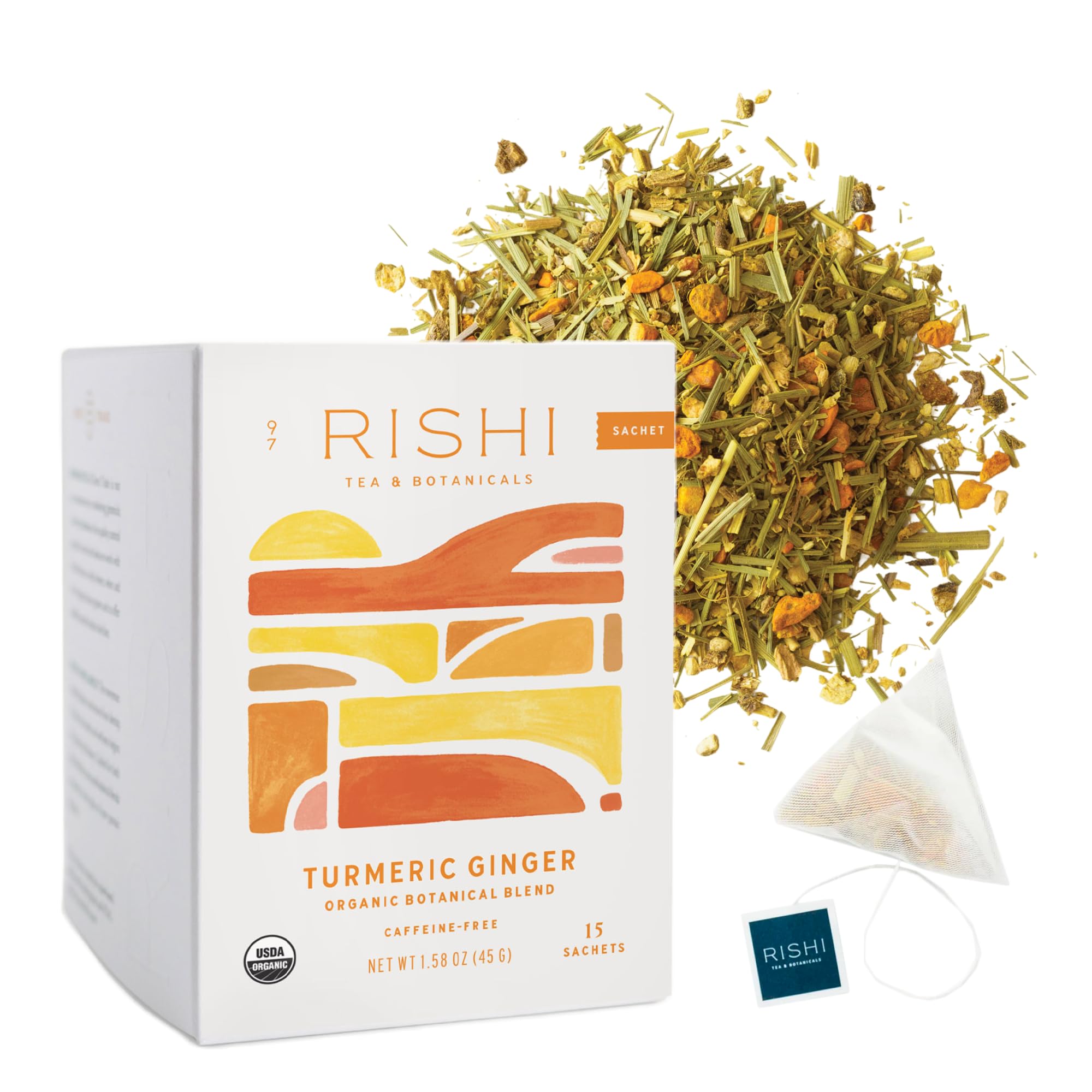
Rishi Turmeric Ginger

93 /100
Trail Score Outstanding

Key details

Blend
Turmeric, ginger, citrus
Count
15 sachets
Bag Type
Biodegradable sachet
Caffeine
Caffeine-free
Check Price on Amazon

If you've bought a turmeric tea before, taken one sip, and quietly moved the box to the back of the shelf, start here. Turmeric and ginger get a lift from citrus in this blend, and the cup lands naturally sweet and spicy at once — closer to a spice-forward chai than to the flat, dusty cups that give turmeric tea a bad name.

The sachets are bigger than a standard paper bag and fully biodegradable, which matters more with roots than with leaves: turmeric and ginger need room to swell, and a roomier bag gives them somewhere to do it. Rishi's own directions are unusually precise — 200°F water, five to seven minutes. We steeped the full seven and found the ginger arrives late, so pulling the bag at three minutes sells the cup short.

What divides people here is cost. Fifteen sachets puts the per-cup price at the top of this group, and at two cups a day that's a real grocery line. The ingredient list is short, too: turmeric, ginger, and citrus, with no pepper or meadowsweet behind them.

So it earns its place on flavor rather than on formulation. We finished this box faster than any other on the page, and that's the argument — the best anti-inflammatory tea is the one you actually drink, and this one goes down without milk, sugar, or willpower. If you want the herb profile built for the job, the top pick does more; if you want a cup you look forward to, this is it.

Pros

  • The best-tasting turmeric tea in this group
  • Roomy biodegradable sachets for root pieces
  • Caffeine-free and certified organic

Cons

  • Highest per-cup cost of the teas here
  • No pepper or meadowsweet in the blend
Our verdict

Buy this one if the reason you stopped drinking turmeric tea was the taste — it's the best cup here by a wide margin, and it's still caffeine-free.

Check Latest Price
3

Best for Allergies

Traditional Medicinals Organic Nettle

94 /100
Trail Score Outstanding

Key details

Type
Single-herb nettle
Count
16 tea bags
Certification
Organic
Check Price on Amazon

This is the plainest cup in the guide: nettle, no turmeric, no chai spices, no honey flavor. That's the whole idea. It's the one tea here aimed at seasonal allergies and puffiness rather than achy joints, and a nettle-only bag is how you find out whether the herb does anything for you.

Drinking it is easy enough. The flavor is mild, grassy, and a little hay-like, and it's one of the few cups here we drank plain. It's also a gentle diuretic, which is part of why it's associated with puffiness and water retention — so keep water nearby and don't stack three cups before a long meeting.

What it isn't: warming, spicy, or remotely indulgent. If you want a turmeric cup with some heat, this will feel like drinking a lawn. If your inflammation shows up as hay fever every spring, or as swelling you'd like to move along, it's one of the least expensive ways to test the idea — sixteen bags, and no blend to muddy the answer.

Pros

  • Single-herb nettle with nothing to muddy it
  • Mild grassy flavor that needs no sweetener
  • Popular for seasonal allergies and puffiness

Cons

  • Plain, grassy cup won't suit spice lovers
Our verdict

If your inflammation shows up as seasonal allergies rather than a sore knee, this single-herb nettle is the simplest cup here.

Check Latest Price
4

Best Morning Cup

Bigelow Matcha Green Tea with Turmeric

94 /100
Trail Score Outstanding

Key details

Blend
Green tea, matcha, turmeric
Count
108 tea bags
Caffeine
Caffeinated
Packaging
Individually foil-wrapped
Check Price on Amazon

Nearly everything in this guide is a nighttime cup, and this one isn't. It's green tea and matcha with turmeric folded in, so it carries real caffeine — the opposite of the caffeine-free herbal blends that make up most of this list. That's the reason it earns a spot: a turmeric cup for seven in the morning.

The flavor is earthy and peppery, with matcha doing most of the work and turmeric sitting behind it. It's smoother than a plain green tea and far gentler than a turmeric-ginger blend, and we were surprised by how much the matcha softens the spice. The bags are individually foil-wrapped — 108 of them across six boxes — so it's the case to split with a friend or park in a desk drawer.

Six boxes is the other thing to weigh: a lot of tea to buy before you know whether you like it, though the per-cup cost is among the lowest here. Split a case if you're unsure, or treat it as a supply that lives at work and stop thinking about it.

Pros

  • Green tea and matcha deliver a genuine caffeine lift
  • 108 individually foil-wrapped bags
  • Smoother, more peppery cup than plain green tea

Cons

  • Caffeinated, so it's a before-noon cup
  • Turmeric is a background note behind green tea
Our verdict

The cup here with the most caffeine in it, which makes it the morning answer rather than the evening one.

Check Latest Price
5

Best Budget

Yogi Honey Chai Turmeric Vitality

95 /100
Trail Score Outstanding

Key details

Blend
Turmeric, chai spices, honey flavor
Count
16 tea bags
Caffeine
Caffeine-free
Certification
USDA Organic
Check Price on Amazon

Turmeric is one of six ingredients here, and that's the appeal rather than a flaw. This is a chai first — cinnamon, cardamom, ginger, clove — with turmeric folded in and an organic honey flavor that reads sweet without any sugar at all. No added sweetener, no milk required, which is unusual for a chai and useful if you're drinking it at a desk.

It's also one of the cheapest boxes in the guide: small, low-priced, caffeine-free, USDA organic, with compostable bags. We didn't need milk to enjoy it, which is rare for a chai. What you give up is concentration — with turmeric sharing the bag with five other spices, this is a pleasant daily chai with a turmeric habit attached, not the cup to reach for when inflammation is the specific problem.

Pros

  • One of the lowest-priced boxes here
  • Chai spices make turmeric easy to drink
  • USDA organic, caffeine-free, compostable bags

Cons

  • Turmeric is one of six ingredients
  • Sweetness comes from flavoring, not honey
Our verdict

One of the least expensive ways into the category, and the chai spices do the work of making turmeric taste good.

Check Latest Price
6

Best with Black Pepper

Buddha Teas Turmeric Ginger

93 /100
Trail Score Outstanding

Key details

Blend
Turmeric, ginger, black pepper
Count
18 tea bags
Bag Type
Bleach-free
Caffeine
Caffeine-free
Check Price on Amazon

Black pepper is the smallest line on this ingredient list and the most useful thing about the blend. Piperine, the compound behind pepper's bite, is what helps your body absorb the curcumin in turmeric — it's why golden-milk recipes call for a pinch of pepper. Buddha puts it in the bag, so you don't have to grind anything in.

The cup is pungent, spicy, and yellow-gold, with a richer mouthfeel than most of the blends here: the closest thing in this guide to golden milk without the milk. Brewing matters. The box asks for 205°F and three to five minutes, and we took ours the full five, which is where the ginger and pepper finally show up.

The trade-off is quantity. Eighteen bleach-free bags at a mid-range price is a short run if you drink this daily, and brewed quickly it comes out thin — a full five-minute steep is the fix, not a second bag. Buy it if the pepper is the part of the formula you care about; skip it if you want a big box and a punchier cup.

Pros

  • Black pepper included for curcumin absorption
  • Spicy, full-bodied cup with a rich mouthfeel
  • Bleach-free bags, organic and caffeine-free

Cons

  • 18 bags is a short run for a daily habit
  • Pepper can dominate the ginger
Our verdict

For a turmeric cup that behaves like golden milk, the black pepper in this blend is the detail that earns it a place.

Check Latest Price
7

Gentle Evening Cup

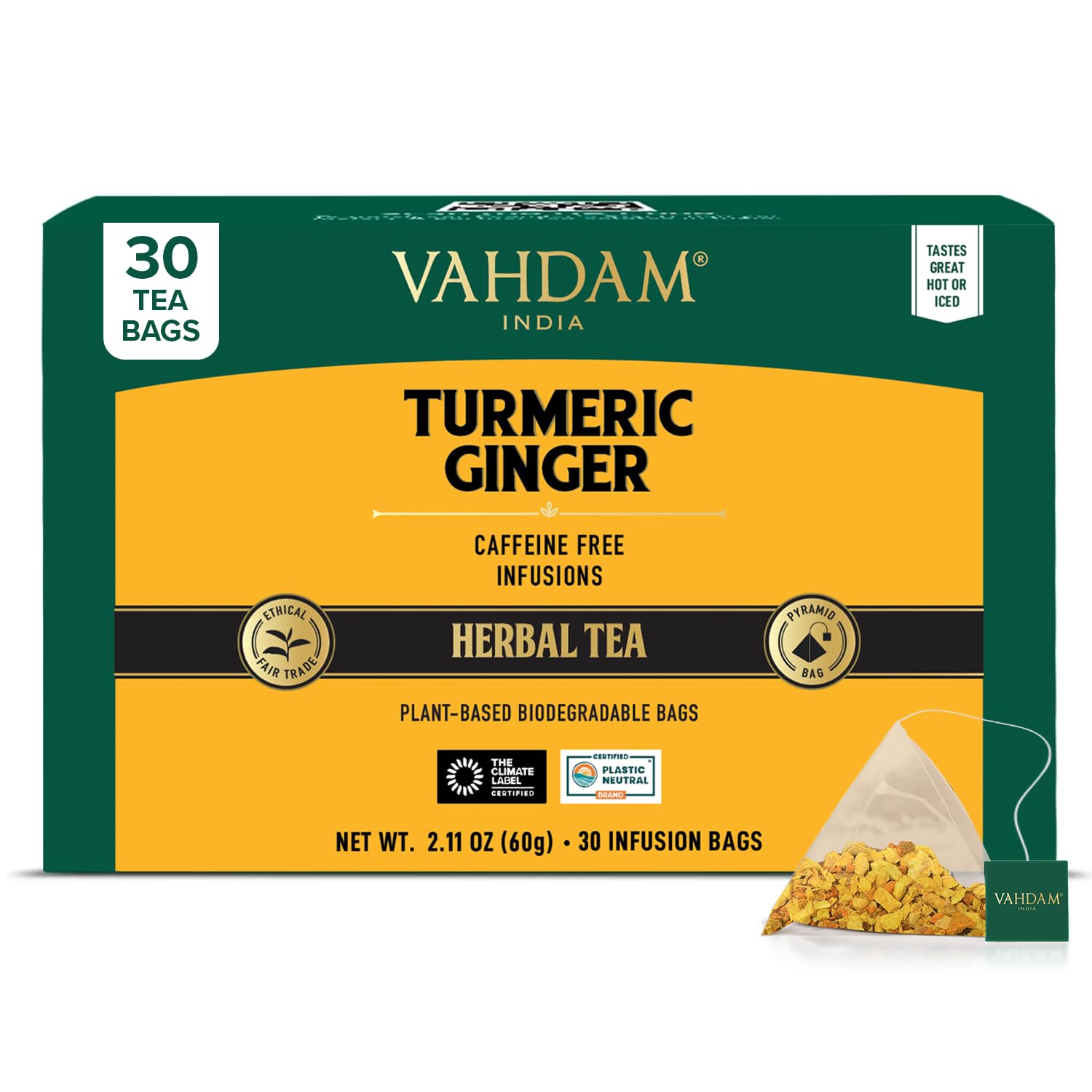
VAHDAM Turmeric Ginger

93 /100
Trail Score Outstanding

Key details

Blend
Turmeric, ginger
Count
30 sachets
Bag Type
Pyramid sachet
Caffeine
Caffeine-free
Check Price on Amazon

The pyramid sachet is the reason to look at this one. Turmeric and ginger are roots, and roots need room to swell and release — a mesh pyramid gives them more of it than a flat paper bag pressed against the sides of a mug. Each sachet is individually wrapped and the thirty of them arrive in a resealable pouch, so the last one hasn't been sitting open to the air.

Flavor is where it divides people. The blend is earthy and lightly spiced, and if you're after a strong ginger bite this will read as weak however long you steep it. We kept it for evenings when a big, spicy cup would be too much, and there it does exactly what we wanted: soft, warming, and easy to sip slowly after dinner.

Thirty bags at a per-sachet price near the top of this group is fair value only if you like a gentle cup. Buy it for the format and the mildness; if you want the turmeric to hit harder, spend the same money on Buddha's peppered blend instead.

Pros

  • Pyramid sachets give root pieces room to steep
  • Individually wrapped, with a resealable pouch
  • 30 caffeine-free sachets per box

Cons

  • Mild
  • High price per sachet
Our verdict

Thirty pyramid sachets of a soft, earthy blend — worth it if you want a gentle evening cup, not a ginger punch.

Check Latest Price
8

Every-Morning Routine

The Republic of Tea Turmeric Ginger Green Tea

93 /100
Trail Score Outstanding

Key details

Blend
Turmeric, ginger, green tea, cinnamon
Count
50 tea bags
Caffeine
Low caffeine
Certification
USDA Organic
Check Price on Amazon

Fifty bags in a canister is a commitment, and this one is aimed at people who drink the same cup every morning. The base is green tea rather than a pure herbal blend, with turmeric, ginger, cinnamon, and a honey flavor on top, so one bag gives you a light caffeine lift and a spiced, golden cup.

The brewing directions are shorter and cooler than an herbal tea's: water just short of boiling, six ounces, one to three minutes. That's a green-tea steep, and following it keeps the cup from turning bitter; the cinnamon and honey flavor soften the edges but can't rescue a bag you forgot about.

Value depends on how you drink it. Fifty bags at a mid-range price is one of the better per-cup deals in this guide for a daily drinker, though a canister isn't individually wrapped, so the bags share air every time you open the lid.

We came back to this one on weekday mornings, when we wanted something quicker than a golden blend and gentler than coffee. It's the pick for a low-caffeine daily routine with turmeric in it, not for a turmeric treatment. If the herb is the reason you're shopping, buy the top pick; if the routine is, fifty bags in a canister makes sense.

Pros

  • 50 organic bags in one canister
  • Low caffeine from a green tea base
  • Cinnamon and honey flavor make it easy plain

Cons

  • Mild turmeric presence next to the green tea
Our verdict

A fifty-bag canister of organic, low-caffeine turmeric green tea for people who want the habit more than the intensity.

Check Latest Price

How We Chose and Tested 16 Anti-Inflammatory Teas

We started by reading ingredient panels rather than marketing copy. A tea made the shortlist only if turmeric, ginger, green tea, or holy basil appeared among the first few ingredients — not buried under a base of chicory and flavoring — and if it carried no added sugar and a price that made daily drinking reasonable. That whittled a shelf of blends down to 16, spanning loose-leaf and bagged, plain and spiced, from brands like Traditional Medicinals, Yogi, and Pukka.

For three months those 16 lived on my kitchen counter. I steeped each one exactly as the box directed and tasted it plain before adding anything, since a tea that only works with a spoonful of honey is a different product. Mornings were turmeric and green tea blends at the counter while the kettle cooled; afternoons, ginger blends at my desk; evenings, chamomile and holy basil on the couch. I noted bitterness, chalky sediment at the bottom of the mug, and whether a strong batch held up when poured over ice.

To test strength, I brewed a second bag in the same cup to see whether the flavor deepened or just turned harsh. I can't measure inflammation in a mug, so effectiveness came down to dose — how far down the ingredient list the turmeric, ginger, or green tea actually sat — plus a panel check for added sugar, sweeteners, and filler bases. Soothing got judged during a week with a scratchy throat, when I drank the ginger blends back to back: some felt genuinely warming, others just hot. For value, I counted usable cups per box and whether a second steep was worth drinking rather than pouring out.

How to Choose an Anti-Inflammatory Tea

Match the herb to the job

Turmeric and ginger are the everyday pair: warming, caffeine-free, and easy to drink after a walk or before bed. Nettle does a different job — it's the one to choose if your inflammation shows up as seasonal allergies or puffiness rather than a stiff knee. Meadowsweet, in our top pick, is a traditional inflammation herb that most blends skip. Decide which of those three jobs is yours before you compare box counts, because no single blend does all three well. And if you react to aspirin, cross meadowsweet off the list; it's a salicylate source.

Caffeine decides when you drink it

Most turmeric blends are naturally caffeine-free, which is why they're sold as evening teas. Two here aren't: the Bigelow matcha blend and the Republic of Tea canister, both built on green tea. If you want a cup at nine at night, check the box for green tea, matcha, or black tea before you order. If you want something to replace a morning coffee, those two are the ones to look at — everything else in this guide will leave you under-caffeinated.

Judge strength per cup, not per box

The most common way a turmeric tea disappoints is by brewing thin, so you use two bags and the box lasts half as long. Follow the directions on the box: Buddha Teas asks for 205°F and three to five minutes, Rishi asks for 200°F and five to seven, and the gap between a three-minute and a seven-minute cup is the gap between tea-colored water and something with a ginger bite. Before you buy a big box, price the cup you'll actually drink — two weak bags cost more than one good one.

Read the bag as well as the count

Roots need room. A mesh pyramid sachet gives turmeric and ginger more space to swell than a flat paper bag, and roots give up more flavor when they have it. Individually wrapped sachets hold their aroma longer than a canister you open twice a day, which matters here because turmeric and ginger fade faster than black tea does. Neither format is a dealbreaker — a canister is the cheaper per-cup route for a committed daily drinker — but the bag explains why two teas with similar counts can taste so different.

Frequently Asked Questions

Final Verdict

Buy the Traditional Medicinals Turmeric Ginger & Meadowsweet. It's the one tea here formulated around inflammation support rather than simply containing turmeric, it's organic and caffeine-free, and it drinks well enough that you won't need honey to finish the cup — which is most of the battle in this category.

If flavor is what has stopped you finishing a turmeric tea before, take the Rishi instead; it's the best-tasting cup here and still caffeine-free. And if you want a morning cup with caffeine in it, the Bigelow matcha blend is where to start.